The baths, the Parliament and the view over the river from Fisherman’s Bastion would each justify the flight. What stays with you is the space between them, so leave room to walk.
What to book before you go to Budapest
One ticket is worth buying from home. The inside of the Hungarian Parliament is seen only on a timed tour and the slots go days ahead, and turning up without one is the single thing most likely to spoil a short trip. Get that booked before anything else, then fit the day to the slot you are given.
Four more are fixed rather than scarce, and knowing which saves a wasted walk. The Opera House has no walk-in route by day, so the guided tour is the only way in. The Hospital in the Rock admits nobody except on its own guided tour. The MOL Campus SkyDeck sells timed slots online and takes no cash at the door. And the Dohány Street Synagogue is closed every Saturday, which is exactly the day a weekend visitor tries it.
One oddity belongs on that list as well. The Money Museum is free and still has to be booked in advance, because capacity is limited and it fills.
Map of the best things to do in Budapest
Five clusters and five outliers. Castle Hill holds entries 3, 6, 7, 8, 19, 23, 24 and 32 within a few minutes of each other, which is the densest half-day on this page. Central Pest holds 2, 4, 9, 10, 11, 14, 26, 28, 29, 35, 36, 38, 39, 40, 41, 42, 44 and 46, and nearly all of that is a flat walk. City Park and Heroes’ Square hold 1, 12, 13, 31, 33, 34 and 45, out at the far end of Andrássy Avenue on the M1, and that cluster is big enough to be a day on its own. The Buda bank holds Gellért Hill (5), Rudas (16) just across Elisabeth Bridge from it, Gül Baba’s tomb (48) ten minutes up the hillside from the Buda end of Margaret Bridge, and the Money Museum (37) at Széll Kálmán tér. Óbuda and the Buda hills hold the Pál-völgyi Cave (25) and Roman Aquincum (47), out on the suburban railway and the bus lines. The outliers are Memento Park (27) in District XXII, the Buda Hills railways (20), the MOL Campus (21) down at Kelenföld, the Holocaust Memorial Center (30) in District IX and Fiumei Road Cemetery (49) by Keleti, with Margaret Island (15) in the river between the two banks and the day trips (50 and 51) beyond the city altogether.
Pin numbers match entry numbers. Four numbers have no pin, because tram 2, the M1, the hop-on hop-off bus and the Basilica organ concert are things to do rather than places to stand.
The order runs from the five things that make the trip to the ones you reach on a longer stay, grouped as you would actually do them, with the day trips last. Start here.
1. Start with a long soak at Széchenyi Thermal Bath
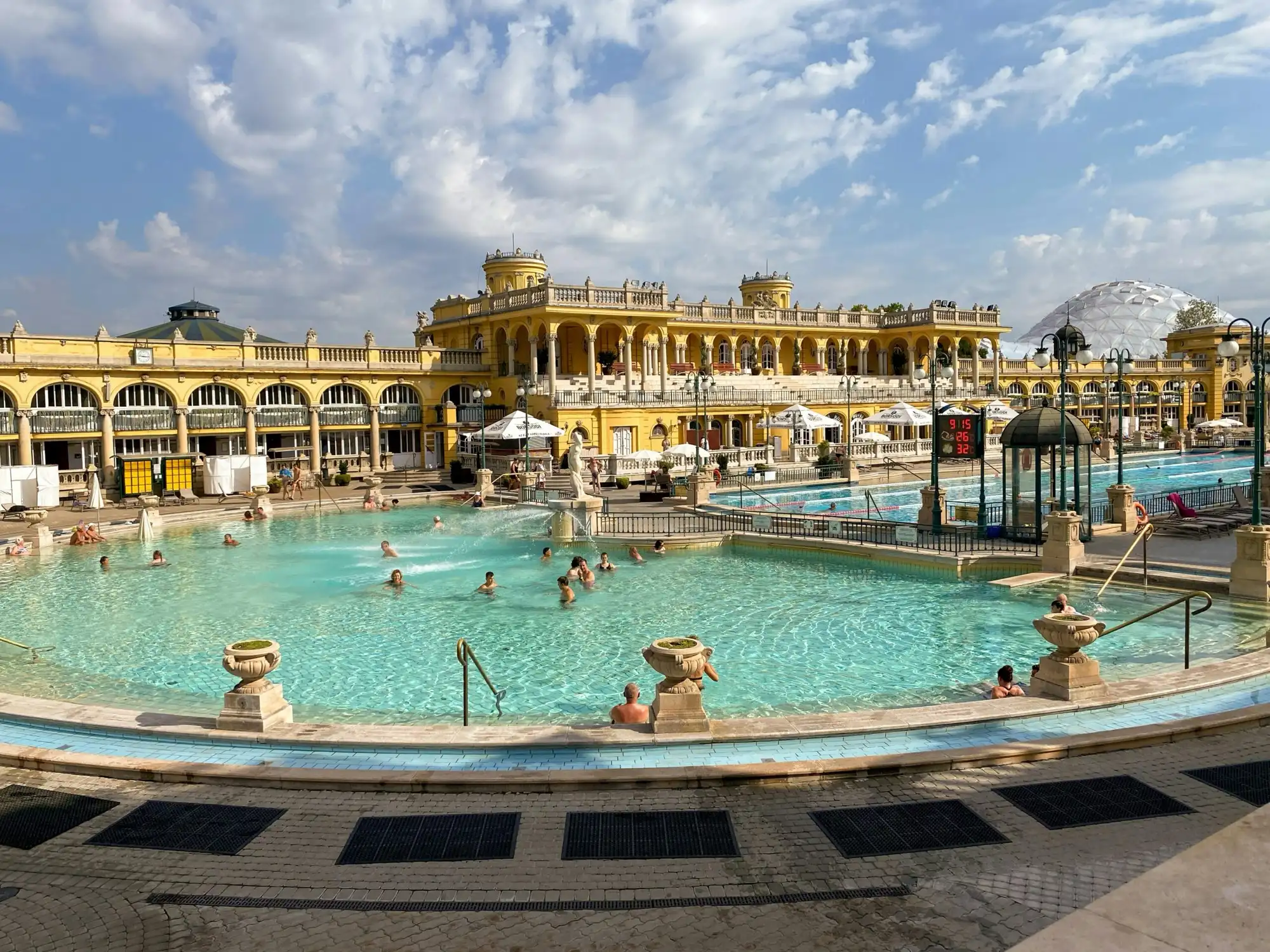
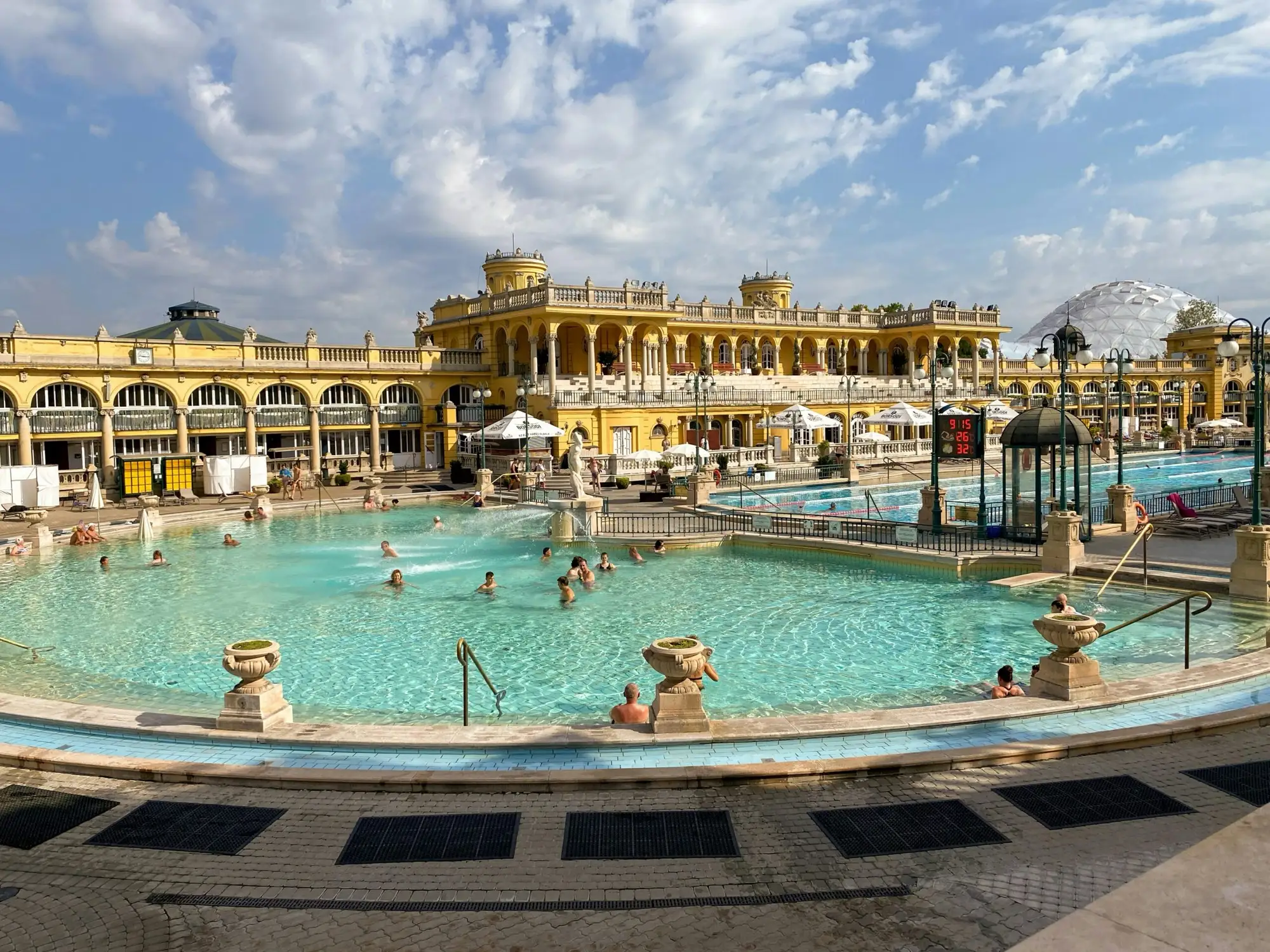
Go on your first morning, before the city has had a chance to tire you out. Széchenyi is the big yellow bath in City Park, it opened in 1913, and the outdoor pools are what you are there for: hot water in a courtyard of Neo-Baroque wings, with steam lifting off it on a cold morning. The indoor halls are older, darker and much less of an occasion.
Be there when it opens. The first couple of hours are calm, it fills through the morning, and from noon it is at its most crowded, with weekends busier than weekdays. Under-14s are not admitted, and towels cannot be hired here, only bought, so pack one. The Palm House lounge and the fast-track options are in our Széchenyi Thermal Bath guide.
Széchenyi is the famous one rather than the only one. The Ottoman bath under a dome is Rudas, further down this list, and the Art Nouveau Gellért is closed for rebuilding until 2028. Our thermal baths round-up chooses between all seven, and the Saturday night Sparty in this same bath is a different proposition we would leave off a first trip.
2. Book a timed tour inside the Hungarian Parliament
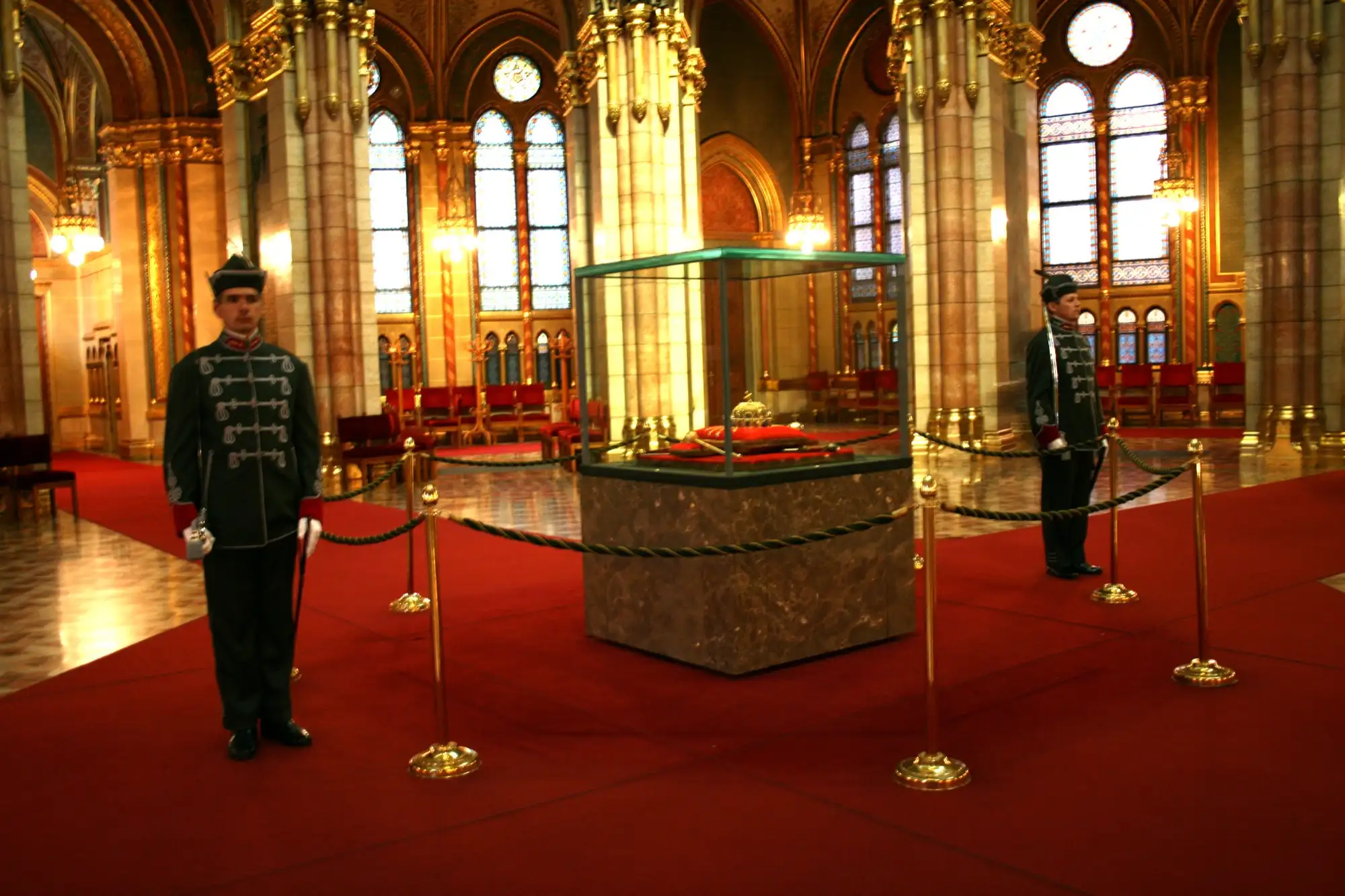
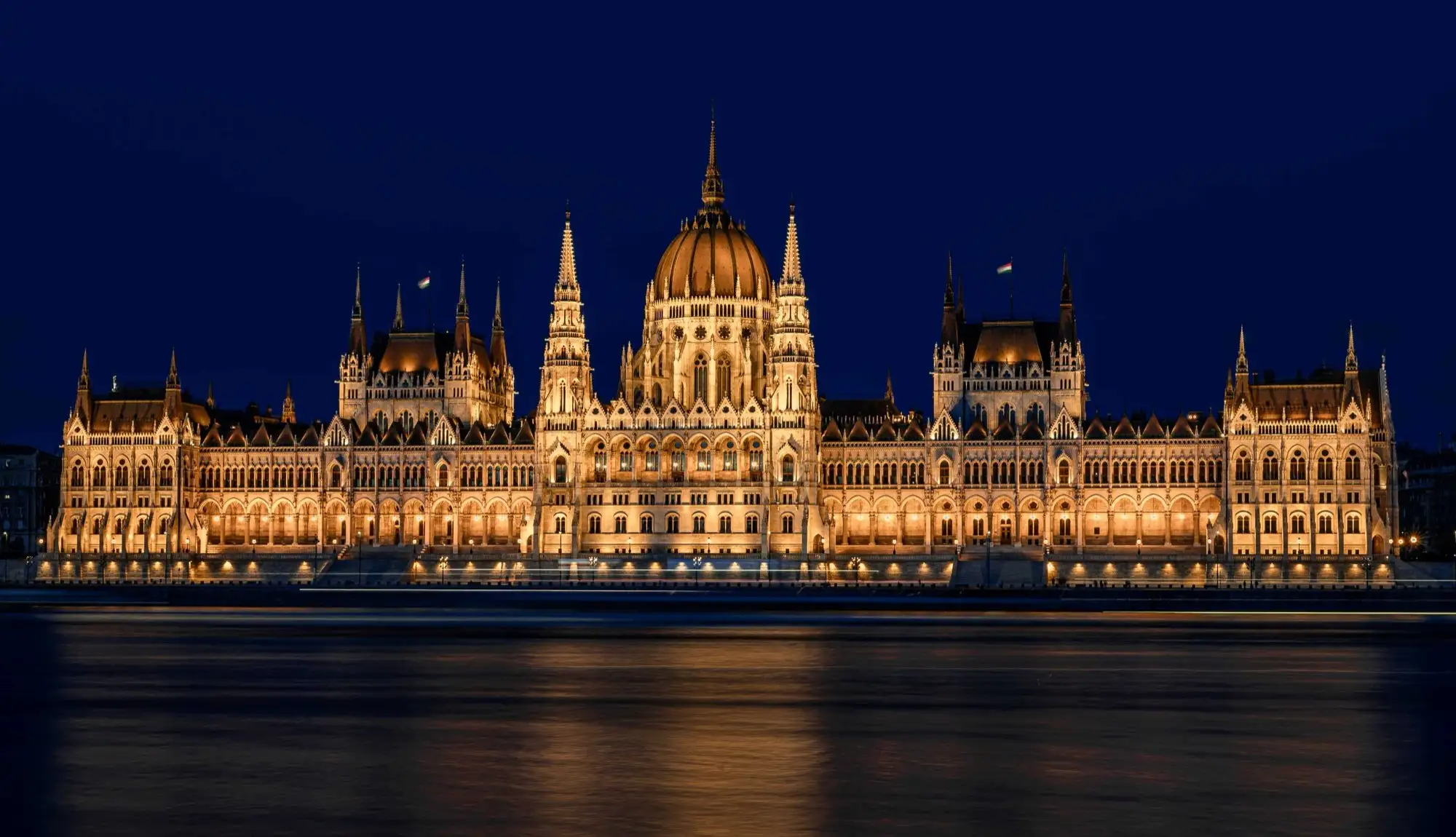
Forty-five minutes at a time somebody else sets is all you get inside, which is why this is the one ticket worth arranging a day around. Imre Steindl’s Neo-Gothic palace on Kossuth tér holds the National Assembly, and the tour route takes in the grand staircase, the Dome Hall where the Holy Crown of Hungary is kept, and the chamber of the old Upper House. Photography is banned in the room with the crown in it.
Book the option that matches your passport, because the two are sold separately and the document is checked at the door. A UK passport books the non-EU ticket. If the slots have all gone, the exhibitions under Kossuth tér are open to anyone and cost nothing, and they are on our list of free things to do.
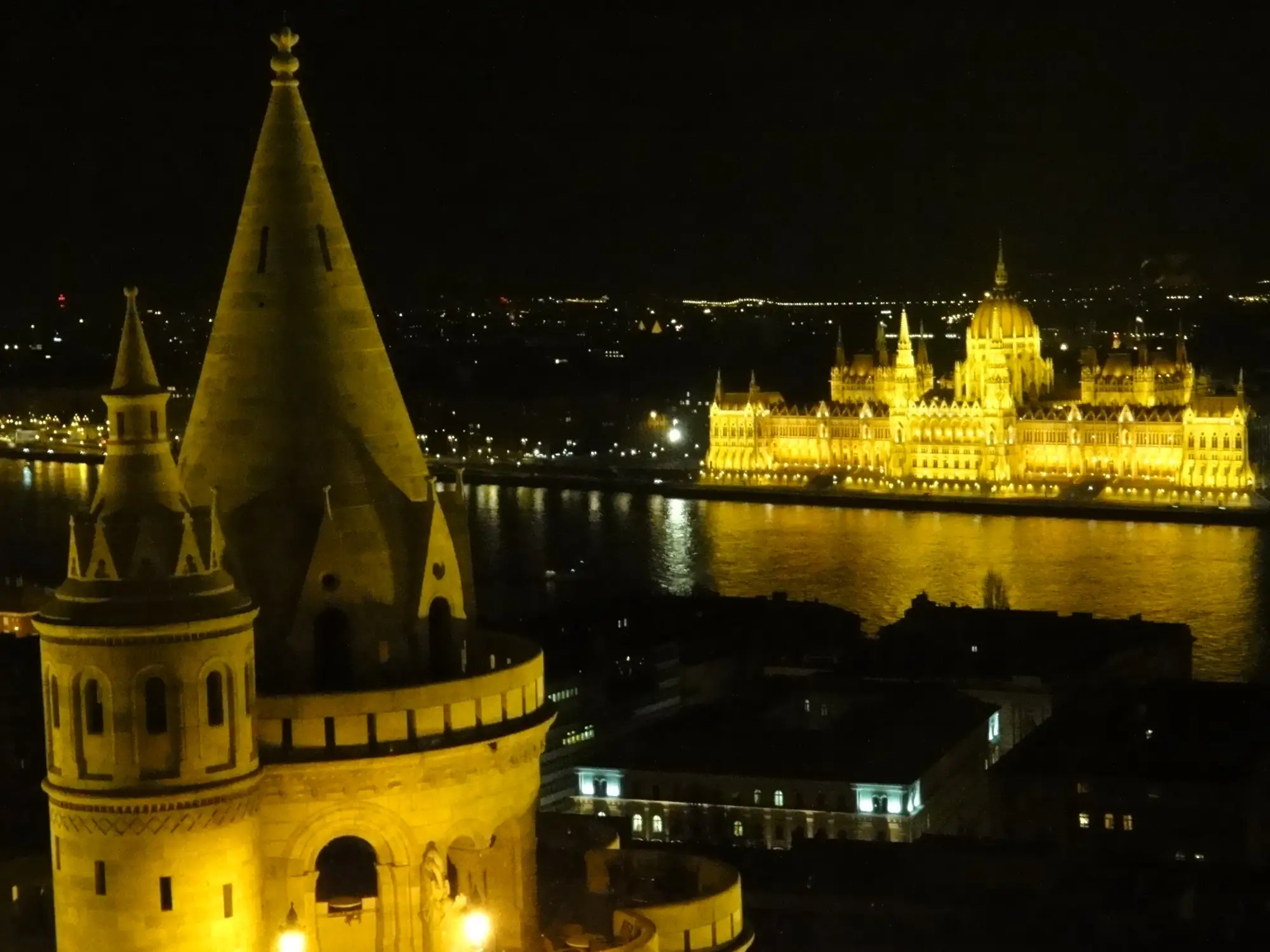
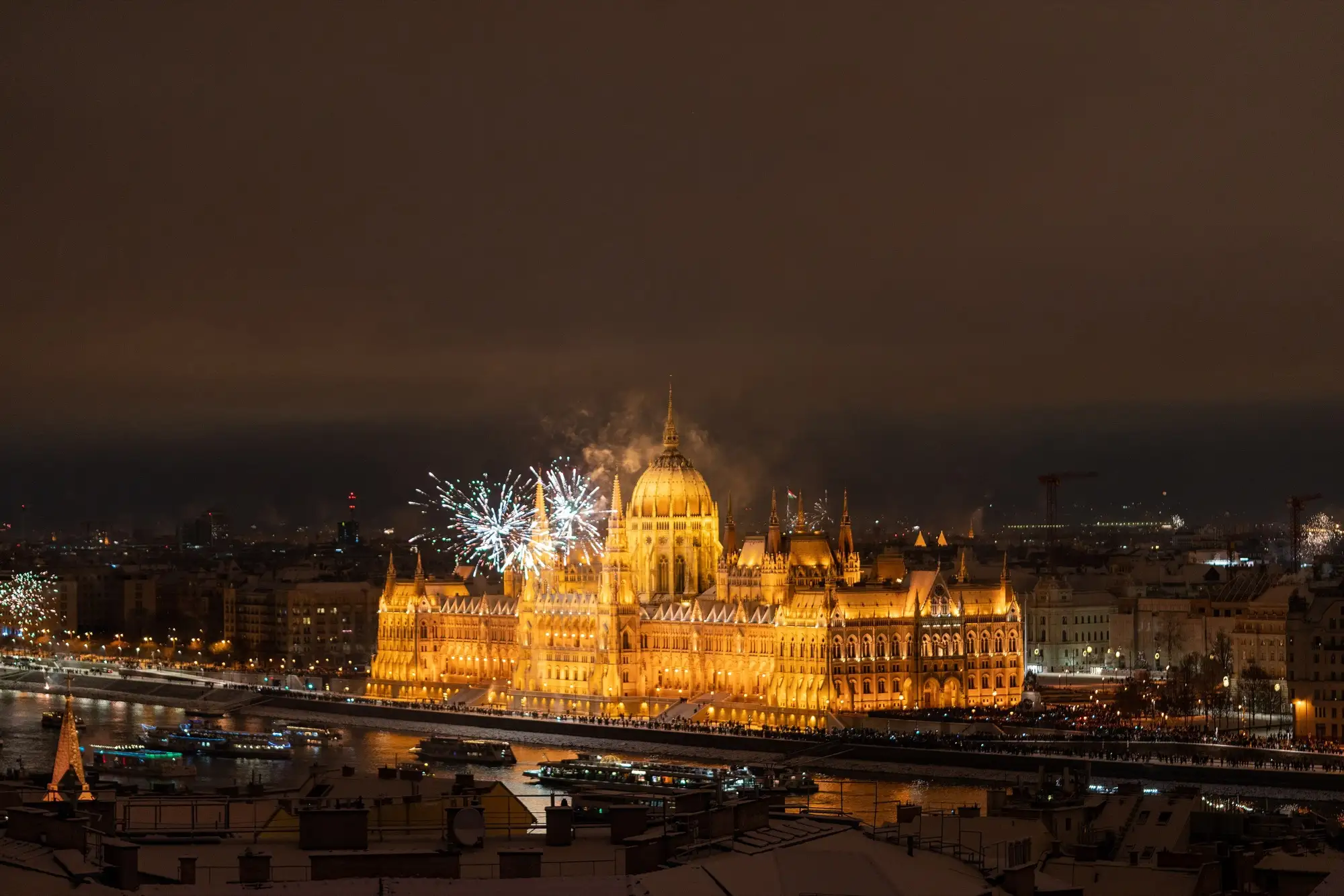
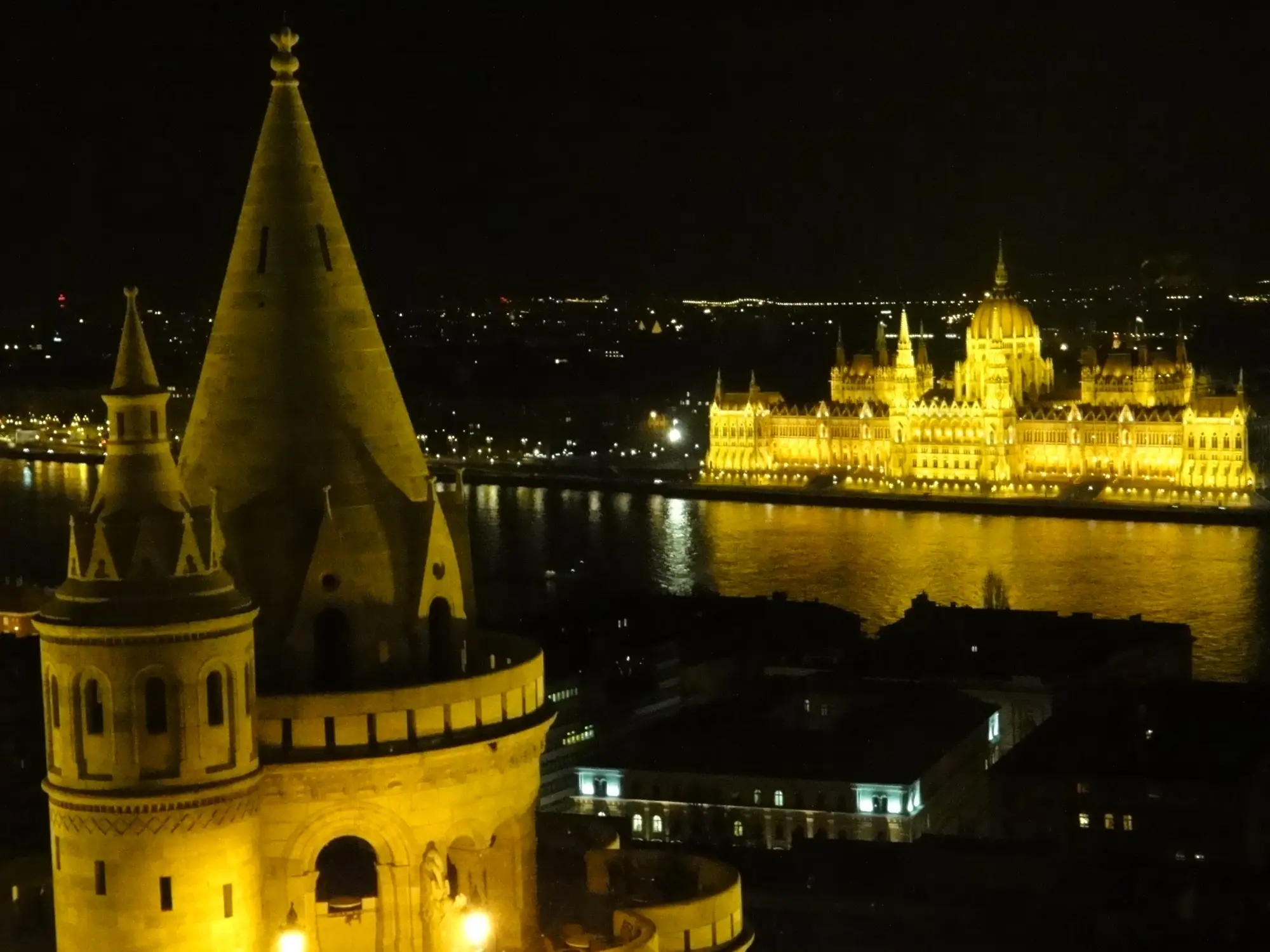
Then come back after dark, when it is floodlit and reflected in the river, which is the single best sight in the city at night. Where to stand is in our guide to the Parliament at night.
3. Go up to Fisherman’s Bastion before the coaches arrive
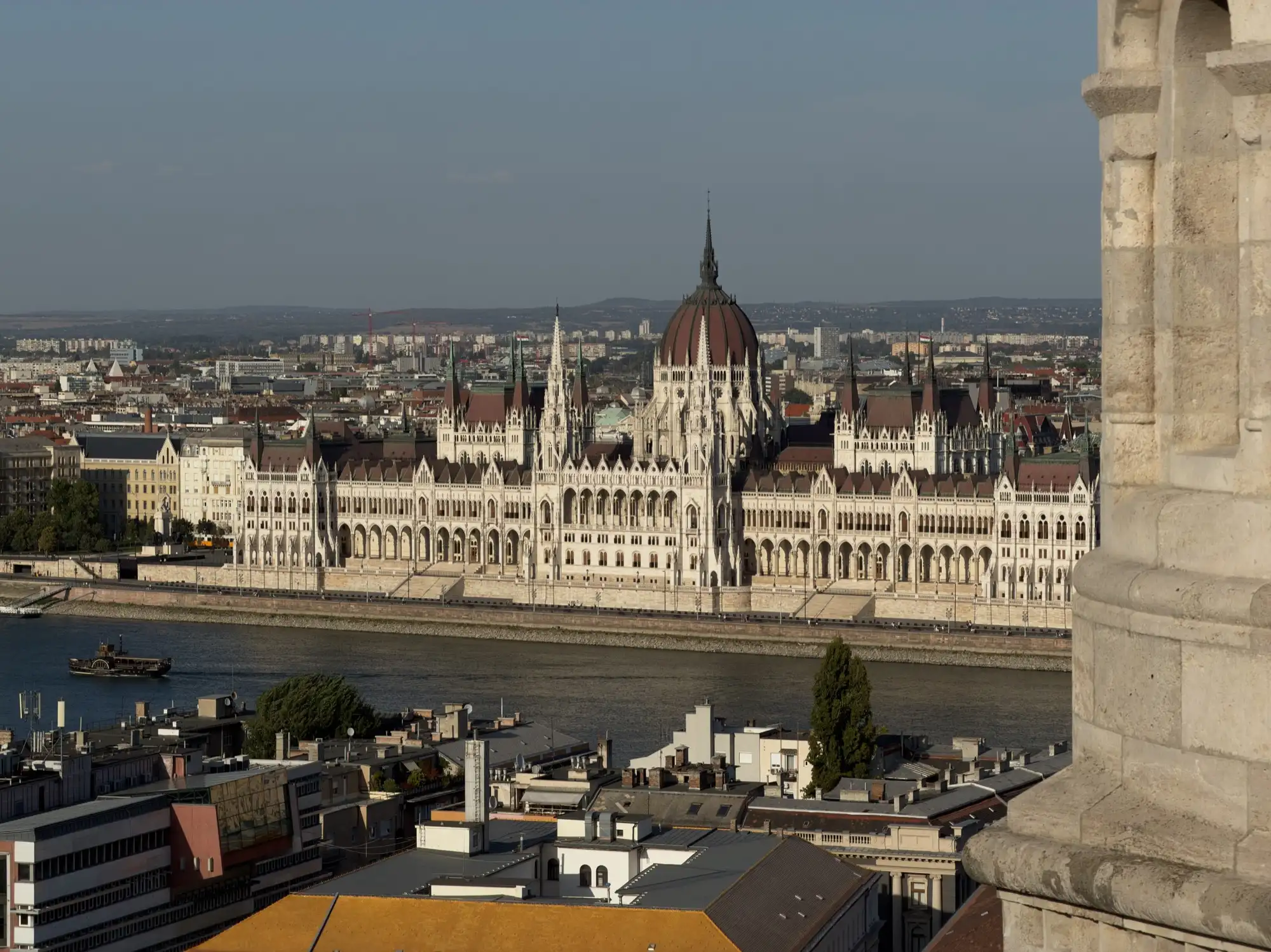
I was up there at seven on a July morning with the arcades to myself, and by ten there was a queue for the same photograph. Early or after dark is the whole trick to Fisherman’s Bastion.
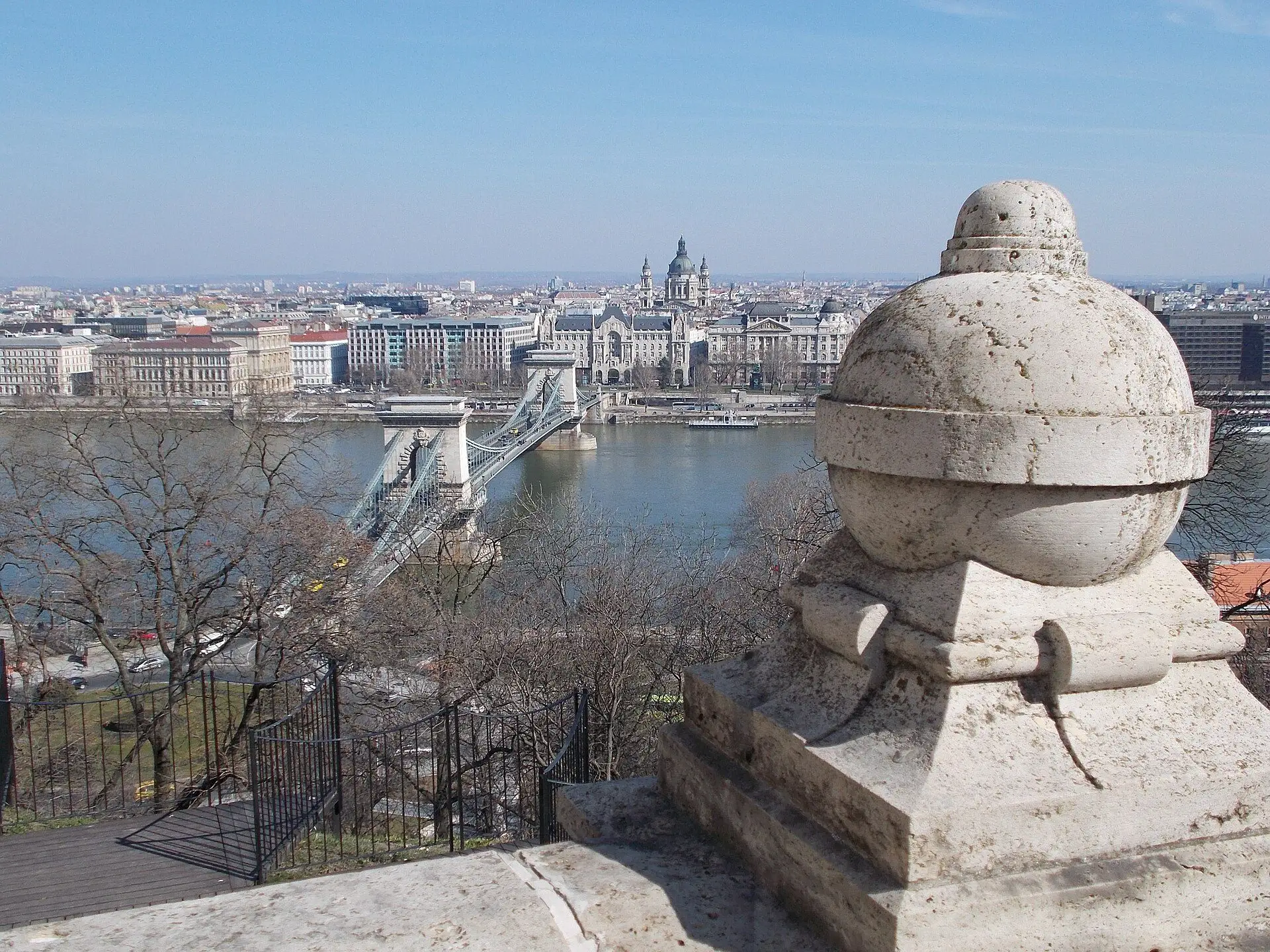
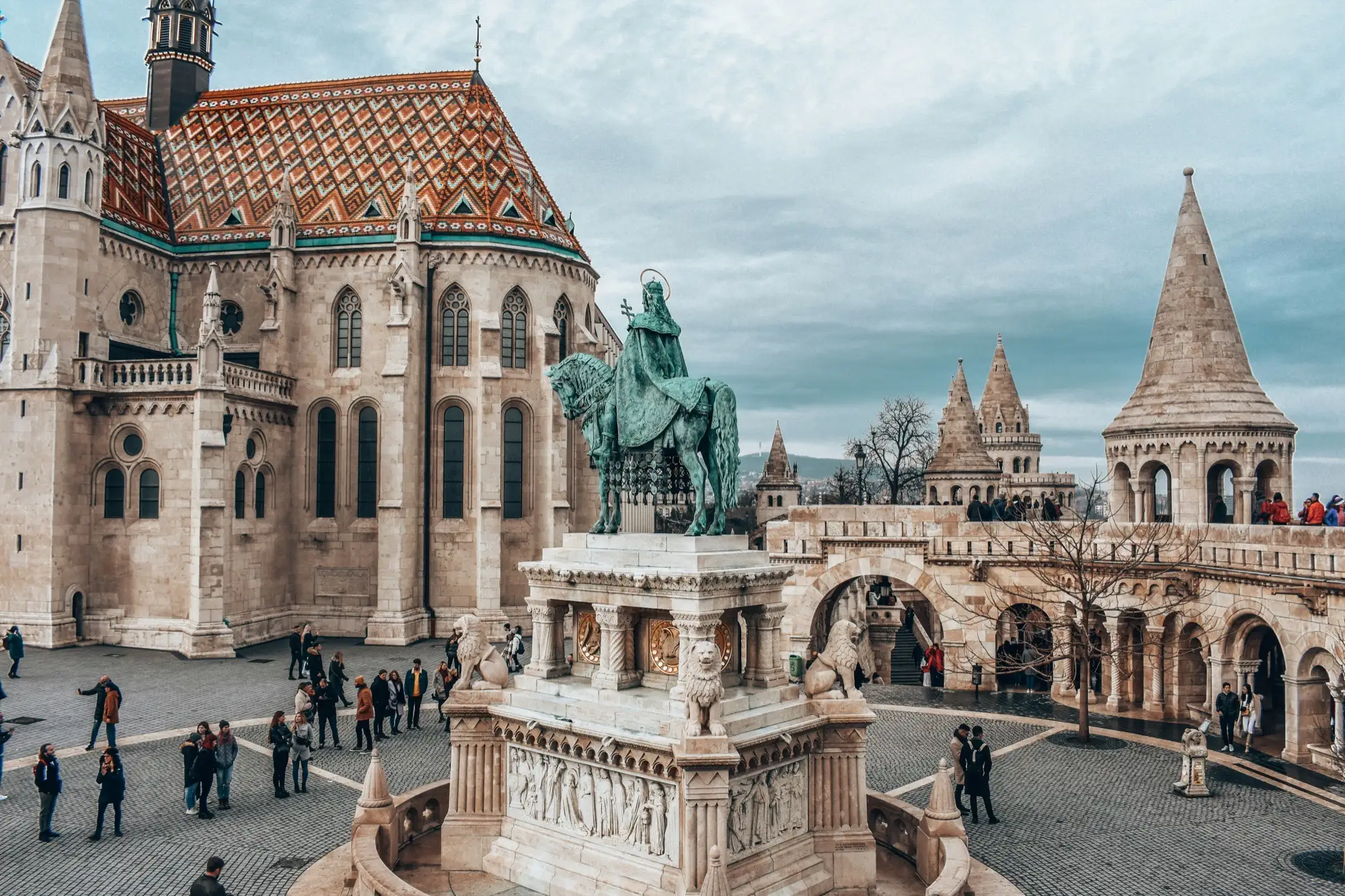
Most of it is free, which is worth knowing before you join a ticket line. The courtyard, the arcades at square level and Frigyes Schulek’s staircase down the hillside are open at any hour for nothing, and only the upper lookout charges. The view is the reason to stand here: the Parliament head-on across the Danube, the bridges running downstream, and Pest spread out behind. From the free level you get almost all of it.
Thirty seconds away is Matthias Church, so treat the two as one stop. The ticket hours for the lookout, and the free hours either side of them, are in our Fisherman’s Bastion guide.
4. Take a Danube cruise after dark
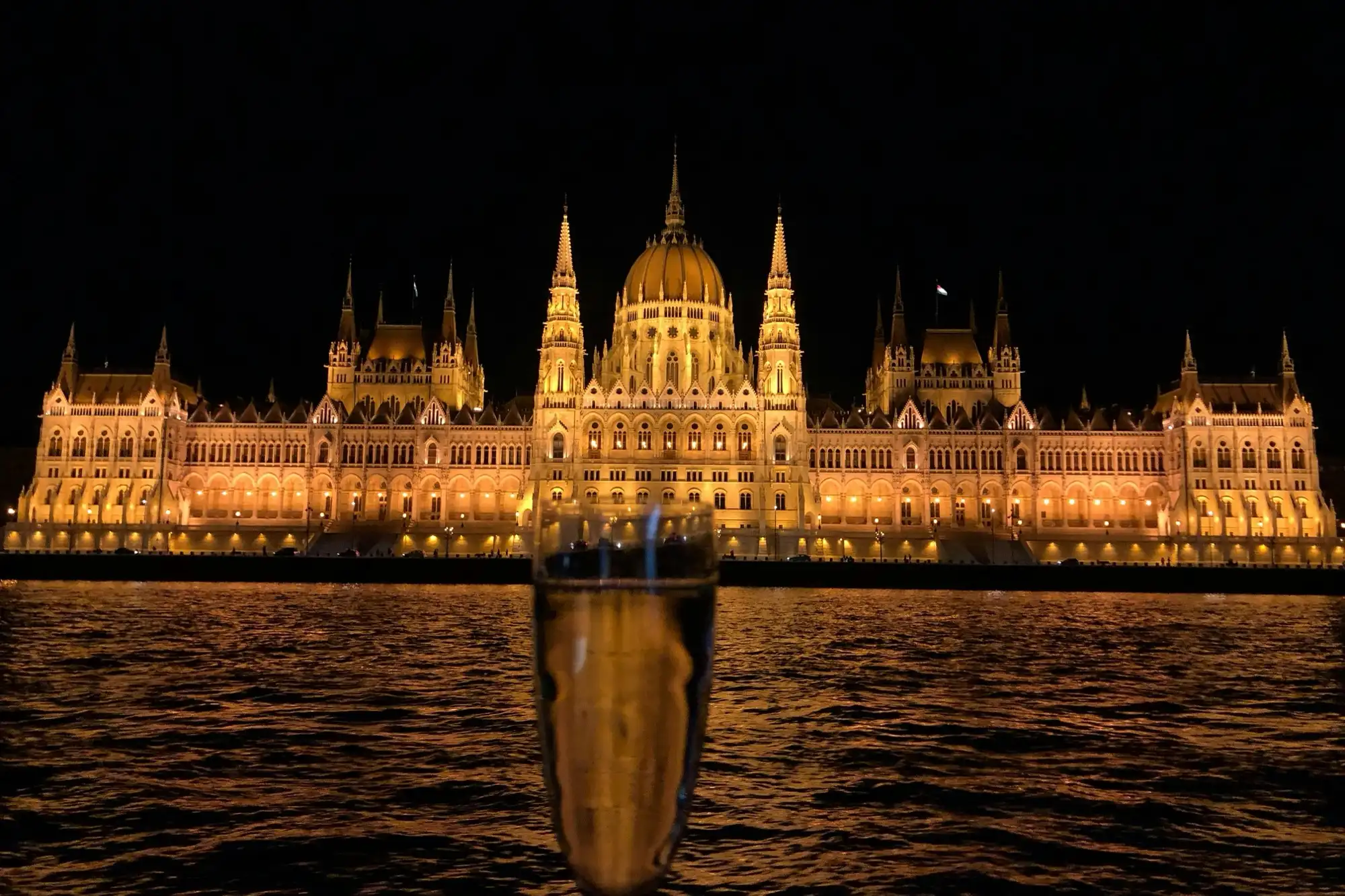
This city was built to be looked at from the water, and an hour on it after dark is the quickest way to see why. The boat takes in the Chain Bridge, Elisabeth Bridge, the lit Parliament, Buda Castle on its hill and Margaret Island, which is most of the skyline in one trip.
There is no public boat through the centre on an ordinary transport ticket, and that catches people out. The only ferry in the city’s fare system crosses the river between two southern districts, and the sightseeing boats are run separately, so getting on the water means buying a cruise.
The evening departure we would book boards on the Pest quay at 7 Jane Haining rakpart, sails for an hour, comes with an audio guide in 29 languages and one drink chosen on board, and takes wheelchairs. What you are looking at from the deck is covered in our guides to the Chain Bridge and the Parliament at night.
5. Walk up Gellért Hill for the long view down the Danube
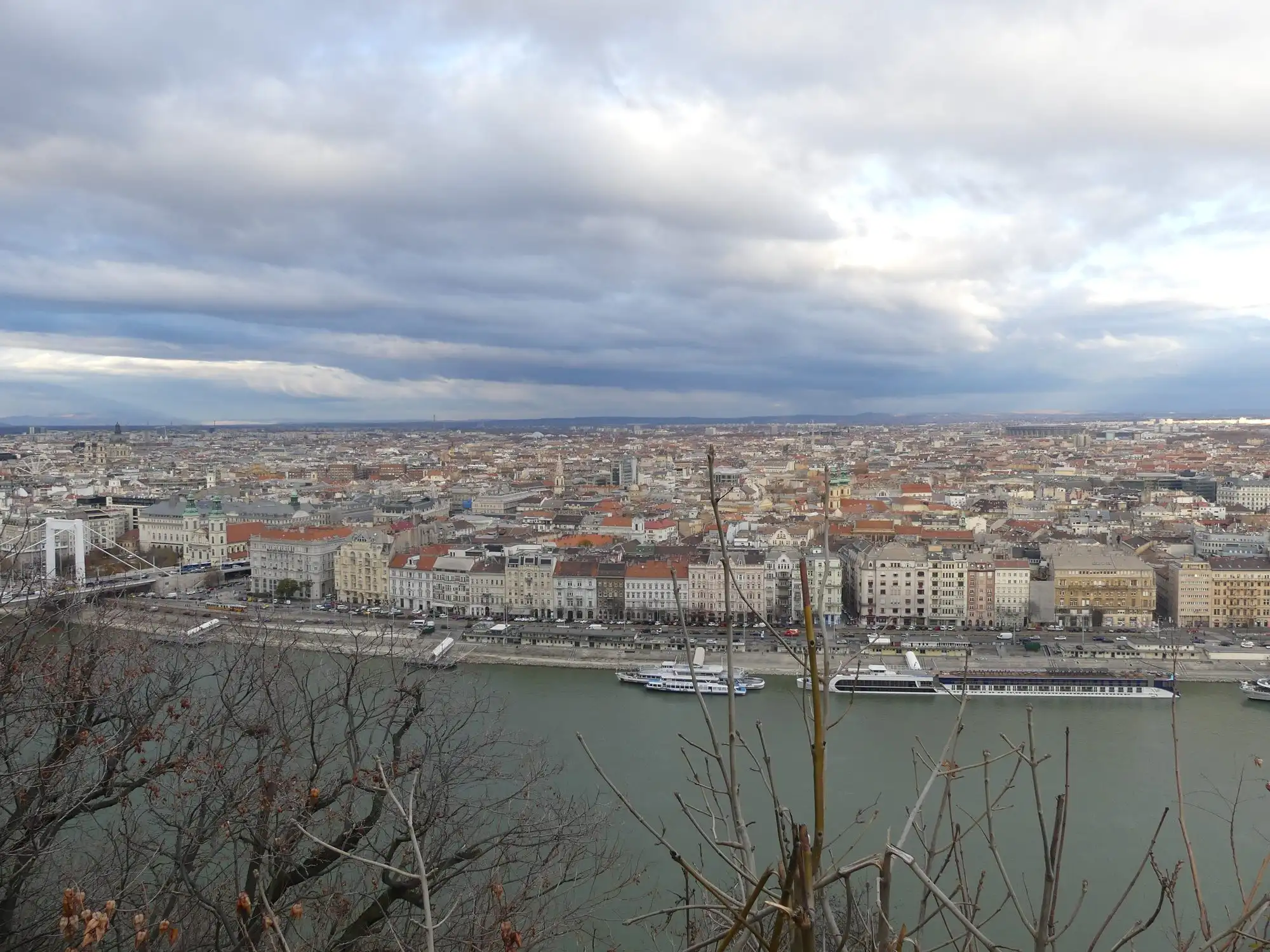
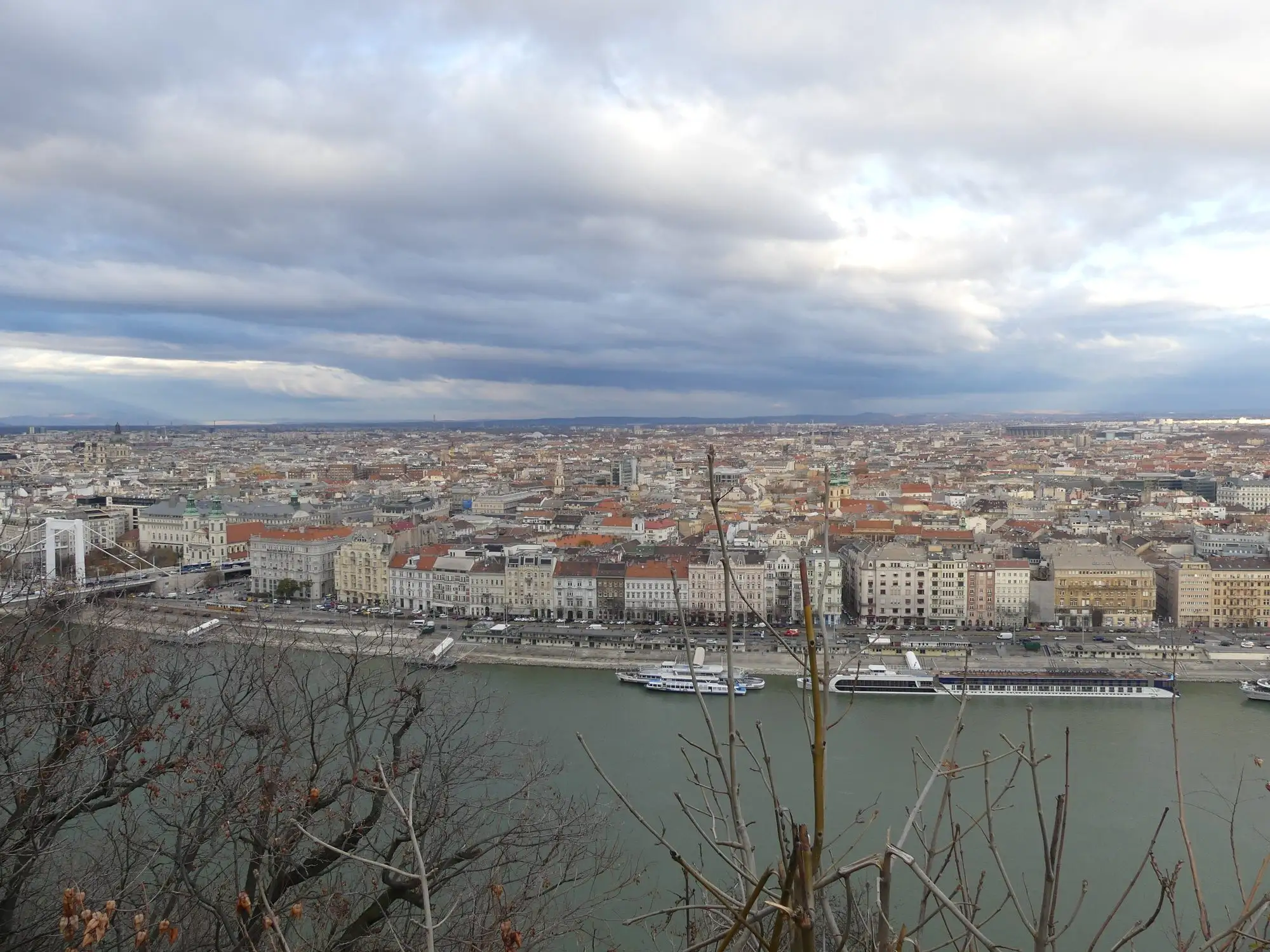
Gellért Hill gives you a different view from Castle Hill, not a repeat of it. From the Citadella you look down the length of the river, over both banks and every bridge at once, which is more than the Bastion gives you from Castle Hill opposite. Of the two big viewpoints, pick this one.
The park inside the fortress walls, the lookouts along them and the Liberty Statue above are free during opening hours, from 06:00 to midnight between April and October and 08:00 to 22:00 from November to March. Tickets are needed only for the Bastion of Liberty exhibition built into the Western Round Bastion, and for the Roof Garden 360 and Round Bastion Terrace you reach through it. The site reopened on 5 April 2026, after a rebuild begun in 2020, so a photograph of a shut and shuttered hilltop is out of date.
It is about 25 minutes up on stepped paths from the river, and they are steep. The gentle way is bus 27 to Búsuló Juhász and roughly 12 minutes on foot from the stop. The Cave Church is at the bottom of the hill by Elisabeth Bridge, and the paths, the lookouts and the step-free options are in our Gellért Hill guide.
Then the rest of the great sights, which is where a three-day trip spends its second and third days.
6. See inside St Stephen’s Hall at Buda Castle
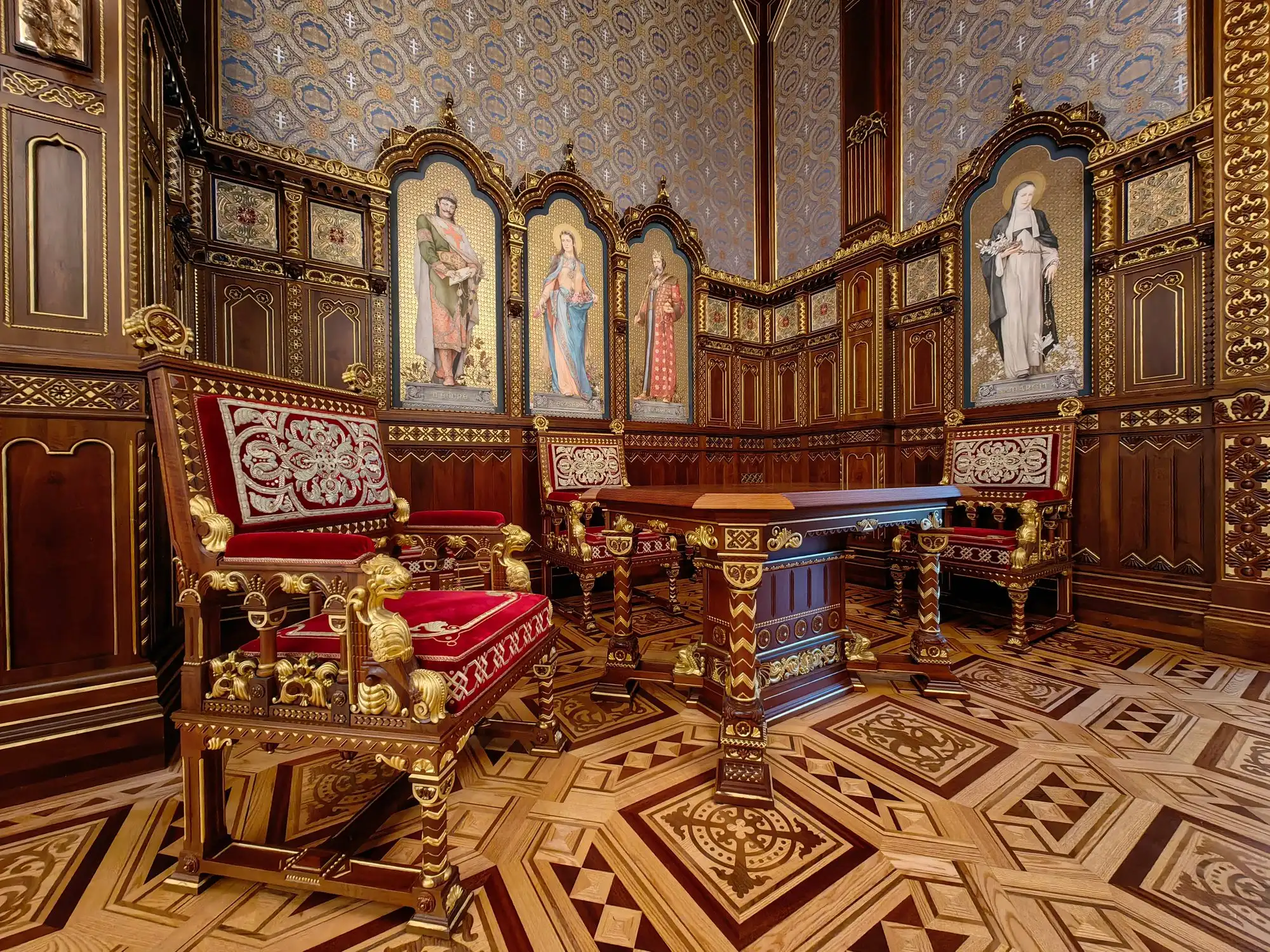
Nothing about the outside of Buda Castle costs a thing. The courtyards, the river terraces and the gardens are open at every hour, and so is the way up from the river, by escalator and lift through the Castle Garden Bazaar. Paying starts when you go indoors, and three places take the money: the Hungarian National Gallery below the dome, the medieval palace under the Castle Museum, and St Stephen’s Hall.
St Stephen’s Hall is what to see indoors, the single royal room rebuilt exactly as it was, all carved panelling, Zsolnay tiles and portraits of Hungarian kings. The guided walk below is what gets you into it, and it comes with a headset so you can hear the guide in the courtyards. The Budapest Card gets you into the hall free on its own, shown at the desk, for anyone who wants the room without a guide.
Give Castle Hill half a day and start it early, because by late morning the lanes up here are shoulder to shoulder. The museums one by one are in our Buda Castle guide, and the step-free ways up are on our getting there page.
7. Watch the guard change outside Sándor Palace at noon
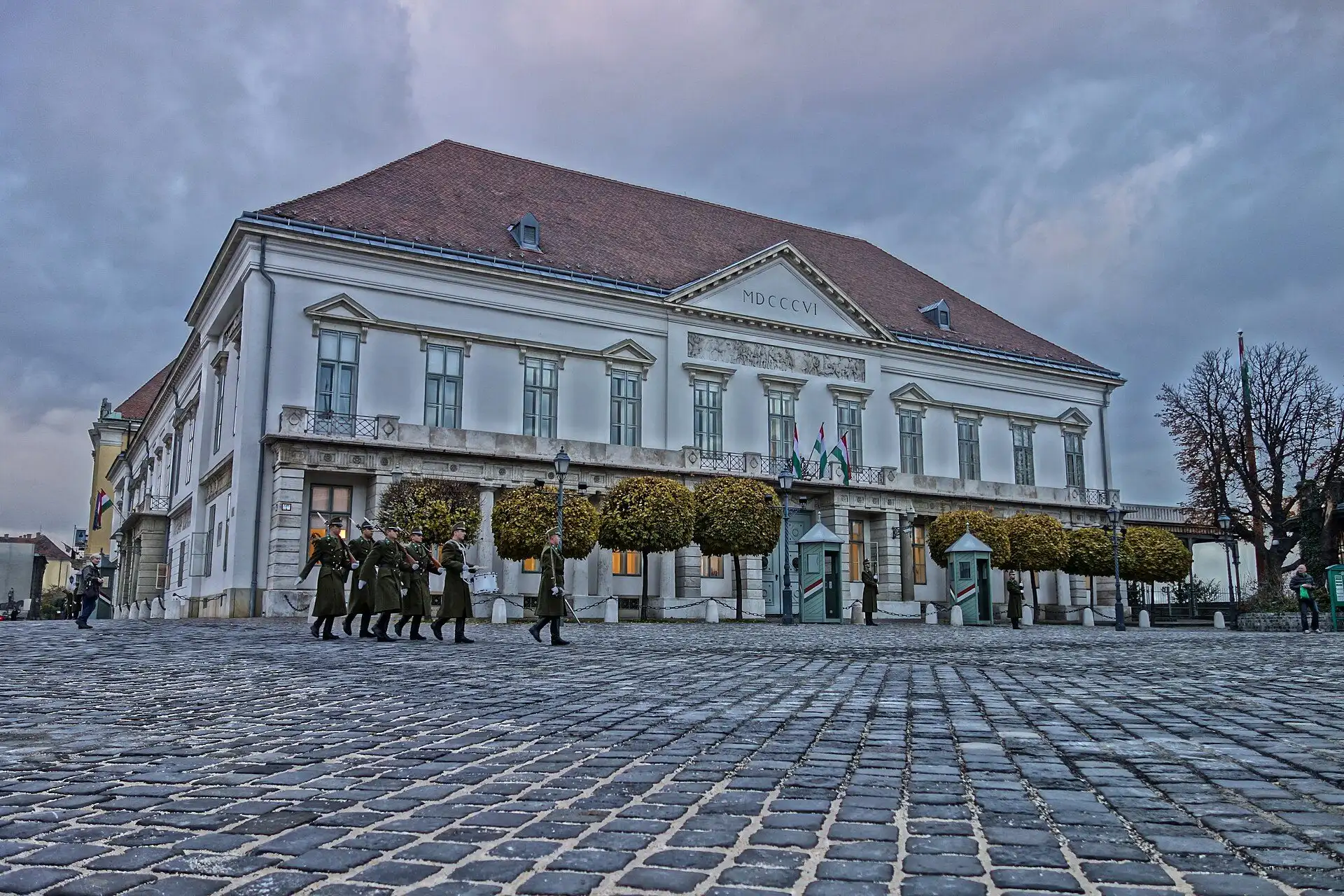
Aim for noon. The Foot Guard at Sándor Palace swaps sentries every hour through the day, and at twelve it turns into a full armed display rather than a two-minute handover. It has been a fixture on Szent György tér since 2015, and once a month from spring to autumn the army’s musicians come with it.
Sándor Palace is the President’s office, standing on the lip of Castle Hill with the funicular’s upper station beside it. The display happens in the open square, costs nothing and needs no booking, so it is the easiest good half hour up here. The first and last changes of the day are not published, which is the other reason to plan around twelve.
Buda Castle’s courtyards are a minute away, so fold this into the castle morning rather than making a trip of it.
8. Go inside Matthias Church for the painted interior
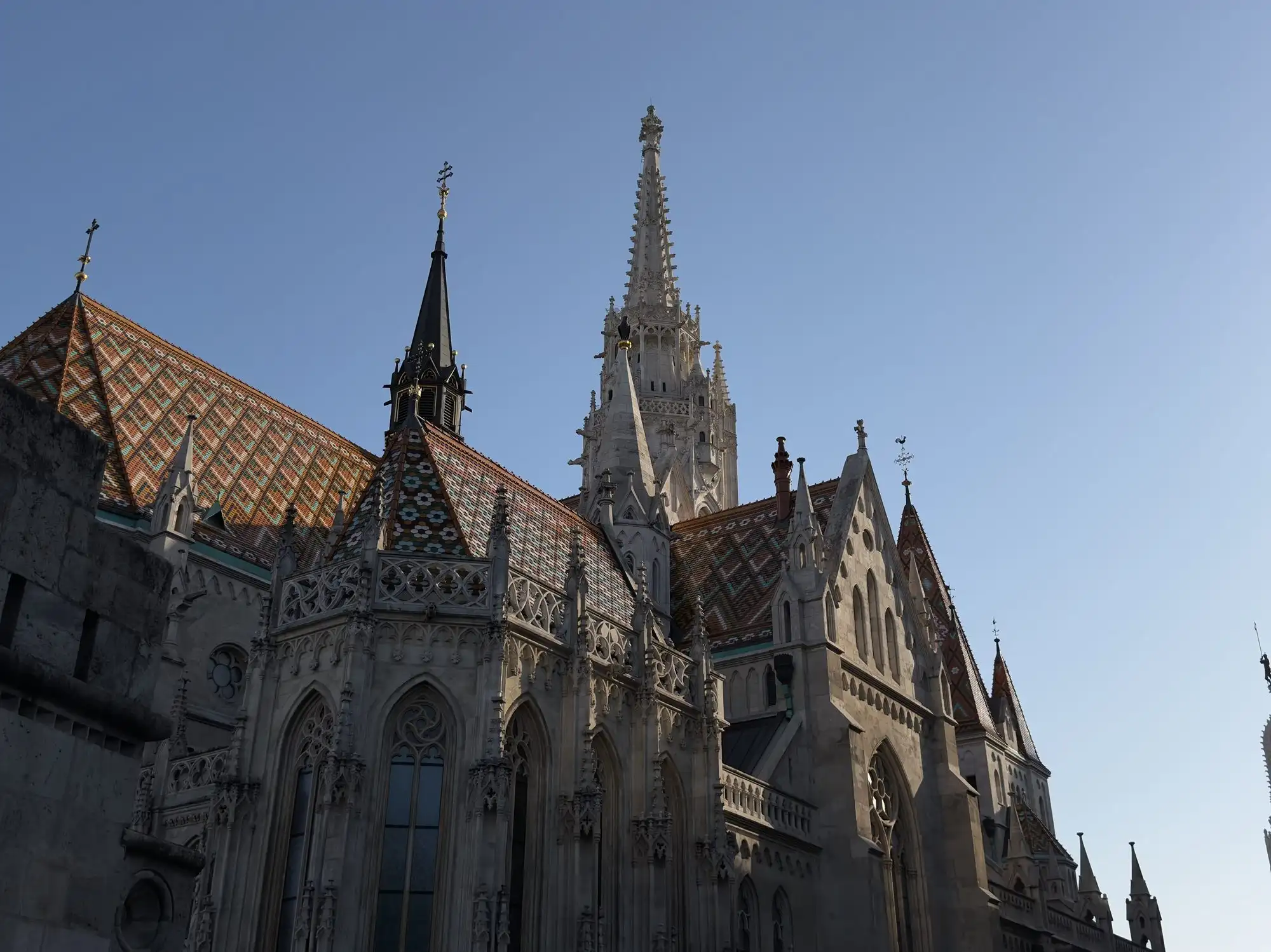
Of the hundreds of churches you could walk into across Europe, this is one of the very few whose inside you remember afterwards, and the reason is the decoration. Frigyes Schulek rebuilt it between 1874 and 1896 with Bertalan Székely and Károly Lotz painting the walls, so the inside is patterned from floor to vault rather than left in plain stone. The diamond-pattern Zsolnay roof outside is the Castle District’s signature.
Two Habsburg coronations took place under that vaulting: Franz Joseph with Elisabeth in 1867, then Charles IV with Zita in 1916. It is a working parish, so sightseers buy a ticket and anyone coming to pray does not, and visitor hours bend around the services. The tower is sold on its own, on a timed ticket you can buy only from the church.
It stands directly in front of Fisherman’s Bastion, so bundle the two and save a second trip up the hill. Service times and what the church ticket covers are in our Matthias Church guide.
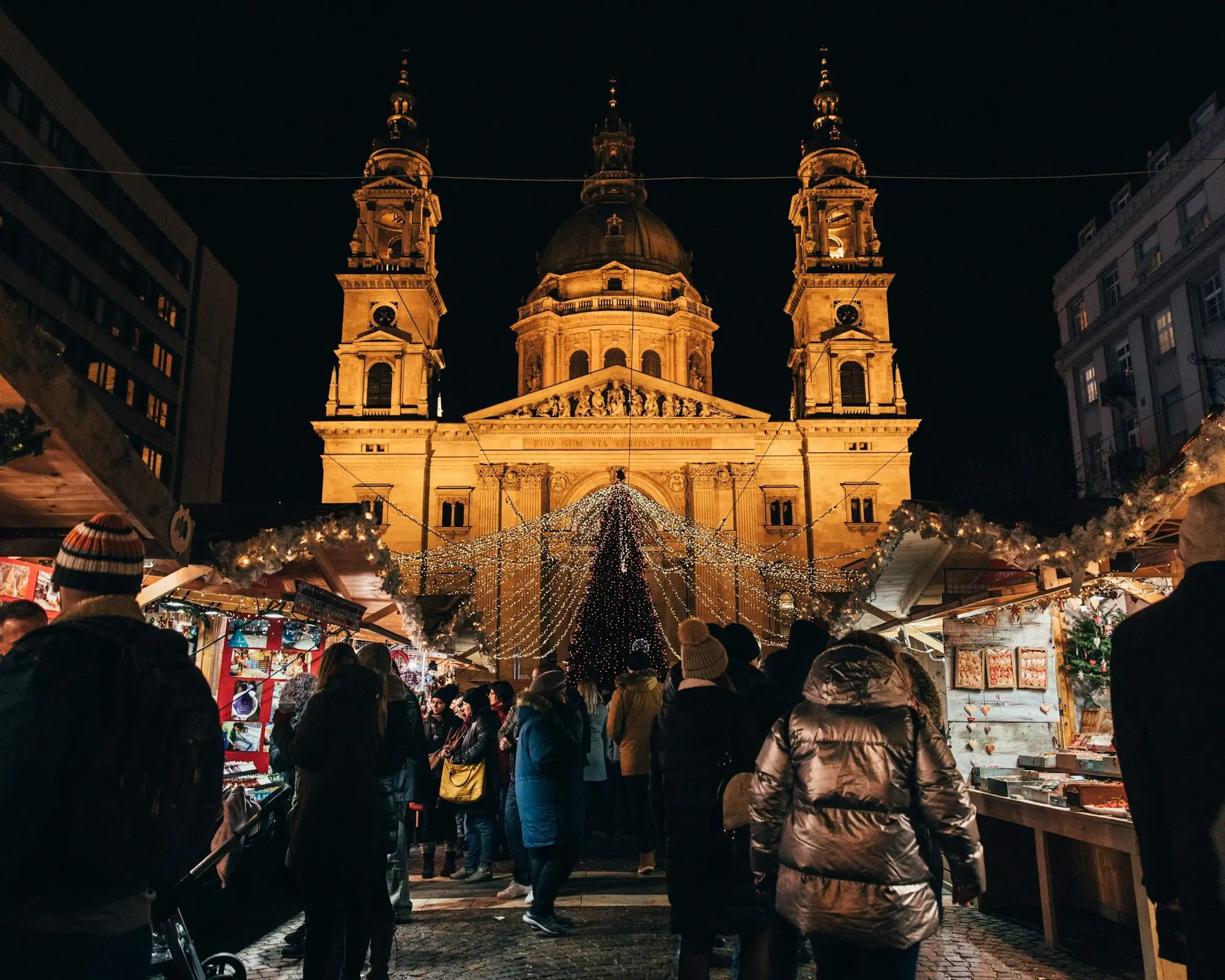
9. Climb to the dome terrace of St Stephen’s Basilica
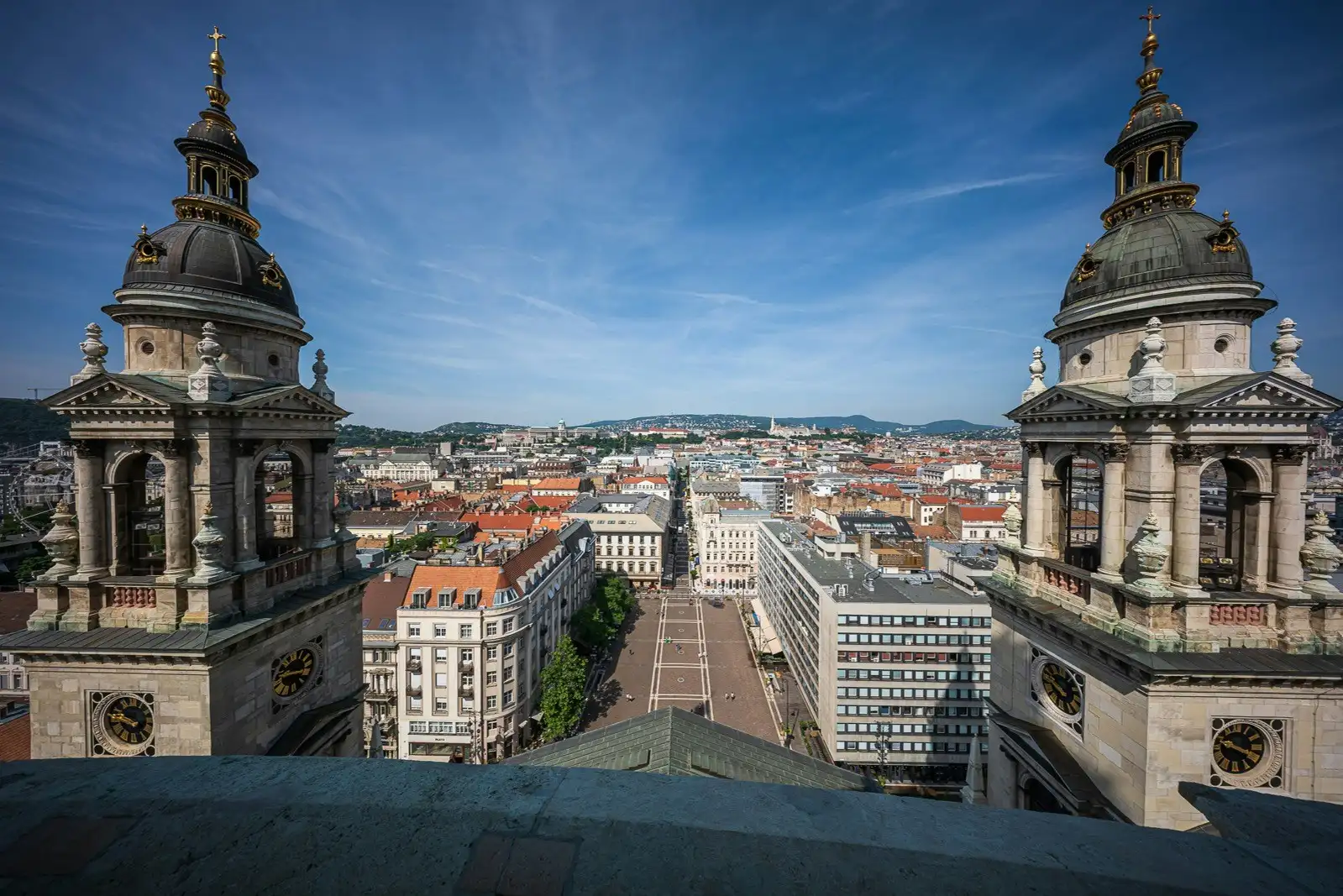
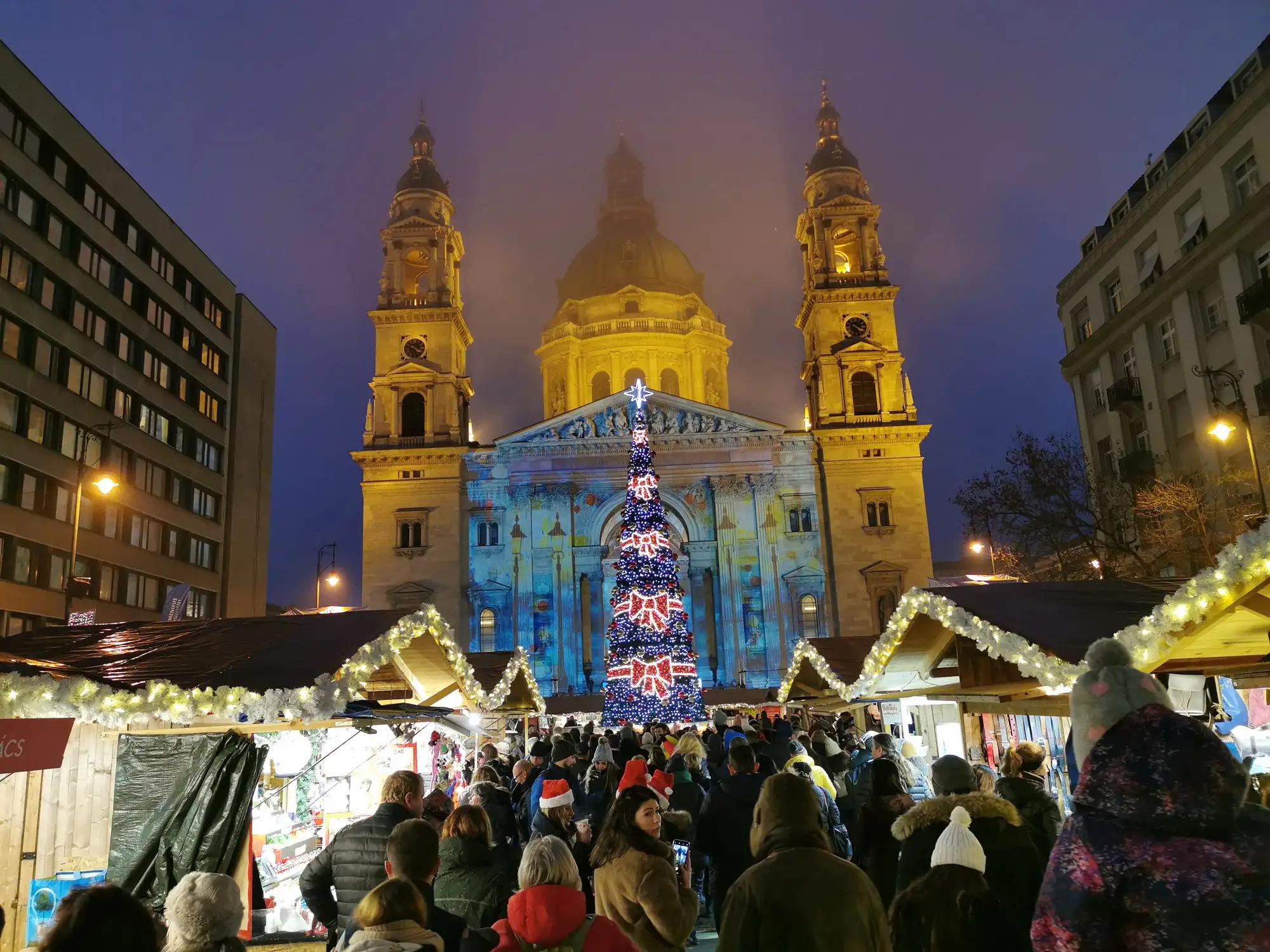
The highest viewing platform in Pest is on the roof of St Stephen’s Basilica, and you can take a lift up to it or climb the stairs. Either way you come out between the two bell towers, looking straight down Zrínyi utca towards the river with Castle Hill beyond it. On a clear afternoon it is the best orientation you can buy in Pest.
Inside, Károly Lotz’s gilded mosaics in the dome are the centrepiece, and the Holy Right, the mummified right hand of King Stephen I, is the relic people queue for. The church took 54 years to finish and was consecrated in 1905. Sightseeing needs a ticket, and an online booking has to be exchanged for a paper one before you get in, at the office on the square rather than at the church door, so head there first.
Mass is free and open to anyone who comes for the service. Times, and which ticket takes you up to the terrace and into the Treasury, are in our St Stephen’s Basilica guide.
10. See the Dohány Street Synagogue on any day but Saturday
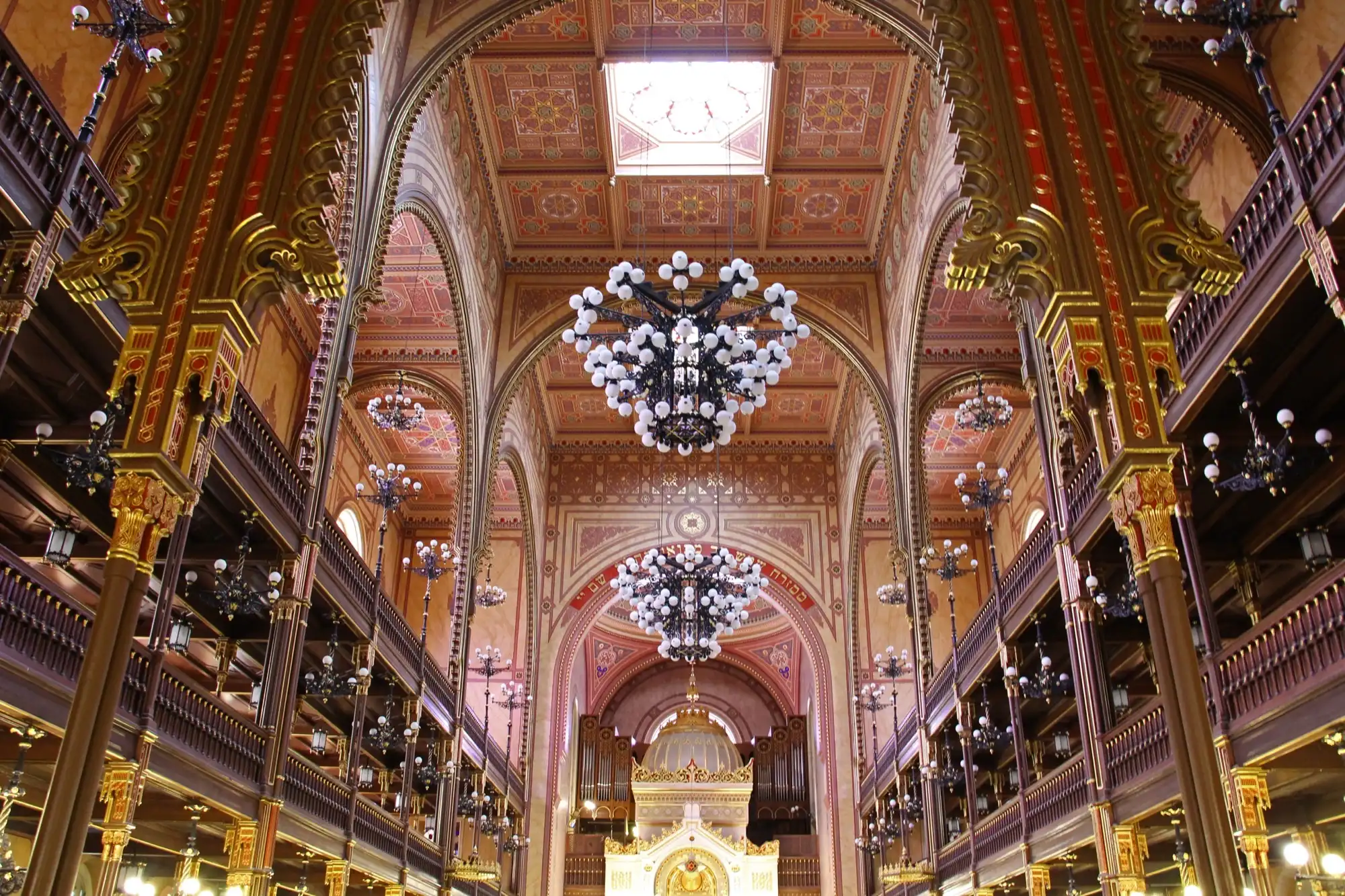
Get the day right and nothing else about this visit is difficult. The synagogue closes every Saturday for Shabbat, without exception, and on the major Jewish holidays, and it shuts early on Fridays. People turn up on a Saturday, find the doors shut and put it down to bad luck, twice in some cases.
It is the largest synagogue in Europe, built between 1854 and 1859 to Ludwig Förster’s Moorish Revival design, with twin onion domes, nearly three thousand seats and an organ Liszt himself once played. One ticket covers the whole compound, which is more than the prayer hall: the Hungarian Jewish Museum next door, the 1931 Heroes’ Temple, the memorial park behind, where Imre Varga’s silver Tree of Life stands, and the courtyard where more than 2,000 people who died in the Budapest ghetto are buried.
Walk out of the gate and you are in the old Jewish Quarter, which is also District VII and the city’s drinking district by night, so the ruin bars are a few streets away. The Orthodox synagogue on Kazinczy utca charges its own entry, a partner sells a ticket for it and the Budapest Card takes ten per cent off. The Dohány ticket bought online cannot be refunded or moved, so settle the date first. More in our Dohány Street Synagogue guide.
11. Walk over the Chain Bridge now the cars have gone
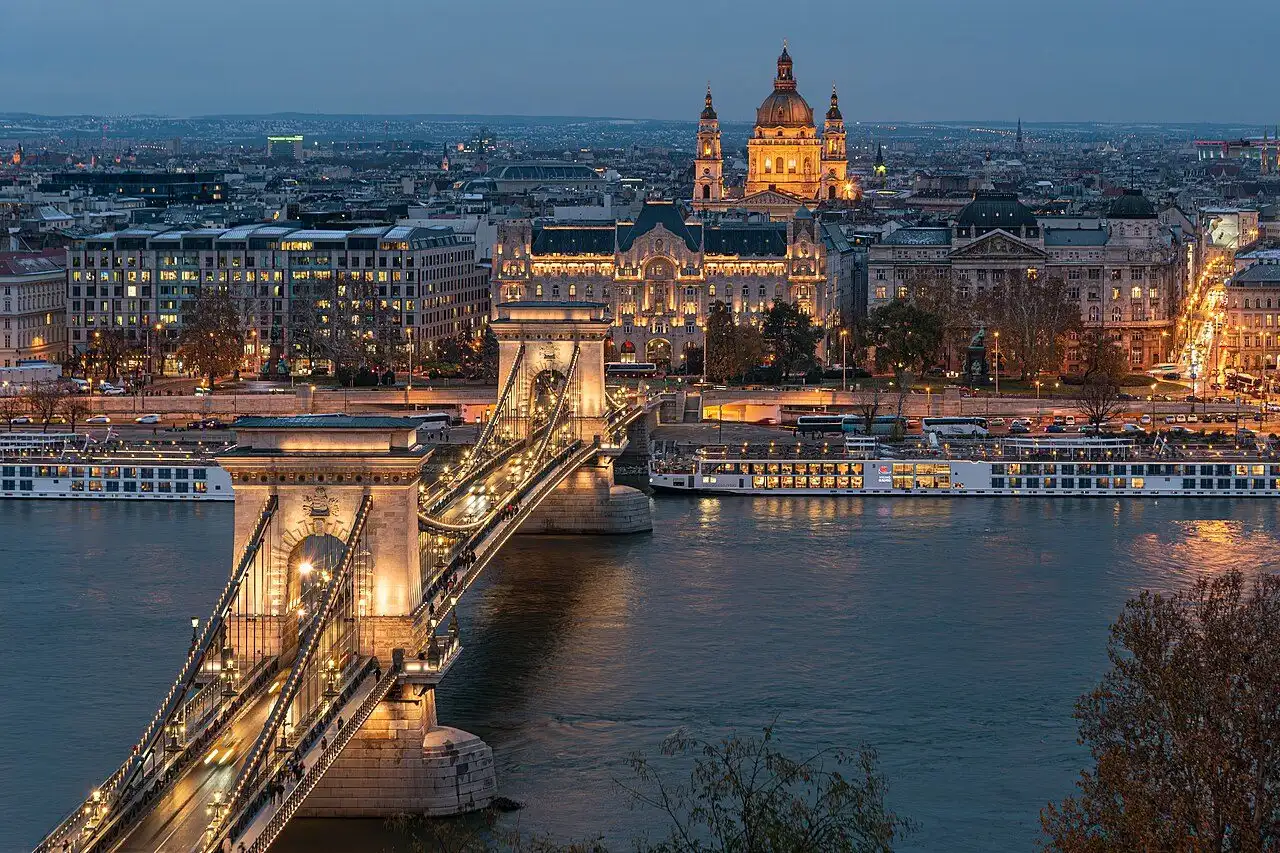
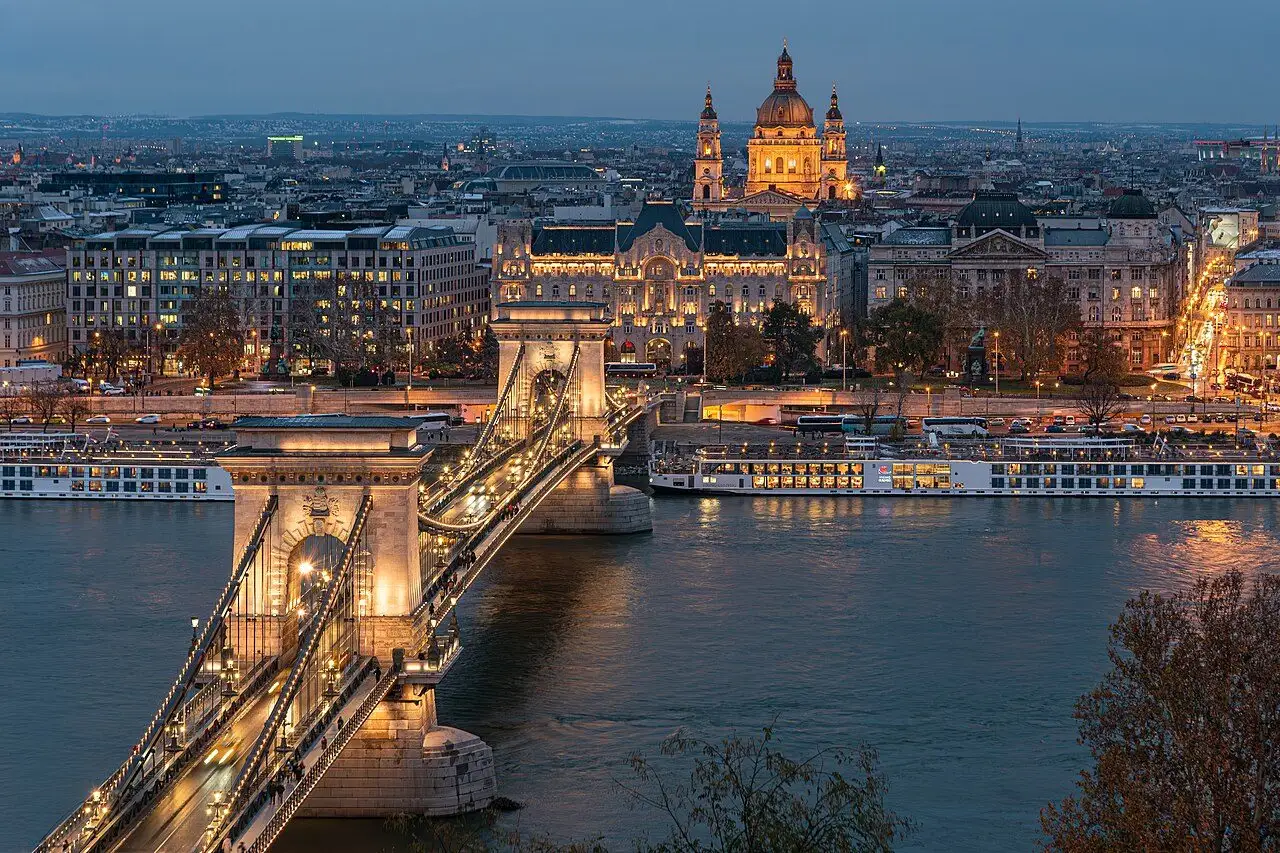
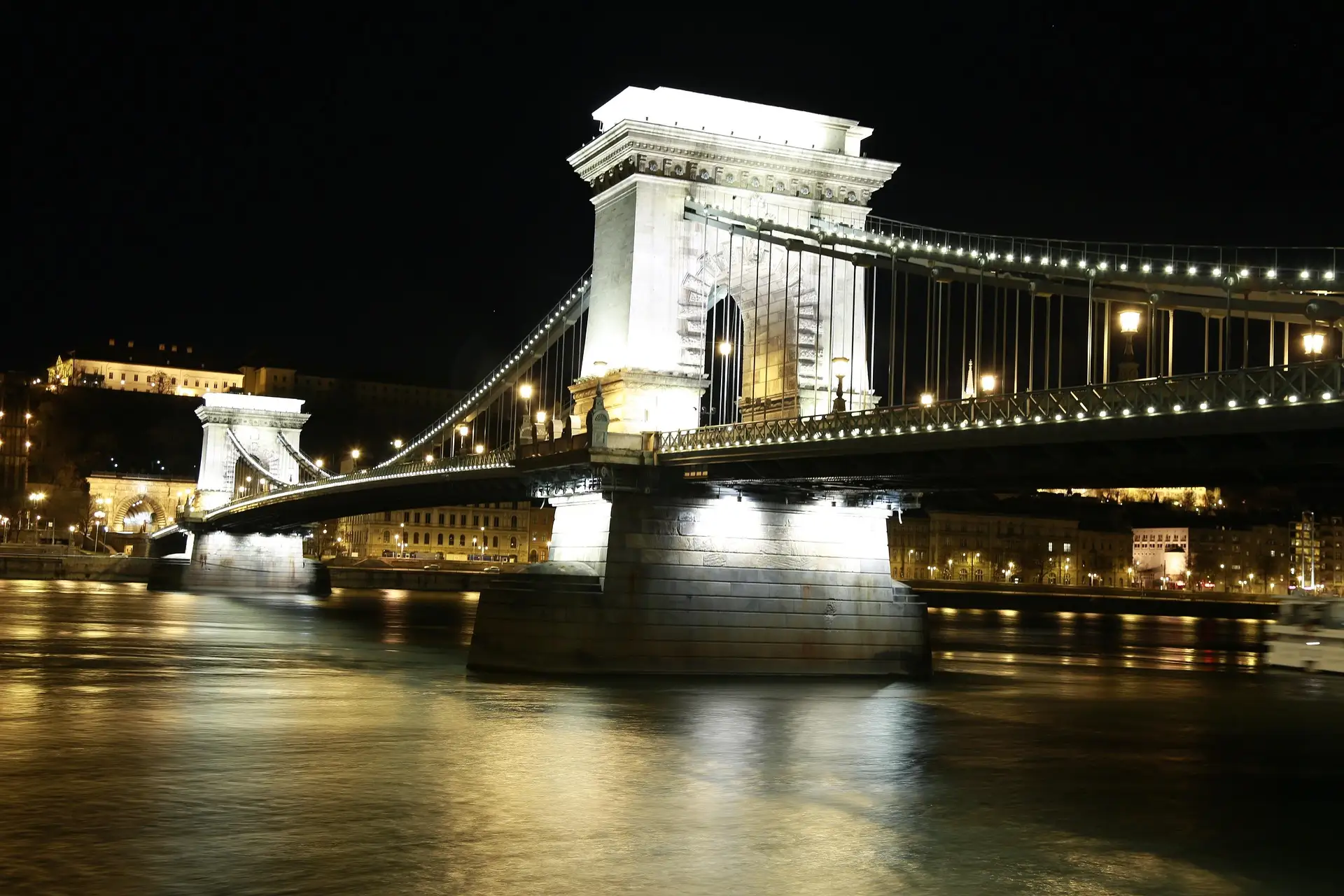
The walk is the attraction. Private cars have been off the Chain Bridge since December 2022 and the pavements reopened in August 2023, so the city’s first permanent river crossing is now mostly a promenade with buses on it. It is 376 metres and about seven minutes end to end, free at any hour.
Ten years in the building, it opened in 1849 to William Tierney Clark’s design and under Ádám Clark’s supervision, with four stone lions at the bridgeheads. The small thing worth noticing on foot is the pavement itself, which swings out around the stonework at each pier, so you get a pocket to stand in and look upstream at the Parliament without anyone walking into you.
Cross at dusk. The lights along the chains come on then, warm white most of the year and in the national colours on national holidays. The lions, the lift up to the castle and the Buda end are in our Chain Bridge guide.
12. Start at Heroes’ Square and walk into City Park
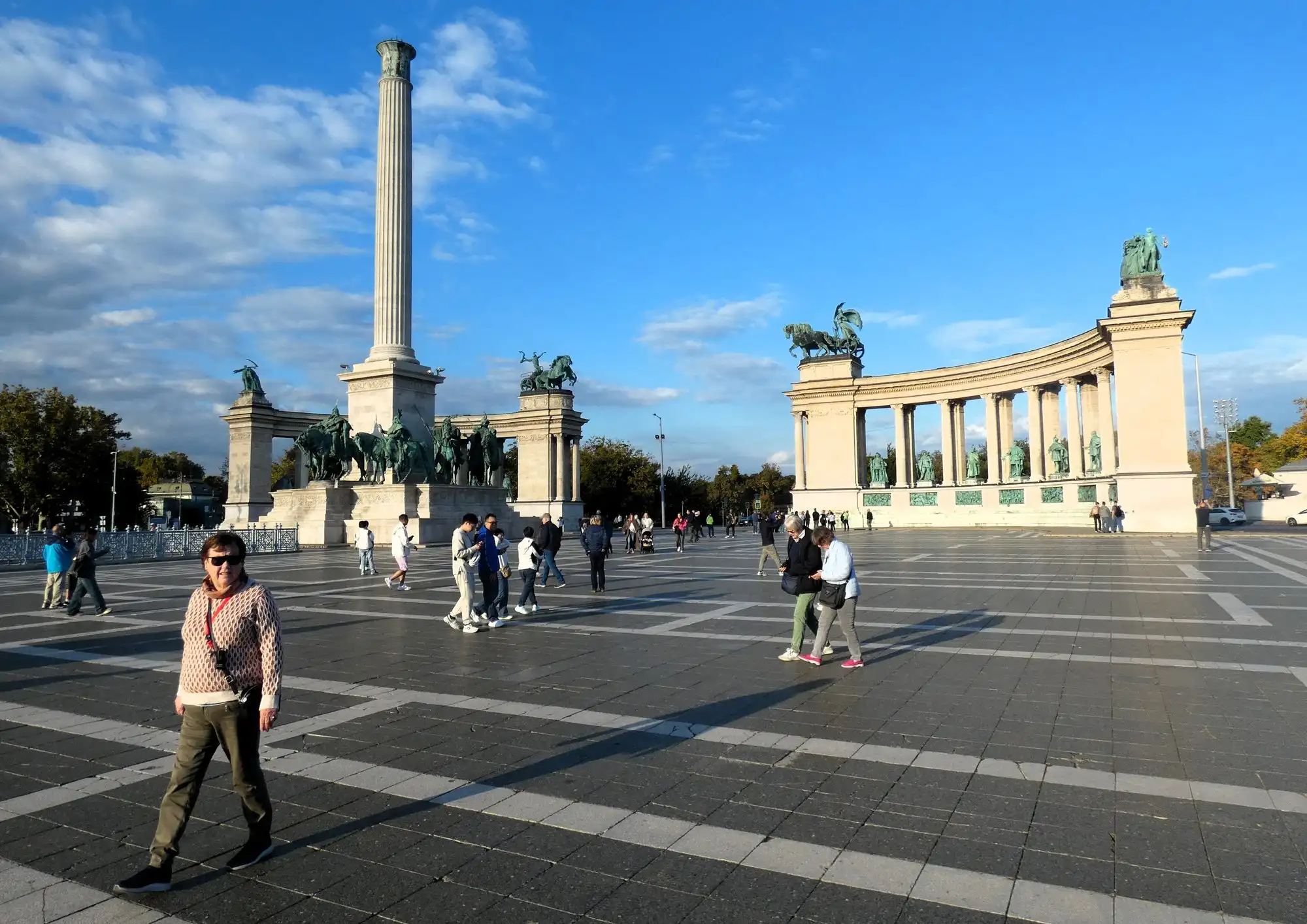
Ride the M1 to Hősök tere and you come up the steps into the middle of it. What you come up into is the Millennium Monument: a tall Corinthian column, seven Magyar chieftains in bronze around its base, and fourteen Hungarian rulers ranged along two curved colonnades behind them. No gate, no ticket, no closing time. The archangel Gabriel has been off the top of the column since the end of 2024, away being restored, and is due back up by the end of 2026. A full-size copy of him is on show indoors nearby, in the park’s visitor centre, for nothing.
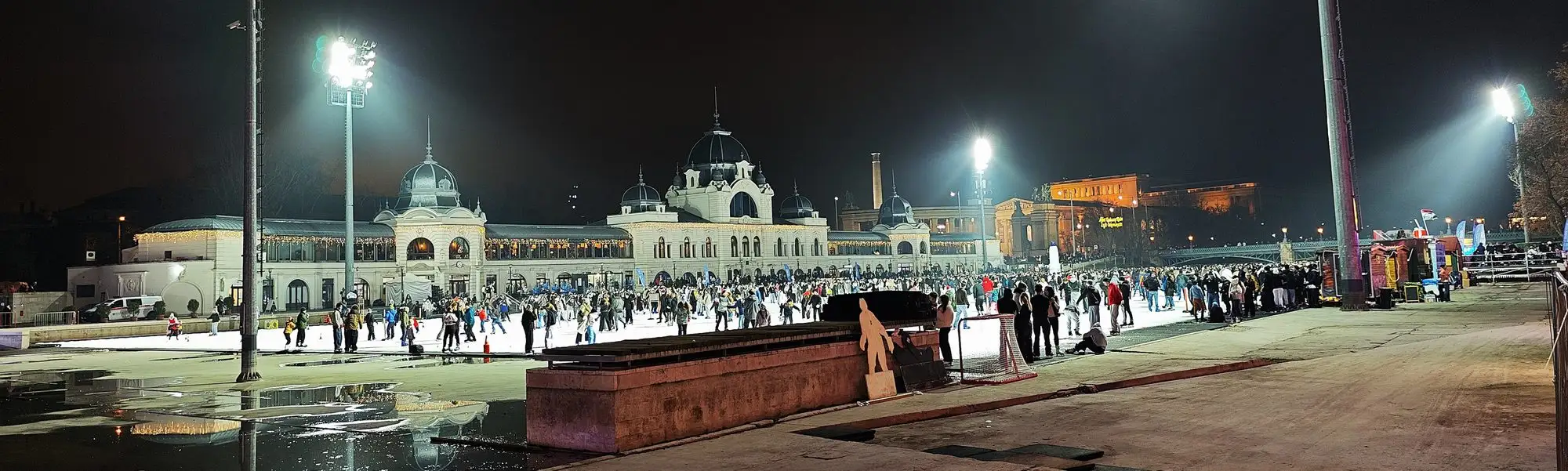
Behind the square, City Park has no gate and no published closing hour either, and the best of what stands in it has an entry of its own further down. The one to take on the way through is the green roof of the Museum of Ethnography, which you walk up like a hillside from outside the building, at any hour, for nothing. From November the water at the far end becomes the City Park ice rink, which our skating round-up covers.
Széchenyi Thermal Bath is at the top of this park, so the bath and the square are one outing rather than two. Our guides to Heroes’ Square and City Park have the rest.
13. Find the Anonymus statue in the courtyard of Vajdahunyad Castle
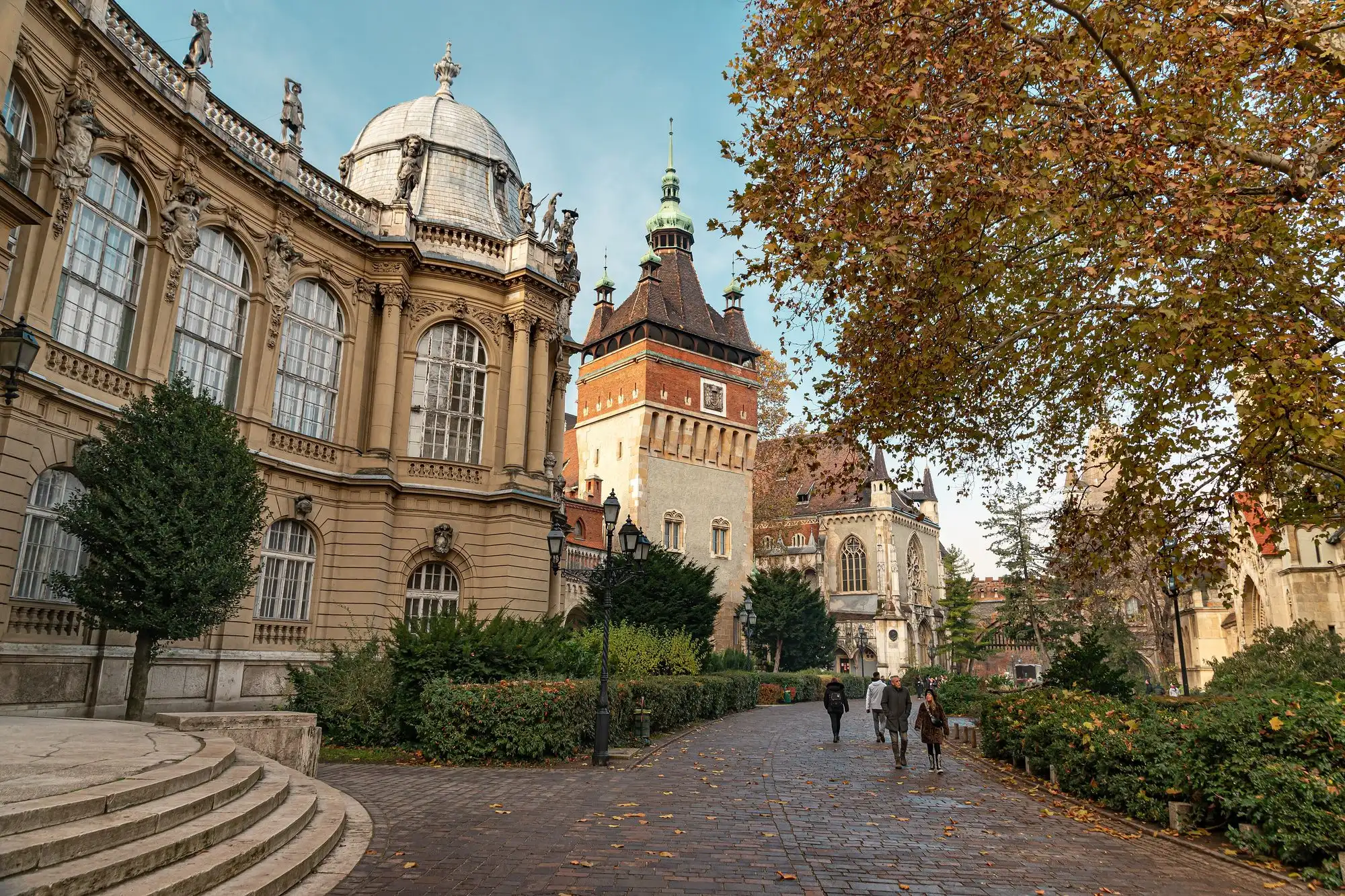
It is not a castle, and knowing that makes it better rather than worse. Ignác Alpár built Vajdahunyad as a walk-through anthology of Hungarian architecture, quoting real buildings from across the old kingdom, the Romanesque portal of the church at Ják among them. Romanesque, Gothic, Renaissance and Baroque all stand within a few steps of each other, so it photographs like four buildings at once.
Walking up to it and round the courtyard costs nothing. The thing to find in there is the Anonymus statue, a hooded medieval chronicler with his pen held out, polished bright where people have rubbed it for luck. The Agricultural Museum inside and the towers both charge, and neither is the reason to come.
The water in front of it is for boats in summer and becomes the City Park ice rink from November, so what you photograph depends on the month. Our City Park guide has the park around it and the ice rink page has the winter version.
14. Walk Andrássy Avenue one way and ride back
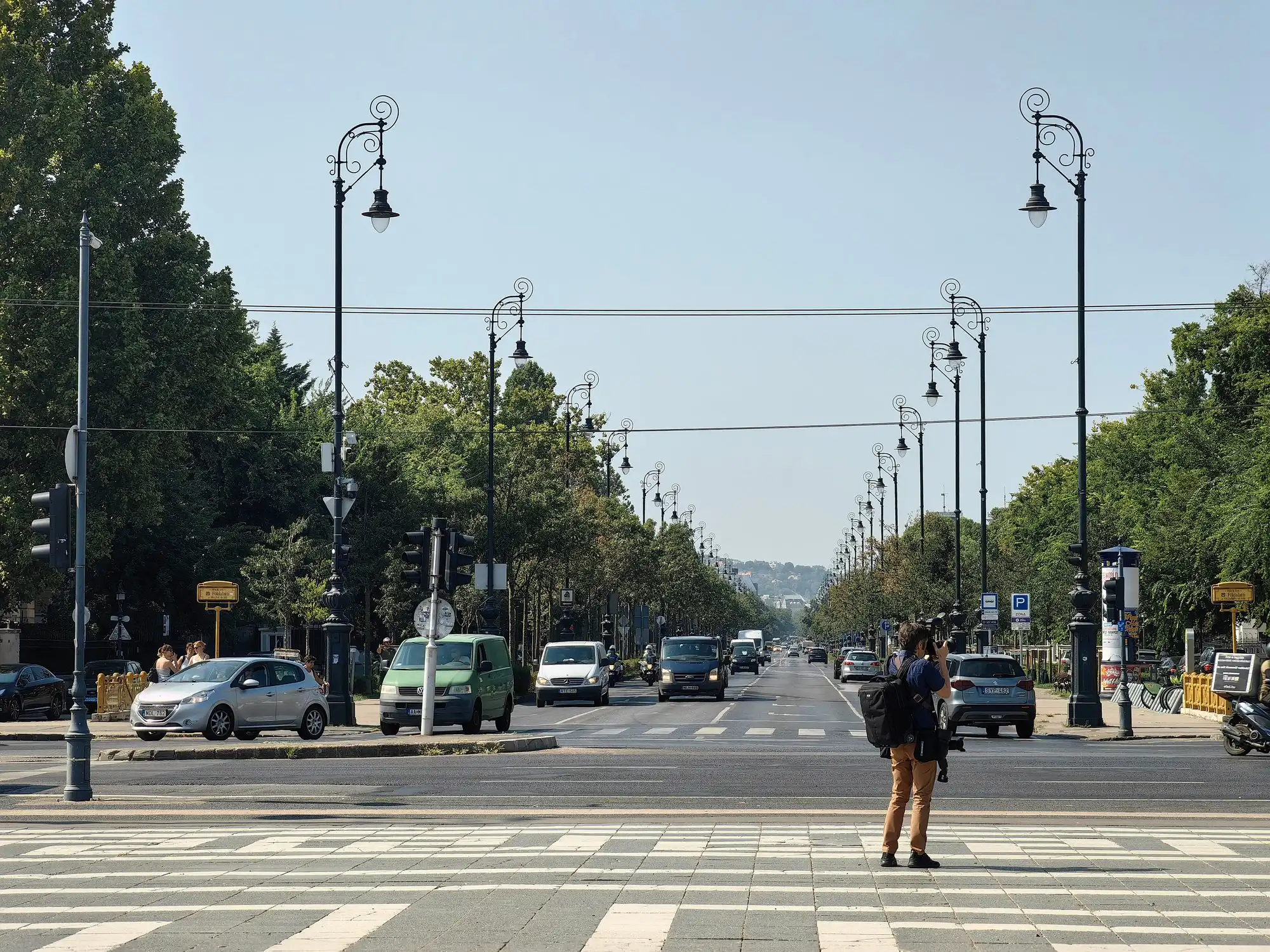
Budapest built this avenue to be looked at, and walking it is the best free hour in Pest. It runs about 2.3 kilometres without a bend, starting where the old city stops and finishing at Heroes’ Square, with Neo-Renaissance palaces along both pavements and trees planted two deep, and UNESCO has counted it inside Budapest’s World Heritage site since 2002. End to end without stopping takes about 35 minutes.
Do it one way and ride the other, because the M1 runs directly underneath with seven stations along the length of it. Walk out from the Opera House to Heroes’ Square, look round City Park, then take the train back. The avenue changes character as you go, from dense city blocks at the Deák tér end through the Oktogon crossing to set-back villas with front gardens near the square.
Number 60 is the House of Terror and number 22 is the Opera House, both further down this list, and the Liszt Academy is a minute off it. Facade by facade, with what is open and what is only to be looked at, is in our Andrássy Avenue guide.
15. Take two hours over Margaret Island
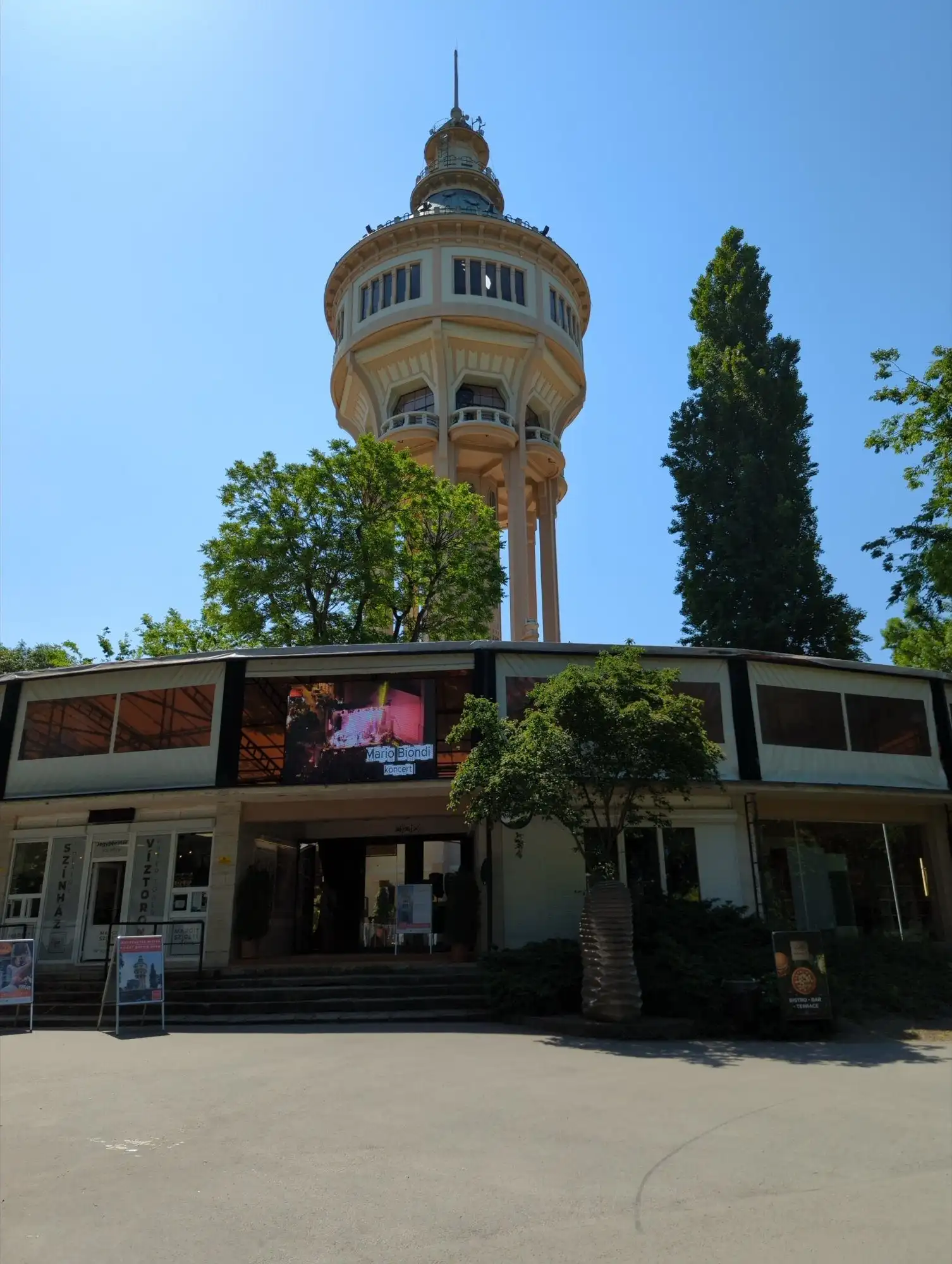
Two and a half kilometres of park lie in the river between Margaret Bridge and Árpád Bridge, and nothing charges to walk onto it. The island is flat, it never closes, and it is bigger and greener than almost anyone expects on their first look at a map. Two hours on foot is the right amount.
What to look for as you go north: the ruins of the Dominican convent where Béla IV’s daughter Margaret was sent in 1252, the Japanese Garden at the far end, and the water tower, which is free to climb on a Budapest Card. The running loop round the edge measures 5.3 kilometres, so expect company on it early in the morning. The musical fountain at the southern end is being rebuilt and is not playing, however many photographs of it you have seen.
The island also solves a problem the thermal baths create. Palatinus, its big open-air lido, admits children, which Széchenyi and Rudas do not, so a family that wants to swim comes here instead. Our Margaret Island guide has the walk and the buses, and the Palatinus page has the pools.
16. Get into the octagonal pool at Rudas, then go up to the roof
Check the day of the week before you set out, because Rudas is the one bath in Budapest that still runs single-sex days on its Turkish side. Women have it on Tuesday, men on Wednesday, and on Monday, Thursday and Friday it is men only until 10:45. Arrive on the wrong morning and the wellness pools are all you will get.
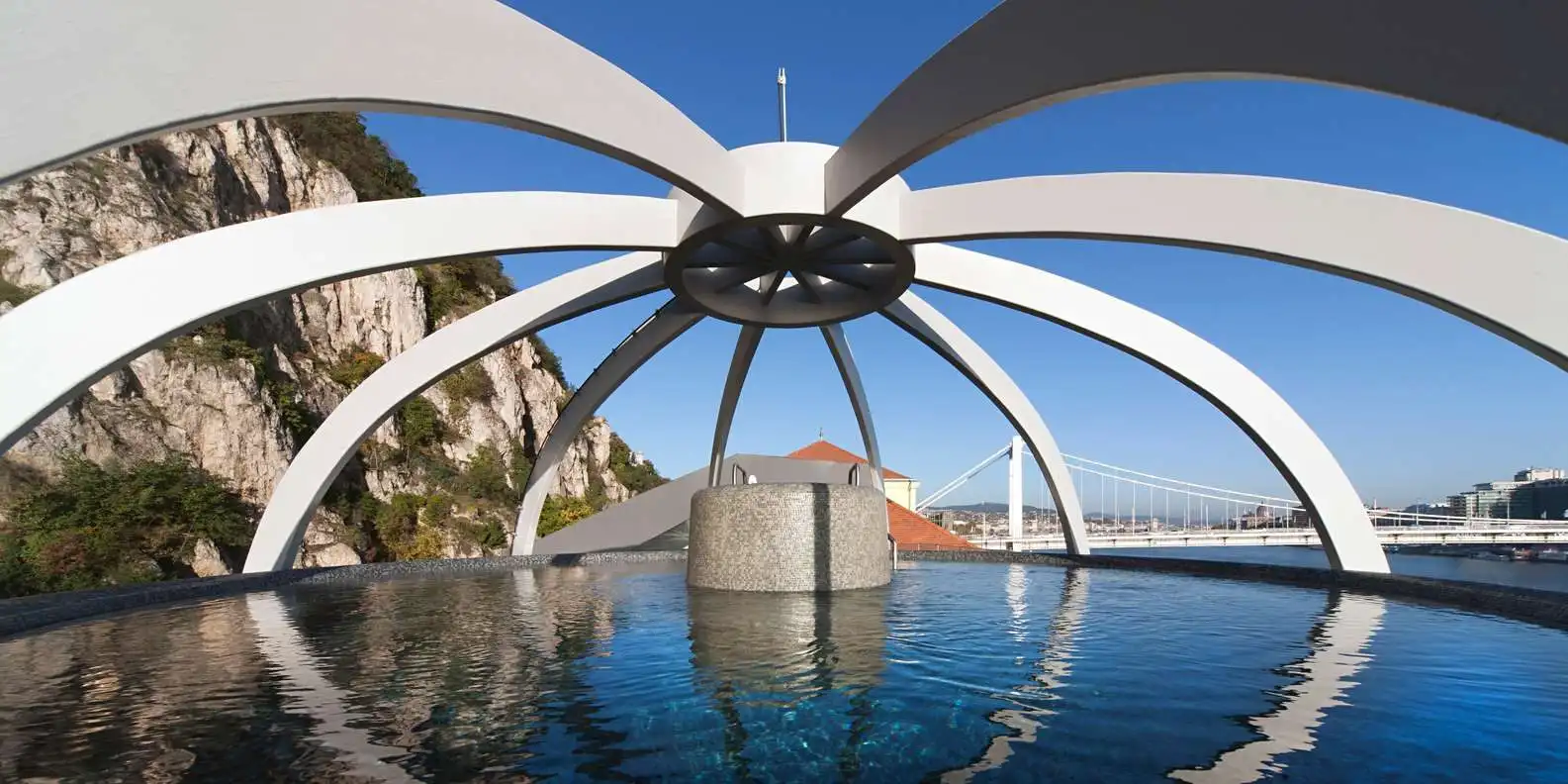
The Turkish bath is the reason to come. The octagonal pool sits under a sixteenth-century dome, with smaller corner pools around it at different temperatures, and there is nothing else like it still working in the city. Then there is the rooftop pool, a round tub on the roof looking up the Danube at Elisabeth Bridge and the cliffs of Gellért Hill, which is the photograph everyone has seen.
Nobody under 14 gets in. The cash desks shut an hour before the bath does and you are expected out of the water twenty minutes before closing, public holidays run on weekend hours, and the Friday and Saturday night sessions from 22:00 to 03:00 are a separate ticket. The Budapest Card takes twenty per cent off. Our Rudas guide has the layout, and the thermal baths round-up chooses between all seven.
Some of the best hours in Budapest are spent moving. Two of these six ride on an ordinary transport ticket, the other four charge their own fare, and one of them shows you the whole city at once.
17. Ride tram 2 along the Pest bank
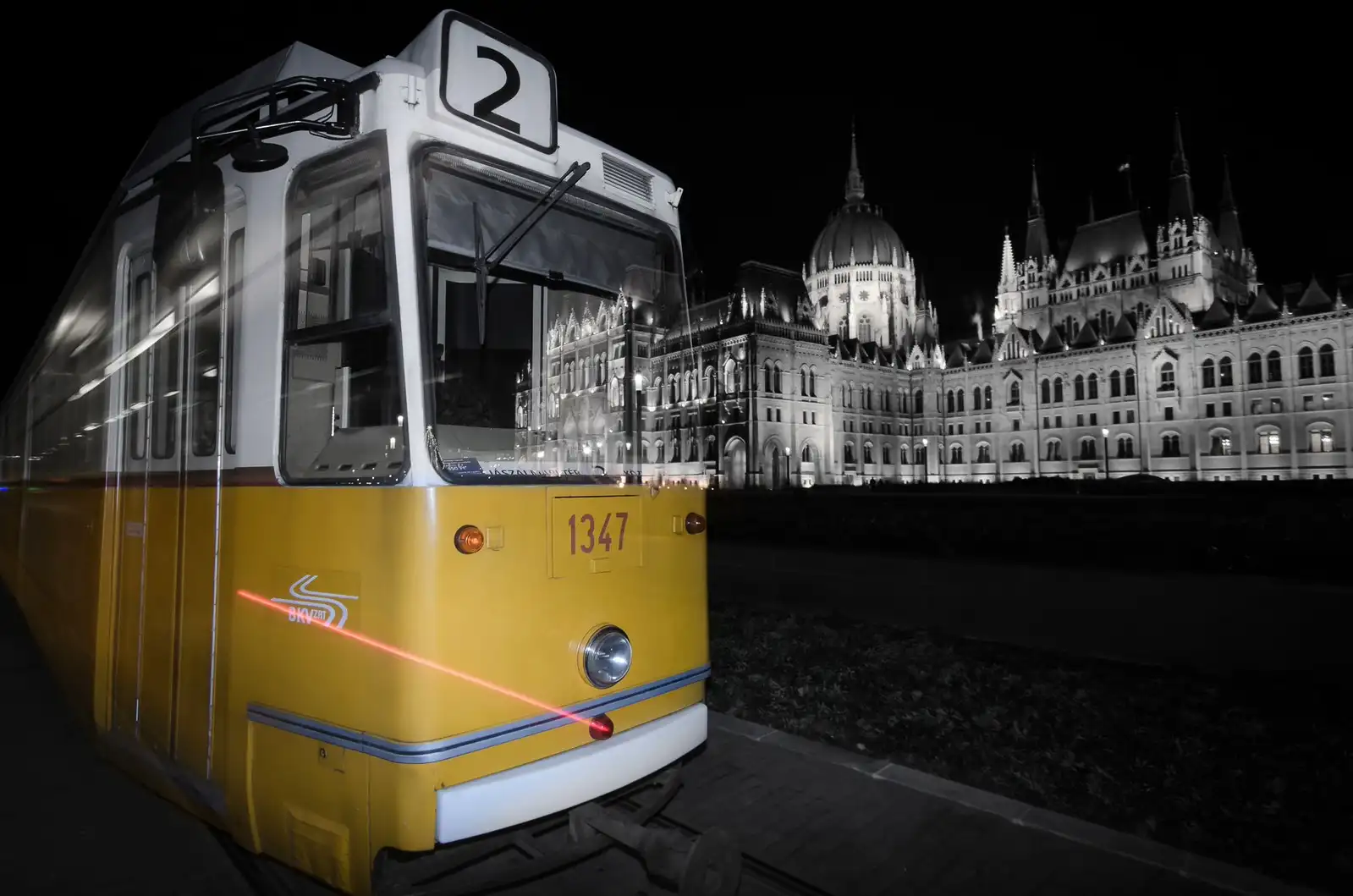
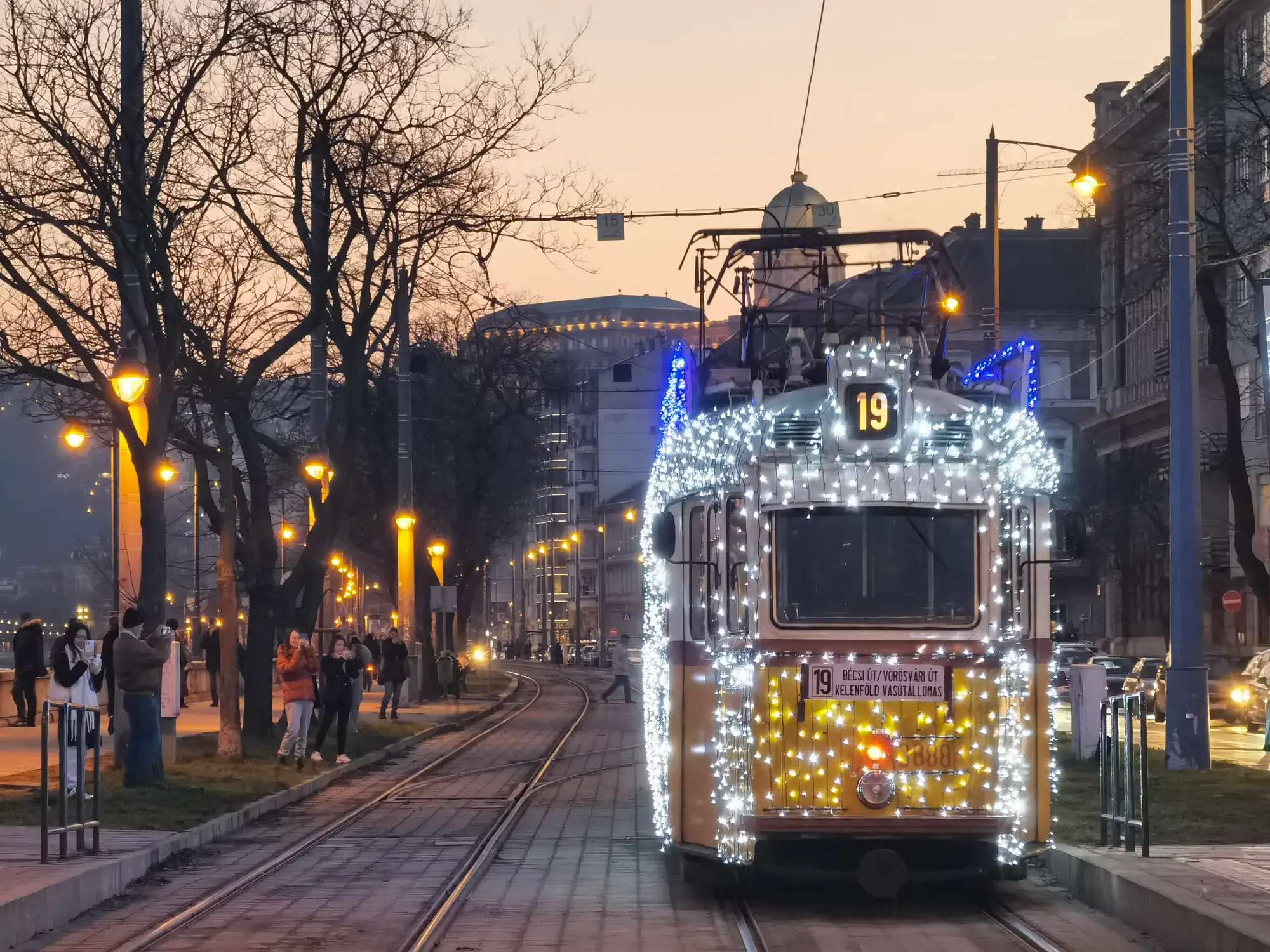
For a bus fare you get the Parliament, the quay, every bridge and the castle on its hill, all through a window. Tram 2 follows the Pest embankment from end to end, with the water on one side the whole way, which makes it the nearest thing the city has to a sightseeing tour you do not have to book. Sit on the river side and stay on past your stop.
A single ticket covers one uninterrupted journey, and on a tram it has to be validated the moment you board, before the tram moves off. Our transport guide has the ticket types and where to buy them.
18. Go down to the M1, the Millennium Underground
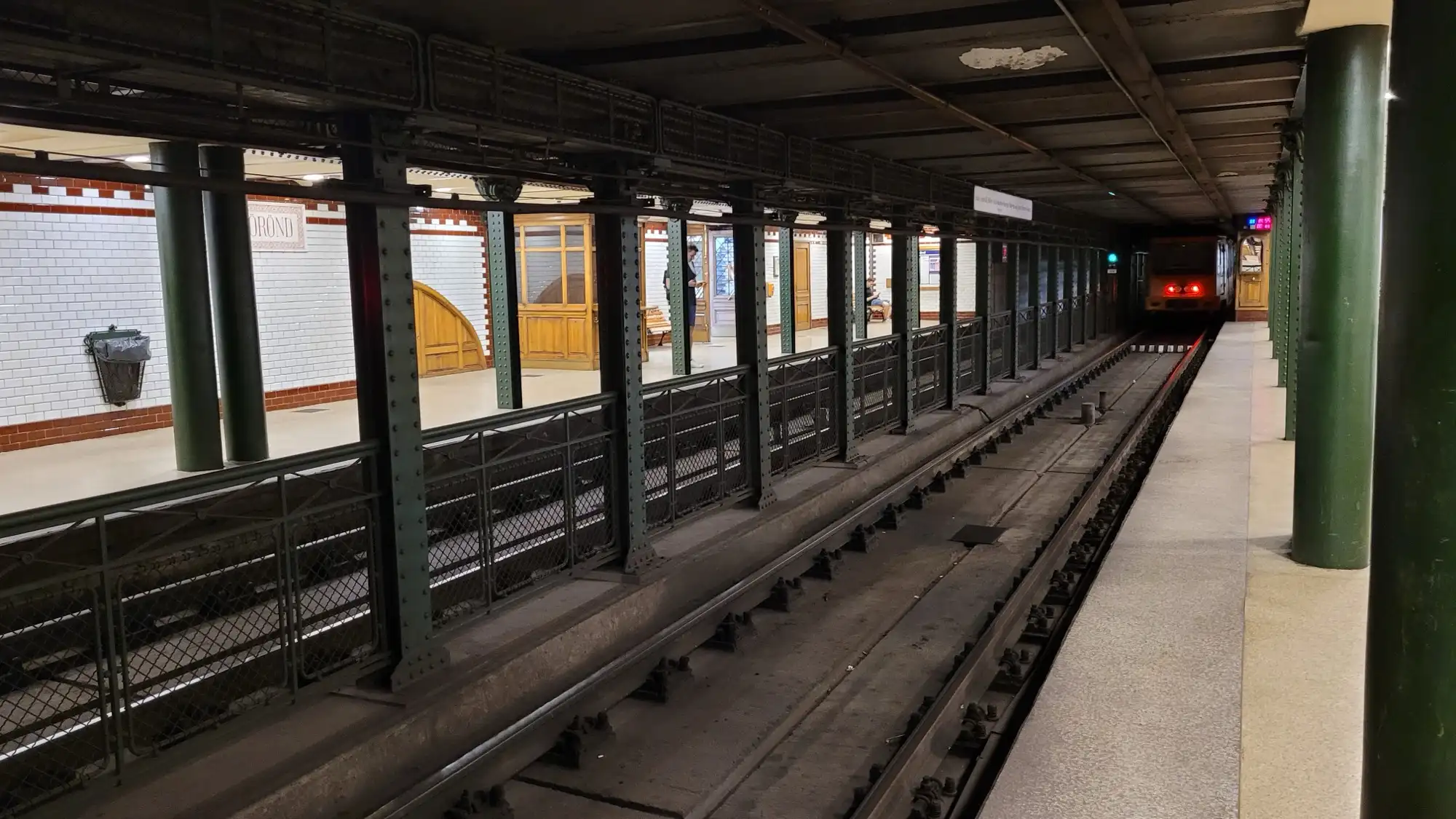
The M1 is the oldest underground railway on the European continent, and it has been left looking like it: tiled platforms just below the pavement, riveted columns along the track and wooden ticket booths in the entrance halls. It is the one line in Budapest that is worth riding for its own sake, which is lucky, because it is also the line that takes you to City Park.
A single ticket lets you change between the metro lines, but not step out of the paid area and come back. None of the M1 stations has a lift. Station by station is in our Millennium Underground guide.
19. Ride the funicular up to Buda Castle
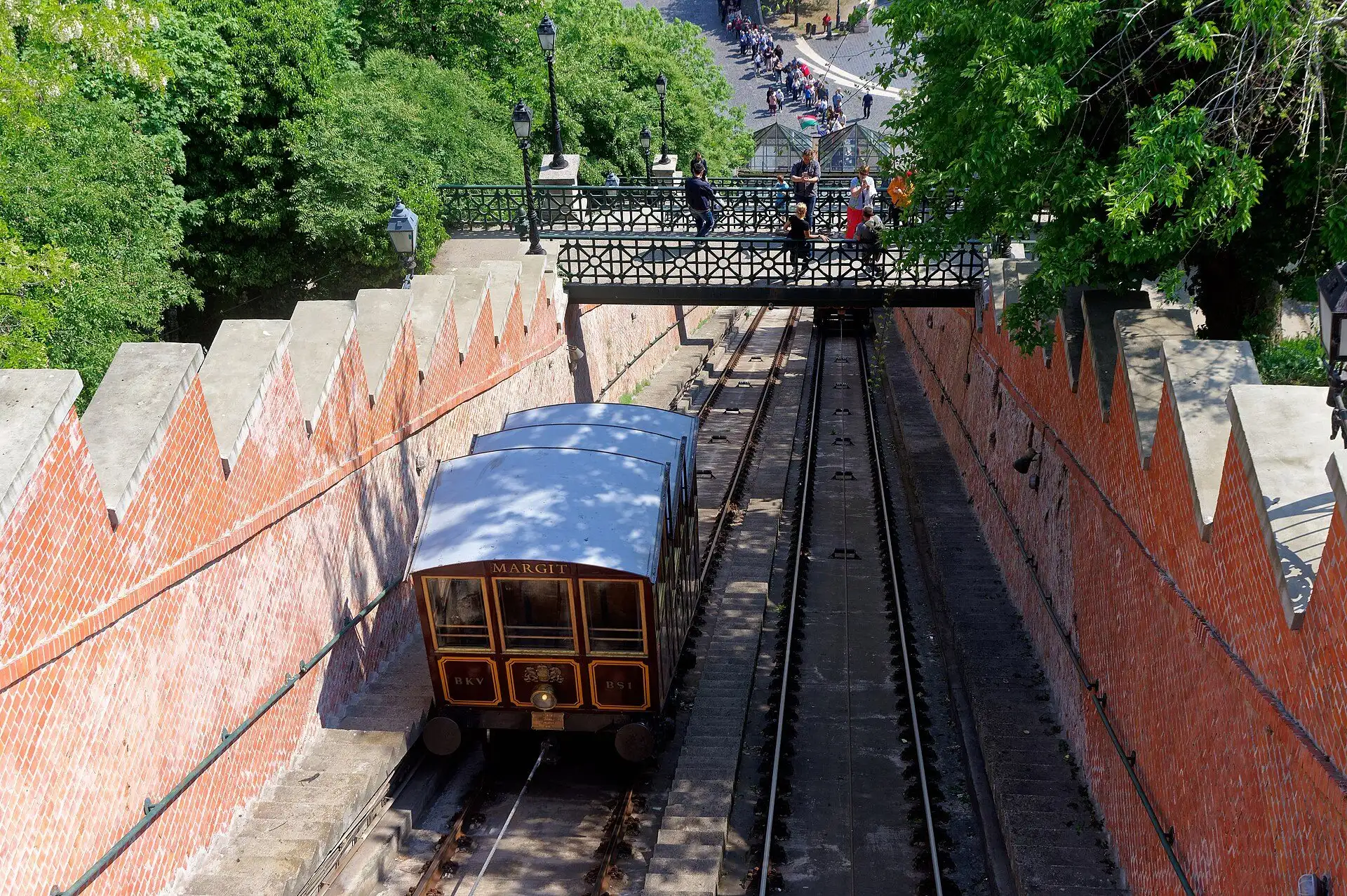
Running since 1870, the funicular hauls two three-tiered cabins up a 95-metre track over a 50-metre gradient, from Clark Ádám tér at the Buda end of the Chain Bridge to Szent György tér by the palace. It was listed as a UNESCO World Heritage Site in 1987, it leaves every five to ten minutes as passengers turn up, and it runs every day from 08:00 to 22:00, with the ticket office closing ten minutes before the last car.
BKK tickets and passes are not valid on it, and that catches people out at the barrier. No travelcard, no free-travel entitlement and no pensioner discount applies, so you buy a funicular ticket at the station or online. The one pass that does get you on free, both ways, is the Budapest Card Plus rather than the plain card, and you collect that ticket at the station.
The ride takes 95 seconds. So our honest advice is to take it up for the novelty and walk down through the Castle Garden Bazaar instead of paying twice. It stops for maintenance on Mondays in odd weeks, and the how to get there page in our Buda Castle guide has every other way up the hill.
20. Go up to the Buda Hills by cog railway and come down by chairlift
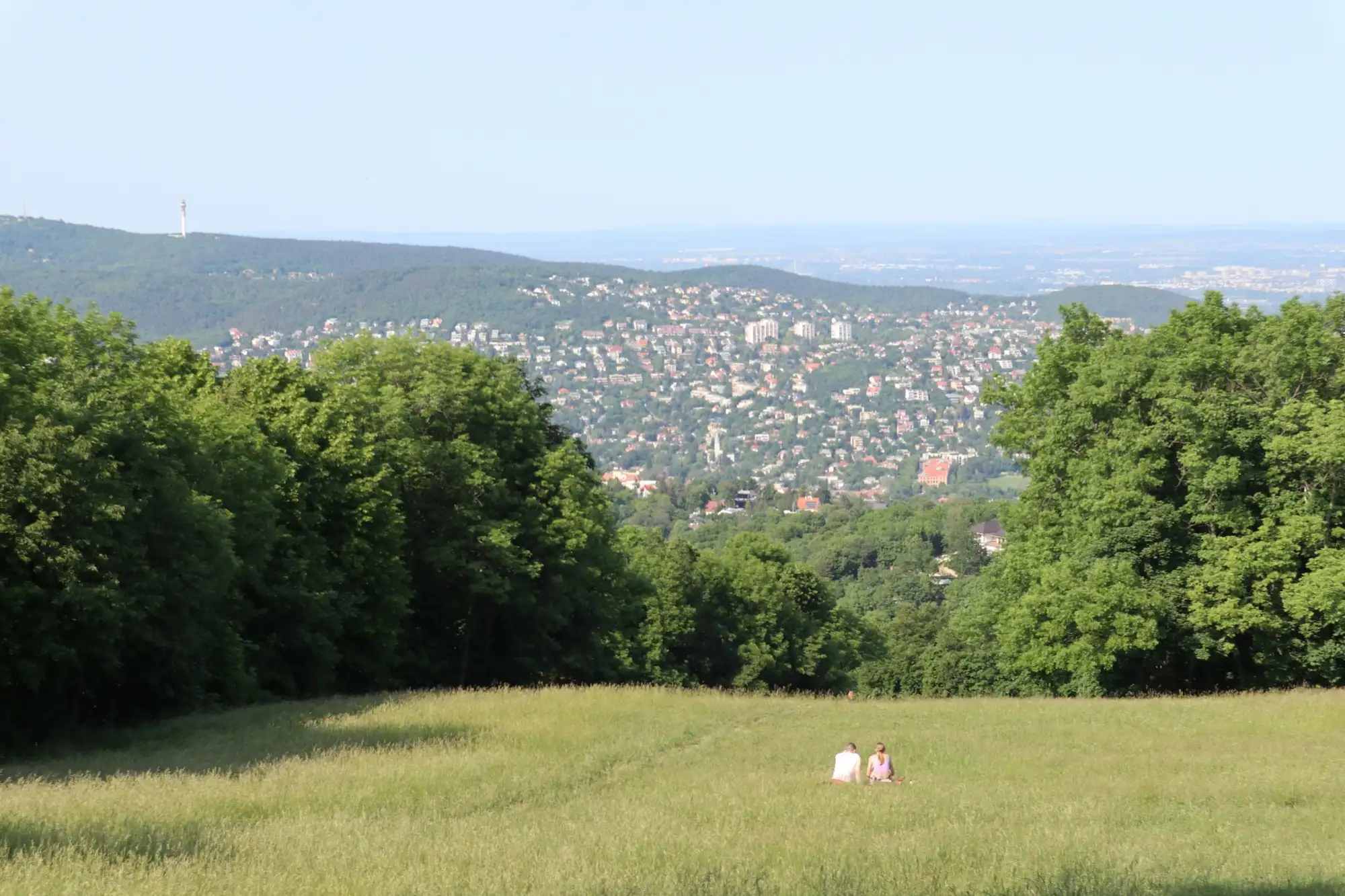
My best half day in Budapest was in December, up in the hills, where there were views over the whole city and nobody else much about. There is no ticket barrier on a hillside, which is why it stays quiet while Castle Hill fills up.
The route is the thing. BKK line 60, the cog railway, climbs from Városmajor up to Széchenyi-hegy as part of the city network. From there the Children’s Railway, staffed by children and run by the railway company, runs along the ridge. Then the Zugliget Chairlift carries you down from János-hegy, the highest point in the city, 1,040 metres of track and 262 metres of descent in about 12 minutes, landing at the terminus of bus 291. Bus 21 from Széll Kálmán tér is the simpler alternative up.
Two warnings. The Children’s Railway and the chairlift each sell their own tickets and the railway’s cannot be bought in advance, with cards taken at only three of its stations. The chairlift is free both ways on a Budapest Card or Card Plus, free for under-3s on a lap, and under-10s must have an adult with them; it stops for maintenance on Mondays in even weeks and can be shut for the day in a lasting storm. The Erzsébet Lookout on the summit shut in February 2026 for rebuilding, so leave it out of the plan. Normafa, the meadow in the photograph, is on our list of free things to do.
21. Ride the lift to the top of the MOL Campus SkyDeck
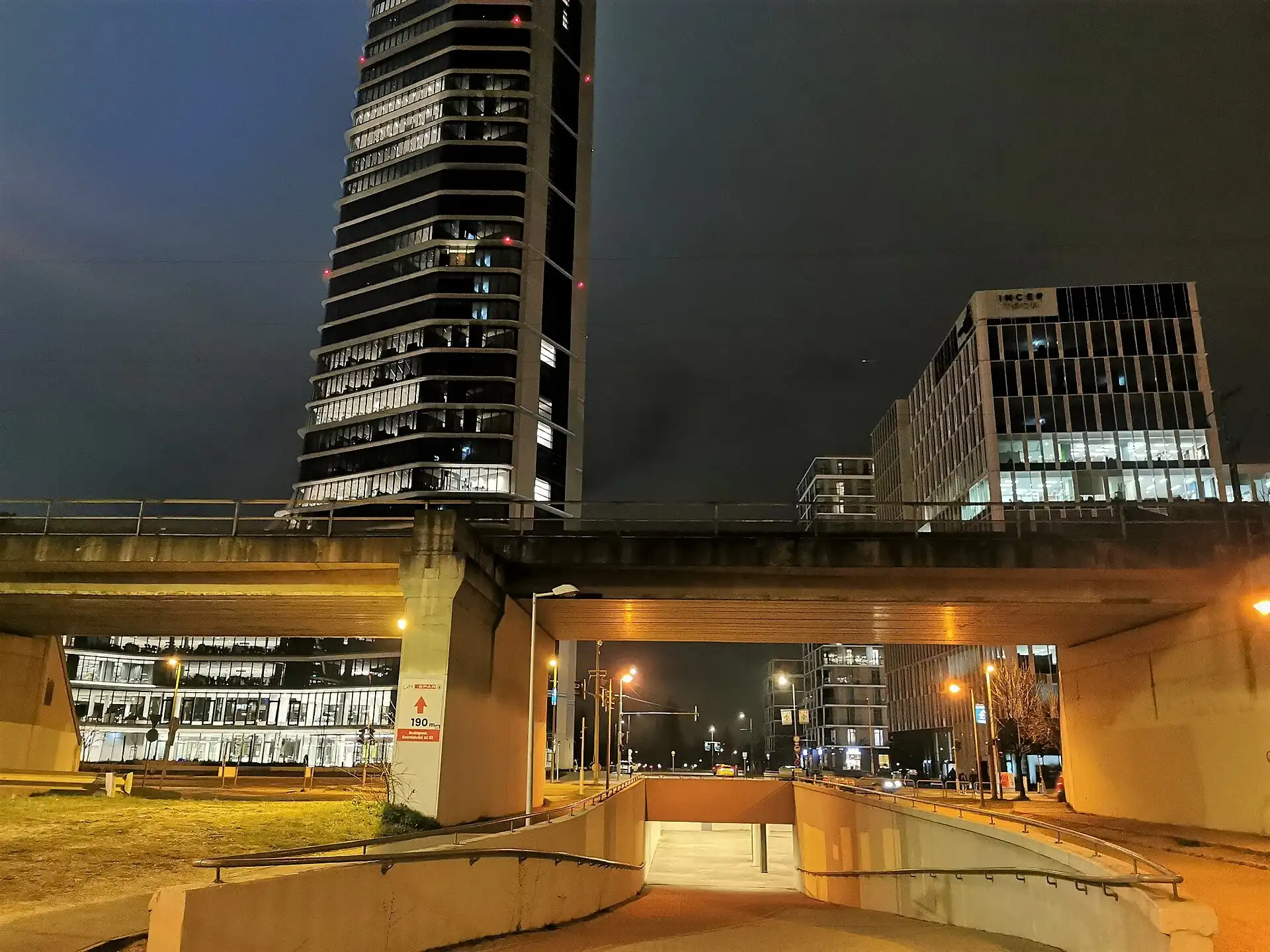
Every other viewpoint on this list shows you the river. The SkyDeck shows you the city, all of it, from a platform 120 metres up on the southern edge of town that you reach by a panoramic lift from the ground floor.
The rules around it are unusually strict, so take them in before you go. Tickets are sold online only, in timed slots, with no cash at the door, although you can buy one up to three minutes before entry if the slot still has room. It opens every day from 10:00 to 19:00 with the last admission at 18:00, public holidays included, and it closes on the third Monday of every month. Thirty to sixty minutes covers the deck and the ground-floor Visitor Center, which anyone can walk into free. Under-14s need an adult with them, under-6s go free, and both the deck and the Visitor Center are wheelchair accessible.
A booking can be moved or cancelled up to 24 hours ahead, and they can cancel it themselves in a thunderstorm or high wind, which is worth knowing before you build an evening round it. Nobody sells a SkyDeck ticket but the building, so that is where to buy one, unless you have a Budapest Card, which gets you up free. Get there on bus 107, 154, 33 or 133E, or tram 1, to InfoPark. If what you actually want is a drink with a view rather than a viewing platform, a Pest rooftop bar will do that better and will not ask you to book a slot.
22. Use a hop-on hop-off bus if your legs have had enough
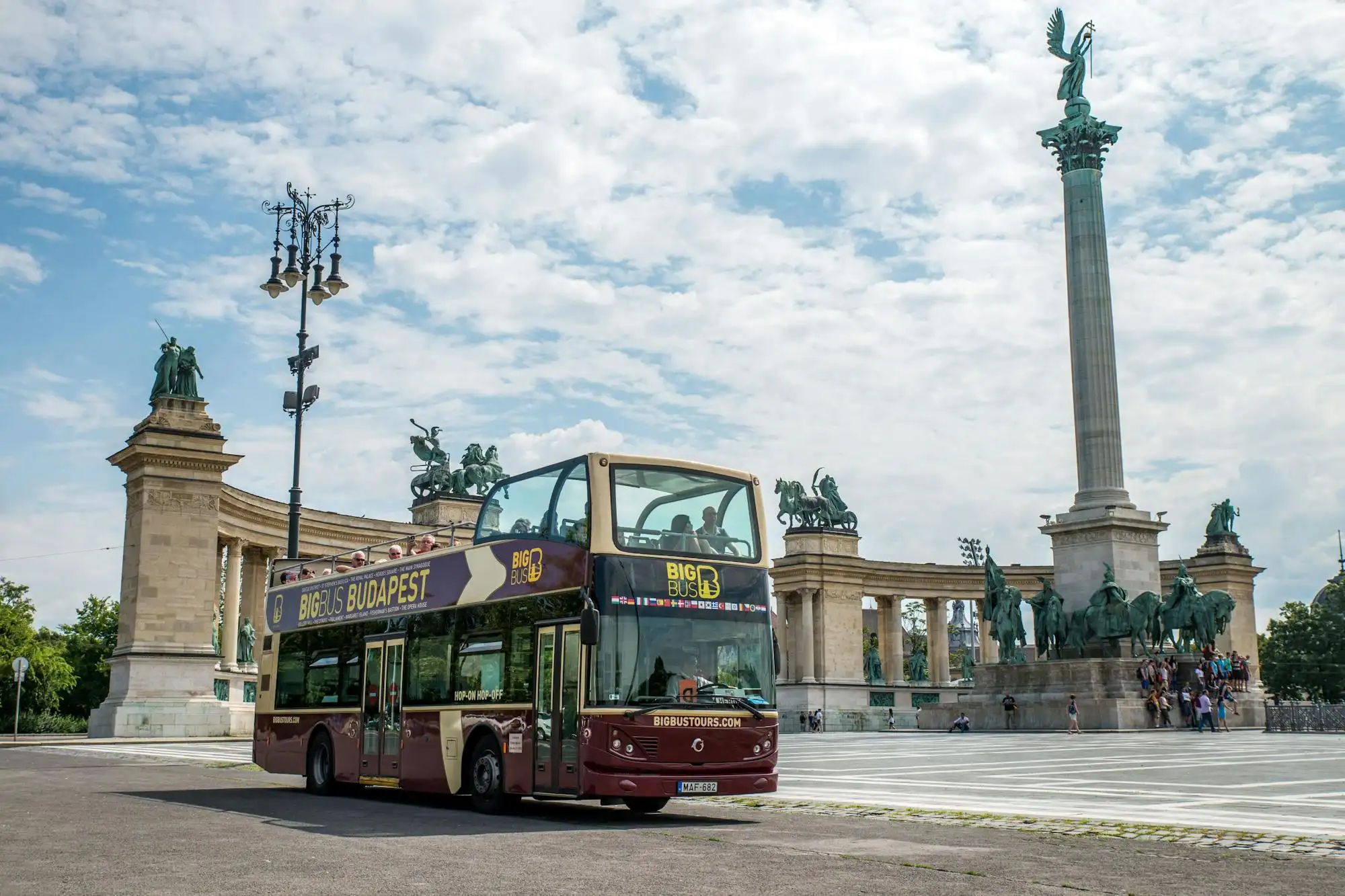
Honestly, most people will not need one. The centre is walkable, the M1 and tram 2 cover the two routes you most want, and a bus ticket for a day or more only pays off if you use it hard. Where it earns its place is a short stay with a lot to fit in, a hot afternoon, or travelling with someone who cannot walk Castle Hill.
On the ticket below the loop takes 90 minutes, the first buses go from 09:00 and they come every ten to twenty minutes. Which company runs which route, how the stops are marked on the street and whether the Castle Bus is worth adding are all on our hop-on hop-off guide, with the full list on the route and stops page.
Three separate places take you underground in Budapest, and they are not interchangeable. Doing one is plenty; doing all three is a theme.
23. Take the guided tour through the Hospital in the Rock
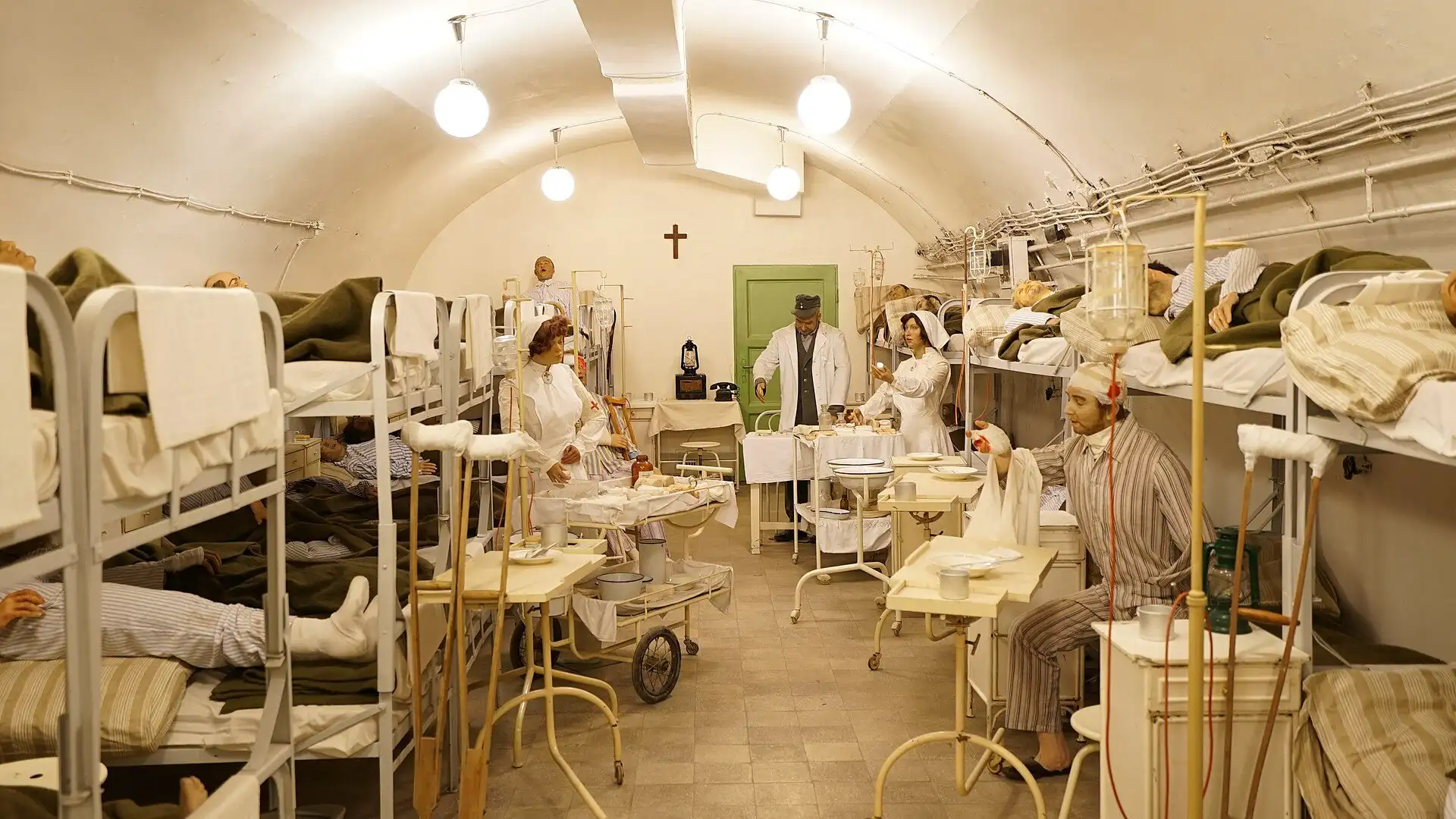
Under Castle Hill, in the caves at Lovas út 4/c, is the emergency hospital that worked through the siege of Budapest and was later fitted out as a nuclear bunker. Wards, an operating theatre and the bunker machinery are laid out as they were, with wax figures in the beds.
There is one way to see it and no exception to it. The museum is open only on a guided tour. The normal tour runs 60 minutes, the English departures come with audio-guide handsets in nine languages, and groups are capped at 25, so buy online in advance rather than at the door, because the tours fill. It opens every day from 10:00 to 19:00, the ticket office shuts an hour before that and the last tour leaves at 18:00. It is closed on 1 January, 1 November, 24, 25 and 31 December.
No photography anywhere inside, no children under 6 at all, and the museum does not recommend it under 12. It is a few minutes on foot from Matthias Church, which puts it in the same morning as Fisherman’s Bastion and Buda Castle. Tickets are sold on the museum’s own website. The caves below the same hill are a different place underground, and our Buda Castle Caves guide keeps the three attractions down there apart.
24. Go under Castle Hill into the Buda Castle Caves
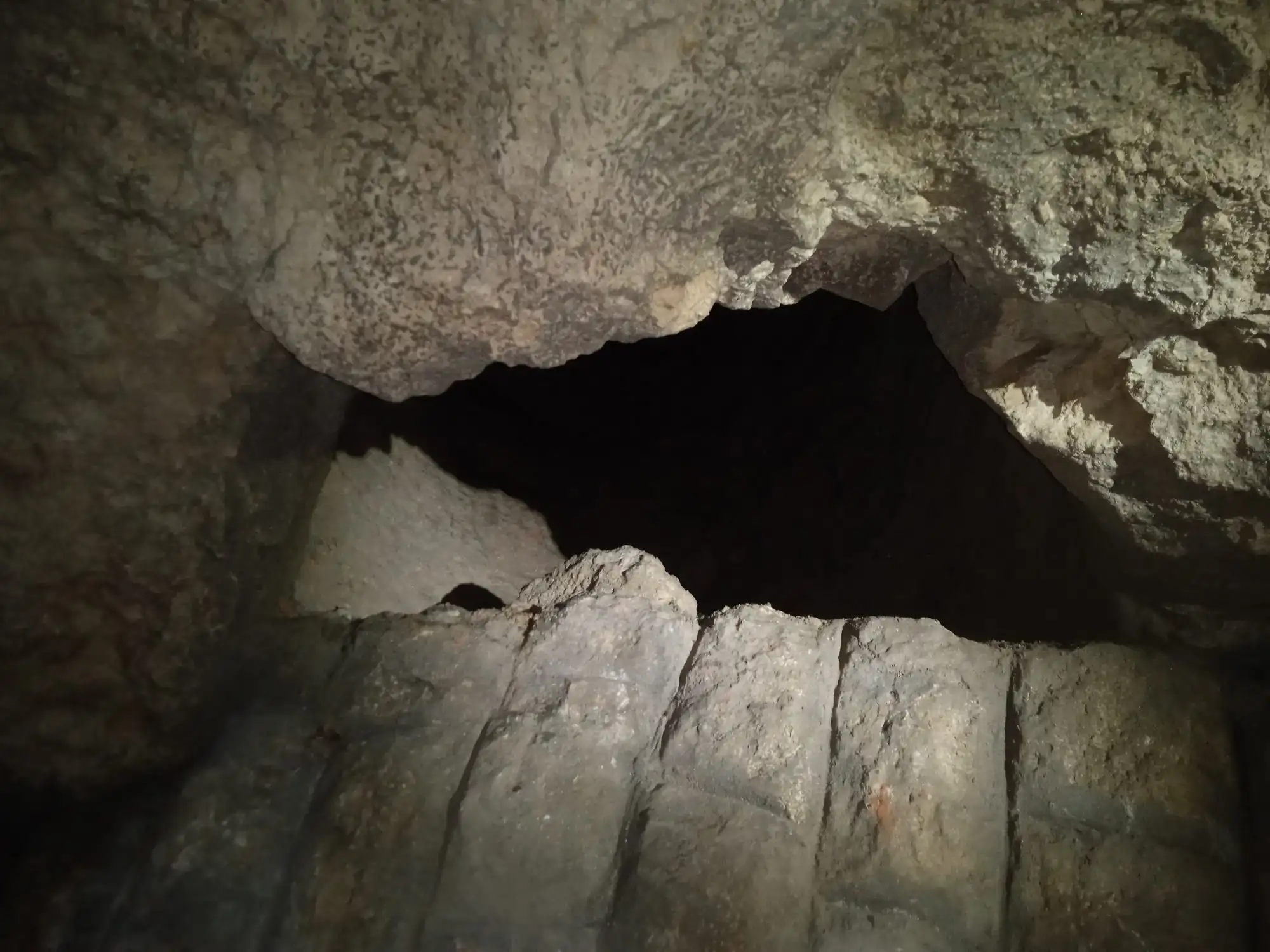
A few metres below the cobbles of the Castle District run 3.3 kilometres of caves and hand-cut wine cellars, and the national park in charge of them takes small groups into the middle of the system. One route links old cellars, a medieval prison and a shelter used in the war, with raw limestone passages in between.
Three separate attractions sell tickets under this one hill, and mixing them up is easy. This is the national park’s section, entered by a plain wooden door at Dárda utca 2, guided groups only and booked ahead. The Labyrinth on Úri utca is the one with wax figures that you walk alone. The Hospital in the Rock, just above on this list, is the wartime hospital on Lovas út. Come here if you want the real cellars and the geology.
The temperature holds at 12°C all year round, so take a layer down whatever it is like upstairs, and shoes you do not mind scuffing. The group is capped at 25, the tour runs 40 minutes or an hour and a half depending on the option, and it is not suitable for wheelchair users or anyone with claustrophobia. Which tour to pick is in our Buda Castle Caves guide.
25. Take the hourly tour into the Pál-völgyi Cave
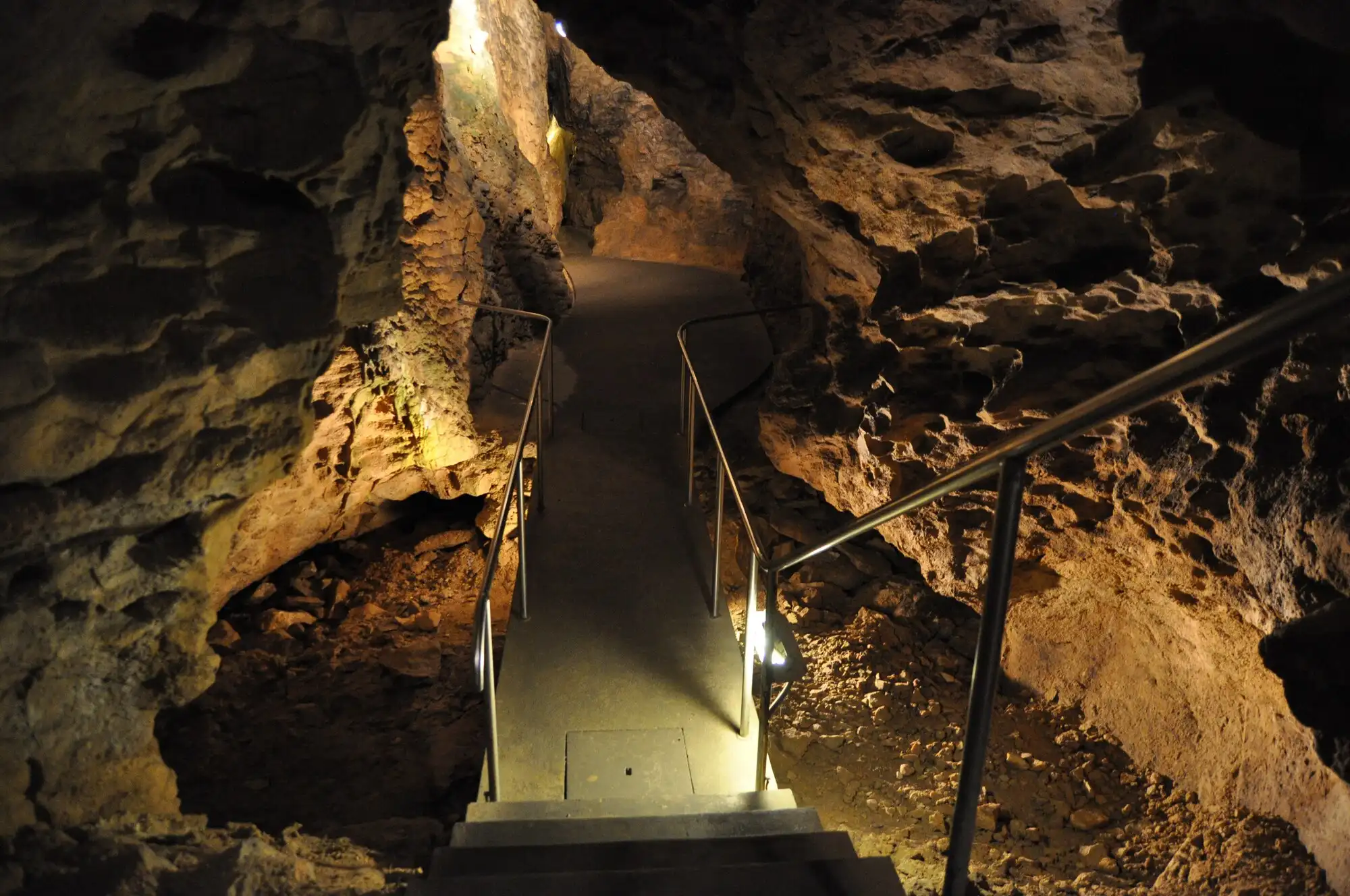
Hungary’s longest cave system runs under a Buda suburb, about 32 kilometres of it known, of which 500 metres is built out with steps and handrails for visitors. The guided tour of that stretch takes about an hour. Tours leave at a quarter past every hour from the Visitor Centre, the first at 10:15 and the last at 16:15, and tickets are bought there at least ten minutes before.
Be honest with yourself about the stairs. There are over 400 of them and a seven-metre safety ladder, and the operator does not admit anyone under five years old or under 115 cm. Anyone with a mobility limitation is directed to the Szemlő-hegyi Cave nearby instead. The crawling, overalls version is the Mátyás-hegy section of the same system, booked separately.
It holds 11°C all year, so take a layer in July and think nothing of it in February; street clothes are fine on the built route. Tours are capped at 35, and if the one you want is full you are given a ticket for the next hour. There is a free audio-guide app in English and seven other languages, no dogs are allowed, and it closes on Mondays except on Monday public holidays, which do not include Christmas or the new year. This is a different place underground from the two above, which are both under Castle Hill; Pál-völgyi is out at Szépvölgyi út 162 in the hills, and the Budapest Card covers both the ride out and the tour.
The twentieth century is the hardest part of Budapest to meet, and these five are how to do it.
26. Give the House of Terror an afternoon, and take the audio guide
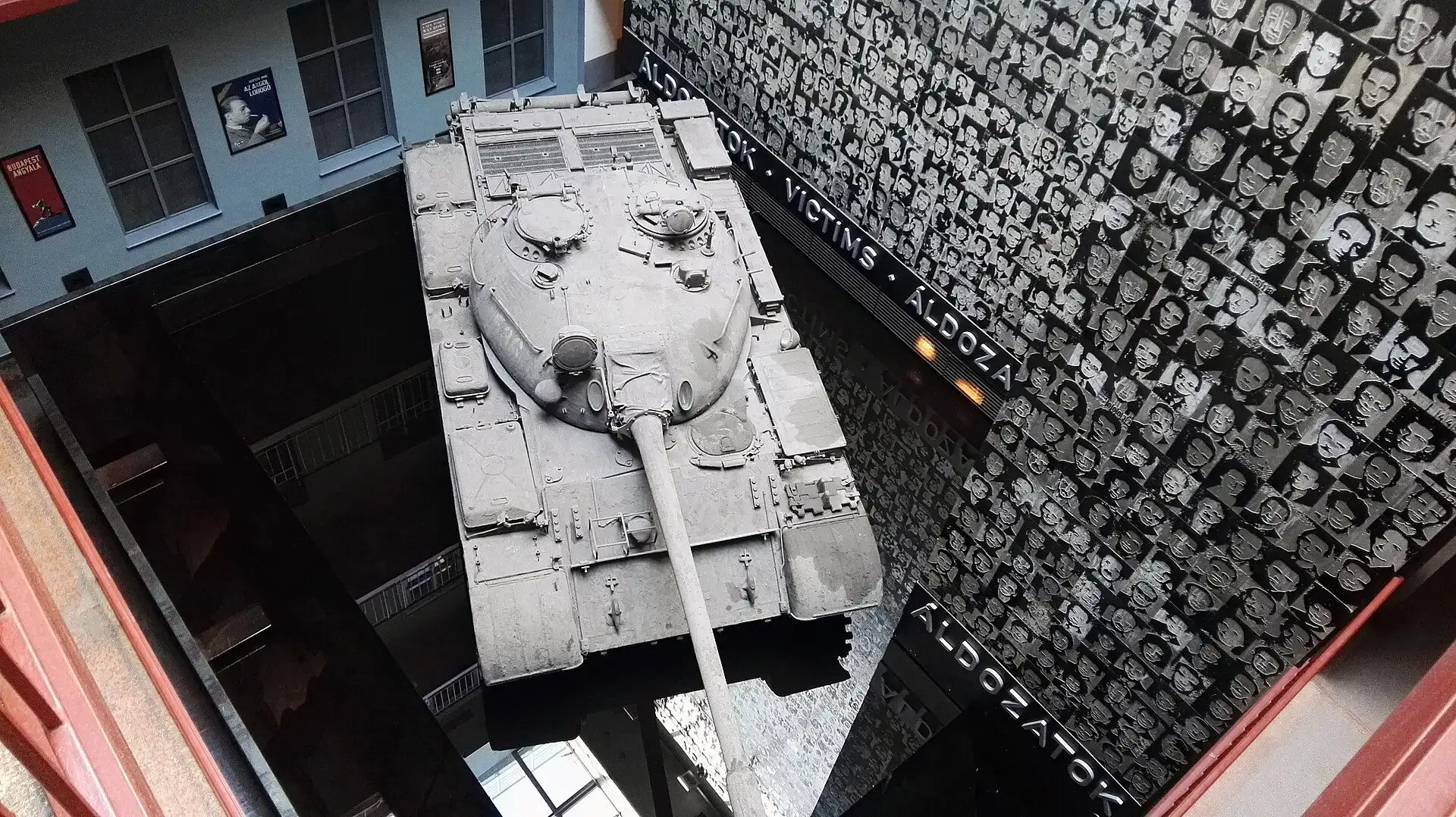
This one is about fit rather than quality. The House of Terror occupies the building at Andrássy út 60 where two of Hungary’s twentieth-century dictatorships ran their political police, the Arrow Cross first and the communist state security after it. The story of both is told floor by floor, down to the cells in the cellar. It is text-heavy and it is long.
I went round without the audio guide the first time and got a fraction out of it. With the guide in your ear it turns into one of the most affecting places in the city, so treat it as part of the ticket rather than an extra, and come with an unhurried couple of hours rather than forty minutes before dinner. If that part of history is not why you chose Budapest, there is no shame in giving it a miss.
Closed on Mondays. The museum sells entry only at its own desk with no online sales, so the booking below is a guided tour that includes admission. More in our House of Terror guide.
27. Go out to Memento Park for the statues nobody destroyed
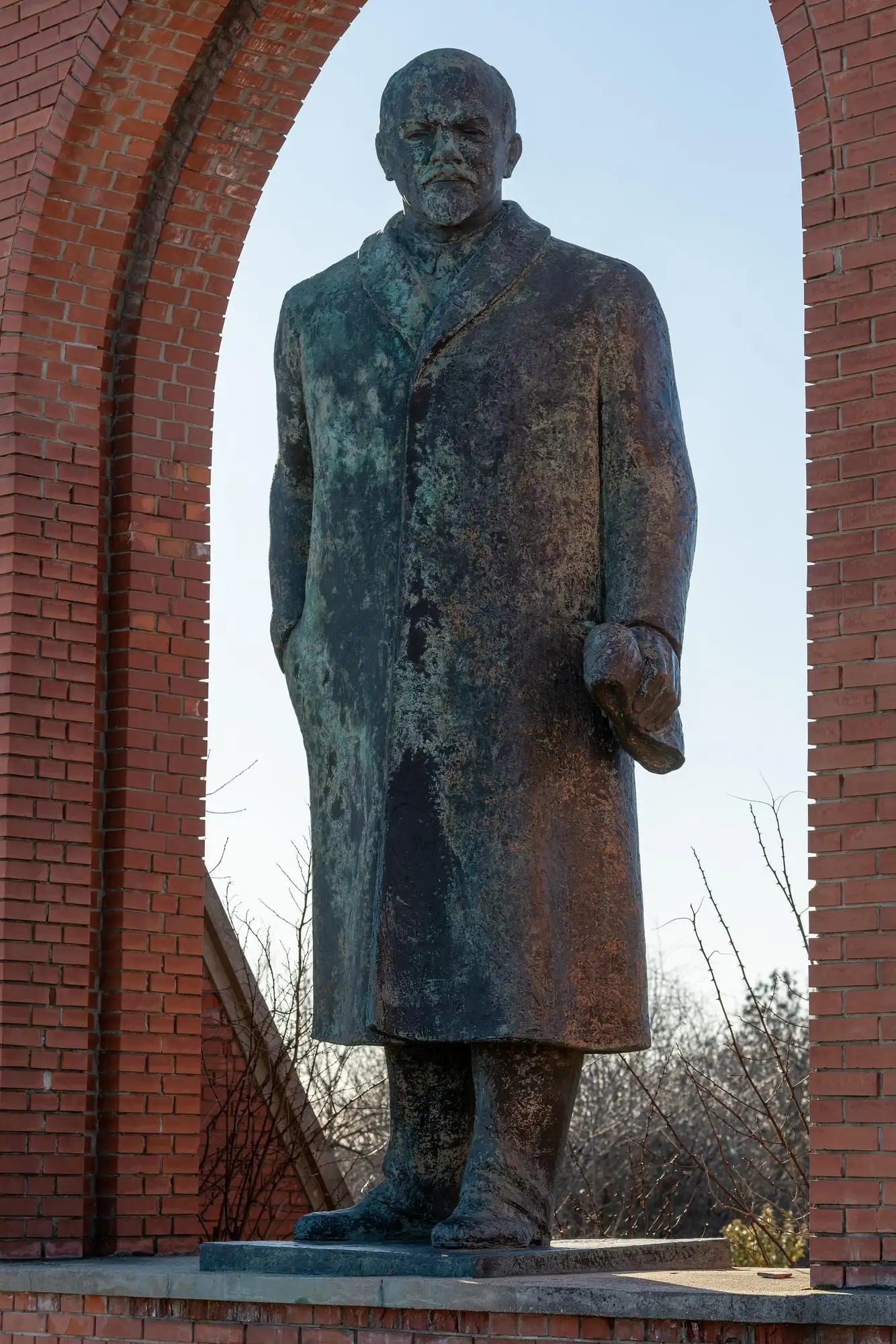
When the regime fell, Budapest did not smash its communist monuments. Ákos Eleőd won a competition in 1991 to build an open-air museum for them in District XXII, and it opened on 27 June 1993, by which time the last Soviet troops had been gone two years. Forty-one monuments stand there now, Lenin, Marx and Engels and Red Army soldiers among them, and at the gate there is a replica of Stalin’s grandstand, built full size, with his boots still on it.
It is a trek, and that is the fair objection to it: a metro ride and then a bus, out to the southern edge of the city. It is still worth the morning, because nowhere else can you walk round this stuff at eye level and in daylight rather than read about it in a museum case. Nothing is timed, one ticket covers everything, and an hour and a half is enough.
The ticket does not include transport from Budapest, so work out the bus before you go, and if you are carrying a Budapest Card show it at the desk, because it gets you in free. Our Memento Park guide has the route and the statues worth finding.
28. Stand for a minute at the Shoes on the Danube Bank
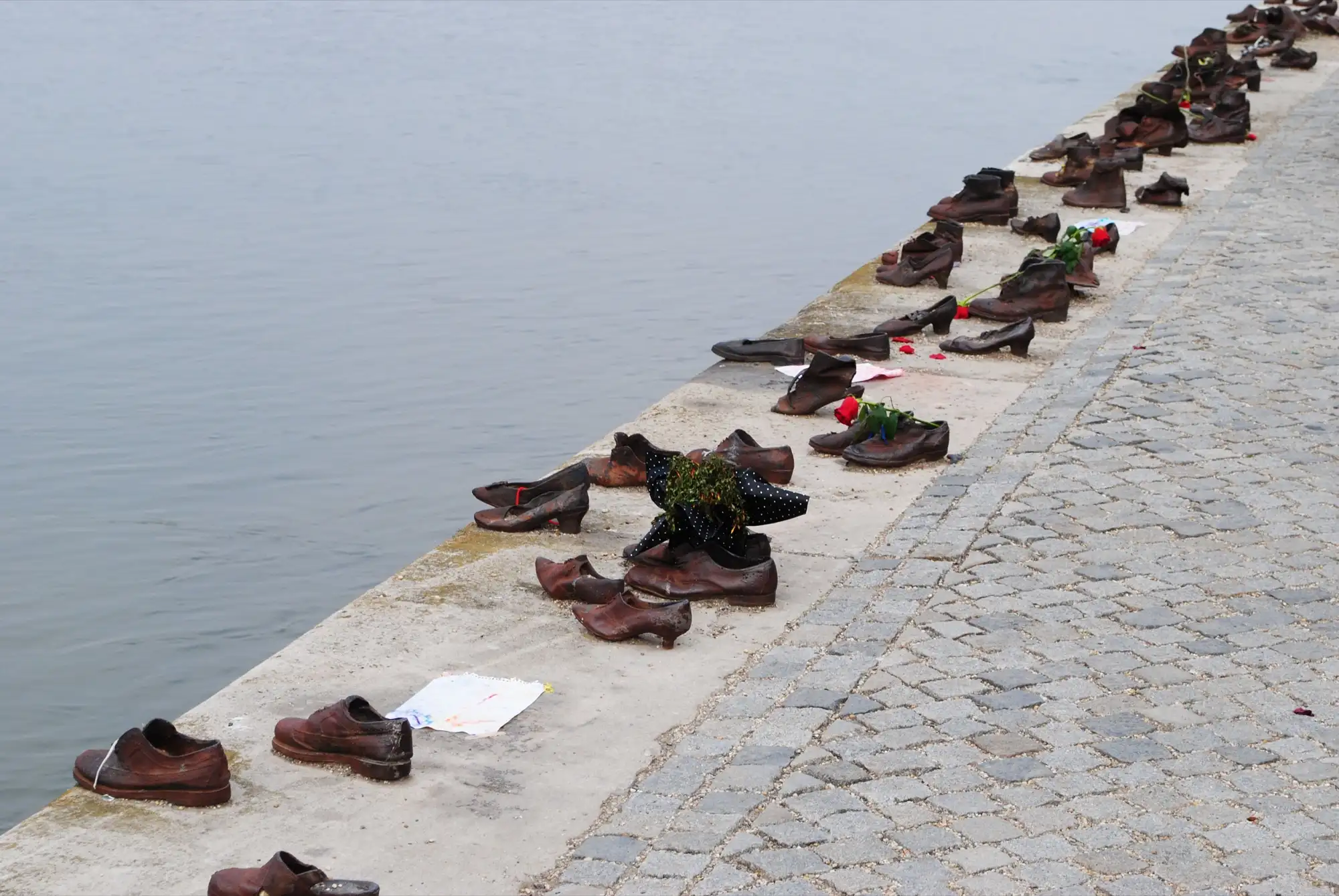
Sixty pairs of iron shoes stand at the water’s edge on the quay, where Arrow Cross militiamen made their owners undress before shooting them into the Danube in 1944 and 1945. The memorial is the work of Can Togay with the sculptor Gyula Pauer, and it was unveiled on Hungary’s Holocaust Remembrance Day, 16 April 2005. Behind it a stone bench 40 metres long carries the dedication in three languages.
It takes two minutes to see and it is the one thing on this list I still think about. Men’s work boots, a child’s pair, a pair of heels set neatly side by side. There are nearly always pebbles and fresh flowers tucked into them.
It costs nothing and stands on an open quay, a short walk north of the Chain Bridge and south of the Parliament, so it belongs in the same riverbank walk as both of them.
29. Walk up the grand staircase of the Hungarian National Museum
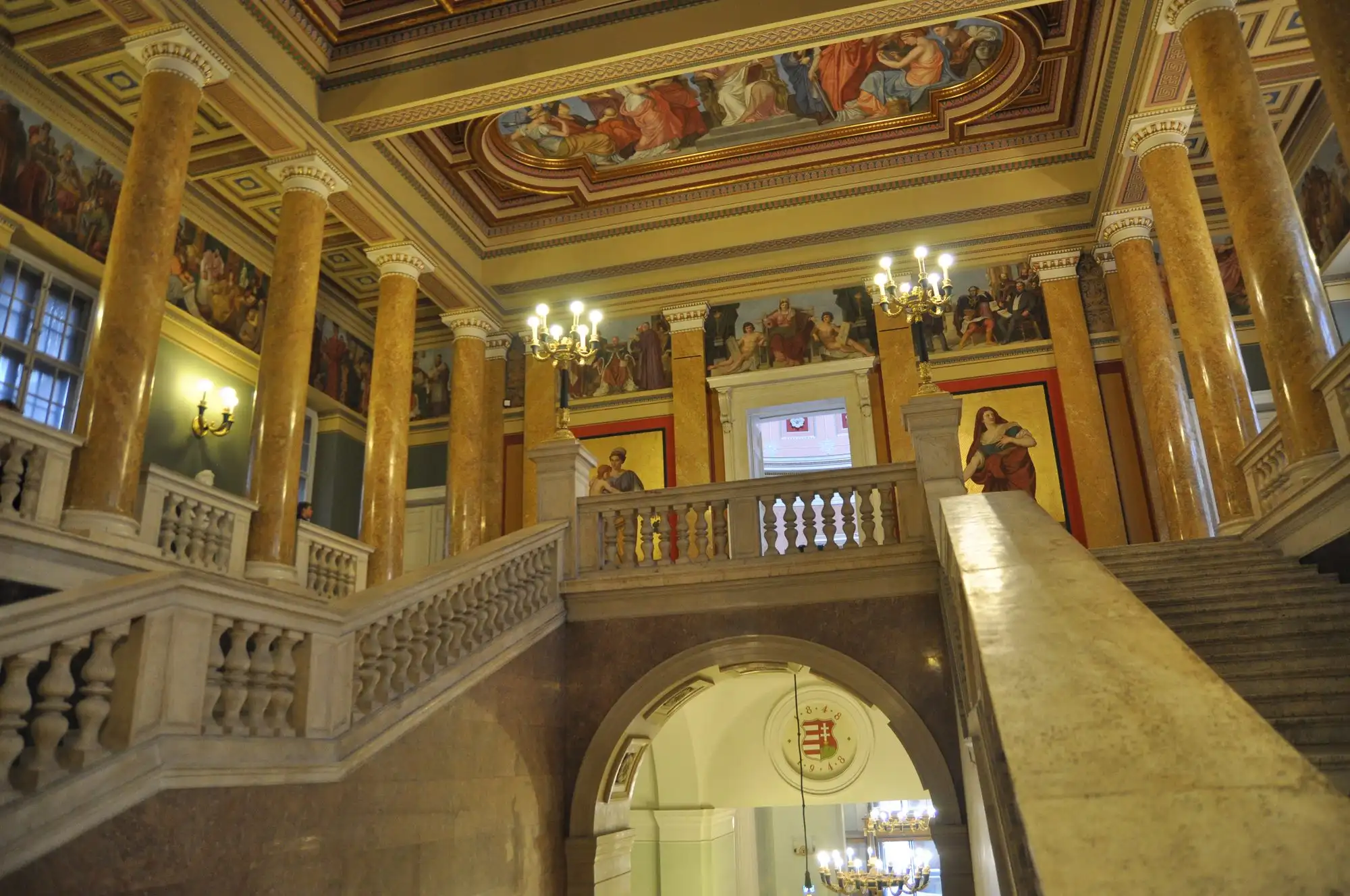
Hungary built this to keep its own story in, and the frescoed staircase inside Mihály Pollack’s columned palace earns the ticket before you have reached a single exhibit. Count Ferenc Széchényi gave his library and coins to the nation in 1802 and the state built this to hold them. Upstairs it tells the country’s story through objects rather than spectacle: the archaeology rooms, the two parts of History of Hungary, and two lapidaries.
Two of its famous things are not on show. The Coronation Mantle and the Seuso Treasure have been shut away for rebuilding since December 2025 with no reopening date, so come for what is open rather than for them. A morning is about right.
It is closed on Mondays, and free to everyone on 15 March, 20 August and 23 October, which our opening hours page sets out in full. The Ervin Szabó library is five minutes away and has an entry of its own further down this list.
30. See the Hungarian side of the story at the Holocaust Memorial Center
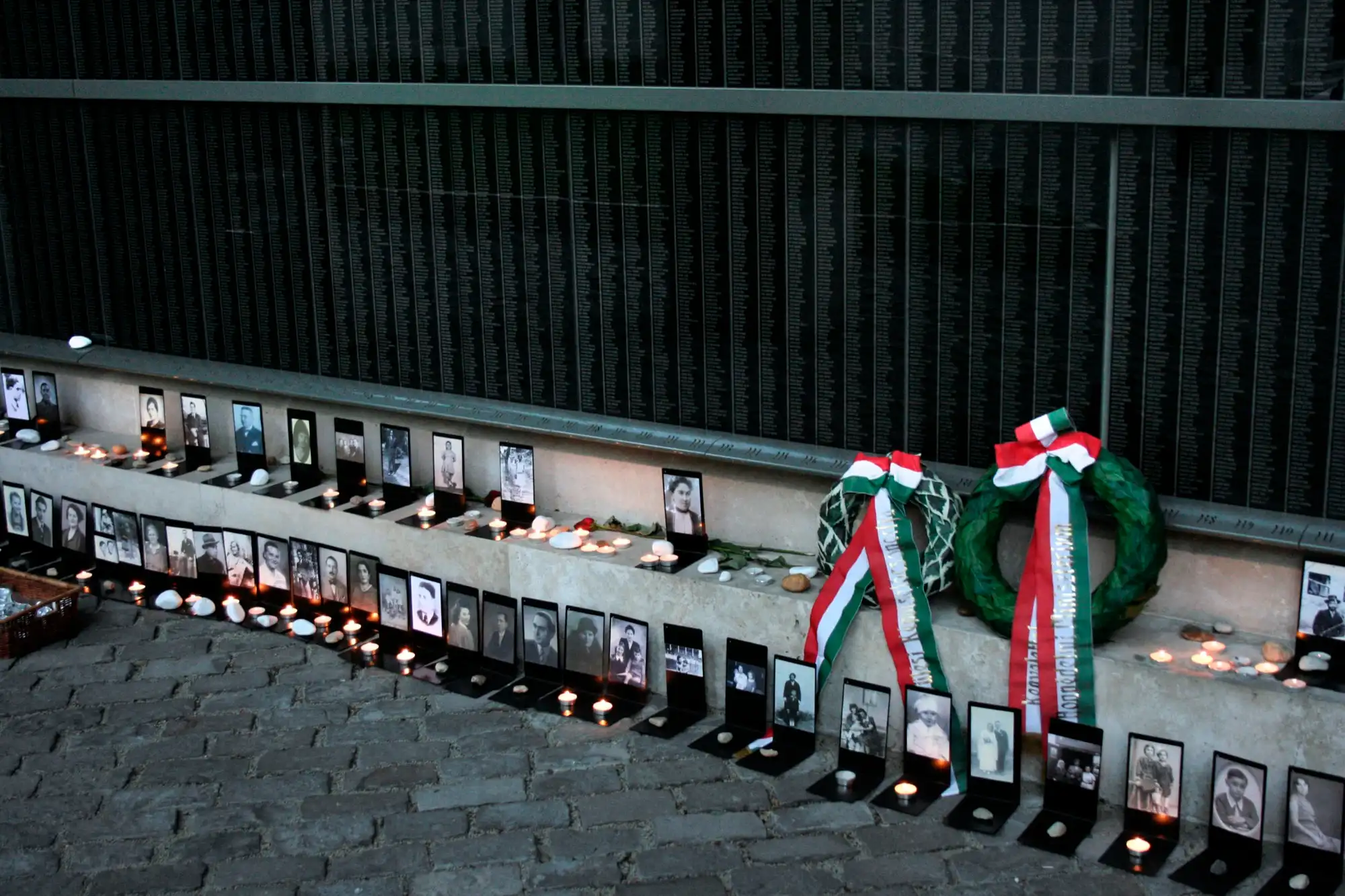
The Dohány Street complex tells a community’s story. This one tells what the Hungarian state did, which is the harder half of it, and it sits out in District IX well away from the Jewish Quarter. It is the twentieth-century visit people remember longest, and the one they are least likely to have heard of before they come.
The centre is built around a restored synagogue on Páva utca, with the permanent exhibition running beneath and around it. Go on a Sunday, or between Tuesday and Friday. Saturday and Monday are both days to keep it off, and the ticket office closes an hour before the building does.
The inner courtyard can be visited without a ticket, and that is where the Memorial Wall of Victims and the Tower of Lost Communities stand. Entry to the whole centre is free on 15 March, 20 August and 23 October whatever your citizenship. Nobody sells the ticket but the centre itself, so the desk is where you buy. The courtyard is on our list of free things to do.
Seven more for a wet afternoon, a slower trip, or a second visit to the city.
31. Walk into the Romanesque Hall at the Museum of Fine Arts
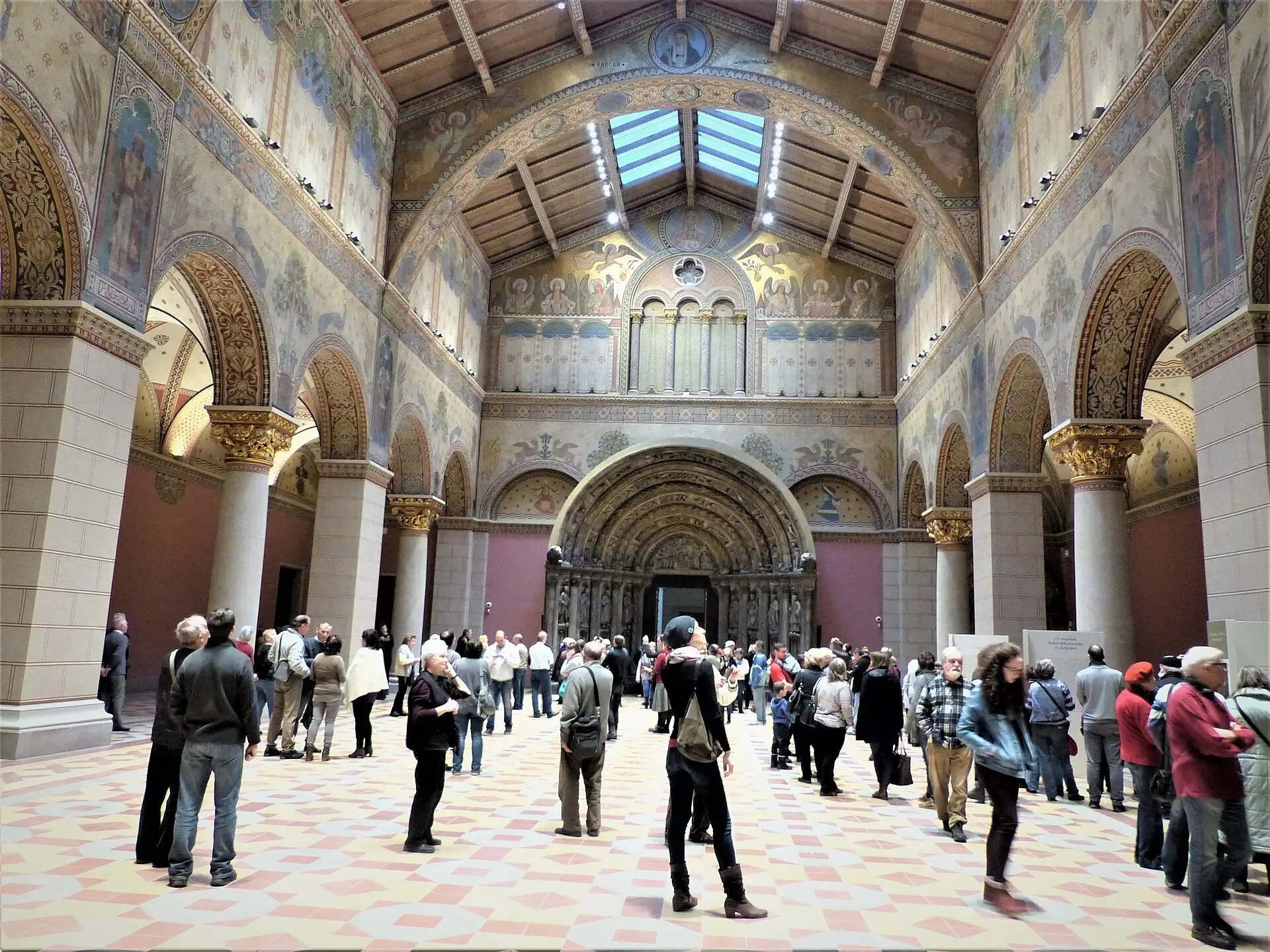
Go left out of the Renaissance Hall and you are in the room this museum is really about. The Romanesque Hall spent seventy years as a warehouse after wartime damage, and what came back out of it is a 900-square-metre room that feels like the inside of a huge medieval basilica. Seventy restorers brought back nearly 2,500 square metres of painted and gilded surface, using five kilograms of gold. The Baroque Hall with the Old Masters is to the right off the same room.
The collection behind all that is the serious one in Budapest: more than 100,000 works running from ancient Egypt to the end of the eighteenth century. Albert Schickedanz and Fülöp Herzog finished the building in 1906, the same pair who built the Kunsthalle facing it and the Millennium Monument standing between the two, and the museum reopened in 2018 after more than three years of rebuilding.
The Budapest Card gets you into the permanent exhibitions free, though a temporary show may want its own ticket. Nobody else sells entry, so without a card you buy at the desk inside. It stands on the corner of Heroes’ Square, so it is the obvious indoor half of a City Park day.
32. Go inside Buda Castle for the Hungarian National Gallery
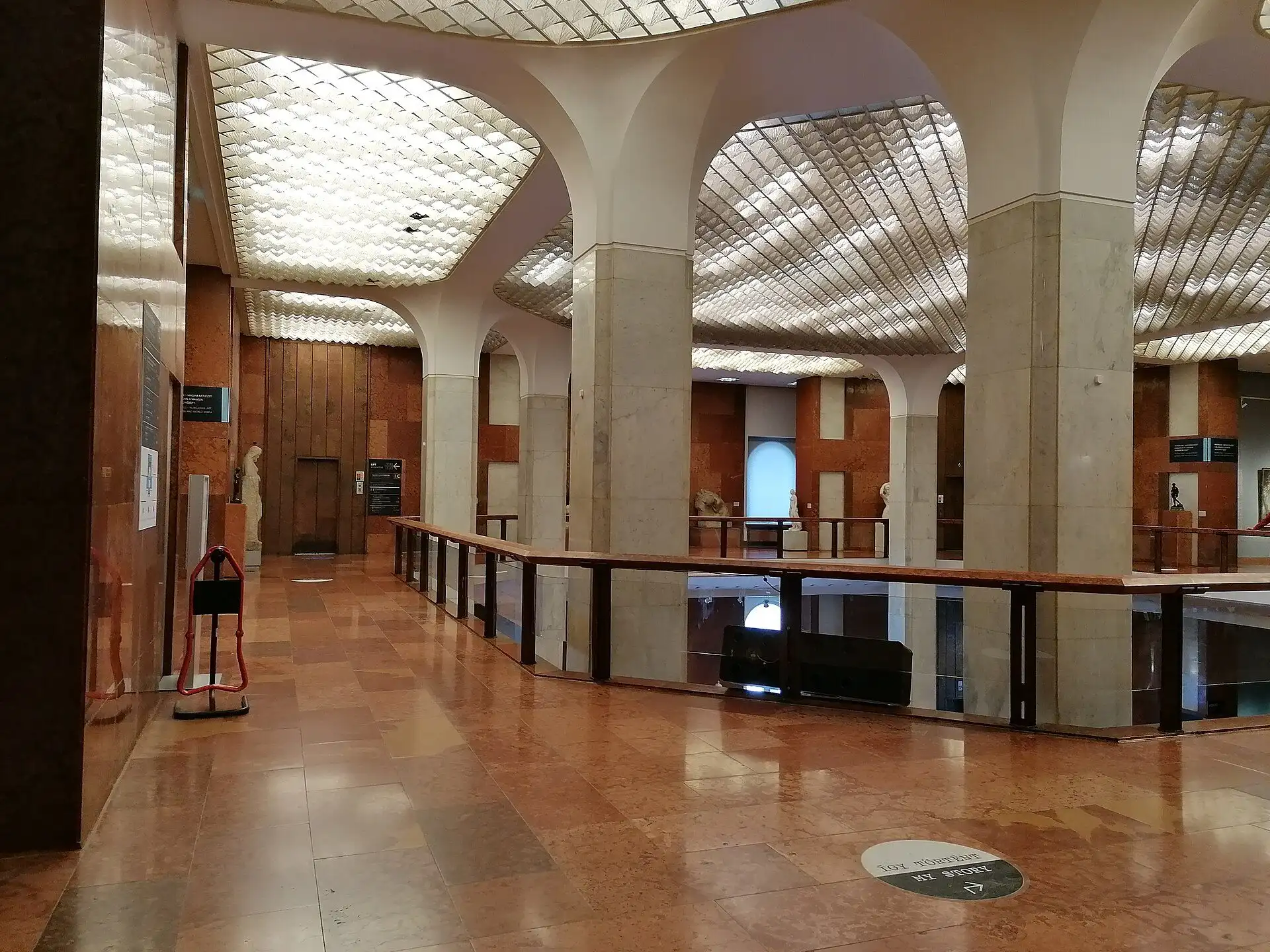
Most people do Buda Castle from the outside and leave it at that. The Hungarian National Gallery is what is inside, filling three wings of the palace, and it is where the country’s own art is kept rather than Europe’s, which is the division between this and the Museum of Fine Arts across the river.
It was founded in 1957 and moved into the palace in September 1975. An hour is about right unless you have the day to give it, and it is the best answer on Castle Hill to rain, which is an argument for keeping it in reserve rather than booking it into the plan.
It closes on Mondays. No partner sells entry on its own, so the desk inside the palace is where you buy, and the Budapest Card gets you in free. The rest of the palace, and the ways up the hill, are in our Buda Castle guide.
33. See the Collection Exhibition at the Museum of Ethnography
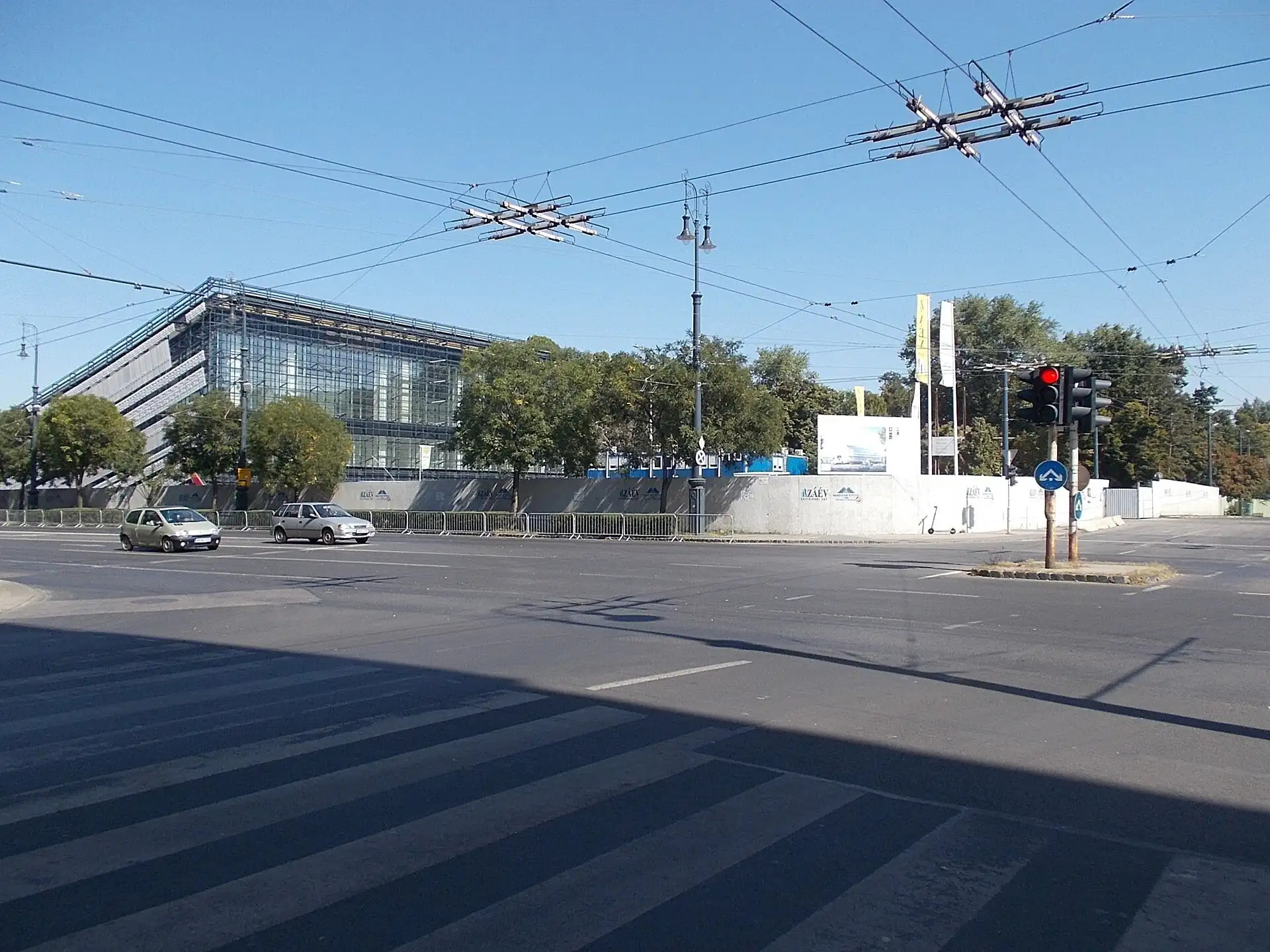
Almost everything else on this list explains Budapest. This explains the country, which is a different and less obvious thing, and it is one of the newest of the big museums in City Park.
The permanent Collection Exhibition covers more than 3,000 square metres and almost 3,600 objects in eight thematic sections. The building is as much of the draw: a long curve with its ends lifted out of the ground, so the grassed roof sweeps up from the park and can be walked on round the clock for nothing, reached from outside only. The Ceramics Space, about 4,000 pieces ranged along the stairs, is the museum’s free exhibition and closes with the rest of it on Mondays.
It opens Tuesday to Sunday from 10:00 to 18:00, with the ticket office shutting at 17:30. There is no lift at the Heroes’ Square entrance and there is one at the Damjanich utca entrance, which decides which way in you take. Tickets are sold at the museum’s desk, or online for a date of your choosing. The free roof is on our list of free things to do, and the park around it is in our City Park guide.
34. Walk in for nothing under the roof of the House of Music Hungary
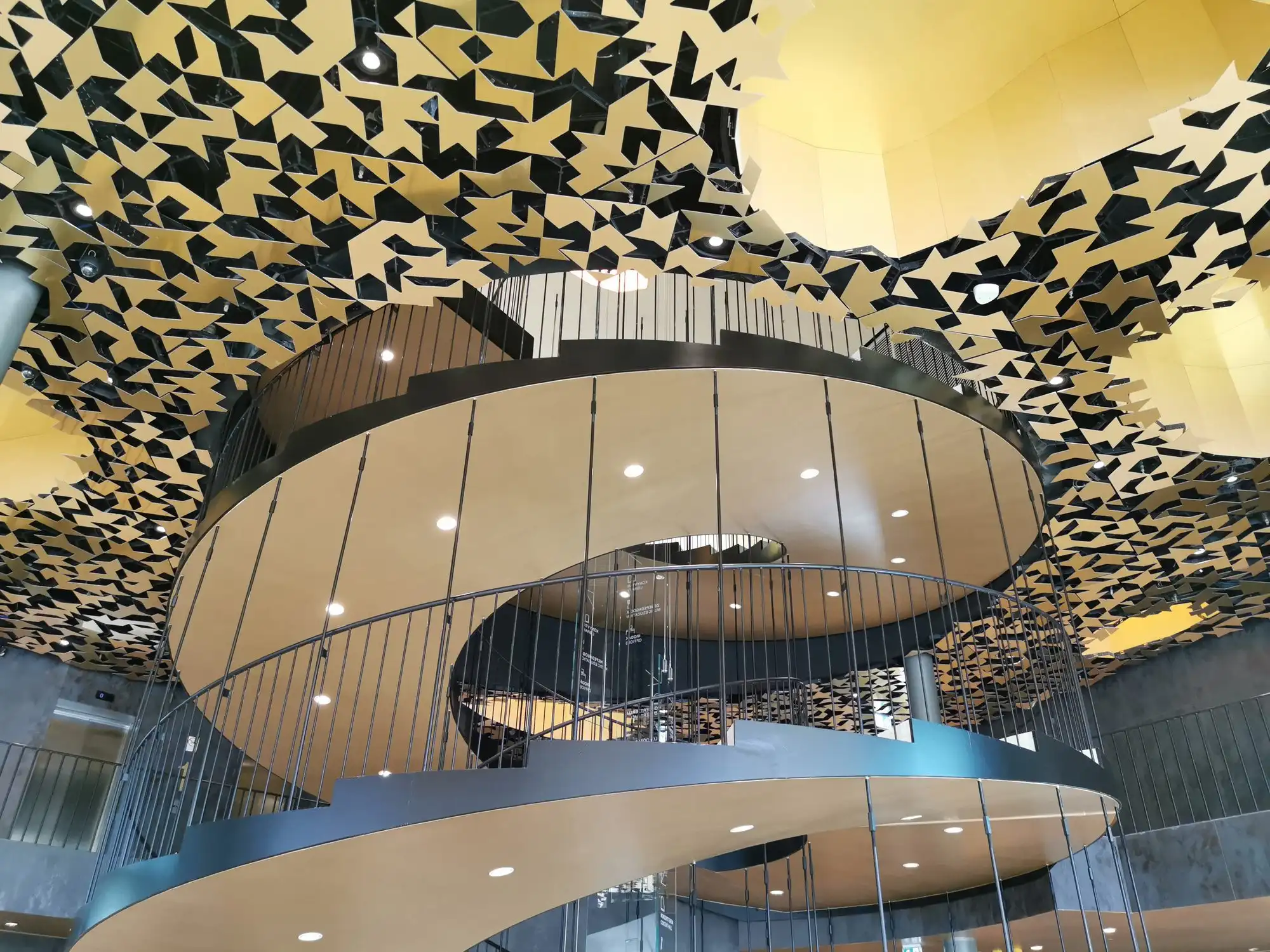
Admission here is free, and that is not a trick. The House of Music Hungary is open to anyone during opening hours and you pay only for concerts and exhibitions, so the building itself, which is what most people come for, costs nothing to stand inside.
Sou Fujimoto’s roof is the thing. It is a thin undulating canopy pierced by exactly a hundred holes, with trees growing up through some of them, and from underneath the gold leaf-patterned ceiling and the glass walls make the park look as though it has come indoors. Fifteen minutes is enough if that is all you came for.
It closes on Mondays, and the Sound Dome closes on the first Tuesday and Wednesday of every month as well, which is the kind of detail that quietly ruins an afternoon. The permanent exhibition stops admitting at 16:15, or 17:45 on Fridays. No partner sells a ticket, so the museum’s own ticket office is where you buy, and the Budapest Card takes twenty per cent off the concerts and exhibitions rather than letting you in free, since the building itself is already free.
35. Time the Capa Center right, because it opens at one
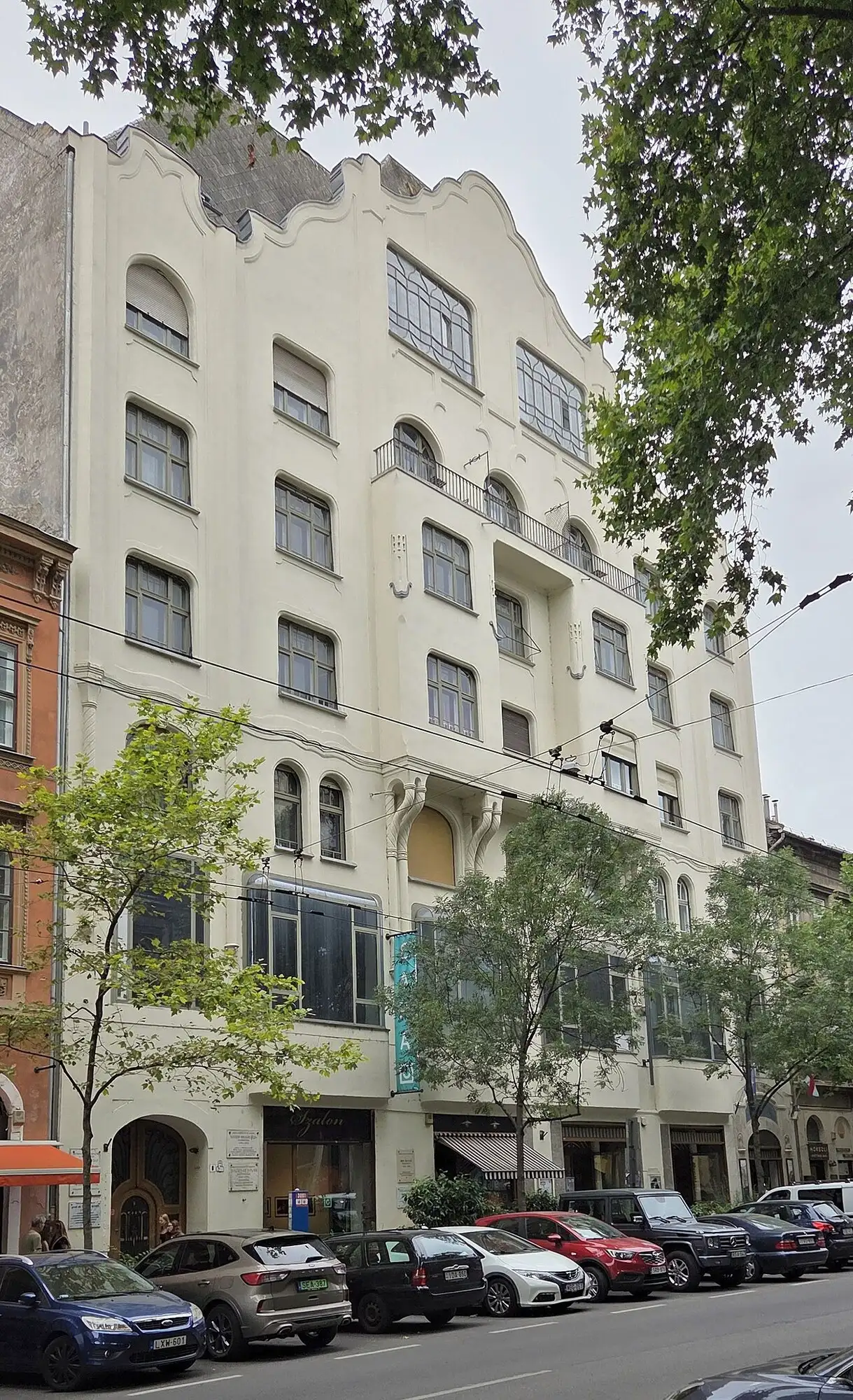
From Tuesday to Friday the Capa Center does not open until 1pm. Walk down Nagymező utca in the morning on your way to something else and the door will be shut. At weekends it opens at ten, it closes at six on every day it opens, and the ticket desk shuts half an hour before that. Mondays and Hungarian public holidays, it is closed altogether.
Get the hour right and it is one of the better small museums in the city. Two permanent exhibitions sit at the centre of it, Robert Capa: The Photojournalist and André Kertész: The Sentimentalist, with a changing temporary programme alongside them. The ground-floor 8F Gallery is free and keeps much longer hours, nine to seven every day, so there is something to look at even when the rest is shut.
Nobody sells a ticket but the centre, so buy at the desk, where the Budapest Card gets you in free. It is a minute off Andrássy Avenue, so it slots into that walk if the clock is on your side.
36. Buy a tourist ticket for the Ervin Szabó library
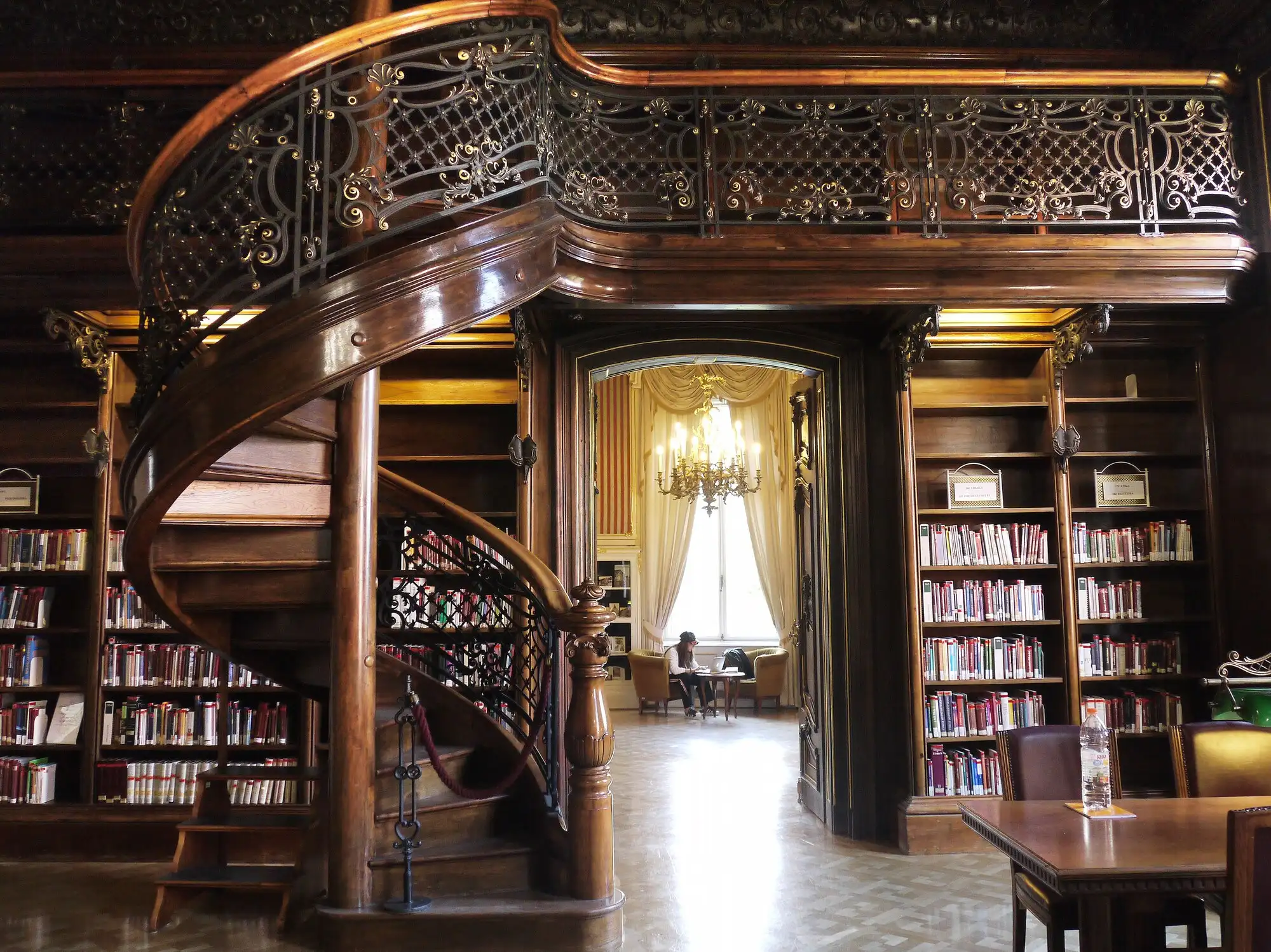
A working public library is not an obvious thing to put on a list like this, and this is the exception that earns it. The Metropolitan Ervin Szabó Library fills the Wenckheim Palace, a nineteenth-century town palace whose panelled and gilded rooms are now reading rooms, with a carved wooden spiral staircase winding between the floors and students at the tables under the chandeliers.
You do not need a library card to look. A tourist ticket is sold at the information desk in the hall during opening hours. People are working in there, so keep the noise down, and ask at the desk before you photograph anything.
Sundays and public holidays are the days it shuts altogether, which is all you have to plan around. Nothing is sold online and neither partner sells a ticket. The Hungarian National Museum is five minutes away, which makes the two of them a half day in the Palace Quarter.
37. Book ahead for the Money Museum, even though it is free
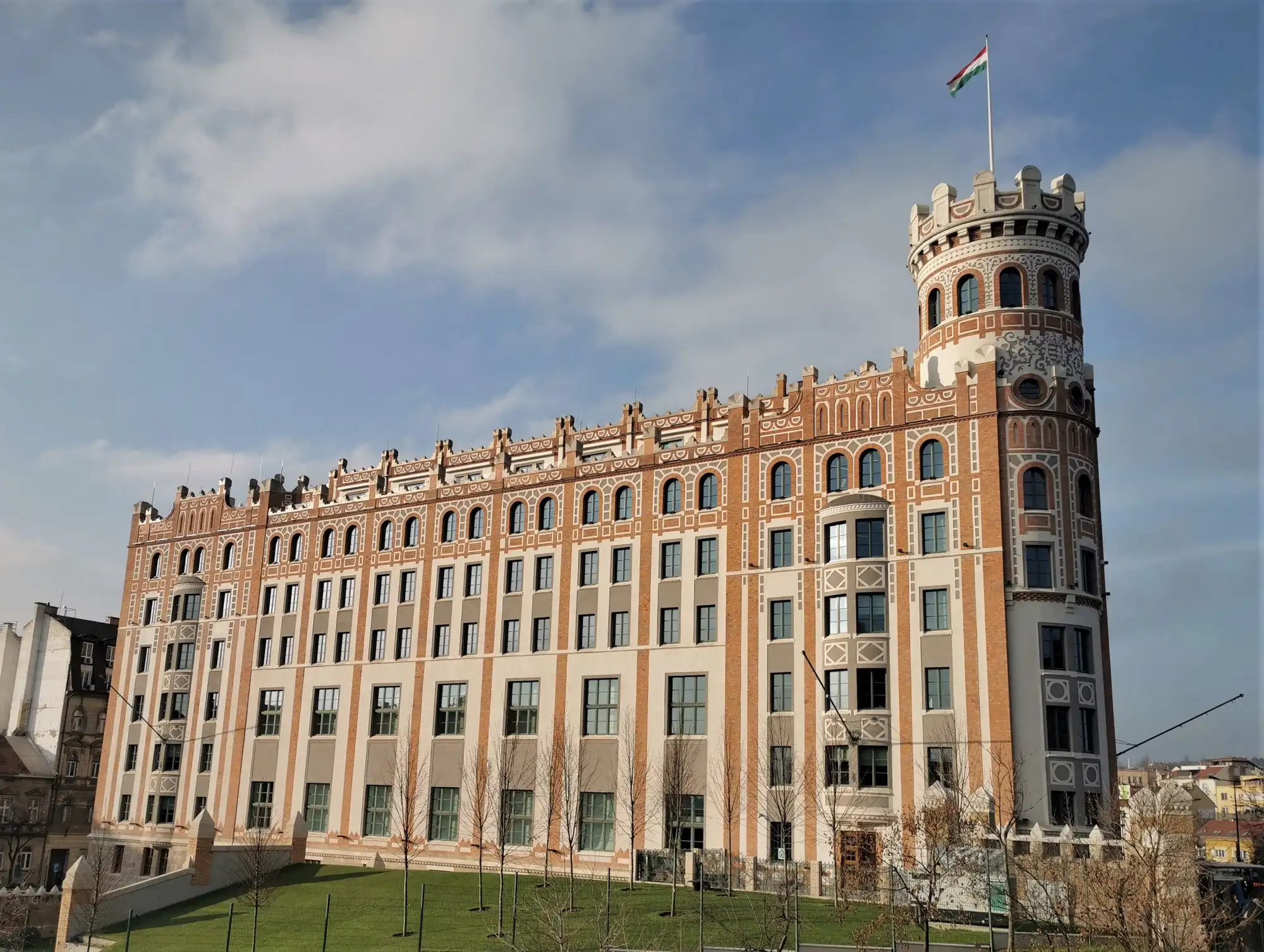
It is free, and you still have to book. The Hungarian National Bank’s Money Museum takes individuals and groups without charge during opening hours, but demand is high and capacity is limited, so registering and booking a slot is a condition of getting in. Turning up hopefully is the one way to waste the trip.
It is also the most generous thing in the city for what it does not charge you: a big interactive museum in the restored Postal Palace at Széll Kálmán tér, with the entrance round the side on Sándy Gyula tér. Allow an hour to an hour and a half. It is barrier-free throughout, which not many of the museums on this page are.
The one oddity is the closed day. It shuts on Tuesdays, which nothing else on this list does, and on school days weekday individual visits do not start until 15:00. Monday and Wednesday to Friday it runs 08:00 to 17:00, and at weekends 09:00 to 17:00. Széll Kálmán tér is the Buda transport hub, so it folds easily into a day that crosses the river; our transport guide has the lines, and it is on our list of free things to do.
Food and drink next, including the one place on this page we would steer you away from.
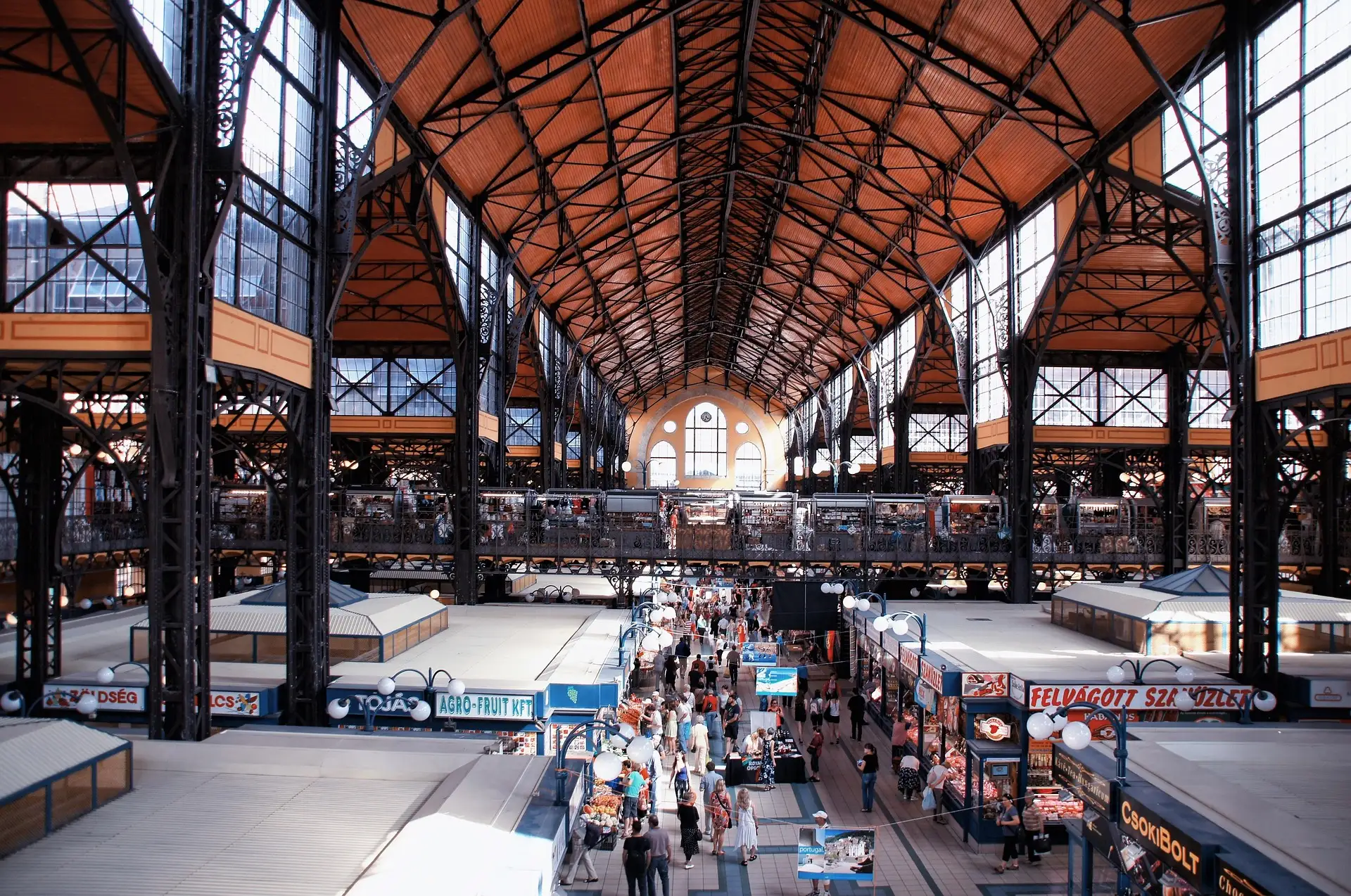
38. Shop the ground floor of the Great Market Hall in the morning
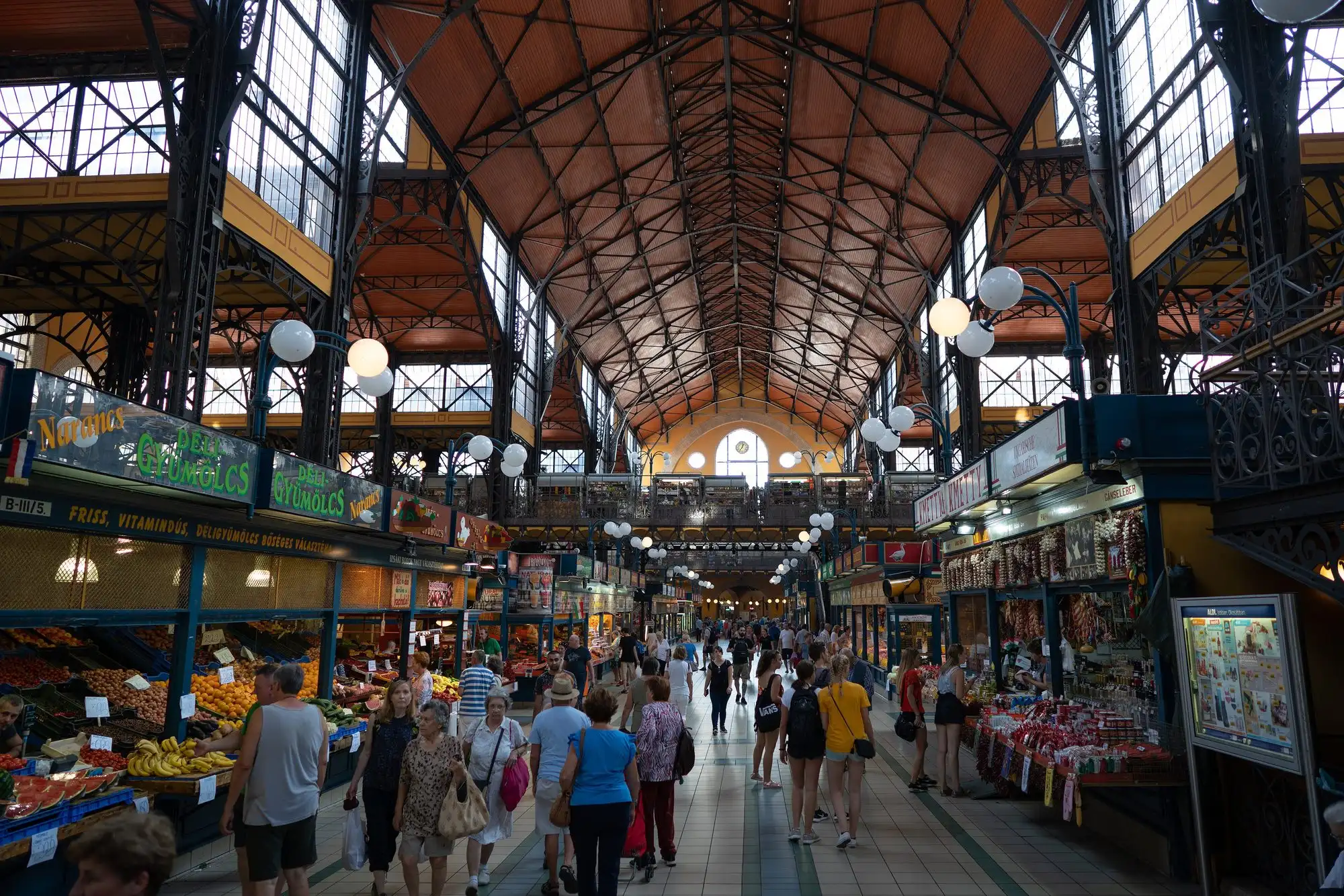
Go in the morning and go for the ground floor. That is where the market still works as a market: produce, butchers’ counters, strings of paprika and rows of salami, with fish and barrels of pickles down in the cellar. Entry is free, Samu Pecz’s iron and brick hall opened in 1897, and at nine on a weekday you are shopping alongside people buying their dinner.
The gallery upstairs is a different place, mostly souvenir stalls and food counters, and it is at its worst from about midday to two, when it is packed and there is nowhere comfortable to eat. I would not plan lunch up there. Eat in District VII or at a counter downstairs instead, and treat the gallery as a look over the railings on your way out.
The hours are worth getting right: Monday to Friday 06:00 to 18:00, Saturday 06:00 to 16:00, and Sunday 10:00 to 16:00, closed on official holidays. Yes, it opens on Sunday mornings. Metro M4 and trams 2, 47, 48 and 49 all stop at Fővám tér right outside, which saves the long walk down from the centre. If you want a working neighbourhood market rather than this one, Lehel Market Hall up in District XIII is the honest version. More in our Great Market Hall guide.
39. Eat at Time Out Market in the Corvin Palace
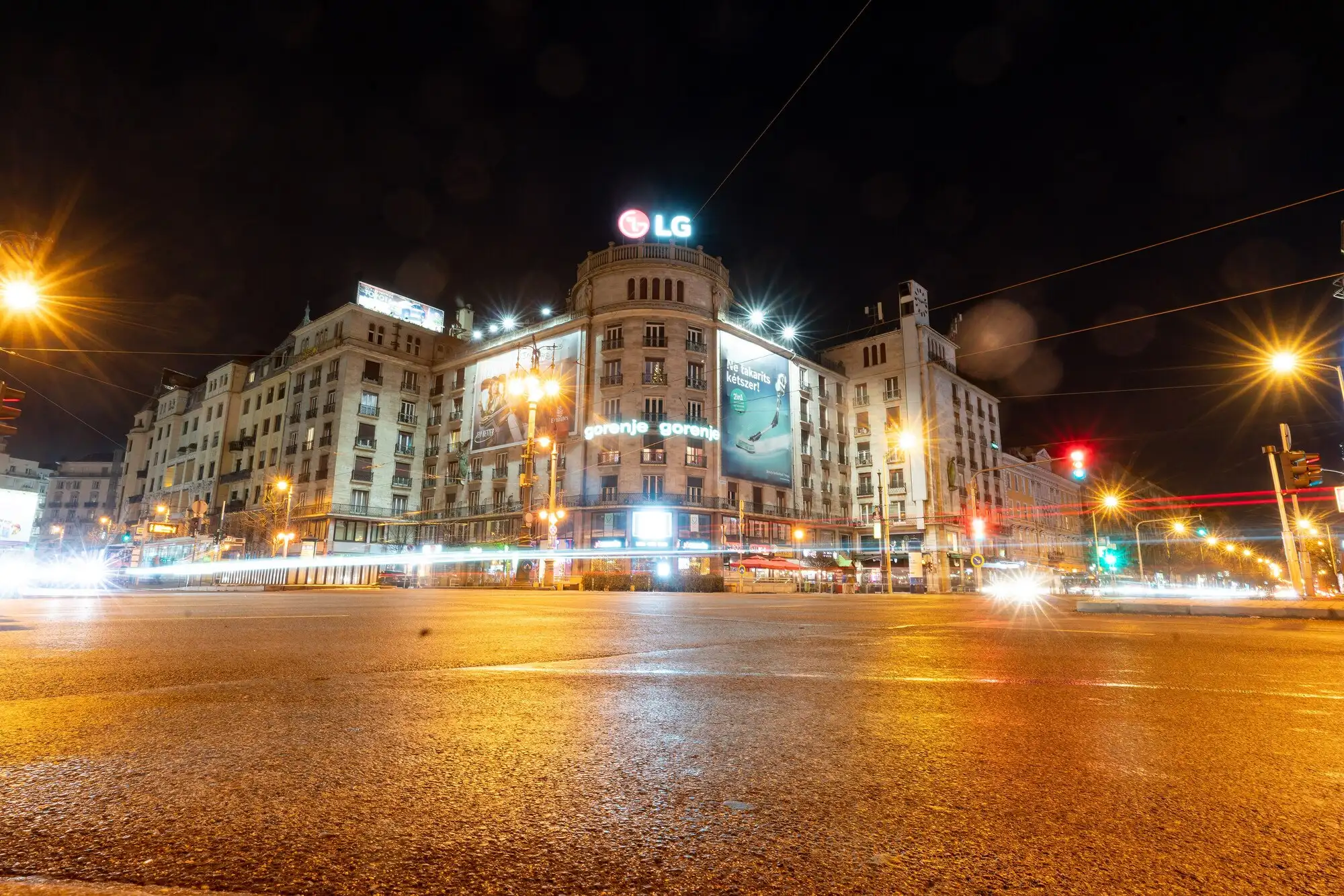
The Great Market Hall’s gallery is where not to eat, and this is the answer to it. Eleven kitchens, three bars and 540 seats sit under one roof at Blaha Lujza tér, open daily from 11:30 to 23:30 with the kitchens stopping at ten, on the M2 and trams 4 and 6.
The building is half the reason to go. Corvin Palace opened as a department store in 1926 and has been restored to its original neoclassical state, so you are eating in a room with some history rather than in a food court. Traders in a food hall come and go, so read the counters when you get there rather than arriving set on a name somebody gave you a year ago.
Three bars share the room, so it is an easy place to try Hungarian wine without committing to a tasting, and a Budapest Card shown at the counter is worth a glass of it, a beer or a coffee for nothing. Where else to eat and drink in the city is in our round-ups of the best coffee shops and the best bakeries.
40. Start a night out at Szimpla Kert in District VII
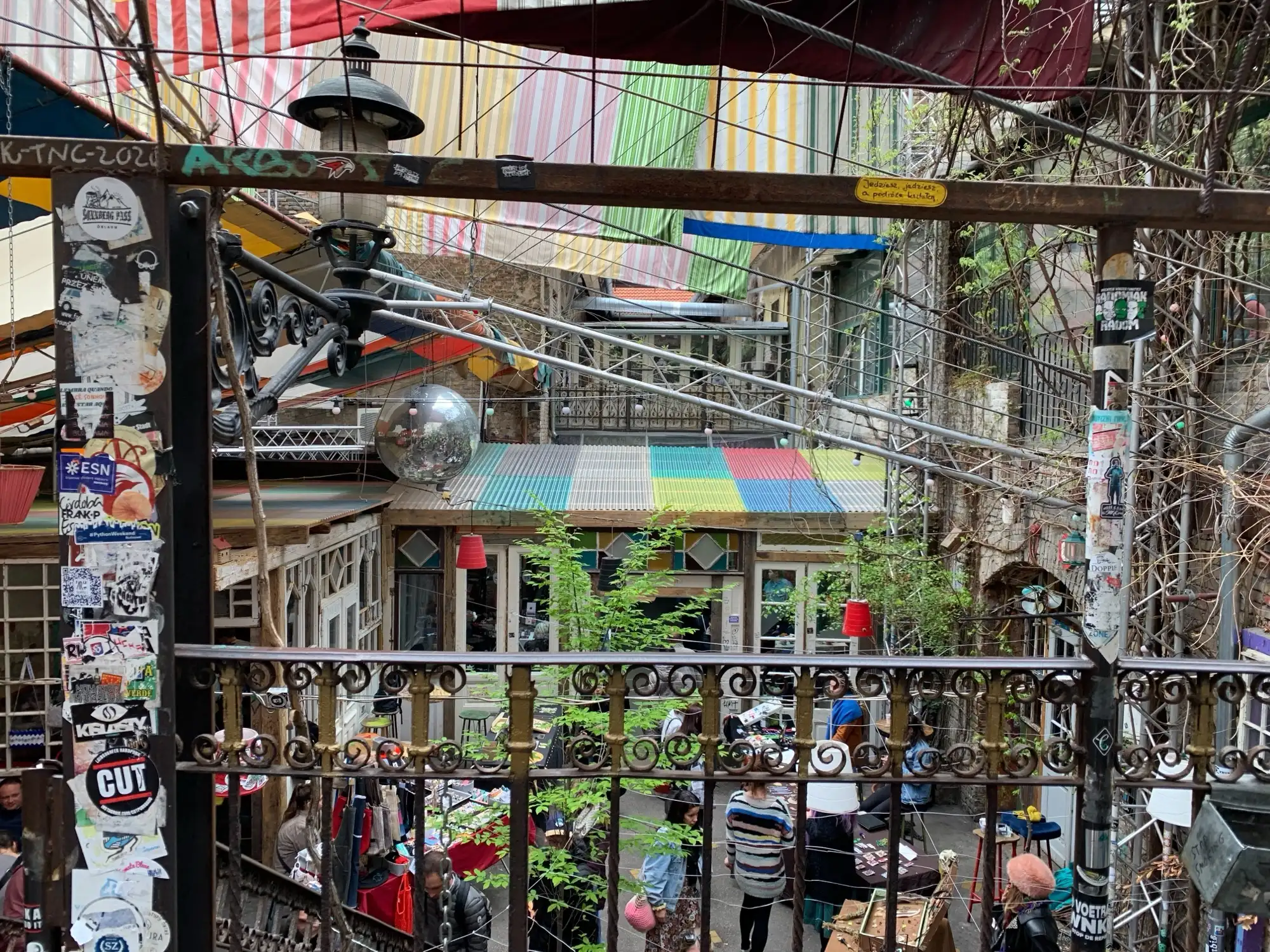
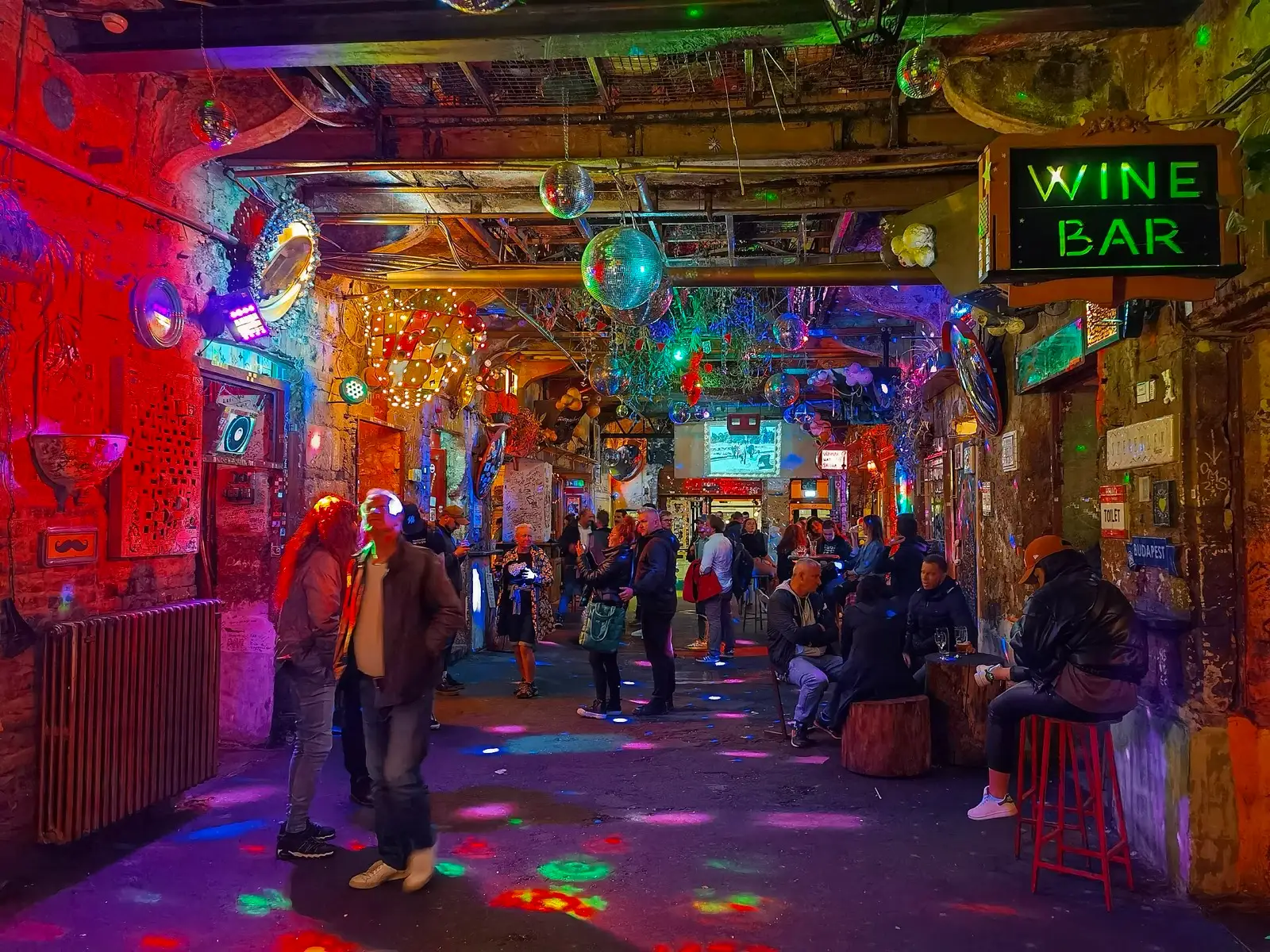
District VII, the old Jewish Quarter, is where the drinking happens, and a ruin bar is exactly what it sounds like: a bar put into a courtyard building that was left to fall down, furnished out of whatever was lying around and never tidied up. They are the reason the city has the night-time reputation it does.
Szimpla Kert is the one everyone starts at, a two-storey courtyard with a film screen, a bathtub for a sofa and stickers over every surface. There is nothing to pay at the door, only for what you drink, so you can have a look without committing to an evening. On Sunday mornings the same courtyard holds a producers’ market, which is a good way to see the place sober and empty.
Nine more, with what each one is actually like, are in our ruin bars round-up, and Szimpla by day is on our list of free things to do.
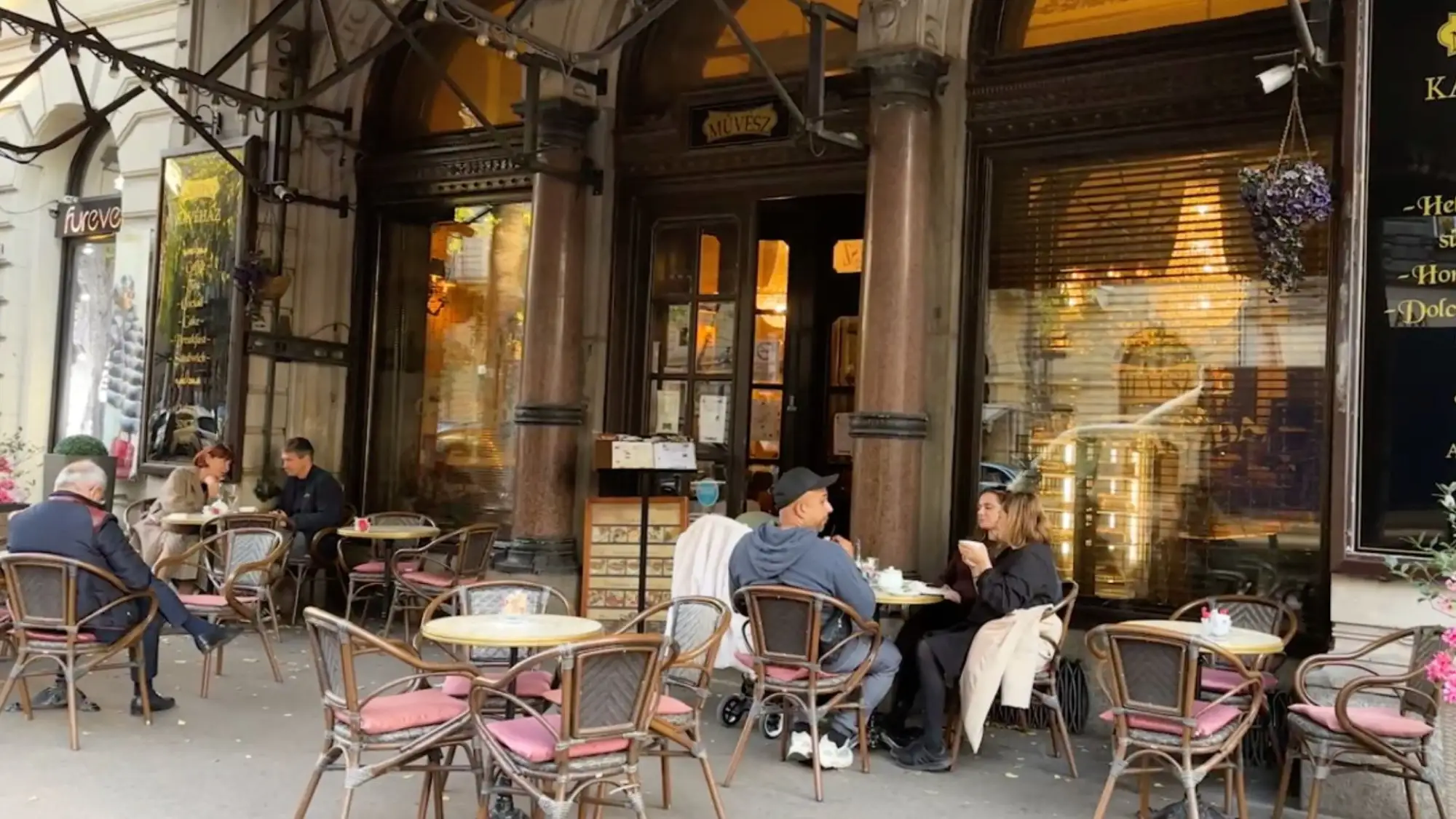
41. Go to the New York Café for the room, not the meal
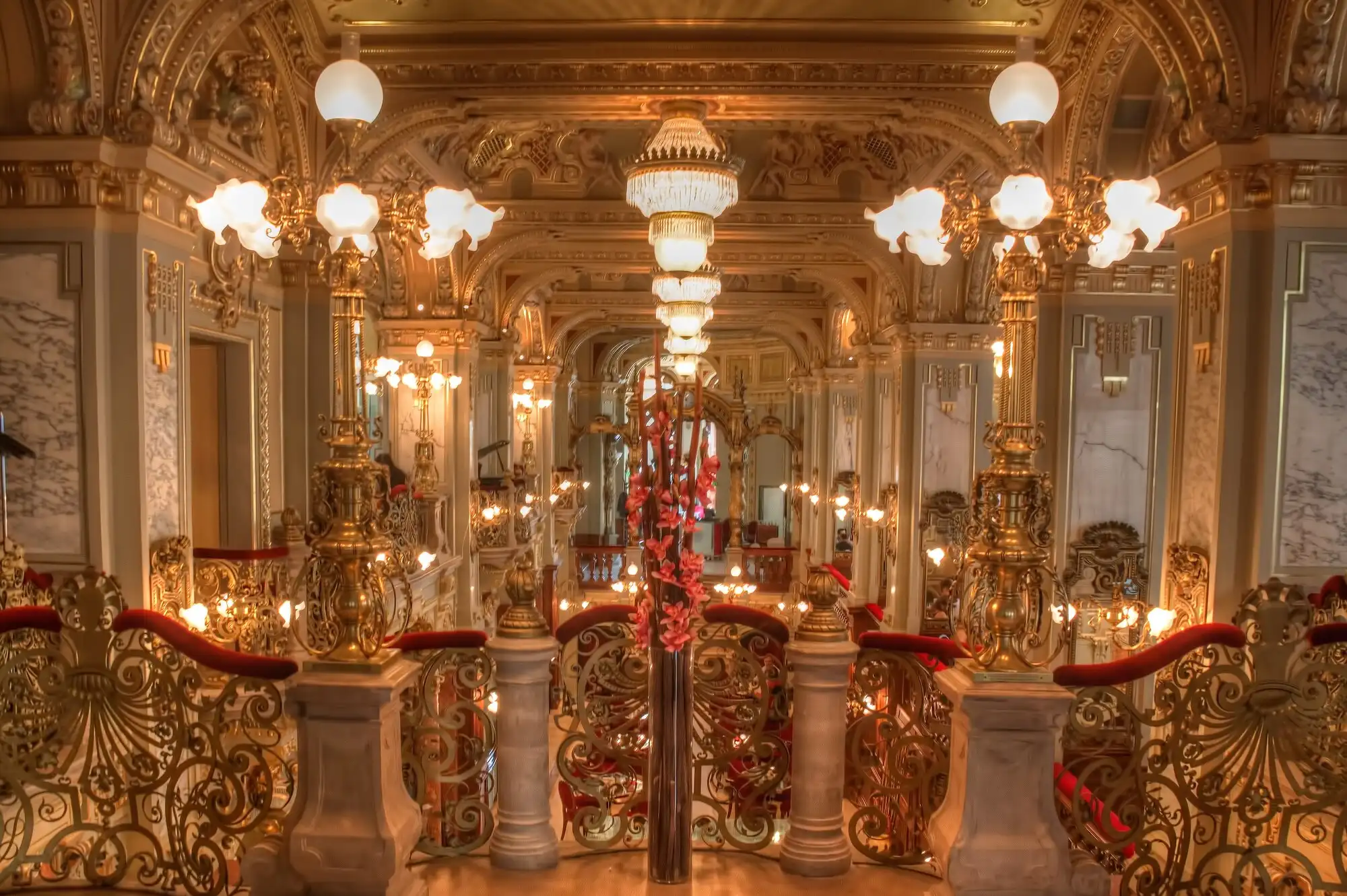
The coffeehouse is a Budapest institution rather than a pit stop, and an afternoon in one is a proper thing to do here. The city’s grand cafés are high-ceilinged rooms with marble, gilt and mirrors, built when a writer could hold court at a table all day, and the cake counter is taken as seriously as the coffee.
A word about the famous one. The New York Café is the most beautiful café room in the city and the reason to go is the room, not the meal. A table can only be reserved for dinner after 18:00, so at every other hour everyone is seated in order of arrival, which is the whole explanation for the waits people complain about. It opens at 07:00 every day, until midnight from Monday to Wednesday and 01:00 from Thursday to Sunday, so the quiet hour is early rather than late.
Which cafés we would actually send you to, and which cake to order, are in our round-ups of the best coffee shops and the best bakeries. One thing we would not do is eat on Váci utca, the pedestrian shopping street between Vörösmarty tér and the Great Market Hall. Walk it if you like, then eat on the market’s ground floor or in District VII.
Three evenings, in three of the best rooms in the city.
42. See a performance at the Hungarian State Opera House
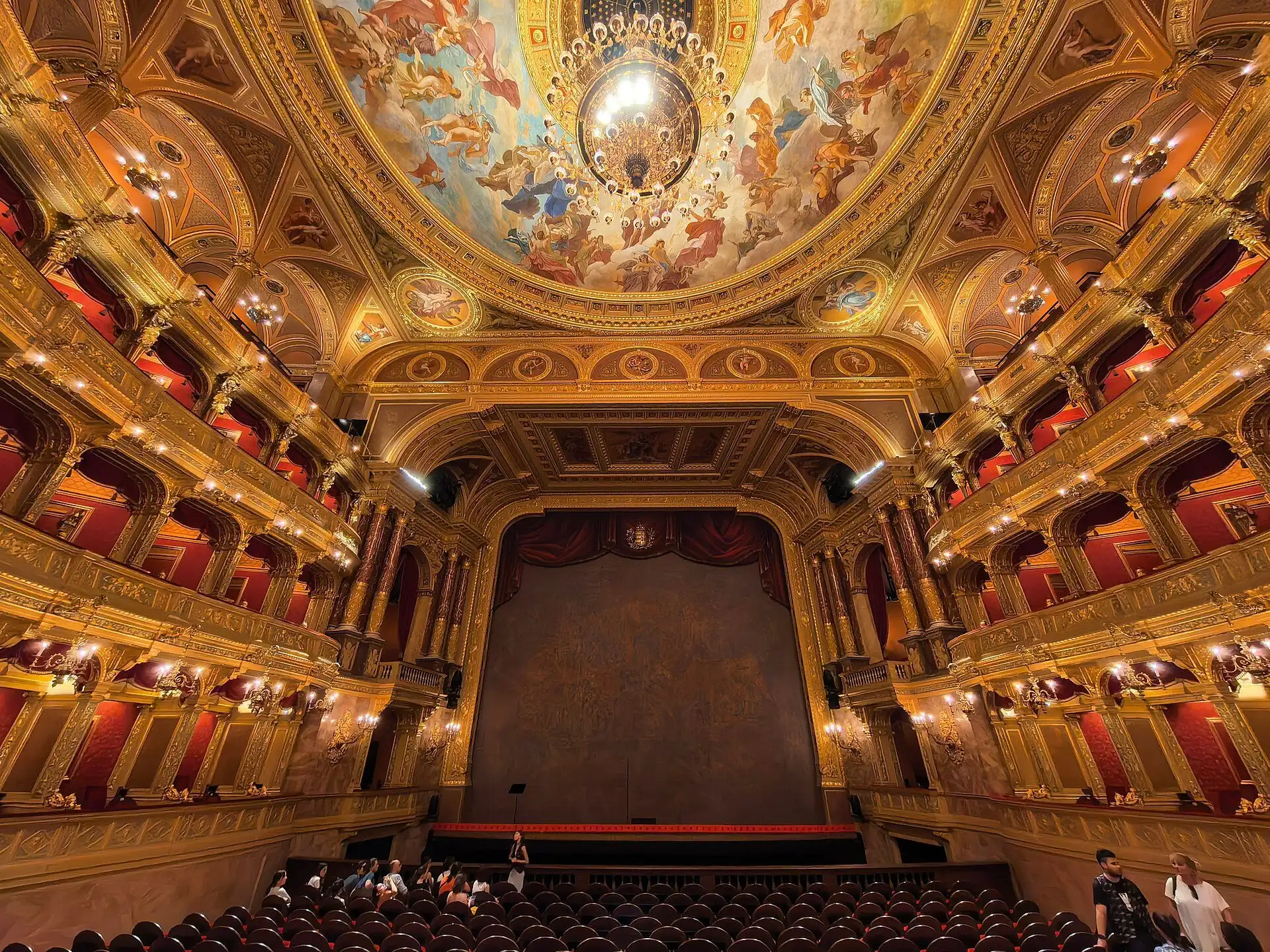
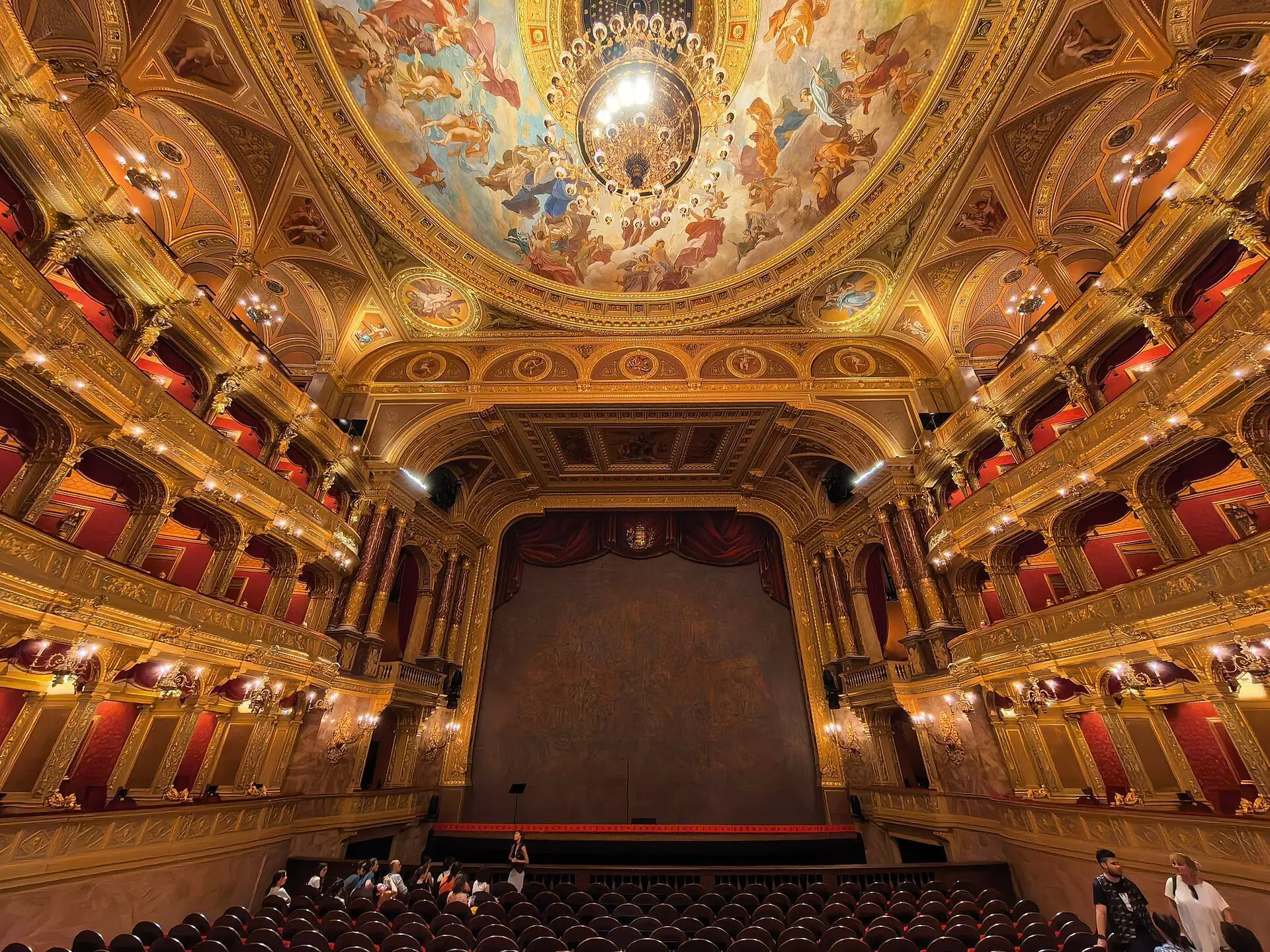
Miklós Ybl’s Neo-Renaissance house on Andrássy út came out of a five-year restoration in 2022 and it looks it: gold leaf everywhere, three tiers of red and gold boxes, and a painted ceiling crowded with Greek gods. If you go inside one more building in Budapest after the Parliament, make it this one.
There are exactly two ways in. A seat at a performance is the better one, and sitting in a largely Hungarian audience is a good part of the experience, so look at what is on before you default to the tour. By day the guided tour is the only option. It lasts an hour, goes as often as three times a day in English, and the company sends singers out onto the staircase at the end of it. The house can cancel a tour for a rehearsal and offer another date, and the tour is not suitable for wheelchair users.
Each tour slot stops taking bookings four hours before it runs. What the tour covers room by room is on our Opera House tours page, and the performance side is in our State Opera House guide.
43. Hear the organ in St Stephen’s Basilica
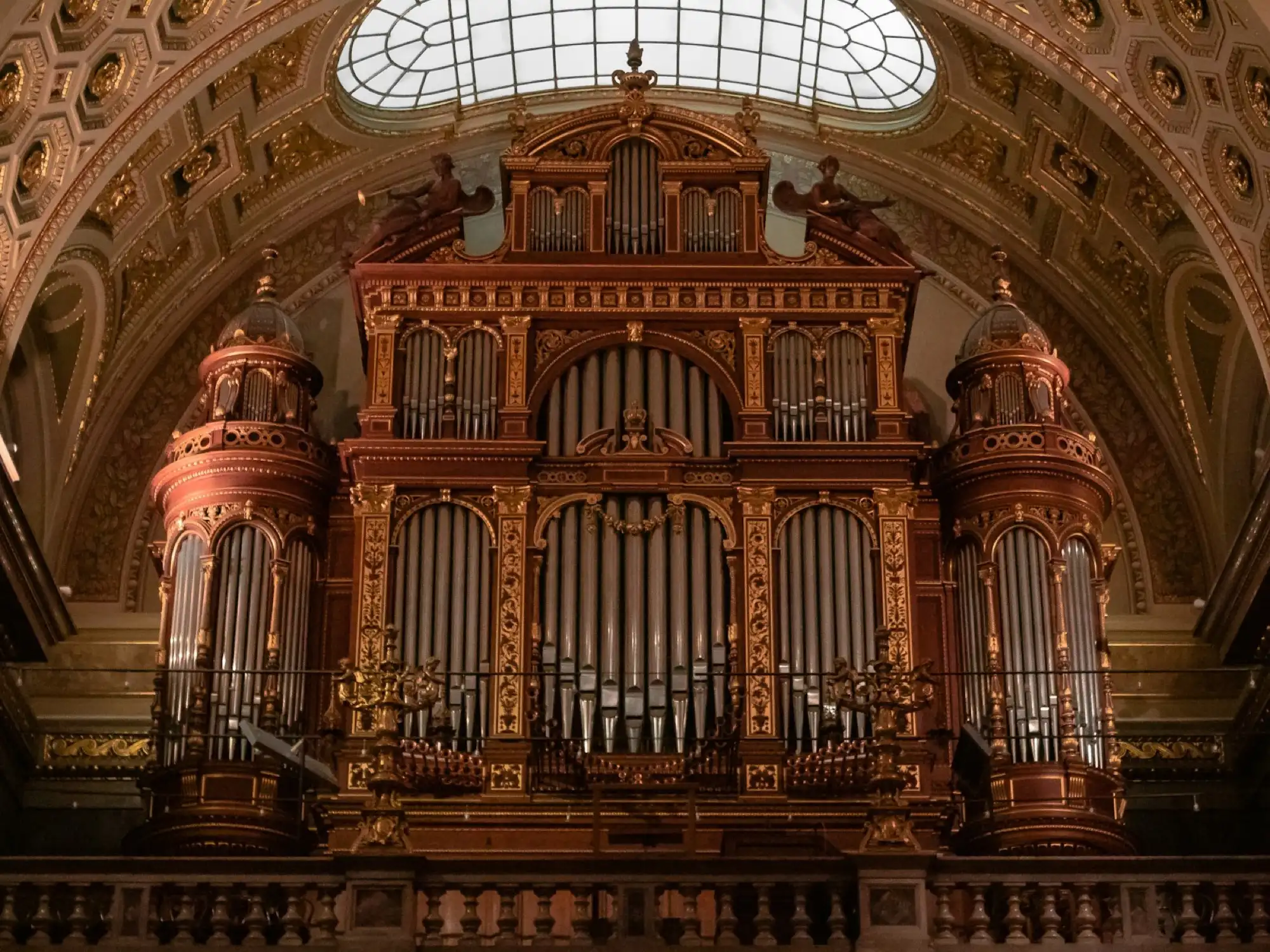
A concert turns the Basilica into a different building from the one you walk round by day. The nave is lit for the music rather than for sightseeing, so you can take in Lotz’s mosaics and the gilding properly while the organ is playing, which is the honest reason to do this as well as a daytime visit rather than instead of one.
The programme on the ticket below is the standard one: Bach’s Toccata and Fugue in D minor and the Suite in B minor, Mozart’s Fantasie in F minor, Albinoni’s Adagio, Liszt and Saint-Saëns, and Verdi, with the organist Miklós Teleki and the singer Kolos Kováts. It runs an hour and ten minutes with fast-track entry, and the concert times are set on the booking calendar rather than fixed, so pick the date and the slot there.
The cancellation term is unusually kind. You can cancel or move the booking up to three hours before it starts, which is late enough to decide on the day. The concert series and the church itself are in our St Stephen’s Basilica guide.
44. Book a concert in the Grand Hall of the Liszt Academy
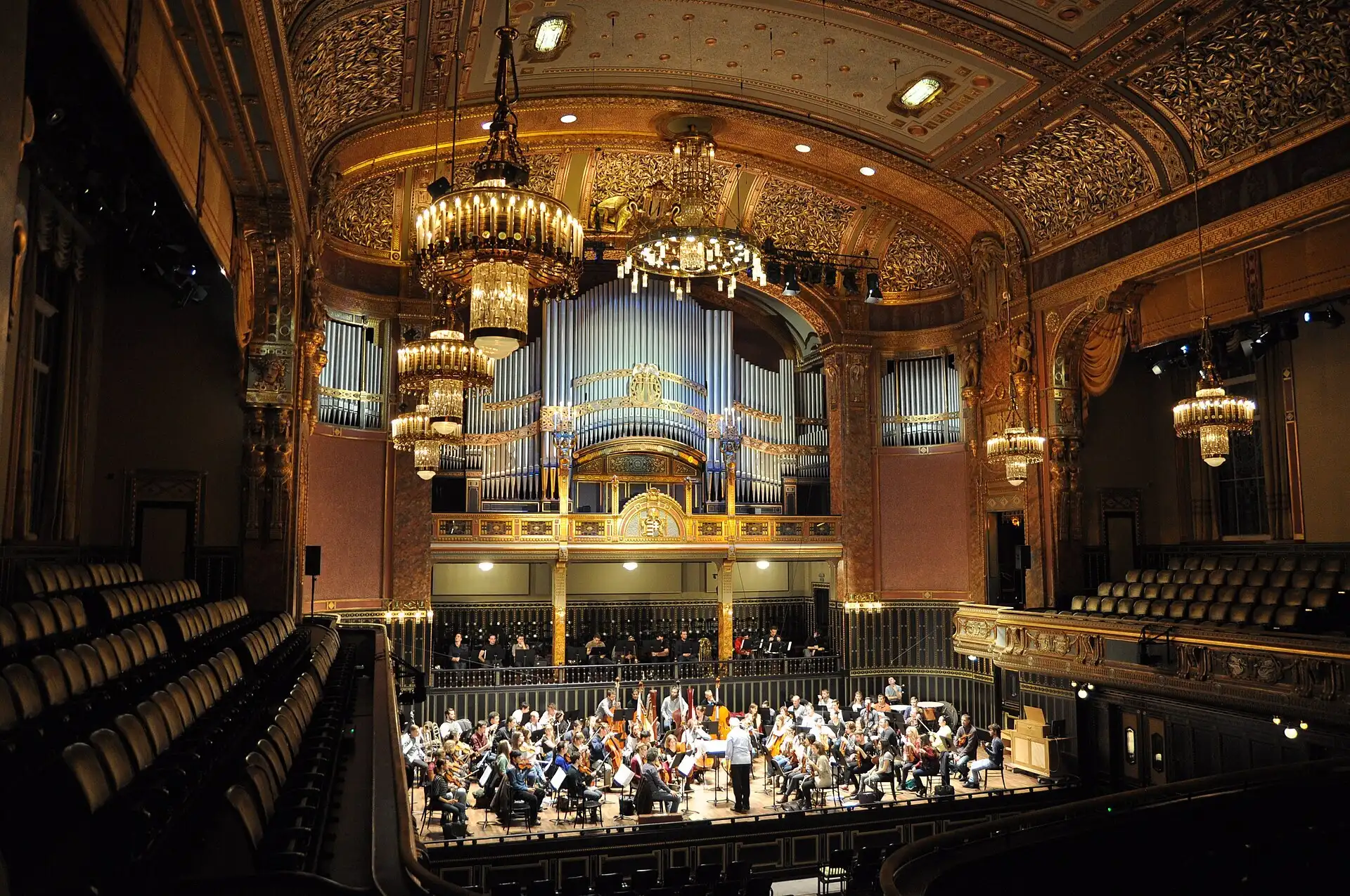
The Liszt Academy will not let you simply walk in. It is a working conservatoire, and the interior opens to the public only in an organised form, which means a concert ticket or the Academy’s own guided tour and nothing else.
Take the concert if you can. The Grand Hall is a gilded Art Nouveau room with the organ behind the platform, and hearing it used is a better evening than looking at it empty. The Academy sells its own concerts through its own box office, for the Grand Hall and the smaller Solti Hall, and runs the separate Liszt Museum elsewhere in the city.
If the tour is the plan instead, ask about languages before you count on it, because English departures are not frequent. Neither of our partners sells a Liszt Academy concert or tour, so the Academy’s own site is the place to look; the classical concerts GetYourGuide sells in Budapest are church concerts, like the Basilica one above. The Academy’s facade, which costs nothing to stand and look at, is in our Andrássy Avenue guide.
Two answers for rain, or for travelling with children.
45. Go to Budapest Zoo for the Art Nouveau animal houses
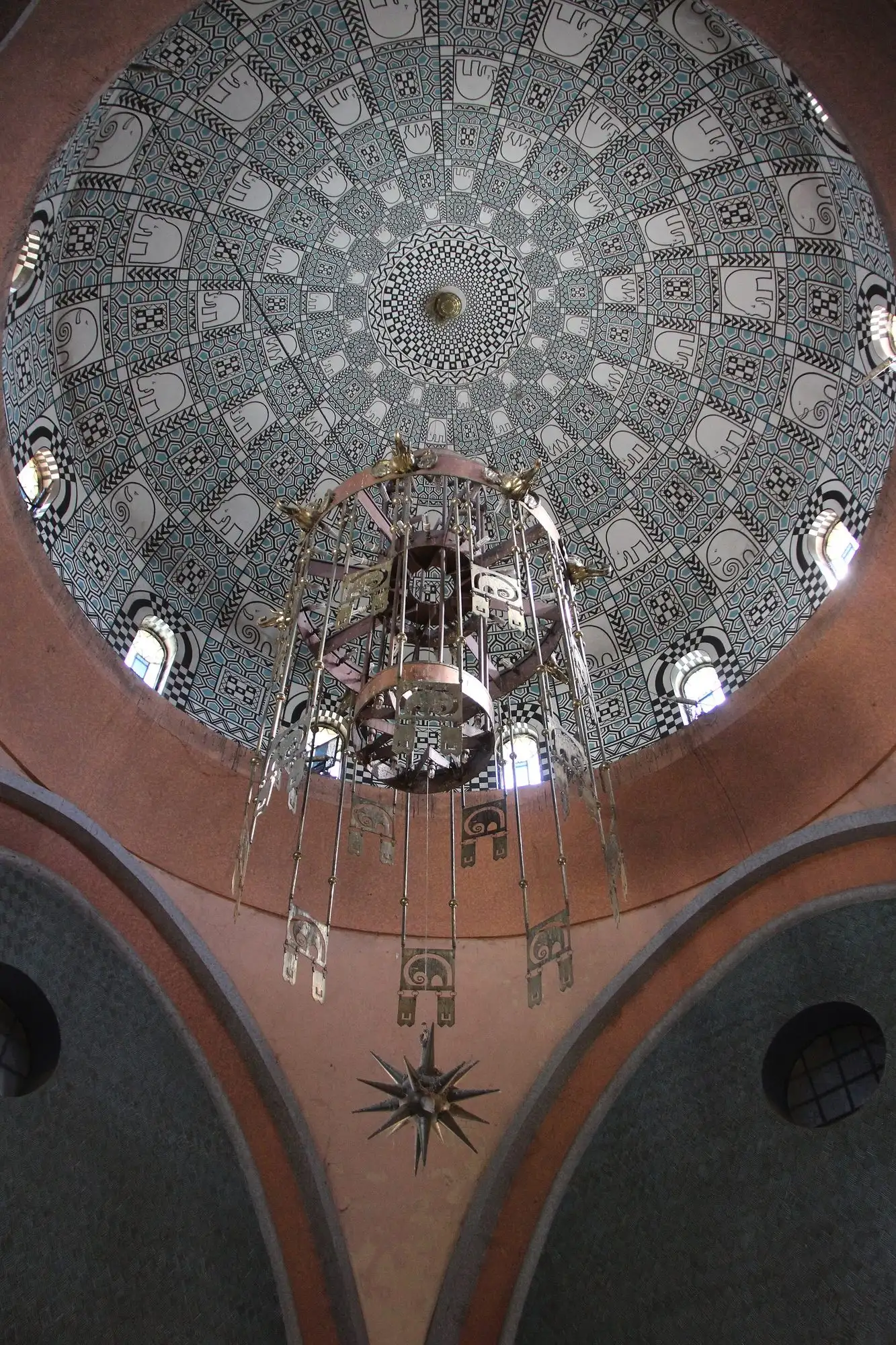
Go for the buildings. What visitors from abroad mention first about Budapest Zoo is not the animals but the Art Nouveau animal houses, the tiled and domed Elephant House above all, and that is the reason an adult with no children in tow still walks through the gate.
It is one of the oldest zoos in the world and the earliest to open in Hungary, founded in 1864 and opened at noon on Thursday, 9 August 1866. One ticket covers everything, including the Great Rock, the Palm House, the Aquarium and the Biodome, so none of the headline buildings is an extra. The Urban Oasis opened inside the Biodome on 1 July 2026, about a hectare under cover with around thirty life-sized prehistoric reptile models, a 25-metre Brachiosaurus, a waterfall falling from fourteen and a half metres and 13,000 tropical plants. Be clear that the Biodome as a whole is only about 80 per cent finished, so the rest of it is not open.
Last entry is an hour before closing, and the animal houses open at 09:00 or 10:00 depending on the building and shut half an hour before the zoo does. The Budapest Card takes twenty per cent off at the ticket office, in person, and not on the zoo’s own online sale. It is next door to Széchenyi Thermal Bath, which is how most people meet it. Hours by season are in our Budapest Zoo guide.
46. Book a slot at the Cat Museum when it rains
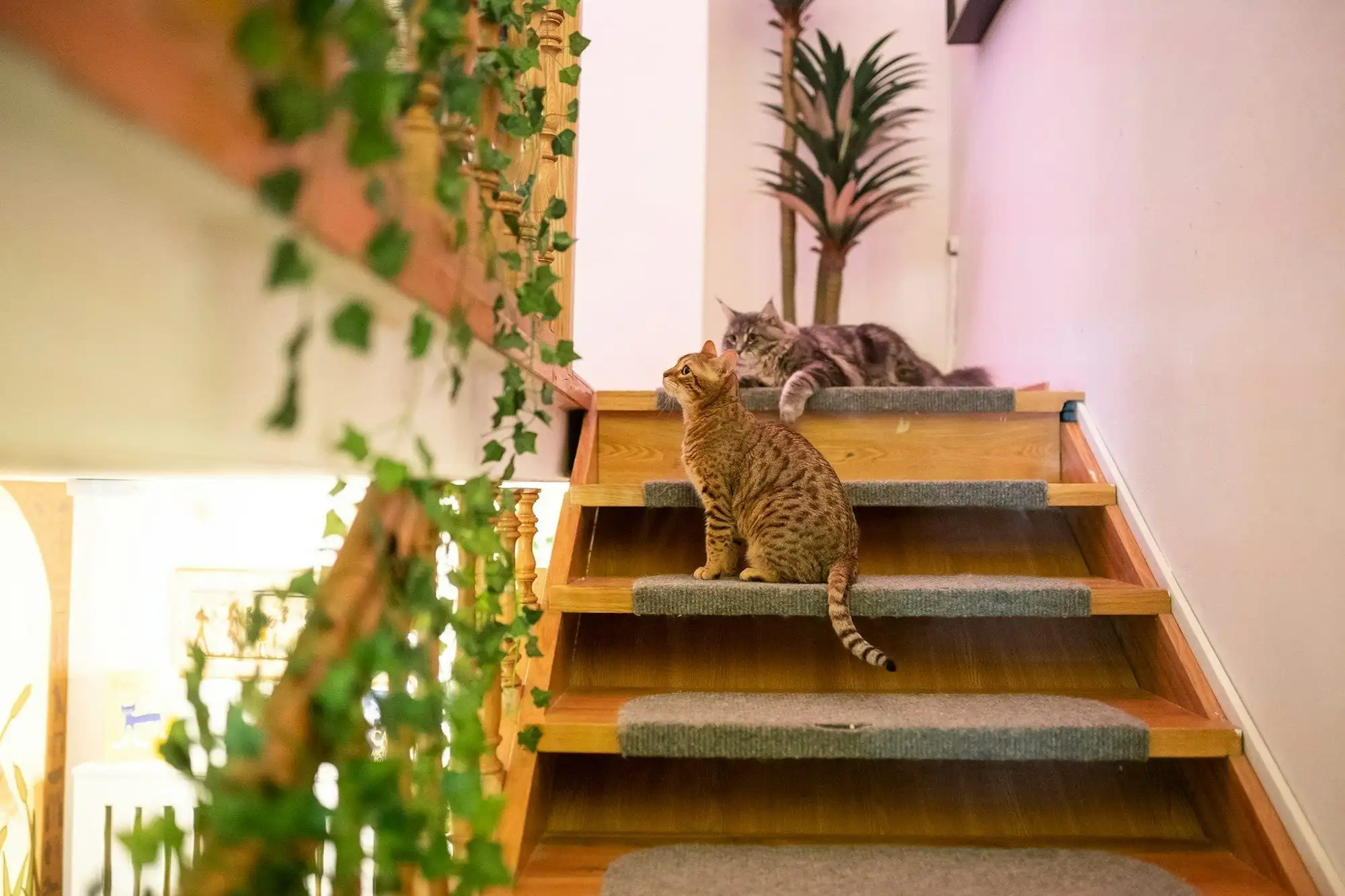
Not a reason to fly to Budapest, and a very good answer to rain. The Cat Museum on Vadász utca is a collection of cat art, porcelain and oddities with live cats living among it, and the cats are what children, and most adults, come away talking about.
Visits run in booked 90-minute slots, the last of them starting at 17:00, and it is open every day from 11:00 to 18:30. The slot is the thing to sort before you set off. Our Cat Museum guide has what is in each room and how the slots work.
Three quiet corners, each a ride out from the centre and each worth it on a longer stay.
47. Find the Roman city in Óbuda
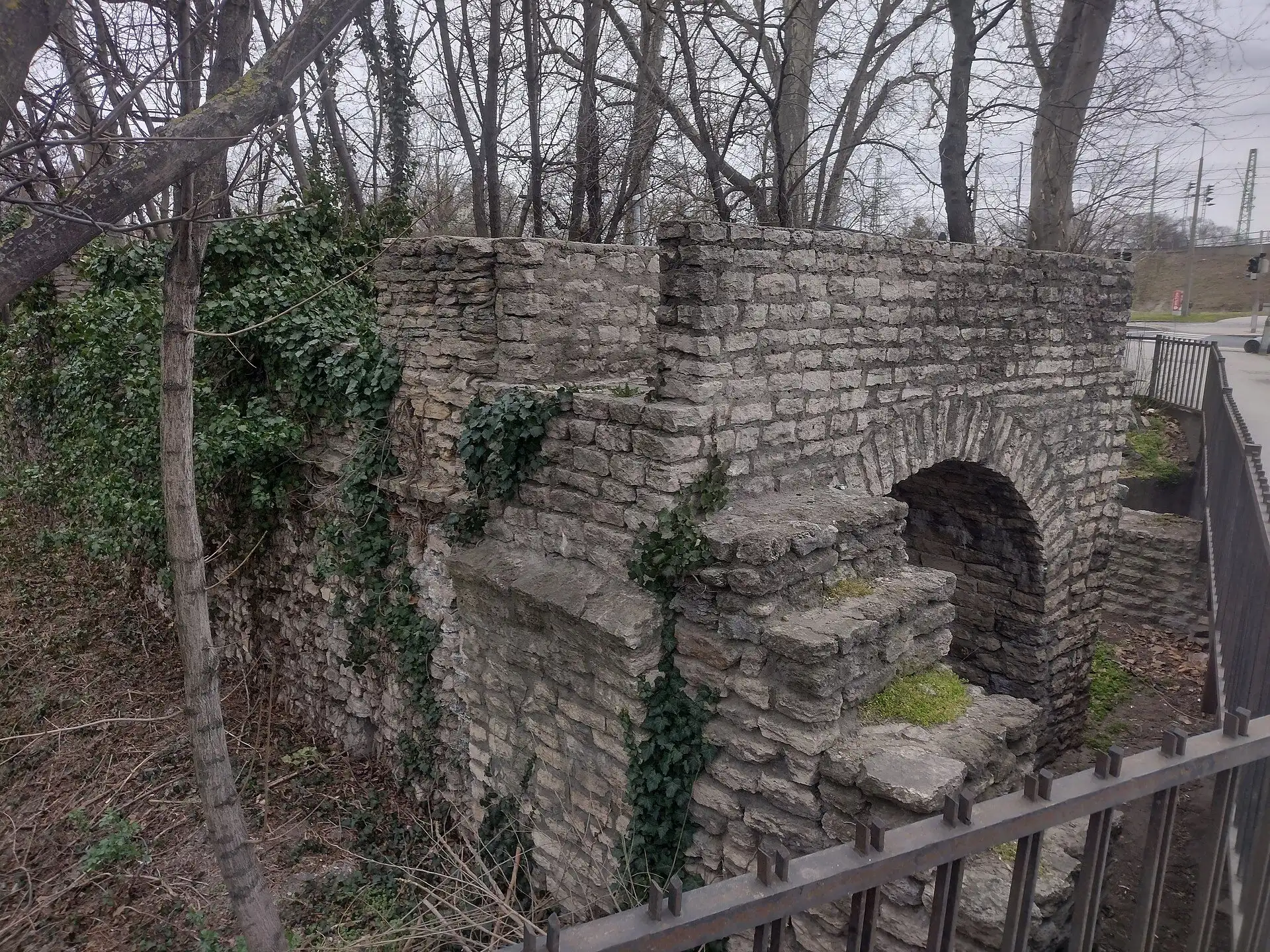
Long before Buda or Pest there was Aquincum, capital of the Roman province of Pannonia Inferior, and what is left of it is spread across modern Óbuda rather than gathered into one museum. Three parts of it are worth the trip, and one ride out on the H5 suburban railway reaches all of them: the museum, the amphitheatre and the old town square.
The Aquincum Museum at Szentendrei út 135 is the main one: a ruin field of streets, houses and bath buildings with the museum beside it, and a single ticket covering the permanent exhibitions, any temporary show and the whole archaeological park. It closes on Mondays, runs 10:00 to 18:00 from 1 April to 31 October with last entry at 17:30, and after the clocks change some of the outlying buildings shut before sundown. Neither partner sells entry; the museum sells its own online and at the desk, with no slot to pick, and an online ticket is good for three months.
The second part costs nothing at all. The Military Town amphitheatre stands open in the street at Nagyszombat utca, with no gate and no charge, and its arena floor, 89.6 metres by 66.1 metres, is larger than the Colosseum’s; it held ten to thirteen thousand people. A short walk away is Óbuda’s Fő tér, a cobbled Baroque square, with Imre Varga’s Várakozók, the bronze women under umbrellas, standing at the Laktanya utca corner. Museum entry is free for everyone on 15 March, 20 August and 23 October, and free on the Budapest Card on any ordinary open day, though not at the Hercules Villa and not on event days. Our Aquincum Museum guide has the ruins in order, and the amphitheatre is on our list of free things to do.
48. Climb to Gül Baba’s tomb for the Ottoman century
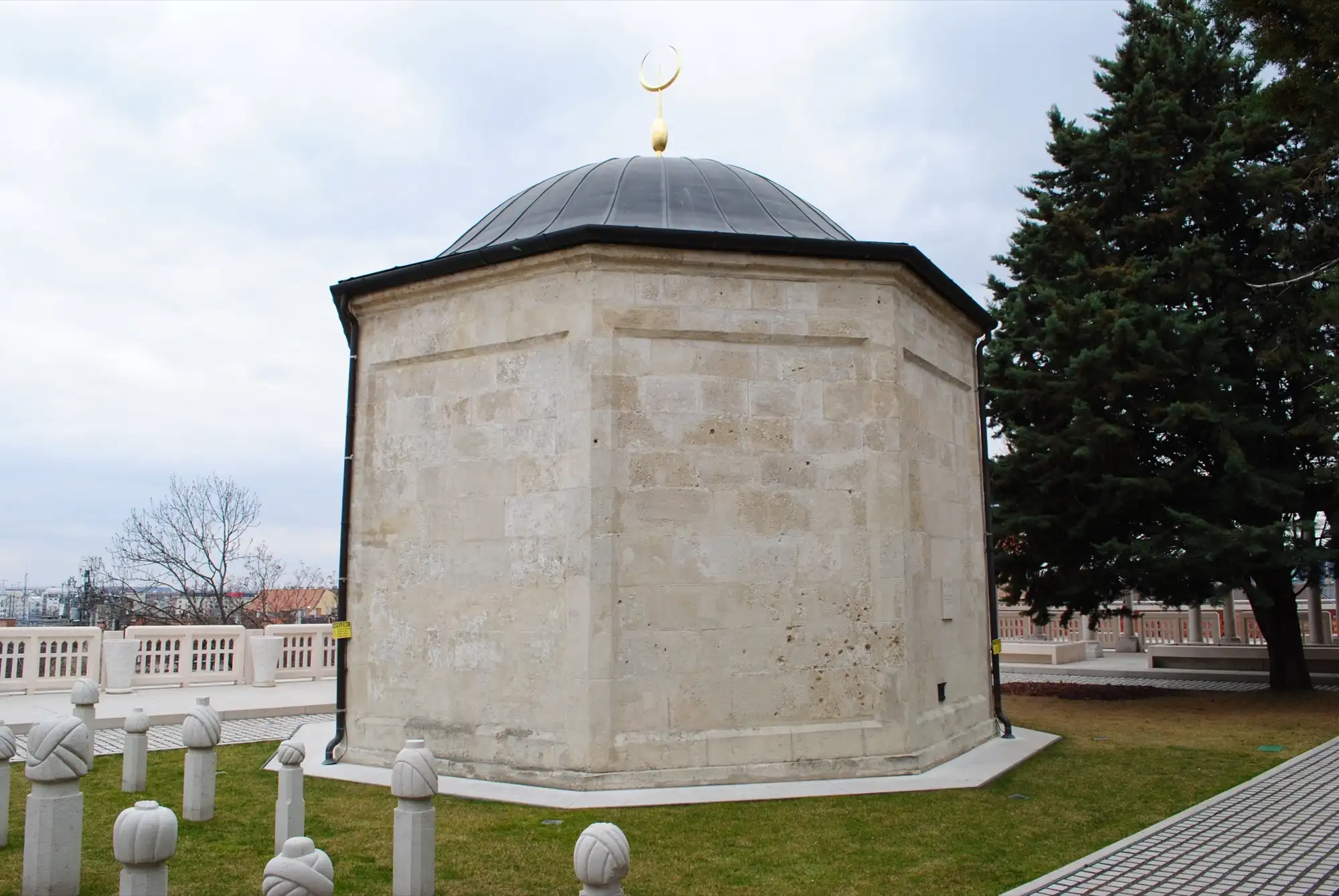
Budapest’s Ottoman century turns up in only a few places on this list, and this is the quietest of them. Gül Baba’s tomb is an octagonal stone chamber under a lead dome, built between 1543 and 1548 for a Bektashi dervish who had come north with Suleiman in 1541 and whose name means Rose Father. It stands on a terrace of rose beds above the Buda bank, with a cultural centre and exhibition in the Wágner villa beside it.
Entry is free for all visitors and it opens Tuesday to Sunday from 10:00 to 18:00, closed on Mondays. From the Buda end of Margaret Bridge, where trams 4, 6, 19 and 41 stop, it is a ten-minute walk up Mecset utca, gently uphill the whole way.
49. Find the Kossuth mausoleum at Fiumei Road Cemetery
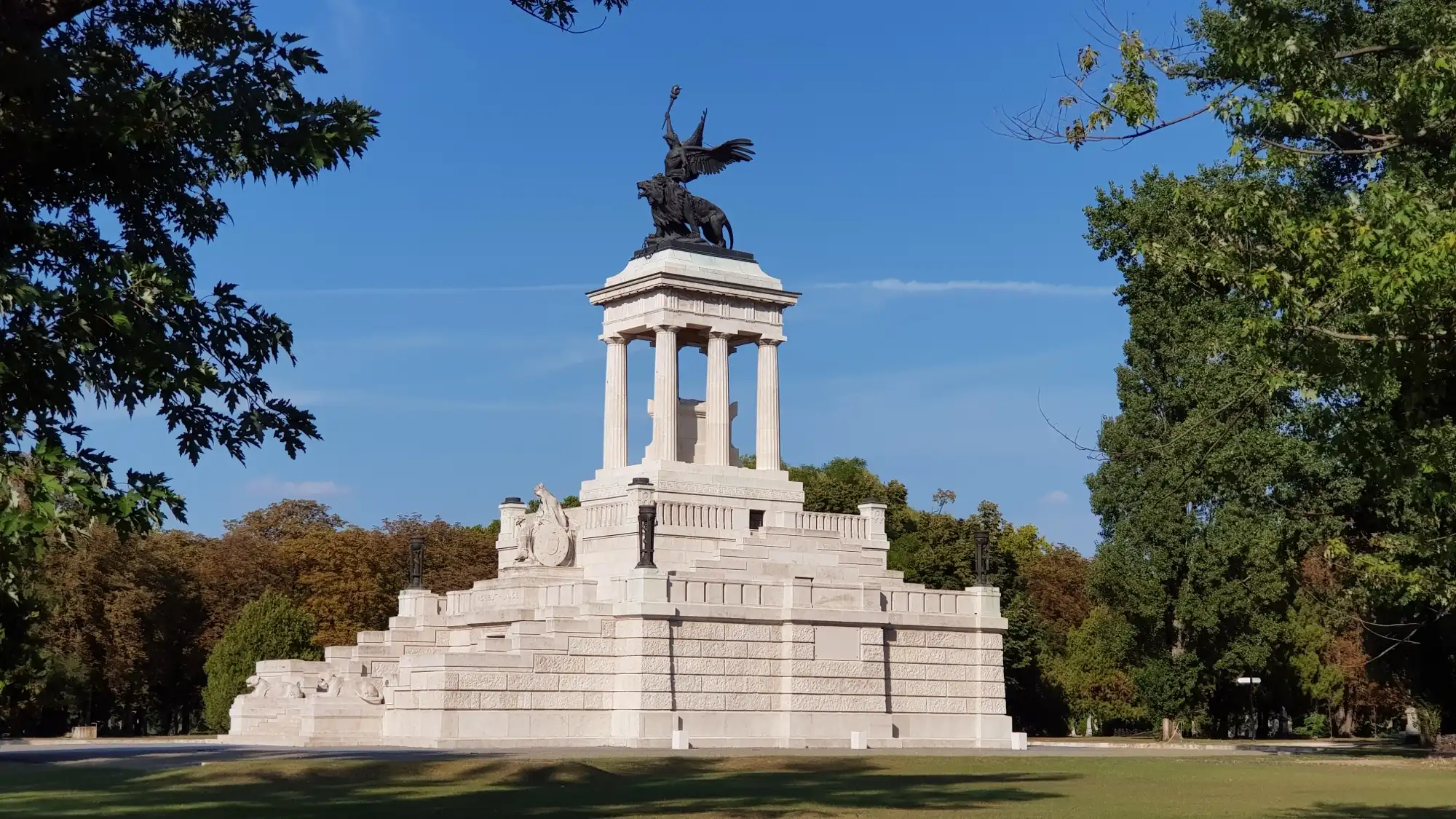
Take the free English map at the information point on your way in. Fifty-six hectares is easy to get lost in, and the thing you came for may be ten minutes’ walk from where you are standing. There is a free app as well, Fiumei Guide.
This is where Hungary buries the people it wants remembered, and the whole cemetery is a national memorial, the only one of its kind in the country. It opened in 1849. The Kossuth mausoleum, finished in 1909, is the largest funerary monument in Hungary, with the Batthyány and Deák mausoleums nearby, and Jókai, Ady, Attila József and Munkácsy are all buried here. The mausoleums themselves open only on guided walks, and the walks advertised in advance are free if you register.
It is free to anyone during opening hours, which start at 07:00 most of the year and 07:30 from November to February, and end at 17:00 in the dark months and as late as 20:00 from May to July. Photography for your own use is allowed. Next door the Salgótarjáni utca Jewish cemetery is also free, on the conditions that visitors keep to the cordoned paths and that heads and shoulders are covered, and it shuts on Saturdays and from 14:00 on Fridays. Keleti station is a short walk away, so it fits an arrival or a departure day.
Day trips last, because a day trip comes out of your days in Budapest rather than being added to them.
50. Give a whole day to the Danube Bend
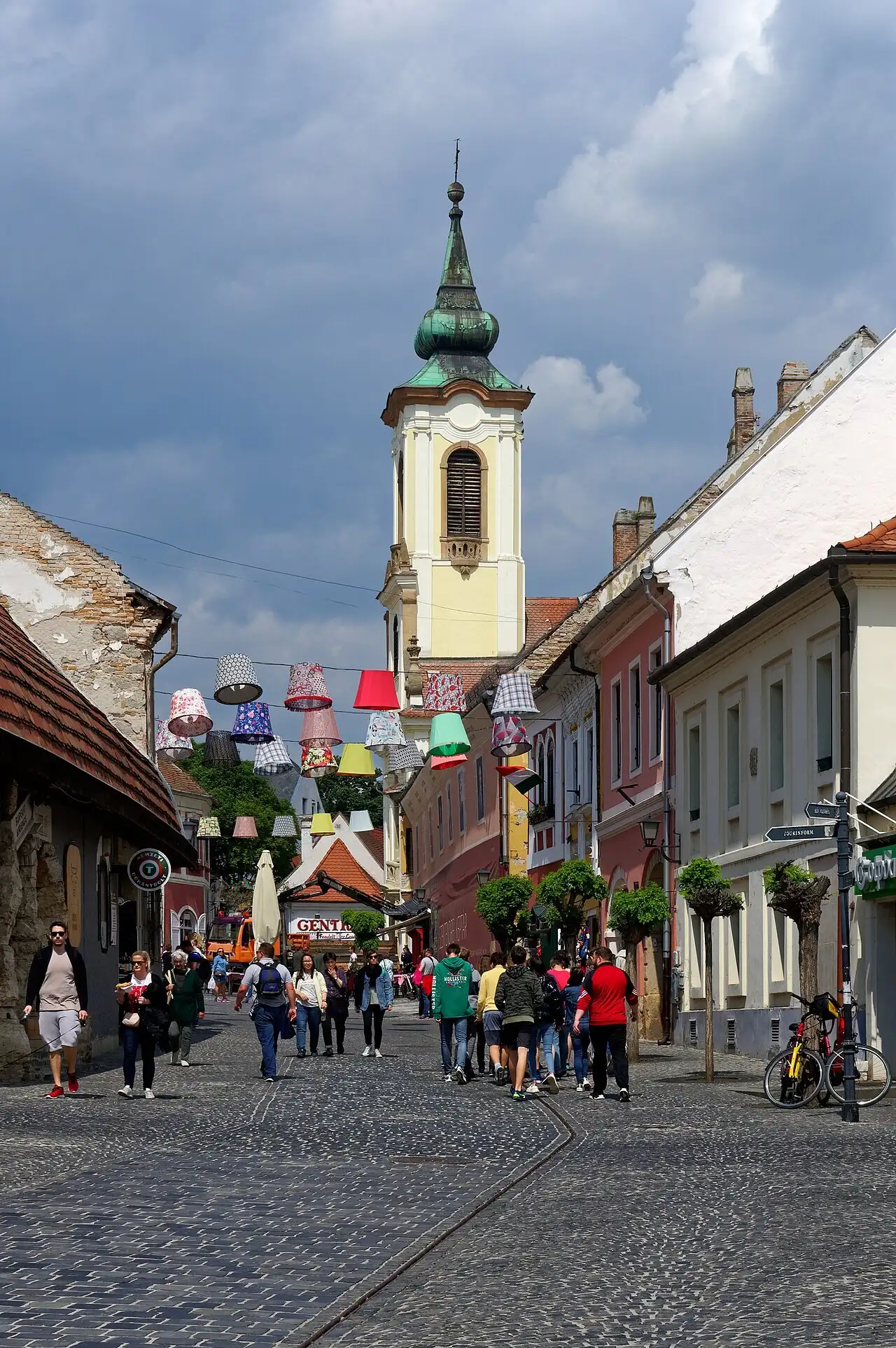
North of the city the Danube turns hard west and then south between hills, and three places sit along that curve. Szentendre is a riverside town of cobbled lanes and small museums around Fő tér. Visegrád is the viewpoint above the bend itself. Esztergom has the basilica, and that is the one building a coach tour actually takes you inside.
Be clear what a coach tour does and does not do. The day trip below goes inside the Esztergom basilica, and that is the only admission in it; Szentendre is a walk and Visegrád is a photo stop, with another stop across the border in Slovakia. It runs nine and a half hours with a live guide, an air-conditioned coach and a three-course lunch, meeting at the operator’s office on Apáczai Csere János utca, two minutes from the Eötvös tér stop on tram 2 and buses 105 and 178. The return may be by boat in summer, and is by coach the rest of the year. Low water puts everyone on the coach whatever the month, so treat the boat as a bonus rather than the reason to book.
To do it yourself, the suburban railway runs to Szentendre from Batthyány tér, and a Budapest ticket needs a suburban extension for the part of the ride outside the city boundary. Either way, be honest with your plan, because this is a whole day gone.
51. Take a half day out to Gödöllő Palace
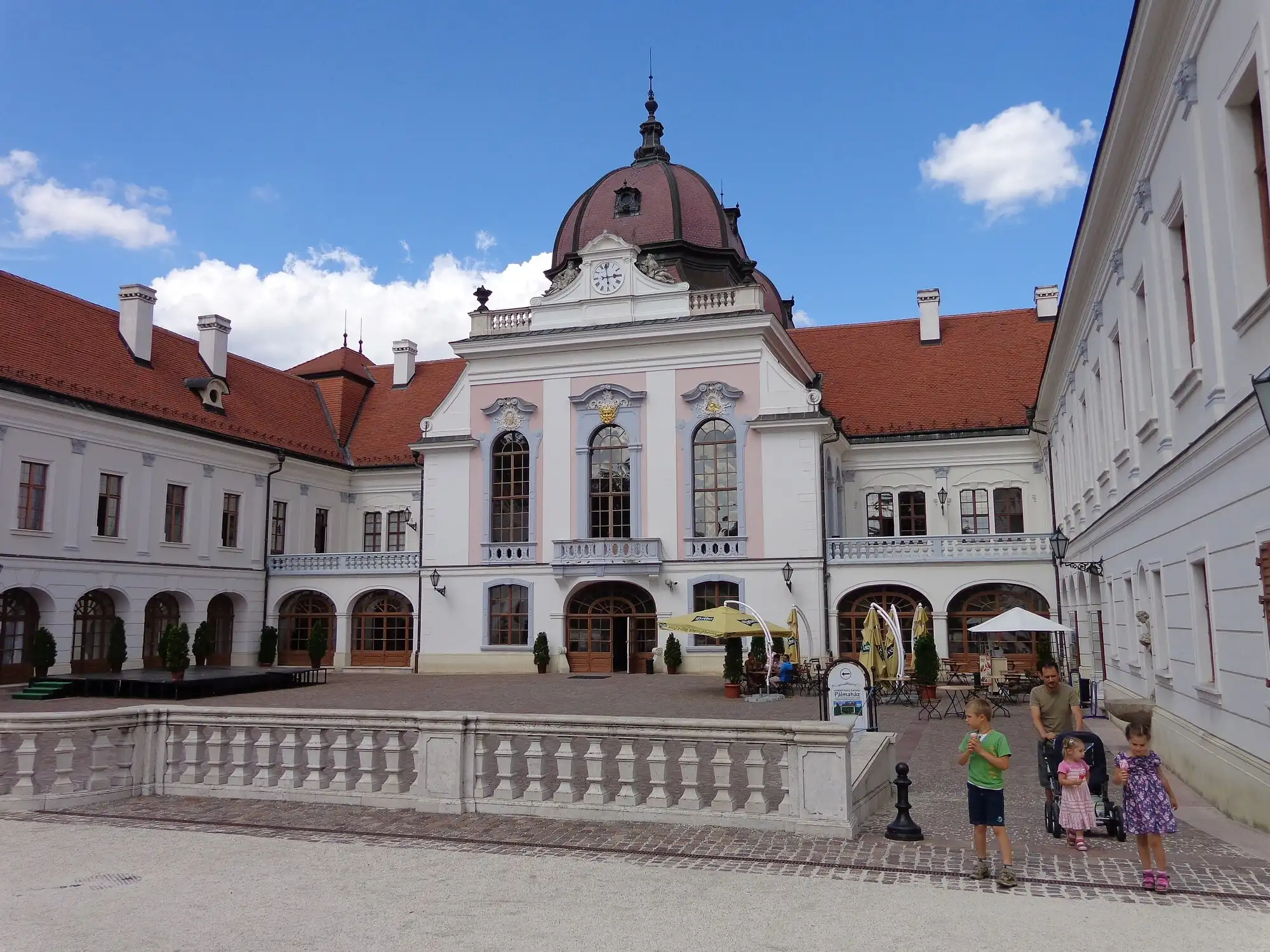
Gödöllő is the eighteenth-century baroque palace east of the city that was Empress Elisabeth’s favourite residence, which is why it is sold as the Sisi palace. It is the one royal house near Budapest worth the journey if you have already done Castle Hill.
Keep this one in proportion. It is a half day and it suits a longer stay or a second visit to Budapest, not a three-day trip with the Parliament and the baths still to fit in. The tour below leaves at 10:00 from the same office as the Danube Bend trip, runs four hours door to door with a guide, a coach, skip-the-line entry and a drop-off back in the city centre, and includes no meal.
How many days to spend in Budapest
Three days is the shortest trip that does not feel like a raid, and four or five is the right length. That is a judgement, and it comes out of the shape of the city rather than out of thin air. Four of the biggest things here are not available on demand: the Parliament is a timed tour, the Opera House by day is a tour or nothing, the Hospital in the Rock is a guided tour only, and the synagogue is shut every Saturday. Fit those four around each other and you have used up the flexible hours of a short trip.
Nothing on this page expects you to do all 51. Take the block that matches your stay and treat the rest as a reason to come back. Each block below has a matching route in our Budapest itineraries, hour by hour.
One day
One day is not enough, and we will not pretend otherwise. Do the first five and let the rest go: a morning at Széchenyi, the Parliament if you booked it weeks ago, Fisherman’s Bastion, Gellért Hill in the afternoon and a cruise after dark. Skip the museums entirely. The one decision that matters is whether you have a Parliament slot, because without one the day reshapes itself around Castle Hill.
A one-day route with the walking and the transfers worked out is a plan of its own.
A weekend
Two days adds the whole of Castle Hill, which is a half-day on its own once you have done Matthias Church, St Stephen’s Hall and the guard change, and the old Jewish Quarter for the synagogue and an evening in the ruin bars. Keep the Saturday for things that open on a Saturday, because the synagogue does not.
The weekend version of this list, in order, is written up separately.
Three days
Three days is where the trip stops feeling like a sprint. The third day goes to City Park: the M1 out to Heroes’ Square, Vajdahunyad Castle, one of the museums in the park, and Széchenyi at the top of it if you have not been already. Add one evening indoors, whether that is the Opera House, the organ concert in the Basilica or the Liszt Academy, and the list has given you its best.
We have the three-day route mapped out day by day.
A week
A week reaches everything the short trips never get to: the art museums, Memento Park, the Buda hills, the caves, Roman Óbuda and the quiet corners out by Keleti and above the Buda bank. It is also the only length that can afford a day trip, and one is enough. Spread the indoor things across the week rather than stacking them, because four museums in two days is how a holiday starts to feel like work.
A week in Budapest, day by day, is a route in its own right.
Getting around Budapest
The centre is walkable and most of this list is in it. From the Parliament south to the Great Market Hall is flat and follows the river, Castle Hill is a short climb or a lift ride, and the old Jewish Quarter is a few streets wide. The exceptions are City Park at the end of Andrássy Avenue, Memento Park out in District XXII, the Buda hills, the Pál-völgyi Cave, the SkyDeck down at Kelenföld and Roman Óbuda, and each of those is a ride rather than a walk.
Single tickets and travelcards
A single ticket is one uninterrupted journey. It covers transfers between metro lines as long as you stay inside the paid area, but leaving the metro area ends it, and the trip back needs a new one.
The 24-hour and 72-hour travelcards give unlimited journeys inside Budapest, can be bought in advance and need no validating, which is the main reason to prefer one if you are moving about a lot.
Who travels free
Anyone aged 65 or over travels free on the whole network, whatever their nationality, on a passport or ID card. Children before school age travel free too, but free travel for older children hangs on a Hungarian student card, so a visiting 12-year-old pays.
Three rides that sit outside the fare system
Airport bus 100E takes only its own airport ticket, or the add-on for a longer-term pass, although the 72-hour Budapest Card Plus covers one ride in each direction. The funicular takes only its own ticket, with the Budapest Card Plus riding free both ways. The chairlift takes only its own ticket, with either the Budapest Card or the Card Plus free both ways. Bus 200E takes an ordinary ticket, but not the airport one.
There is no public boat through the centre
The one ferry inside the fare system is away down in the southern districts, so seeing the city from the water means a cruise ticket. That is why the evening cruise is high on this list rather than filed under transport.
Ticket types, machines and the night network are in our transport guide, and whether a pass pays for itself is worked out in our city passes guide and on the Budapest Card page.
What a trip to Budapest costs
Cheaper than the Western European capitals, and much cheaper than London. Hungary’s general price level sits about a third below the EU average, with eating out and hotels roughly 30 per cent below it, while Austria, France and Germany are all above that average and the United Kingdom is well above it. That gap is a real part of why the flight is worth taking.
The useful question is not how much but what charges, and on this list the answer splits cleanly.
| On this list | What it asks of you |
|---|---|
| Every bridge and the whole riverbank, Heroes’ Square, City Park, Margaret Island, the lower level of Fisherman’s Bastion, the Gellért Hill park and its lookouts, the Vajdahunyad courtyard, the Ethnography roof, the ground floor of the House of Music, the Óbuda amphitheatre, Gül Baba’s tomb, Fiumei Road Cemetery and the guard change at Sándor Palace | Nothing at all |
| The Money Museum | Nothing, but booked in advance, because capacity is limited |
| Moving about: the metro, trams, buses and tram 2 | A ticket or a travelcard, with the funicular, the chairlift and the airport bus each wanting their own |
| The headline paid sights: the Parliament, the baths, the Basilica dome and Treasury, the synagogue complex, the Opera tour, the museums, the caves, the Hospital in the Rock and the evening cruise | An admission charge each, and the scarce ones are worth booking from home |
| Several the Budapest Card covers outright, among them the Museum of Fine Arts, the Hungarian National Gallery, St Stephen’s Hall, the Capa Center, the Aquincum Museum, the Pál-völgyi Cave, Memento Park and the SkyDeck | Free on the card, which changes the arithmetic once you are doing more than two of them |
| Several more the card takes a slice off, among them Széchenyi, Rudas, the Basilica, the synagogue, the zoo, the Hospital in the Rock and the evening cruise | Money off, given in person at the ticket desk rather than on an online booking |
| Either day trip | A tour fare, and a whole day of your trip |
So a day that costs almost nothing is easy to build here, and our free things to do list has 28 of them. If you are planning several paid sights and a lot of transport, compare that against a pass in our city passes guide before you book them one by one.
When to go to Budapest
Spring and autumn, if you have a choice. The weather suits the walking that makes up most of this list, and Castle Hill is thinner on the ground than it is in July. No season is a write-off, though. Each one changes the list rather than ruining it.
Spring
The walking season, and the point at which the city opens up again: Margaret Island’s small zoo runs from spring to autumn, the island itself is at its best before the summer crowds, and the terraces come out. The three national days with free museum entry, 15 March among them, fall either side of spring, so check the date before you buy a museum ticket.
Summer
Hot, busy and the only season for the open-air water: Palatinus on Margaret Island, the outdoor lido pools and the boats on the City Park lake. It is also when the Danube Bend tour may come home by boat at weekends, though low water puts everyone back on the coach. Spend the hottest hours on the river or up in the Buda hills, and remember that the Pál-völgyi Cave holds 11°C, the one thing on this page that is better in a heatwave than in February.
Autumn
Our pick, with spring. The light on the river is at its best, Castle Hill is bearable again, and the thermal pools start to make sense as the air cools. By late autumn the outdoor pools at Széchenyi are coming into their own and the City Park lake is about to be drained for the rink.
Winter
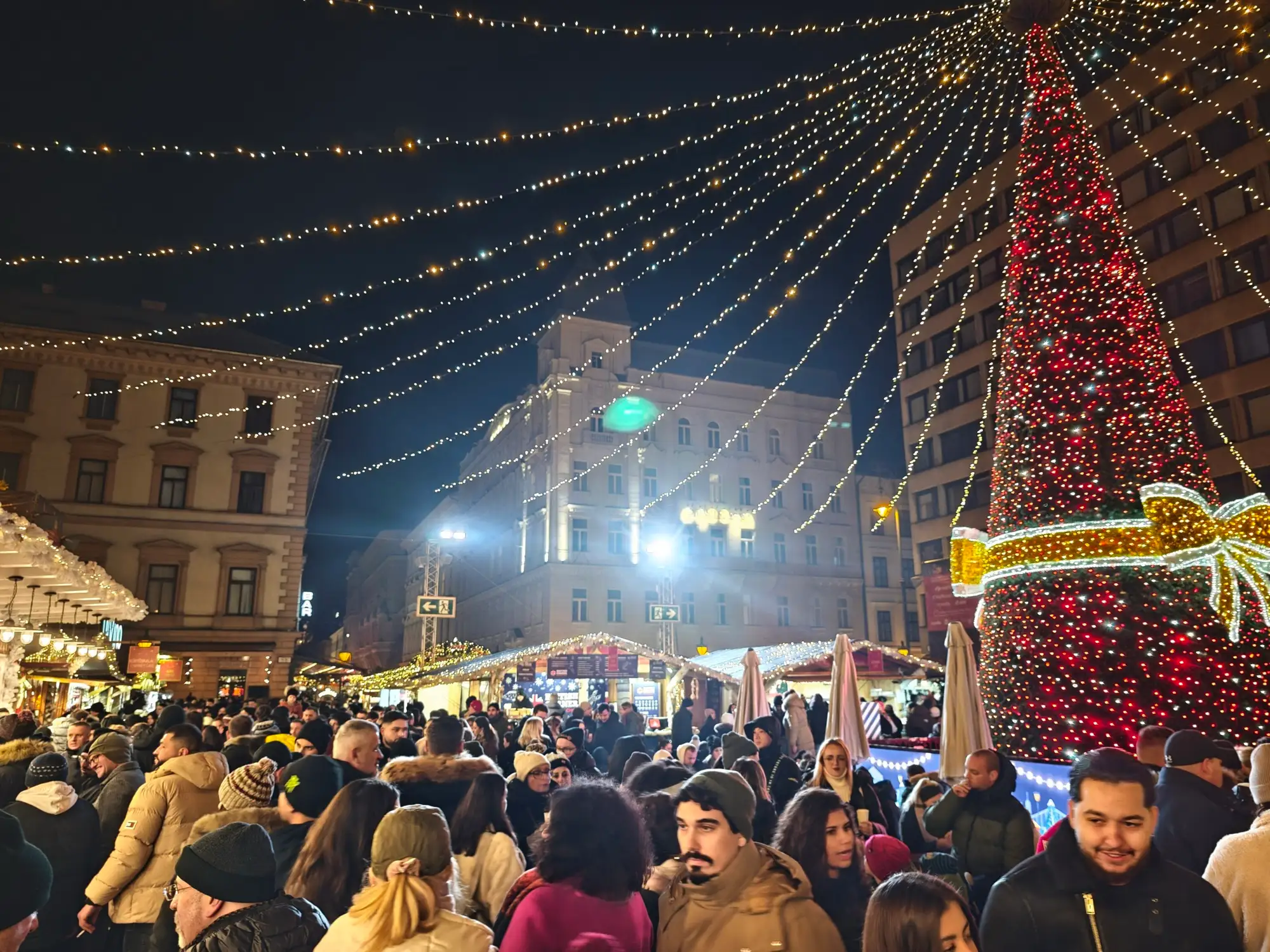
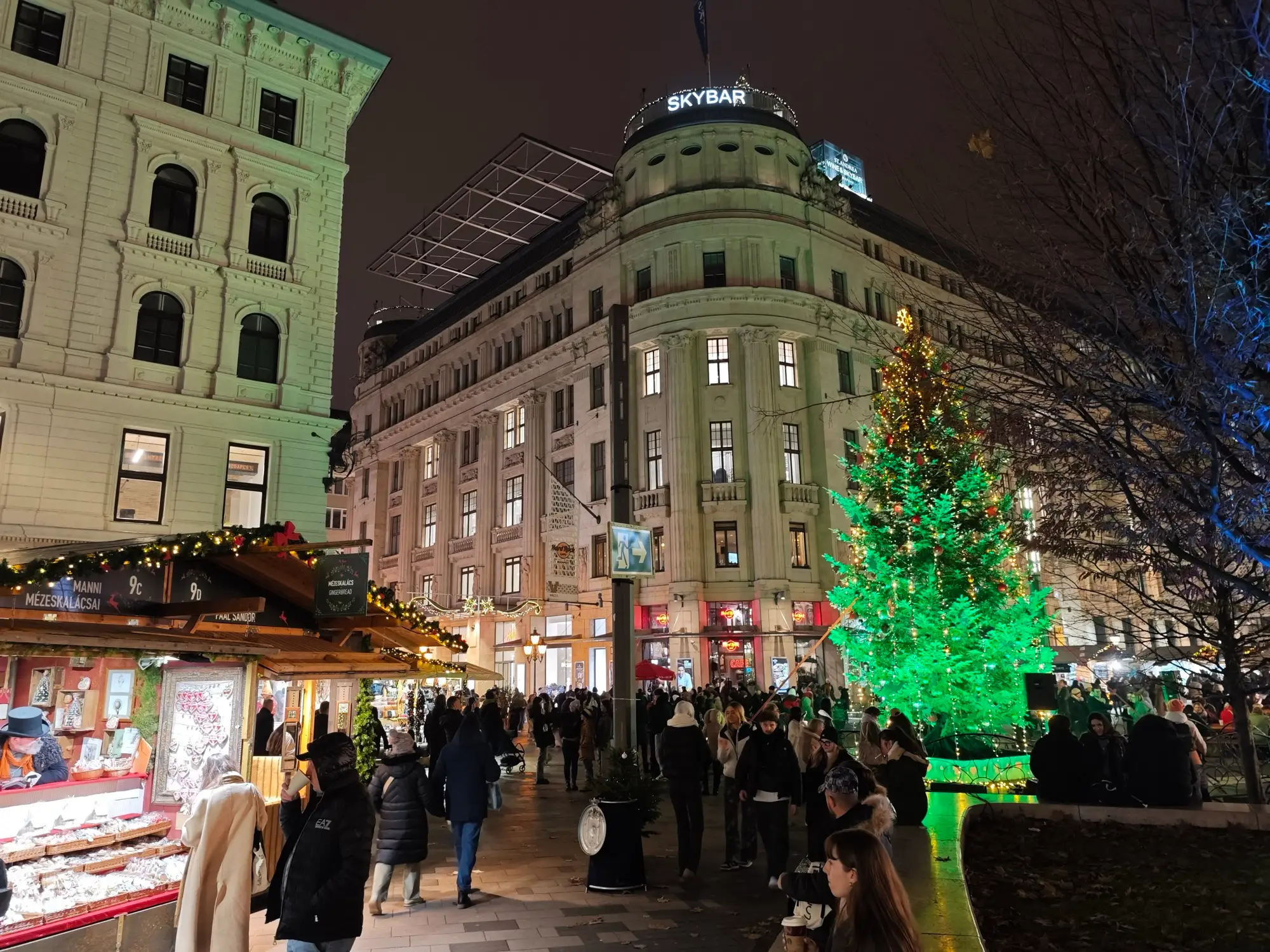
The season the baths and the floodlit skyline were made for. Sitting in hot water in cold air is the whole pleasure of a thermal bath, and the contrast is strongest on the coldest morning of your trip. The floodlights come on in the late afternoon, so an evening cruise fits into a short day instead of needing a late night. From November the City Park lake becomes the ice rink, Margaret Island’s small zoo is shut, and from late November the Christmas markets take over the squares.
What is shut in Budapest, and when
Nobody plans around this and it wrecks more days than crowds do.
Mondays
Most museums, which on this list means the House of Terror, the Hungarian National Museum, the Hungarian National Gallery, the Museum of Ethnography, the House of Music Hungary, the Capa Center and the Aquincum Museum. The Pál-völgyi Cave and Gül Baba’s tomb close too, although the cave does open on Monday public holidays, except at Christmas and the new year. The MOL Campus SkyDeck closes on the third Monday of every month, which is its own kind of trap. The funicular takes odd-week Mondays off for maintenance and the chairlift even-week Mondays, unless the day is a public holiday. Keep the Holocaust Memorial Center off a Monday as well, and off a Saturday, for the reason in the Saturdays line below.
Tuesdays
The Money Museum, and it is the only thing on this list that shuts on a Tuesday. The House of Music’s Sound Dome also closes on the first Tuesday and Wednesday of each month, while the rest of the building stays open.
Saturdays
The Dohány Street Synagogue, all day, every week, and the major Jewish holidays as well; on Fridays it closes early. The Salgótarjáni utca Jewish cemetery beside Fiumei Road shuts on Saturdays too, and from 14:00 on Fridays. The Holocaust Memorial Center is the awkward one: Saturday and Monday are both days it may be closed, so visit it on a Sunday or between Tuesday and Friday and the question never arises.
Sundays and public holidays
The Ervin Szabó library is entirely closed. The Capa Center closes on Hungarian public holidays. The Great Market Hall does open on Sunday from 10:00 to 16:00, but shuts on official holidays.
Open, but not when you expect
The Capa Center does not open until 1pm from Tuesday to Friday, which ruins a morning in exactly the way a closed day does. The Money Museum is free and still has to be booked ahead, because capacity is limited and it fills.
A few fixed dates
The Hospital in the Rock takes five days off a year: New Year’s Day, 1 November, Christmas Eve and Christmas Day, and New Year’s Eve.
Shut for years, so do not send anyone
Gellért Thermal Bath until 2028, the Király and Rác baths, the Erzsébet Lookout in the Buda hills, and the musical fountain on Margaret Island, which is being rebuilt. The fountain is the one that still turns up in other people’s plans, so cross it off yours.
Slot-bound rather than shut
The Parliament, the Opera House and the Hospital in the Rock are all seen at a time somebody else sets, so book them first and fit the rest around them. The MOL Campus SkyDeck sells timed slots online only, and the Pál-völgyi Cave runs on the quarter past the hour.
Verdict
If you only do one thing, get in the water at Széchenyi. It is the one experience here that nowhere else in Europe quite matches, it is best of all on the coldest morning of your trip, and an hour in those pools has a way of turning into most of a day. Arrive at opening time, stay outside rather than in the halls, and if you would rather have an Ottoman dome or a quieter crowd, our thermal baths round-up picks the bath for you.
After that, the Parliament if you booked in time, Fisherman’s Bastion at seven in the morning, and an hour on the river after dark. Then put the list down and walk somewhere that is not on it.