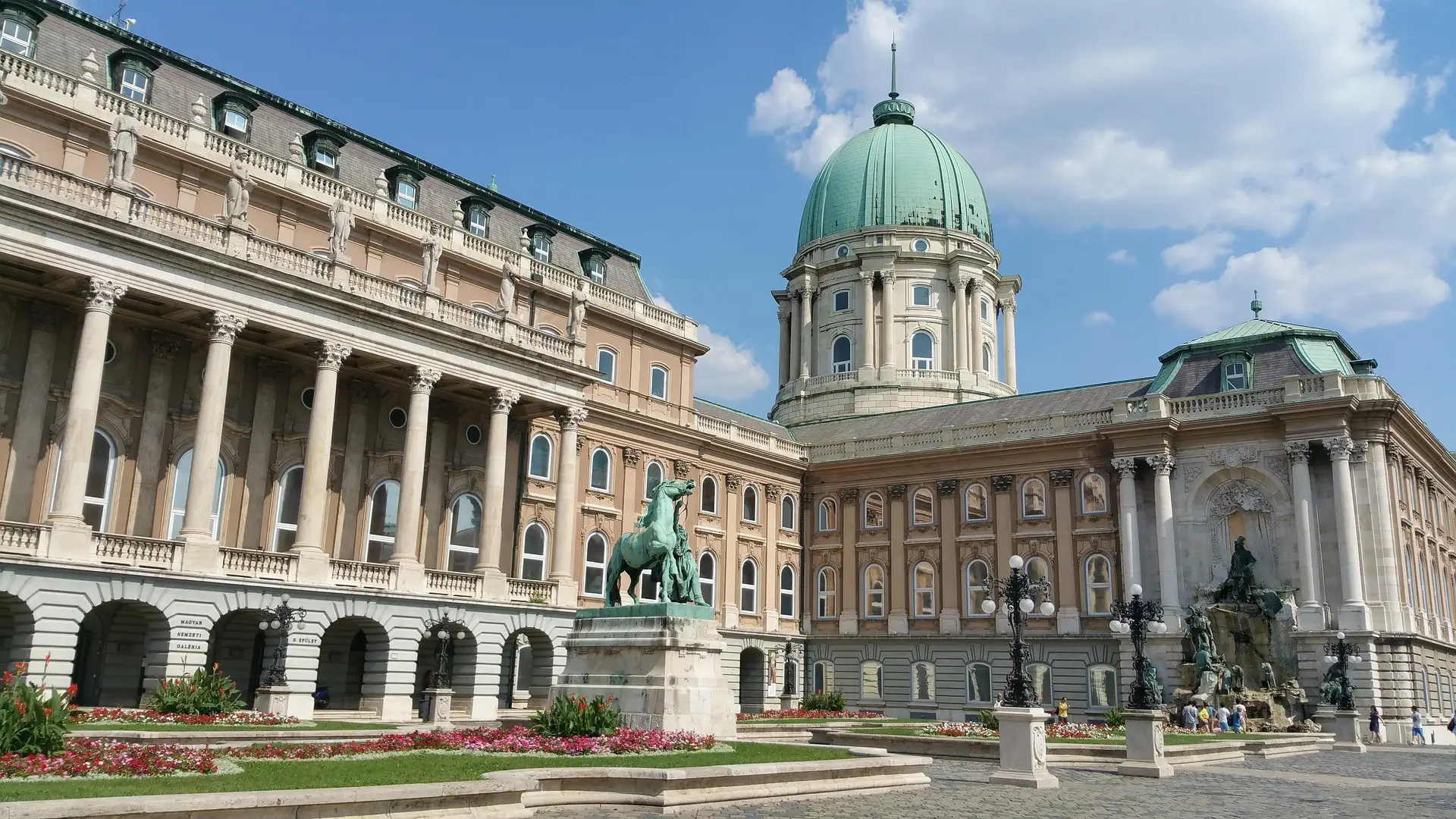
Nobody charges you to walk round Buda Castle. The courtyards of the royal palace, its terraces over the Danube and its gardens are open to everyone around the clock, and you pay only once you go indoors.
The tickets are for the Hungarian National Gallery under the dome, the medieval palace beneath the Castle Museum, and St Stephen’s Hall, the one royal room rebuilt exactly as it was.
The palace has been the biggest building site in Budapest since 2019, and in September 2026 the government paused the works for a review, so cranes and fences are part of the view for now.
- Visit length
- 2 hours for the courtyards and one museum, half a day for the hill
- Entry
- Free. The museums and St Stephen's Hall are ticketed
- Book ahead
- St Stephen's Hall and the guided walks
- Opening hours
- Castle grounds, courtyards and terraces (free): Daily 00:00 to 24:00Hungarian National Gallery: Mon closed, Tue to Sun 10:00 to 18:00Castle Museum and St Stephen's Hall: Daily 10:00 to 18:00Hospital in the Rock: Daily 10:00 to 19:00Labyrinth: Daily 11:00 to 18:00
- Best time
- Before 10:00, or after dark
- Nearest stop
- Bus 16 / 16A / 116 / 216 Dísz térAbout 270 m north of Szent György tér, on the level. The 16 and 216 come up from Deák Ferenc tér in Pest
- Accessibility
- Step-free from the river by the Castle Garden Bazaar lifts; cobbles throughout
- Guard change
- On the hour at Sándor Palace, full ceremony at noon
- Rebuilding works
- Fences, cranes and closures across the palace
- What's free
- Courtyards, terraces, gardens, the guard change
Tickets
The castle itself needs no ticket. Each museum sells its own tickets at its own desk, and the partner products worth having are guided walks: one goes inside St Stephen’s Hall, one inside Matthias Church, and one stays outdoors.
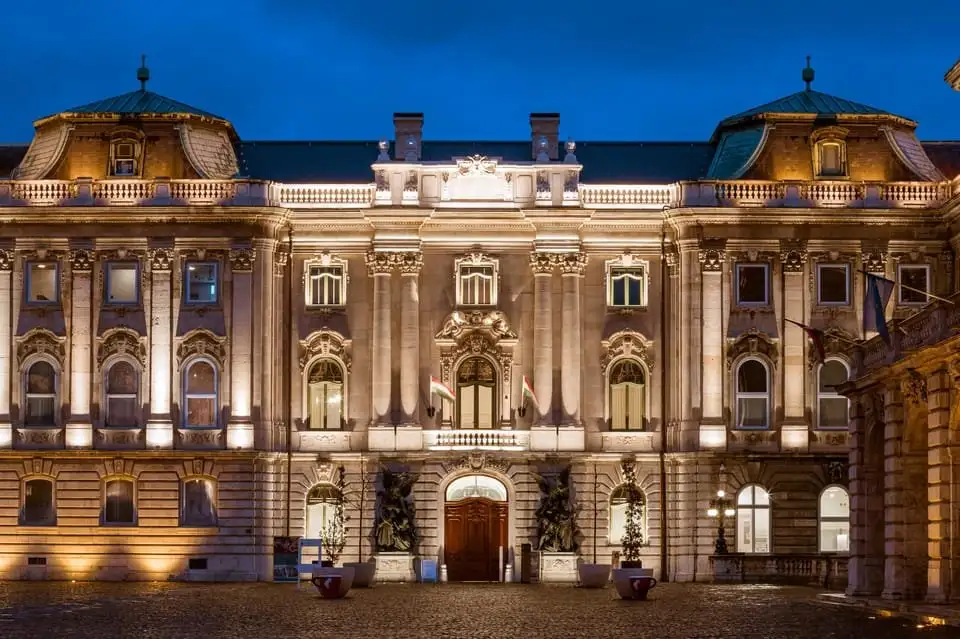
Budapest: Buda Castle Walk with Saint Stephen's Hall
Best for: Seeing inside St Stephen's Hall, with a guide to tell the palace's story
- 90 minutes, 30 of them inside St Stephen's Hall
- Live guide in English, with headsets
- Free cancellation up to 24 hours ahead
What’s included and more details
What’s included
- Guided walk round the palace courtyards and terraces
- Entry to St Stephen's Hall
- A headset to hear the guide
- Meeting point
- Savoy Terrace, in front of the Hungarian National Gallery (Szent György tér 2). Look for the turquoise umbrella
- Arrive
- 15 minutes early. The tour starts on time and latecomers cannot join
- Not suitable for
- Children under 12 and people with limited mobility
- Also
- Reserve now and pay later
Budapest: Historic Buda Castle Walking Tour
Best for: Seeing the whole of Castle Hill in one go, with a historian as your guide
- 2.5 hours
- Live guide in English
- Free cancellation up to 24 hours ahead
What’s included and more details
What’s included
- Guided walk of the Castle District
- Entry to Matthias Church, with the guide's commentary inside
- Meeting point
- The Holy Trinity Column on Szentháromság tér. Buses 16, 116 and 216 stop nearby
- Weather
- Mostly outdoors. In heavy rain the route takes in more indoor stops
- Also
- Reserve now and pay later
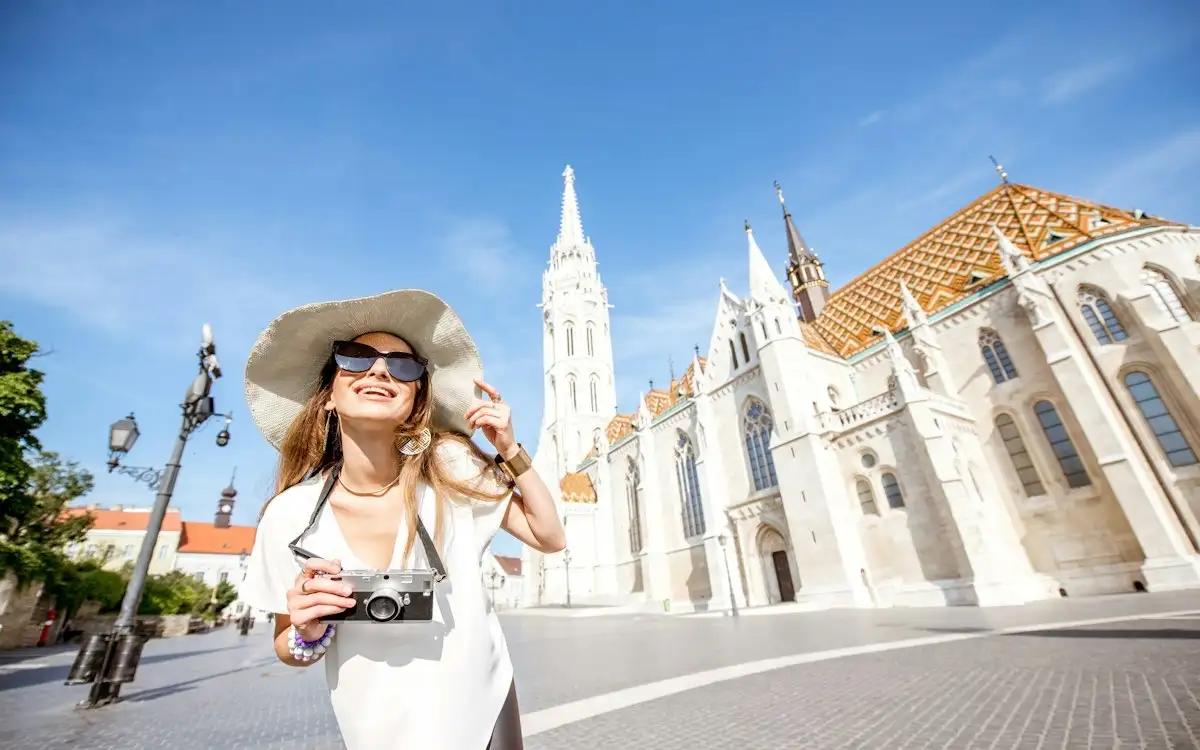
Walking Tour of Buda
Best for: An easy afternoon introduction to the Castle District, all from outside
- 2 hours, starting at 14:00
- Live guide in English
- Free cancellation up to 24 hours ahead
What’s included and more details
What’s included
- A licensed guide past Fisherman's Bastion, Matthias Church, the Royal Palace and the funicular
- Meeting point
- In front of Matthias Church at the Holy Trinity Column (Szentháromság tér 2)
- Not included
- Entrance fees and hotel pick-up
- Changes
- You can move the date up to 24 hours before
Getting in free with the Budapest Card

Budapest Card: Public Transport, 30+ Top Attractions & Tours
Best for: Getting into the Gallery, the Castle Museum and St Stephen's Hall for nothing, which is most of a day on the hill
- 24, 48, 72 or 96 hours from first use
- Free cancellation up to 24 hours ahead
What’s included and more details
What’s included
- Free entry to the Hungarian National Gallery
- Free entry to the Castle Museum
- Free entry to St Stephen's Hall
- Unlimited public transport, including the Castle Bus
- On the hill
- One visit each. St Stephen's Hall still needs a timed slot, so show the card at its own ticket desk
- Not covered
- The Labyrinth and the Hospital in the Rock. The funicular is on the 72 hours Plus only
- Where it is given
- At each ticket desk, in person, never online
- Worth it only if
- You would have paid for several of the things on it. One free entry does not cover the card on its own
- St Stephen’s Hall is visited in timed slots with a cap on numbers, so book a slot online or take the walk that includes it. The ticket also gets you into the Castle Museum’s medieval palace rooms
- The Hungarian National Gallery and the Castle Museum sell tickets at their own desks in the Lion Court. The Budapest Card covers one visit to each
- The funicular sells a return ticket only, and the Hospital in the Rock and the Labyrinth are ticketed separately at their own doors
Every tour compared, with what each one goes inside: Buda Castle tours guide.
Highlights
The terrace over the Danube
Stand on the Savoy Terrace with the Chain Bridge, the Parliament and the whole of Pest laid out below, for nothing.
St Stephen's Hall
Step into the one palace room rebuilt exactly as it was in 1900, Zsolnay fireplace, carved wood and painted kings included.
The Hungarian National Gallery
See Munkácsy, Csontváry and the Gothic altarpieces under the dome, then climb to the dome terrace, the highest point of the palace.
Plan your visit
Opening hours
The castle grounds never close. Inside, the Castle Museum and St Stephen’s Hall open every day from 10:00 to 18:00, the National Gallery the same hours from Tuesday to Sunday, and the Hospital in the Rock until 19:00.
Castle grounds, courtyards and terraces (free): Daily 00:00 to 24:00Hungarian National Gallery: Mon closed, Tue to Sun 10:00 to 18:00Castle Museum and St Stephen's Hall: Daily 10:00 to 18:00Hospital in the Rock: Daily 10:00 to 19:00Labyrinth: Daily 11:00 to 18:00Every set of hours, the festive days and the guard change times are in our opening hours guide.
Getting there
The palace is at the southern end of Castle Hill, above the Buda end of the Chain Bridge. Four ways up: the funicular, the Castle bus, the free escalator and lifts from the Castle Garden Bazaar on the riverbank, and the free lifts from Palota út on the west side.
Nearest stops
By car: not recommended. The Castle District sits behind traffic barriers and you pay for every minute inside.
The routes compared, the funicular’s ticket rule and the step-free way up are in our how to get there guide.
Before you go
- Wear shoes for cobbles. Every courtyard and street on the hill is cobbled or setted, and the terraces have steps between levels
- Bags: St Stephen’s Hall sends anything bigger than 30 by 40 by 20 cm to its cloakroom, and allows only a small bottle of water inside on medical grounds
- Photos are fine outdoors and in St Stephen’s Hall without flash, tripods, selfie sticks or stabilisers. The Hospital in the Rock allows no photography at all
- Children: the St Stephen’s Hall walk is not sold to under-12s, the Hospital in the Rock does not admit under-6s, and pushchairs must be pushed, not carried, in the hall
- Money: the museums have their own ticket desks, and the Hospital in the Rock is card only
- Check the day’s closures on the Castle Headquarters’ map before you set off, and give yourself 15 minutes to find a tour meeting point
Accessibility
The courtyards and terraces can be reached without steps, but the surface is cobbles throughout and the levels are joined by stairs as well as ramps and lifts.
- Step-free from the river: the Castle Headquarters’ own step-free route runs from Clark Ádám tér through the Castle Garden Bazaar’s lifts and the southern gardens, about 15 minutes. The Tabán lifts from Palota út are the high-capacity alternative on the west side
- The lifts go out of service now and then, so have the Castle bus to Dísz tér as a fallback. Most of Budapest’s buses are low-floor
- St Stephen’s Hall has an accessible entrance with a lift at the main gate and lends wheelchairs free from its ticket desk
- The National Gallery has a lift route in by a side entrance. Ask at the desk for the step-free way in before you queue
- The guided walks are sold as not suitable for wheelchair users or anyone with a mobility impairment, and the cave tour and the Hospital in the Rock involve stairs
- The funicular’s cabins are stepped, and staff have helped wheelchair users aboard, so ask before you buy a ticket
What to see and do
Start on the Savoy Terrace
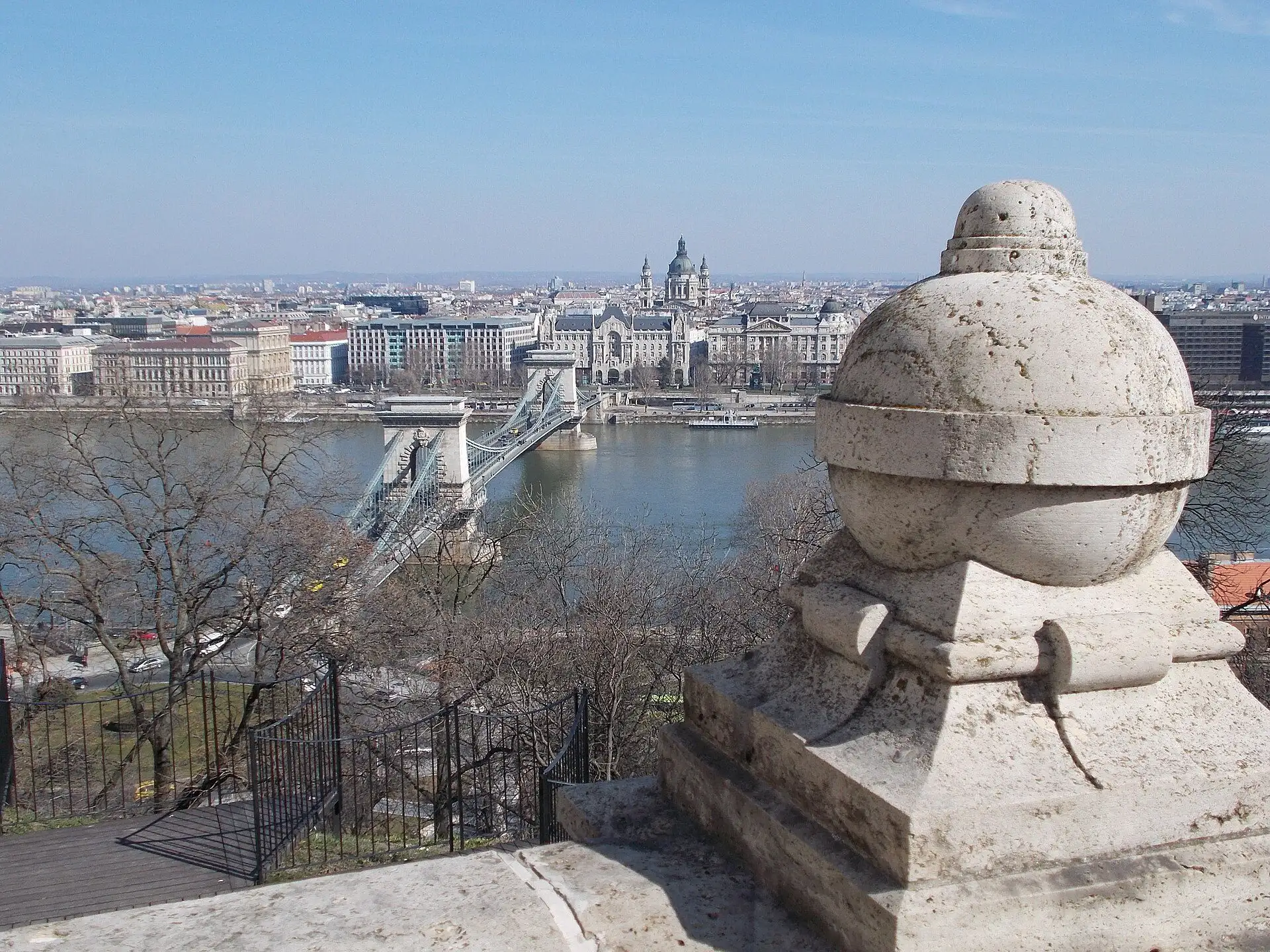
The terrace in front of the palace’s river facade is the view everyone comes for: the Chain Bridge straight below, the Parliament upstream, St Stephen’s Basilica’s dome across the water. It is free, it is open all night, and it is where the funicular and the steep road up from Clark Ádám tér both deliver you.
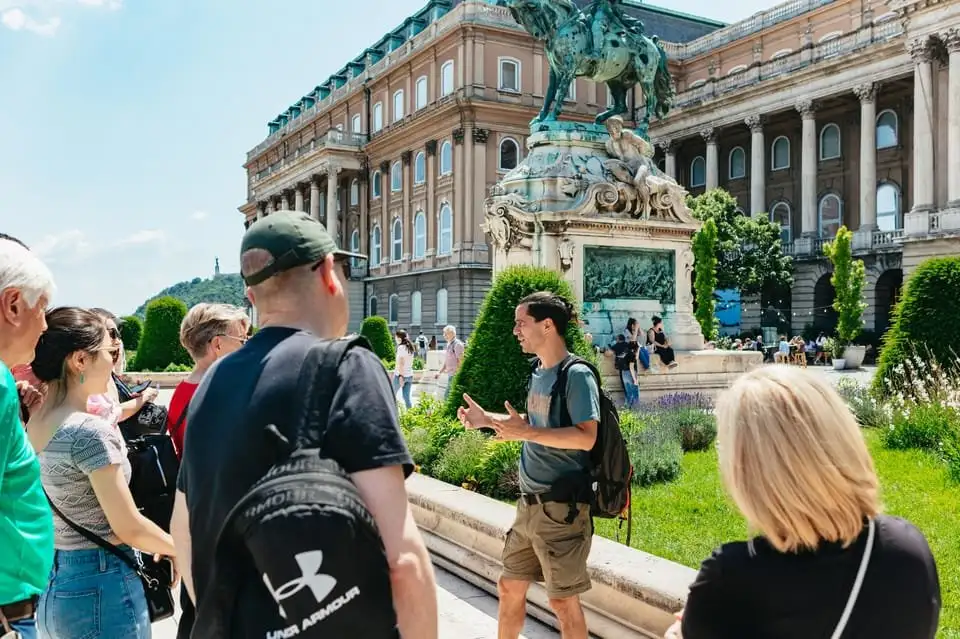
The horseman in the middle is Prince Eugene of Savoy, who fought in the recapture of Buda in 1686 and crushed the Ottoman army at Zenta in 1697. József Róna’s bronze was ordered by the town of Zenta, which then could not pay for it, so it has stood here since 1900 instead.
Look at the two Turkish prisoners on the plinth and the battle reliefs round it. Above the terrace, on the corner of the Habsburg Gate’s railing, is the Turul, Gyula Donáth’s bronze bird of Magyar legend with a sword in its claws, 5 metres high and 7 metres across, put up in 1905 and craned back after restoration in 2021.
Come before 10:00 or after dark. Through the day every guided walk on the hill gathers here, and the palace walk meets right under the statue.
Find the Matthias Fountain in the Hunyadi Court
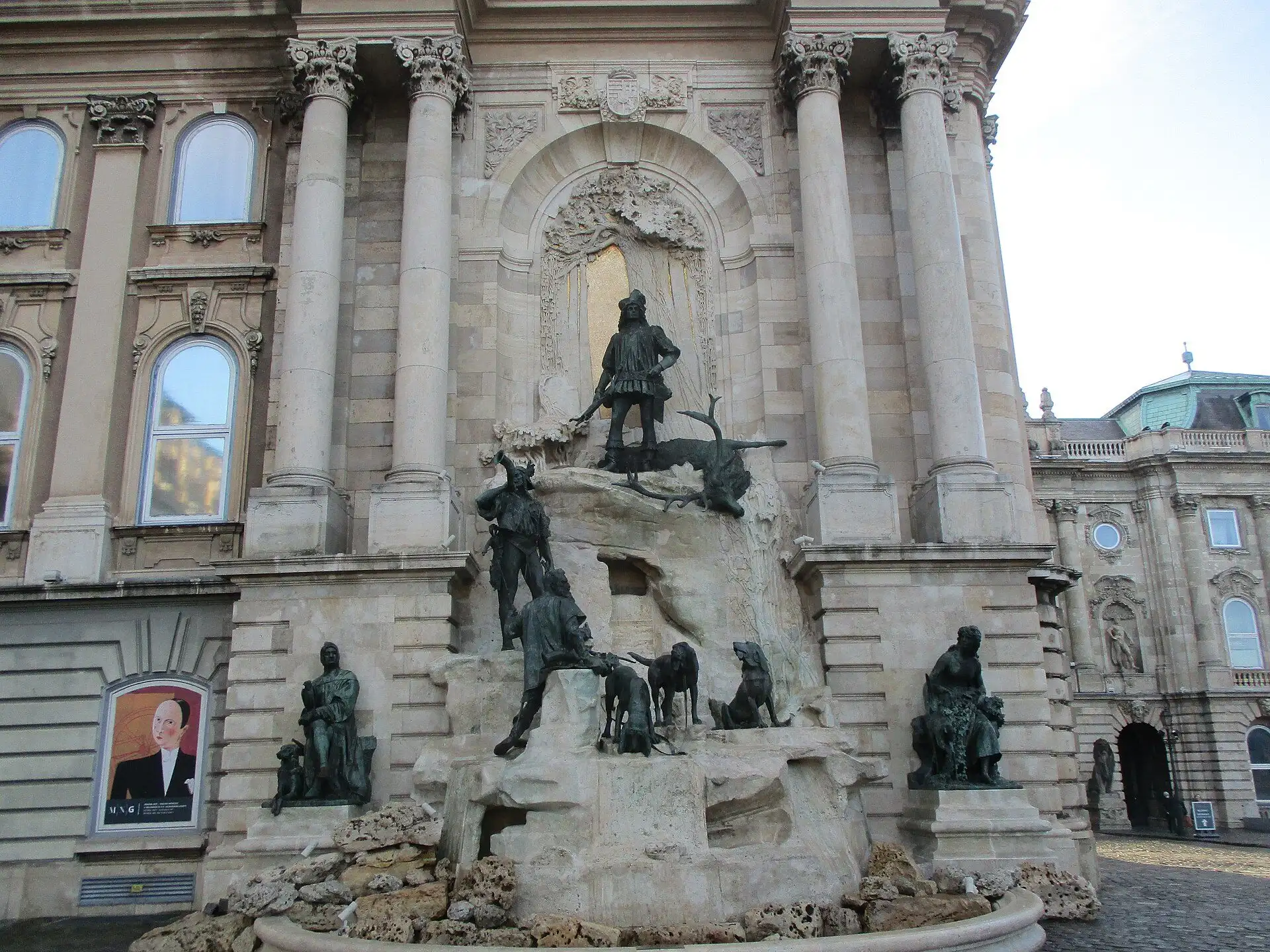
Walk through the Habsburg Gate or round from the terrace and you are in the Hunyadi Court, the outer courtyard, with Alajos Stróbl’s Matthias Fountain of 1904 on the far wall. King Matthias stands at the top in hunting dress, arriving at a spring with a stag at his feet.
Below him, on her own plinth to the right, sits Fair Ilonka, the peasant girl of the legend, with a fawn. On the left is Galeotto Marzio, the court chronicler, with a falcon. One of the hounds is a post-war copy, because the original was destroyed in 1945.
Across the courtyard is the Csikós, György Vastagh’s beaten-copper horse-herd taming a stallion, made after the sculptor had studied the herdsmen on the Hortobágy. Beside it stand the rebuilt Guardhouse, now a café-restaurant with a terrace over the court, and the Riding Hall, rebuilt from nothing between 2016 and 2019.
The Riding Hall is an events venue, so you cannot wander in, but you can look into the riding arena from its lobby every day between 13:00 and 16:00 unless an event is on. The visitor centre in this courtyard, open 9:00 to 17:00, tells the story of the rebuilding.
Book a slot in St Stephen's Hall
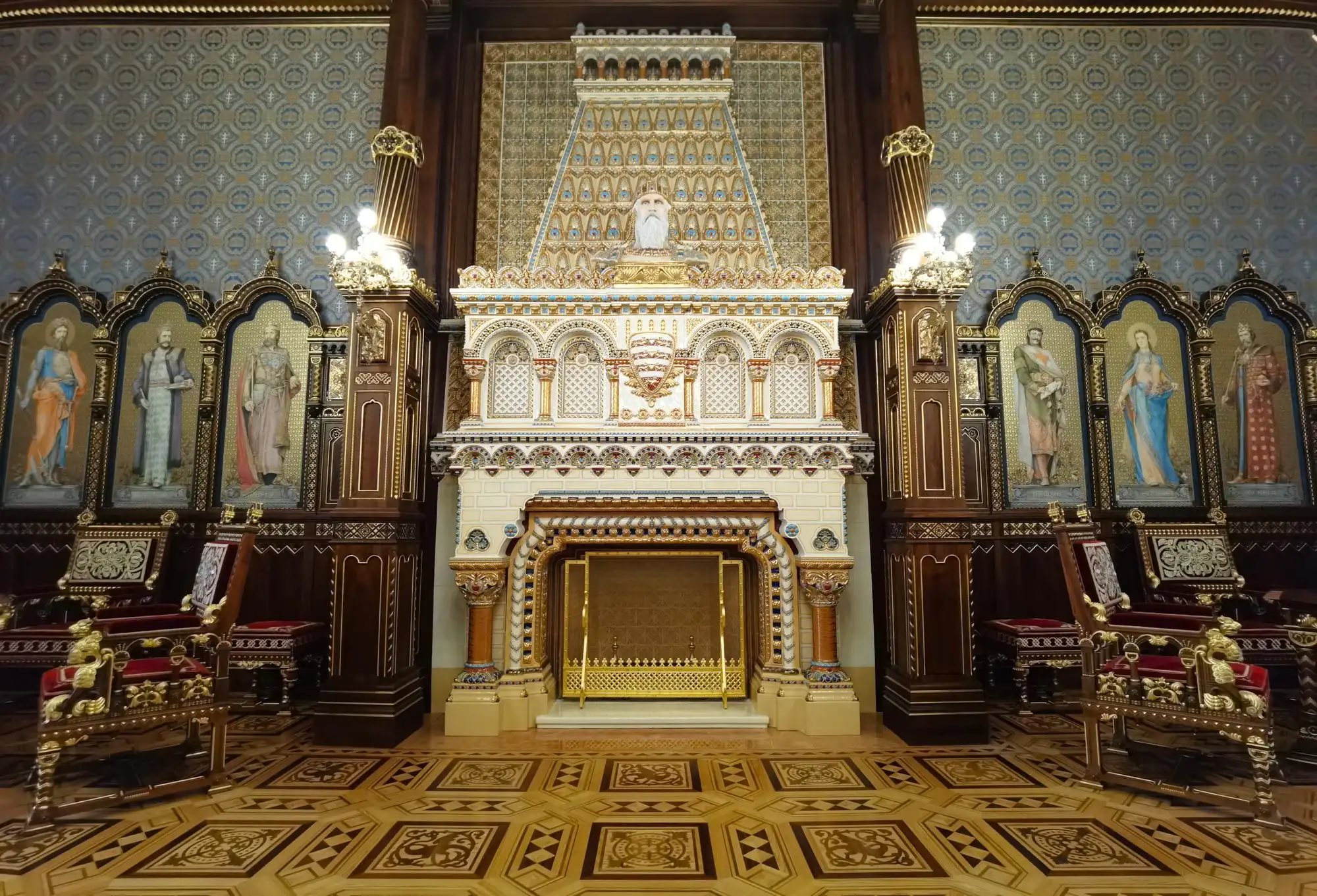
Everything inside the palace was looted or burnt in 1945 and rebuilt plain, except this room. St Stephen’s Hall, the reception room that won a grand prize at the 1900 Paris exhibition, was reconstructed piece by piece from the original designs and reopened on 20 August 2021. Look for the white Zsolnay ceramic fireplace, the carved wood panelling and the painted kings round the walls.
It is in the wing between the Castle Museum and the library, entered from the Lion Court, and it is visited in timed slots because the room is small. You go round with a multilingual tablet guide, or with a guide on the walk we feature, and the hall’s own ticket also admits you to the Castle Museum’s medieval palace rooms next door. Allow 30 to 45 minutes.
Slots fill, so book online before you come up the hill. The walk-up desk sells only the next slot with space.
Give the National Gallery 90 minutes
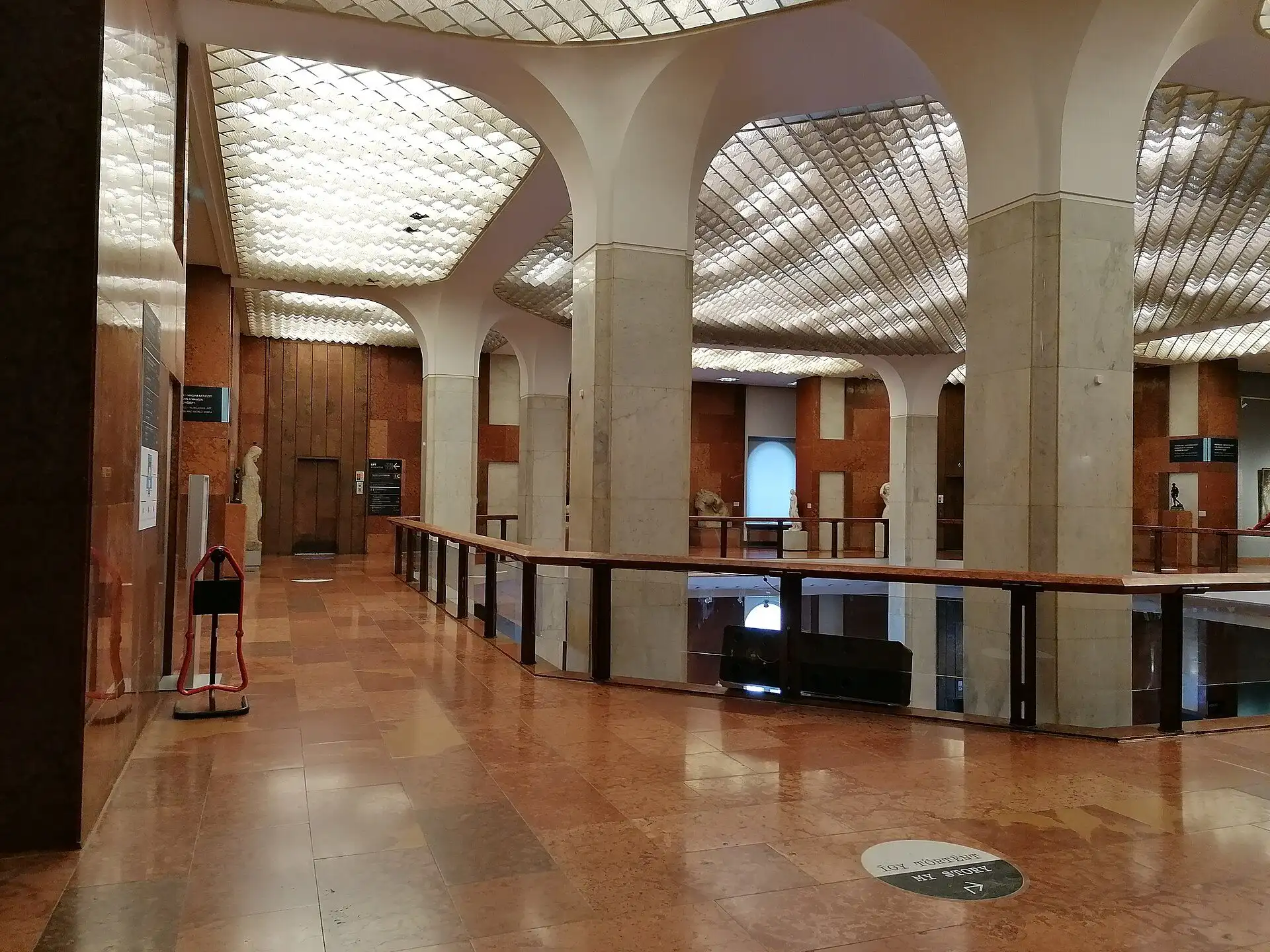
The Hungarian National Gallery fills the wings under the dome, entered from the Lion Court side, and holds Hungarian art from medieval stone carving to today. Three things justify the ticket: the Gothic winged altarpieces from the country’s medieval churches, Mihály Munkácsy’s dark realist canvases, and Tivadar Csontváry Kosztka’s dreamlike landscapes, which you will not see anywhere else.
The dome terrace is included in the exhibition ticket. It is 54 steps up from the top floor, open until 17:00 and only in fair weather, with no more than 15 people allowed out at a time. On a clear day it is the highest point of the palace and worth the climb.
The Gallery is open Tuesday to Sunday, and it stops letting people in at 17:00, so it is a morning or early-afternoon visit. The Budapest Card gets you in.
Be at Sándor Palace on the hour
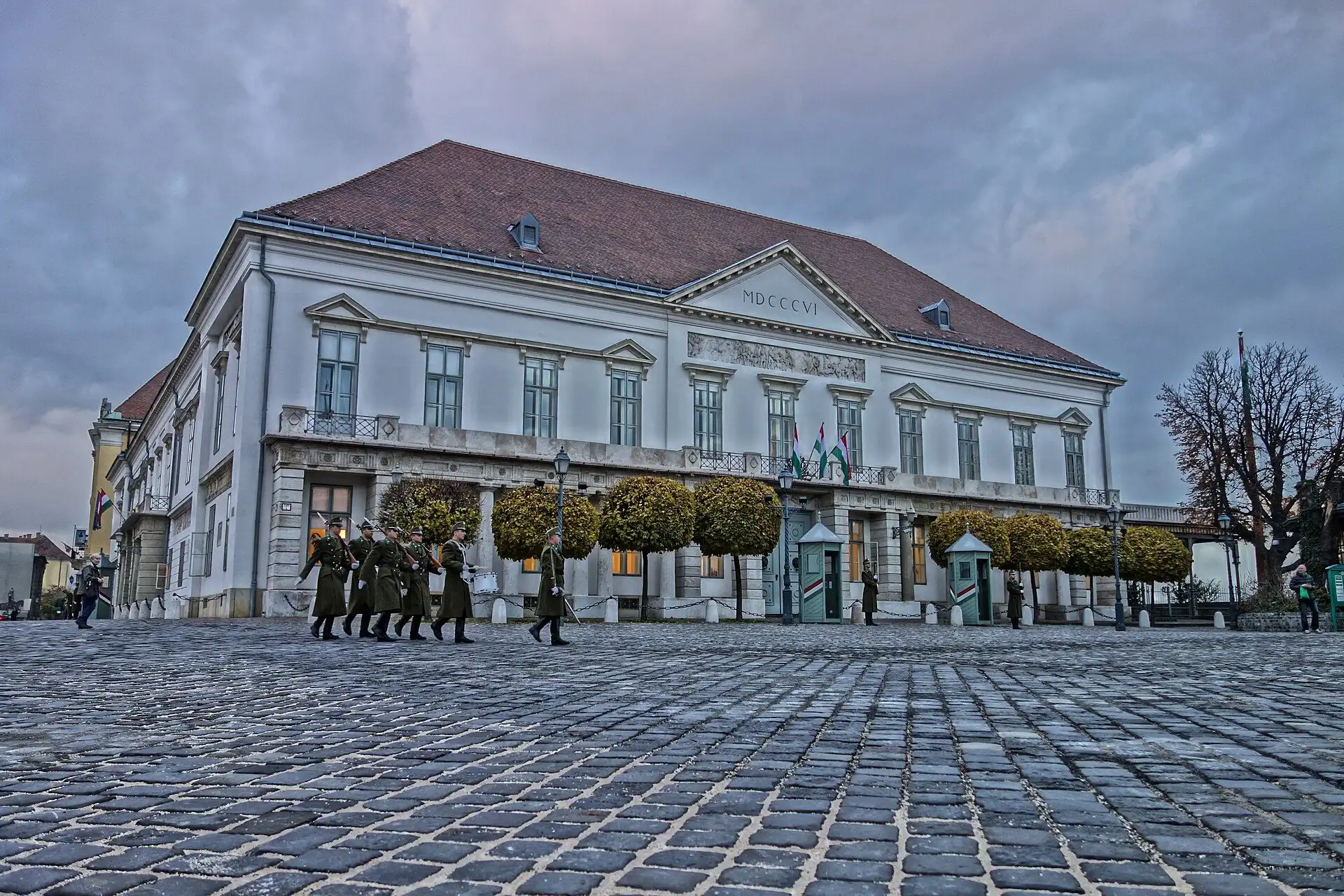
The plain classical building at the top of the funicular, on Szent György tér, is Sándor Palace, the office of the President of Hungary. Built in 1806 for Count Vince Sándor, it was the Prime Minister’s seat from 1867 to 1945 and was rebuilt after the war.
You cannot go in, except on the President’s occasional open days, which are free with registration and book out. The Honvéd Palace Guard outside it changes on the hour through the day, and at noon the whole unit turns out for an armed ceremonial drill.
The noon drill is the one to plan around. It lasts a few minutes, you watch from the square, and it costs nothing. From spring to autumn the guard also stages a musical guard change about once a month.
If you have ridden the funicular up, you arrive right beside it.
See what is being rebuilt, and what is fenced off
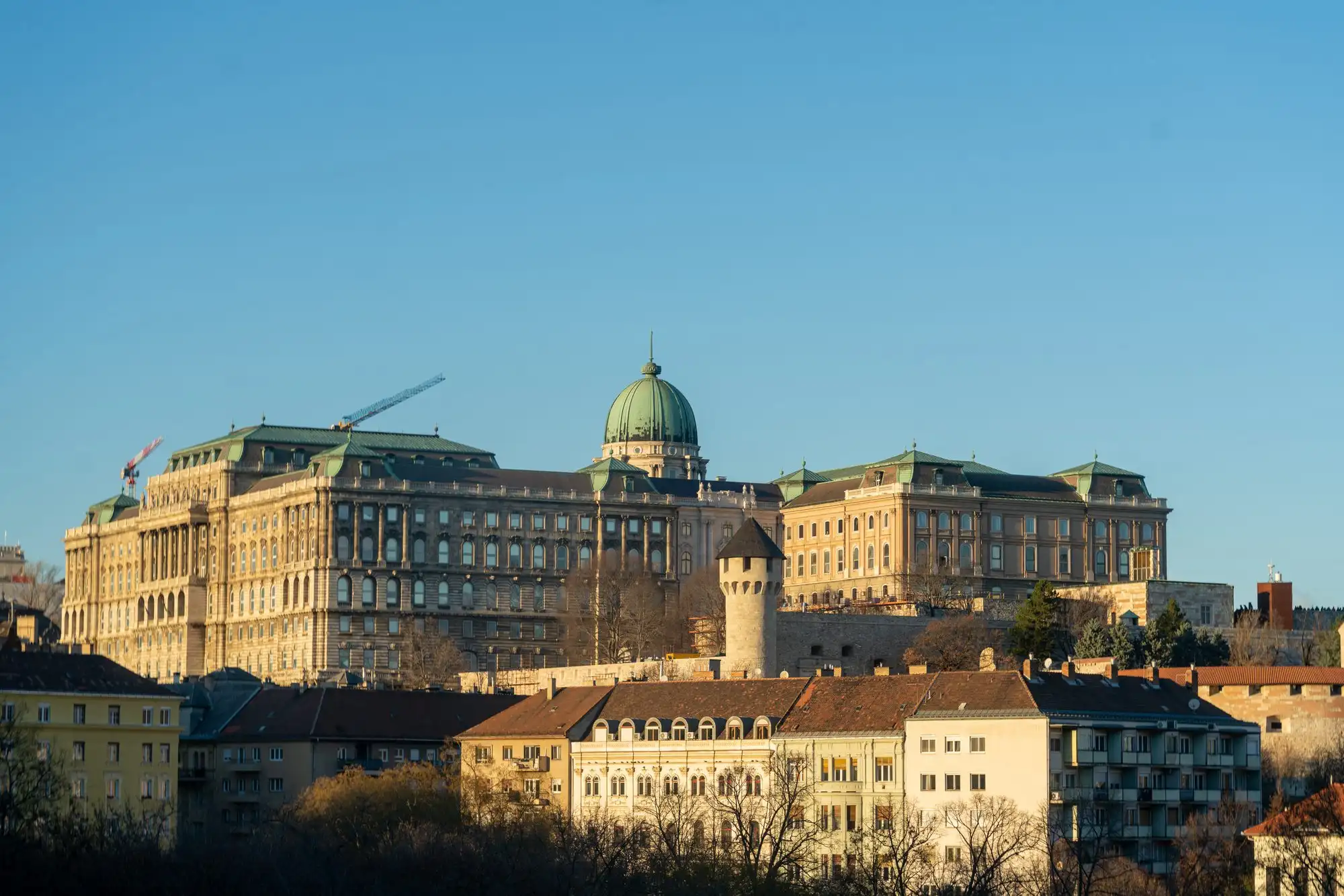
The palace you see today is two buildings in one. Alajos Hauszmann finished a Neo-Baroque royal palace in the years before the First World War. The siege of 1945 gutted it, and the rebuild of the 1950s and 1960s gave it a plainer facade, offices and galleries inside, and a taller, barer dome.
The National Hauszmann Programme, launched in 2019, has been putting the old palace quarter back. St Stephen’s Hall, the Riding Hall and the Guardhouse are finished. The palace’s northern wing and Archduke Joseph’s palace on Szent György tér were still under construction in September 2026, when the government paused the palace’s own reconstruction pending a review.
On the ground that means hoardings round parts of the courtyards, lorries on the access roads and paths that move. Check the Castle Headquarters’ live closure map before you set off, and allow 15 minutes to find a tour’s meeting point.
None of it stops a visit. The terraces, the fountains and the museums are open, and the rebuilt buildings are the best reason to come now rather than in ten years.
Insider tips
Ride up, walk down
The funicular sells a return ticket only, and the way down is the better half of the hill anyway. Ride up for the view over the Chain Bridge, then leave through the southern gardens and the Castle Garden Bazaar’s escalator to the riverbank, or down the steep road between the walls to Clark Ádám tér.
Come back after dark
The palace is floodlit, the courtyards stay open, and the coach groups have gone. The terrace at night, with the Chain Bridge and the Parliament lit below, is the best free thing on the hill.
Fix the St Stephen's Hall slot first
It is the only part of the visit that can sell out, so book a slot or the walk that includes it, then fit the Gallery and the guard change round it. If you have the hall ticket, the Castle Museum’s medieval rooms are already paid for.
Pick one thing underground
There are three: the Hospital in the Rock, the wartime hospital and nuclear bunker on Lovas út, a guided hour with audio guides in nine languages and no photographs; the Labyrinth at Úri utca 9, wax figures and Dracula in the old cellars, good for children; and the guided cave tour under the northern part of the hill, natural limestone caverns at 12°C. The hospital is the one worth a whole hour of a short trip.
Take a jumper for the dome
The Gallery’s dome terrace is open to the wind and closes in bad weather, and the caves are cold all year. Bring a layer for either.
Nearby attractions
The rest of Castle Hill is a level walk north from the palace through the old town, and the Chain Bridge is at the bottom of the funicular.
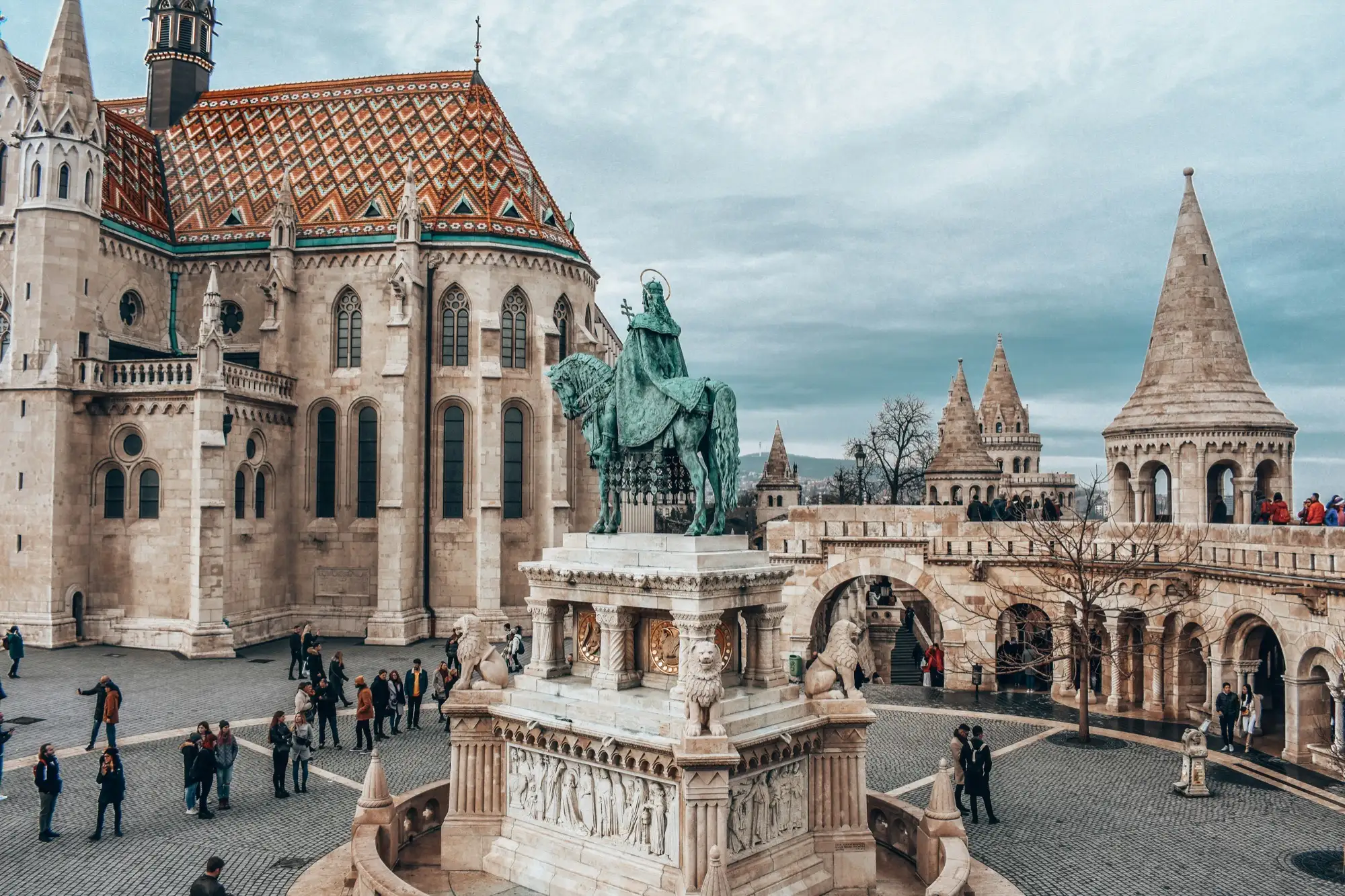
Fisherman's Bastion
About 12 minutes north on foot through the Castle District, on the level.
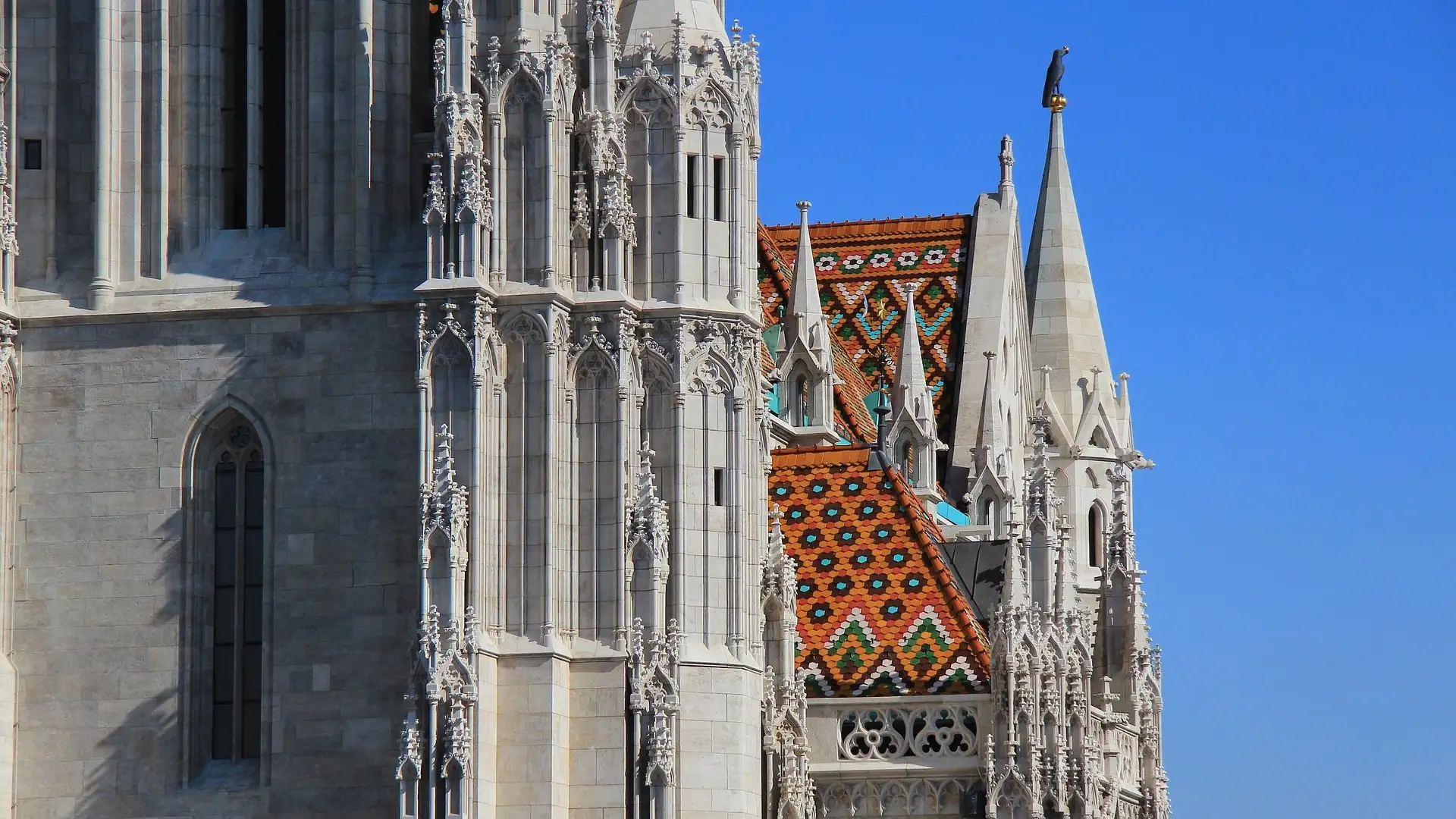
Matthias Church
About 13 minutes north on foot, beside the Bastion on Szentháromság tér.
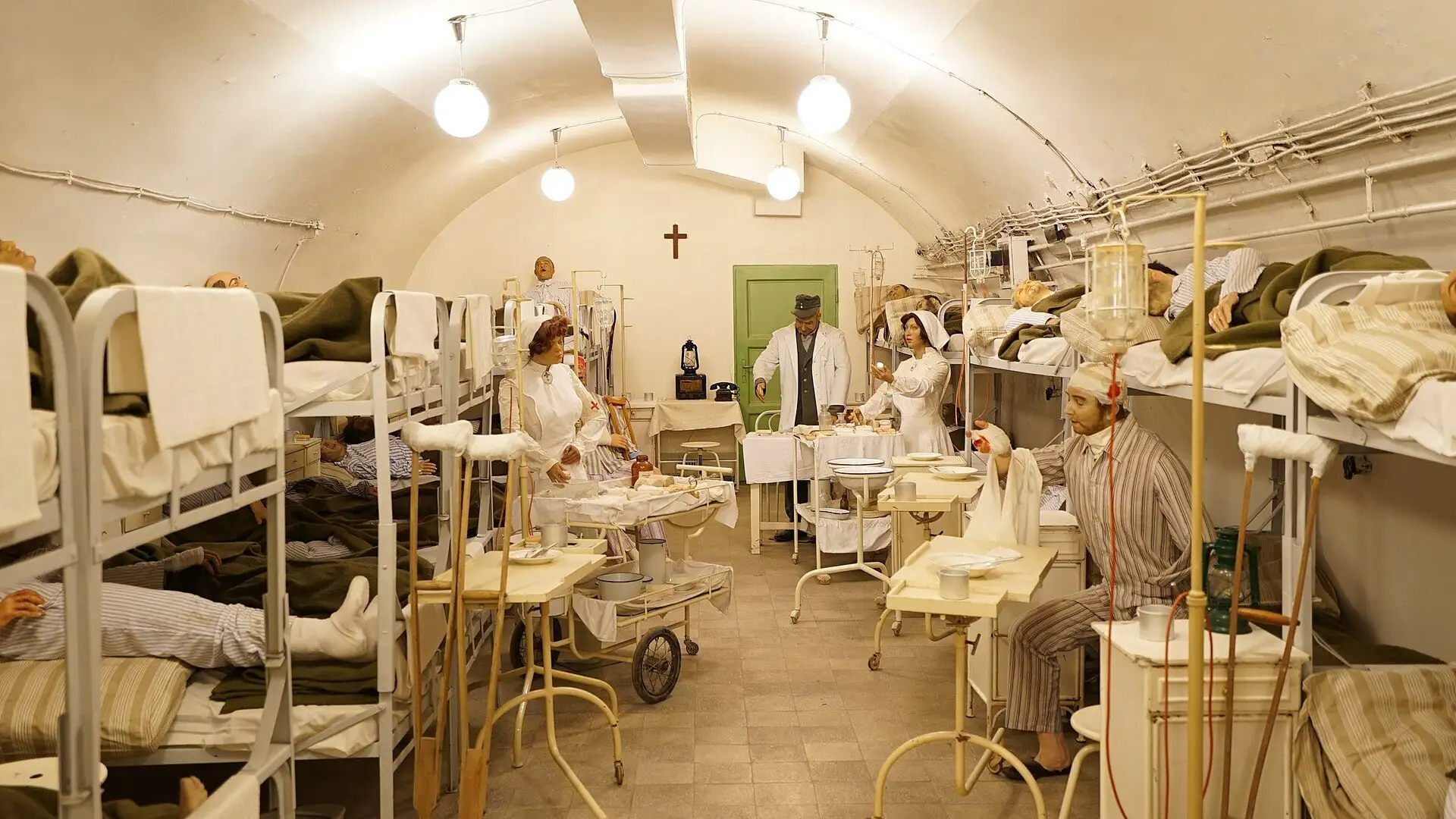
Hospital in the Rock
The wartime hospital and nuclear bunker under the hill, at Lovas út 4/c on the western slope. Guided tours only, every day to 19:00.
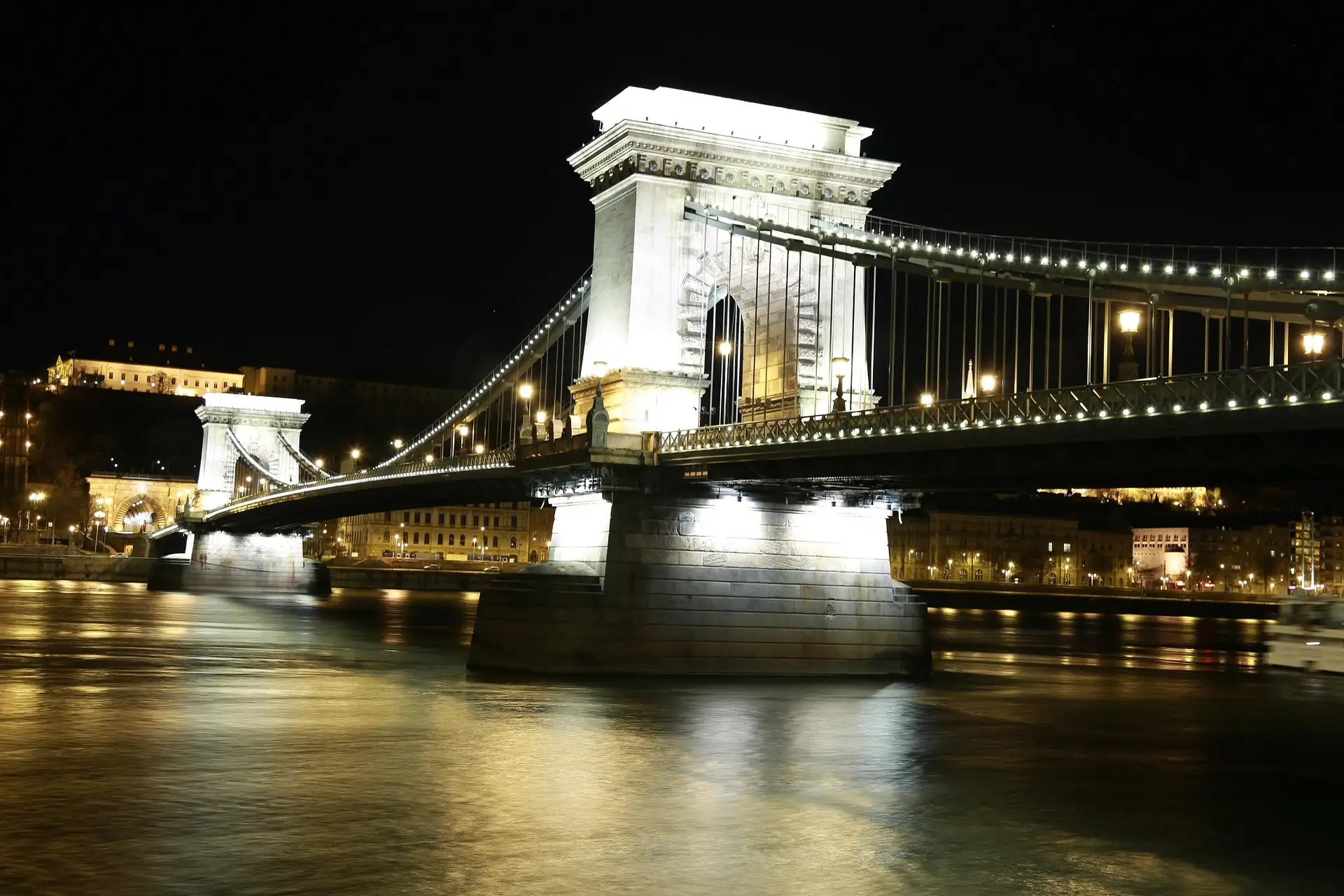
Széchenyi Chain Bridge
About 8 minutes’ walk down the hill, at the foot of the funicular.
Did you know?
- The Turul on the Habsburg Gate is 5 metres high and 7 metres across, and it left the hill in 2021 for the first time since 1905, lifted off by crane for restoration.
- The funicular of 1870 was the second in the world, built so that officials could reach the government offices on the hill. Its cars are named Gellért and Margit.
- The Holy Crown of Hungary was kept in the palace from the end of the 18th century until 1944, and the Holy Right, St Stephen’s mummified hand, had a chapel here before it moved to the Basilica.
- The green dome is not the one Hauszmann built. His was demolished after the war, and the taller, plainer dome that replaced it was finished in the 1960s.
History
A fortress after the Mongols, a Renaissance court under Matthias, a ruin under the Ottomans, a Baroque palace under Maria Theresa, Hauszmann’s showpiece, a burnt shell in 1945, a socialist rebuild, and now a rebuild of the rebuild. No building in the city has been knocked down and put back as often.
- 1247
Béla IV builds a fortress
After the Mongol invasion of 1241 to 1242 the king walls the south-western end of Castle Hill. Within decades it is a royal residence and a town.
- 14th and 15th centuries
The medieval palace
Louis the Great moves the court here from Visegrád, Sigismund adds the Fresh Palace, and Matthias builds a Renaissance palace famous across Europe for its Corvina library.
- 1686
Recaptured from the Ottomans
After 150 years of Ottoman rule and repeated fires, the medieval palace is demolished almost to its foundations in the recapture of Buda.
- 18th century
Maria Theresa's Baroque palace
A new palace rises on the site, its Danube-facing north wing the oldest part still standing. The university is housed here from 1777 to 1784 and the Holy Crown from the end of the century.
- 1890 to 1905
Ybl and Hauszmann triple it
Miklós Ybl and then Alajos Hauszmann extend the palace along the hill until, by 1905, it is one of the largest royal residences in Europe.
- 1945
The siege
The palace is the last German stronghold in the city and burns for weeks in January 1945.
- 1959 to 1985
The socialist rebuild
A plainer palace with a new dome is built for museums: the Castle Museum in 1967, the National Gallery in 1975 and the National Széchényi Library in 1985.
- 2019
The Hauszmann Programme
The rebuilding of the old palace quarter begins. St Stephen’s Hall, the Riding Hall and the Guardhouse reopen in 2021; the palace works are paused for review in September 2026.