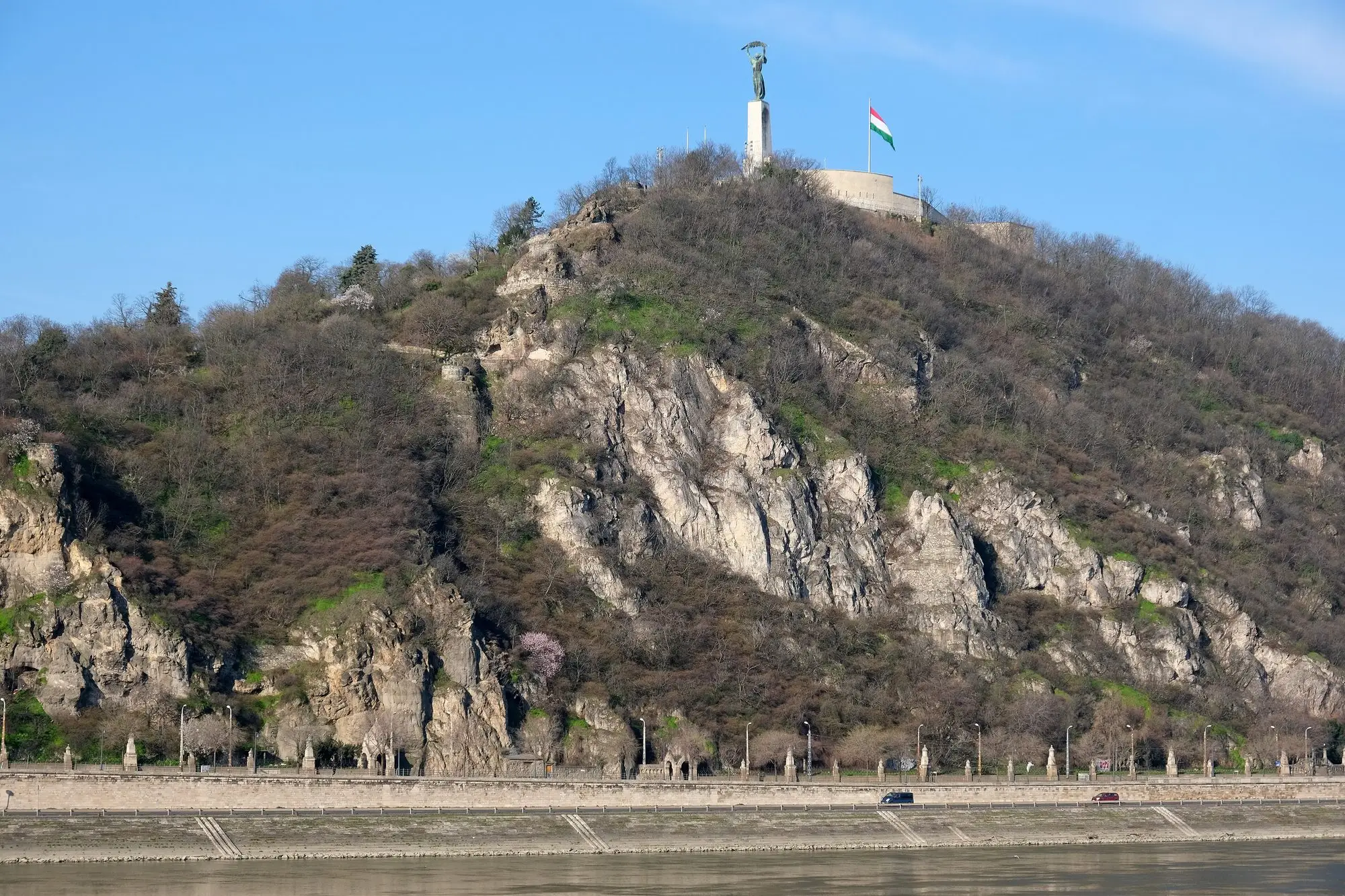
Gellért Hill is the rock the Danube bends around, 235 metres high, with the Liberty Statue on top and the Citadella fortress behind it. It is where Budapest goes for the view, and the view is both banks at once: the Parliament, the bridges, Buda Castle and the roofs of Pest in a single sweep.
The fortress itself was shut while it was rebuilt, from autumn 2020. It is open again, and nearly everything inside the walls now costs nothing to walk into.
- Visit length
- An hour for the view, half a day with the exhibition and the Cave Church
- Entry
- Free. Only the Bastion of Liberty exhibition is ticketed
- Book ahead
- The exhibition's timed slot, and the guided walk
- Opening hours
- Gellért Hill (free): Daily 00:00 to 24:00Citadella park, April to October (free): Daily 06:00 to 24:00Citadella park, November to March (free): Daily 08:00 to 22:00The Bastion of Liberty exhibition: Mon to Thu 10:00 to 18:00, Fri 12:00 to 20:00, Sat to Sun 10:00 to 18:00Cave Church: Mon to Sat 09:30 to 19:30, Sun closed
- Best time
- The hour before sunset, or early morning for the climb
- Nearest stop
- Bus 27 Búsuló Juhász (Citadella)About 500 m from the Citadella's north entrance, around a 6-minute walk up Szirtes út. The only bus onto the hill
- Accessibility
- Lifts to every level inside the fortress, stepped paths up the hill
- Reopened
- 5 April 2026, after a rebuild begun in 2020
- Height
- 235 m, about 140 m above the river
Gellért Hill tickets and tours
The hill costs nothing. Neither does the park inside the fortress walls, the wall-walk and every lookout along it, the Liberty Statue, or any of the paths up from the river. One thing on the hill is ticketed: The Bastion of Liberty, the exhibition built into the Western Round Bastion, and the two terraces you reach through it.
Neither of our booking partners sells that ticket. The Citadella sells it on its own website in timed slots, and the Budapest Card covers it: free entry, handed over at the ticket desk.
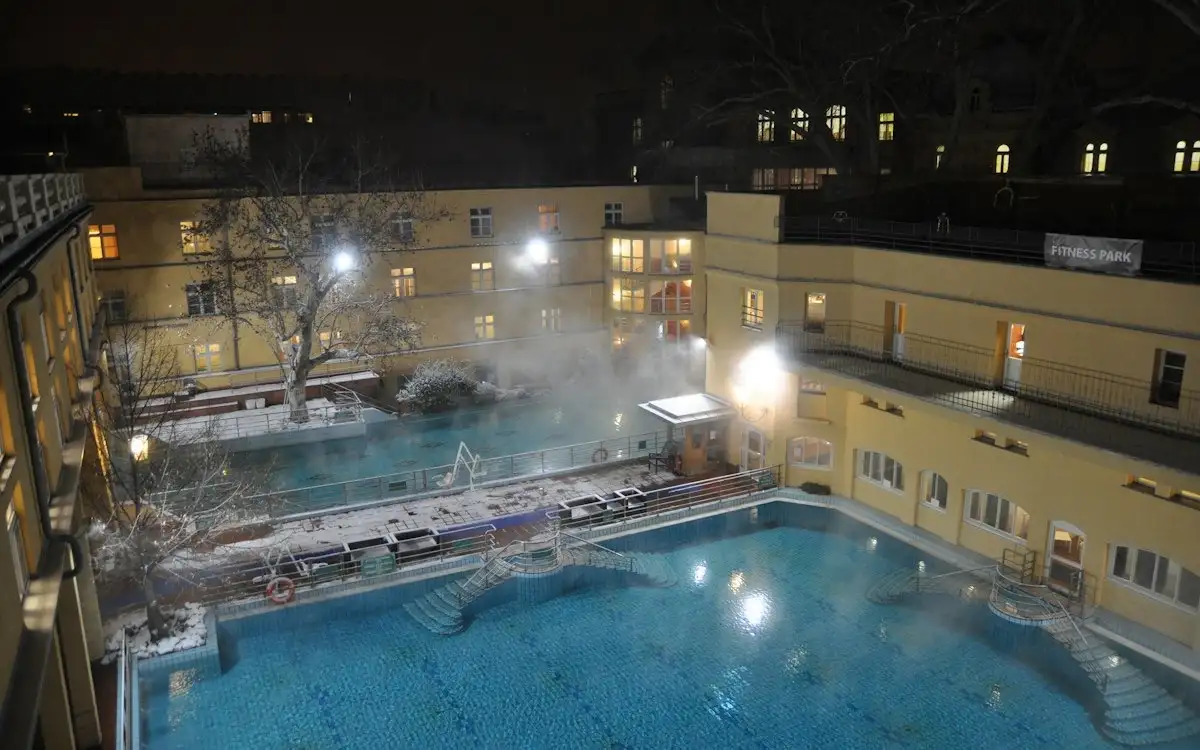
Budapest Card: 30+ Attractions with Szt. Lukacs Thermal Bath and Pool
Best for: Getting into the exhibition for nothing, if museums and transport are most of your trip
- 24, 48, 72, 96 or 120 hours
- Live guide in English on the two walking tours
- Cancellation possible until 23:59 the day before
What’s included and more details
What’s included
- Free entry to The Bastion of Liberty exhibition here
- Entry to 30+ attractions, including Lukács Thermal Bath
- Unlimited public transport, including bus 27 up the hill
- Walking tours of Buda and Pest in English, and a Danube cruise
- Here
- The Citadel, The Bastion of Liberty, free once per card
- How it is given
- In person at the ticket desk, never online, and it does not hold a time slot
- Choose
- 24, 48, 72, 96 or 120 hours
- Worth it only if
- You would have paid for several things on the list. One exhibition does not cover the card
Budapest: Citadella Guided Panorama Tour
Best for: An hour in the Citadella with someone who can tell you what you are looking at
- 1 hour
- Live guide in English
- Free cancellation up to 24 hours ahead
What’s included and more details
What’s included
- A guided walk of the fortress with a live guide
- The hill's story, from the Celts to the siege of Budapest
- Finishes on the rooftop terrace of the western round bastion
- Meeting point
- The Citadella's Glass Hall information desk, Citadella sétány 1. Look for the guide with a turquoise umbrella
- Runs
- On selected dates rather than daily, so open the calendar first
- Book by
- At least an hour ahead
- Ages
- The operator recommends it for ages 12 and over
- Exhibition
- Not included. The ticket takes 20% off an exhibition admission bought within 30 days
- The hill, the Citadella park, the wall-walk lookouts and the Liberty Statue are free whenever the park is open. Only the exhibition and the two terraces reached through it are ticketed
- The exhibition runs on 20-minute entry windows with 40 people in each, so the slot you want is the thing to book, not the day
- The Budapest Card’s free entry is handed over in person at the ticket desk, never online, so it does not hold a slot for you
All four guided tours of the hill, what each one takes in and how to book: Gellért Hill and Citadella tours.
Highlights
Walk the wall-walk and the bastions
Free lookouts cut into the fortress walls, facing Elisabeth Bridge, Liberty Bridge and the hills.
Stand under the 14-metre Genius
The Liberty Statue, conserved in the rebuild, with a cross now set on the pedestal below it.
Go into the church inside the rock
The Pauline order’s Cave Church at the foot of the hill, closed in 1950, walled up in the 1960s and reopened in 1989.
Plan your visit
Opening hours
The hill never shuts. The Citadella park keeps seasonal hours, open until midnight from April to October and until 22:00 from November to March, and the exhibition and the Cave Church each run to their own timetable.
Gellért Hill (free): Daily 00:00 to 24:00Citadella park, April to October (free): Daily 06:00 to 24:00Citadella park, November to March (free): Daily 08:00 to 22:00The Bastion of Liberty exhibition: Mon to Thu 10:00 to 18:00, Fri 12:00 to 20:00, Sat to Sun 10:00 to 18:00Cave Church: Mon to Sat 09:30 to 19:30, Sun closedEvery timetable in one table, the quiet hours and how long to give it: opening hours guide.
Getting there
Nothing on rails goes up. Bus 27 from Móricz Zsigmond körtér is the only route onto the hill, and everybody else walks up from the river, which is about 25 minutes and 120 metres of climb on stepped paths.
Nearest stops
Every route up compared, with real walking times, parking and the step-free answer: how to get to Gellért Hill.
Before you go
- Wear something you can climb in. The paths from the river gain 120 metres on steps and cobbles, and parts of the south face have no shade. Bus 27 is the way round that
- Book the exhibition’s slot, not the day. Entry is in 20-minute windows, 40 people at a time, and same-day tickets are sold only if any are left
- Photography is fine in the park, at the Liberty Statue and along the promenade, and inside the exhibition too, but with no flash. Filming during guided and themed walks is not allowed
- Dogs are welcome in the park on a lead. Guide and assistance dogs need none, and owners are asked to clear up
- Pushchairs go into the exhibition as long as the child stays in them, and children under two may only go in inside a pushchair or a front-mounted carrier
- Lost something? Lost property from the exhibition is held at the ticket office that day. Anything lost in the park goes to the Operator Office beside the North Steps
Accessibility
The Citadella’s own words: “Both the Citadella Park and The Bastion of Liberty exhibition are fully accessible for wheelchair users. Within the Round Bastion, all levels of the building can be reached by lift. Throughout the park, lookout terraces and wall-walks along the fortress walls can be accessed comfortably.”
- Two lifts, one in the western rondella and one out in the park, reach every level of the fort, the lookout terraces and the wall-walks
- Accessible toilets with baby-changing tables in the rondella and in the open park
- Getting up the hill is the hard part. The paths from the river are stepped, and no step-free walking route to the summit is published. Bus 27 to Búsuló Juhász leaves the shortest and gentlest approach, about 500 metres along Szirtes út
- The guided tours are not wheelchair accessible. The Citadella walk’s operator says its route takes in cobbled streets, stairs and narrow corridors, and two of the other tours are listed as unsuitable for wheelchair users
- Under-6s, over-70s and a disabled visitor with one companion go into the exhibition free on a registration ticket
What to do here
Six things, from the free park at the top to the church cut into the rock at the bottom. The order below is the one that works if you come up from the river and walk down the other side.
Walk straight into the fortress park
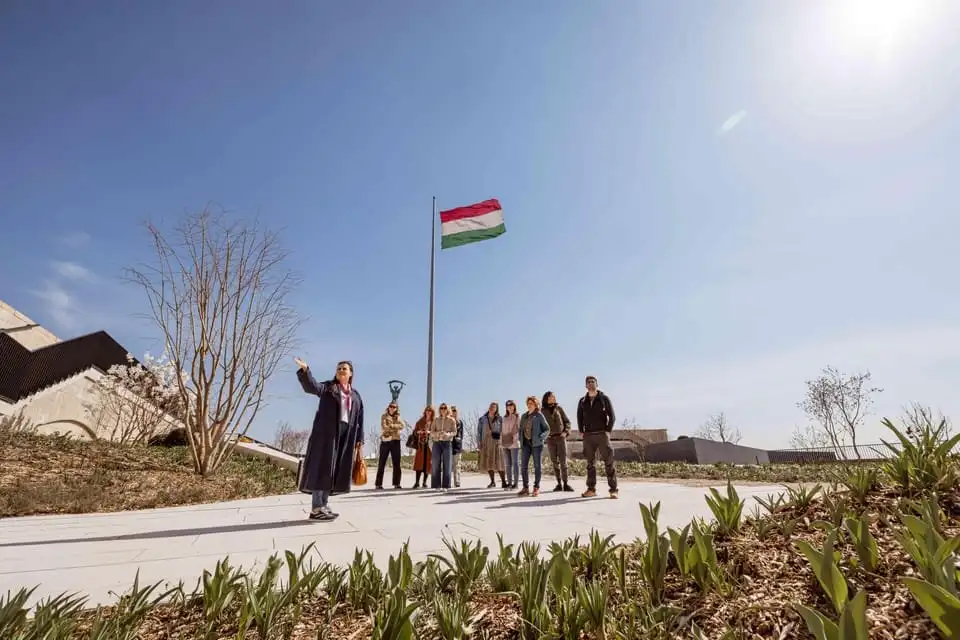
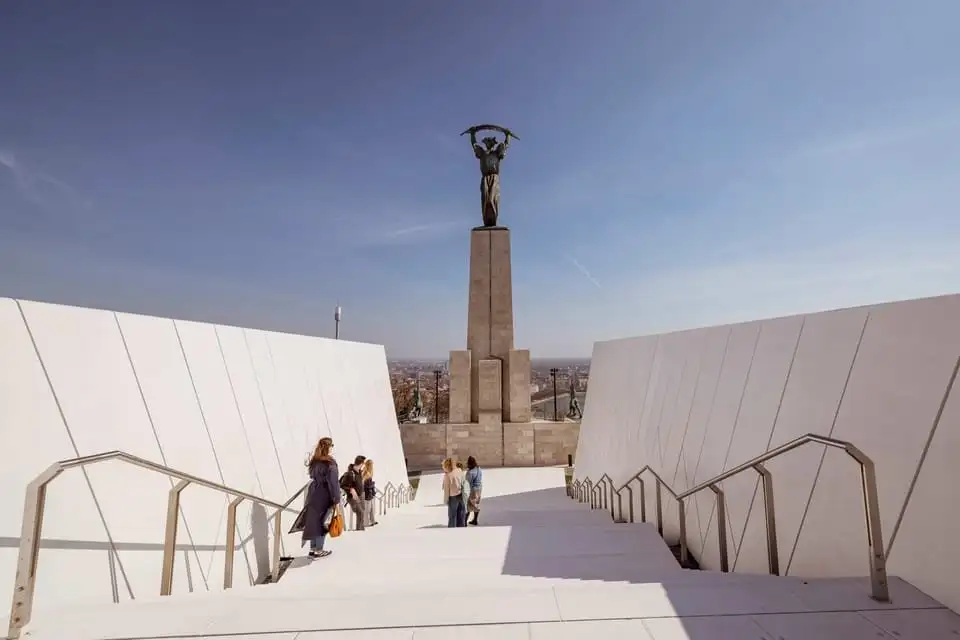
This is the part that surprises people who last came here before 2020. The rebuild cut new entrances and passageways through the fortress walls, linking the two sides of the hill, and a striking staircase on the eastern side takes you up into the courtyard directly from the Liberty Statue. There is no gate and no ticket desk.
Inside is a new public park of more than 6,000 m², part of a green space that grew by half again to around 20,000 m². At the centre of it stands the country’s largest national flag, 72 m² of tricolour on a 36-metre mast.
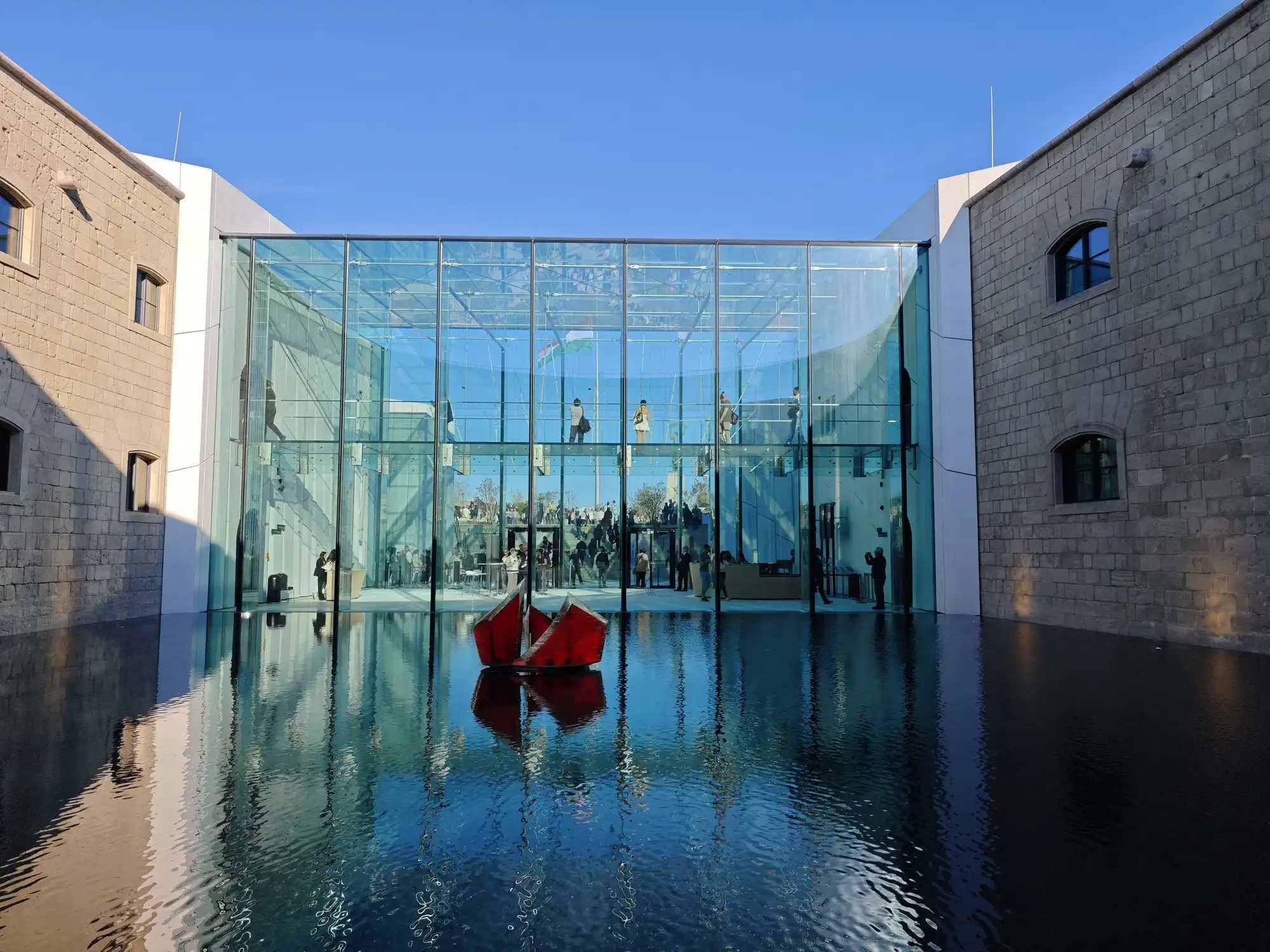
Three things to find. The pomegranate tree kept from the old planting. The reflecting pool with an eternal flame at its centre, in the former round-bastion courtyard. And a bronze inlay set into a circular stone surface, marking the Geodetic Base Point where Hungary’s survey network began.
Give it half an hour on its own. There is a café, an ice cream parlour and a gift shop in the park, which is more than the hilltop has offered in years.
Look for the cross on the Liberty Statue
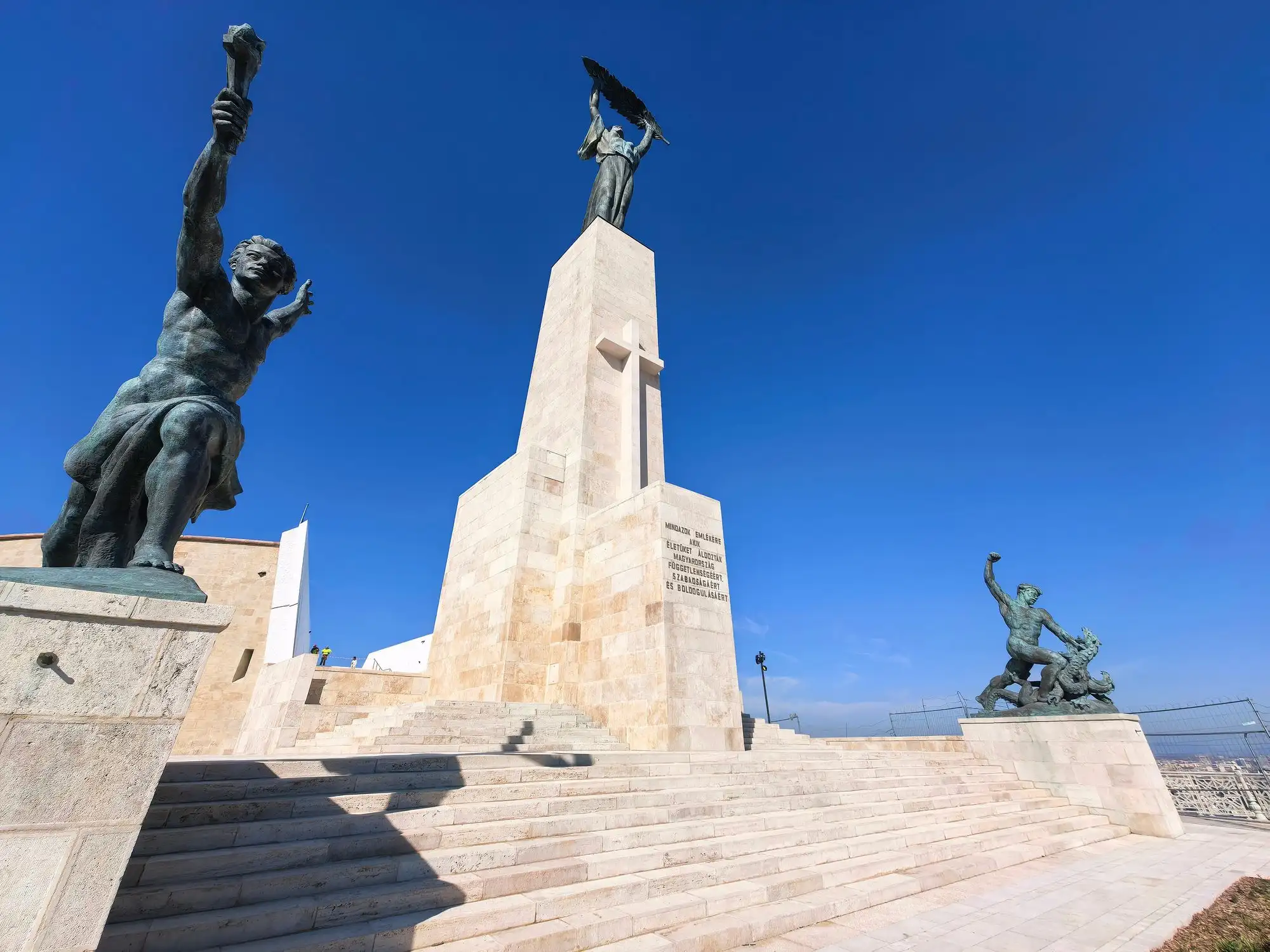
Zsigmond Kisfaludi Strobl’s monument went up in 1947 as the Liberation Monument. The whole thing stands 40 metres; the bronze figure holding the palm leaf, the Genius, is 14 metres of that, and the two smaller bronzes flank the steps below.
Anyone comparing an old photograph with what they see now will spot two changes. The group has been conserved after decades of neglect, and a cross has been placed on the pedestal of the principal figure, which the Citadella explains as a reference to 1100 years of Hungarian statehood and the country’s western Christian heritage.
The monument’s politics have been rewritten on the hill itself. During the 1956 revolution the statue of the Soviet soldier that stood here was toppled, and later political changes removed further Soviet references. That soldier survives, and it stands in Memento Park out in District XXII, its plaque still recording where it came from.
The terraces round the statue were redesigned with the new park, so this is also where most people stop first. Go early or late if you want a photograph without a queue of them.
Take the free lookouts before you buy anything
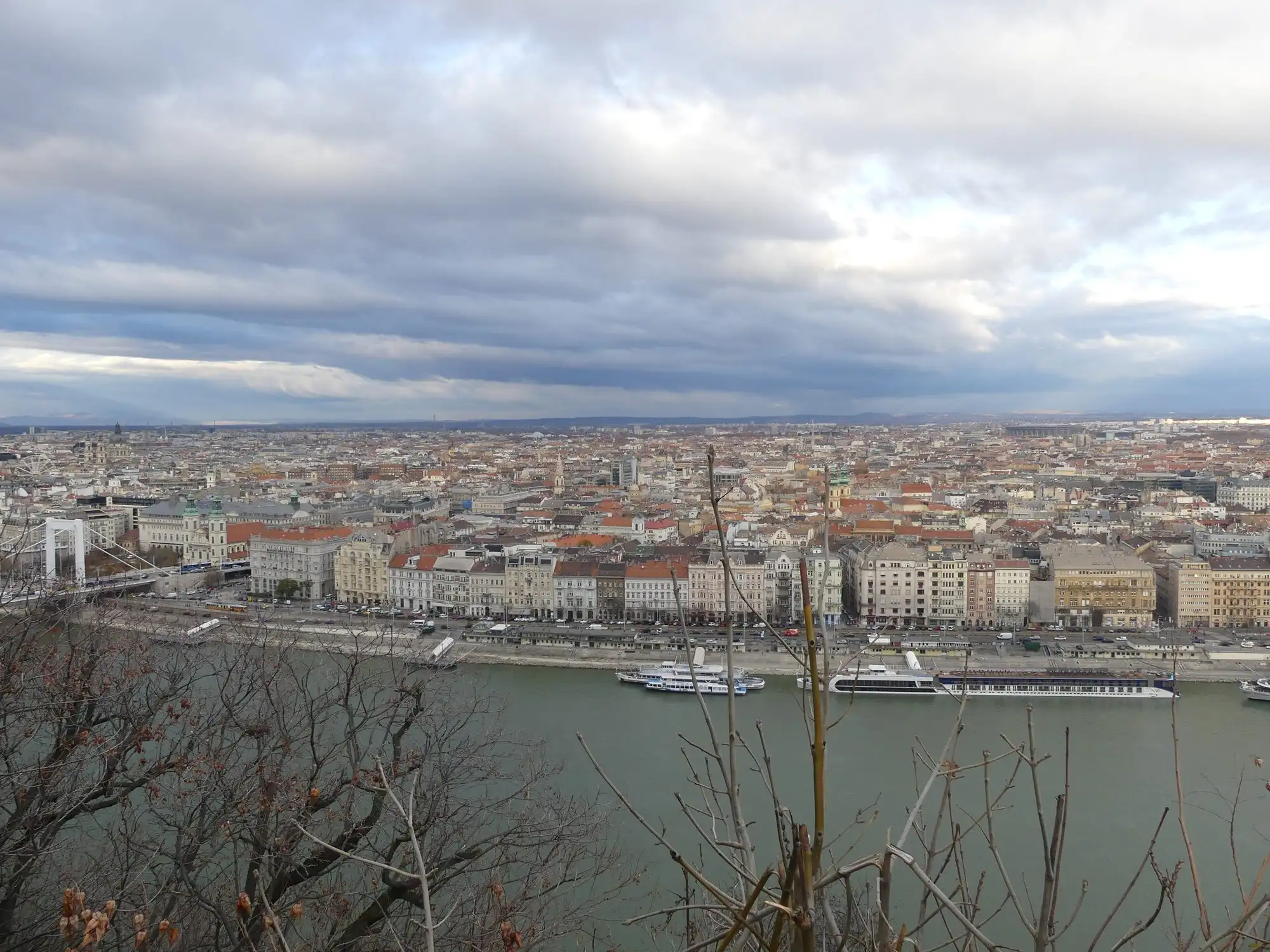
The lookout terraces opening off the park, along the wall-walk and the bastions, are free. That is worth saying plainly, because two of the best ones are not and it is easy to assume the whole hilltop is behind a ticket.
Three to find by name. The North Bastion faces Elisabeth Bridge and Margaret Island. The East Bastion faces Liberty Bridge and the Pest waterfront, and that is the view people come up here for. The South Bastion looks the other way, over Kelenföld. There is also a north-facing lookout at the V-shaped gap above the former main gate, now called the Great Gate, where Budapest’s citizens began pulling the fortress apart in 1899 and ran out of money before they finished.
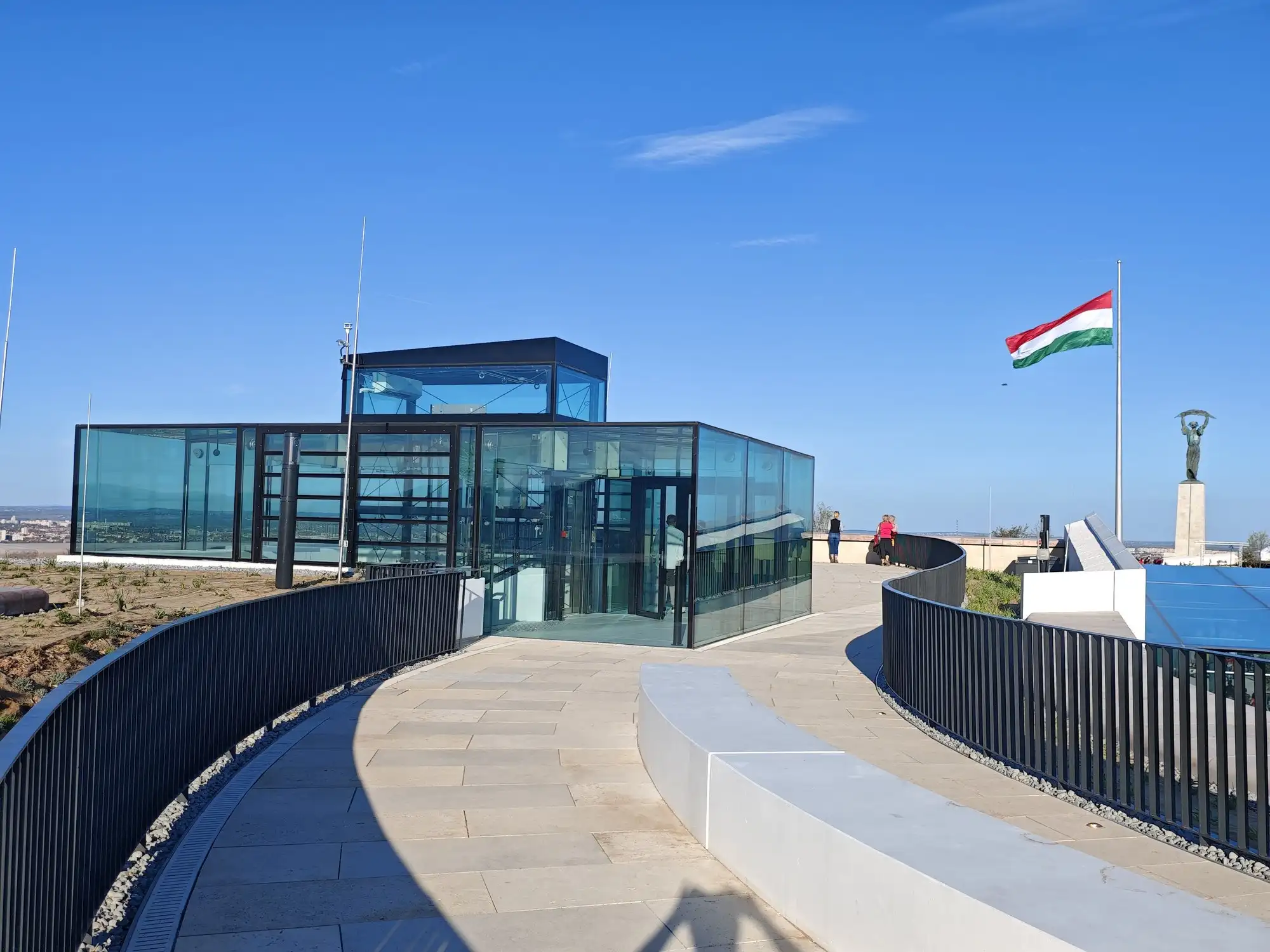
The two ticketed ones are the Roof Garden 360, on top of the Western Round Bastion, and the Round Bastion Terrace, which replaced the glass restaurant box the socialist-era hotel pushed into the breached cannon tower. Both are reached through the exhibition. Do the free ones first and decide afterwards whether you want more.
Give the Bastion of Liberty exhibition a timed slot
The exhibition fills the Western Round Bastion, more than 1,700 m² of casemates, and its argument is the hill itself. Whoever held Gellért Hill held symbolic authority over the nation, marked in turn by a cross, a mosque, a Habsburg fortress and a Soviet monument.
Emese, the mythical mother of Álmos, narrates thirteen centuries, and you move from one period to the next as if through a sequence of gateways: the Conquest and the founding of the state, the Ottoman occupation, Habsburg rule, the kuruc uprisings, 1848 to 1849, the world wars, the Holocaust, Trianon, Soviet occupation, 1956 and the reprisals, and the regime change. The Citadella says it gives particular weight to the historical role of women.
It is an immersive, self-guided audio experience rather than a display of objects. That is the thing to know before you buy, because nobody can take you round. Personal guides are not allowed, and a position-aware audio guide included in the ticket does the job instead.
It is the right choice if Hungarian history is what you came for, and skippable if you are here for an hour and a view. The ticket is sold on the Citadella’s own website, on a timed slot. Photography inside is allowed, strictly without flash.
Go down to the Cave Church before five o'clock
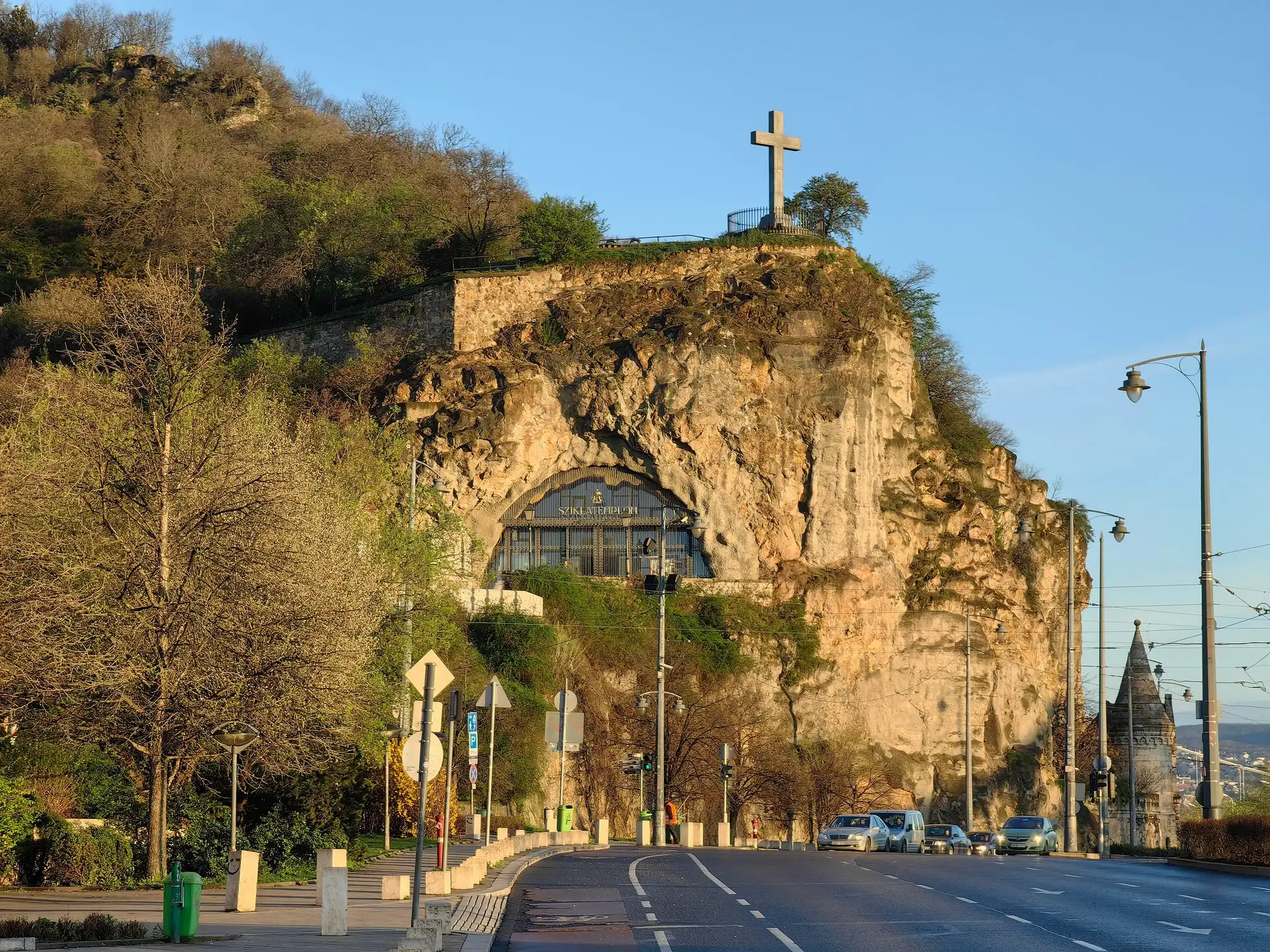
Magyarok Nagyasszonya Sziklatemploma, the Cave Church of Our Lady of Hungary, is cut into the base of the hill at Szent Gellért rakpart 1, across the road from the Gellért Hotel and about ten minutes down from the Liberty Statue. It belongs to the Paulines, the only men’s religious order founded in Hungary. The church was closed in 1950 when the order was banned, walled up with two metres of concrete in the 1960s, and reopened in 1989.
You buy a ticket at the welcome centre in the outer cave, and an audio guide in eight languages takes you round. It is open from Monday to Saturday and shuts to visitors during the Mass that begins at 17:00 every day, so go before five.
What to find inside, the Mass times and the one tour that goes in are on our Cave Church page.
Stop at the St Gellért monument on the way up
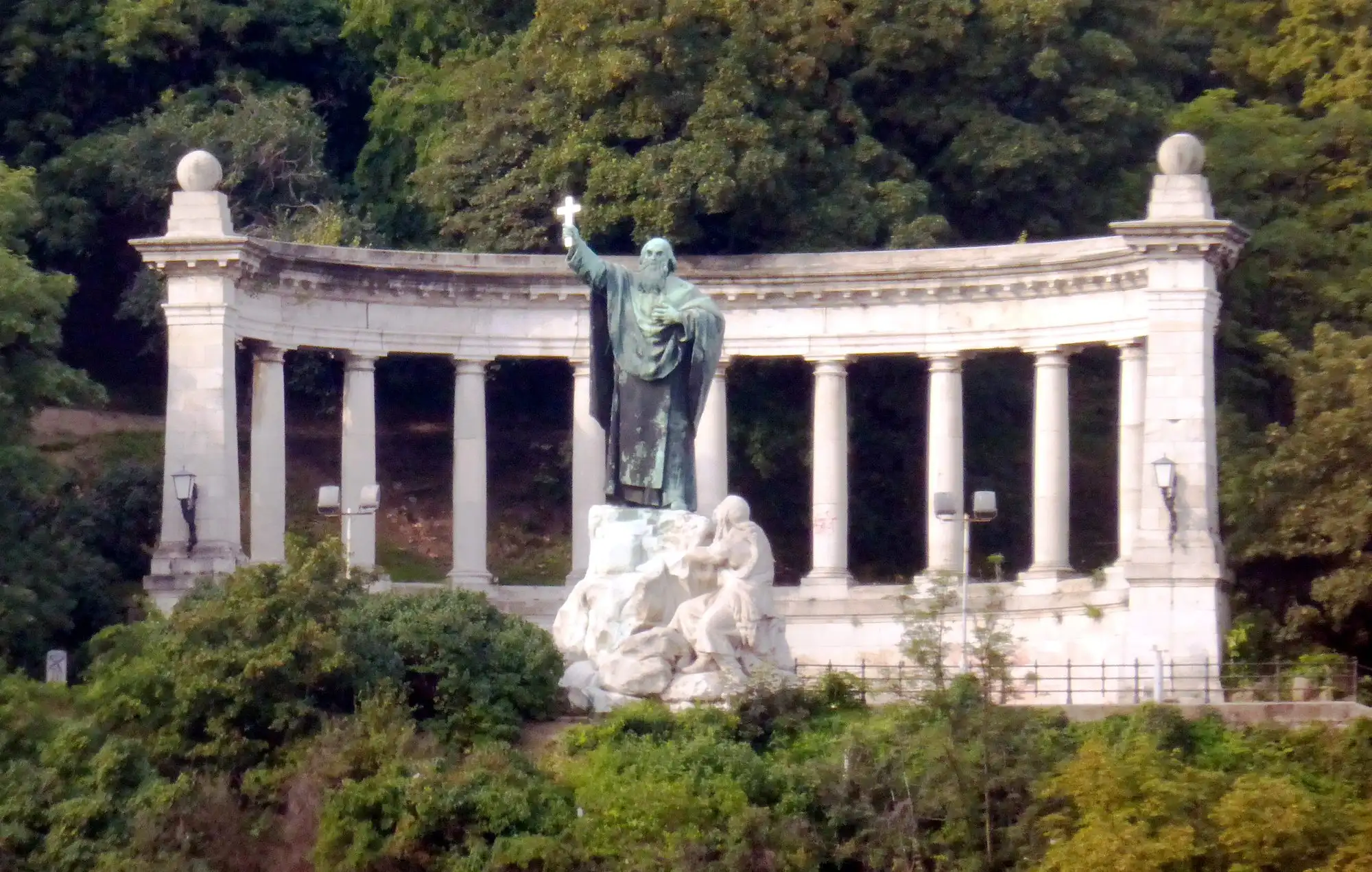
The hill is named after the man this monument commemorates. In 1046, during the pagan uprising associated with Vata, Bishop Gerard was hurled from the rock face above the Danube, and from the fifteenth century the hill increasingly carried his name.
The monument was unveiled on 16 June 1904, one of ten statues King Franz Joseph gave the city. Gyula Jankovits made the seven-metre bronze bishop raising his cross, Aladár Gárdos the kneeling pagan Magyar warrior beside him, and the architect Imre Francsek designed the semicircular arcaded colonnade behind.
The figure was drawn at three metres and enlarged so it would hold its own against the mass of the hill, which it does. It faces Elisabeth Bridge, and you can pick it out from the Pest bank.
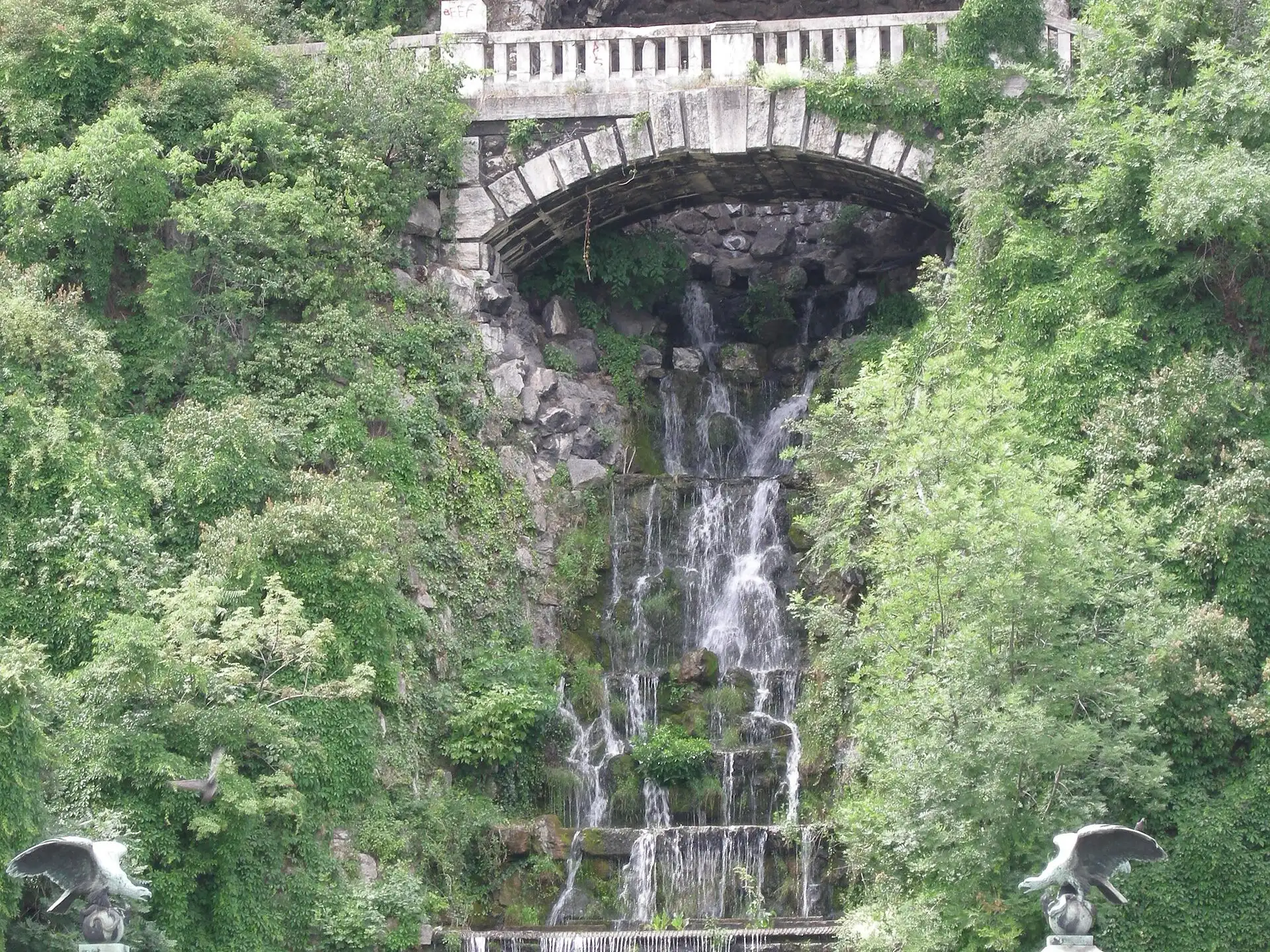
Below the colonnade an artificial waterfall runs down the hillside, operated by the city. It is not on all year round, so treat it as a bonus rather than a reason to come. The monument stands on the Szent Gellért lépcső above Döbrentei tér, which makes it a natural halfway stop on the climb from the north foot of the hill.
Insider tips
Come up half an hour before sunset
The hour before sunset is when the hill earns its reputation, because you get the city in daylight and then watch it change over to the floodlit version from the same spot. Bring a layer. It is windier up here than at river level, and the lookouts are open to it.
Your exhibition slot is a window, not a time
The time on the ticket marks the start of a 20-minute entry window, and you may go in at any point inside it. That is the official position, in as many words, and it saves a lot of anxious queuing. Arrive at the start of the window anyway, because the flow through the indoor rooms depends on it.
Bus 27 is the only way up without the climb
It runs from Móricz Zsigmond körtér to Búsuló Juhász (Citadella), and the stop is only about 30 metres lower than the fort, so the last stretch along Szirtes út is a gentle six minutes rather than a climb. Ordinary BKK tickets and the Budapest Card cover it. Ride up, walk down.
Walk off the Tabán side for the quiet half
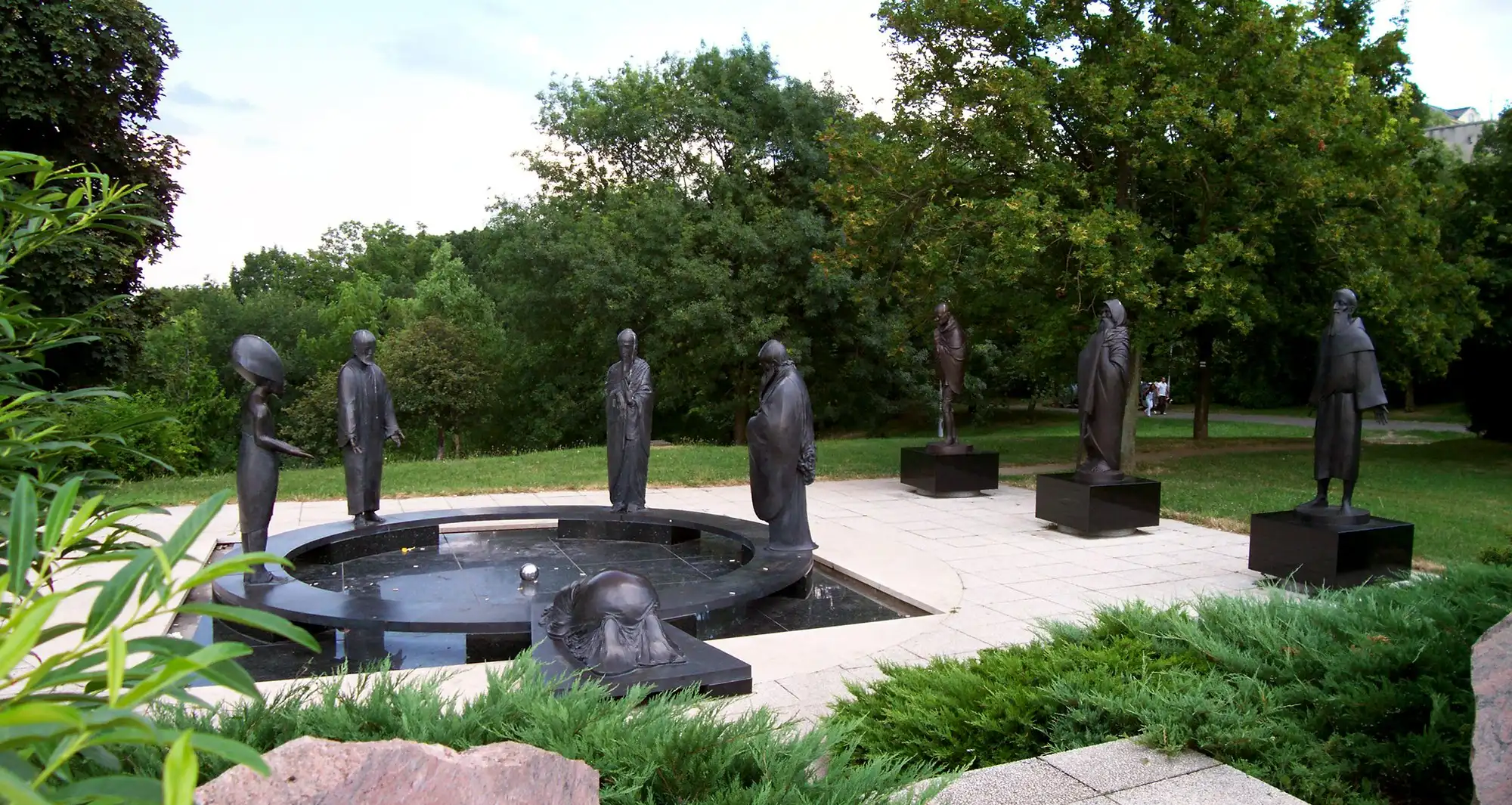
Almost everyone arrives from the Danube and leaves the same way, which leaves the western slope towards Tabán empty. Filozófusok sétaútja, the path that runs through it, passes the Philosophers’ Garden and comes out near Döbrentei tér, and it is the one part of the hill where you can hear yourself think on a July afternoon.
Nearby attractions
Everything below is at the foot of the hill or across one bridge from it, so the hill works best as the middle of a day rather than a trip of its own.
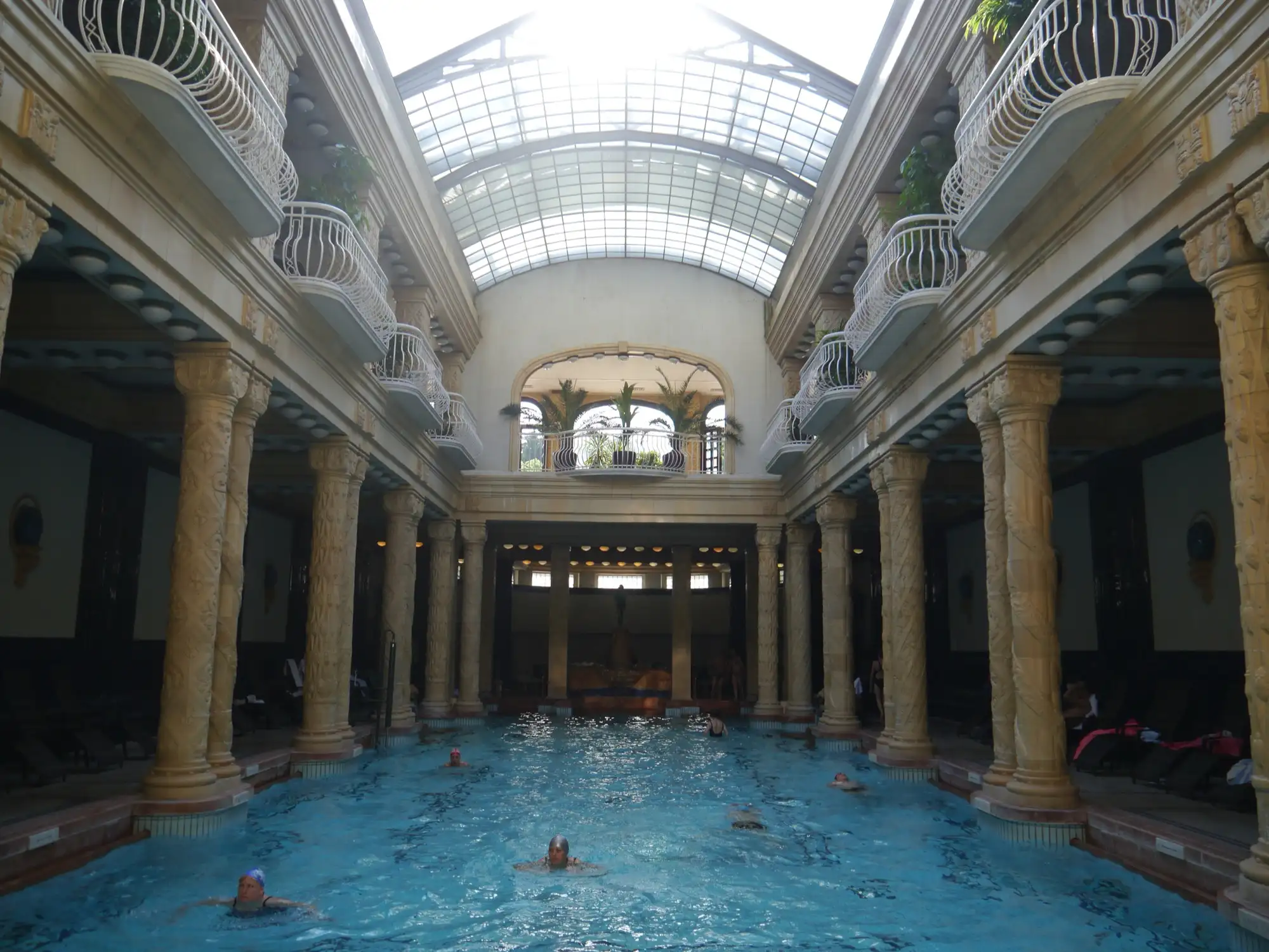
Gellért Thermal Bath
About 10 minutes down the east paths to Szent Gellért tér. The bath has been closed since 1 October 2025, with a reopening planned for 2028, so this is a look at the building rather than a swim.
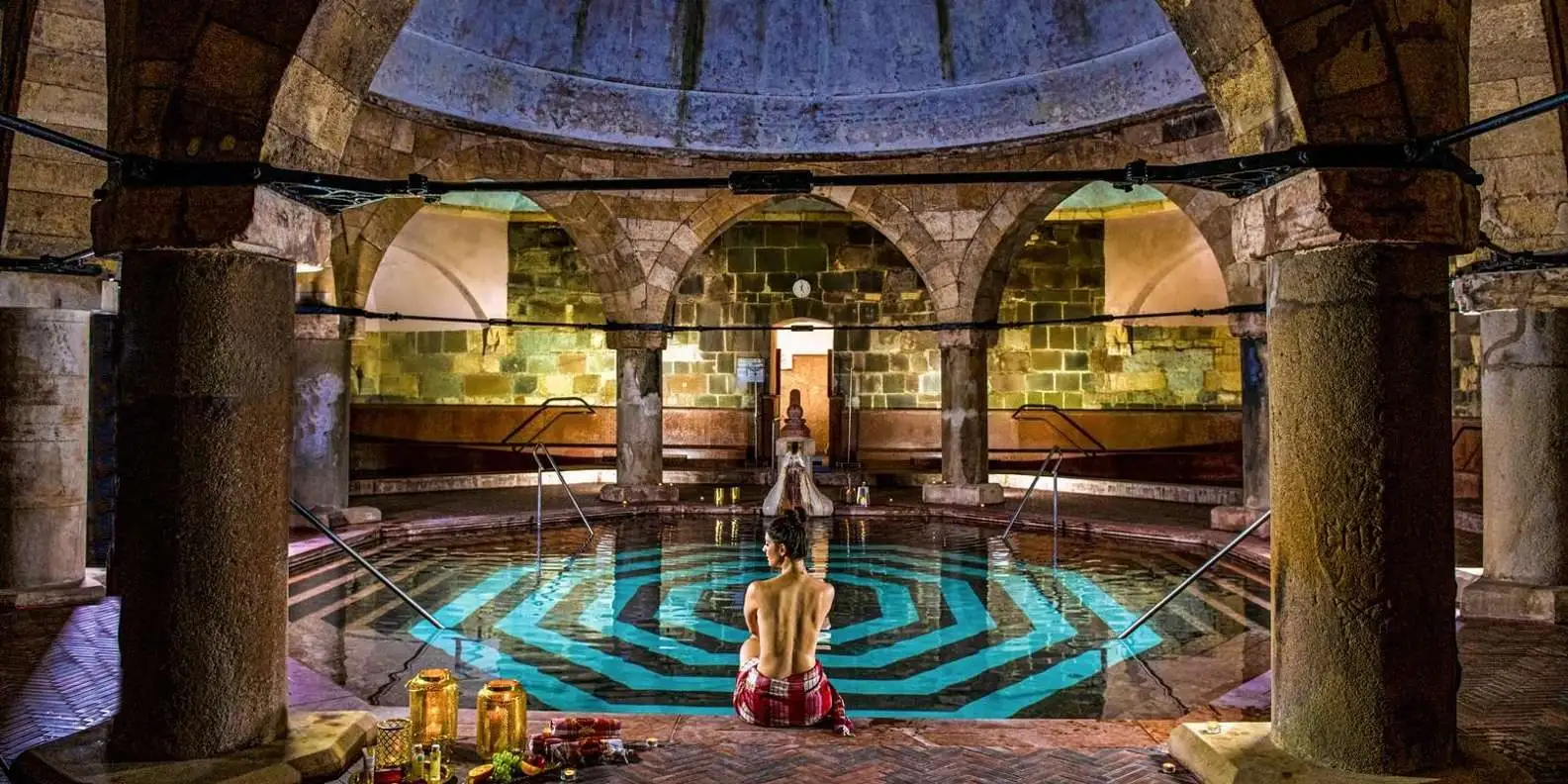
Rudas Thermal Bath
About 10 minutes down the north paths to the embankment, or tram 19 or 41 from Szent Gellért tér to Rudas Gyógyfürdő. The Ottoman dome is the oldest thing on this stretch of river.
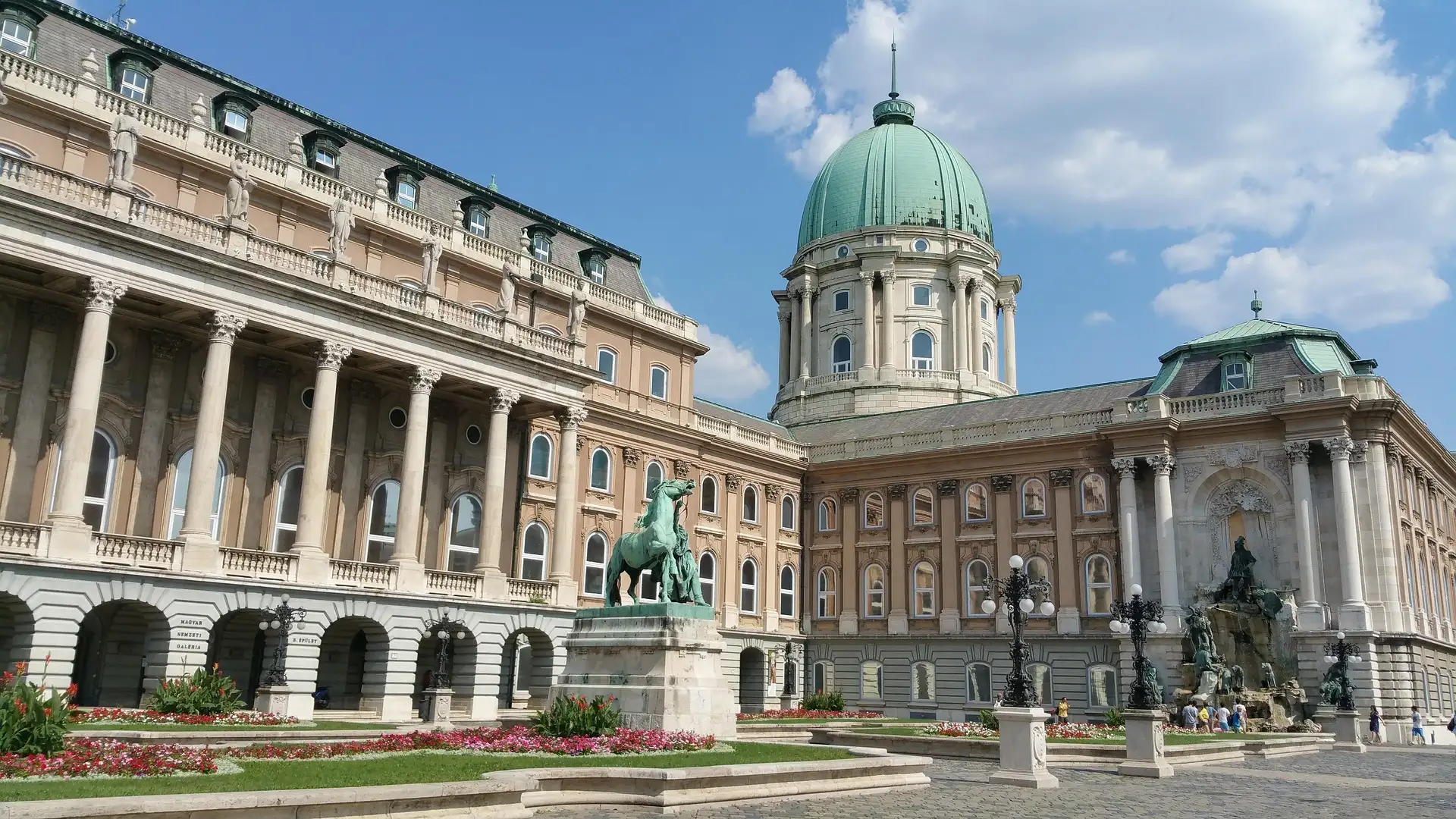
Buda Castle
About 25 minutes down and north along the embankment, or tram 19 or 41 from Rudas Gyógyfürdő to Várkert Bazár.
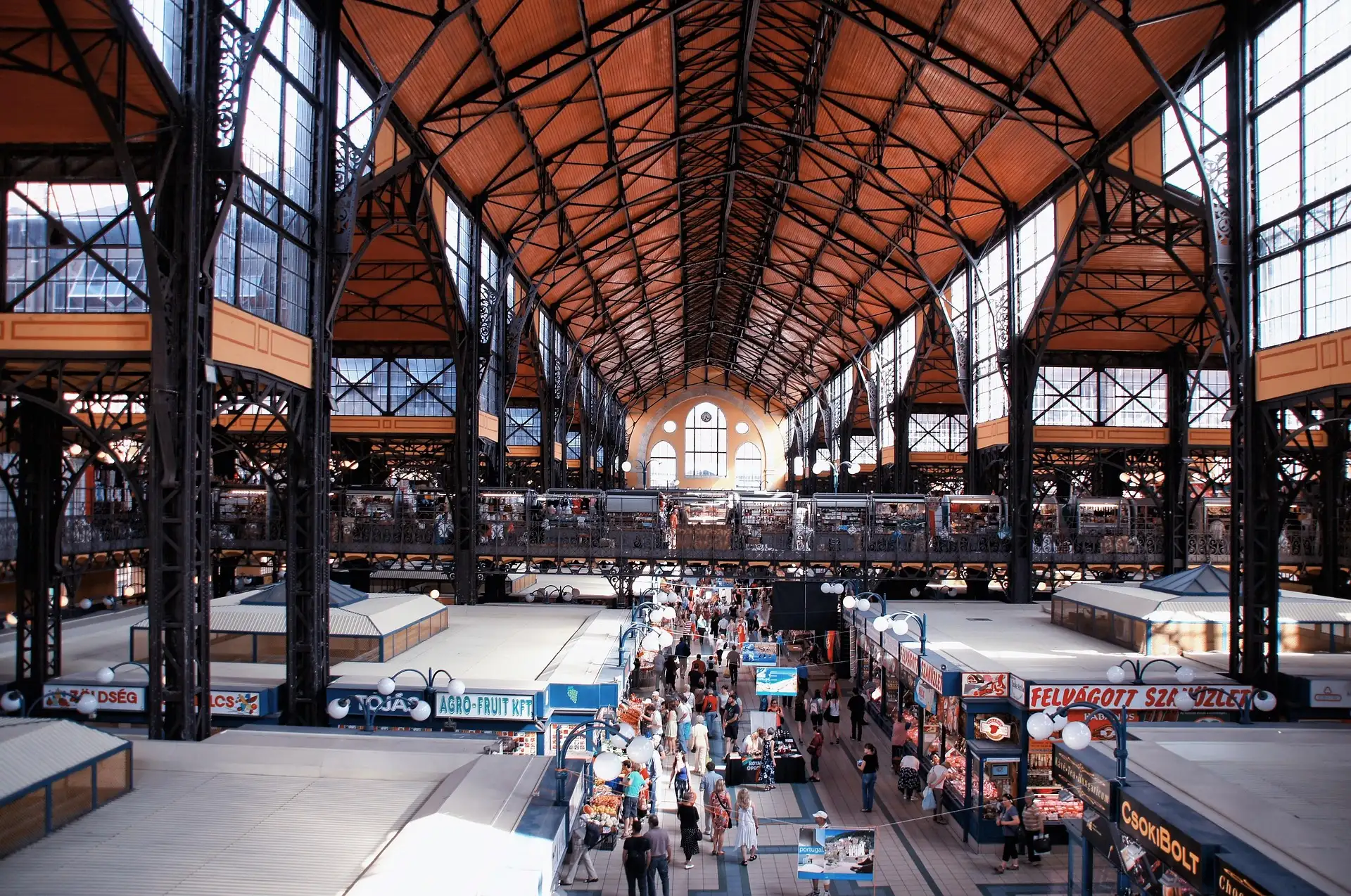
Great Market Hall
About 20 minutes: down to Szent Gellért tér and across Liberty Bridge. Metro M4 from Szent Gellért tér to Fővám tér saves the bridge.
Did you know?
- Hungary’s national survey network began on this hill, at Palatine Joseph’s observatory. The original marker was destroyed by the mid-nineteenth century, and its position was preserved on the East Bastion with a stone column and bronze markers in 1933.
- The flag in the Citadella park is the country’s largest hoistable one, 72 m² flying from a 36-metre mast. It was raised ceremonially on 15 March 2022, while the site was still closed.
- The excavations that opened the rebuild in 2020 turned up Celtic, Roman and Ottoman coins and pottery, a First World War Austro-Hungarian anti-aircraft gun mount, and Second World War shells and aerial bombs that the Hungarian Defence Forces had to remove.
- The architect of the rebuild is Dániel Taraczky, lead designer of the art1st design studio. The idea was to separate the “head” of tyranny, the Western Round Bastion, from the body of the fortress so the space could open up.
- Citadel comes from the Italian for a fortress built at a city’s highest point, a last defensive refuge. The Habsburgs planned a whole ring of forts around Pest-Buda and never built another one.
History
Celts settled the hill, a bishop was thrown off it, the Ottomans put a palisade on the summit, and an astronomical observatory stood here before General Haynau’s fortress replaced it. The short version:
- 1046
Bishop Gerard is hurled from the rock face above the Danube during the pagan uprising associated with Vata. From the fifteenth century the hill carries his name.
- 1815
The university observatory, the Csillagda, is inaugurated on the summit. It is destroyed in the siege of Buda in May 1849.
- 1850 to 1854
The fortress is built at General Haynau’s order, to designs by Ignaz Weisz, overseen by the military engineer Emanuel Zitta. Imperial troops are in place by 1854.
- 1899
With the garrison gone, Budapest’s citizens begin pulling the walls down. The money runs out and the demolition is never finished.
- 1945
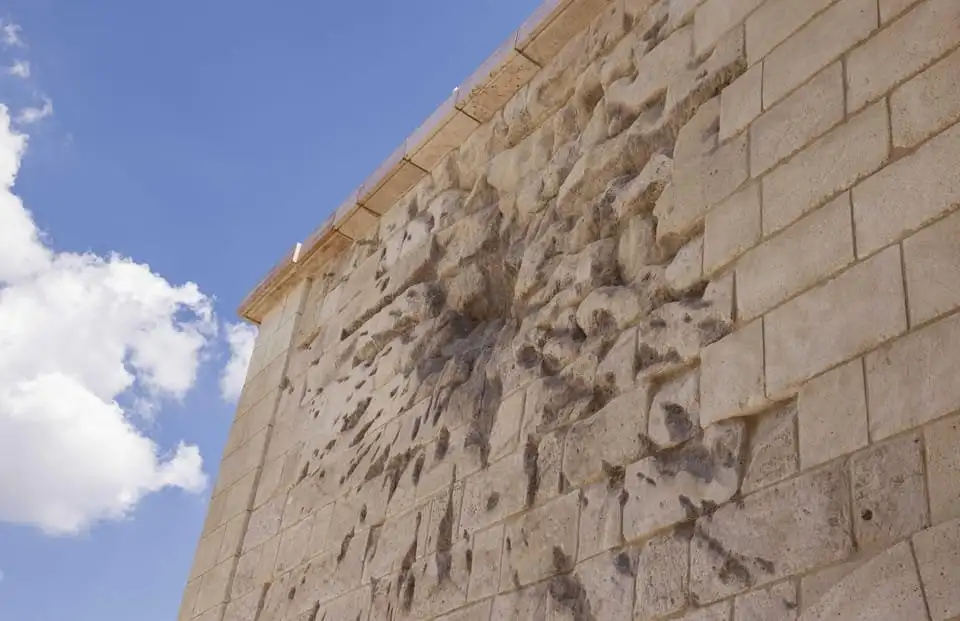
The Citadella falls to Soviet troops in February after the siege. The scars of gunfire are still in the walls.
- 1947
The Liberty Statue is raised, by Zsigmond Kisfaludi Strobl.
- 1987
The Citadella joins Budapest’s UNESCO World Heritage listing.
- 2026
The rebuilt Citadella opens to visitors on 5 April, with a free park inside the walls and The Bastion of Liberty exhibition in the casemates.
The fortress nobody wanted, the pantheon that was never built and the slum years in between: history of Gellért Hill.