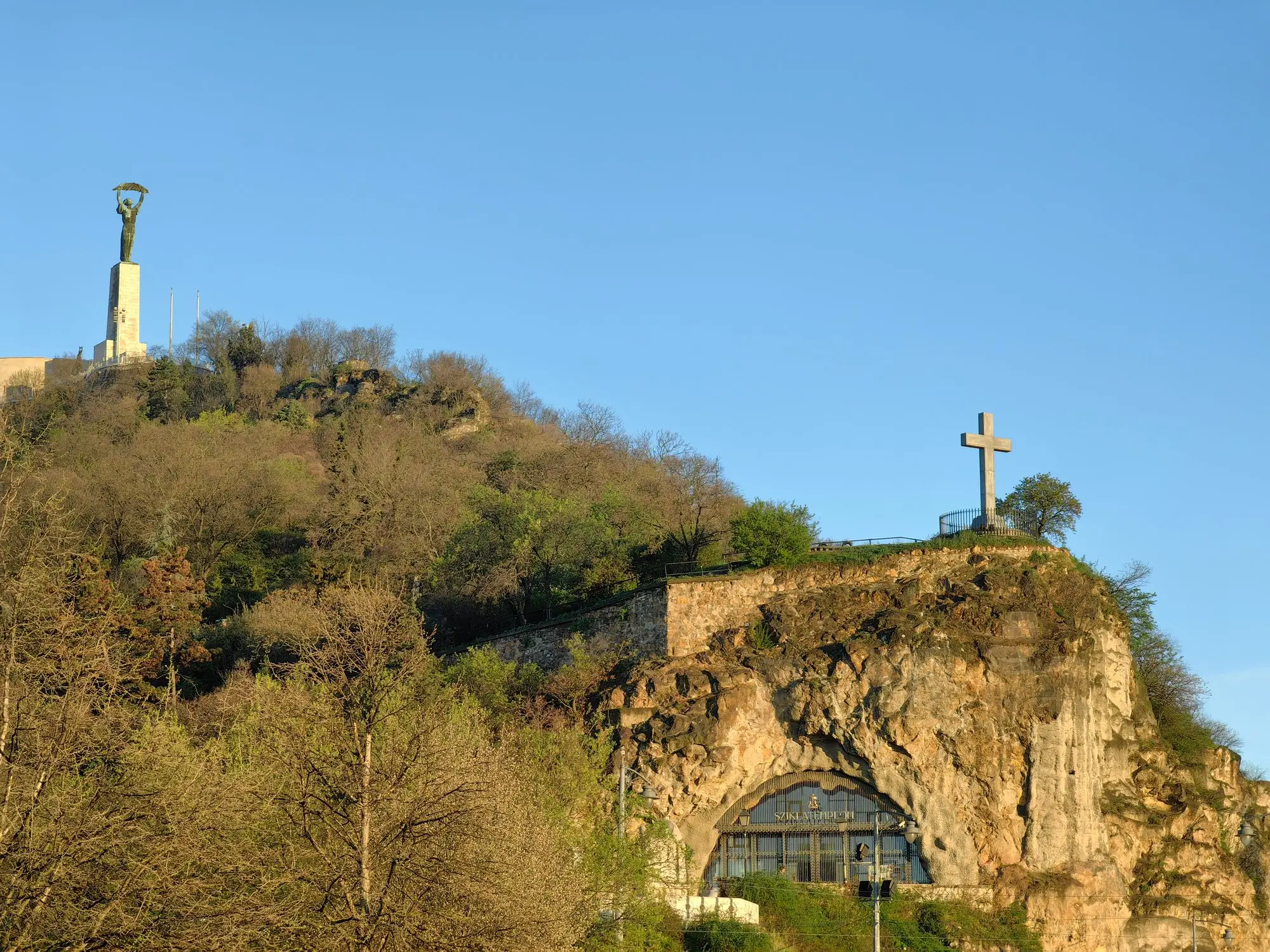
The Cave Church is a working church cut into the rock at the foot of Gellért Hill, across the road from the Gellért Hotel. It belongs to the Pauline monks, the only men’s religious order founded in Hungary, and its story is the reason to go in. The state closed it in 1950 when it banned the order, walled the cave mouth up with two metres of concrete in the 1960s, and it reopened in 1989.
It is open to visitors from Monday to Saturday, with an audio guide included, and it shuts to them for Mass at five o’clock every day. This page covers the hours and the Mass times, how a visit works, what to look for inside and the one tour that goes in.
Cave Church tickets and tour
No booking partner sells entry to the Cave Church. Tickets are sold at the Pauline welcome centre in the outer cave as you arrive, and children under 10 go in free. The one tour that goes inside is a private guided walk over the whole hill, which ends with 45 minutes in the church.
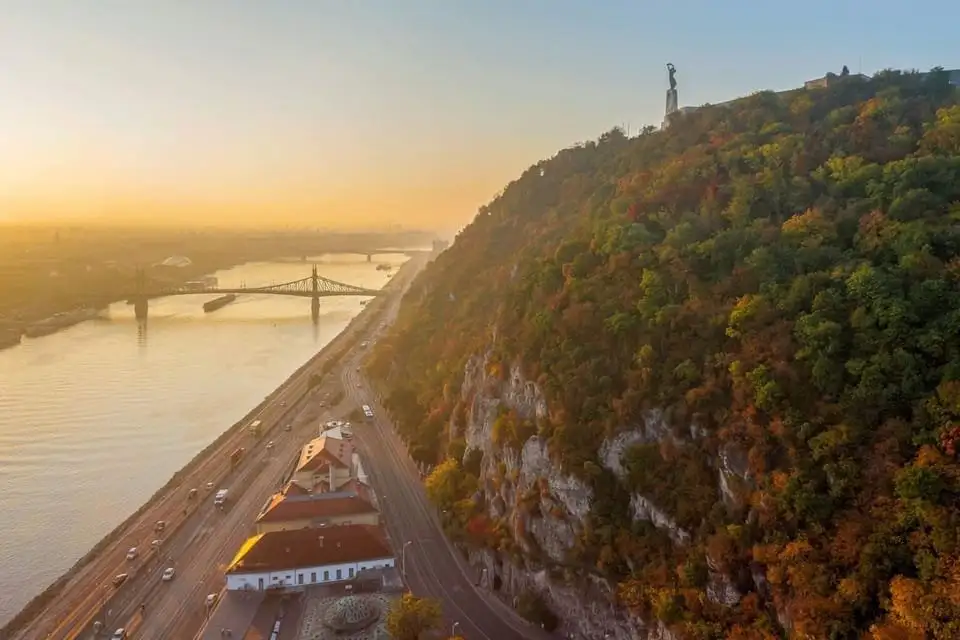
Budapest: Gellért Hill Guided Walking Tour
Best for: Seeing the Cave Church with a guide, as the last stop of a walk over the whole hill
- 2.5 hours, ending with 45 minutes in the Cave Church
- Live guide in English
- Free cancellation up to 24 hours ahead
What’s included and more details
What’s included
- A private guide for the whole walk
- A visit to the Cave Church, the last stop
- The Citadella lookout and the Statue of Gellért
- The Philosophers' Garden and a walkway in the side of the hill above the Danube
- Meeting point
- The staircase to the monument of St Gellért, near Döbrentei tér
- Finishes
- Szent Gellért tér, at the foot of the hill
- Operator
- EvezzVelem
- On Sundays
- The Cave Church cannot be visited, and the rest of the walk runs anyway
- Cave Church admission
- Not stated on the booking page
- Not suitable for
- Wheelchair users, or anyone with limited mobility or a fear of heights
- The tour ends at the church, so you finish at the foot of the hill, a few minutes from the M4 at Szent Gellért tér
- The ticket includes the audio guide, and children under 10 go in free
- The tour is private, so nobody else joins your booking. Every guided tour of the hill is compared on our Gellért Hill tours page
What to see in the Cave Church
Start with the two films at the welcome centre
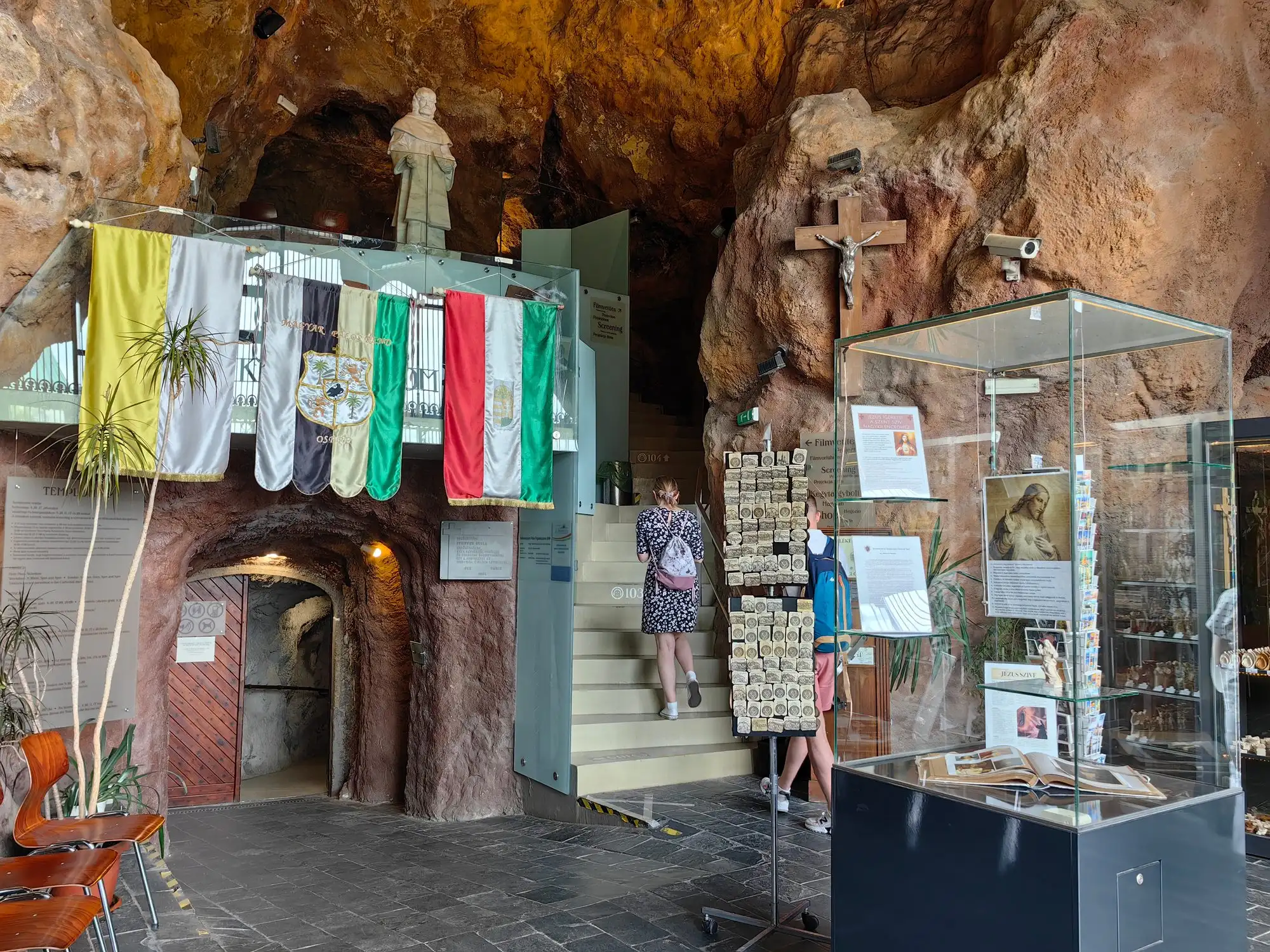
Every visit goes through the Pálos Fogadóközpont, the Pauline welcome centre in the outer cave. You buy your ticket here and are handed an audio guide, in Hungarian, English, German, French, Italian, Spanish, Polish or Russian.
The tour starts with two screenings rather than with the church. The first tells the history of the Cave Church. The second is a short video that leaves you with a question to carry in: which wolf do you feed?
The church’s shop is in the outer cave too, selling hand-carved wooden statues from Hungary and northern Italy, crucifixes and rosaries. Leave it for the way out, because the films set up everything the audio guide tells you next.
Find Our Lady of Lourdes on your right
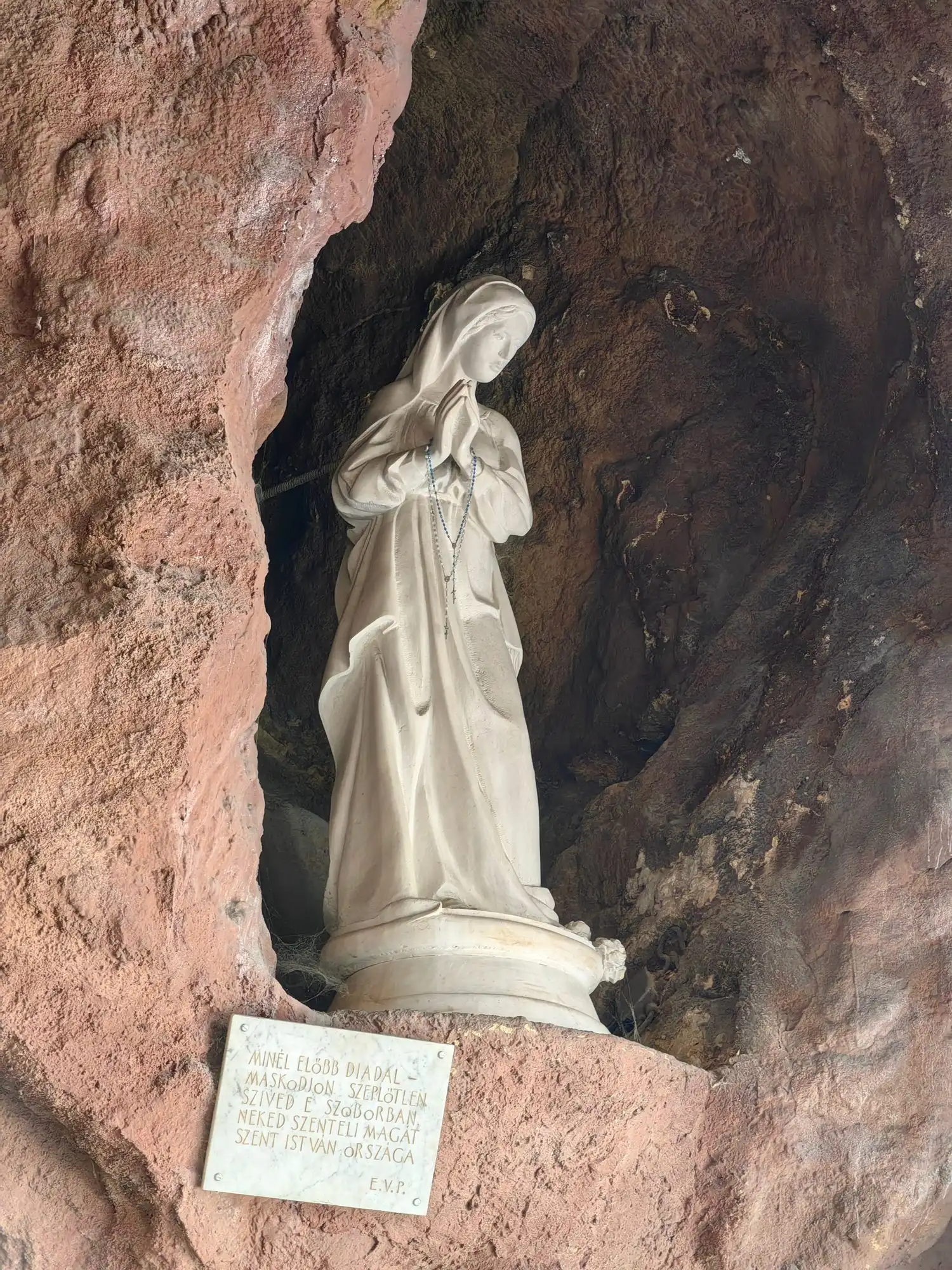
The church exists because of Lourdes. A group of Hungarian pilgrims visited the grotto there in the 1920s and came home with the idea of a cave church of their own, and the church in the rock was finished in 1931.
The statue of Our Lady of Lourdes is how the church remembers that. It stands in the outer cave, on the right as you come through the glass door.
It is easy to walk straight past while you are still sorting out the audio guide, so stop and look for it before you go further in.
Take the stations in the church slowly
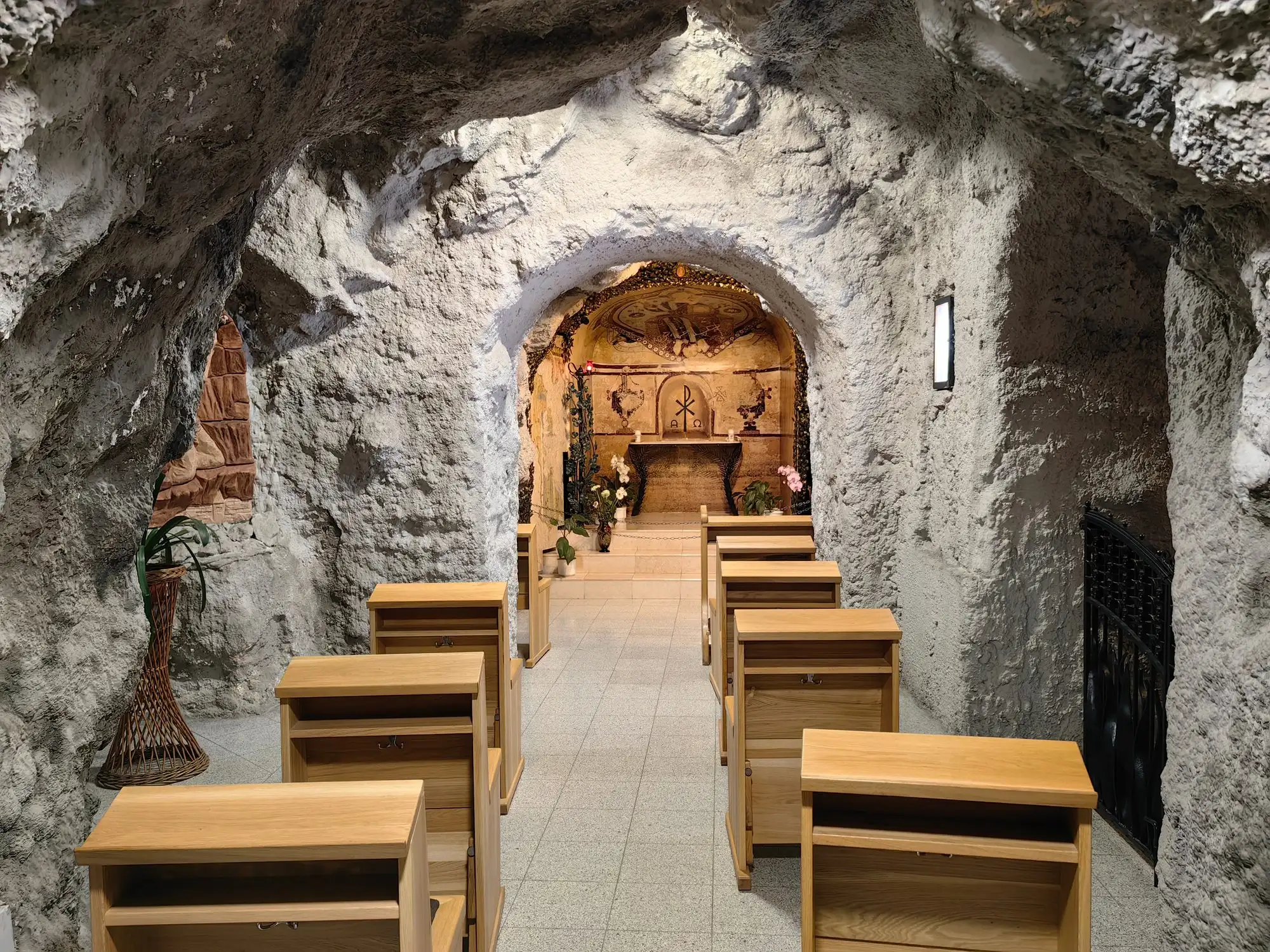
From the outer cave you go into the church itself, and the audio guide takes you round it station by station. Move between the stations quietly, because people come here to pray.
The stories are the best part. You hear what St Stephen said when he offered Hungary to the Virgin Mary, what an archaeological site in Egypt has in common with the church’s tabernacle, what devotion to the Sacred Heart means, and who gave his life for a fellow prisoner at Auschwitz. The rest is Hungarian history, the Pauline monks and the upheavals of the twentieth century.
Let each station play to the end before moving on. The commentary is the thing you came for.
Look for the relic, the altar and the icons
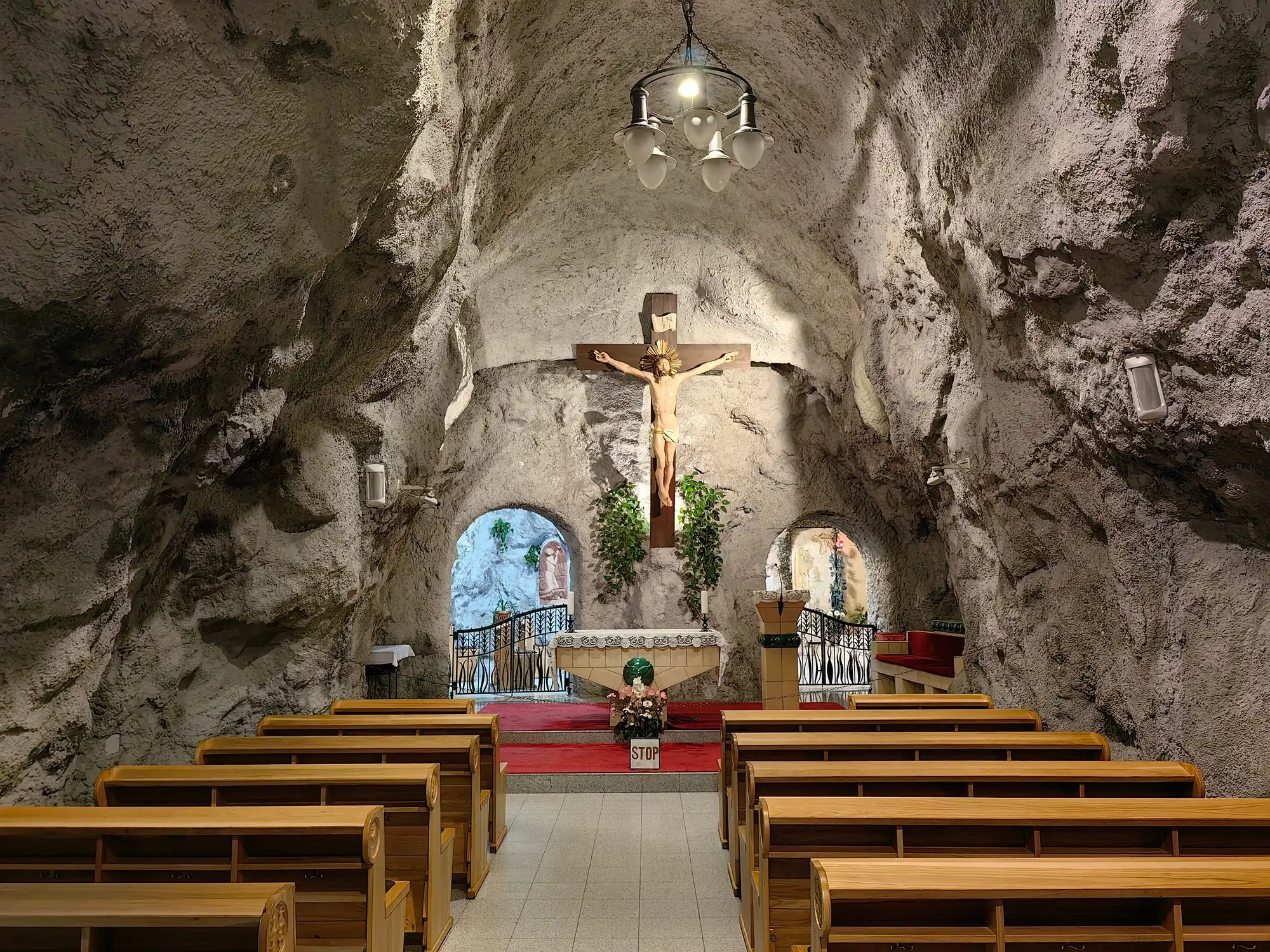
Three things in the church are worth hunting for by name. The first is the Pauline order’s most important relic, part of the tibia of St Paul the Hermit.
The second is the main altar, made by the Zsolnay porcelain factory in Pécs. There is a ceramic relief of St Gellért as well, the bishop the hill is named after.
The third is a small exhibition of Russian metal icons, old pieces from the Eastern Church that the Paulines describe as unique in Europe. It is small, so look for it rather than expecting to come across it.
Save time for the wood carvings in the innermost hall
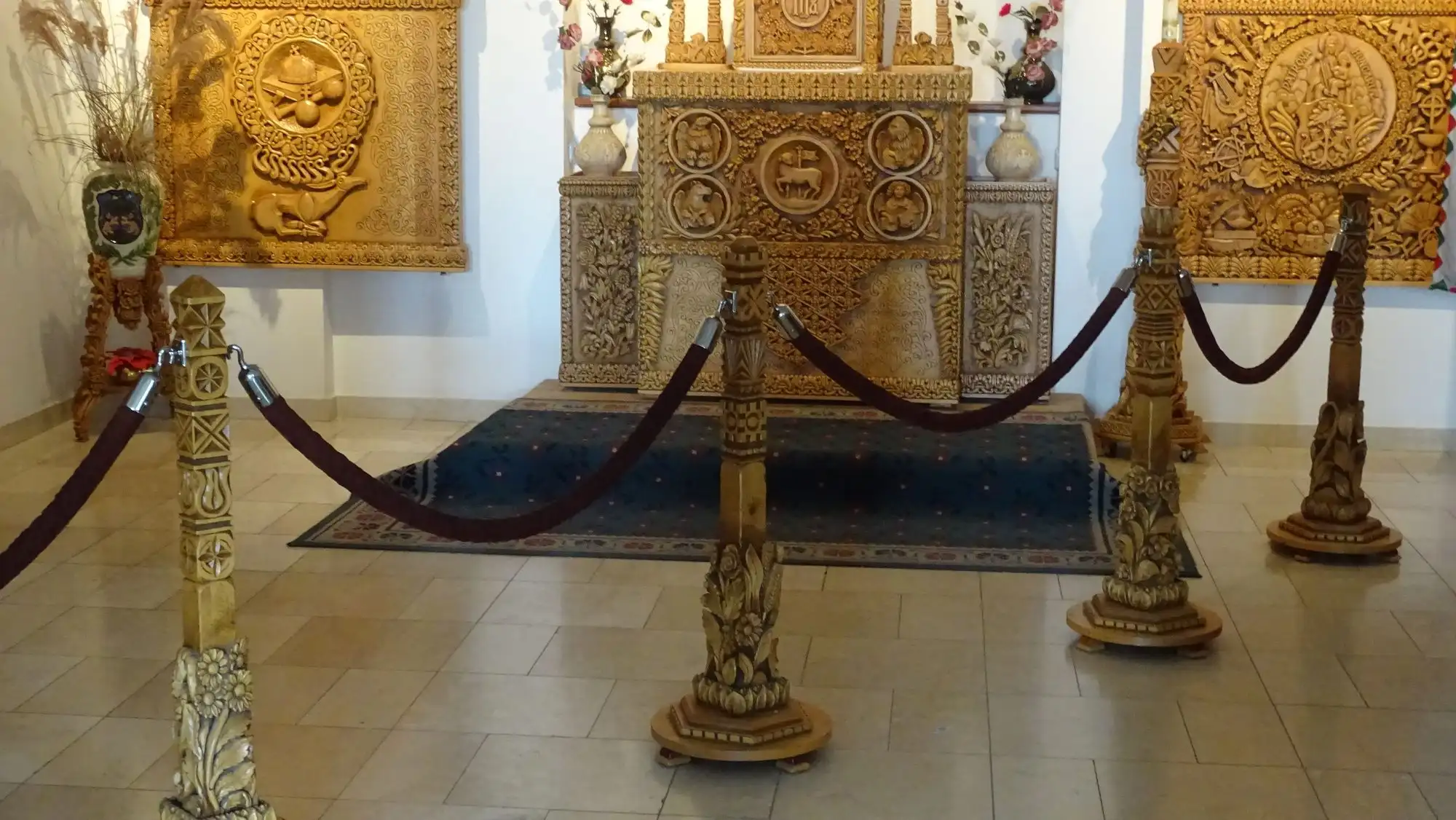
The innermost hall holds the best thing in the church. Its wall is covered in carvings by Béla Ferencz, a woodcarver born in Transylvania who lived in California.
He spent ten years on them and gave them to the Pauline order after the church reopened in 1989.
It is the furthest point inside, so leave time for it rather than arriving with the audio guide almost done.
Look at the entrance on the way out
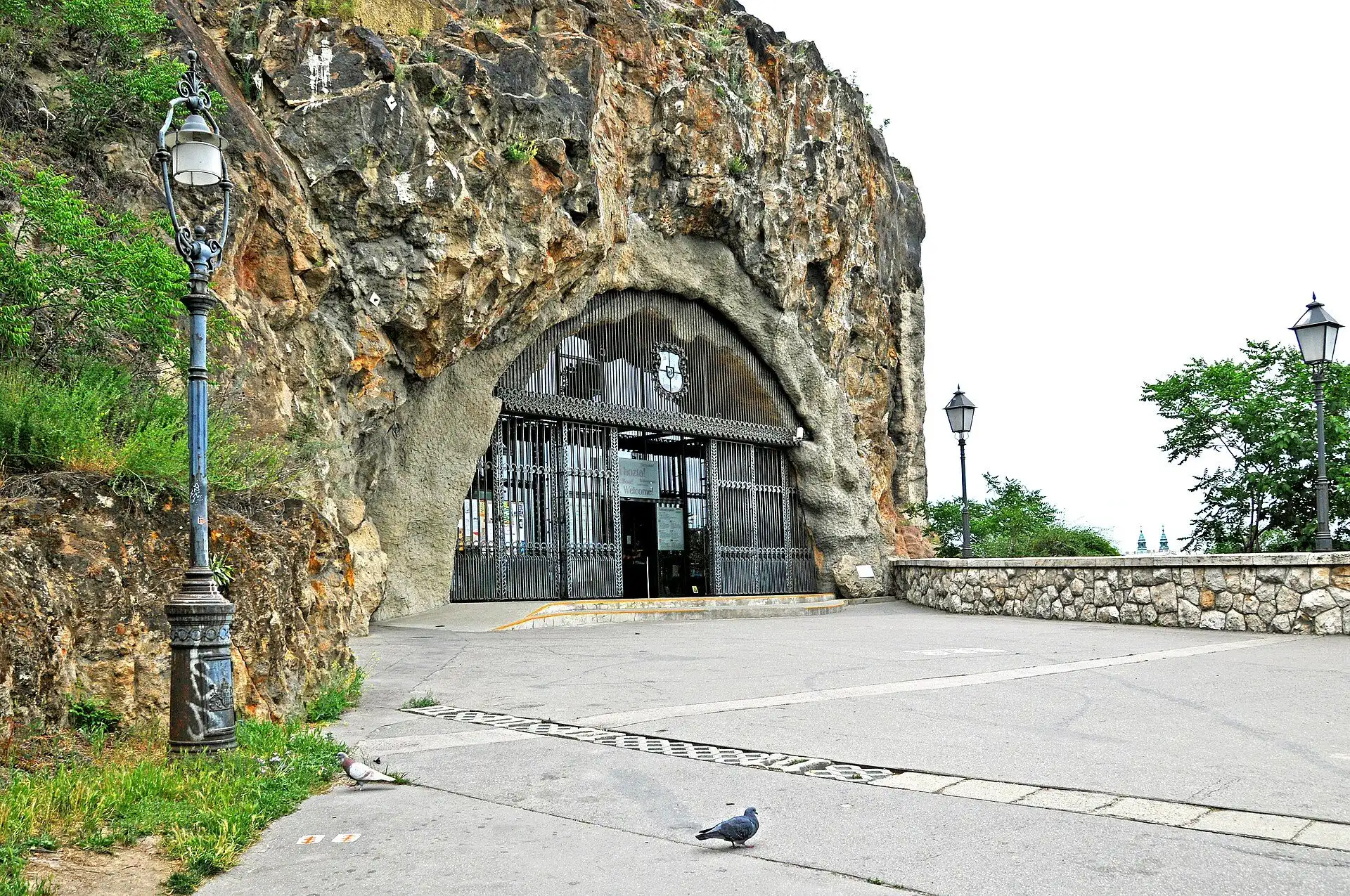
The entrance is where the church’s twentieth century shows. In the 1950s the monks were forced out, and in the 1960s the mouth of the cave was sealed with a concrete wall two metres thick. The cross above the entrance was torn down too.
A piece of that wall was kept on the right side of the entrance, and it is still there as a reminder. Look up as well, to the cross on the rock above, and find the statue of St Stephen, the founder of the Hungarian state, at the entrance.
It takes a minute, so do it on the way out, when you know the story.
How a visit to the Cave Church works
Take the metro to Szent Gellért tér
Metro M4 to Szent Gellért tér leaves you about five minutes’ walk from the church, at the foot of the hill by Liberty Bridge. Trams 19, 41, 47, 48, 49, 56 and 56A stop on the same square.
From the Liberty Statue it is about 10 minutes down, and about 20 minutes back up to the Citadella if you are doing the hill afterwards. Every route is on our how to get to Gellért Hill page.
Buy your ticket and take the audio guide
Pay at the welcome centre in the outer cave and you are given the audio guide in the language you choose. Children under 10 go in free.
Watch the films, then walk the church
The two screenings come first, then the stations in the church, moving quietly between them. The church publishes no visit length, so allow for the films as well as the walk, and keep clear of 17:00, when it closes to visitors for Mass.
Mass at the Cave Church
The Cave Church is a working church as well as a sight, and worshippers are welcome at every service, including on Sunday, when it is closed to sightseeing.
- Mass every day at 17:00 and 20:00, at 08:30 from Monday to Saturday, and at 11:00 on Sunday
- In Advent the 08:30 Mass is replaced by a rorate Mass at 06:00
- The Rosary every day at 16:30
- Confession is usually offered during Mass, though not every time. The calendar at the foot of the services page on the church’s own website shows which
- On the 13th of every month, a Fatima devotion and Mass at 11:00
- Every Thursday, adoration with the Rosary from 21:00 to 23:00, and adoration for men from 07:00 to 08:00
The Pauline monks and the Cave Church
The Paulines are the only men’s religious order founded in Hungary. They have four monasteries in the country, at Pécs, Pálosszentkút, Márianosztra and here, and the monks move from one to another every few years, so the community at the Cave Church changes. Its monastery was built for them in the 1930s, when the order returned to Hungary.
- 1920s
A group of Hungarian pilgrims visits Lourdes and comes home with the idea of a cave church on Gellért Hill.
- 1931
The church in the rock is completed.
- 1934
A neo-Romanesque monastery is built for the Pauline monks, who are also given the church.
- 1950
The state bans the Pauline order and the church is closed.
- 1960s
The mouth of the cave is walled up with a concrete wall two metres thick.
- 1989
The church reopens.
Before the church, the site was lived in, and a photograph from about 1874 shows a cave dwelling where the church now stands. The hill’s longer story, from the Celts to the Citadella, is on our history of Gellért Hill page.
Before you go
- It is a working church. Dress as you would for any church, and keep your voice down between the stations
- Sunday is for services only. The church is closed to visitors all day, and the guided walking tour skips it that day
- Children under 10 go in free
- Accessibility. The church publishes nothing on step-free access inside the cave
Insider tips
On a Sunday, see it at Mass
The church is closed to sightseeing on Sunday, but Mass is said at 11:00, 17:00 and 20:00. You will not get the audio guide or the films, and you sit through the service rather than walking round, but it is the way to see the church in use.
Walk the Tisztulás Útja from the door
The Tisztulás Útja, the Way of Purification, is a pilgrimage route through the city built on the Ten Commandments. It starts at the Cave Church and ends at Ferenciek tere in Pest, it can be walked on your own, and the guide booklet is sold at the welcome centre.