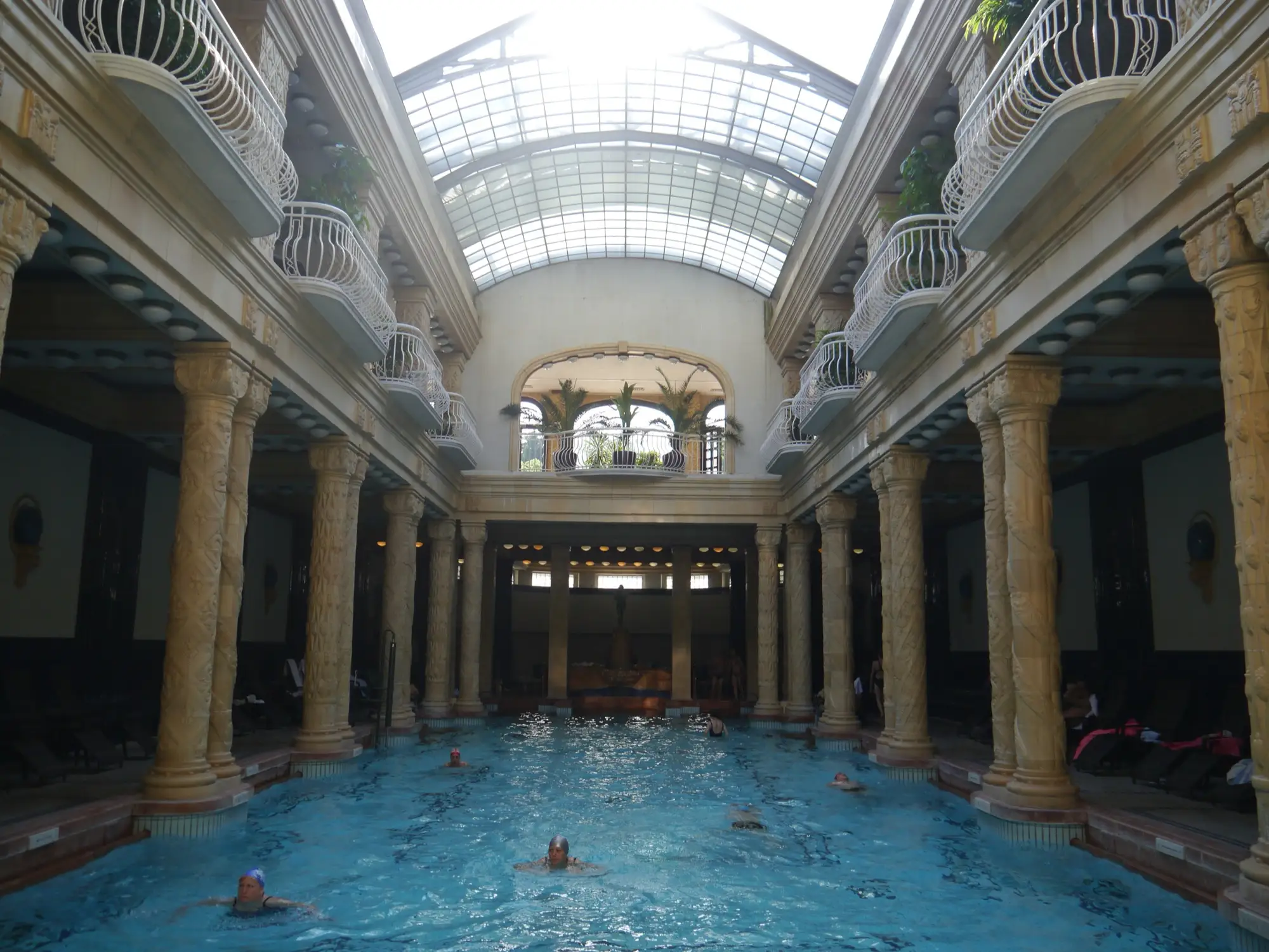
Gellért is the bath inside the Art Nouveau hotel at the Buda end of Liberty Bridge: two thermal halls tiled in Zsolnay porcelain, a swimming pool between carved columns under a roof that opens, and an outdoor wave pool the bath counts as the first in the world. It opened in September 1918, in the last weeks of the First World War, and until it shut it was the city bath company’s second most important bath.
It is closed. The doors shut on 1 October 2025 for a rebuilding that the bath expects to take until 2028, and nobody sells a ticket for it. This page tells you what is happening, where to bathe in the meantime, and what the Gellért was like, so you know what you are waiting for.
- Entry
- Closed since 1 October 2025
- Book ahead
- Nothing on sale
- Nearest stop
- Metro M4 Szent Gellért tér (Műegyetem)Comes up on the square in front of the hotel, with lifts. The bath's door is round the corner on Kelenhegyi út
- Accessibility
- Lifts to the indoor pools, outdoor area not accessible
- Dress code
- Swimwear and slippers, cap in the swimming pool
- Reopening
- Planned for 2028
- Age limit
- 14 in the thermal pools
- Water
- 41 to 43°C from wells in the hill
- Opened
- September 1918
Tickets
Budapest baths to visit instead
For the full-day bath experience, Széchenyi. It is the one the Gellért’s own site sends you to, with 18 pools, 3 outdoor and 15 indoor, open every day of the year, and a day ticket you can book online. It is across the river in City Park, a direct ride on the M1 from the centre. Our Széchenyi guide covers the pools, the rules and the quietest times.
For the nearest substitute, Rudas. It stands under the same hill about 12 minutes’ walk north of Gellért along the embankment, with an Ottoman-era Turkish bath under a domed roof, a modern wellness wing and a rooftop pool over the Danube. The Turkish bath keeps separate men-only, women-only and mixed days, so check the day before you go. Night bathing runs on Fridays and Saturdays until three in the morning. Details on our Rudas page.
For a local bath at a local price, Lukács. It is north of the Castle, plainer than either of the others and the bath the Budapest Card gets you into free. Our Lukács page has the rest.
Highlights
Soak in the Zsolnay-tiled thermal halls
The two thermal halls, tiled in Zsolnay porcelain and mosaic, are the rooms the Gellért is known for, and both are being restored in the rebuild.
Swim under a roof that opens
The 27°C swimming pool sits between carved columns under a glass roof that is opened on warm days, with a gallery above it for the photograph.
Wait for the waves
The outdoor wave pool of 1927 lost its waves years before the closure, and getting them back is part of the plan.
Plan your visit
Opening hours
There are none. The bath closed on 1 October 2025 and its site gives the planned reopening as 2028, with no hours to show until then.
The operator’s timetable, as its chief executive set it out in May 2026, runs in three steps. The pump house in the basement is rebuilt first, the main works start in early 2027 once the financing is settled, and the indoor bath reopens by the end of 2028, with the outdoor pools and a new Private Spa section following in summer 2029.
The loan for the works had been refused once and resubmitted when we checked in September 2026, so treat every date as provisional and check the bath’s own site before you count on it.
Until it closed the bath opened every day from 09:00 to 19:00, with the pools cleared at 18:40, and the outdoor pool ran from early June to late September. Expect the new hours to be published on the official site when a date is set, and not before.
Getting there
Metro M4 comes up on Szent Gellért tér, the square in front of the hotel, with lifts to the surface. Seven tram lines and two bus routes stop on the same square. The bath’s own door is not on the square but round the corner on Kelenhegyi út, behind the hotel.
Nearest stops
Which tram to take, where the door is and the step-free route: how to get there.
Before you go
How the bath worked until it closed. The rules are likely to come back in much the same form, but the bath will publish the new ones when it reopens, so check them then.
- One ticket for everyone. The bath sold a single day ticket at the same price online and on the door, with no half-day, child, student or senior rate. Only under-3s went in free. Euros were not accepted, cards and forints were
- Locker or cabin. The locker held a backpack and nothing bigger. A cabin was a private changing room that stayed yours all day and took a suitcase. The bath’s advice for two people was one cabin and one locker, shared
- QR code to wristband. An online ticket was swapped at the information desk for a wristband that opened the gate and your locker, and you kept it until you left
- Swimwear only, slippers everywhere. Swimwear material only in the pools, and slippers or flip-flops compulsory across the whole bath
- A cap in the swimming pool only. Not needed in the thermal pools
- Nothing was hired. Caps, towels, slippers, swimsuits and bathrobes were sold in the shop inside
- Under-14s could not use the thermal pools, saunas, steam rooms or plunge pools, and could not use the swimming pool unless they could swim
- Massages of 20, 45 and 60 minutes were booked separately, and under-18s needed a parent
Accessibility
- The bath’s own arrangements when it closed. Entry for guests with disabilities was through the thermal departments, the indoor thermal pools, saunas and swimming pool could be reached by wheelchair, and a lift on the former women’s side went down to the swimming pool. The outdoor area was not accessible
- Two pools had a hoist: the 38°C thermal pool on the former women’s side and the 27°C swimming pool
- After the rebuild this may all change, and the operator has said nothing about it yet. Check the bath’s own site when it reopens rather than counting on the old arrangements
- Getting there is step-free. Every station on metro line M4 has lifts, trams 19, 56 and 56A run low-floor cars, and more than nine in ten Budapest buses are low-floor. Trams 41, 47, 48 and 49 are not on the transport company’s low-floor list
Pools and saunas
The bath is shut, so this is the Gellért as it ran until 30 September 2025, from the bath’s own descriptions, with what the rebuild promises where the operator has said so. Eight pools were in use in its last year: six thermal pools between 34 and 40°C, the indoor swimming pool and, in summer, the outdoor pool.
Start in the thermal halls
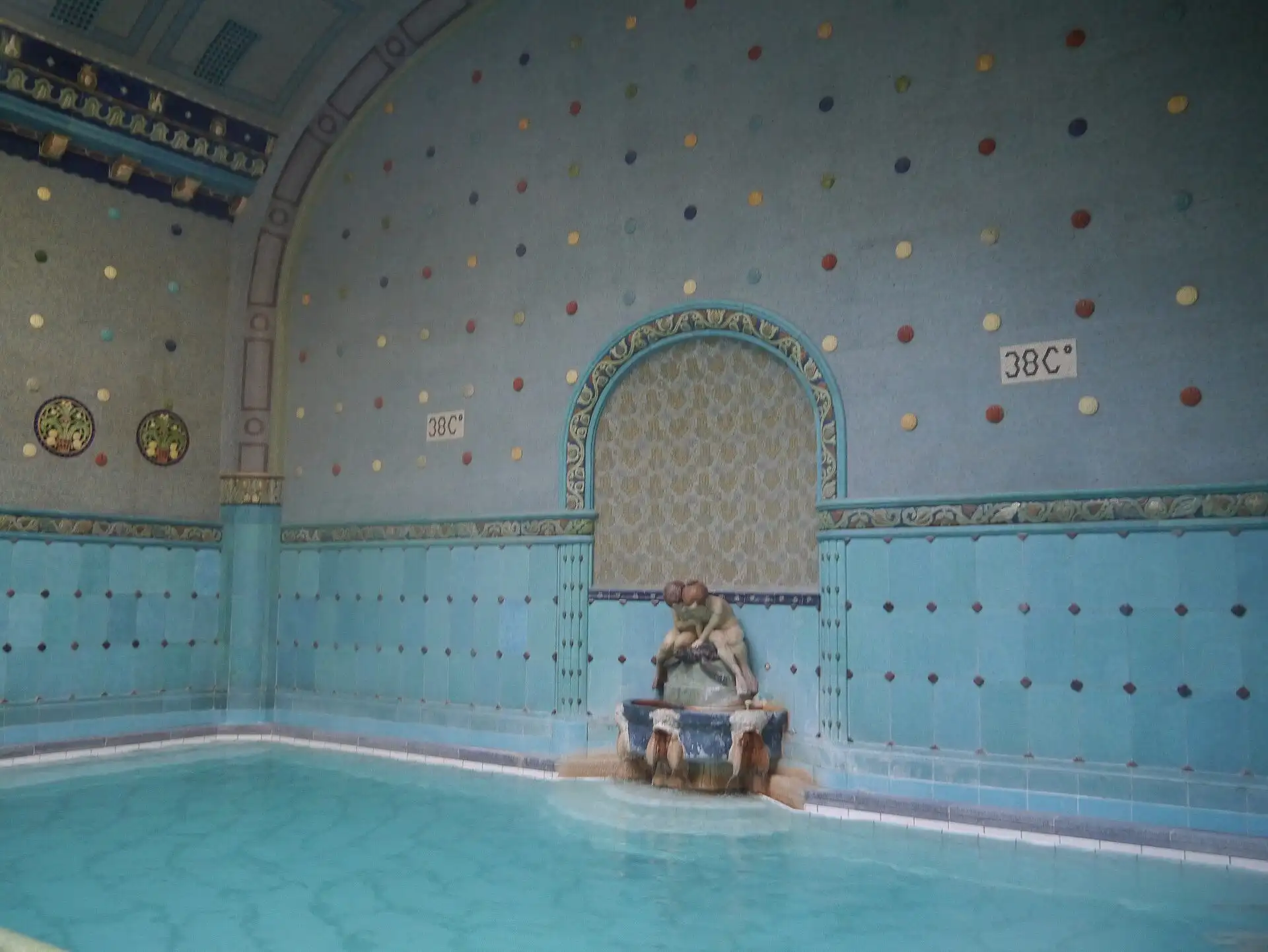
The thermal pools fill the two wings of the building, one hall on the left that was the men’s side and one on the right that was the women’s, until the bath went fully mixed on 1 January 2013. Both are tiled floor to ceiling in Zsolnay porcelain and mosaic. One of them is the blue hall in every photograph, with two groups of cherubs on its columns, and the hottest pool, at 38°C, is on the former women’s side.
The water comes out of Gellért Hill at 41 to 43°C and reaches the pools at 35 to 40°C, so you sit rather than swim. It is medicinal water, heavy in calcium, magnesium and fluoride, which the bath recommends for worn joints, arthritis and back problems.
The operator has said the Zsolnay tiling of both halls will be restored, and the indoor halls are in the first phase of the reopening.
Swim lengths under the glass roof
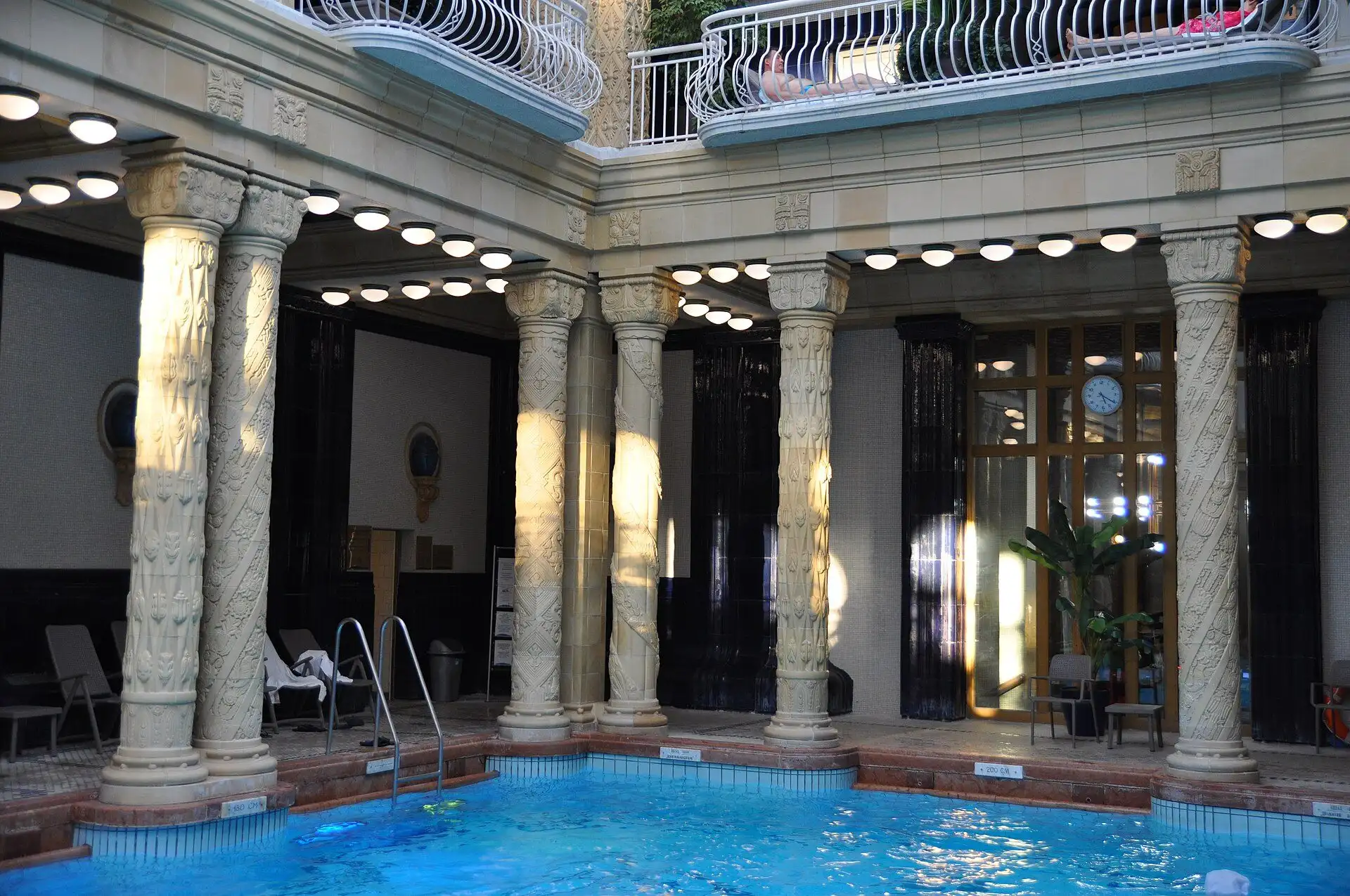
The swimming pool is the room between the two thermal wings, and the one that makes people gasp: a 27°C pool surrounded by columns carved with fish, leaves and mythical creatures, under a glass roof that is motorised and opened to let the heat out. The gallery running round it is where the famous photograph is taken from, palms and all.
It is 0.8 to 2 metres deep and meant for swimming, so it is the one place in the bath where a swimming cap was compulsory. No cap, no swim. The bath sold them in its shop, because nothing was hired.
The swimming pool section also had a smaller 36°C thermal pool for warming up again. A lift on the former women’s side brings you down to the pool without stairs.
Look up in the entrance hall
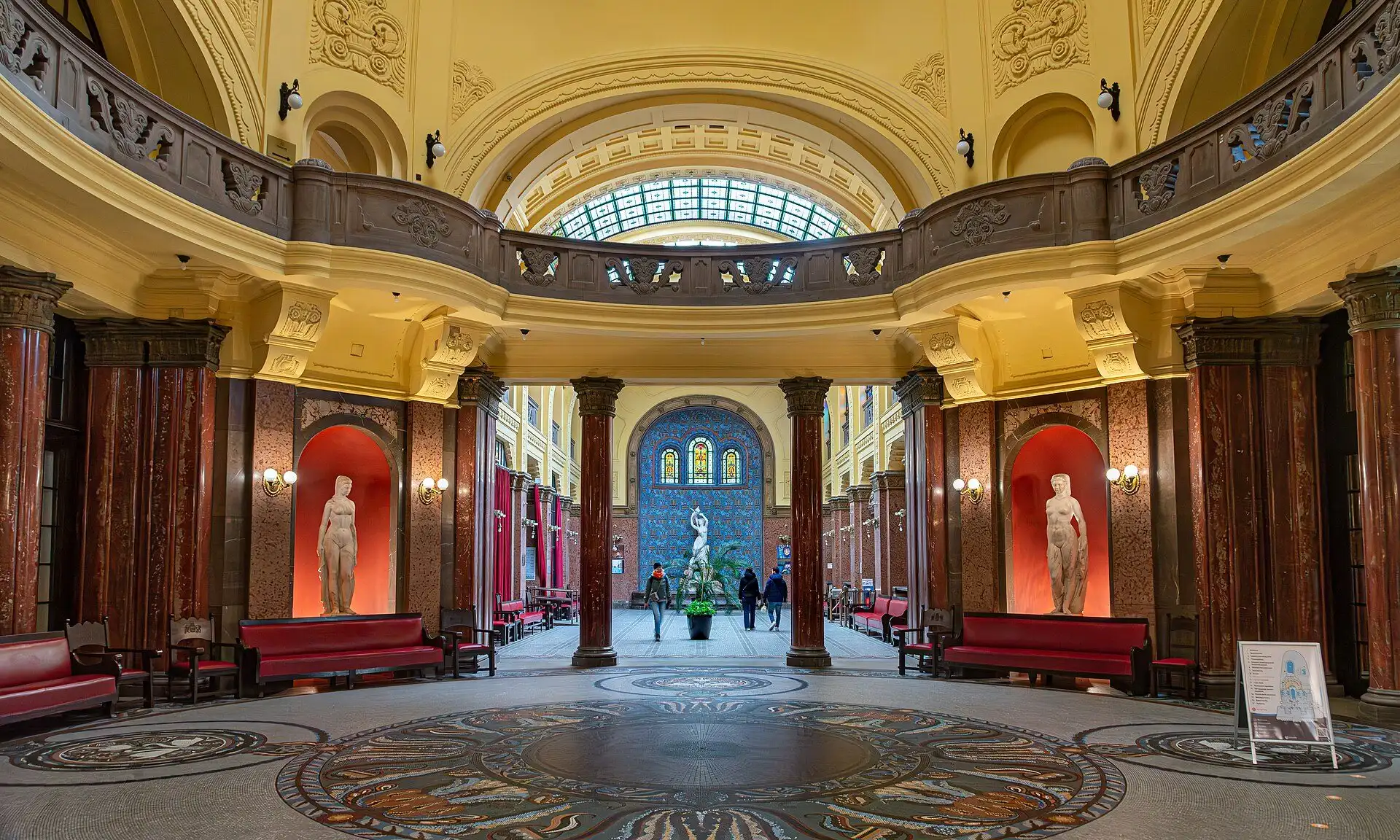
The entrance hall is a room most people hurry through on the way to the changing rooms, and it deserves a minute. The building is Art Nouveau and its dome carries Baroque touches, and the hand-painted glass windows are from the workshop of Miksa Róth, each one an episode from János Arany’s poem The Death of Buda.
Towards the swimming pool entrance a statue of four women stands for the four seasons, the bath’s way of saying it is open all year. At the far end is the Venus statue, which originally stood on Vigadó tér on the Pest side.
The rebuild goes back to archive research for this room, and the operator has said its original colours and forms will return.
Save the outdoor pools for summer
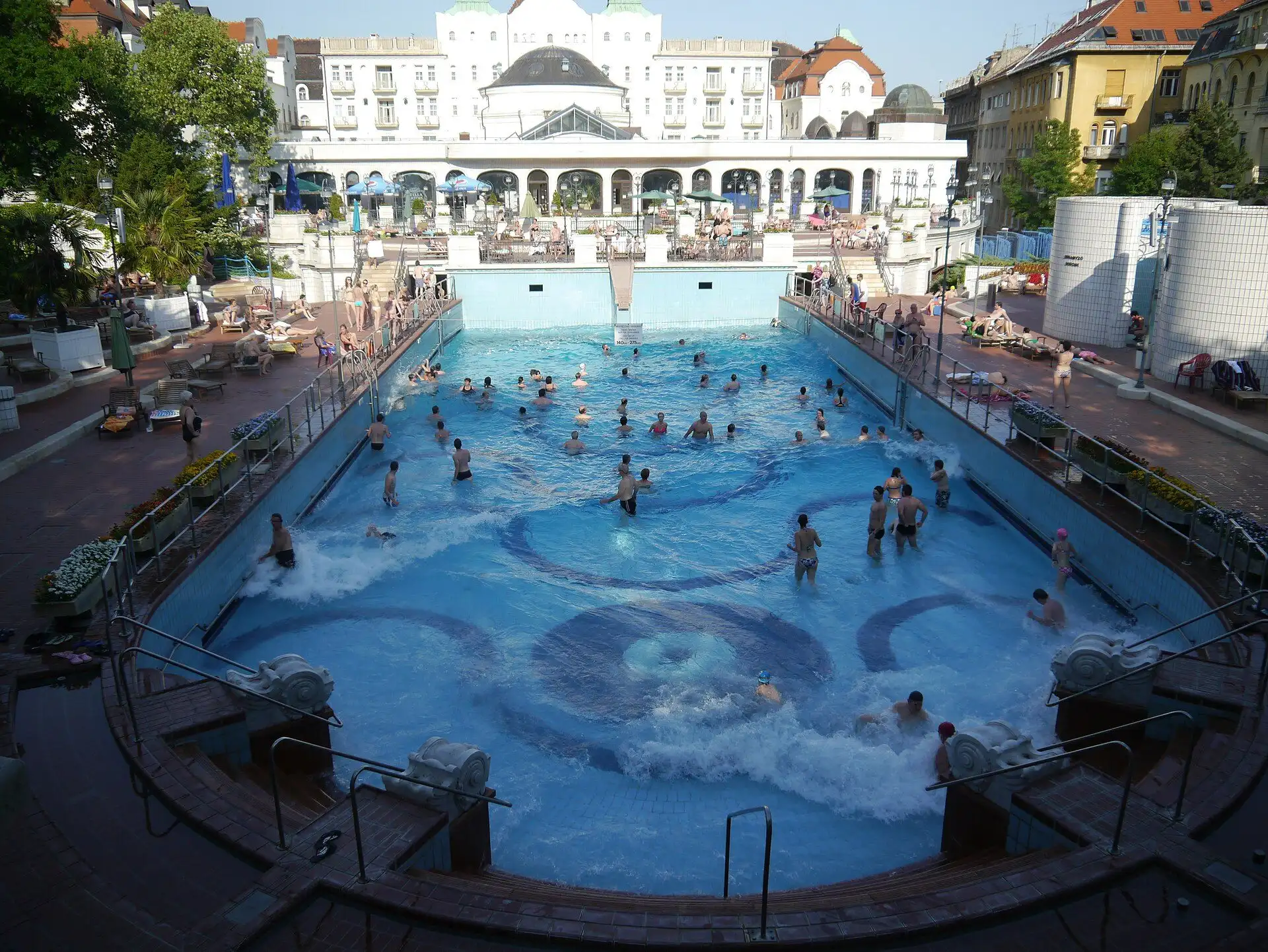
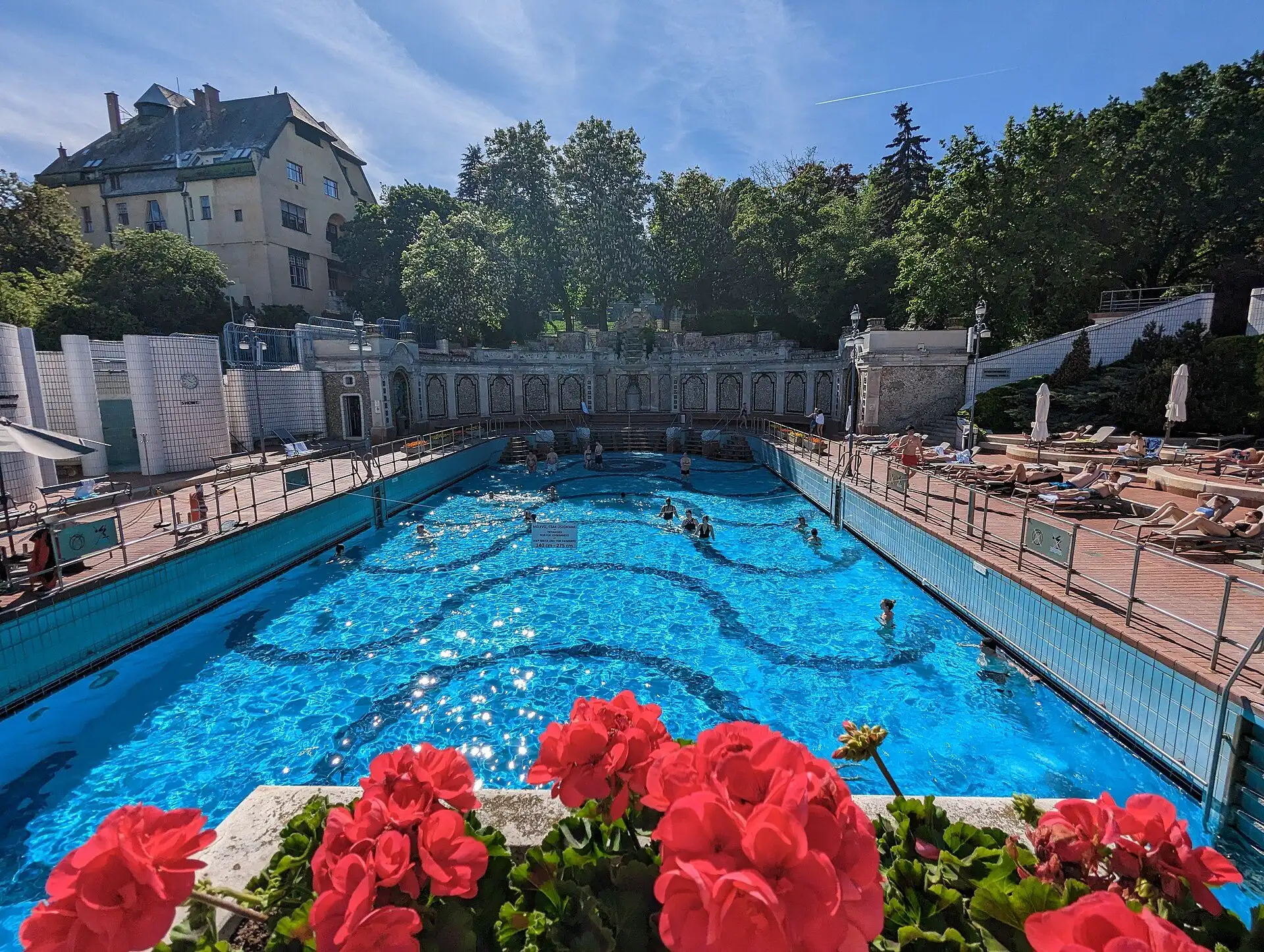
Behind the building, in line with the swimming pool, is the outdoor wave pool that was added in 1927 and that the bath counts as the first wave pool in the world. It is 500 square metres, from 40 centimetres to 2.75 metres deep, and in its last summers it ran at 26 to 29°C from early June to late September.
It ran without waves. The machinery had stood still for about four years by the time the bath closed, and the operator has made getting the waves back one of the promises of the rebuild. Beside it is a 36°C outdoor thermal pool, and a garden with statues where the loungers go.
The outdoor area is in the second phase of the works, after the indoor halls, and it was not wheelchair accessible before. The plans add a sun terrace on space that was unused and a sauna with a view of the Danube and Liberty Bridge.
Work through the saunas last
The saunas were plainer than the pools and easy to miss. There were five hot-air chambers at 50, 60, 70 and 80°C and two steam rooms at 43°C, all included in the day ticket, and from May 2023 they ran on shorter hours than the pools, 10:00 to 18:00.
Under-14s were not allowed in the saunas, the steam rooms, the plunge pools or the indoor thermal pools, which the bath put down to the mineral content of the water. Expect the same rule, or a stricter one, when it reopens. Széchenyi now bars under-14s from the whole bath.
What the Gellért Bath rebuild brings
The halls as they were
The Zsolnay tiling of both thermal halls restored, and the entrance hall’s original colours and forms brought back from archive research.
Waves again
The 1927 wave pool with its machinery working, and larger changing rooms.
A sauna with a view
A panoramic sauna facing the Danube and Liberty Bridge, and a sun terrace on outdoor space that was never used.
Insider tips
Don't buy a Gellért ticket from anyone
No product exists. A listing that still names Gellért is a leftover, and a ticket “including Gellért” cannot include it. The bath’s own shop sells its other baths, and our partners sell Széchenyi.
The nearest substitute is Rudas, not Széchenyi
Rudas is a short walk up the embankment from Gellért, under the same hill, and it is where the operator expects a large share of Gellért’s visitors to go. Its Turkish bath has men-only, women-only and mixed days, so look at the day’s rule before you walk over.
Walk the square anyway
Szent Gellért tér is worth the stop even with the bath shut. Liberty Bridge lands on it, the Cave Church is cut into the hill across the road, and the steps up Gellért Hill start just behind the hotel. The hotel is under renovation too, so the view of the building to take is from the bridge or the Pest embankment, not from its forecourt.
Put 2029 in the diary, not 2028
The official line is 2028, but the operator’s own phasing gives the indoor bath the end of 2028 and the outdoor pools summer 2029, and the financing had slipped once when we checked. If Gellért is the reason for a trip, wait for a published opening date.
Nearby attractions
The bath stands at the foot of Gellért Hill where Liberty Bridge meets the Buda bank, so the hill, the river and the market on the other side are all close.
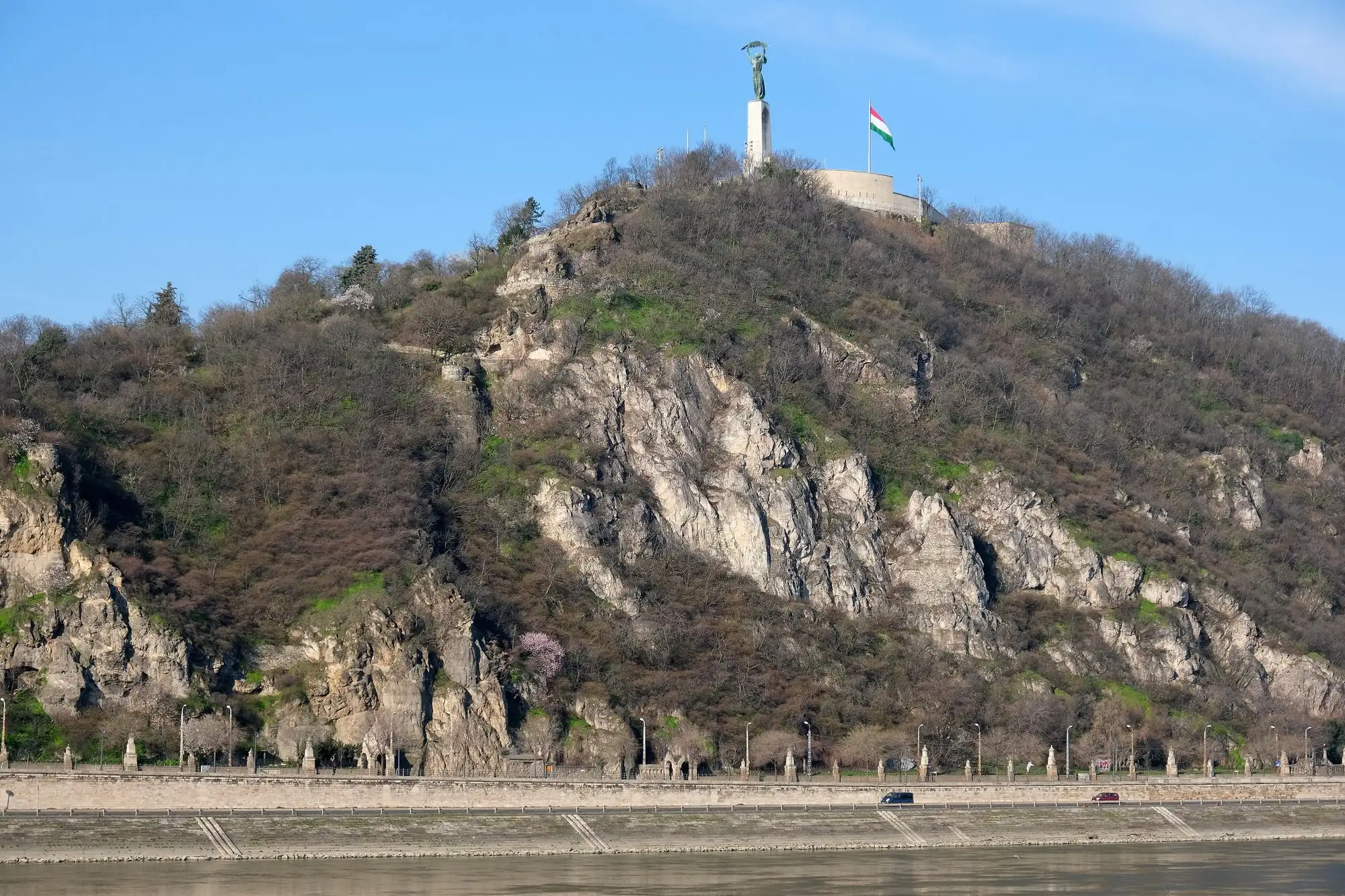
Gellért Hill
About 25 minutes up the hill by the paths behind the hotel, with the Liberty Statue on top.
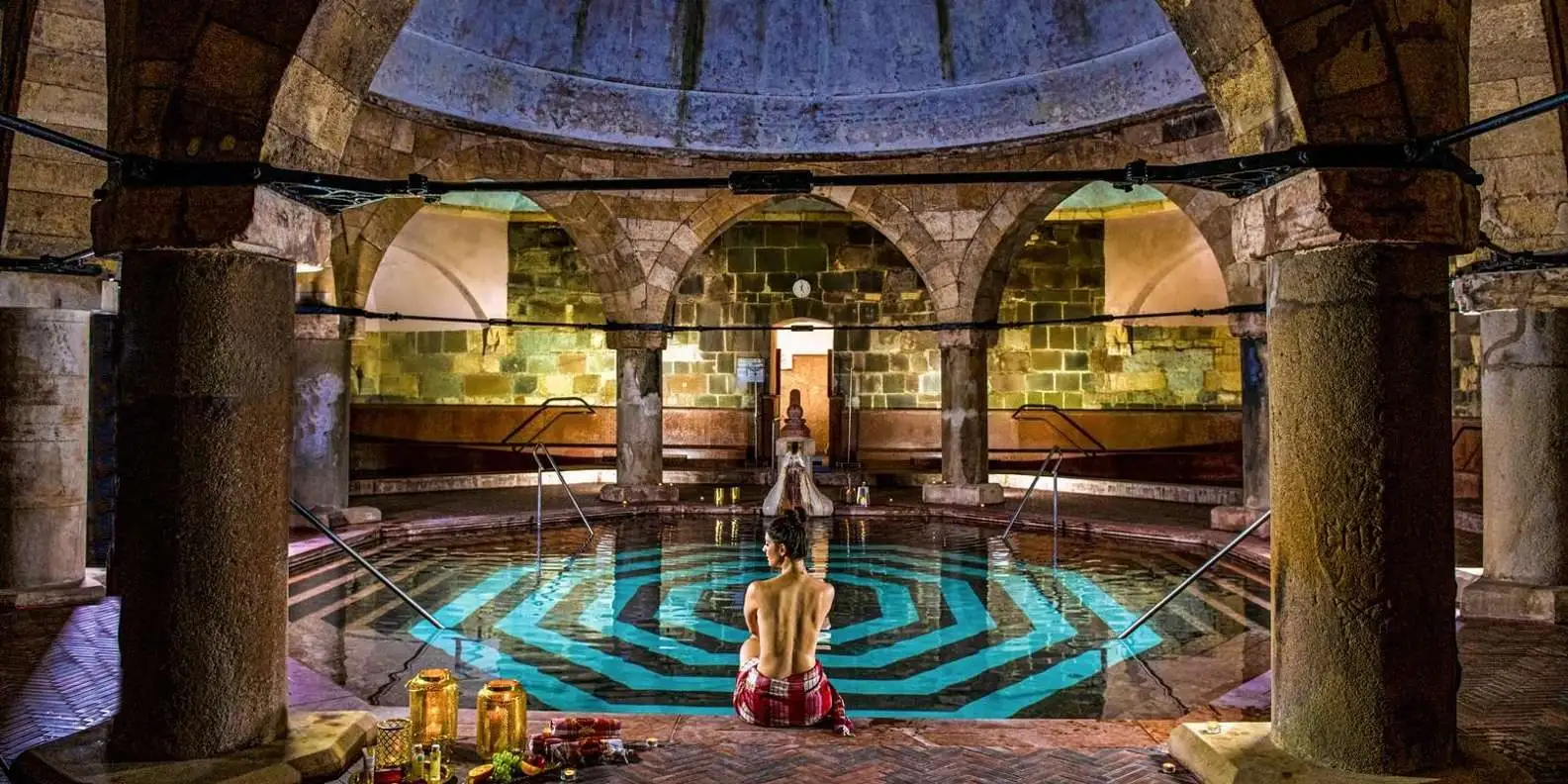
Rudas Thermal Bath
About 12 minutes north on foot along the embankment, at the foot of Elisabeth Bridge, the nearest bath still open.
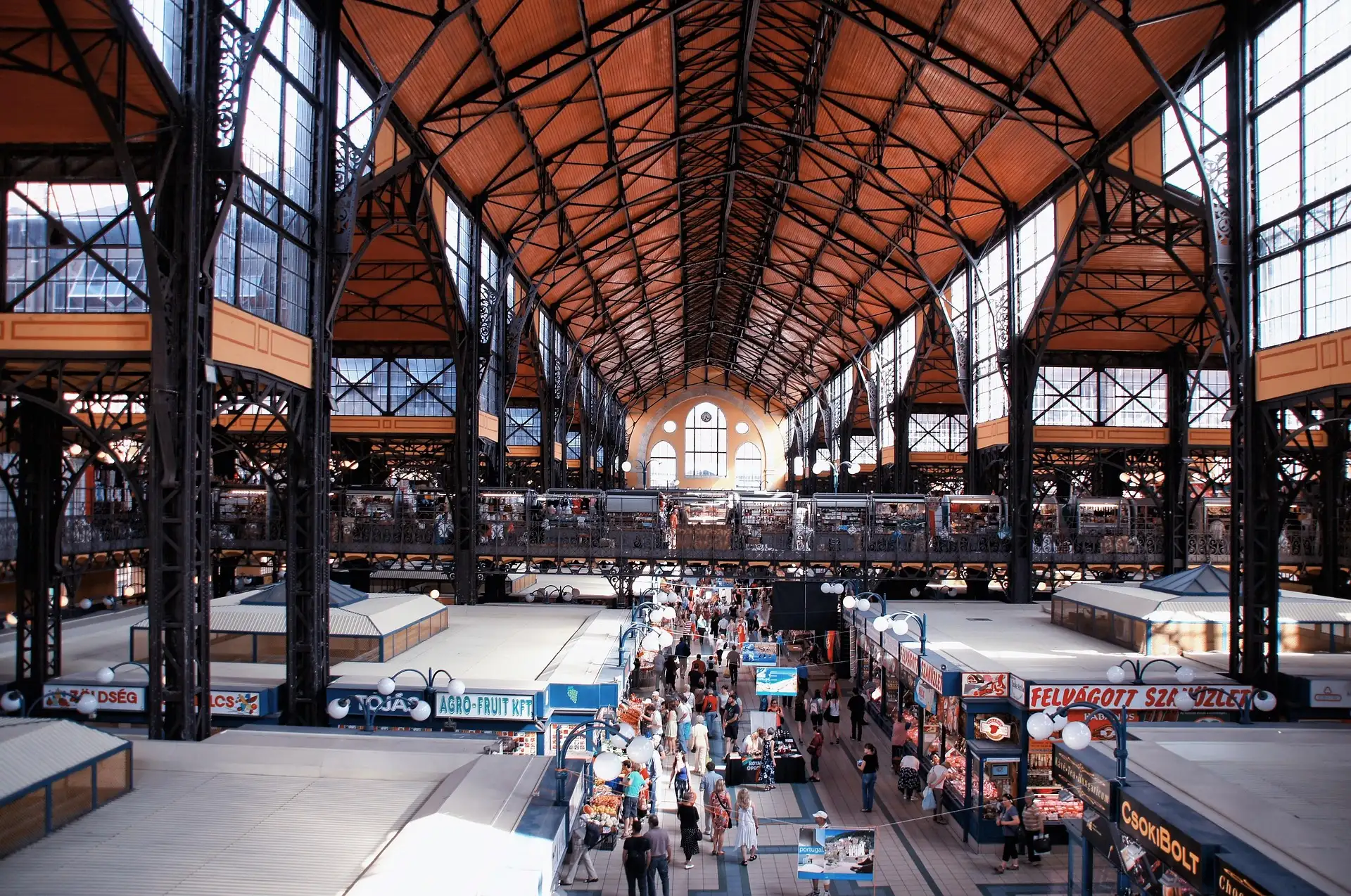
Great Market Hall
About 11 minutes on foot across Liberty Bridge, at the Pest end of the bridge.
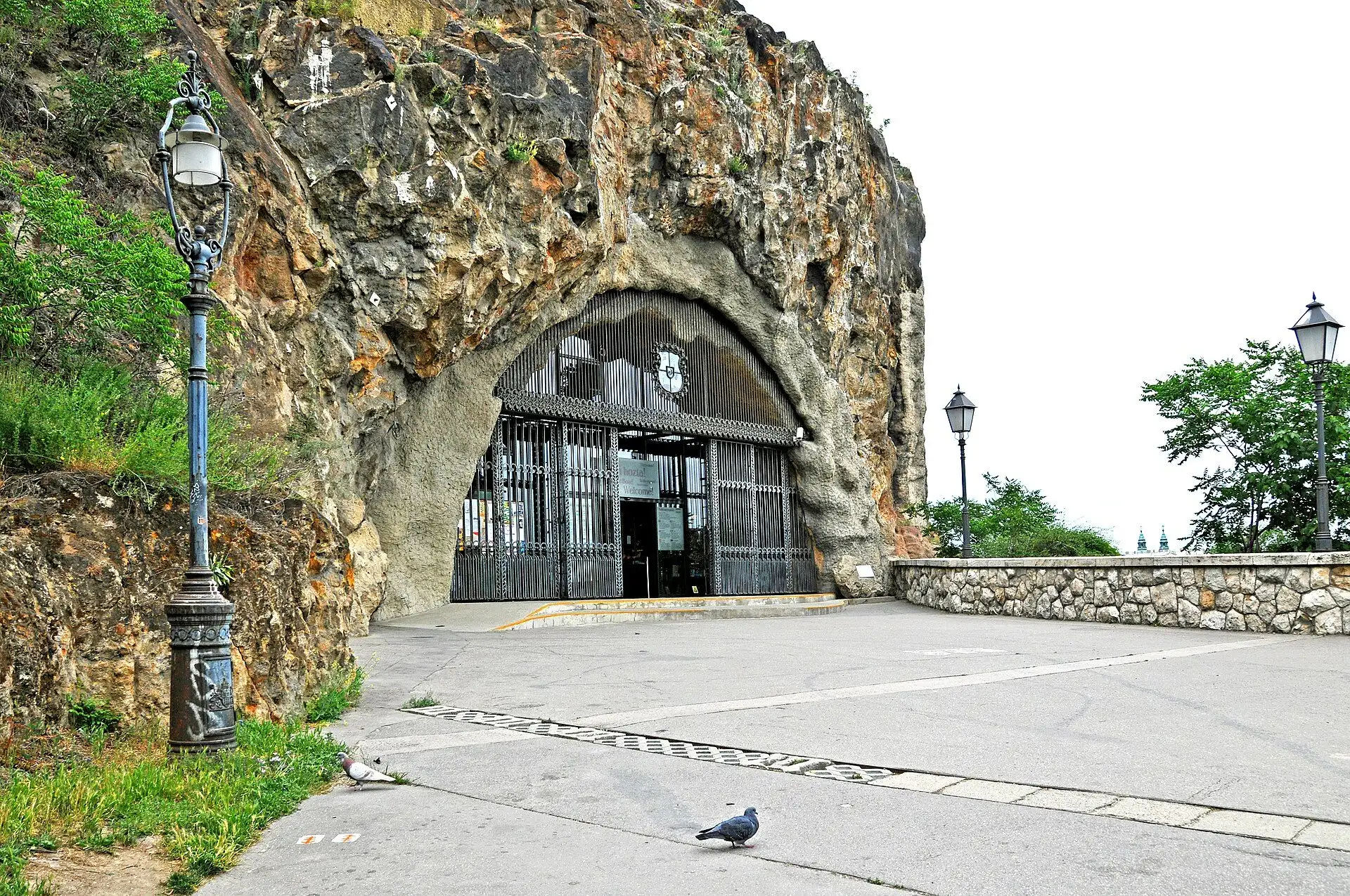
Cave Church
Across the road from the hotel, a church cut into the rock of Gellért Hill, run by the Pauline order. Open Monday to Saturday, closed to visitors during the five o’clock Mass.
History
Hot springs on this spot were being written about in the 15th century, and a mud bath stood here until the bridge came. The short version:
- 15th century
Records describe “miraculous” springs at the foot of the hill, later prized by the Turks as larger and hotter than the other Buda baths.
- 17th century
The bath takes the name Sárosfürdő, the Mud Bath, from the fine silt the springs push up.
- 1894
The old bath is demolished to build the Ferenc József Bridge, today’s Liberty Bridge.
- 1905
A design competition ends with three architects sharing first prize.
- September 1918
The Szent Gellért bath and hotel open after seven years of building, slowed by the First World War.
- 1927
The outdoor wave pool is added, to Artúr Sebestyén’s design.
- 1934
The effervescent bath opens.
- 1 October 2025
The bath closes for its first full rebuilding since the 1970s, with reopening planned for 2028.
The bridge that demolished a bath, the war that delayed one, and the eleven-year renovation of the 1970s: history of Gellért Thermal Bath.