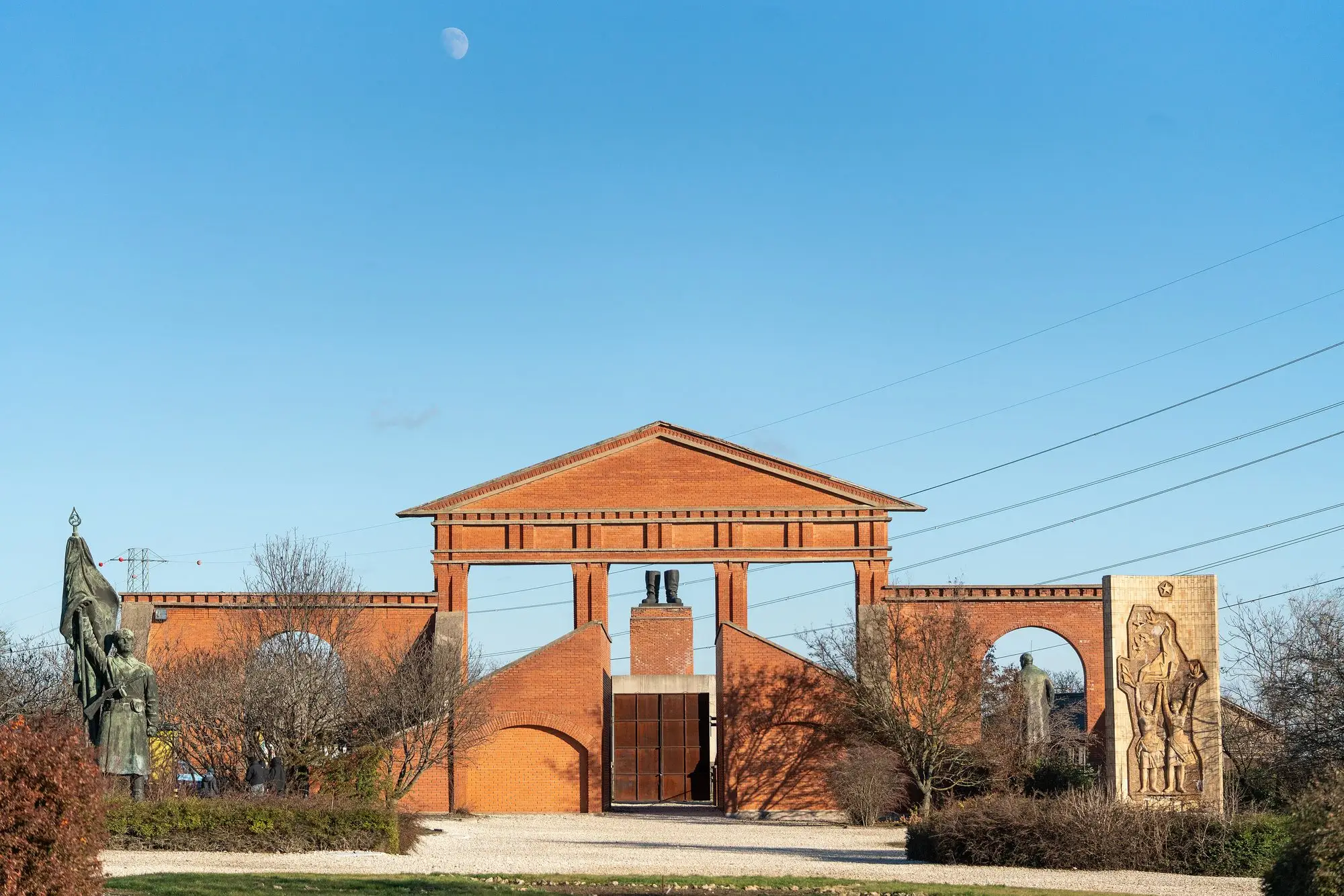
Memento Park is what Budapest did with its communist statues after 1989. It didn’t destroy them. Architect Ákos Eleőd won a 1991 design competition to build an open-air museum in District XXII and put them there: Lenin, Marx and Engels, Red Army soldiers and 41 monuments in all to the regime that lasted forty years, with a full-size replica of Stalin’s grandstand and his boots at the gate.
The park opened on 27 June 1993, two years after the last Soviet soldier left Hungary. It’s a metro ride and a short bus ride from the centre and a quiet, slightly surreal way to spend a half-day. Worth the trip if you’ve already covered the obvious Pest landmarks and want something with more weight.
- Visit length
- 60 to 90 minutes
- Entry
- One ticket for everything, on the door or online
- Book ahead
- Only for the guided tour and the Trabant
- Opening hours
- Summer (1 May to 31 October): Daily 10:00 to 18:00Winter (1 November to 30 April): Daily 10:00 to 16:00
- Best time
- Morning, on a clear day
- Nearest stop
- Bus 101E / 101B / 150 Memento ParkAbout 200 m. The stop is east of the park on Balatoni út, so walk west to the brick gate
- Accessibility
- Not barrier-free: gravel paths, steps to the grandstand
- Guided tour
- 11:15, in English, 70 minutes
- Getting there
- M4 to Kelenföld, then bus 101E, 9 minutes
- Winter hours
- Closes at 16:00 from November to April
- Parking
- Free in opening hours
Tickets
One ticket covers everything in the park and nothing is timed, so the choice is whether you want a guide and how you get there.
Memento Park: Entry Ticket
Best for: Walking round the statues at your own pace
- Cancellation possible until 23:59 the day before
What’s included and more details
What’s included
- Admission to Memento Park and all its sights
- Not included
- A guided tour and transport from Budapest
- Address
- Corner of Balatoni út and Szabadkai utca, 1223 Budapest
- Changes
- You can move the date until 23:59 the day before
Memento Park Guided Tour in English
Best for: Hearing the stories behind the statues from the park's own guide
- 70 minutes, starting at 11:15
- Live guide in English
- Free cancellation up to 3 hours ahead
What’s included and more details
What’s included
- Admission to Memento Park
- Guided tour of the park
- Meeting point
- The guide waits at the cash desk
- Group size
- Up to 15
Memento Park: Private Trabant Transfer
Best for: Arriving in a Trabant, with a private guide from your door and back
- 3 hours, with pick-up at 09:30
- Live driver-guide in English
- Free cancellation up to 24 hours ahead
What’s included and more details
What’s included
- Pick-up and drop-off in Budapest in a retro Trabant
- Skip-the-line entry and a guided tour
- A drink at the Red Star Store
- A drink and a snack at a retro bistro
- Pick-up
- From your accommodation. Choose the address at checkout
- Group size
- Up to 3
- Age
- No children under 12 in the Trabant
Getting in free with the Budapest Card
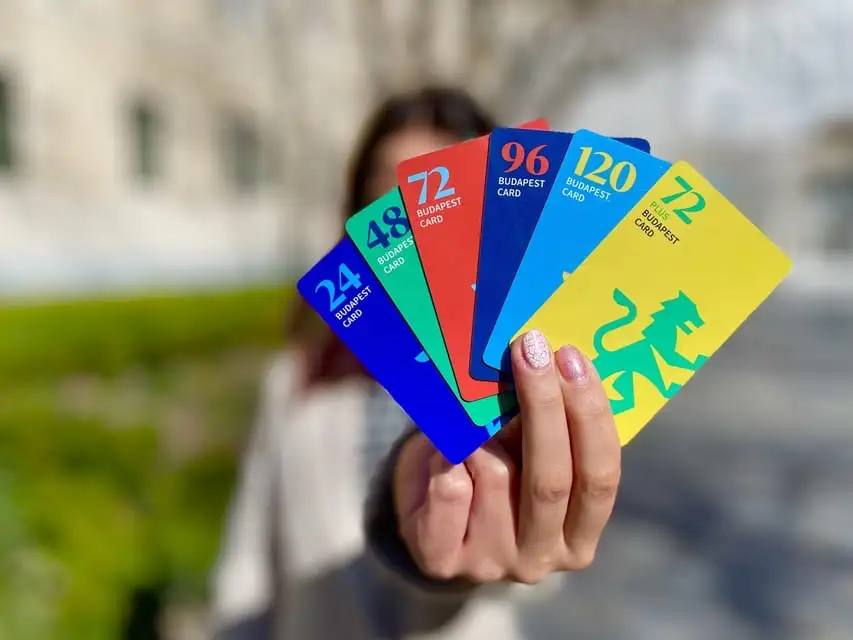
Budapest Card: Public Transport, 30+ Top Attractions & Tours
Best for: Getting in here for nothing, with the bus out to the park covered as well
- 24, 48, 72 or 96 hours from first use
- Free cancellation up to 24 hours ahead
What’s included and more details
What’s included
- Free entry to Memento Park
- Unlimited public transport, including the bus out here
- Free entry to more than 30 museums and attractions
- A Danube river cruise
- At Memento Park
- Free entry. The park's own tickets page says so in as many words
- Getting out here
- Buses 101B, 101E and 150 from Kelenföld on metro M4, all covered by the card
- Where it is given
- At the ticket desk, in person, never online
- Worth it only if
- You would have paid for several of the things on it. One free entry does not cover the card on its own
- Show your voucher on your phone at the cash desk in the barracks, which is also where the guide waits at 11:15
- The ticket is for one visit on one day, so see everything before you leave
- The guided tour’s calendar shows which days it runs; the Trabant needs to be booked so the car can be at your door at 09:30
For a full breakdown of every ticket type, see our Memento Park tickets guide.
Highlights
Stalin’s boots on the grandstand
A full-size replica of the tribune where an 8-metre Stalin stood in central Budapest until the crowd cut him off at the knees on 23 October 1956. Only the boots are left.
41 statues of the regime
Lenin, Marx and Engels, Dimitrov, Captain Ostapenko and the Red Army soldier from Gellért Hill, arranged in five semicircles inside a brick-walled circle.
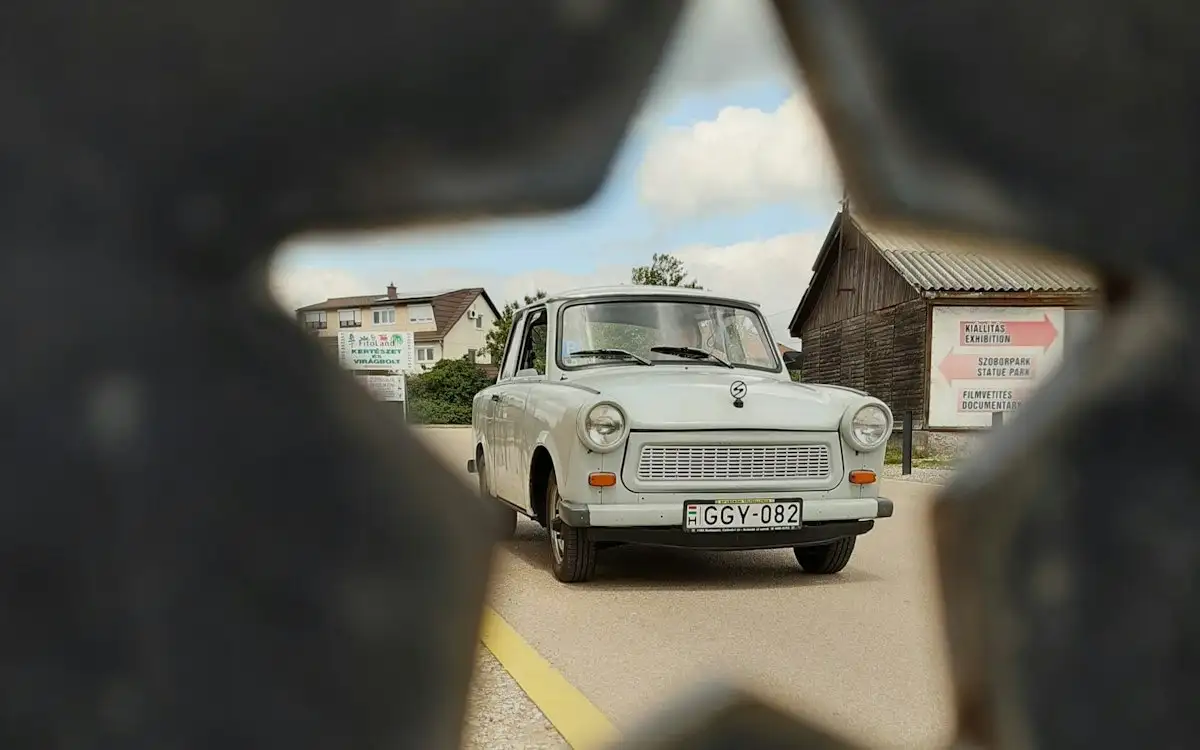
A Trabant to climb into
The East German people’s car waits just inside the entrance, and you are allowed to get in.
Plan your visit
Opening hours
The park is open every day of the year, from 10:00 to 18:00 between May and October and from 10:00 to 16:00 between November and April. It is outdoors, so the winter afternoon is short.
Summer (1 May to 31 October): Daily 10:00 to 18:00Winter (1 November to 30 April): Daily 10:00 to 16:00Check our detailed opening hours guide for the seasons, the best time to go and how long to spend.
Getting there
Memento Park is in District XXII, about 9 km south-west of the city centre, at the corner of Balatoni út and Szabadkai utca. Take metro M4 to its last stop and bus 101E or 101B from there; the Memento Park stop is about 200 m from the gate.
Nearest stops
By car: straightforward, and the park’s own car park is free during opening hours.
See our complete guide on how to get there for the bus routes, parking, taxis and the Trabant transfer.
Before you go
- Nothing is timed except the 11:15 guided tour, so arrive when you like and stay as long as you like
- Cash or card both work at the desk, in forints or euros
- Photography is fine for personal use, anywhere in the park
- Dogs are welcome on a lead
- The film is not for small children. It is real secret-police footage
Accessibility
The park says plainly that its grounds are not barrier-free, because of the uneven terrain. The ground is mostly level, but the paths are gravel and the grandstand’s balcony is reached by steps, so do not count on a step-free visit.
The metro has lifts at every station and most buses are low-floor. The step-by-step route, and the case for driving, are in our how to get there guide.
What to see and do
Start on Witness Square at Stalin’s grandstand
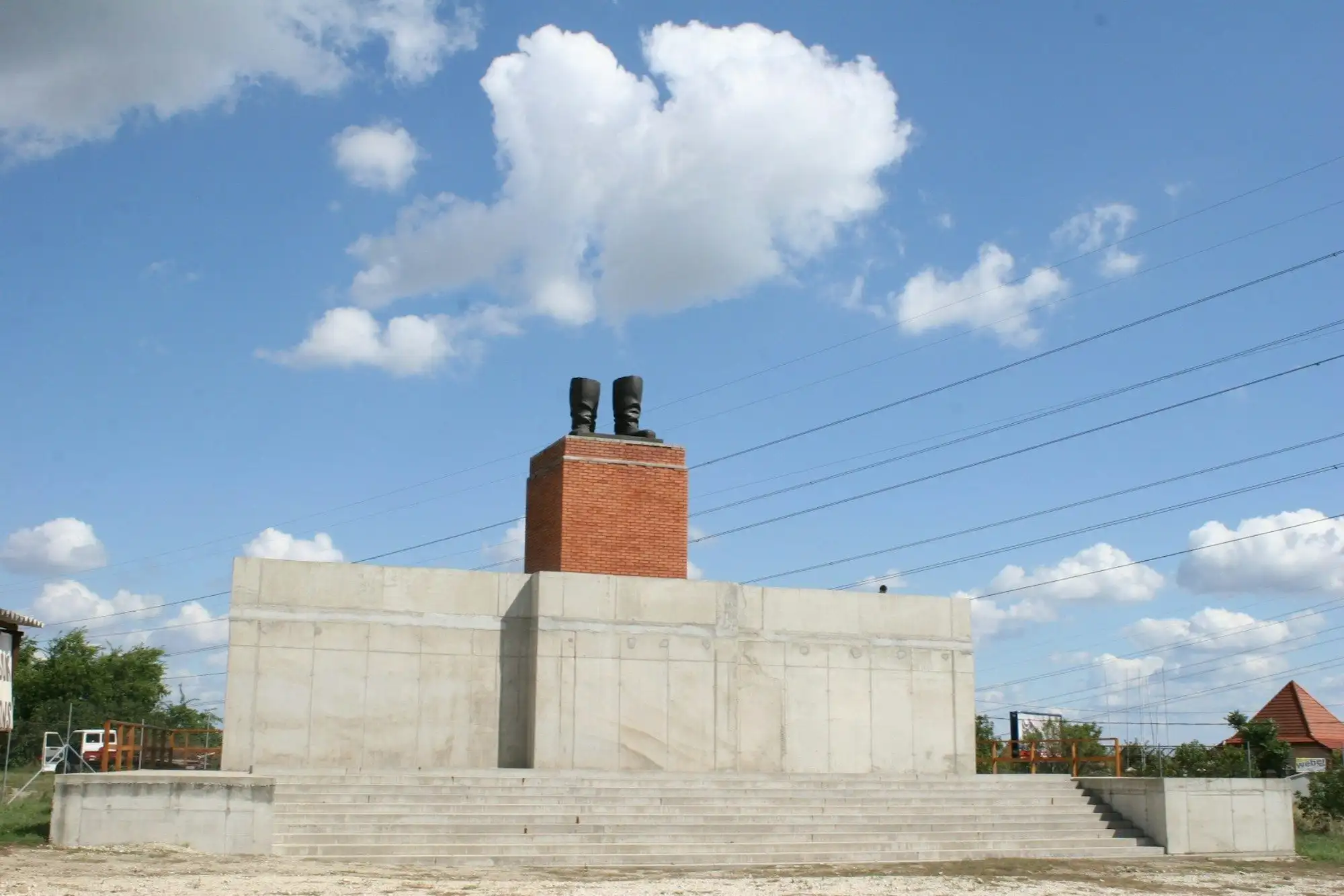
The square in front of the main gate is called Witness Square, and the big concrete tribune on it is a 1:1 replica of the one that stood on Felvonulási tér in central Budapest with an 8-metre bronze Stalin on top. Party leaders stood on it at Stalin’s feet on communist holidays and waved at crowds that had no choice but to cheer.
On the evening of 23 October 1956, the first day of the uprising, the crowd sawed the statue off at the knees and pulled it down, and the boots stayed on the plinth. That is what is up there now: a pair of boots and nothing above them, the most photographed thing in the park.
You can climb the steps to the balcony and wave at whoever is below. Go inside too. Hidden in the grandstand is a storeroom with the bust of Lenin as a child, which used to decorate a Soviet-style pioneer camp.
Walk the statue park in a loop
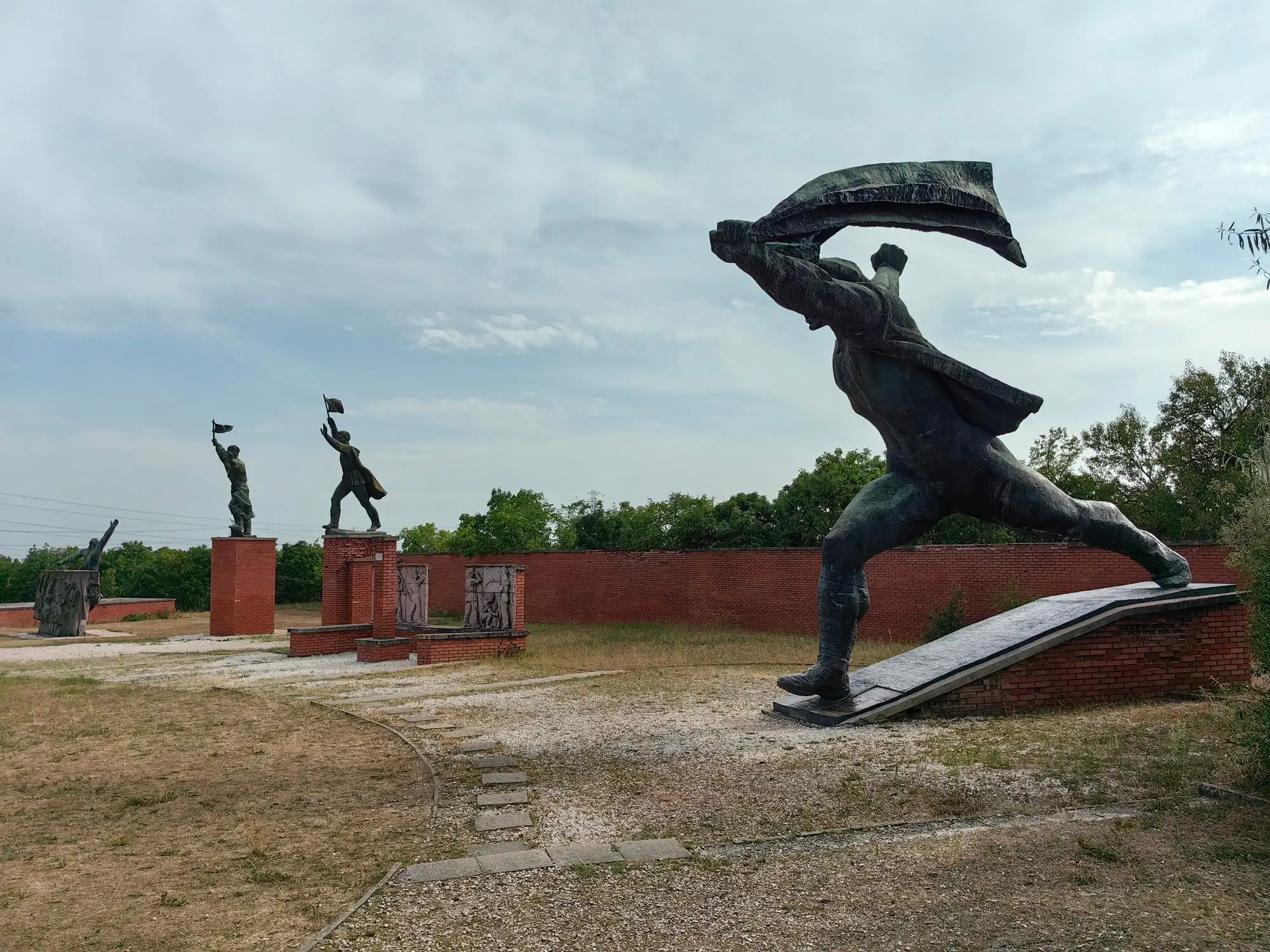
Through the gate, the park is five semicircles of statues set inside one big circle of red-brick wall, with a flowerbed in the shape of a star in the middle. The 41 works were made between 1945 and 1989 for streets and squares all over the city, and each has a numbered plaque giving its name in Hungarian and English, the sculptor, the date and where it stood.
The ones to find by name: Zsigmond Kisfaludi Strobl’s Liberating Soviet Soldier of 1947, which stood on Gellért Hill; Jenő Kerényi’s Captain Ostapenko of 1951; and István Kiss’s Republic of Councils monument of 1969, a giant running figure with a flag that turns up on every postcard.
The park does not explain the statues, on purpose. Eleőd wanted you to think about the period that made them, so the booklet from the desk or the guided tour is what turns a pleasant walk into an understanding of what you are looking at.
Look at the gate from both sides
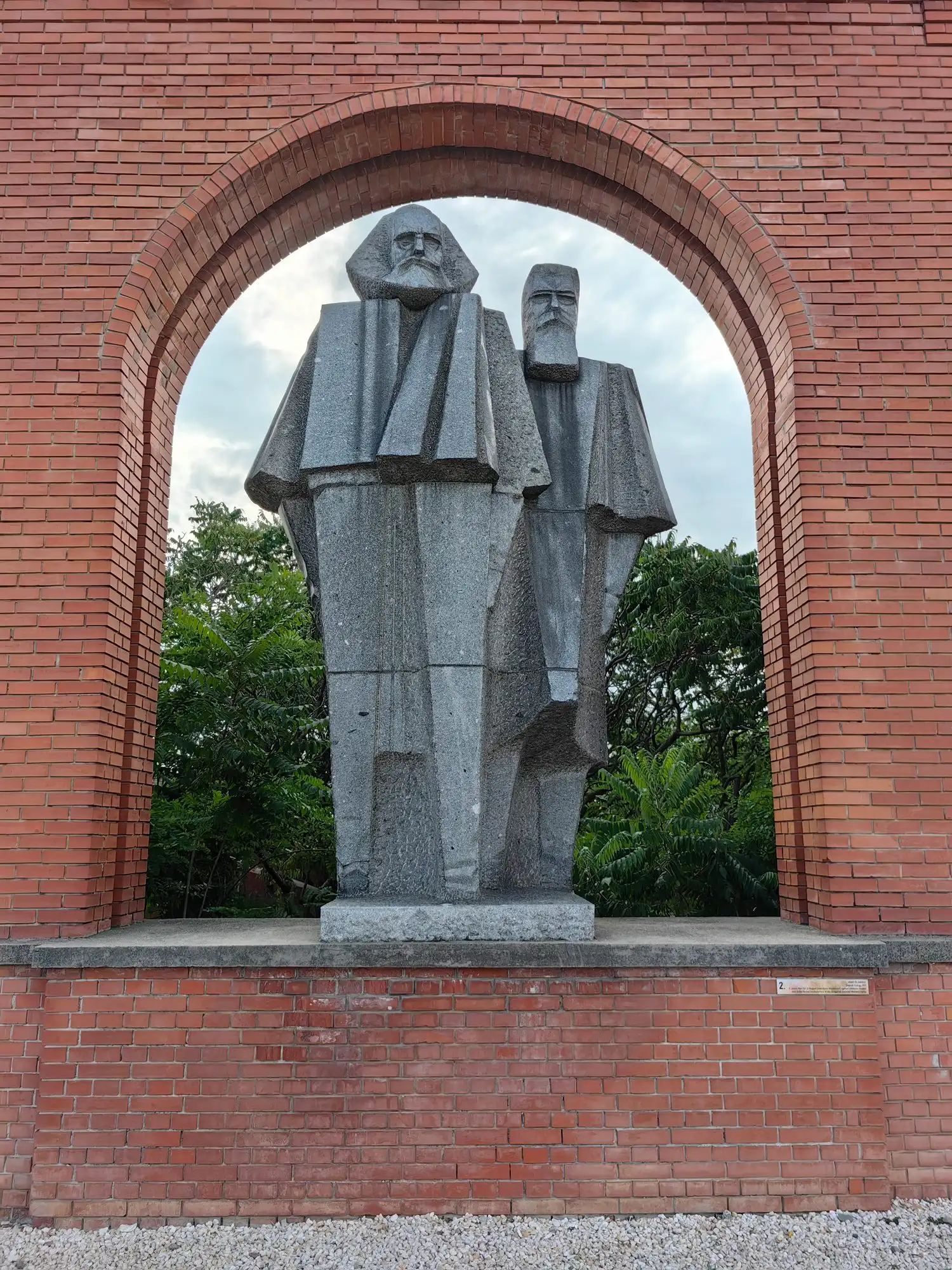
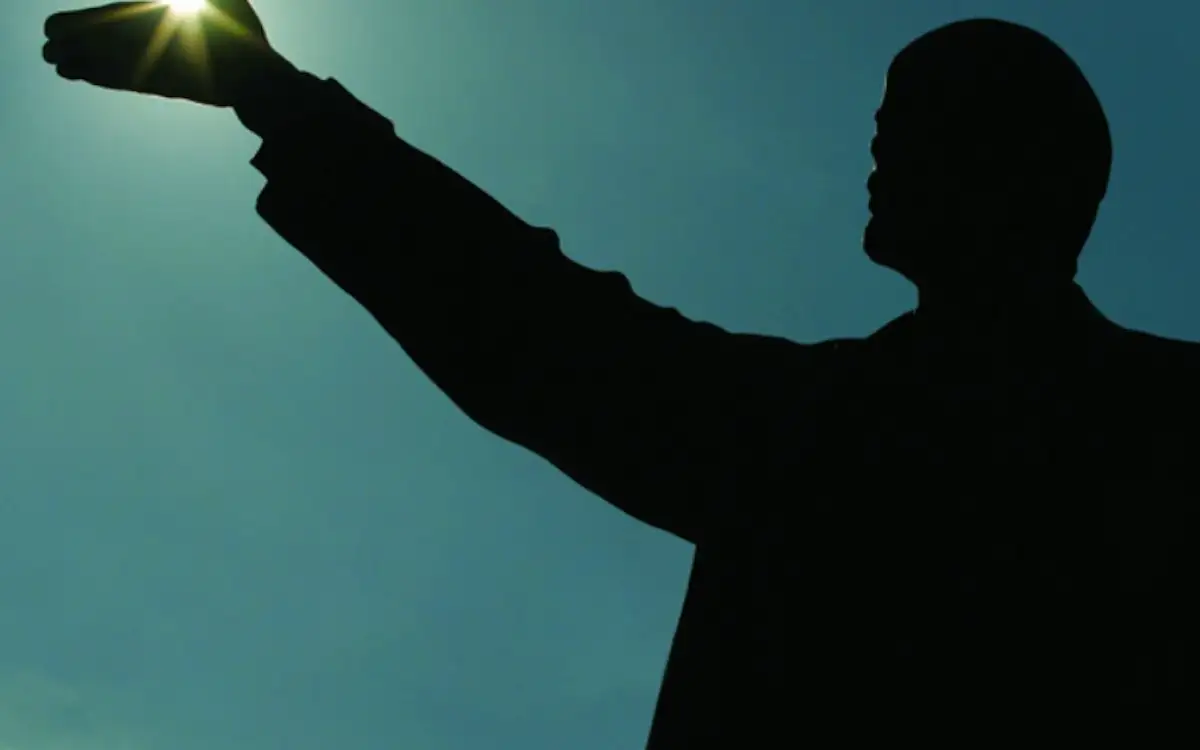
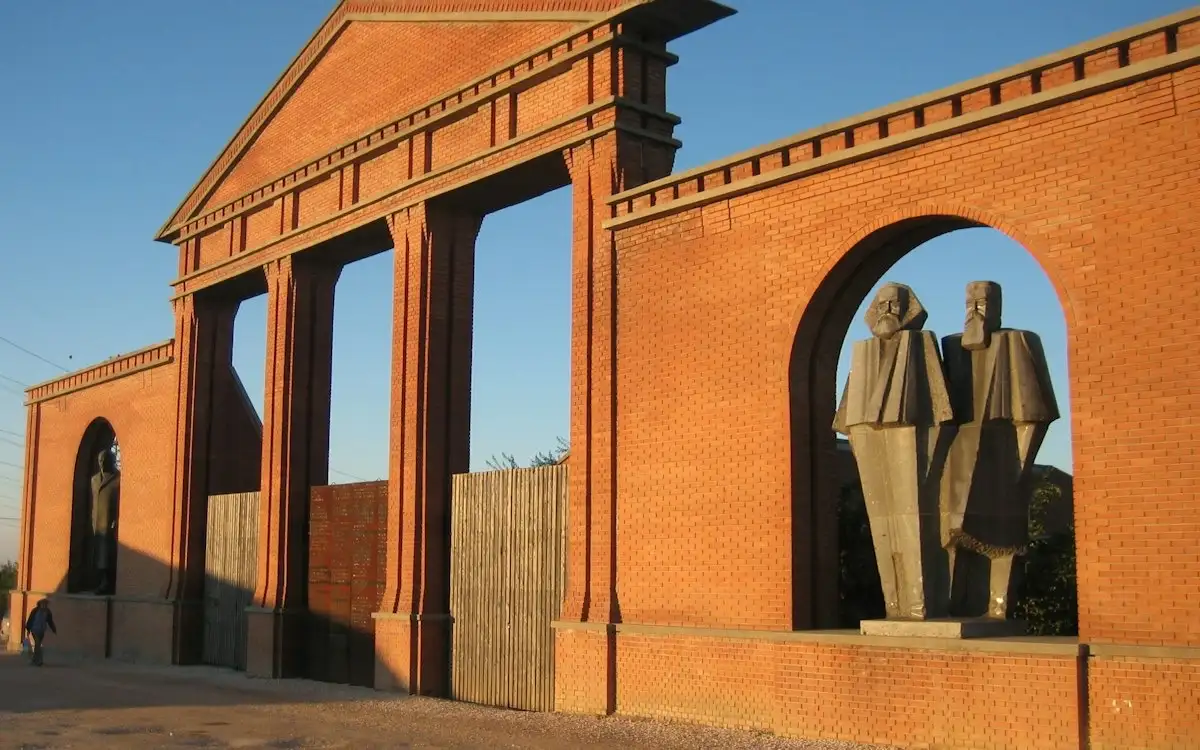
The entrance is a red-brick facade with a pediment and two big arches, and the two most famous names in the park are parked in them: Pál Pátzay’s Lenin of 1965, which stood on Dózsa György út, and György Segesdi’s angular Marx and Engels of 1971. The joke is that the facade is grand and there is nothing behind it but open ground.
Look back at it once you are inside. From the park side the arches frame the two statues against the sky, which is the better photograph.
Give the barracks half an hour
The barracks on Witness Square holds the cash desk and the Red Star Store, and behind them a photo exhibition and a small cinema. The exhibition covers the two moments the park is about: the 1956 revolution and the collapse of the system in 1989 and 1990.
The cinema shows The Life of an Agent, a 2004 montage cut from the training films the Ministry of the Interior made for its secret police between 1958 and 1988.
It comes in four parts of 10 to 15 minutes each: how to hide a bug, how to search a house, how to recruit an informer and how to run a network. It is in Hungarian with English subtitles, and it gives the statues outside their weight.
It is also the only cover in the park, so it is where you go if the rain comes.
Get into the Trabant
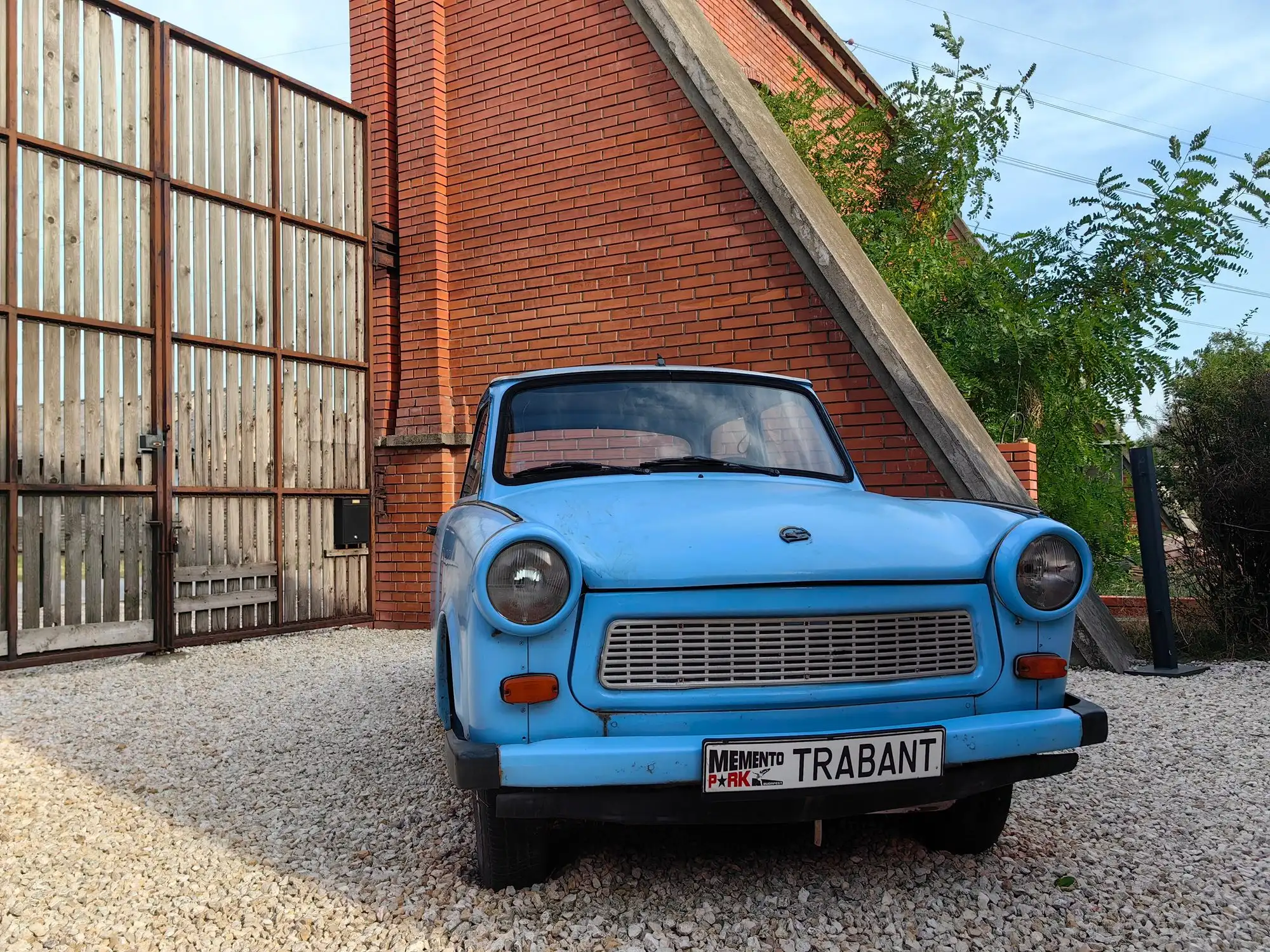
The first thing you see inside the entrance is an original Trabant, the East German people’s car with a body of pressed fibre and plastic that families across the Eastern Bloc waited years for. You are meant to open the door and sit in it, and everyone does.
If you want the full version, the park runs the Trabant transfer. A restored car collects you from your accommodation at 09:30 and a driver-guide takes you round the park. Details are in our tours guide.
Insider tips
Buy the booklet on arrival
The plaques give you a name, a sculptor and a street. The booklet sold at the desk gives you the story behind each statue, and without it or a guide the park doesn’t make sense. Pick it up before you walk through the gate, not on the way out.
Forget the minibus from Deák Ferenc tér
Older guides send you to a daily minibus from Deák Ferenc tér. The park’s website no longer offers it, only a private bus on request. Take the M4 and bus 101E or 101B, which run all day. The route is in how to get there.
Go in the morning and on a clear day
The 11:15 guided tour sets the rhythm of the morning; if you are self-guided, arrive at 10:00 and you have the park to yourself before it. Grey days suit the subject and are easier on you than a summer afternoon, but from November to April the gates shut at 16:00, so do not leave it late.
Bring water in summer
Drinks are sold at the desk, but do not count on anything more. There is no shade among the statues, so a summer afternoon here with no water is a mistake.
Nearby attractions
Nothing is within walking distance of Memento Park. These three are on the M4 line on the way back, so they make a natural second half of the day.
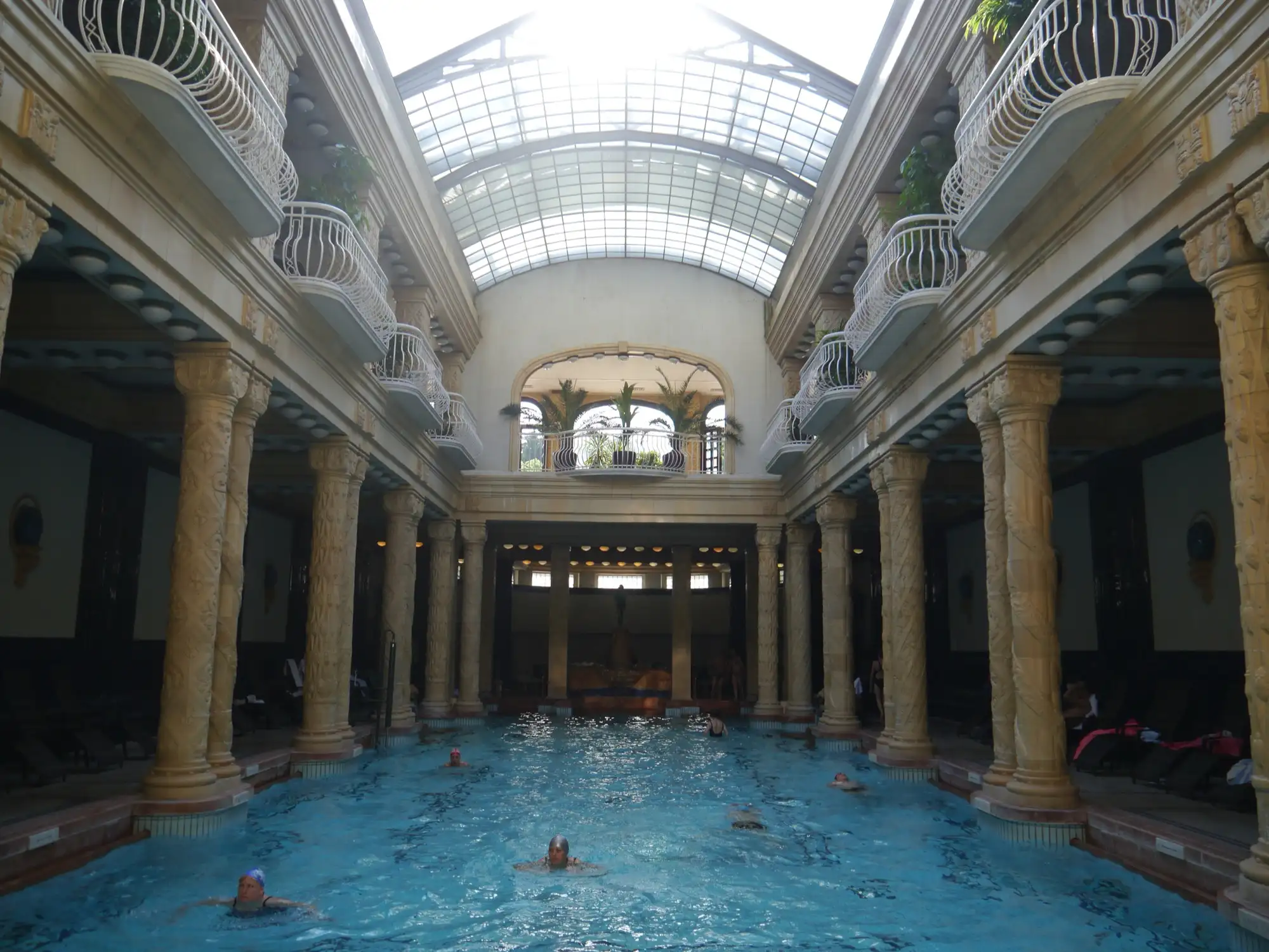
Gellért Thermal Bath
Get off the M4 at Szent Gellért tér. The bath is across the road from the station.
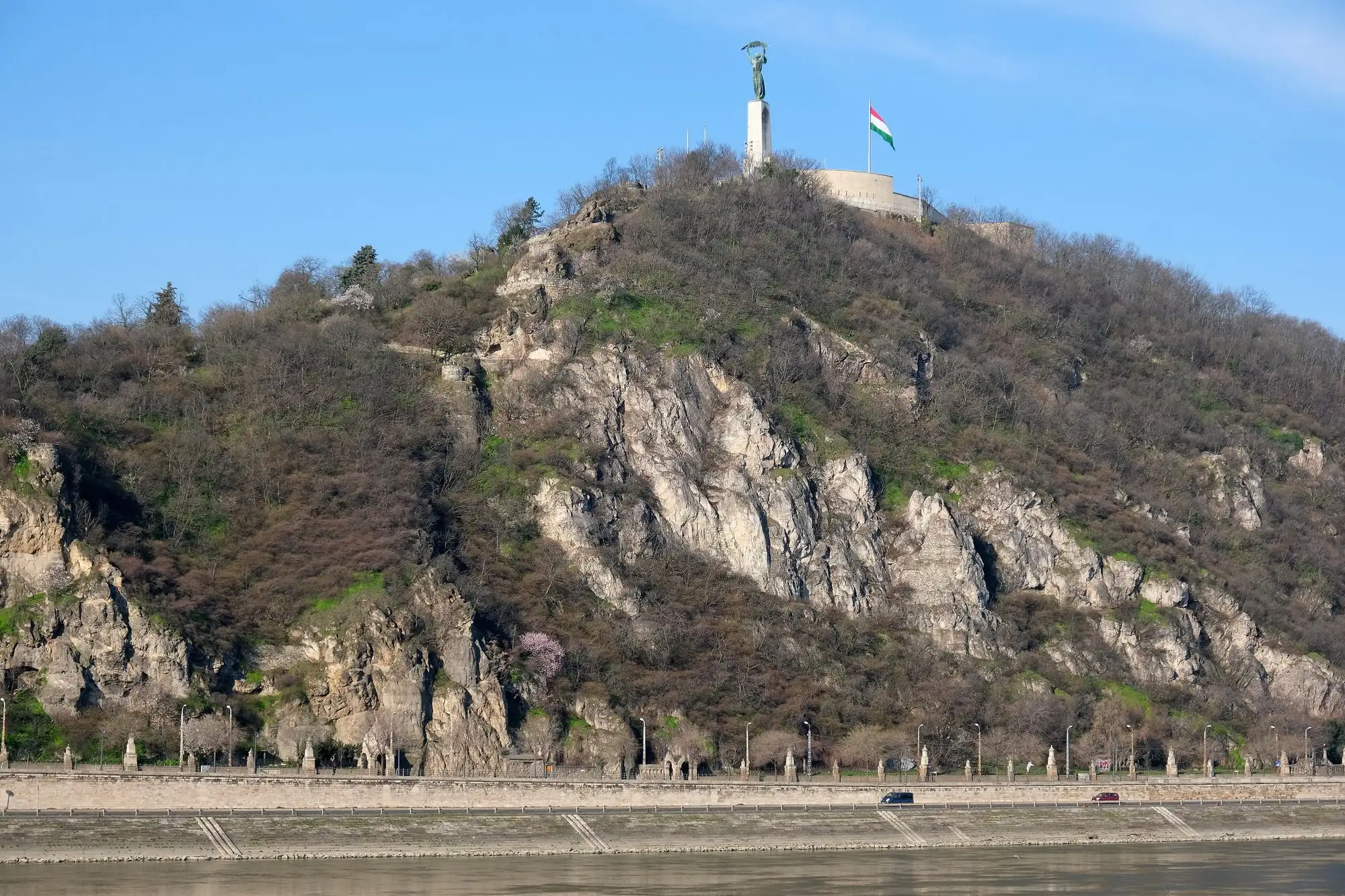
Gellért Hill
From Szent Gellért tér, walk up Gellért Hill to the fortress and the Liberty Statue, where the park’s Soviet soldier once stood.
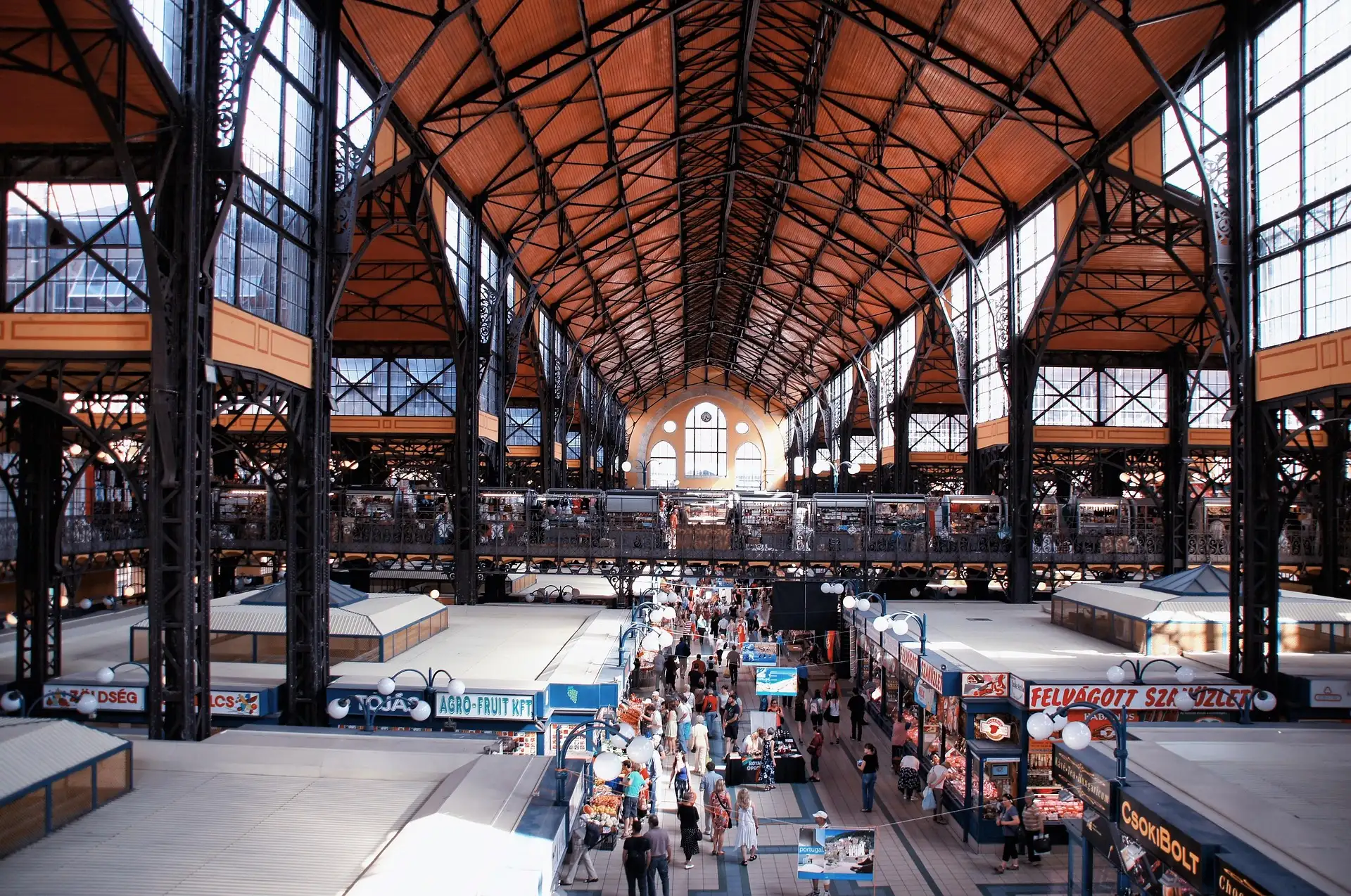
Great Market Hall
Get off the M4 at Fővám tér. The market hall is next to the station.
History
After 1989 some people wanted the statues melted down. The city said no, held a competition, and Ákos Eleőd’s concept, called One Sentence About Tyranny, won it. The park opened in 1993 and has never been finished as designed.
- 1945
The takeover begins
Backed by the Red Army, communist politicians take power in Hungary. Over the following decades thousands of statues go up across the country praising the regime and its Soviet backers.
- Dec 1951
The Stalin statue is unveiled
Sándor Mikus’s 8-metre bronze Stalin is inaugurated on a grandstand on Felvonulási tér, the parade square in central Budapest.
- 23 Oct 1956
Stalin comes down
On the first evening of the revolution the crowd saws the statue off at the knees. The boots stay on the plinth.
- 1989 to 1990
The regime collapses
The statues come off their plinths across Budapest. The city rejects calls to destroy them and orders a statue park instead.
- 19 Jun 1991
The last Soviet soldier leaves
Lieutenant General Viktor Silov crosses the Tisza bridge at Záhony, ending 47 years of foreign troops on Hungarian soil.
- 27 Jun 1993
Memento Park opens
Eleőd’s park opens on the Tétény plateau, two years after the withdrawal. The brick wall meant to ring the statues was never completed.