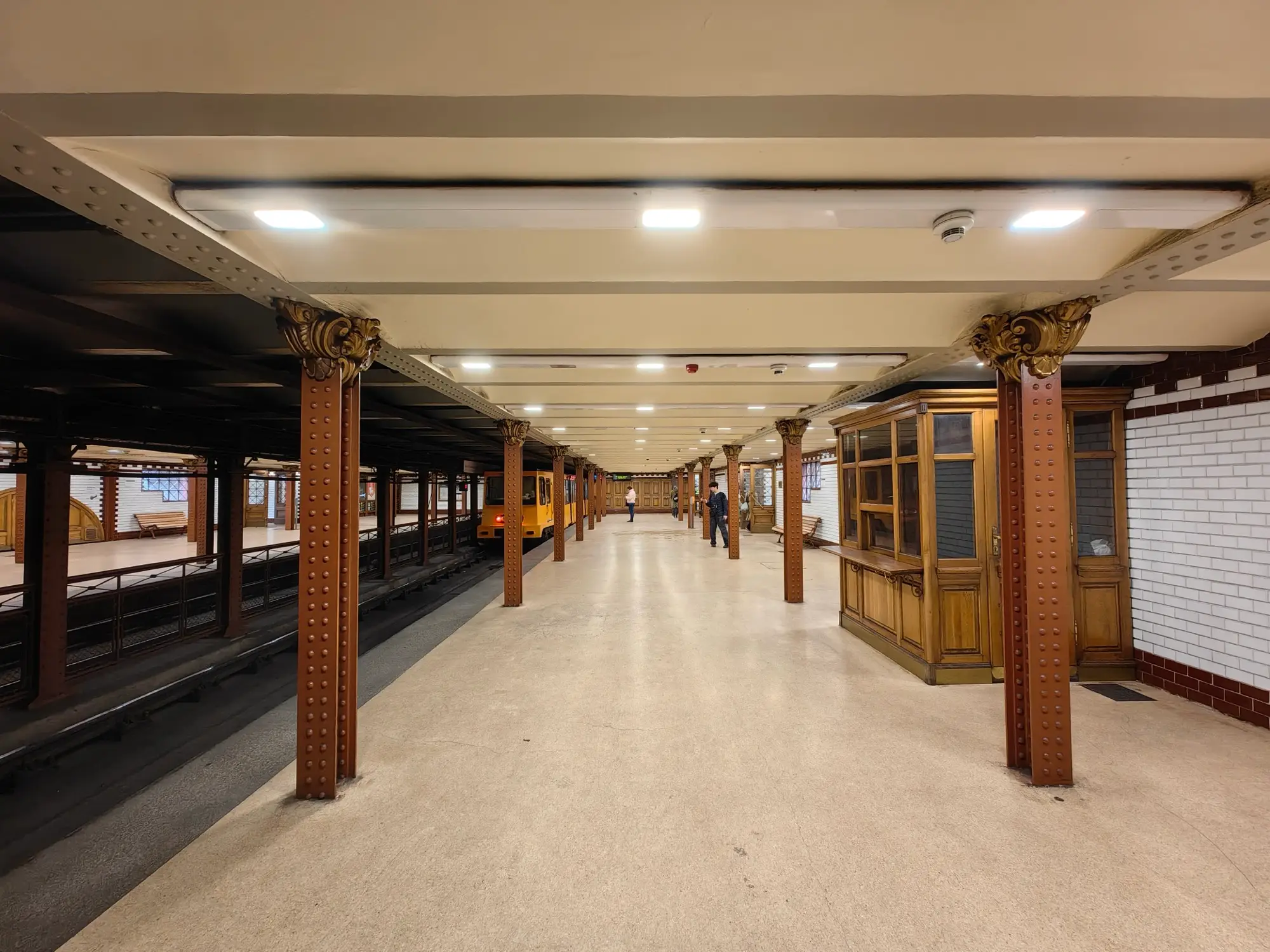
The Millennium Underground is the M1, Budapest’s yellow metro line, and it has run under Andrássy Avenue since 2 May 1896, which makes it the oldest underground railway on the European continent. It is a working line, not a museum ride. The stations under the avenue have kept their original tiling, iron columns and timber booths, and the platforms sit a single flight of stairs below the pavement.
Tours that ride the Millennium Underground
Any ordinary BKK ticket gets you on the M1, so a tour is for the story rather than the ride. These two walking tours put a guide beside you on it.
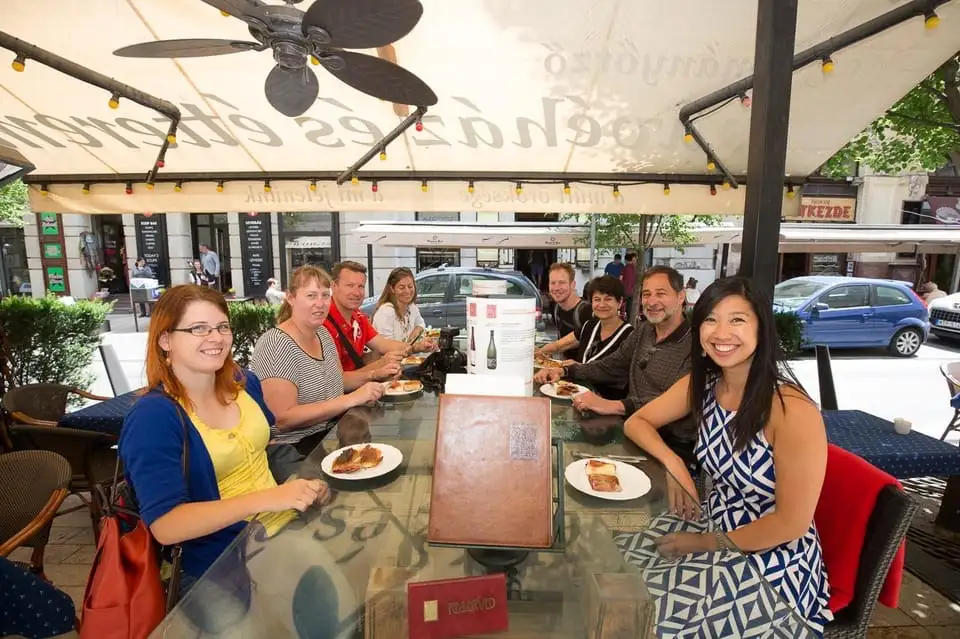
Budapest: All-in-One Walking Tour with Strudel House Stop
Best for: A long day's introduction to both sides of the river, starting with the M1 from the Opera House to Heroes' Square
- 3.5 hours
- Live guide in English, small group
- Free cancellation up to 24 hours ahead
What’s included and more details
What’s included
- Your public transport tickets during the tour
- One extra single ticket back to the centre
- Strudel and a drink at the Strudel House
- A licensed guide
- Meeting point
- On the steps in front of the Hungarian State Opera House
- Route
- The M1 to Heroes' Square and City Park, back into town for the Basilica, the Parliament and the Chain Bridge, then up to the Castle District
- Ends
- At Fisherman's Bastion
- Walking
- About 6 km over 3 hours, in rain or shine. No large bags
- Not included
- Entry to churches or other buildings
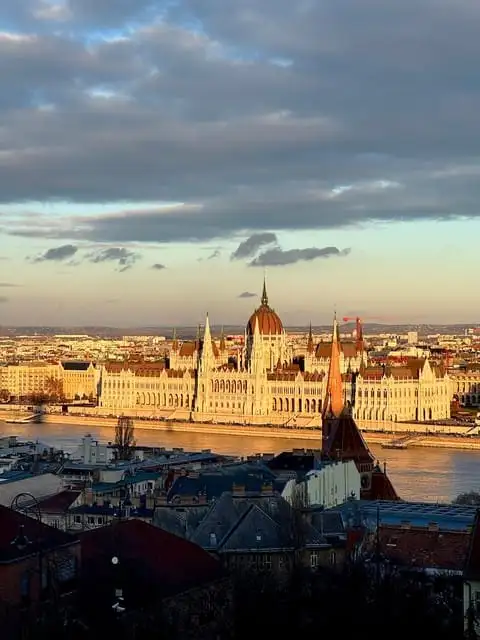
Budapest: Parliament, Basilica & Central Market History Tour
Best for: Two hours round Pest by foot, the M1 and the riverside tram, with a guide telling you the history
- 2 hours
- Live guide in English
- Free cancellation up to 24 hours ahead
What’s included and more details
What’s included
- A ride on the Millennium Underground
- A ride on the riverside tram
- A guided walk past the Parliament, the Basilica and the Chain Bridge
- City Park, Heroes' Square and the Central Market Hall from outside
- Meeting point
- In front of Anna Cafe, Fővám tér 6. The guide carries a blue, grey or black umbrella
- Not included
- Your transport ticket, which you can add when booking or buy on the tour, and entry to any building
- No need to buy one with
- A 24-hour or 72-hour travelcard, or your own single tickets
- Walking
- About 2 km. Not suitable for wheelchair users
- Neither tour includes entry to any sight. Both are walks past the buildings, with the metro as one stretch of the route
- Only the strudel tour includes your transport ticket. On the shorter one, bring a ticket or a travelcard, or add one when you book
- The shorter tour warns that the metro or the tram may be skipped during closures or local events, and the M1 does close on some weekends (see below)
Free with the Budapest Card: the M1 and its museum
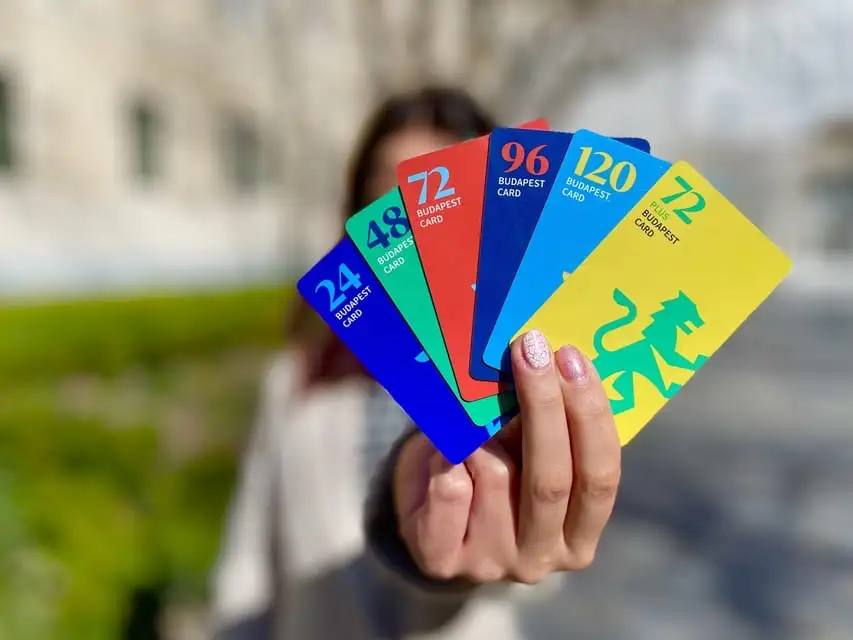
Budapest Card: Public Transport, 30+ Top Attractions & Tours
Best for: Riding the M1 as often as you like and getting into the Underground Railway Museum for nothing
- 24, 48, 72 or 96 hours from first use
- Free cancellation up to 24 hours ahead
What’s included and more details
What’s included
- Free entry to the Underground Railway Museum
- Unlimited public transport, every M1 ride included
- Free entry to more than 30 museums and attractions
- A Danube river cruise
- At the museum
- Free entry. Show the card at the cash desk
- Collect it
- Swap the voucher at a BKK customer centre, one of them at Deák Ferenc tér metro station
- Bring
- Passport or ID card. Its number goes on the card before first use
- Worth it only if
- You would have paid for several of the things on it. Transport and one small museum do not cover the card
Millennium Underground stations, in order
Eleven stations, about a minute apart. Seven are under the avenue, two are at the city end before it starts, and two are beyond it, one in City Park and the terminus just outside it. At every station under the avenue there are two separate stairways, one for each direction, on opposite sides of the road, so check the sign before you go down.
Vörösmarty tér and Deák Ferenc tér, the city end
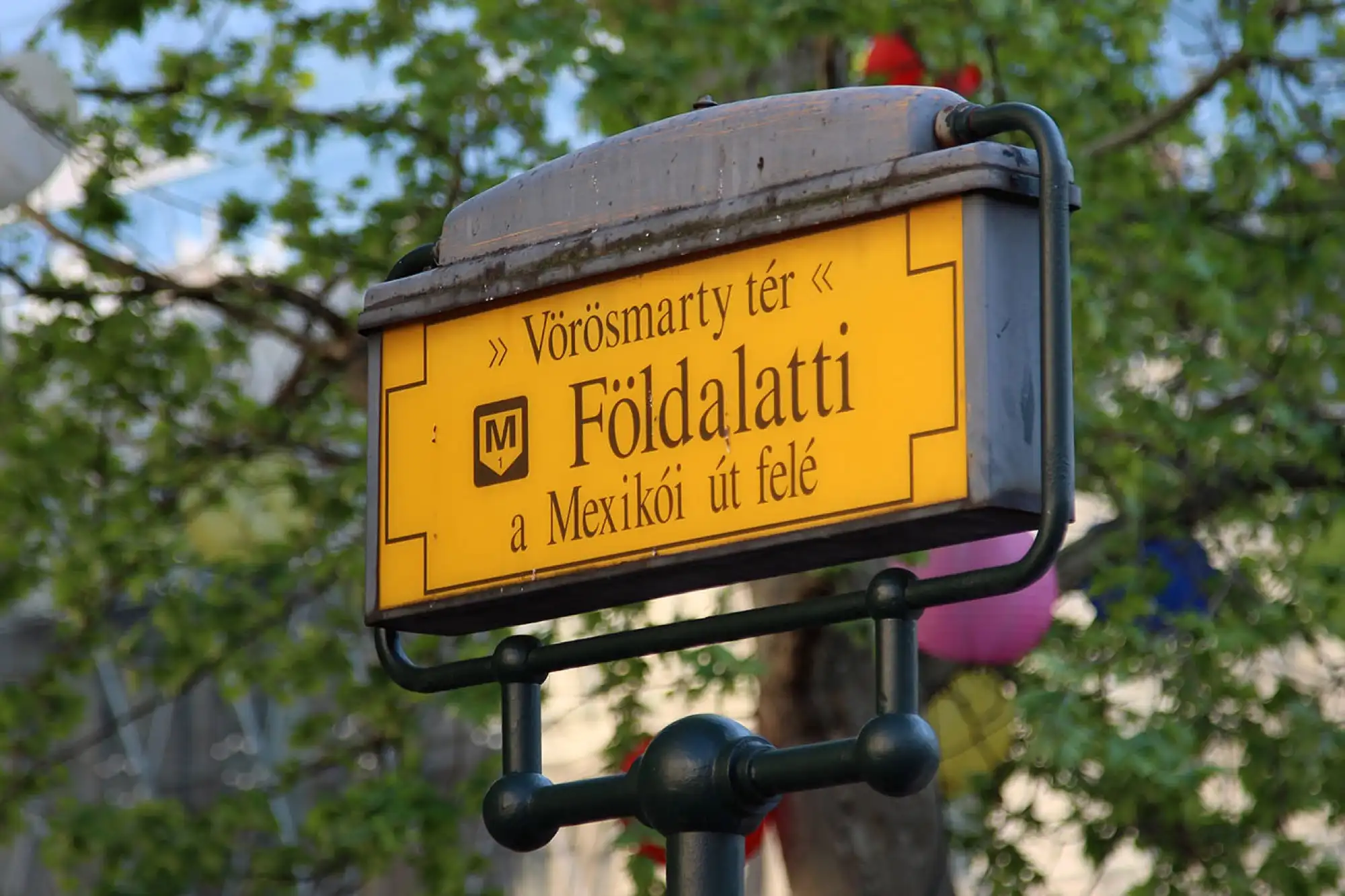
Vörösmarty tér is the terminus, in the square of the same name by the Gerbeaud café, and the yellow sign over its stairway says where the trains go: Földalatti, a Mexikói út felé, towards Mexikói út. In 1896 this was Gizella tér, and the station’s original tiled name board is now in the museum.
Deák Ferenc tér, the next stop, is where the M1 meets the M2 and the M3, and it is the stop for the Underground Railway Museum, which is in the underpass there. Neither station is on Andrássy Avenue. The avenue starts one stop further on.
Bajcsy-Zsilinszky út, the start of the avenue
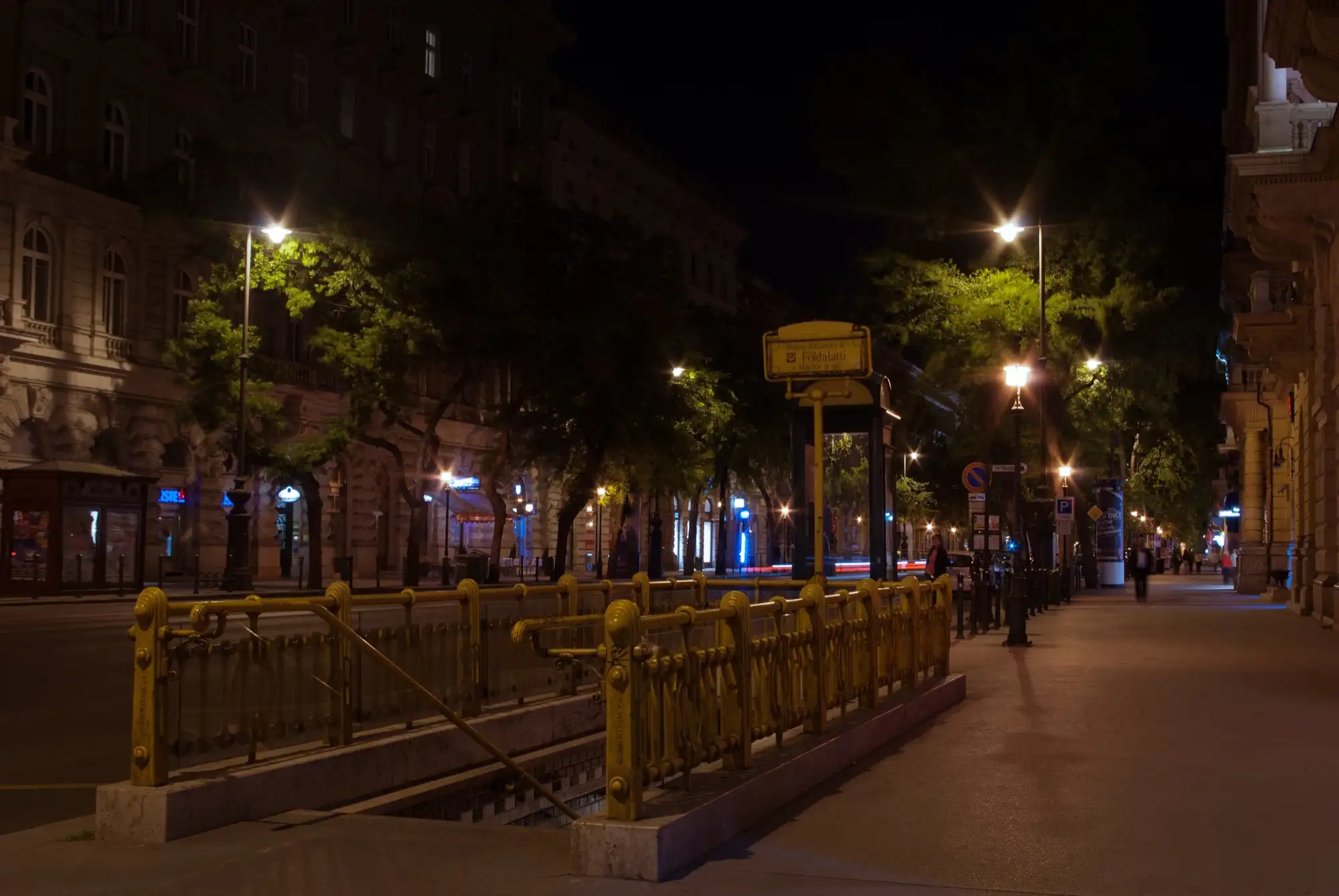
The first station under the avenue itself, at its junction with Bajcsy-Zsilinszky út. Come up here and you have the whole of Andrássy Avenue in front of you, which makes it the stop for anyone who wants to walk out to Heroes’ Square and ride back.
The entrances here are the kind the line is known for, a gap in the pavement edged with wrought-iron railings painted yellow and a yellow sign on a post naming the station. There are two, one on each side of the road.
Opera, for the Opera House
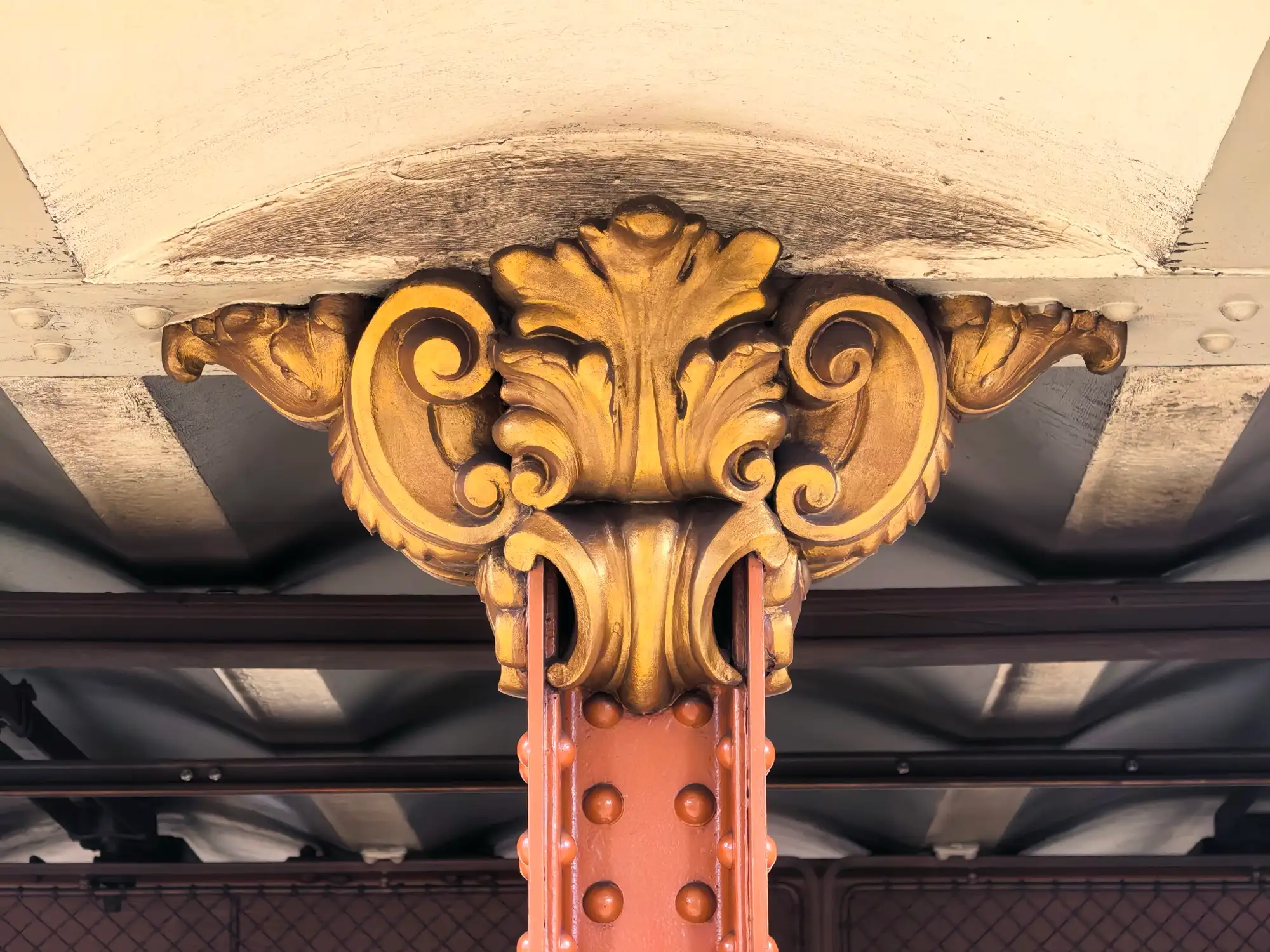
The one station named after the building people are looking for, right outside the Hungarian State Opera House. It is also the best-dressed station on the line. The iron columns here are painted brown, not green like those at Oktogon, Kodály körönd and Hősök tere, and their capitals are picked out in gold.
Look at the timber ticket booth on the platform and the white tiled walls while you wait. If you only have time to see one station properly, see this one, then walk the 8 minutes or so to Oktogon above ground.
Oktogon, where the trams cross
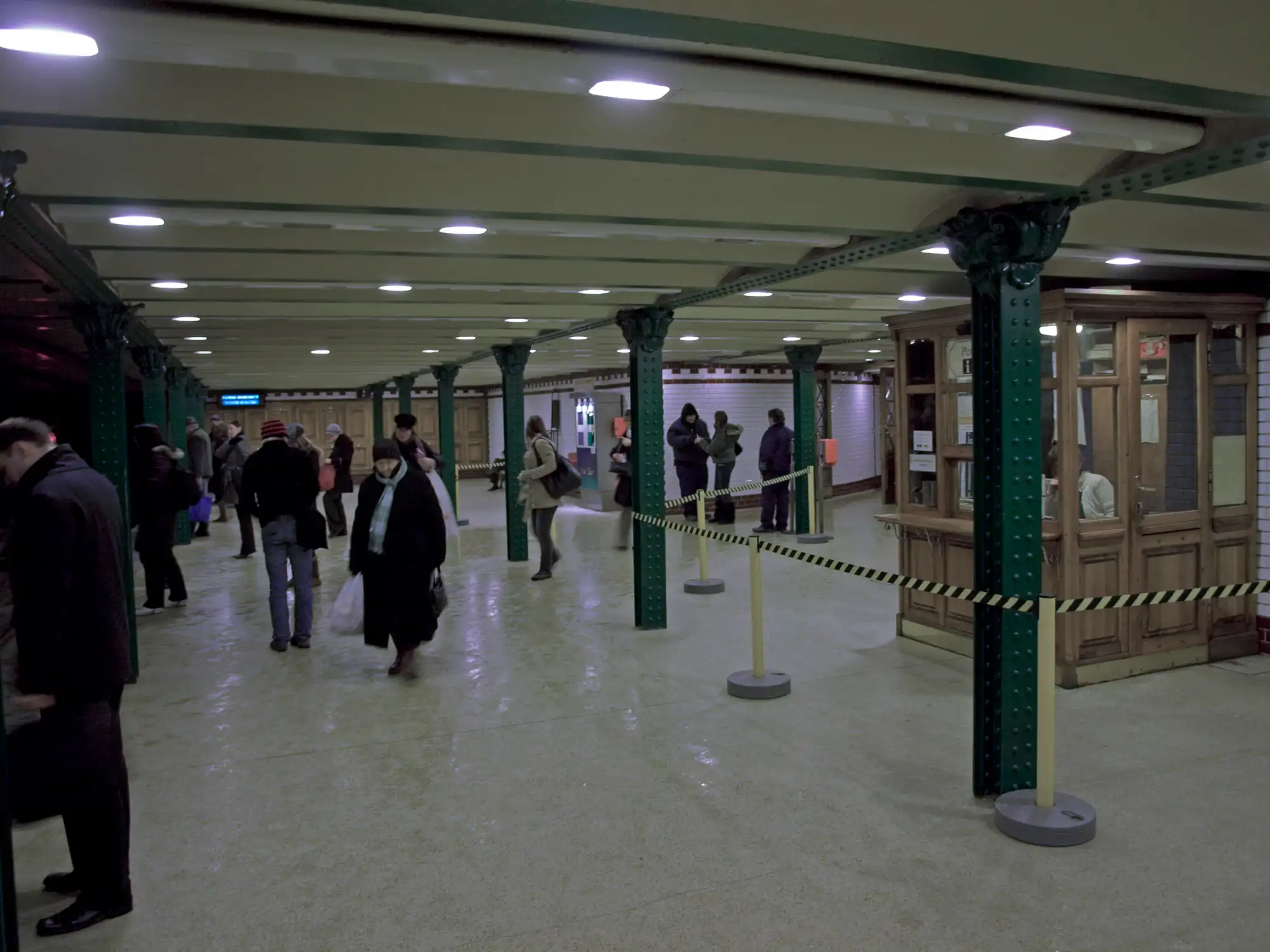
Oktogon is where Andrássy Avenue crosses the Grand Boulevard, and the one station under the avenue where you can change to a tram. Lines 4 and 6 stop on the boulevard above, and on Friday and Saturday nights they run all night.
When the line has been closed for engineering work at weekends, the trains have run only between Vörösmarty tér and Oktogon, with replacement buses for the rest of the way, so this is where you would change.
Vörösmarty utca, for the House of Terror
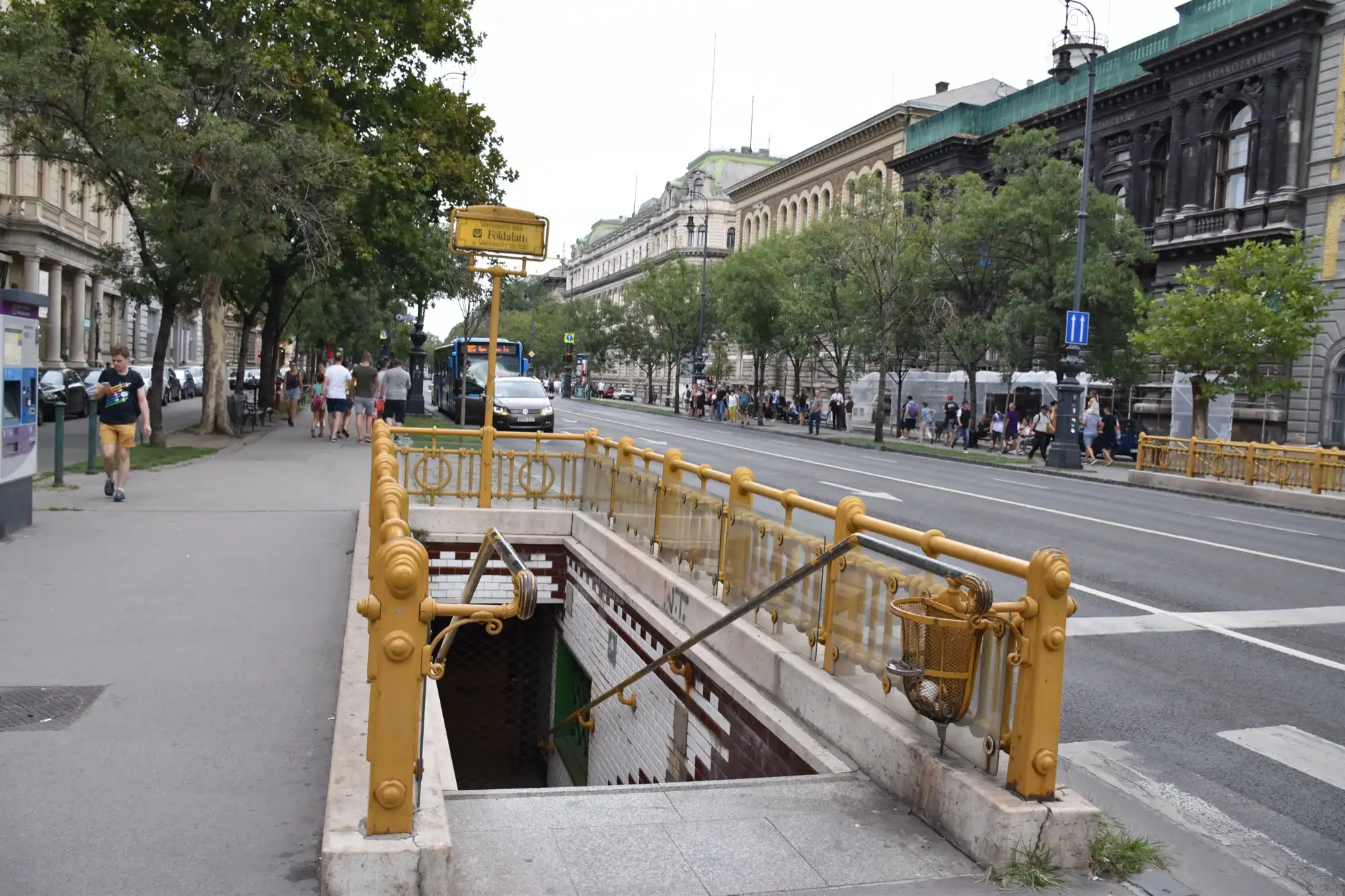
The stop for the House of Terror Museum at Andrássy út 60. Both stairways come up about 100 metres further along the avenue than the museum, so turn back towards Oktogon when you reach the pavement.
The station is named after a street, Vörösmarty utca, and it is not Vörösmarty tér, the terminus five stops back towards the city. The two are easily confused on a map.
Kodály körönd, for the circus and the composer's flat
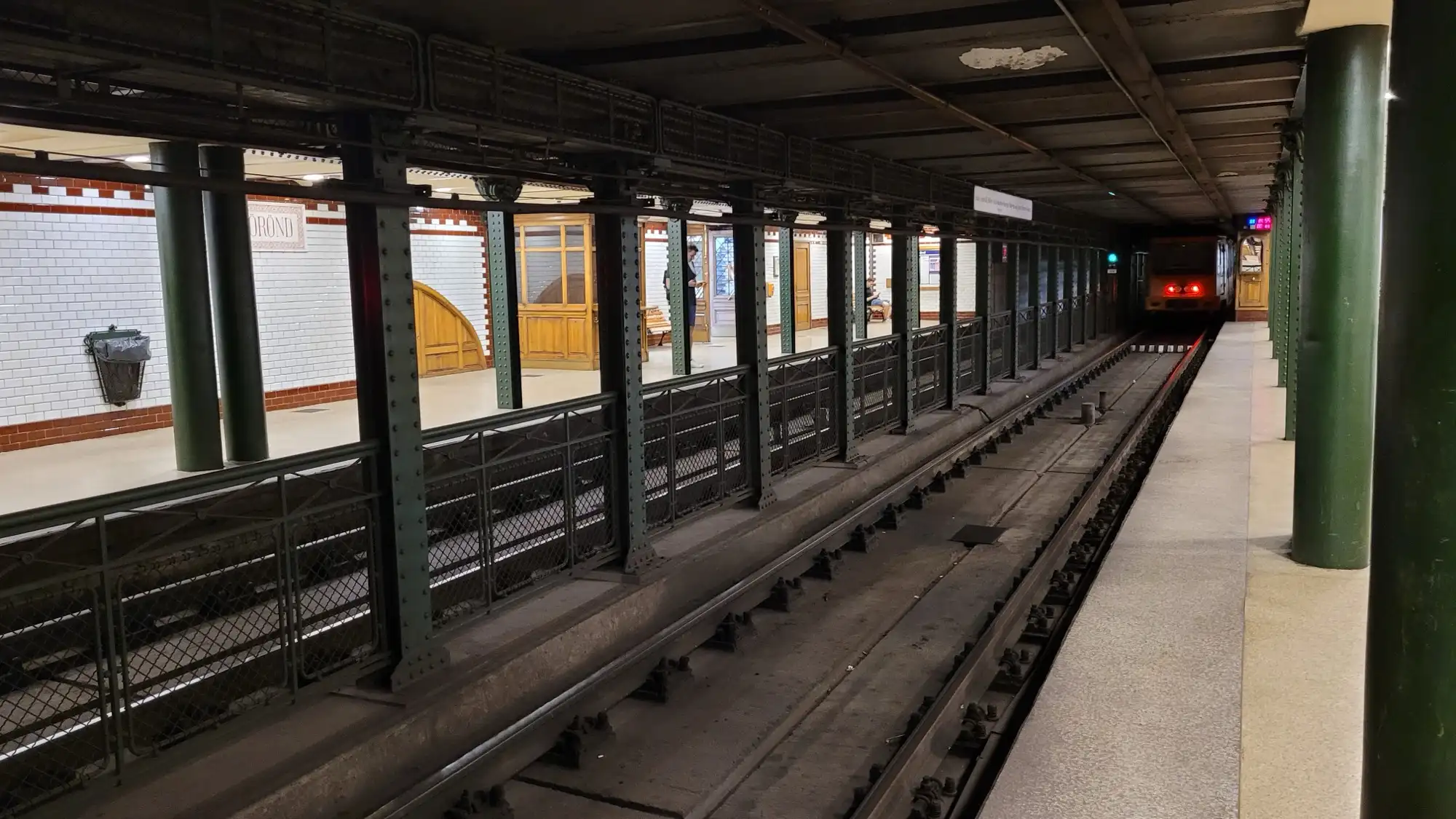
You come up in the middle of Kodály körönd, the round circus of four palace blocks about halfway between Oktogon and Heroes’ Square, where Zoltán Kodály’s flat is a museum. It is the stop to choose if you want only the quieter, greener stretch of Andrássy Avenue, which runs from here to Heroes’ Square.
Down on the platform you get the M1 at its most typical. A single line of green riveted columns stands between the tracks, the white tiles are trimmed with dark red, and the roof is low over the trains.
Bajza utca, for the villa quarter
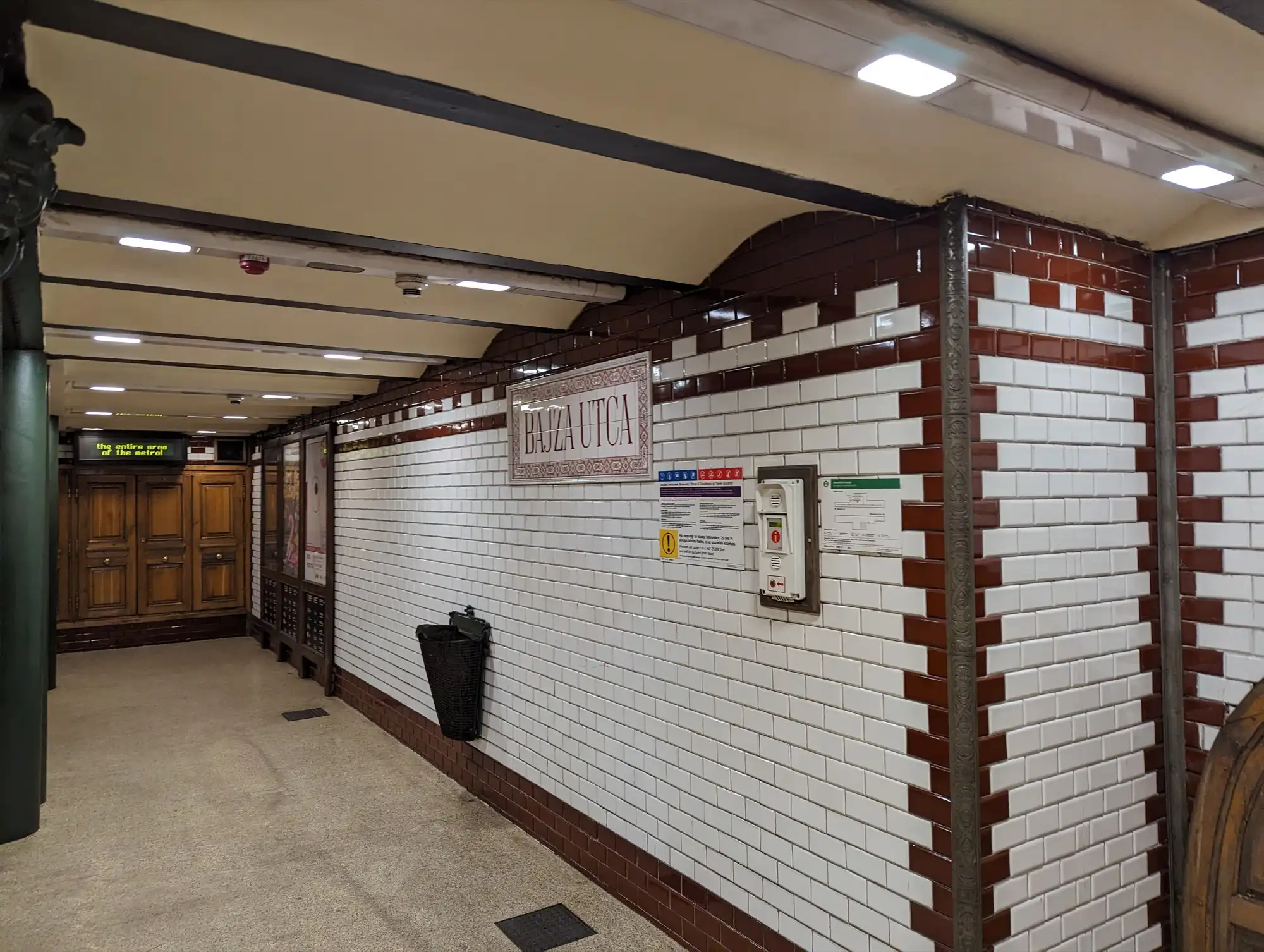
The station for the villa quarter, the last stretch of the avenue, where most of the big houses behind their front gardens are embassies and institutes. The Ferenc Hopp Museum of Asiatic Arts, at number 103, is a few steps further out from the station.
The tiling is at its best here. The name is set into the wall on a tiled panel, the white tiles are framed in dark red, and the doors at the end of the platform are timber.
Hősök tere, for Heroes' Square and City Park
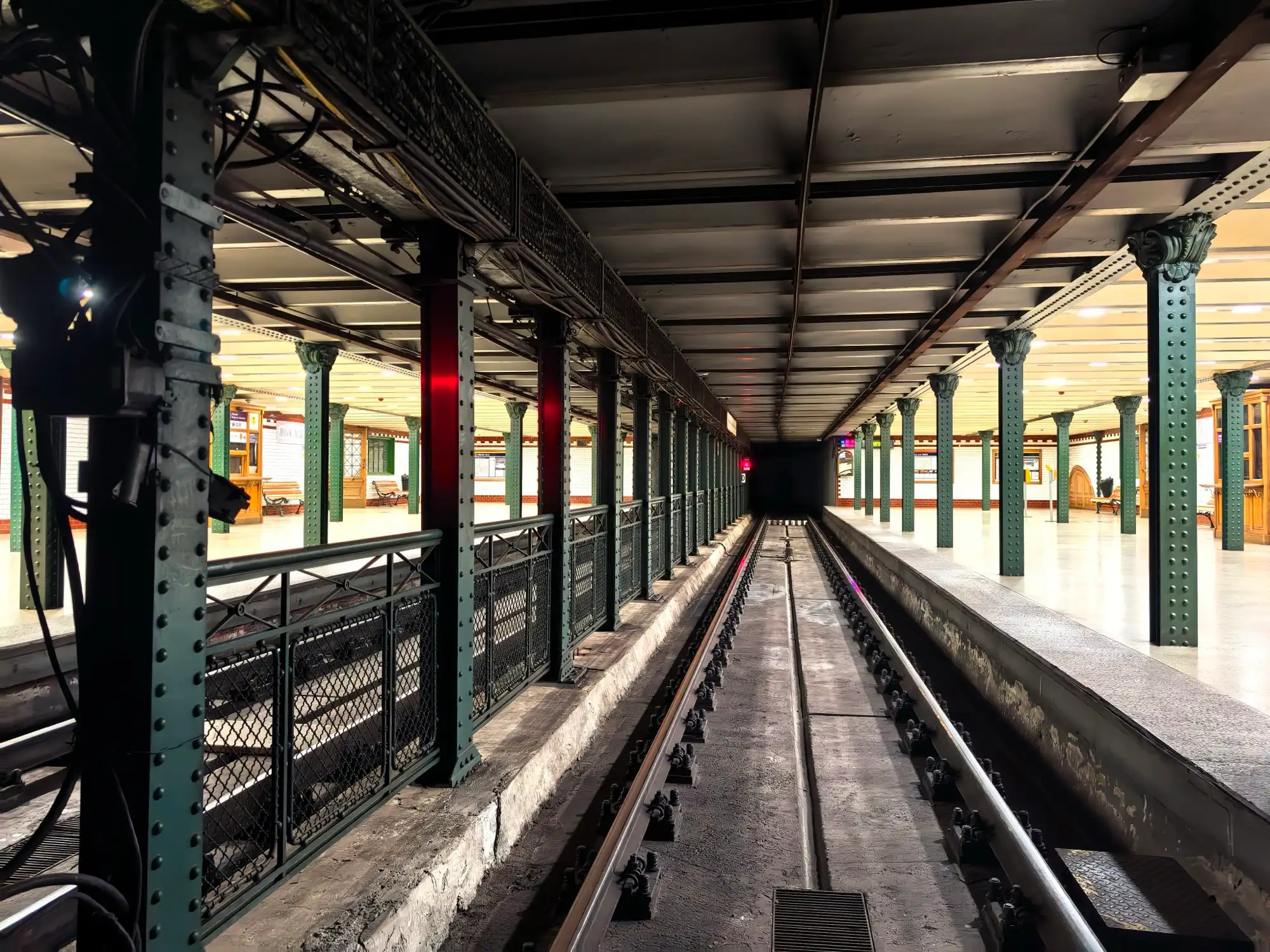
The last station under the avenue, at its very end. Come up for Heroes’ Square, the Museum of Fine Arts and the Műcsarnok, and walk on into City Park.
Beyond here the stations are not the old ones. Those under the avenue have kept their original features, but the stations in City Park first stood above ground and were rebuilt below the surface.
Széchenyi fürdő, for the baths and the Zoo
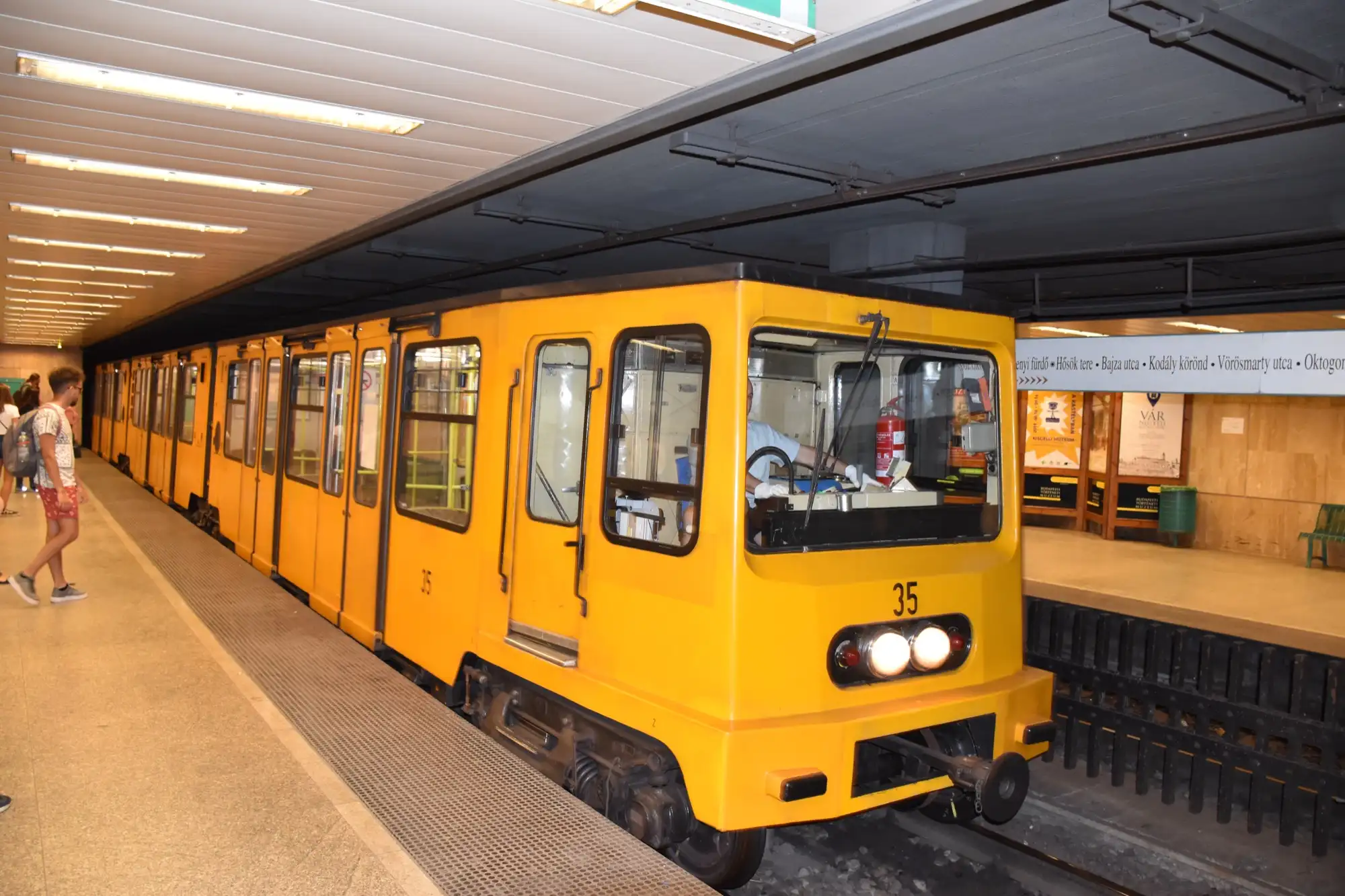
The stop for the Széchenyi Thermal Bath, a short walk from the exit, and for the Budapest Zoo, about 5 minutes west to its main gate. You come up in the park itself.
The station is plain next to the ones under the avenue, with panelled walls and a flat ceiling.
Mexikói út, the end of the line
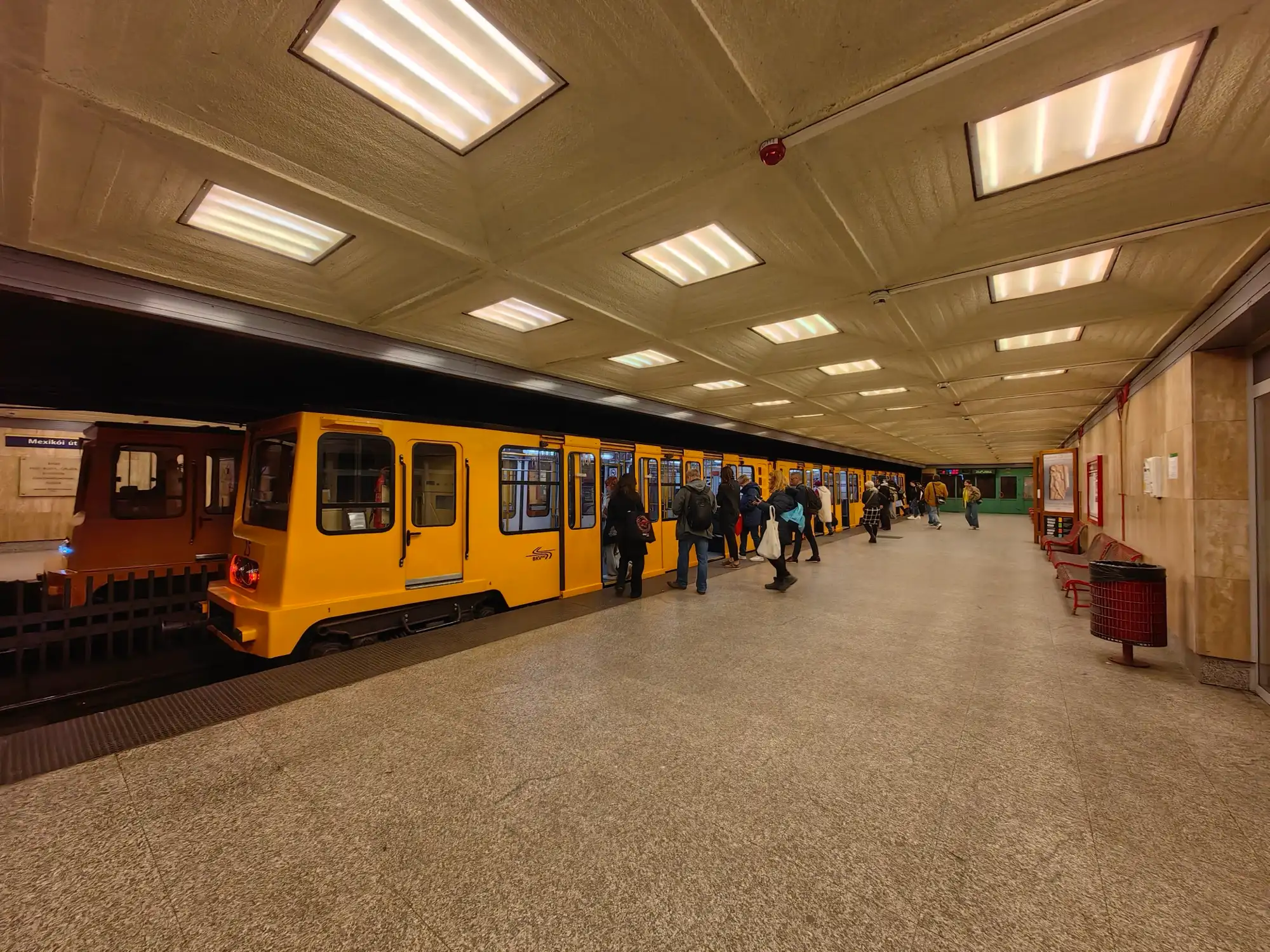
The terminus, just outside City Park, where you can change to trams 3 and 69. There is no sight here, so for the baths get off one stop earlier.
If you have ridden out for the sake of it, the trains back into town leave from the other platform, which has its own stairs, so a single ticket will not take you back. Vörösmarty tér is about 12 minutes away.
M1 tickets and passes
The M1 takes every ordinary BKK ticket, pass and travelcard, and the rules are the same as on the other three metro lines.
- Validate a paper ticket as you enter the station. On the metro you stamp it at the row of validators at the station entrance, and that row is also the boundary. Cross it with an unstamped ticket and you can be fined
- A single ticket is one trip in one direction. It is valid for 80 minutes on the metro, with changes between metro lines allowed, but leaving the metro or turning back needs a new ticket
- Tap a bank card instead. Budapest Pay&GO terminals at the station entrances sell and validate a single ticket in one tap of a contactless card or phone, with no paper to keep
- Phone tickets are scanned at the entrance. In the BudapestGO app, scan the QR code or touch your phone on the NFC sticker as you enter the station
- A 24-hour or 72-hour travelcard is the one for sightseeing. A paper one needs no validating, and it covers every ride
What to look for in the M1 stations
White tiles framed in dark red
Under the avenue the walls are lined with white tiles edged in dark red, and the station names are set into tiled panels.
Riveted iron columns
A row of riveted iron columns holds up the roof between the tracks, green at most of the stations under the avenue and brown with gilded capitals at Opera.
Low yellow trains
The cars in service were bought between 1973 and 1987 and stand 2.59 metres tall, low enough for a tunnel dug just under the road.
Tips for riding the M1
Pick the right side of the road before you go down
Every station under the avenue has two separate stairways, one for each direction, and there is no way across underground. Facing Heroes’ Square, the stairs on your right go out towards City Park, and the stairs on your left go back into town. Go down the wrong one with a stamped single ticket and you will need a second ticket once you have crossed over.
Get a travelcard if you want to stop and look
The stations are the reason to ride, and a single ticket does not let you get off, look at one and carry on. A 24-hour travelcard turns the M1 into something you can hop on and off all day.
M1 accessibility
The M1 is the hardest of Budapest’s metro lines for anyone who cannot manage steps.
- No station on the line is step-free. All eleven are reached by stairs, and there is no lift anywhere on the M1
- The tram is the level alternative for part of the way. Trams 4 and 6 stop at Oktogon, and their stops are barrier-free, with low-floor trams on both lines
- Bus 105 runs along the avenue between Deák Ferenc tér and Heroes’ Square, stopping by every station on the way, and every bus on the route is wheelchair accessible. The full step-free routes are on our getting to Andrássy Avenue page
- Neither tour on this page is suitable for wheelchair users or anyone with limited mobility
M1 weekend closures and replacement buses
Underground Railway Museum at Deák Ferenc tér
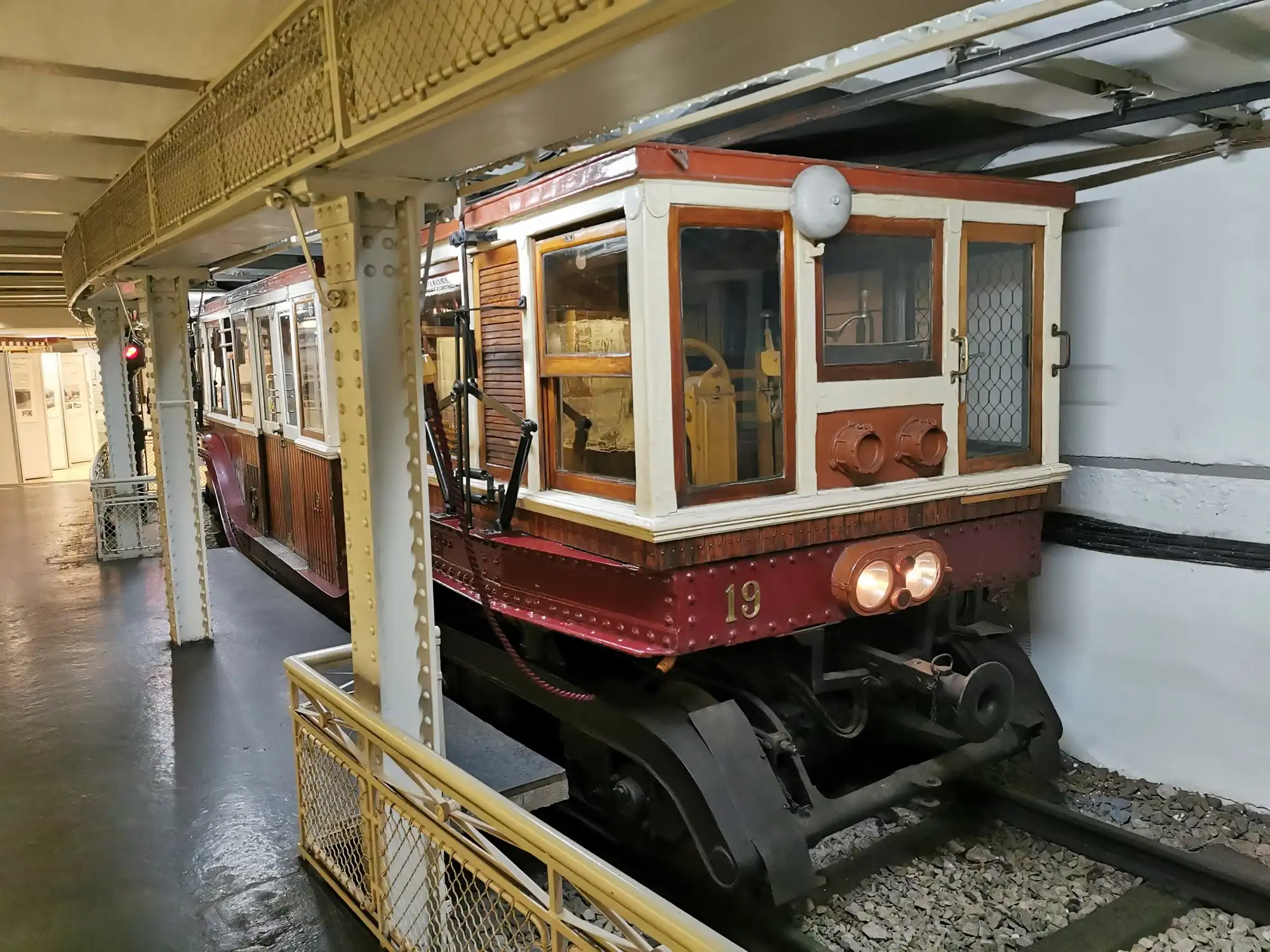
The museum is in a stretch of the M1’s own tunnel under Deák Ferenc tér, taken out of service in 1955 when the east-west metro was built. BKV, which runs the line, opened it in 1975 and renewed it for the centenary in 1996, so the walls around you are part of the exhibit.
Three of the line’s old cars, numbers 19, 1 and 81, stand on the old track. They were lowered in by crane through an opening in the roof in 1975.
In the foyer is the station’s original name board from Gizella tér, as Vörösmarty tér was called in 1896, in its Zsolnay tiles, and near it the marble tablet recording that Franz Joseph rode the line on 8 May 1896 and gave it his name.
Opposite the cars, cases of plans, maps, the construction log, photographs and models take the story from the building of the line to the later metro lines.
- Where: in the underpass beneath Deák Ferenc tér, the Deák téri aluljáró
- Open: every day except Monday, 10:00 to 17:00. The cash desk closes at 16:45
- Paying: cash only at the desk. Under-6s and over-70s go in free, and so does anyone with the Budapest Card
- Allow: half an hour to an hour. It is small, and it suits anyone who has just ridden the line
A short history of the Millennium Underground
The line exists because a tram was refused. Budapest needed a fast way out to the Millennium Exhibition in City Park, and in 1893 the Interior Minister turned down a street railway on Andrássy Avenue as unfit for it. Work on an underground started on 13 August 1894, the tunnel dug from above and kept shallow to clear the Grand Boulevard’s main sewer, and the line opened on 2 May 1896.
Franz Joseph rode it on 8 May and let it take his name. In 2002 the avenue and the line beneath it were added to Budapest’s World Heritage listing. The whole story is on our history of Andrássy Avenue page.