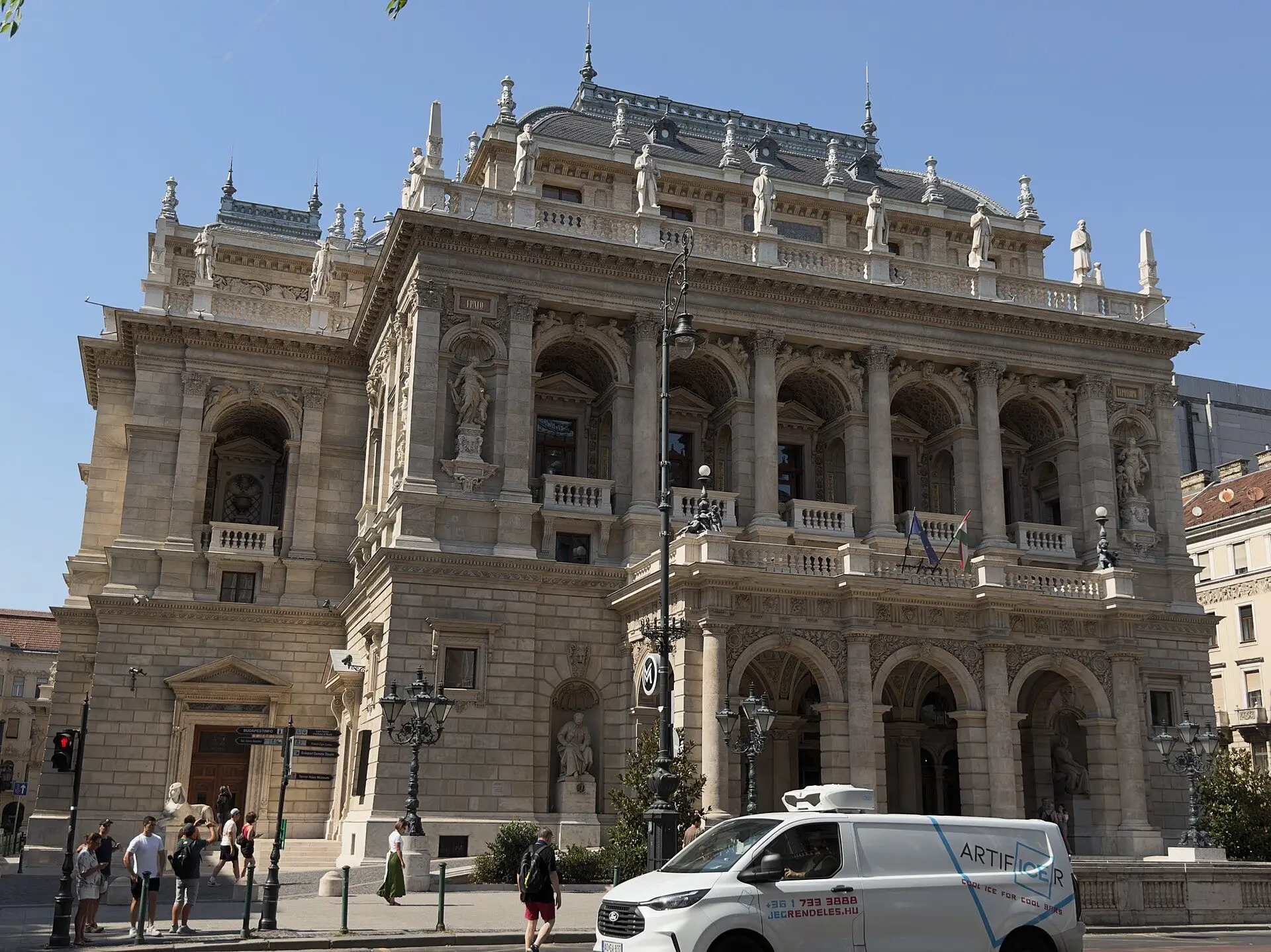
You cannot wander into the Hungarian State Opera House. Miklós Ybl’s Neo-Renaissance palace on Andrássy út has no walk-in route for sightseers, so there are exactly two ways to see the inside of it. One is a seat at a performance. The other is the 60-minute guided tour, which leaves up to three times a day in English and ends with opera singers performing on the grand staircase.
The building reopened in March 2022 after a restoration that closed it for nearly five years, and it looks it. Expect gold leaf, red and gold boxes and a ceiling fresco with most of Mount Olympus on it. One thing to know before you book: the auditorium is shut to visitors whenever the company is rehearsing.
- Visit length
- About an hour on the tour
- Entry
- Guided tour, or a ticket for a performance
- Book ahead
- Yes, groups are capped
- Best time
- The 13:30 tour, on a weekday
- Nearest stop
- Metro M1 OperaOn the pavement right outside the building. Stairs only
- Accessibility
- Lifts to the stalls and Floor III, stairs on the tour route
- Dress code
- None, though people dress up for performances
- English tours
- 13:30, 15:00 and 16:30, most days
- Box office
- Daily 10:00 to 19:00
Tickets
There is one tour to book, and booking for each slot closes four hours before it starts.
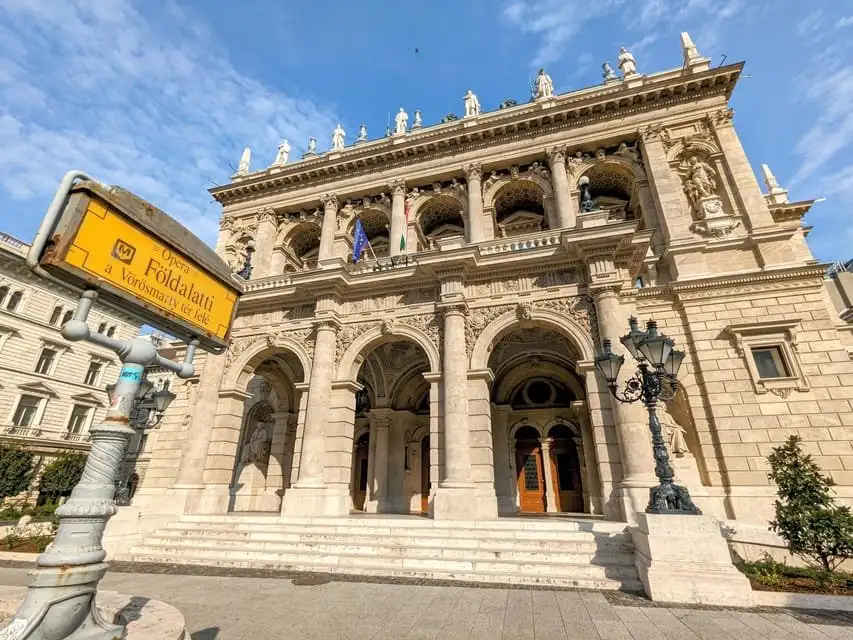
Budapest: Opera House Guided Tour
Best for: Seeing inside the Opera House by day, with a short concert at the end
- 1 hour
- Live guide in English, German, French, Spanish or Italian
- Free cancellation up to 24 hours ahead
What’s included and more details
What’s included
- A guided visit inside the Opera House
- A short concert
- Choose
- The tour language
- Good to know
- The Opera House may cancel tours for rehearsals, and another date is offered
- Not suitable for
- Wheelchair users
- Also
- Reserve now and pay later
- Groups are capped at 30, and several language groups can be working through the building at the same time
- No city card covers this one, free or discounted. What the cards do include is in our Budapest Card guide
- Performances are the Opera’s own to sell. Neither partner carries them, so an evening in the auditorium is bought from the Opera directly
Tour times, the route and how to book →
Highlights
The Apotheosis of Music
Károly Lotz’s circular fresco fills the auditorium ceiling with six groups of gods listening to Apollo, and a chandelier of about two tonnes hangs in the middle of it.
A concert on the stairs
Every tour ends with singers from the company performing costumed scenes on the landing of the grand staircase, with the group sitting on the steps.
Hungarian by law
The brief demanded Hungarian craftsmen and Hungarian materials. Ybl met it with five exceptions, from Carrara marble to a chandelier ordered in Mainz.
Plan your visit
Opening hours
There are no sightseeing hours. The building opens to visitors on the guided tours at 13:30, 15:00 and 16:30, and a performance that day can take a slot away.
Getting there
The Opera has its own metro station, and the entrance is on the pavement right outside the building. The M1 is stairs only, so the step-free way in is M3 Arany János utca, about 6 minutes’ walk west.
Nearest stops
Before you go
- The tour starts at the information desk in the entrance hall. Be there a few minutes early
- The cloakroom is free, and coats, jackets, rucksacks, suitcases, umbrellas and musical instruments have to go in it
- Photograph what you like for your own use. No flash and no tripods on the tour
- At a performance everyone needs a ticket, including children, and the age guidance printed on a production is advice rather than a rule
- Latecomers to a performance are let in at the interval, or at a suitable break. If the piece has no interval you will not get in at all, unless you hold a box ticket
Accessibility
The building was made considerably easier to use in the restoration, but the tour route is a different question from the auditorium.
- Lifts serve the audience areas, including the stalls, an accessible box on the same level and the accessible toilets
- The tour route uses the grand staircase, and the closing concert happens on it. The Opera does not publish a step-free version of the route, so plan for stairs
- M1 Opera is not step-free. None of the M1 stations here are. The step-free station is M3 Arany János utca
What to see and do
Look up before you go in
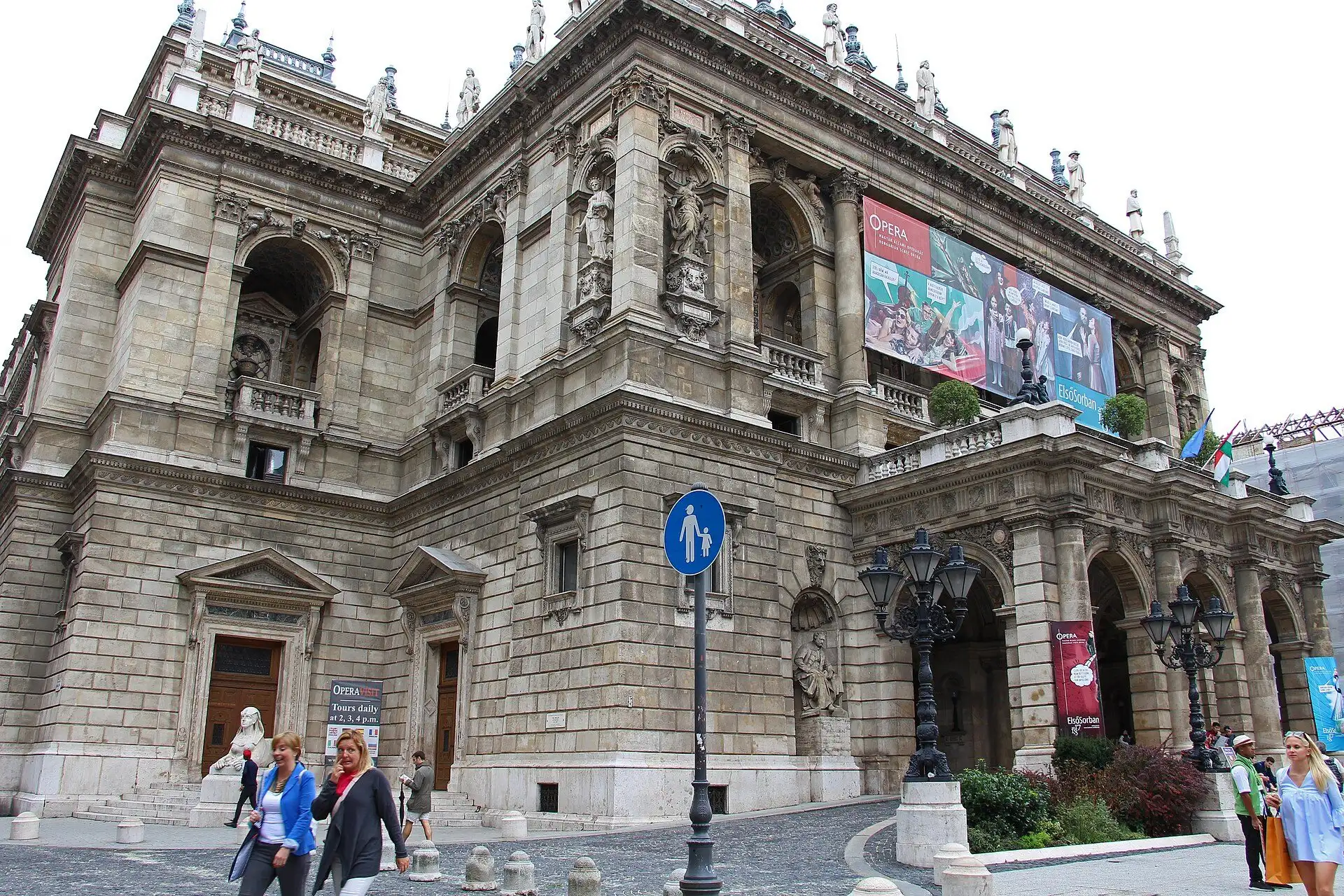
Two sphinxes in Carrara marble guard the side entrances, one holding a laurel wreath and the other a theatrical mask in its claws. They stand for Apollo and Dionysus, order and frenzy, a pairing that runs through the decoration inside as well, on the foyer ceiling and again on the auditorium roof.
In the niches beside the main entrance stand Ferenc Liszt and Ferenc Erkel, carved by Alajos Strobl. Both men sat for him in person, and he was twenty-six at the time. Liszt is caught mid-movement and Erkel is perfectly still, a contrast Strobl used deliberately to mark the difference between the two men.
Then look along the parapet at the sixteen composers on the skyline, from Monteverdi to Smetana. They are not the originals. The first set was cut from a softer stone, decayed so badly by the 1930s that one fell onto the pavement, and was replaced in 1965 in a different style, with a partly different cast of composers, some of whom the Opera had never staged.
Start in the foyer, not on the stairs
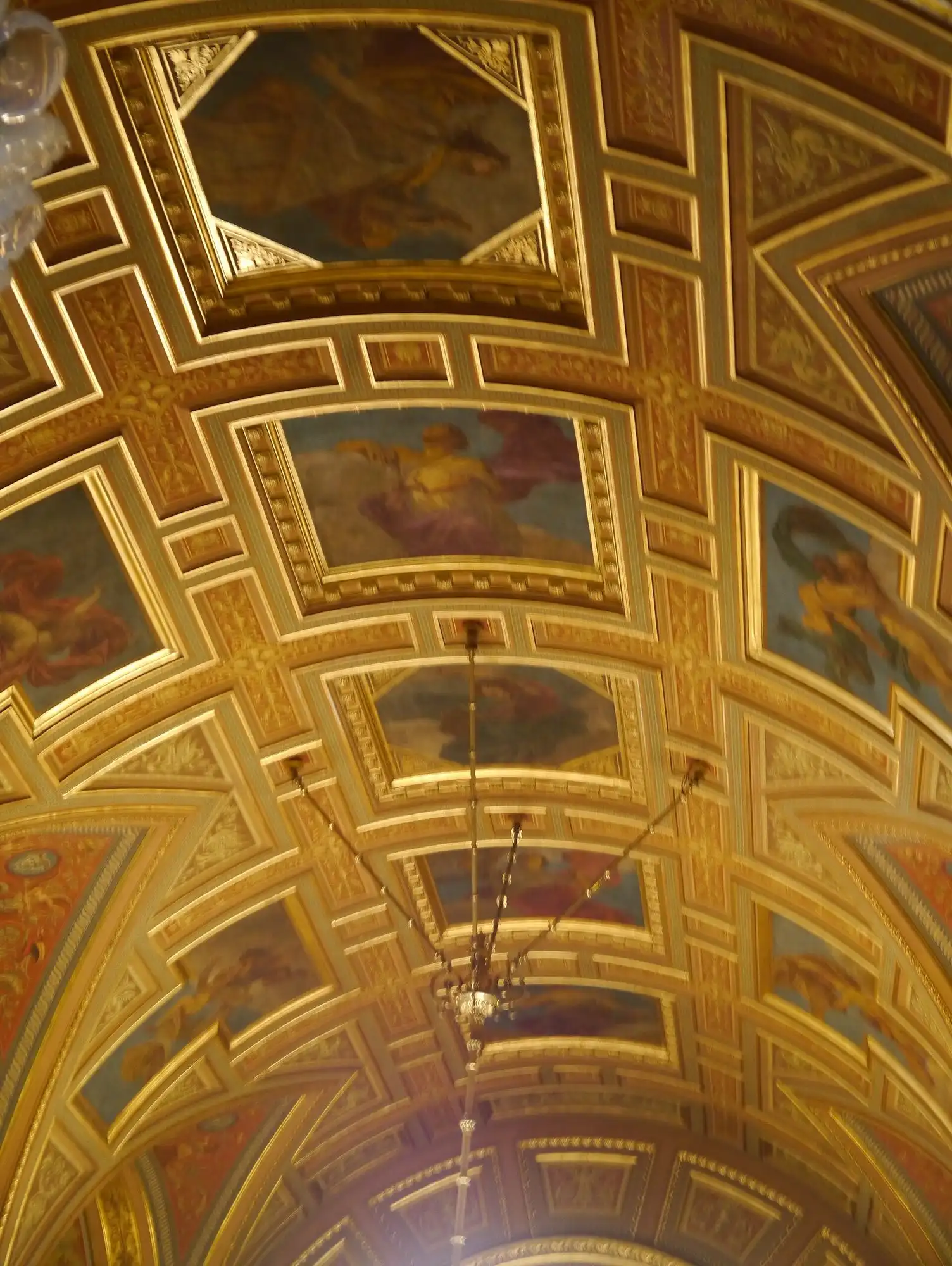
The foyer is where Ybl sets out what the rest of the building is going to do. Liver-coloured walls, dark grey marble, eight columns and gilded barrel vaults, all of it borrowed from the Italian Renaissance palace.
Look up at the coffers. Bertalan Székely painted the nine muses into gilded four- and eight-sided frames, Urania through to Terpsichore, with Apollo among them. Above the main entrance there is a golden lute, and above the gates and the old cash desks are Antal Szécsi’s relief portraits of four composers, including Ferenc Doppler and Karl Goldmark.
Hang back here for half a minute after the guide moves off. You get the ceiling to yourself and you still catch the group at the bottom of the stairs.
Take the grand staircase slowly
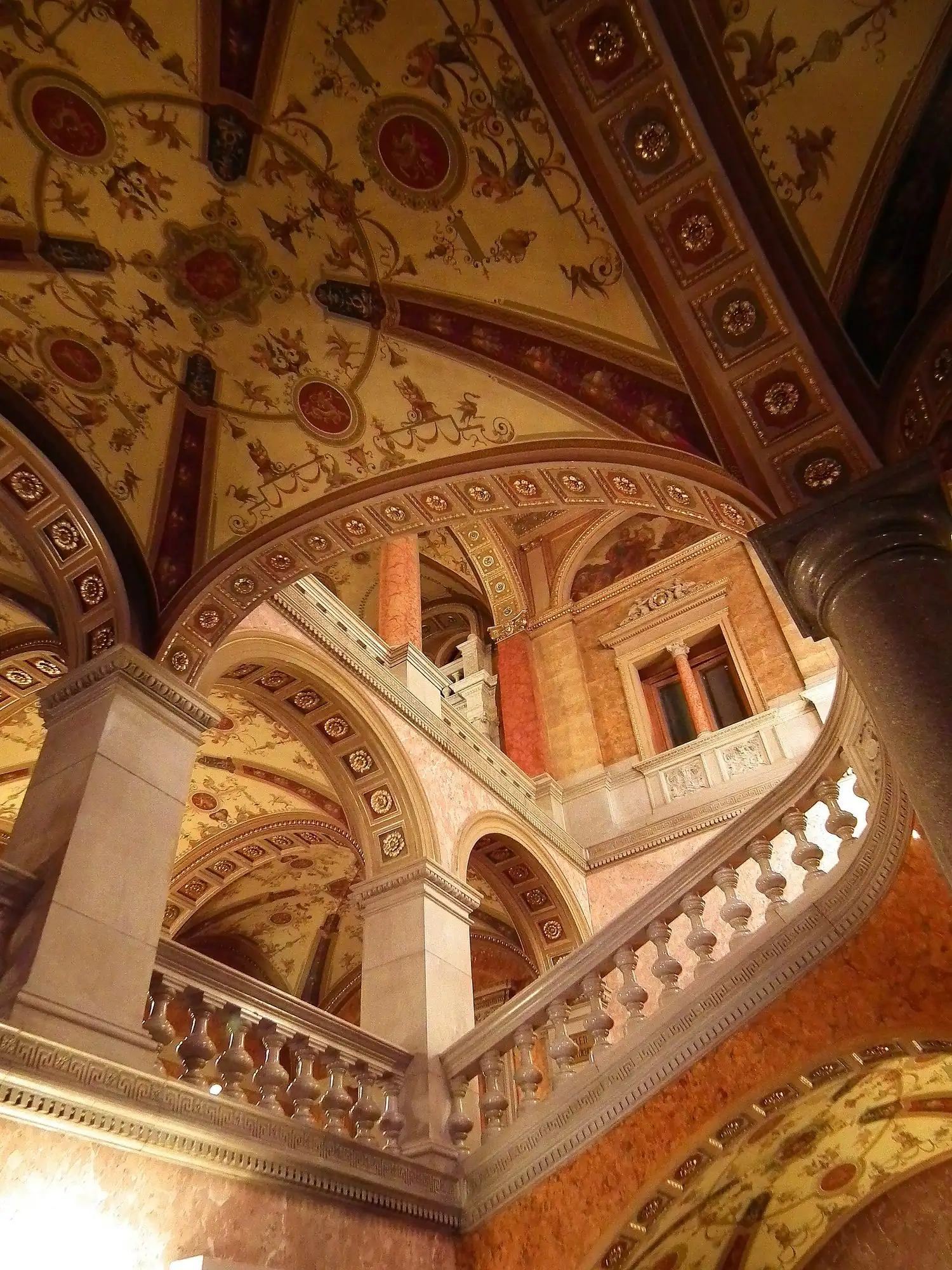
The stairs split in two and run up to the auditorium doors, marble the whole way, with balustrades you will want to put a hand on. The ceiling above them is mirrored and gilded into nine coffers, and every one of them is a Mór Than painting on the Waking of Music and the Power of Music.
The best story is in the long side panels, the contest between Apollo on the lyre and Marsyas on the flute. Apollo wins, and the satyr is skinned for his insolence. Along the wall Than tells the Orpheus story in three scenes, at the gate of the underworld, leading Eurydice out, and his own death.
At the foot of the main marble wall is Strobl’s statue of Ferenc Erkel, who wrote the first Hungarian operas and was the Opera’s first musical director. Ede Telcs’ bust of Ybl faces him across the hall. The man who wrote the music and the man who built the room, set up to look at each other.
Get the auditorium if you can
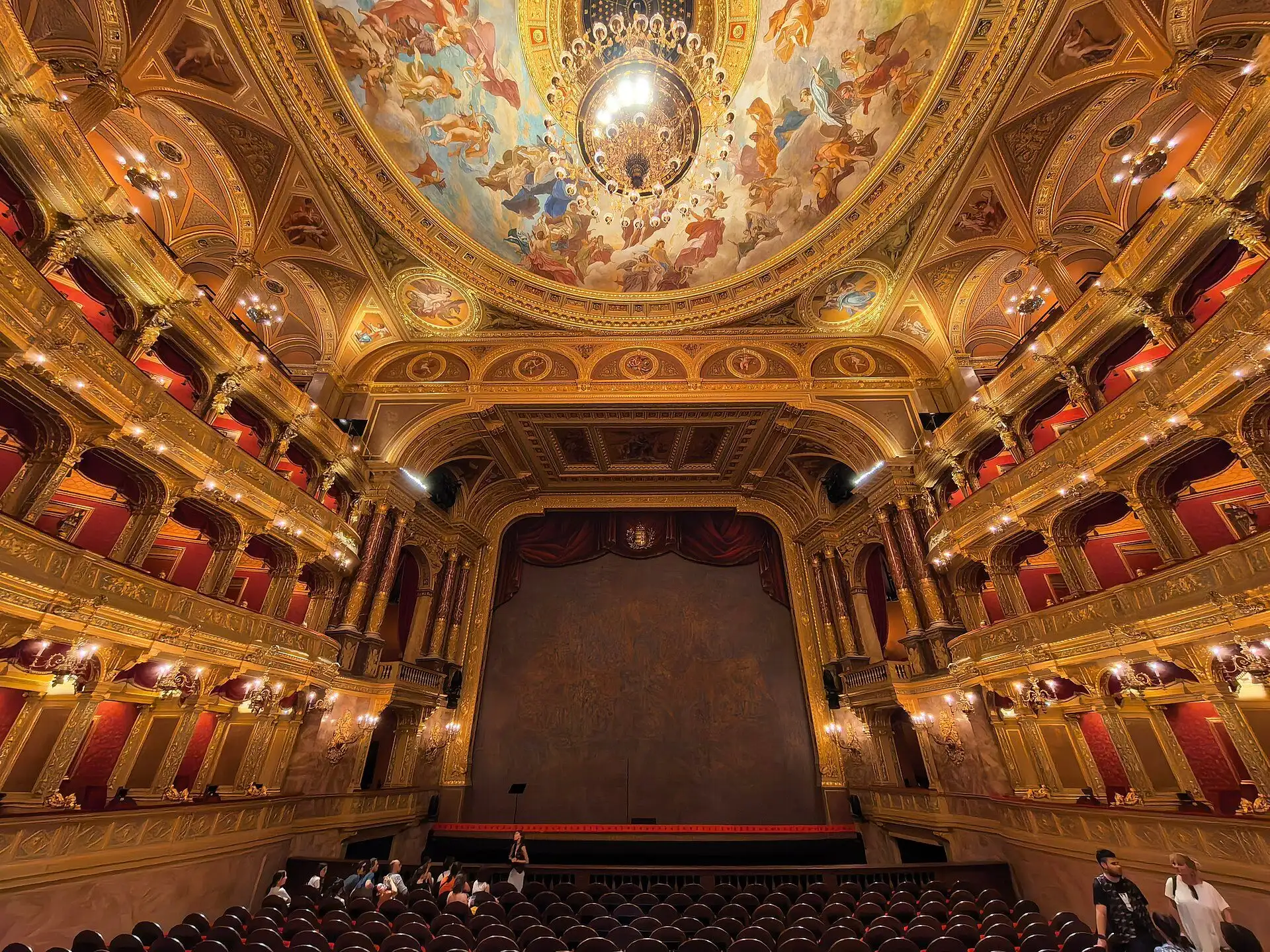
Three storeys of boxes in a horseshoe, each tier set back behind the one below, and twenty-four-carat gold on every parapet and elbow board. The royal box sits in the middle of the grand circle, kept for Hungary’s three highest office holders and their guests, with Gyula Donáth’s figures of the Tenor, Soprano, Alto and Bass standing in the boxes on either side.
The restoration made the room smaller on purpose. Capacity came down from 1,200 to 1,000, the boxes now seat four instead of six, the rows are further apart, and the wooden dividers between the ground floor boxes were swapped for wickerwork so the sound dies away properly.
The auditorium is closed to tours whenever the company is rehearsing, and the Opera publishes no warning of which afternoons those will be. It is the one thing that spoils this visit for people. When it happens the guide takes you into rooms that are normally shut instead, which is a decent consolation and not the thing you came for.
Find Apollo in the ceiling
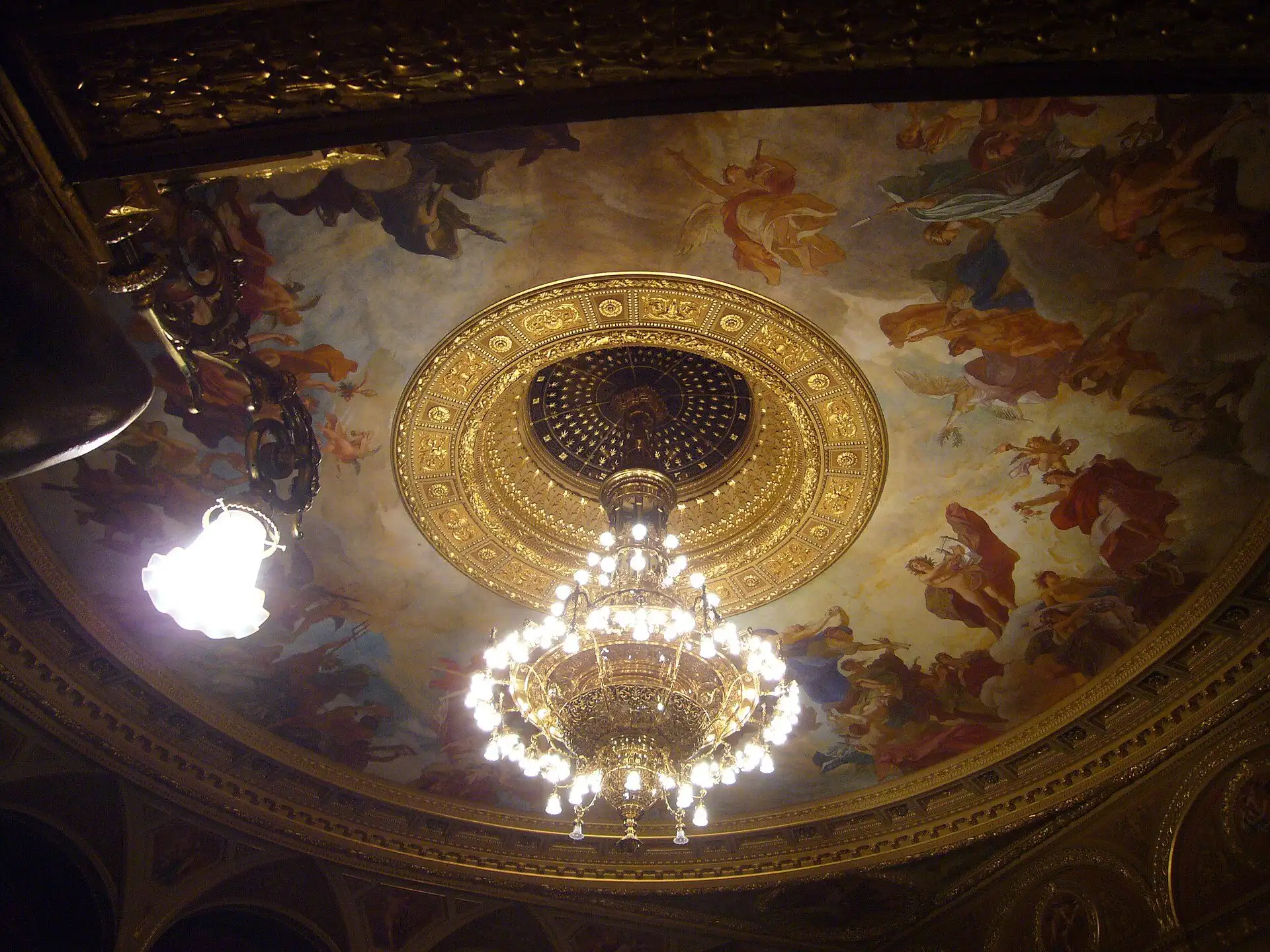
Lotz’s fresco is forty-five metres round, and it is the best thing in the building. Six groups of gods sit on Olympus listening to Apollo play. Find Zeus and Hera with Athena and Hermes, then Nyx with Hades, Persephone and the god of sleep, then Dionysus with a centaur, then Poseidon, then Aphrodite with the three Charites turning you back towards Apollo.
The chandelier under it came from Mainz and went into the ventilation shaft in 1884, carrying five hundred gas lights. What hangs there now weighs about two tonnes and has more than two hundred bulbs. Twice a year it is still lowered onto the ground floor seats on hand winches, to be cleaned and to have its bulbs changed.
One more thing to look for, up where the arches meet the Corinthian columns. Each hexagon holds a putto, and the house story is that the putti play the day’s music at midnight to keep the acoustics honest.
Stay for the concert on the stairs
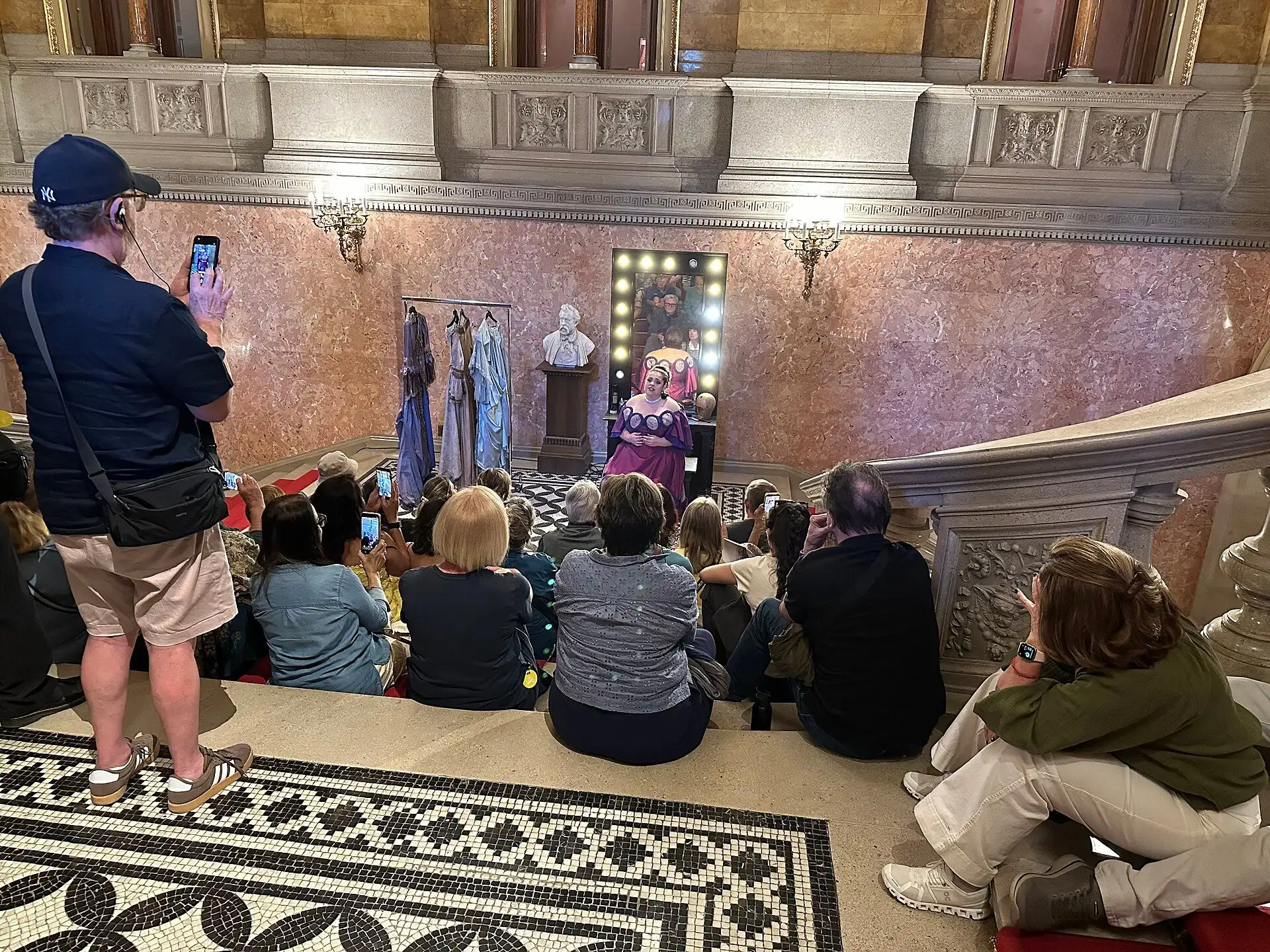
Every tour finishes the same way. The guide sits the group down on the grand staircase, and young singers from the company come out onto the landing in costume and perform short scenes staged by András Almási-Tóth, the Opera’s artistic director.
It is a proper voice in a room built to carry one, at a range of a few metres, and it is the reason people come away from this tour happy even when the auditorium was shut.
Sit towards the middle of the steps rather than at the back. You can hear it perfectly well from anywhere, but the scenes are acted as well as sung, and from the back you are looking at the backs of heads.
Insider tips
Cross the road for the photograph
Andrássy út is wide enough that the whole front, sphinxes, arcade, composers and all, only fits in one frame from the far pavement. Nobody does it on the way in, because you arrive at the steps. Do it on the way out.
You can eat in the building without a ticket
The OperaBistro is on the ground floor, reached through the main entrance on Andrássy út or straight off Hajós utca at the side, and it is open to anyone from Tuesday to Sunday, 12:00 to 21:00. Sandwiches, salads and cakes rather than a meal.
Put the Basilica in the same morning
The first tour of the day is not until half past one, which leaves the morning empty. St Stephen’s Basilica is about six minutes’ walk west, and Ybl took that building over too after its first dome collapsed, so the two make a matched pair.
Nearby attractions
The Opera stands in the middle of walkable Pest, on Andrássy Avenue itself, with three more of the city’s set pieces within a ten-minute walk.
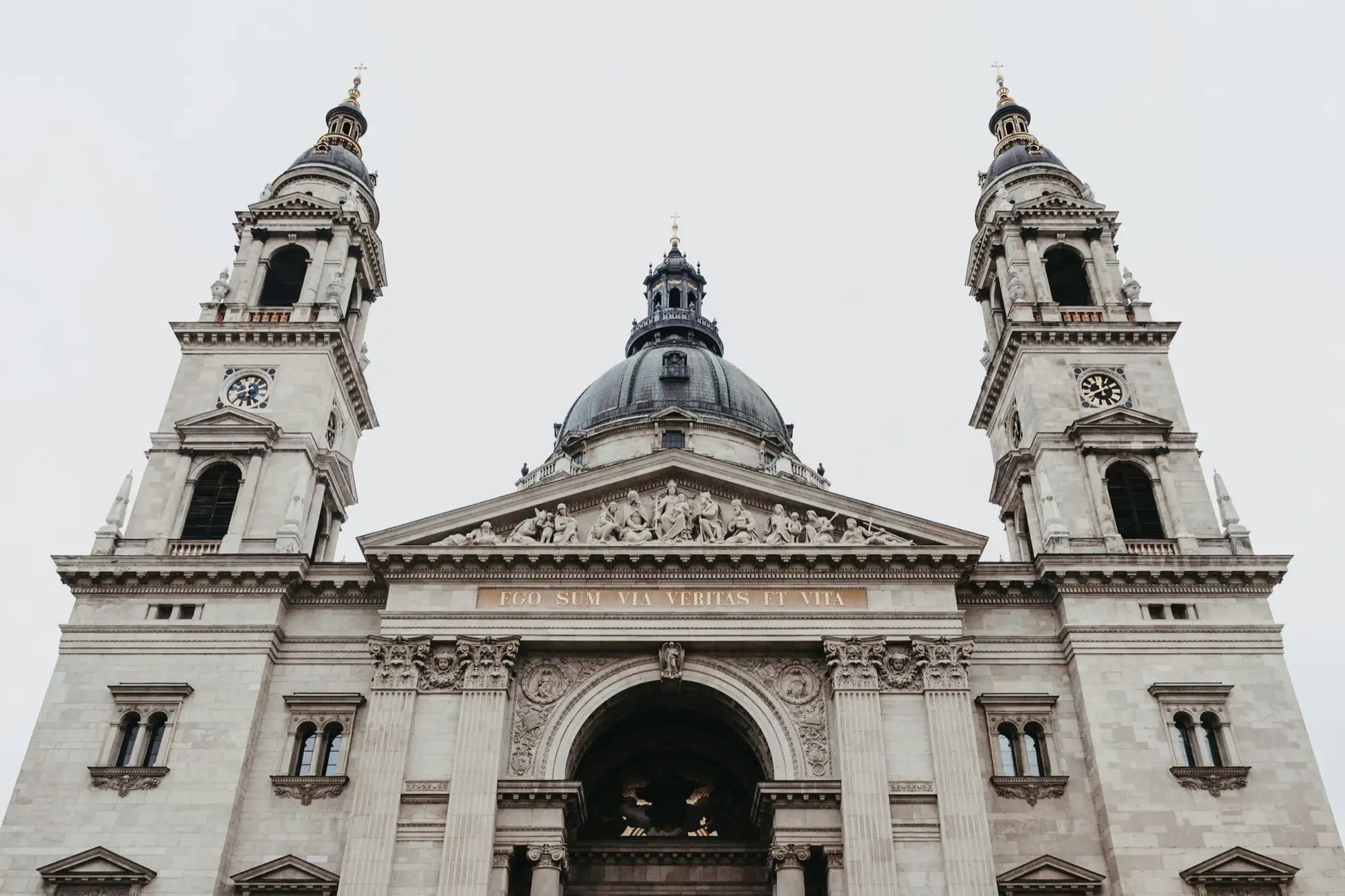
St. Stephen's Basilica
About 6 minutes south-west on foot. Ybl redesigned this one too, after its first dome collapsed.
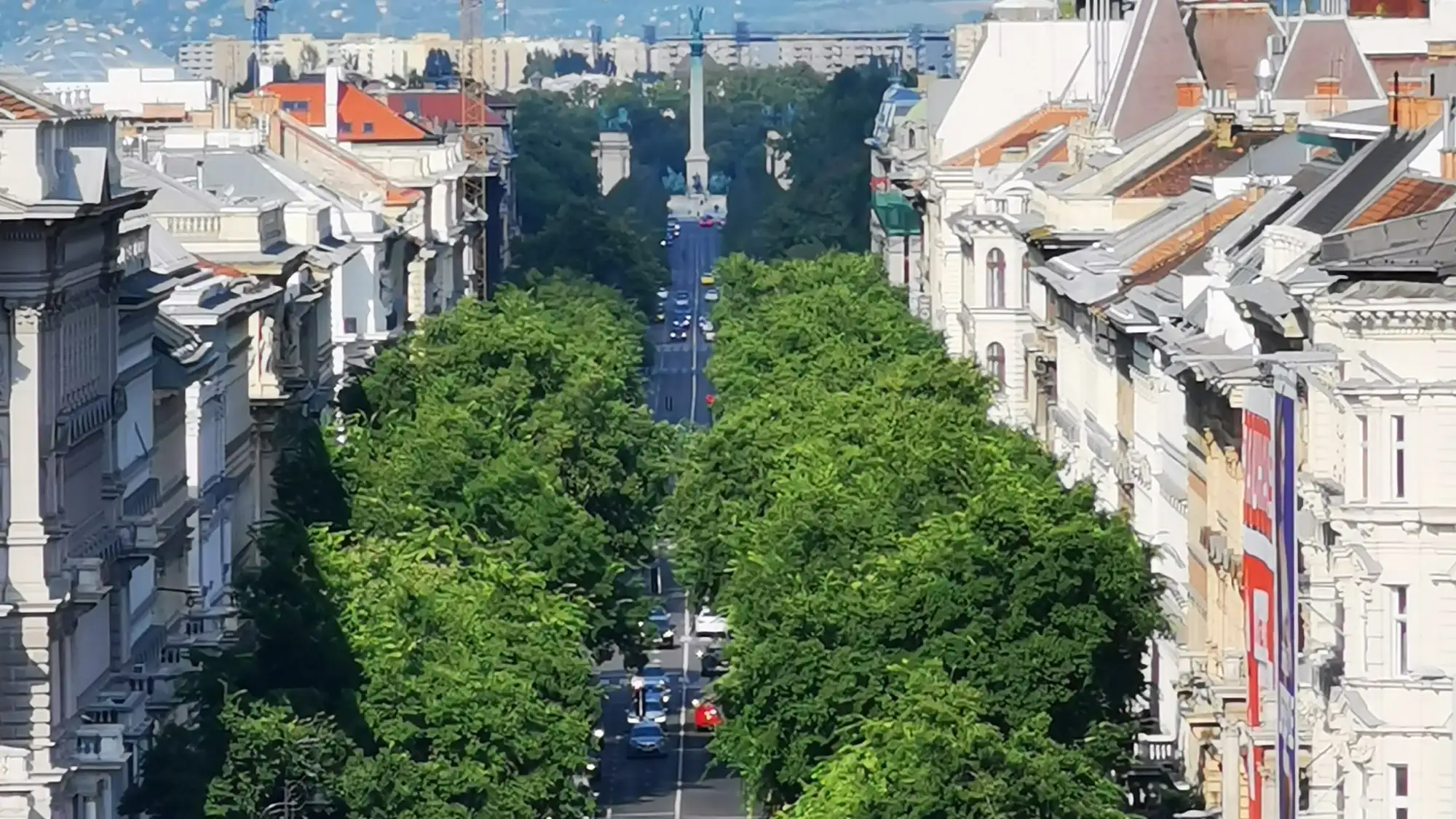
Andrássy Avenue
The boulevard the Opera stands on, running from Erzsébet tér to Heroes’ Square.
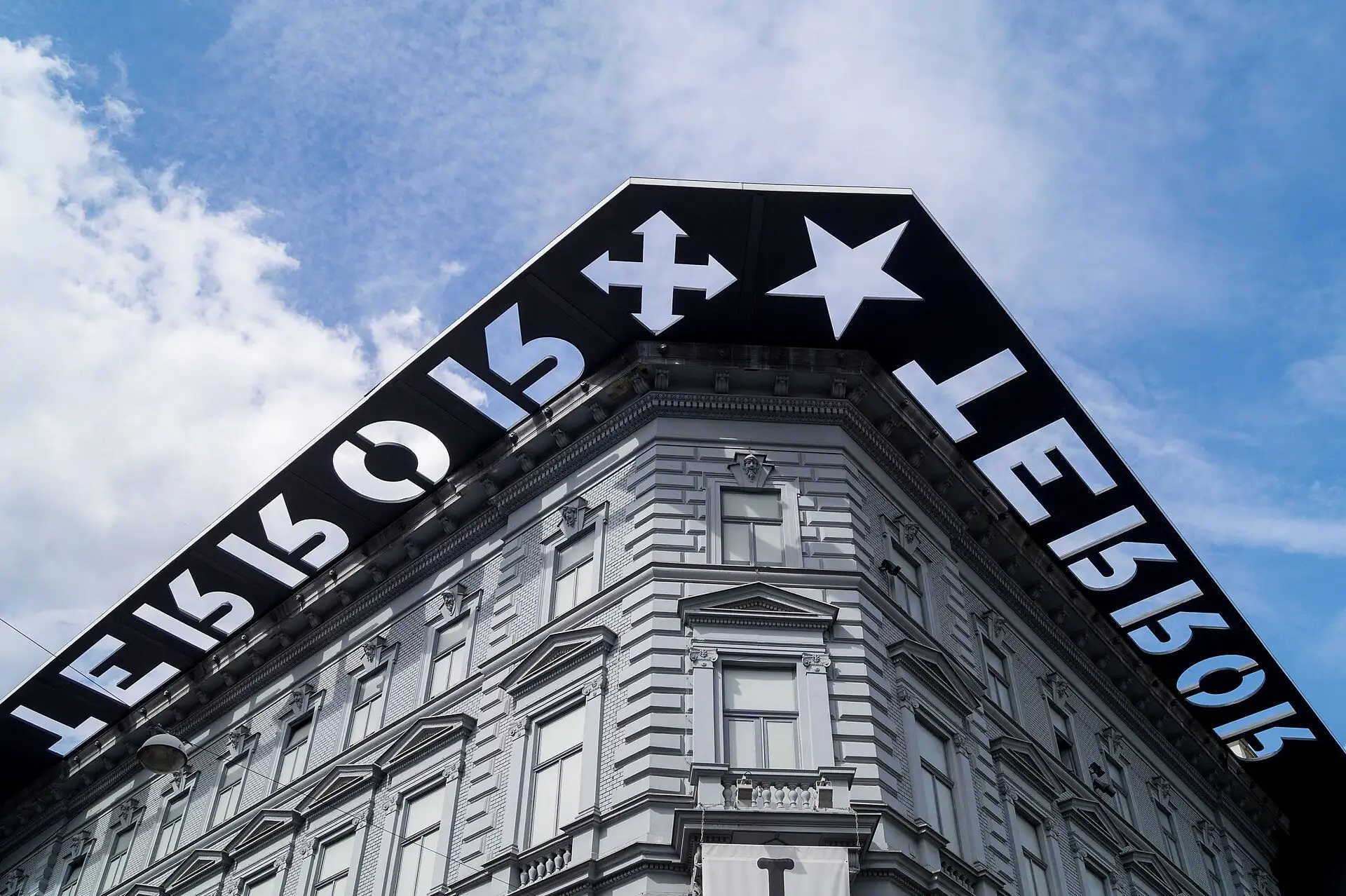
House of Terror Museum
About 11 minutes north-east on foot, further up Andrássy út at number 60.
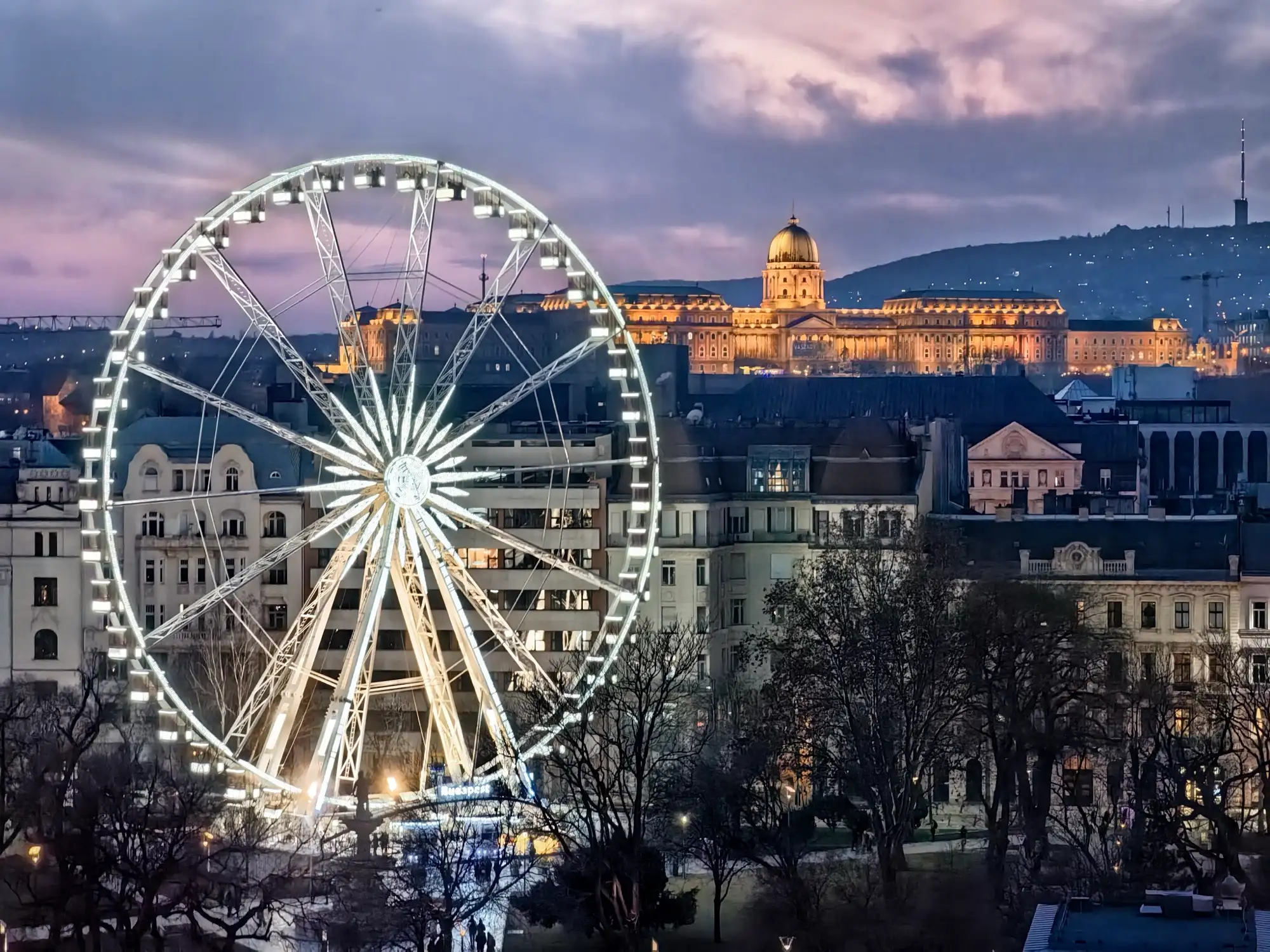
Budapest Eye
About 10 minutes south-west on foot, on Erzsébet tér.
History
Franz Joseph backed the project on one condition: the Pest opera was not to be bigger than Vienna’s. Ybl removed the highest level of boxes and shrank the lobby to comply, and the building came out better proportioned for it.
- 1873
A competition, not a commission
The Budapest Public Works Council and Franz Joseph I back the idea. Six architects are invited to tender, and the jury votes overwhelmingly for Miklós Ybl.
- 1875
Permission, with a catch
The building permit is issued only after repeated reworkings, because the king will not allow a Pest opera house larger than Vienna’s.
- 27 Sept 1884
Opened five years late
Four years of building were planned and it took nine. Franz Joseph attends an opening built from the first act of Bánk bán, the overture to Hunyadi László and the first act of Lohengrin, conducted by Ferenc Erkel and his son Sándor.
- 1912
Medgyaszay's rebuild
Two rows of seats are added at ground level, the orchestra pit is deepened and pushed towards the stage, and the ground floor cloakroom is created.
- 1980 to 1984
The second reconstruction
Mária Siklósi’s renovation replaces the Asphaleia stage machinery and builds the ten-storey administrative block on Hajós utca.
- 2017 to 2022
Closed for nearly five years
The company moves out at the end of the 2016/17 season. Work finishes on 10 March 2022 and the house reopens with a gala two days later.