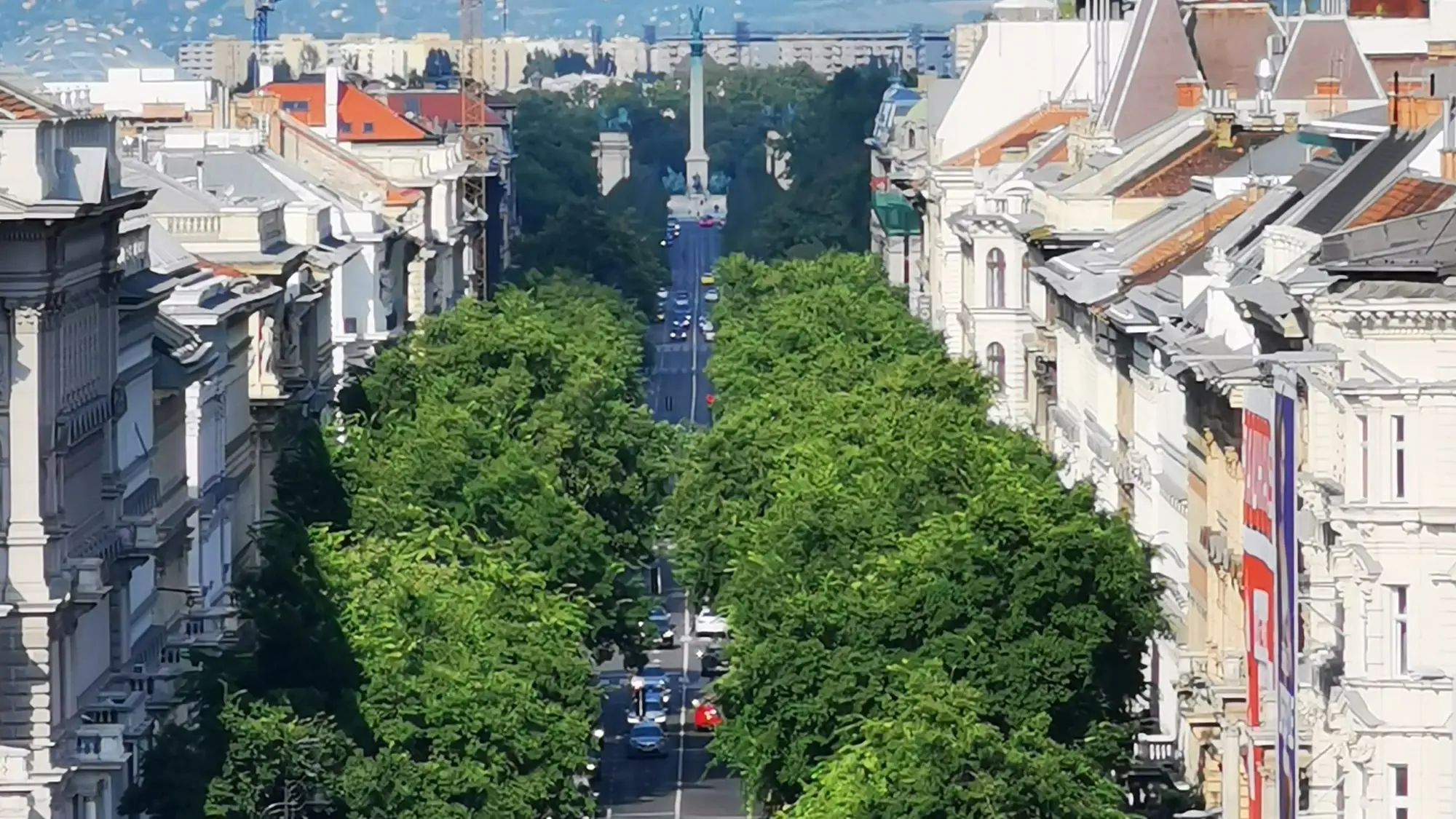
Andrássy Avenue was argued over for thirty years, built in four, stopped dead by a bank crash, finished by the people who could afford to, and renamed five times by governments that each wanted something different from it. The street you walk down is the result of all of that and it shows, if you know where the joins are.
At a glance
Timeline
- 1841
Kossuth puts it in the paper
Lajos Kossuth argues in Pesti Hírlap for a tree-lined avenue out to the city wood, so that people need not use the narrow, ugly Király utca and its dull, endless row of houses. Nothing comes of it for a quarter of a century.
- 1868
Andrássy takes it up
Gyula Andrássy, back from exile in Haussmann’s Paris and now prime minister, raises the boulevard again. A Belgian, Joseph Toussaint, puts a plan in front of him while he is weighing Ferenc Reitter’s rival canal scheme.
- 1870
Parliament orders it
Act LX of 1870 provides the money and makes the Board of Public Works responsible. The Board buys and clears the land, drains the marshy ground and clears the smallholdings along the route.
- 1872
Building begins
The plots are meant to be built up by 1877. The road is surfaced in wooden blocks rather than stone, on a tender from a contractor named John Norris, because it is cheaper.
- 1873
The Vienna crash stops it
Building halts almost completely. Apart from the new opera house, almost nothing is going up along the line at all.
- 1876
It opens as Sugár út
Carriages run on Sunday 20 August and the avenue is formally handed over the next day. It is nowhere near finished.
- 1884
The houses are done, and so is the Opera
About 118 houses now line the street. Miklós Ybl’s Opera House opens on it in the same year.
- 1885
It takes Andrássy's name
Sugár út becomes Andrássy út.
- 1893
A surface tram is refused
The Interior Minister’s decree of 26 July rejects an electric railway laid in the road surface. The avenue, it says, had been given a purpose from the outset that does not tolerate a street railway.
- 1896
The underground opens
The Continent’s first underground railway runs from 2 May, after less than two years of building. Franz Joseph rides it on 8 May and permits it to take his name.
- 1938
The körönd becomes Hitler tér
On 4 November the Board of Public Works meets with one item on the agenda and renames the Körönd. The name is stripped out in 1945.
- 1949 to 1957
Three new names
The street becomes Sztálin út at the end of the 1940s, Magyar Ifjúság útja in 1956 and Népköztársaság útja in 1957.
- 1971
Kodály körönd
The circus is named for Zoltán Kodály, four years after his death, after a long argument about whether his first name should be in it too.
- 1990
Andrássy út again
The avenue takes back the name it had before the war.
- 2002
World Heritage
Andrássy Avenue and the Millennium Underground beneath it are added to Budapest’s World Heritage listing, inscribed in 1987 for the Danube banks and the Buda Castle Quarter.
Key facts
- Built
- 1872 to 1884
- Opened
- 20 August 1876, as Sugár út
- Ordered by
- Act LX of 1870
- Length
- About 2.3 km, in a straight line
- Overseen by
- Gusztáv Petschacher, architect to the Sugár út company
- Underground
- 2 May 1896, the first on the Continent
- Buildings
- 132 along it, five of them modern
- Status
- World Heritage, added 2002
Who built it
Nobody signed the avenue, because it was not designed as one building. The Board of Public Works bought the land, laid the road and sold the plots, and the houses went up separately to the designs of the best architects then working in Pest.
Gusztáv Petschacher, who had come from Vienna as the Sugár út Construction Company’s architect, led the design, and the names along the street include Adolf Feszty, Vilmos Freund, Antal Szkalnitzky and István Linzbauer. Miklós Ybl’s Opera House of 1884 is the one building everybody can name.
The scheme behind all of them was Lajos Lechner’s, and it is what makes the walk change character as you go. Trees in the pavements as far as Oktogon; a widened road with a double line of trees and service roads from there to Kodály körönd; front gardens beyond the körönd; detached villas from Bajza utca to City Park. The green widens the whole way out.
The history of Andrássy Avenue
Thirty years of arguing about a road
The idea was Lajos Kossuth’s and he put it in a newspaper in 1841: a tree-lined avenue running out to the city wood, so that Pest need not funnel everything through Király utca and its dull, endless row of houses. Nothing happened for a quarter of a century.
What changed was the traffic. Everything moving between inner Pest and the City Park still went through Király utca, by then so congested that carriages could not get through it. Gyula Andrássy, who had spent his exile after 1849 in Paris watching Haussmann cut boulevards through the city, raised the plan again in 1868 and made it his own.
A Belgian named Joseph Toussaint put a boulevard scheme in front of him at exactly the moment he was weighing Ferenc Reitter’s rival plan for a canal.
Act LX of 1870 settled it. It allotted the money, borrowed more against a loan raised the same year, and made the Board of Public Works responsible for building the thing. The Board bought and cleared the land, drained the marshy parts and cleared out the smallholdings of bad reputation along the route, and building began in 1872.
The crash that nearly stopped it
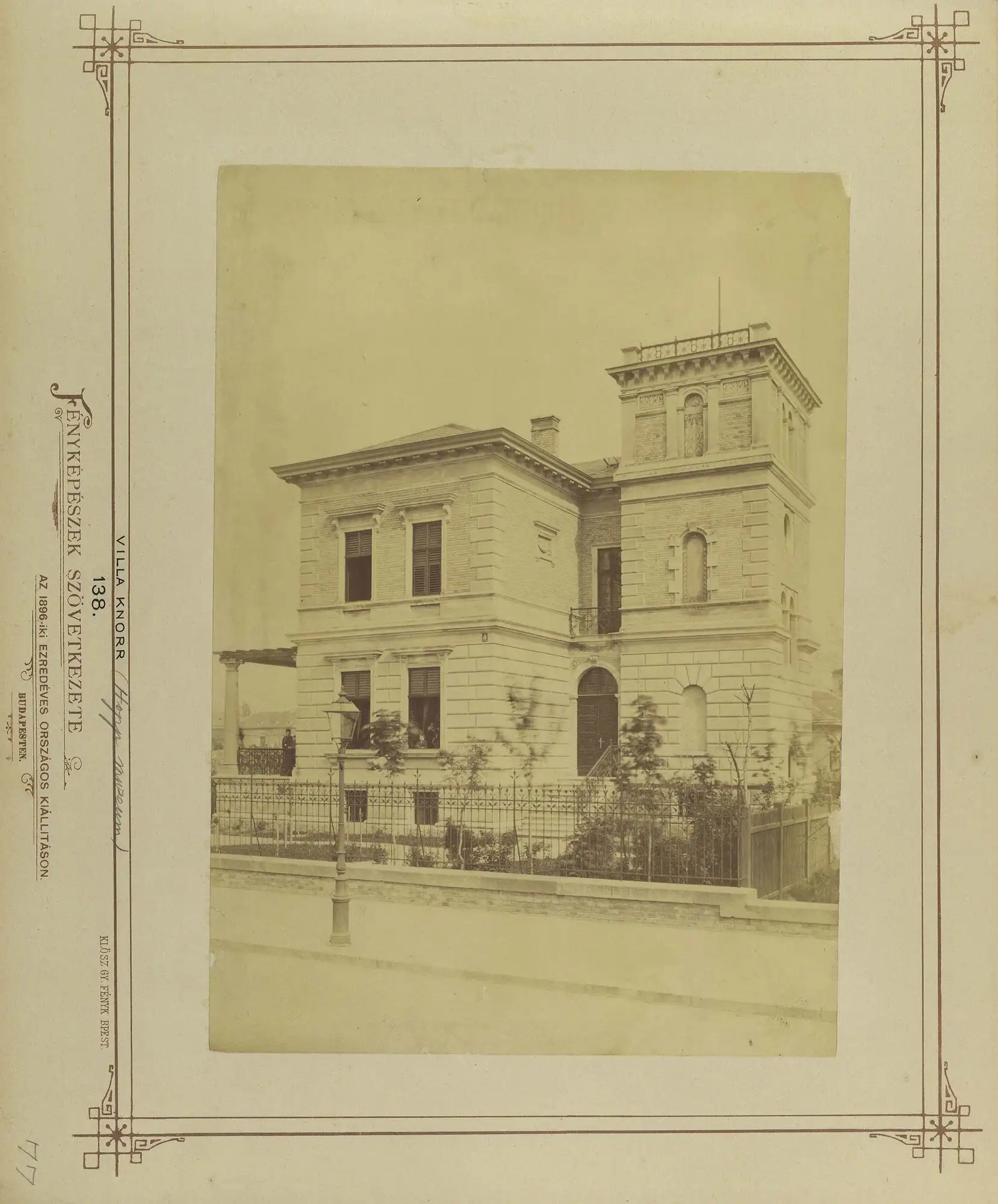
The plots were supposed to be built up within five years. Then the Vienna stock exchange crashed in 1873 and the money stopped. A Budapest paper writing in 1876 found that apart from the new opera house almost nothing was going up along the whole magnificent line, and described what was there instead: the shadows of the demolished houses standing like ghosts, the empty boarded plots standing as reproaches and question marks.
Tax exemptions were offered and barely helped. The Board changed tack and sold the plots to the people who still had money, the aristocracy, the magnates and the banks and insurance houses, which is why the inner end is palaces and the outer end is villas built as summer houses. The Fonciére, Saxlehner, Pallavicini and Knorr houses all come from that second phase.
The road itself was a separate scandal. It was surfaced in wooden blocks rather than granite, on a tender from a contractor named John Norris, because an earlier stretch of the same surface in Buda had held up and it cost less. The system was fundamentally flawed, the untreated timber rotted fast, and in 1879 Norris left Hungary owing a great deal of money. The repairs were paid for out of the retention the Board had not yet handed over.
Why the railway went underneath
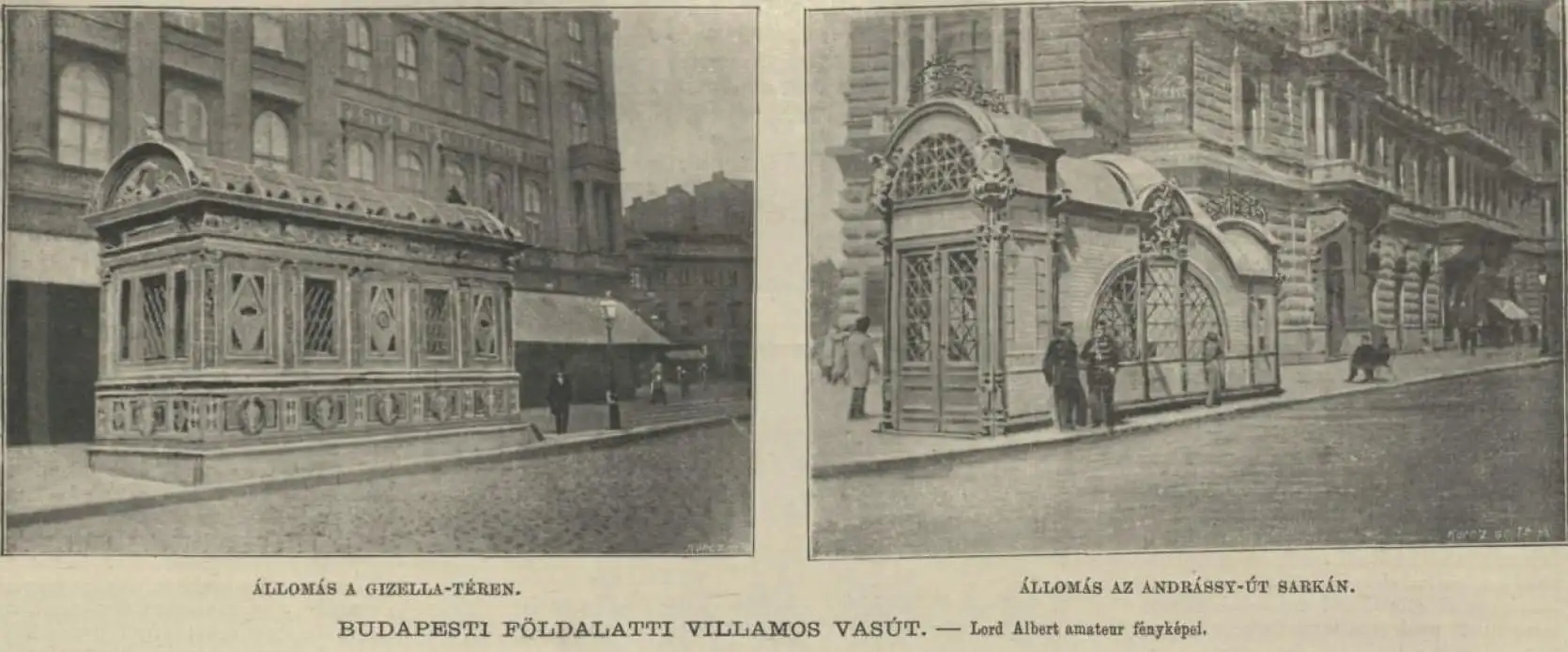
Budapest has the oldest underground railway on the Continent because it refused to have a tram. The city needed a fast link out to the City Park for the millennium celebrations of 1896, and the Interior Minister’s decree of 26 July 1893 turned down an electric railway laid in the road surface. The avenue, it held, had been given a purpose from the outset that does not tolerate a street railway.
What followed was quick even by the standards of the day. The proposal went in on 22 January 1894, the permit came on 9 August, and work started four days later, on 13 August. It had to be finished before the king arrived in the spring of 1896, and it was.
The tunnel was dug from above, largely by hand, as far as Heroes’ Square, with the line running in open cutting beyond that. It is shallow and the carriages were built unusually low, and not to save money. The tunnel had to pass over the main sewer of the Grand Boulevard at Oktogon, which fixed its depth for the whole length.
The line opened on 2 May 1896. Franz Joseph, in Budapest for the millennium, rode it with his entourage six days later, on 8 May, and gave permission for it to take his name, so the Budapesti Földalatti Villamos Közúti Vasút became the Ferencz József Földalatti Villamos Vasút.
Five names in a century and a half
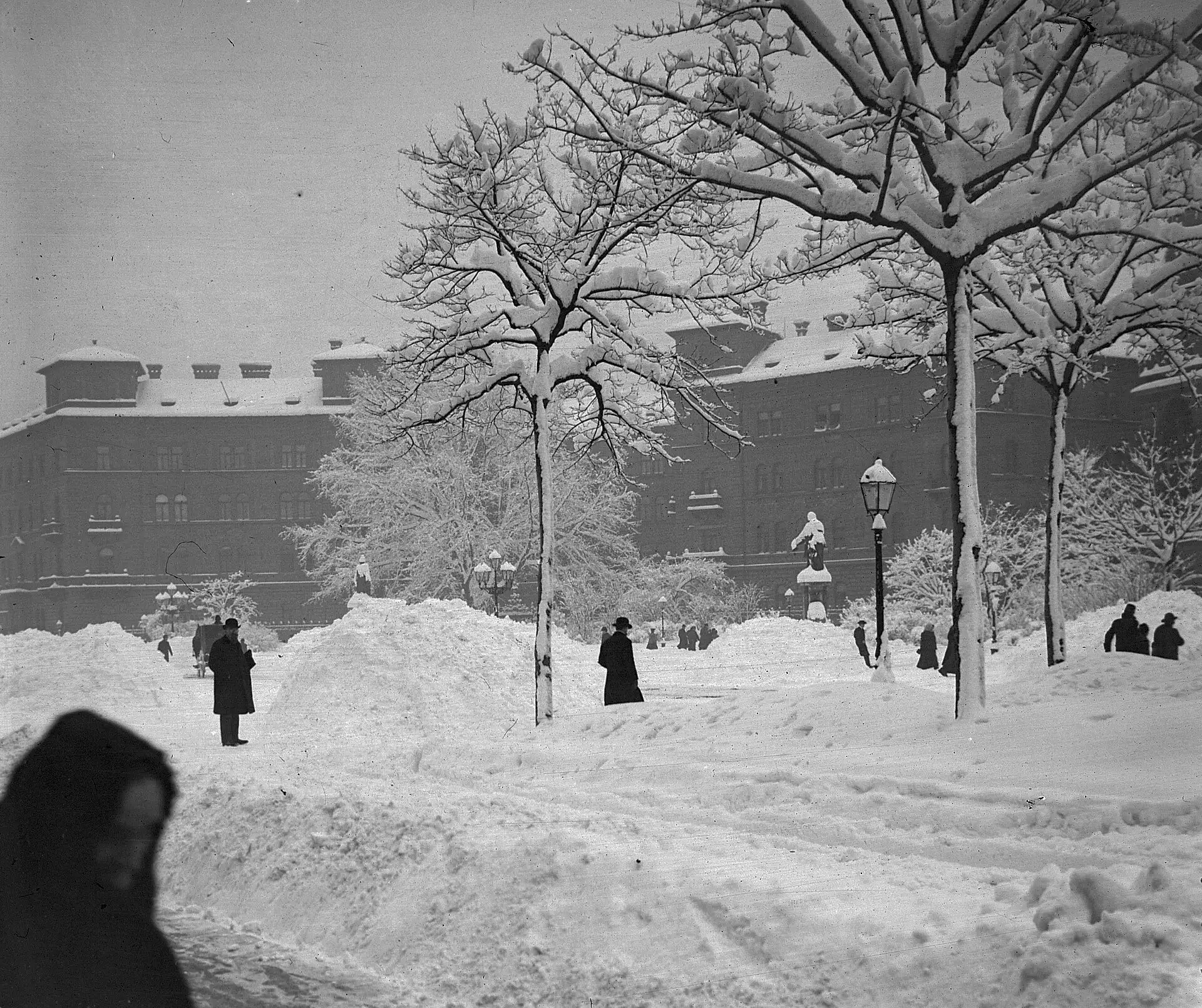
The street plates are a miniature Hungarian history on their own, and the Kodály flat on the körönd has watched every change of them from its own windows.
It opened as Sugár út, Radial Road, and became Andrássy út in 1885. At the end of the 1940s it became Sztálin út. In 1956 it was Magyar Ifjúság útja, the Road of Hungarian Youth, which lasted months. In 1957 it became Népköztársaság útja, People’s Republic Avenue, and stayed that until 1990, when Andrássy út came back.
The körönd ran its own version of the same story. It was plain Körönd until 4 November 1938, when the Board of Public Works met with a single item on the agenda and renamed it Hitler tér, days after the First Vienna Award. That name was stripped out in 1945 and the square went back to Körönd. It became Kodály körönd in 1971, four years after the composer’s death, and only after a long argument about whether his first name belonged in it as well.
The statues moved with the names. Of the four put up around the circus between 1902 and 1905, only Miklós Zrínyi still stands here. Gábor Bethlen’s and István Bocskai’s were taken to Heroes’ Square after the Second World War and János Pálffy’s was taken down, and three replacements went up in the late 1950s.
The trees, lost twice
The avenue was planted with plane trees, and the point of them was shade. Kossuth’s original argument had been for a shaded road out to the woods. Two things have taken them.
The first was the First World War. The cold and the fuel shortage saw local people cut a great many of them down, and the avenue was replanted in 1920. The second was the city itself. Planes could not cope with the traffic and the smoke that came with the twentieth century, and by the 1980s four in five of them were dead or sick, so they were replaced with hardier species.
That is why the tree you see most often now is not the tree the avenue was planted with. Between Oktogon and Vörösmarty utca, Főkert put in 4,500 perennials and 16 trees in November 2020, raising the level of the green strip because the ash roots sit high, and replacing dead ash with hackberry, which copes better with city air.
One of the originals is still there. The old plane on Kodály körönd, in front of the MÁV pension tenement, is more than 150 years old and has a hollow at the base of its trunk big enough for several people to stand in, which is exactly what one man did, living in it for the best part of a year from 2019 before he was moved on and a grille was fitted over the opening.
Why it survived at all
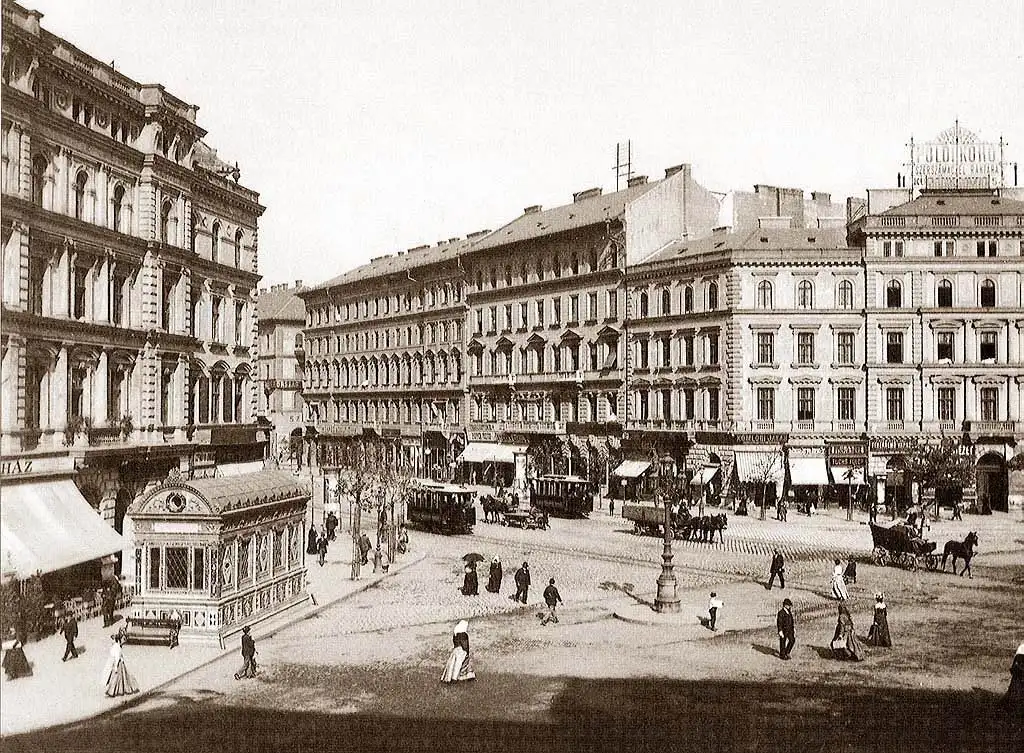
Most of what Budapest built between 1860 and 1905 is still standing, across some twelve square kilometres of city, and the blunt reason is that Hungary was never rich enough to knock it down.
After the First World War there was no money for the towers and rebuilding schemes other cities went in for. After 1948 everything was nationalised and the housing shortage made demolition unthinkable. After the privatisation of 1993 a single building on the avenue had so many separate owners that nobody could buy one and redevelop it at a profit.
Then the protection arrived. The whole avenue has been part of Budapest’s World Heritage site since 2002, and Hungarian law gives Andrássy út its own line in the schedule of ministers whose consent is needed, so even a small change to a facade is not a private matter. The commercial life came back instead of the bulldozers. Louis Vuitton opened beside the Opera House in 2006, and Gucci, Burberry and Max Mara followed.