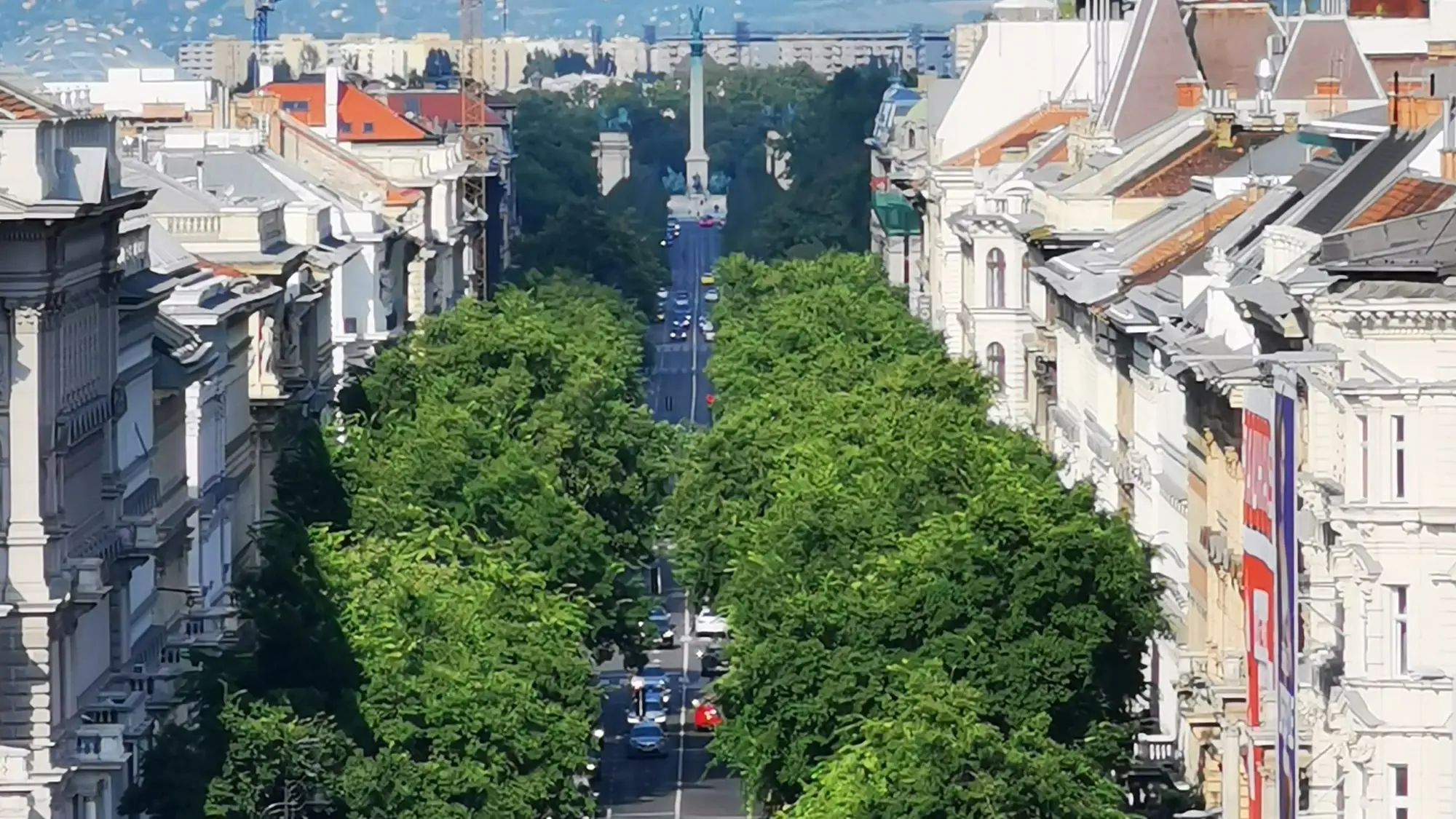
The fastest way on to Andrássy Avenue is the Millennium Underground, line M1, which runs the whole length of it with seven stations along the way. From anywhere in central Pest you are a few minutes from one of them, and no part of the street is far from a way down.
The nicest way is to walk in from St Stephen’s Basilica, about 6 minutes, so that you start at the city end and have the avenue in front of you rather than stepping up into the middle of it. Not a single M1 station is step-free, which is covered properly further down. As for driving, do not.
Location and address
By public transport
Seven metro stations, one tram crossing, two bus routes and two trolleybus routes. The metro is the quick way, the tram is the level way, and the buses are the ones that get diverted.
By metro, line M1
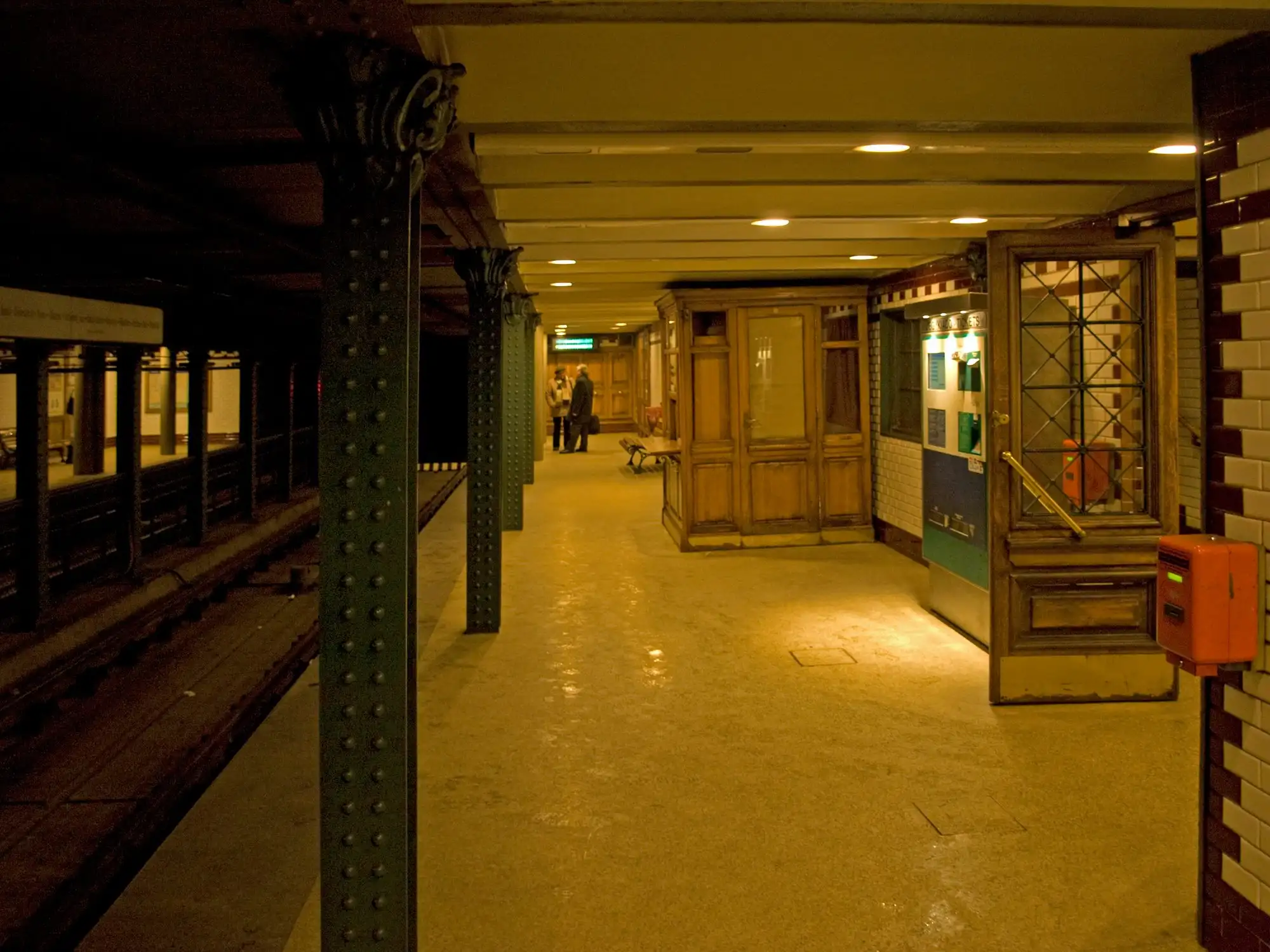
The M1 follows the avenue from end to end. Working outwards from the city, the stations under it are Bajcsy-Zsilinszky út, Opera, Oktogon, Vörösmarty utca, Kodály körönd, Bajza utca and Hősök tere, seven in a row under one street.
Only one of them is named after the building people are looking for, and that is Opera. The rest take their names from streets and squares, which is where the trap is. Vörösmarty utca is on the avenue and is the stop for the House of Terror. Vörösmarty tér is the terminus at the other end of the line, five stops away. Picking the wrong one puts you in the wrong part of Pest.
Every station on the line is reached by stairs. On some weekends the M1 also runs a shortened route, with a replacement bus between Mexikói út and Oktogon in place of part of the line. What each station is for, the tickets and the first and last trains are on our Millennium Underground page.
By tram, lines 4 and 6
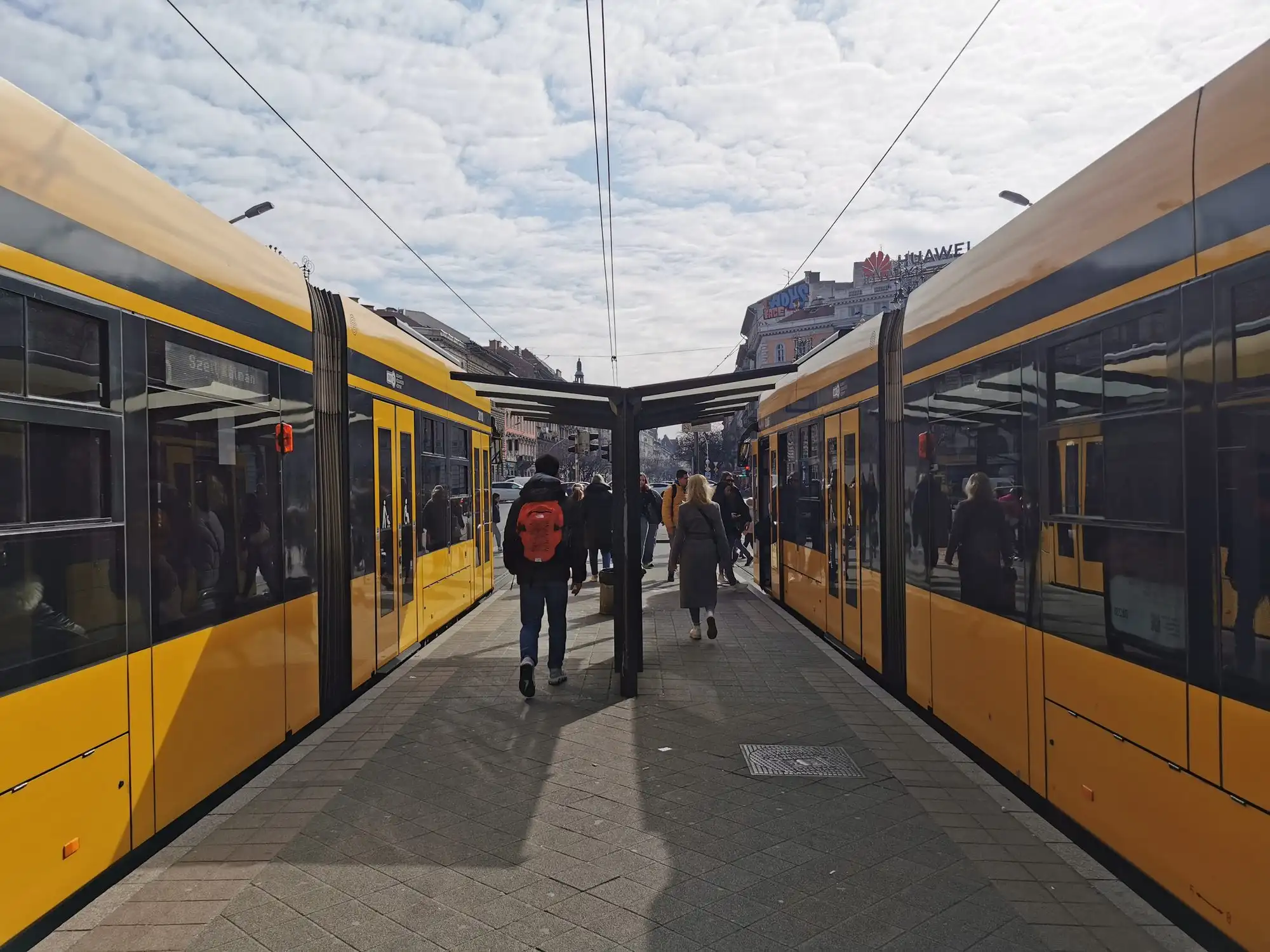
Trams 4 and 6 cross the avenue at Oktogon, and that is the only point on its whole length where any tram touches it. Oktogon is about 12 minutes in from the city end, which leaves about 20 minutes of avenue ahead of you.
This is the useful one if steps are a problem. The stops on lines 4 and 6 are barrier-free and low-floor Combino trams run on both, so the tram is the level way on to a street whose metro has no lifts at all.
Lines 4 and 6 also run through the night on Friday and Saturday nights along the Grand Boulevard, which makes Oktogon the way back after a late concert at the weekend.
By bus and trolleybus
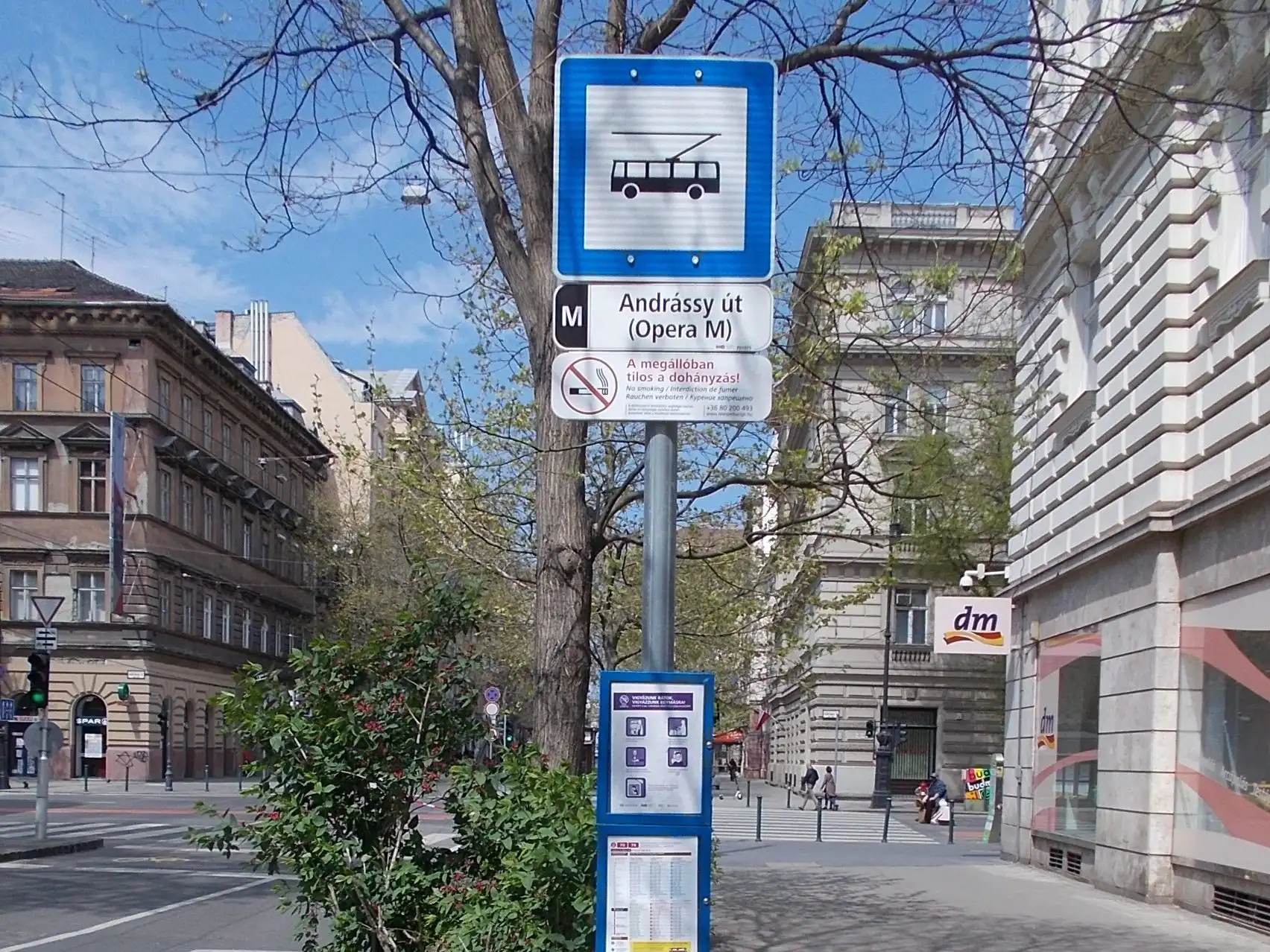
Buses 105 and 210 run along the avenue and stop at Opera M, right beside the Opera House, and again at Vörösmarty utca M. Trolleybuses 70 and 78 stop at Andrássy út (Opera M), about 200 metres further east along the avenue, roughly 3 minutes on foot.
The stops are marked with a blue pictogram sign on a pole, with the stop name under it and a timetable case below that. They sit among street trees and are easy to walk past.
These are the services that change at short notice. When Heroes’ Square holds a state commemoration or a big event, buses 105 and 210 have been diverted off the avenue, skipping the stops between Oktogon and Hősök tere, so on a national holiday plan to walk rather than ride.
On foot
End to end (about 35 minutes)
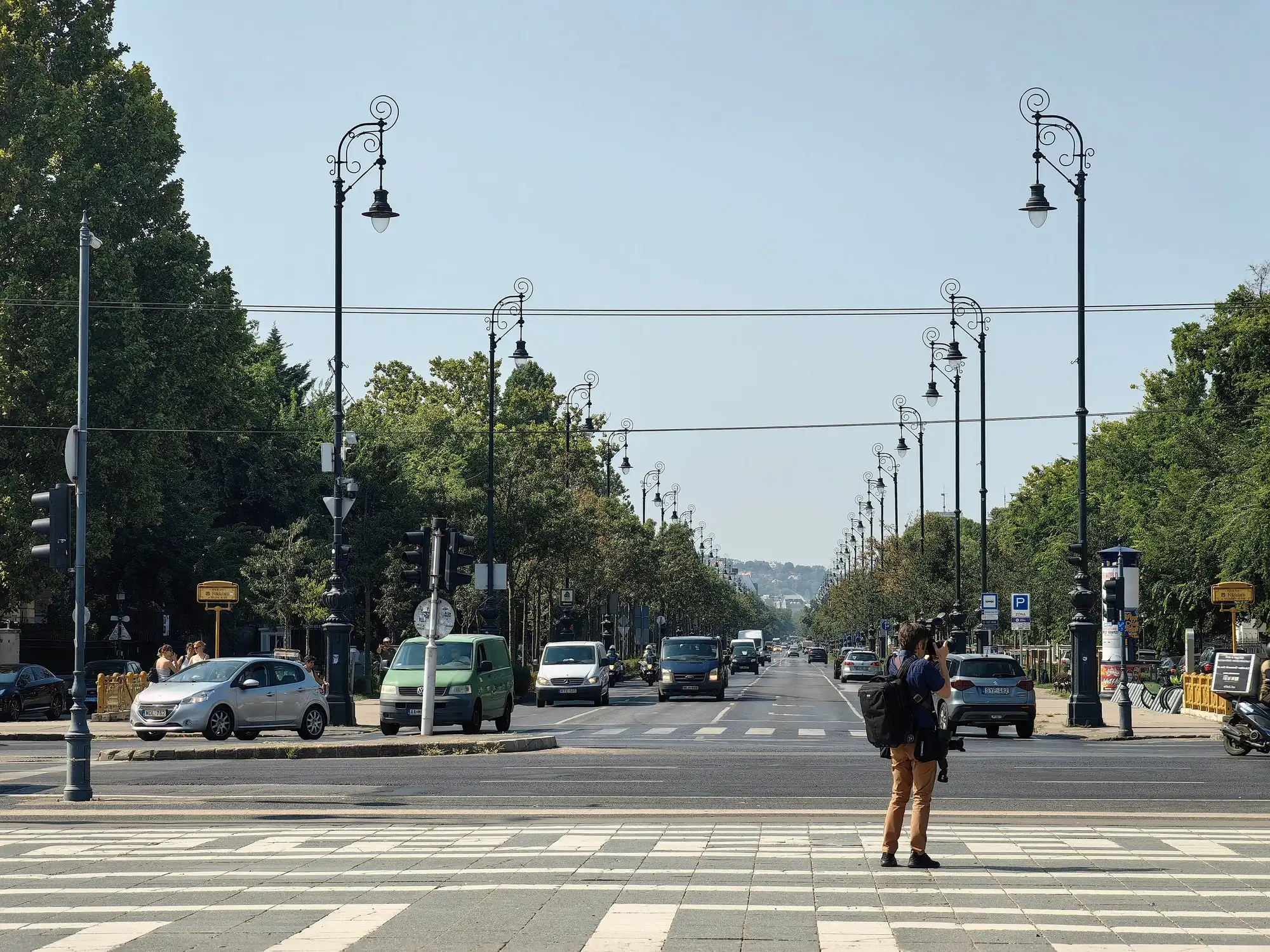
From the Bajcsy-Zsilinszky út junction, where the avenue starts, to Heroes’ Square is about 2.3 kilometres and about 35 minutes without stopping. Starting from Erzsébet tér instead, which is where most people are coming from, makes it about 40 minutes.
It is flat the whole way and the pavements are wide and even on both sides, so the time is a walking time rather than an effort. Allow one to two hours if you intend to look at anything, and longer again if you are going inside.
From St Stephen's Basilica (about 6 minutes)
About 476 metres from the Basilica to the Opera House, six minutes at an ordinary pace. This is the best way to join the avenue, because you come in at the city end with the whole street ahead of you.
From Deák Ferenc tér (about 10 minutes)
About 828 metres, ten minutes, from the interchange where the M1, M2 and M3 meet. Useful if you are changing lines anyway. Walk it rather than ride two stops on the M1, since the walk takes you past the start of the avenue.
Between the landmarks on the avenue
The Opera House to Oktogon is about 8 minutes. Oktogon to the House of Terror is about 4. The House of Terror to Kodály körönd is about 7, and Kodály körönd to Heroes’ Square is about 12, which is the longest single stretch and the quietest.
Opera House to Heroes’ Square, skipping the first few hundred metres, is about 30 minutes.
By car and taxi
By bike
Painted cycle lanes run along both sides for much of the avenue, with gaps where there is no lane at all and stretches where the lane is shared and marked with pictograms. Between Oktogon and Kodály körönd riders are sent on to the service roads that run beside the main carriageway rather than into a lane on it, which is quieter but means watching for cars pulling out.
MOL Bubi, the city bike share, has docks along and around the avenue.
By hop-on hop-off bus
Accessibility
The surface is the easy part of this street. Getting below it is not.
- Flat and paved the entire length, with wide, even pavements on both sides and no gradient worth the name. In that respect it is one of the easiest long walks in the city
- No station on the M1 is step-free. Every one of the seven stations under the avenue is stairs only, with no lift anywhere on the line
- Trams 4 and 6 at Oktogon are the level way on. Their stops are barrier-free and low-floor Combinos run on both lines, which puts you on the avenue where the Grand Boulevard crosses it
- M3 Arany János utca has a lift, about 6 minutes west of the Opera House, and so does M3 Deák Ferenc tér, about 10 minutes from the same point
- The buses and trolleybuses are low-floor. Trolleybuses 70 and 78, the two that run along the avenue, are low-floor throughout. More than 90 per cent of Budapest’s buses are low-floor, only low-floor buses run at weekends and at night, and they carry a pictogram on the door for wheelchairs and prams
- The BudapestGO journey planner will route you step-free if you ask it to, which is the practical way to work out a door-to-door route on the day