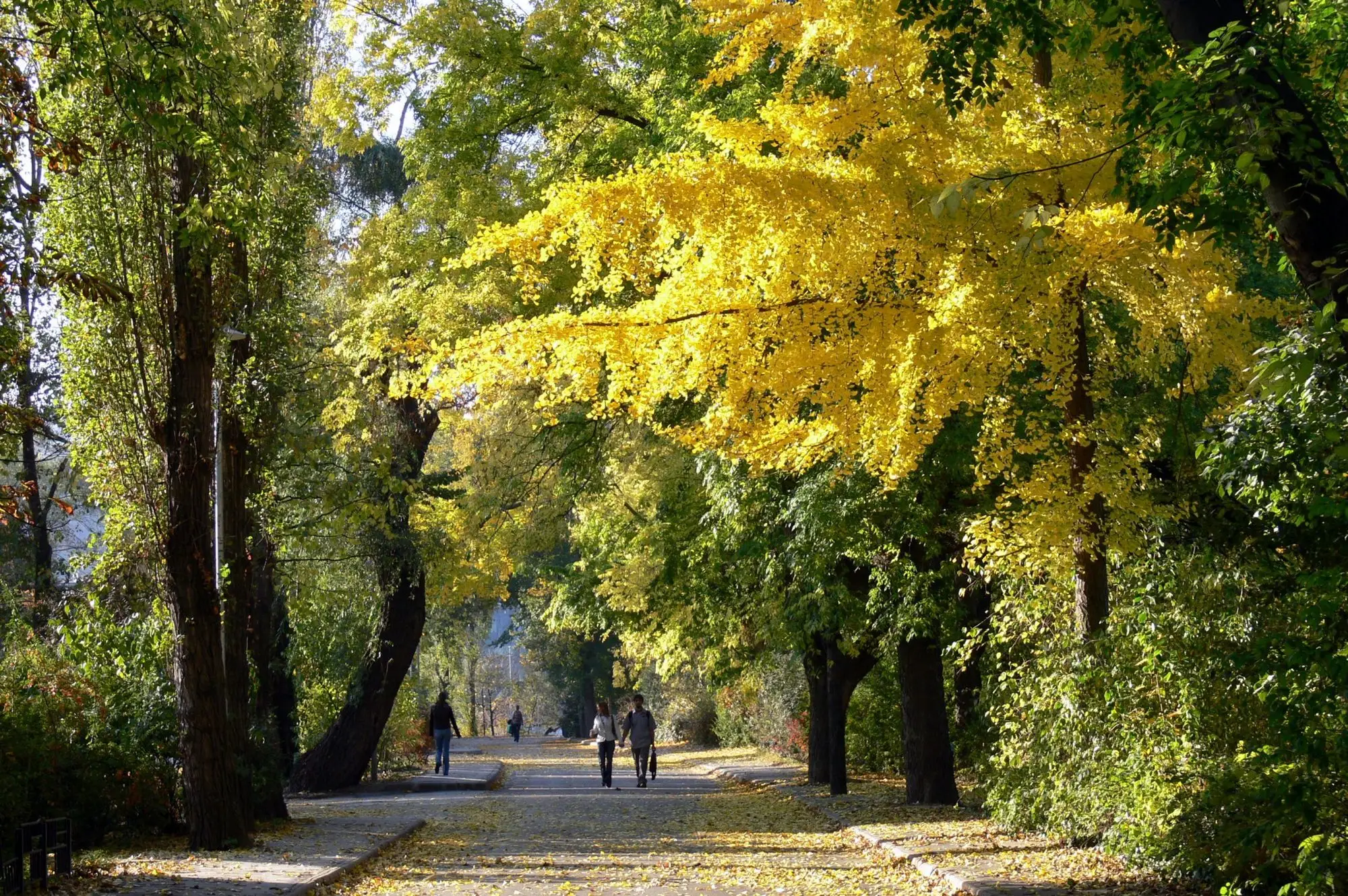
Margaret Island is the park in the middle of the Danube, 2.5 kilometres long, 500 metres across at its widest, sitting between Margaret Bridge and Árpád Bridge. It carries the oldest and most unusual trees in Budapest, a ruined Dominican convent, a lido, a running track and a musical fountain, and all of it is free to walk onto at any hour.
You cannot drive across it. Private cars need a permit, so everyone arrives on foot from either bridge, on tram 4 or 6 to the ramp down from Margaret Bridge, or on buses 26 and 226, the only routes that run the length of the island.
Once you are on it, the island is flat and long, which is why so many people hire something to pedal.
- Visit length
- Half a day, or an hour to walk the loop
- Entry
- Free, and the island never closes
- Best time
- Early morning, or the evening in fountain season
- Nearest stop
- Bus 26/226 Margitsziget / Margit hídThe first stop on the island, at the southern end by the Musical Fountain and the Centenary Monument
- Accessibility
- Flat throughout, step-free paths
- Size
- 2.5 km long, 500 m at its widest
- Getting around
- Buses 26 and 226 run the length of it
- Cars
- No driving across, one paid car park at the north end
- Running track
- About 5.3 km, tartan, no bikes
- Musical fountain
- Shut for a rebuild, new season planned for May 2027
Margaret Island guided tour

Budapest: Margaret Island Guided Tour on Electric Vehicle
Best for: Seeing the island itself with a guide, on an electric four-wheeler
- 2 hours, from central Pest and back
- Live guide in English, Hungarian, Spanish or Hebrew
- Free cancellation up to 24 hours ahead
What’s included and more details
What’s included
- A guided tour with a professional guide
- A child seat
- Meeting point
- The operator's shop at Pilvax köz 1-3, District V, entered from the pedestrian street, with photos of the vehicles in the windows
- Vehicle
- The EZRaider, an electric four-wheeler
- Group
- A booking needs at least four people
- Book by
- At least 8 hours ahead
- Ages
- Adult 15 to 99, child 14 and under
Our Margaret Island tours page covers the route on the island, who the tour suits and how to book it.
Highlights
Pedal cars for hire
A bringóhintó, the four-wheeled pedal car, from the hire base at the north end, which is how most families cover the 2.5 kilometres.
153 steps up the water tower
A 1911 tower of early reinforced concrete with a lookout gallery over the whole island, free with the Budapest Card.
A convent in ruins
Low walls and gravel paths in the middle of the island, with the slab that marks where Saint Margaret was buried.
Plan your visit
Opening hours
The island itself never closes. There is no gate, no ticket desk and no last entry, and the running loop is lit after dark.
What does keep hours is everything standing on it, and the timetables differ. Palatinus opens every day of the year from 09:00, closing at 19:00 in summer and, in the last two winters, at 16:00. The Water Tower publishes its hours a month at a time and has been open daily to 18:00. The small zoo runs from spring to autumn, 10:00 to 18:00, and closes for the winter.
The Musical Fountain works to a season of its own, 1 May to 31 October, and it is shut for a rebuild from 1 October 2026, with its operator planning to start the new season in May 2027.
Every timetable, in one table: Margaret Island opening hours.
Getting there
Two bus routes run the length of the island and nothing else does. Bus 26 starts at Nyugati pályaudvar and calls at eight stops along the island; bus 226 follows the same road. Trams 4 and 6 stop on Margaret Bridge itself, at the ramp down to the southern end.
Nearest stops
By car: you cannot drive across. The one car park a visitor can use is at the north end, reached from Árpád Bridge, and it charges round the clock.
Every stop, both bridges, the boats and the step-free route: how to get to Margaret Island.
Before you go
- Nothing to book and nothing to buy to get onto the island, at any hour
- You cannot drive across it. Buses, emergency vehicles and electric or plug-in hybrid taxis may come on, and everybody else needs a permit
- Hired pedal cars and bikes may not leave the island. Taking one off can bring a police report, and the hire firm says so in its own rules
- Bikes are not allowed on the running track. The track is for runners; the path beside it takes everything else
- More than twenty drinking fountains are dotted about the island, so bring a bottle rather than buying water
- The eating is thin for a place this size, so bring food if you are planning a long afternoon
Accessibility
The island is flat from end to end, and the main routes are paved and step-free, which makes it one of the easier places in Budapest to get round on wheels.
- Come on at the southern end, where both tram stop positions and the southbound bus platform are mapped as step-free. Neither platform at the Árpád Bridge end is
- The Water Tower is 153 steps and no lift, so the lookout is not step-free
- Buses 26 and 226 run the length of the island, which is the way to cover 2.5 kilometres without walking it
Every stop, and how the ruins and the gardens compare: how to get to Margaret Island.
What to do here
Time your visit round the fountain's evening block
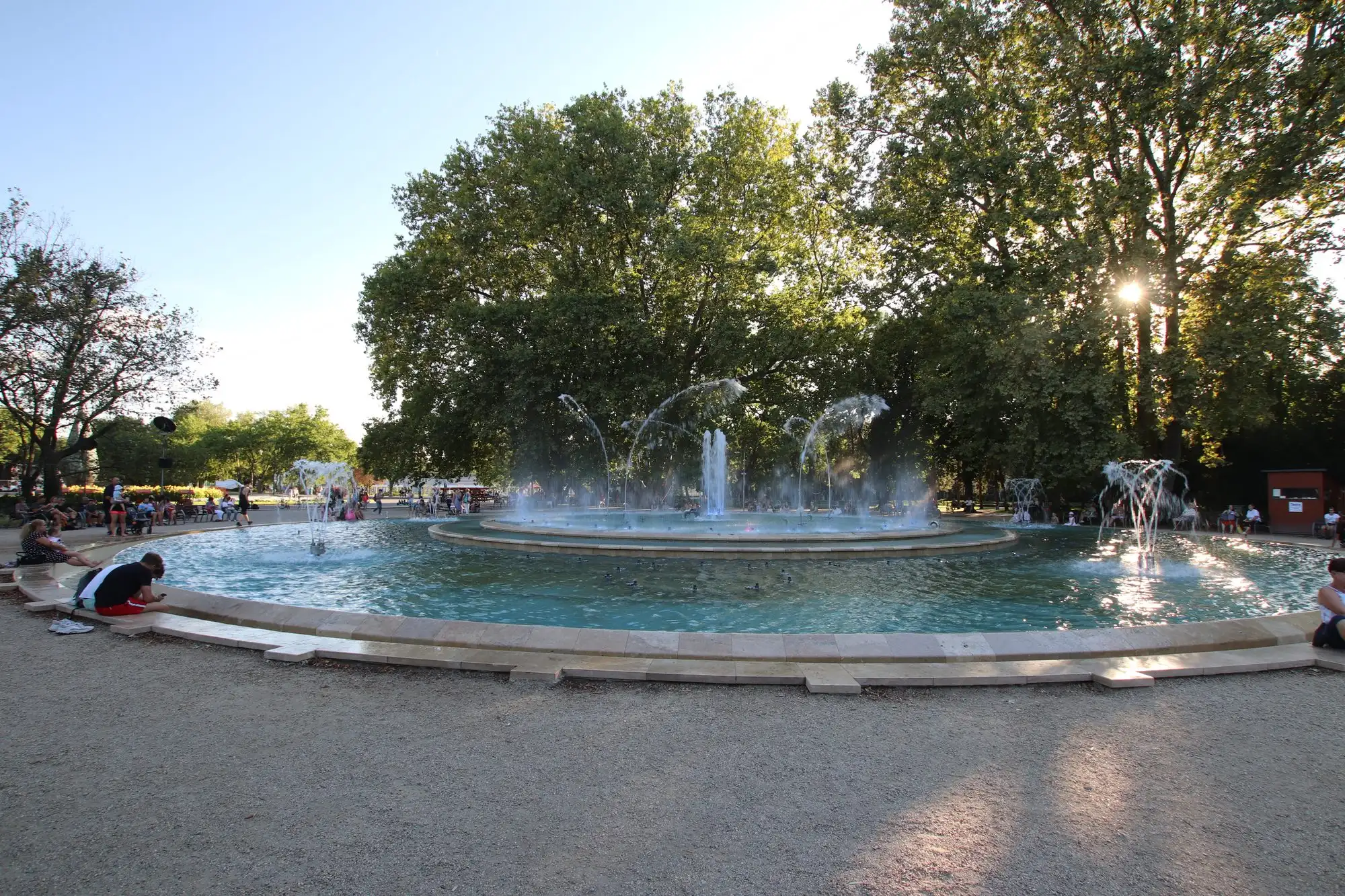
The Musical Fountain sits at the southern end, beside the Centenary Monument, and it is the first thing you reach coming down from Margaret Bridge. The basin is 36 metres across and holds 400 cubic metres of water, 154 nozzles play across it, and the central jet goes up 25 metres. Its operator calls it the largest musical fountain in Hungary and one of the largest in Europe.
In an ordinary year it runs from 1 May to 31 October, from 10:00 to 22:00, with a block of music on the hour from 11:00 until 21:00. The 21:00 block is the one to plan around, the longest of the day and the only one with films projected onto the curtain of water. The children’s blocks are at 11:00 and 16:00.
There is a second musical water feature at the far end of the island, the Bodor Well, which plays on the hour as well, and the bus stop beside it is called Zenélőkút. Get off there for the Musical Fountain and you are 2.5 kilometres from it.
Climb the water tower for the view over the island
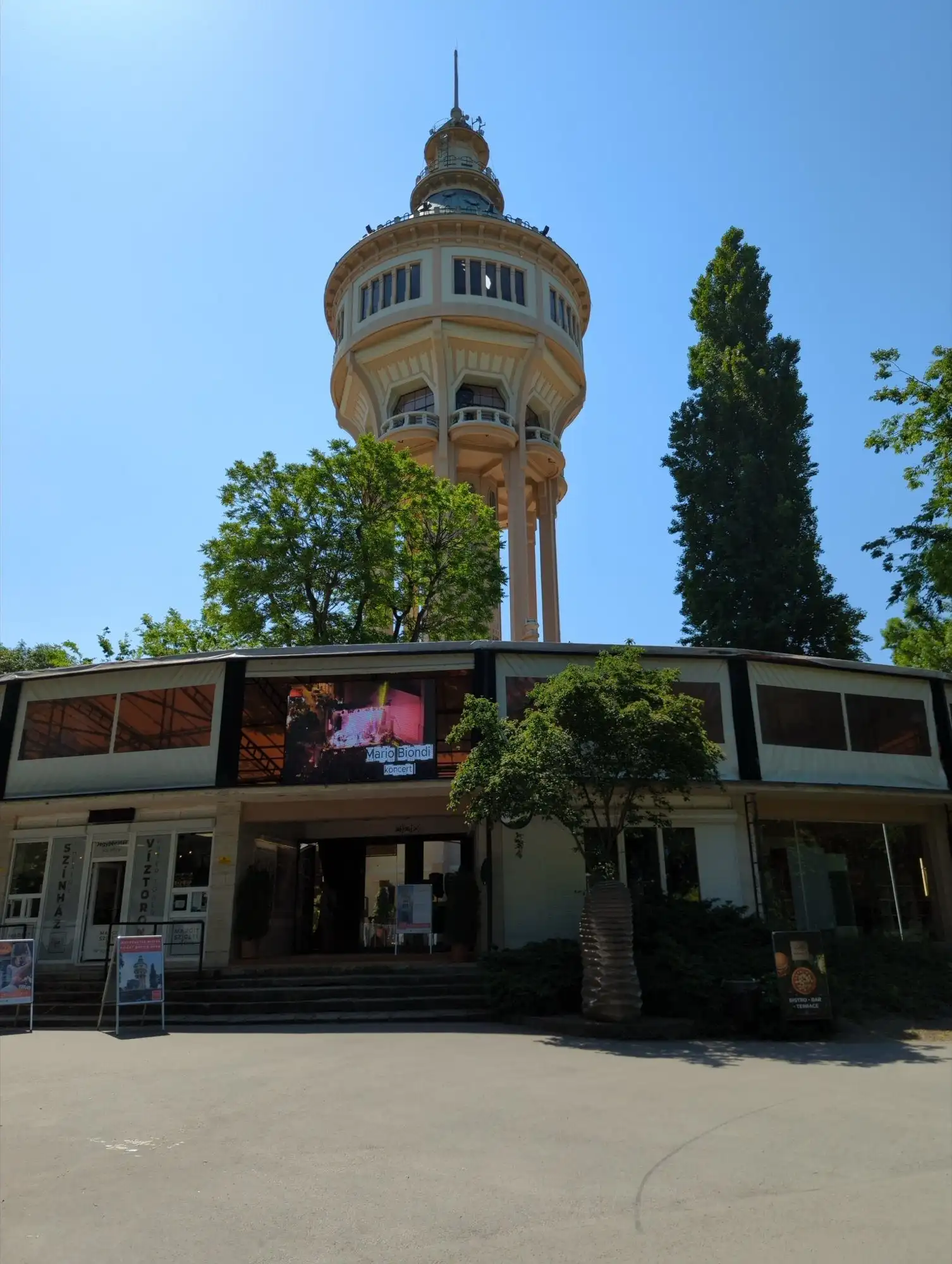
The water tower was finished in 1911 and was designed from the start to do two jobs, hold water and be climbed.
Ray Rezső Vilmos drew it and Zielinski Szilárd engineered it, and he was one of the first people in Europe to build in reinforced concrete and the man who brought the material to Hungary. It is 57 metres tall, the basin at the top held 600 cubic metres, and the main columns carry 220 tonnes each.
The climb is 153 steps, a concrete stair for the first 24 metres and an iron one for the next 20, and the gallery at the top looks down the length of the island and across both arms of the river. Since 2012 the tower has doubled as an exhibition space, and it was declared a monument of townscape significance back in 1977.
Two practical things. Only 30 people may be inside at once, so on a busy afternoon expect to wait at the bottom. And the tower publishes its hours a month at a time and closes at 18:00 on performance days, so check before you make the journey for it alone.
Walk through the convent ruins where the island got its name
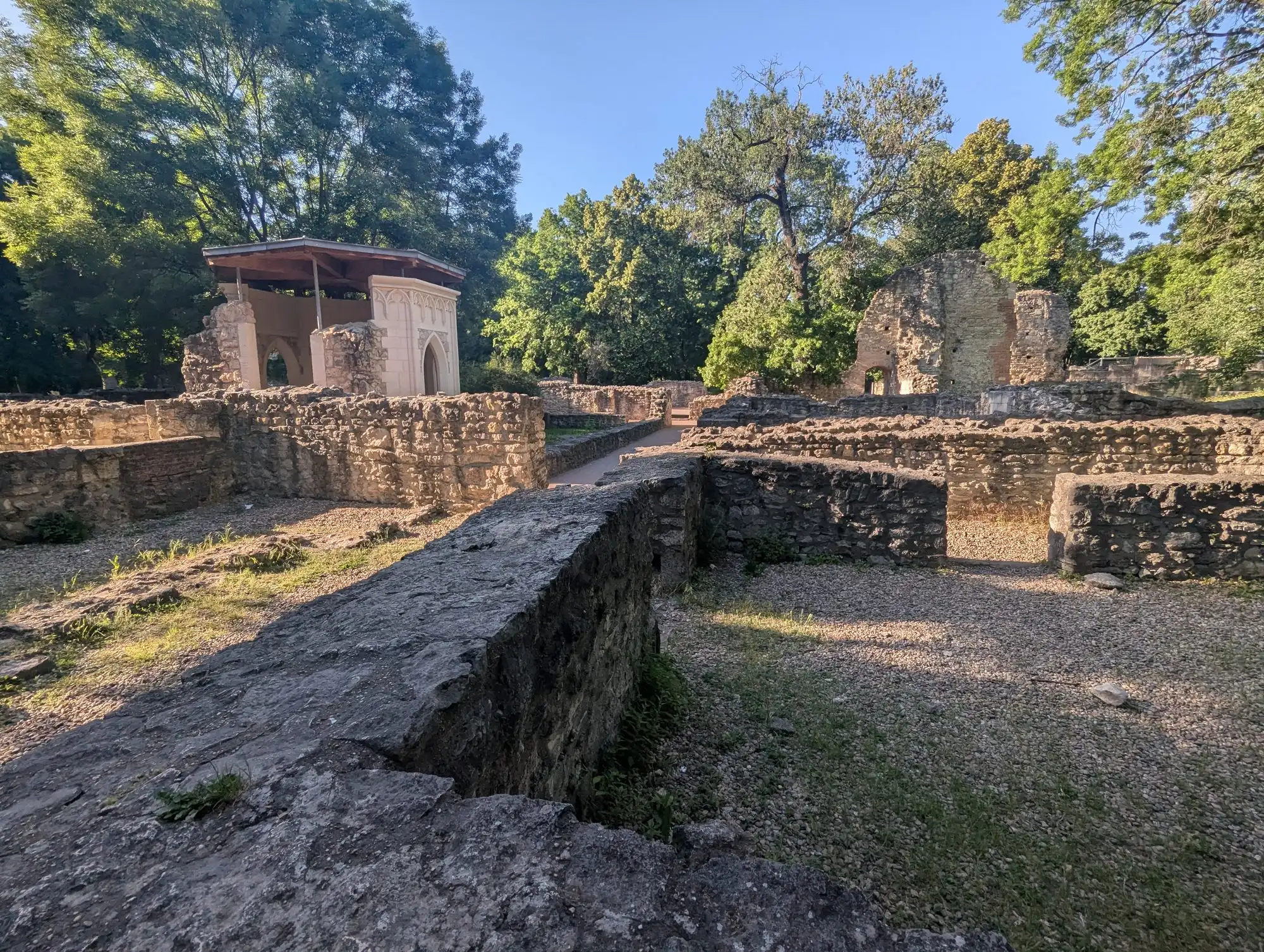
Béla IV founded a Dominican convent here in 1252 and his daughter Margaret moved into it at ten years old. She died on the island in 1271 and was buried in the church, pilgrims came to her grave for 250 years, and the island has carried her name ever since.
What survives is the outline: walls a metre to a metre and a half high, with parts of the sanctuary and the tower reaching about two metres, and carved Gothic window frames and mouldings among them.
Two things to look for. The red marble slab under its canopy marks where her grave stood until the sixteenth century, and beside it grows a remarkable intertwined pair of trees, a field maple and an ash grown together.
The ruins are open at any hour and cost nothing, and they are worth a slow circuit in daylight, when the carved fragments show. Two more ruined houses stand on the island, a Franciscan church dedicated to Saint Clare and a Premonstratensian chapel that holds the oldest bell in Budapest. Their story is on our history of Margaret Island.
Spend a hot afternoon at the Palatinus lido
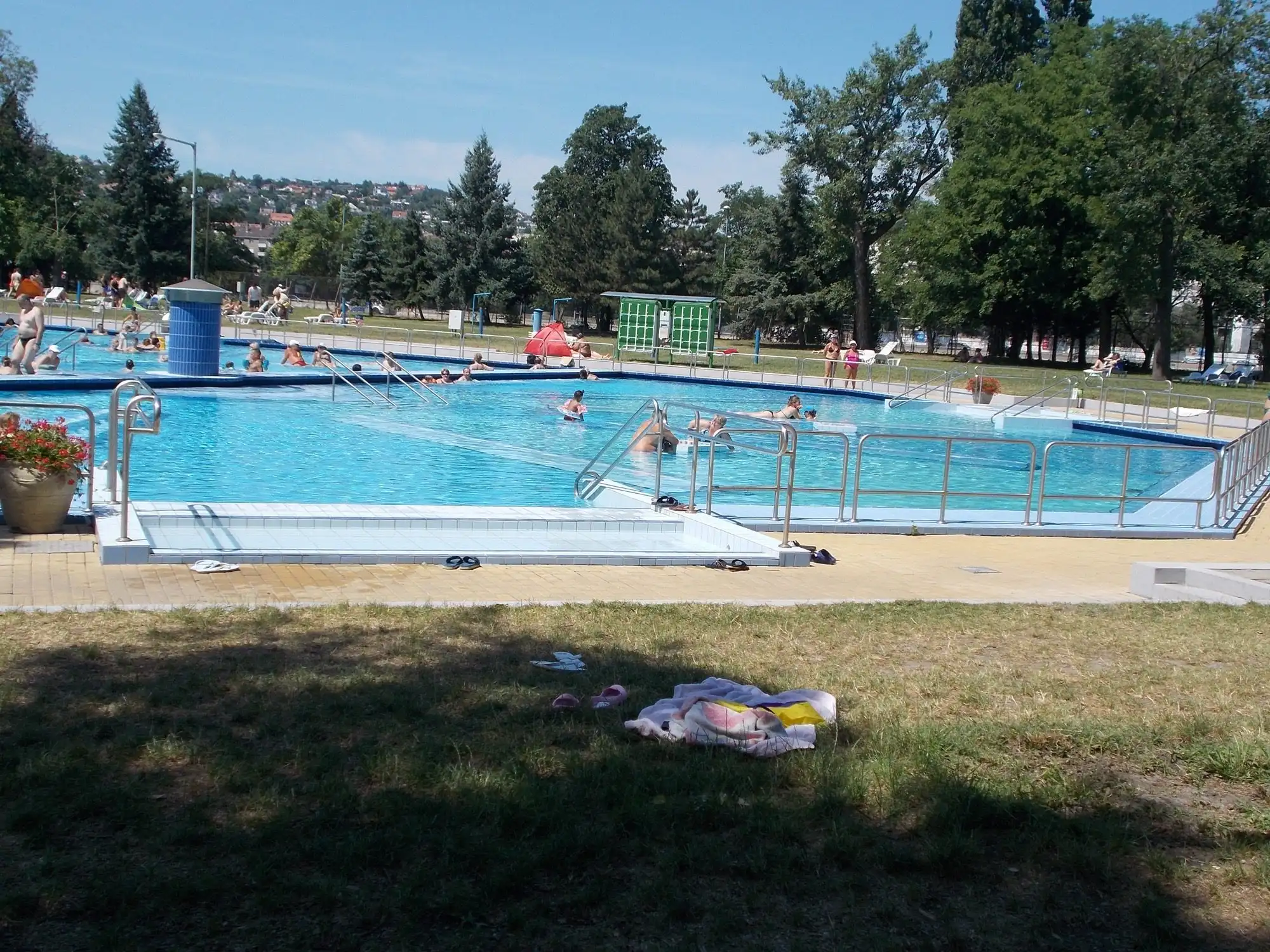
Palatinus is the island’s lido, open since 1919 as the first bath in Budapest where you could swim outdoors, with 15 pools, four water slides and a Bauhaus building from 1937. It admits children of any age, which most of the city’s historic baths do not.
It is open every day of the year, but the wave pool, the slides and most of the outdoor pools are summer only, and in winter the hours are shorter. GetYourGuide sells a full-day admission ticket to Palatinus with free cancellation up to 24 hours ahead, and bus 26 stops outside.
Our Palatinus guide covers which pools run in which season, the hours, the slides and what to bring.
Hire a pedal car for the length of the island
The island is 2.5 kilometres from end to end, and the local answer to that is the bringóhintó, a four-wheeled pedal car you steer from a bench. The standard one seats three adults and two small children, the family tandem six adults, and the giant tandem nine. There are also bicycles, electric bikes, go-karts, electric scooters and a tiny pedal car for pre-school children called the Picikli.
Two hire bases. Bringóvár, at the north end beside the hotels, is the main one and runs every day of the year from 09:00, with free bike storage and a buffet; get off bus 26 at Szállodák.
The second base sits by the Musical Fountain at the southern end, about 450 metres from the tram stop, and it is seasonal, opens late morning and closes in bad weather, so ring ahead or start at Bringóvár.
You pay at the end, billed by the time you use, nobody under 18 may hire without a parent or a teacher, and a hired vehicle may not leave the island.
Walk or run the loop, and know which surface is for whom
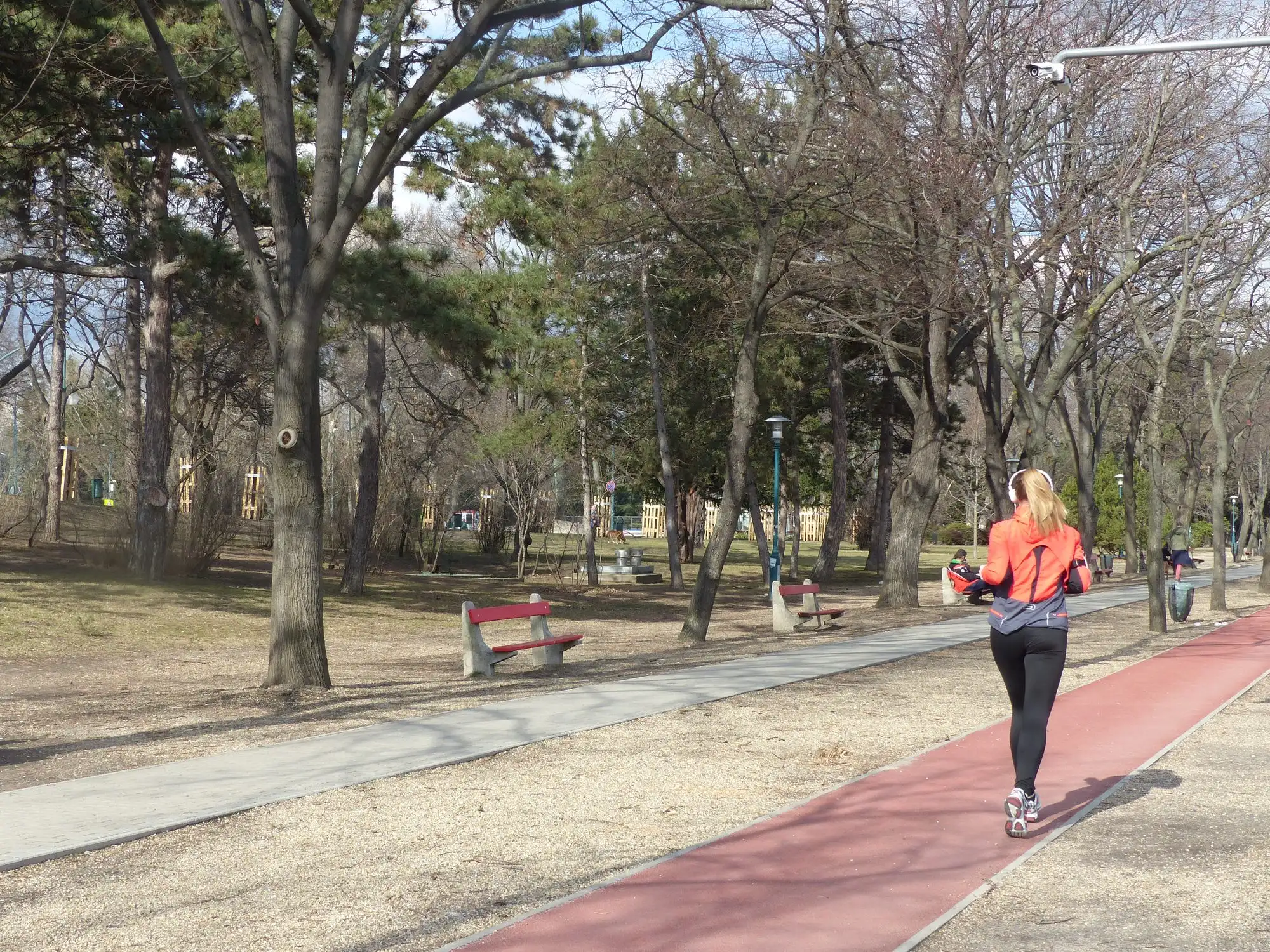
A running track goes right round the island, named the Monspart Sarolta Futókör after the orienteering world champion. It measures about 5.3 kilometres, the surface is tartan rather than asphalt, and it is lit, which is why Budapest runners treat this island as their track rather than a park.
The rule people break is simple. Bikes are not allowed on the track. That goes for hired pedal cars too. There is a footpath alongside for walkers and a road for everything with wheels, so the three keep out of each other’s way.
Allow about an hour to walk the loop at an ordinary pace, less if you are only doing one bank. The early morning is the runners’ hour and the weekend afternoon belongs to families on wheels. Our opening hours guide sets out when the island is at its quietest.
Insider tips
Check what is on at the open-air stage
The stage in the middle of the island runs the Margitszigeti Nyári Fesztivál from May to August, more than seventy programmes of opera, operetta, ballet, musicals, classical, jazz and pop.
A ticket for that season’s performances also gets you into the Water Tower for nothing, before 20:00 and in the interval.
The small zoo is free, and it shuts for the winter
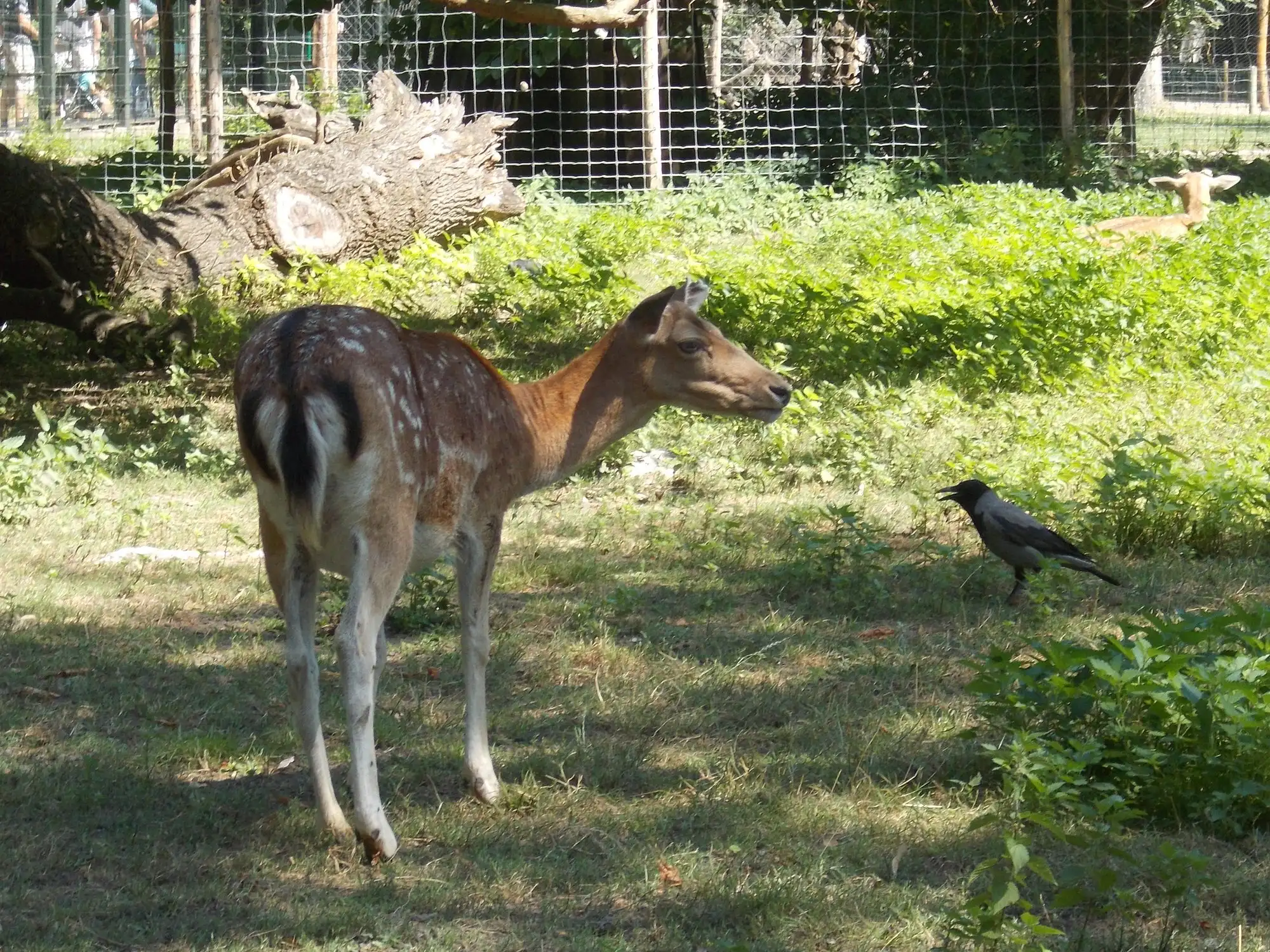
Halfway up the Pest-facing bank there is a small zoo run by the Budapest Zoo, open every day from 10:00 to 18:00 from spring to autumn and closed in winter. Entry is free and it is a fraction of the size.
Fallow deer and field hares recall the island’s medieval name, and most of the owls and birds of prey are injured animals that could not survive in the wild. Stop in if you are on the island anyway, but it is not worth a journey on its own.
Walk up to the Japanese garden at the north end
The head gardener György Magyar laid it out with rare planting, and its prize is a Caucasian wingnut, a tree Budapest has few of. Four Chinese dawn redwoods stand by the goldfish pool, one with a trunk over half a metre thick, and a fragment of a third-century Roman gravestone is built into the rim of the pond.
The rose garden is in the middle, not by the tower
People look for it beside the water tower and walk past it. It is south of Palatinus, in the middle of the island, and it has held more than 4,000 rose bushes since it was enlarged for the 2017 world aquatics championship. The flower garden beside it is planted with annuals from spring to late autumn.
Nearby attractions
The island has a bridge at each end, so what counts as nearby depends on which way you walk off it.
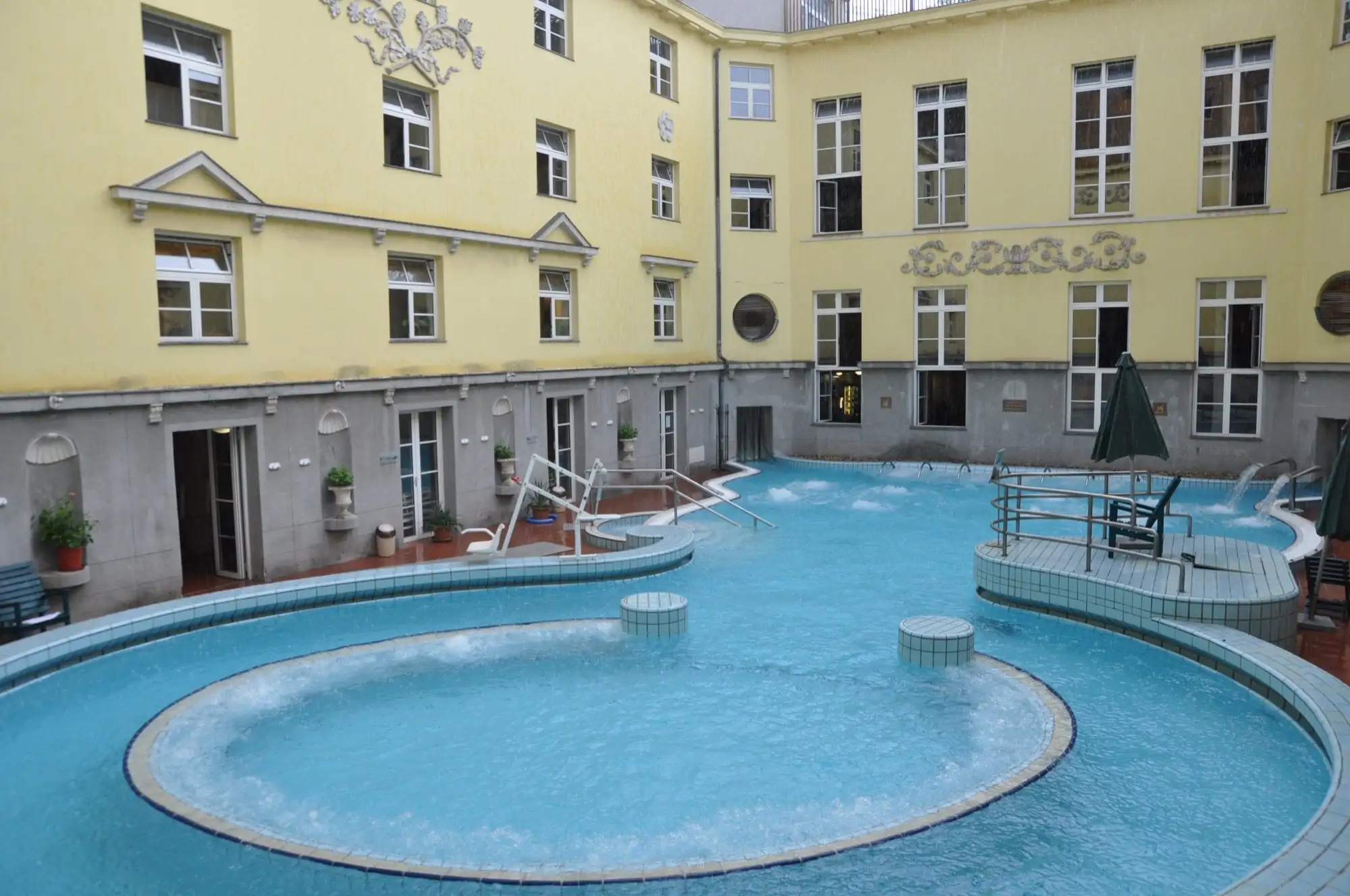
Lukács Thermal Bath
About 13 minutes on foot from the south end, over the Buda side of Margaret Bridge.
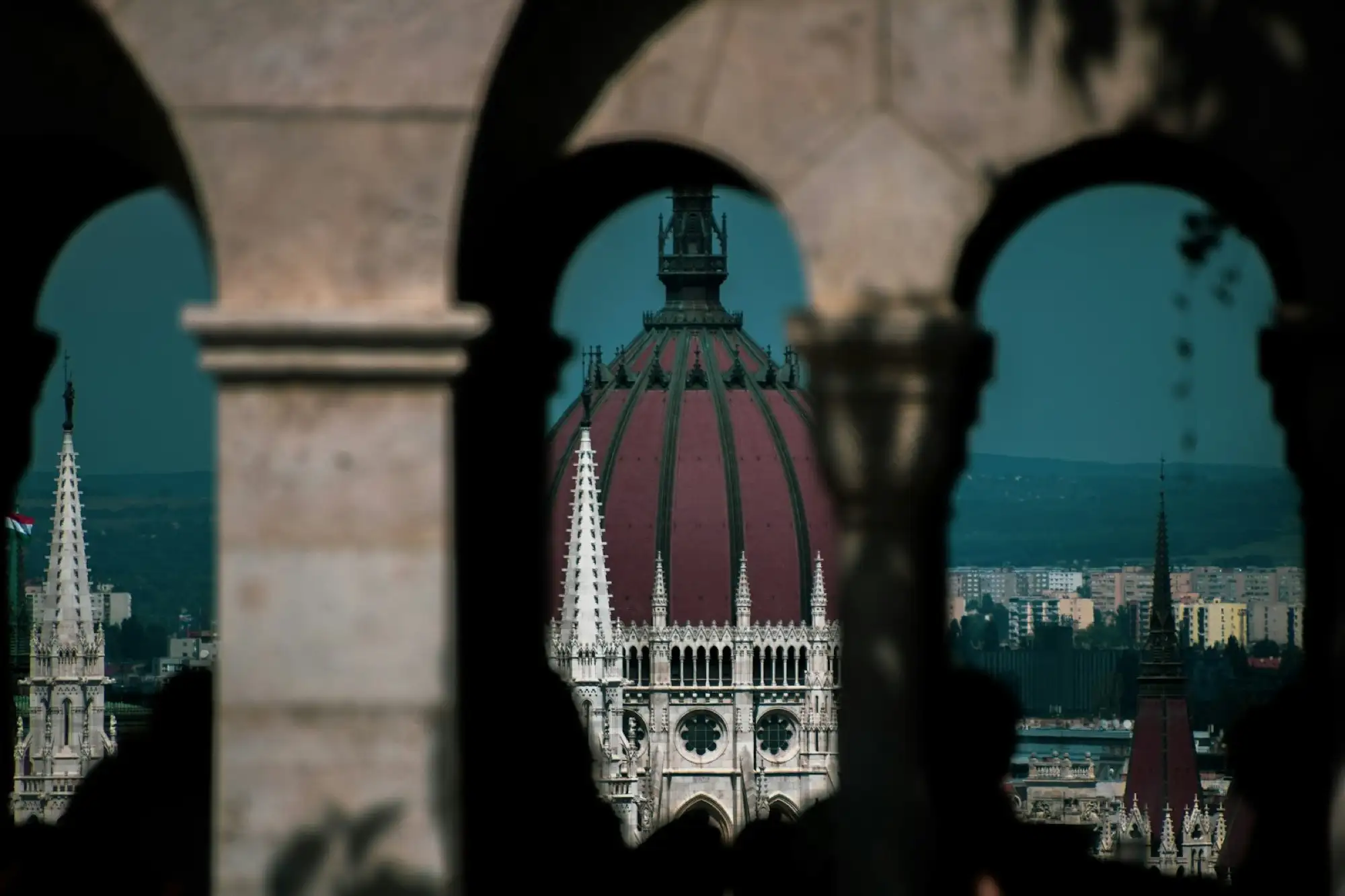
Hungarian Parliament
About 15 minutes south, over Margaret Bridge and down the Pest embankment.
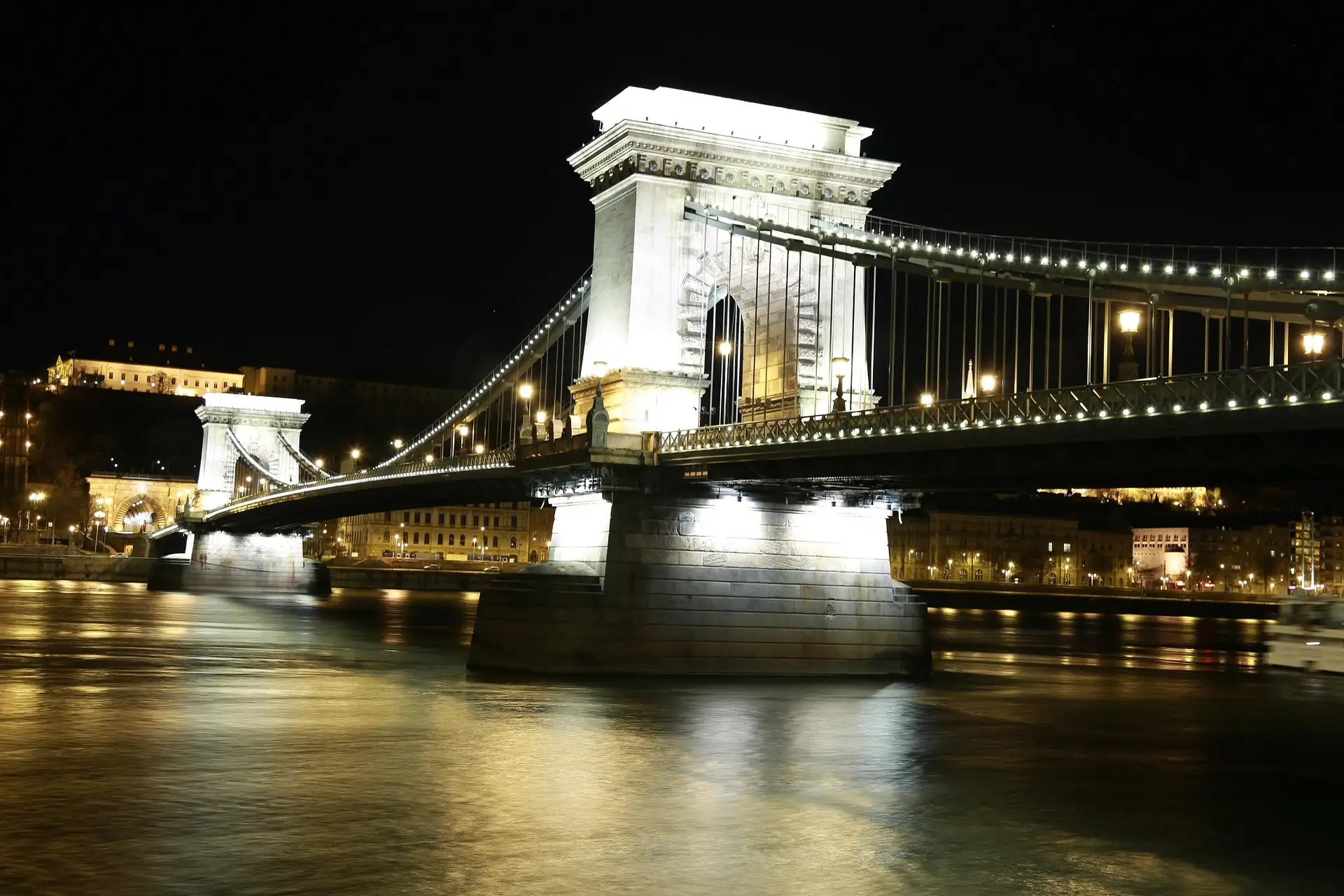
Széchenyi Chain Bridge
A long walk south along the river. Tram 2 from Jászai Mari tér, at the Pest end of Margaret Bridge, runs down the embankment to it.
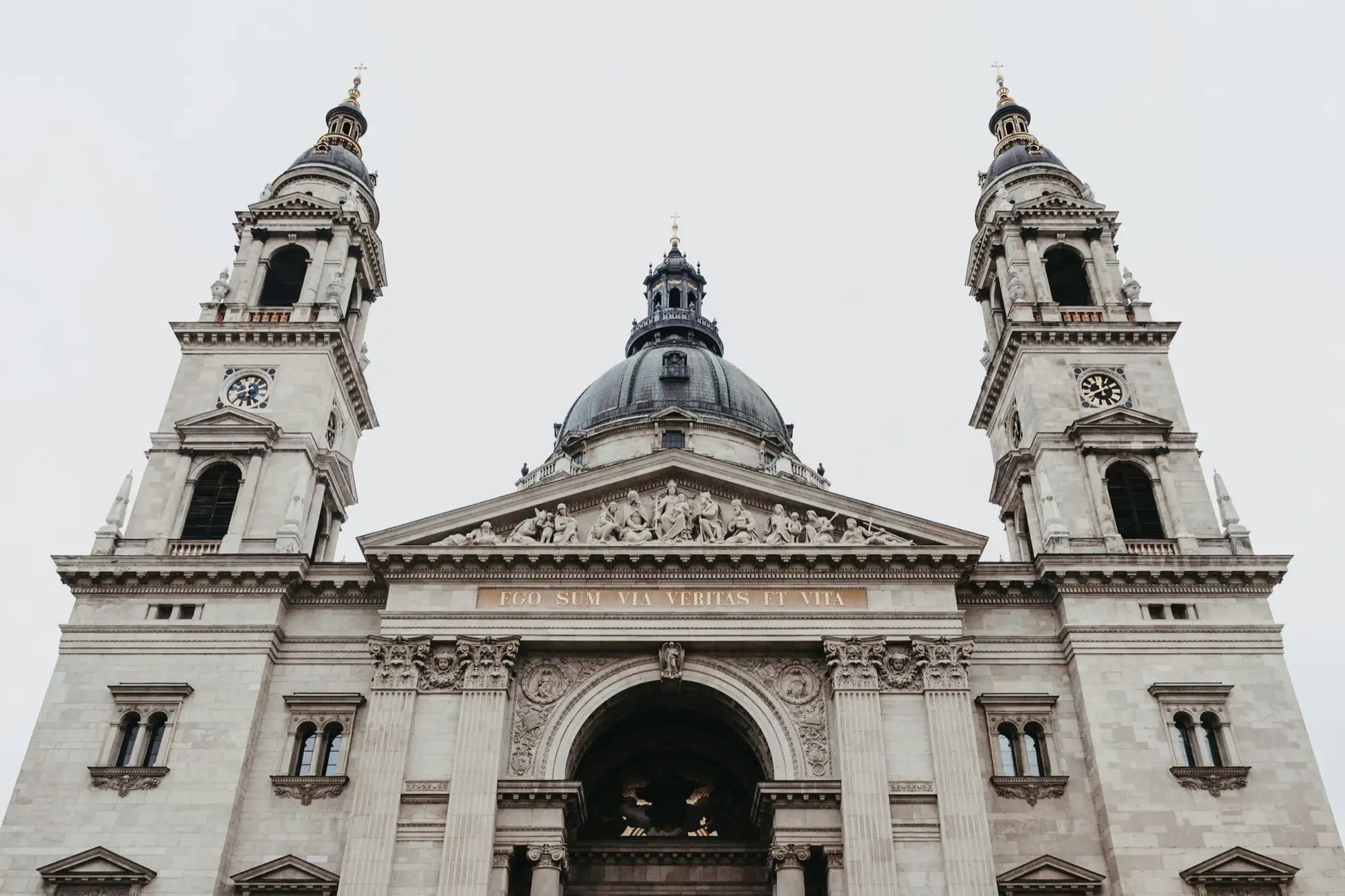
St. Stephen's Basilica
Too far to walk from the island. Tram 4 or 6 to Nyugati pályaudvar, then south down Bajcsy-Zsilinszky út.
Did you know?
- The island was called Insula leporum, the Island of Rabbits, because it was hunted over. The fallow deer and field hares in the small zoo are a nod to the name.
- A cyclone in 1914 blew over an old tree and a bell came up intact in its roots. It is the oldest bell in Budapest, cast in the fifteenth century, and it hangs in the rebuilt chapel again.
- The plane trees that set the look of the island were planted from 1808 by Károly Tost, a gardener brought from Schönbrunn, because Palatine Joseph was fond of plane trees.
- A horse tramway ran the length of the island from 1871. It carried its last passengers on 10 April 1928.
- Some of the busts along the Artists’ Promenade were moved here from the Statue Promenade in the City Park in 1966.
History
The island has been a hunting ground, a convent, a private garden nobody else was allowed into, and a public park, in that order. It was first named in a charter in 1225, the Dominicans arrived in 1252, and for a century after 1790 it belonged to the palatines, who planted it and kept the public off. It only left the archducal family’s hands in the first decade of the 1900s.
- 1225
First named
The island appears in a charter for the first time, as Insula leporum, the Island of Rabbits.
- 1252
The Dominican convent
Béla IV founds the convent and his daughter Margaret moves there at ten years old. She dies on the island in 1271.
- 1540
The nuns leave
The community goes, taking Saint Margaret’s remains with it. They are later brought to Pest and lost there.
- 1799
A private garden
Palatine Joseph takes full ownership, builds a holiday home and forbids visiting, admitting only distinguished guests.
- 1869
Opened to the public
The island opens to visitors after a rebuilding to Miklós Ybl’s plans, with baths, hotels and restaurants.
- 1919
Palatinus opens
The first bath in Budapest where you could swim outdoors opens on the island.
- 1962
The Musical Fountain
The fountain is built at the southern end. The Centenary Monument joins it in 1972.