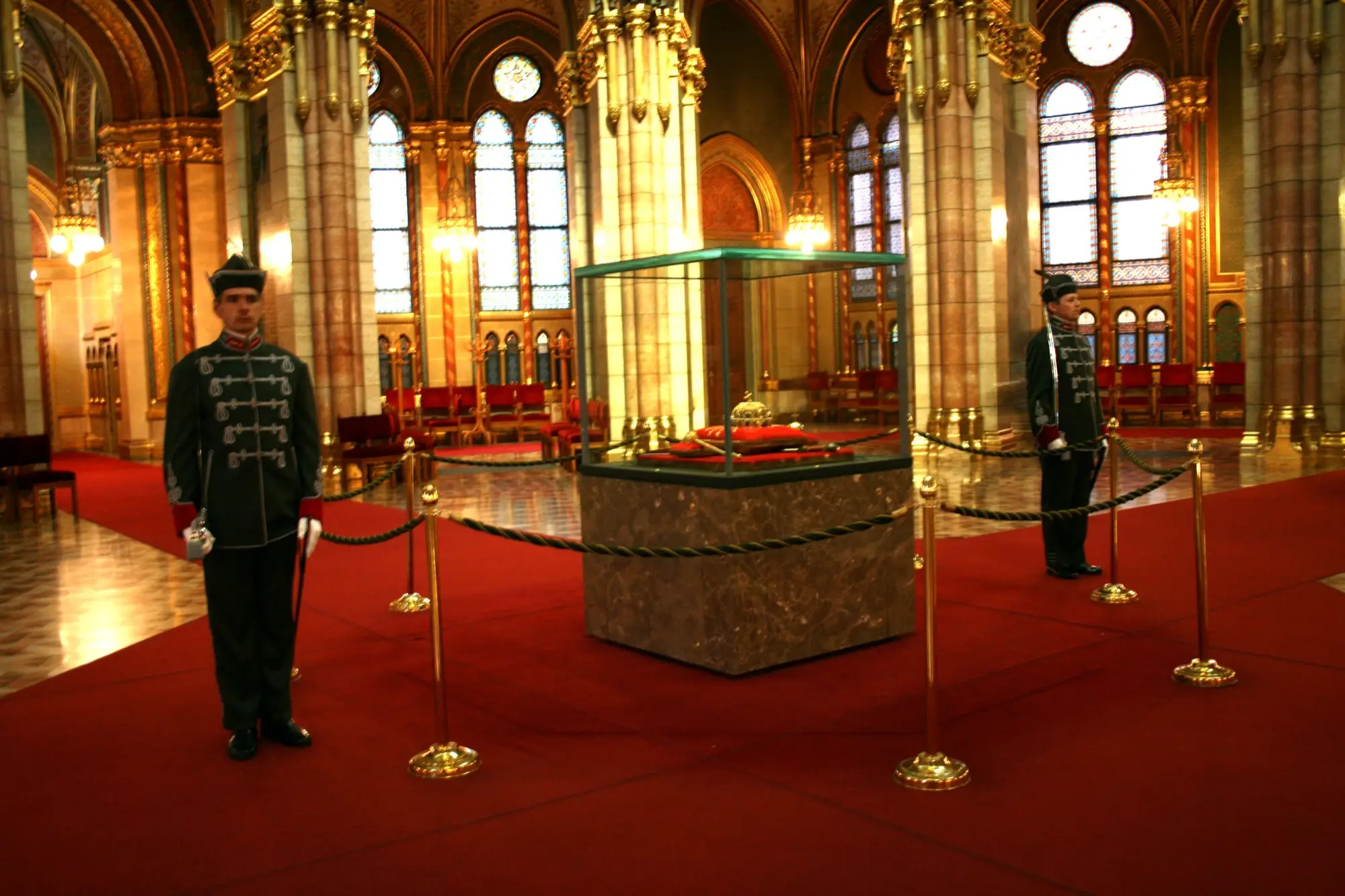
The Holy Crown is the one object in Hungary that outranks the building it sits in. It is Hungary’s coronation crown, it spent more than three decades in American hands, and it now stands under the Parliament’s dome with soldiers of the Crown Guard beside it.
The only way to see it on an ordinary day is the Parliament tour, which passes through the Dome Hall. This page covers what you are looking at, how it got there, and how the visit works.
Parliament tickets that include the Holy Crown
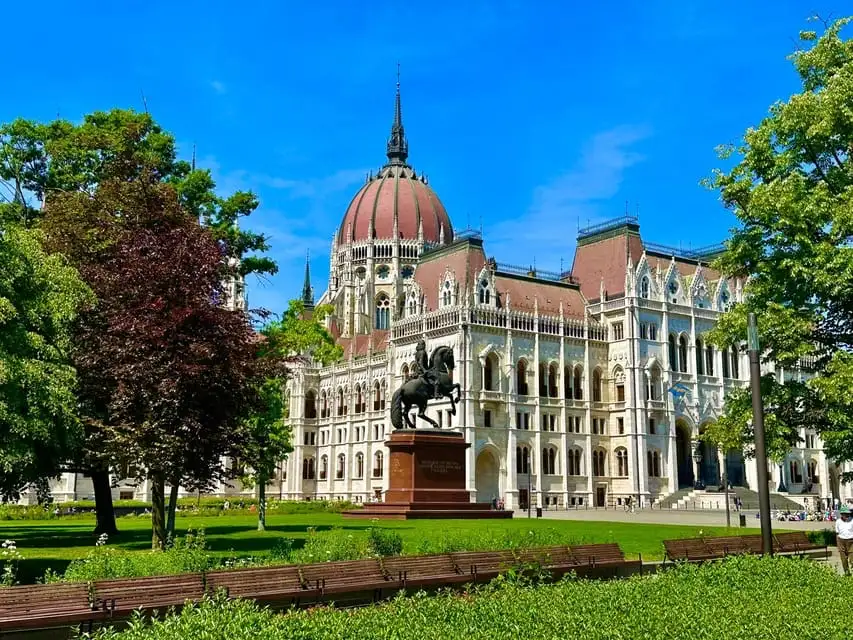
Parliament Entry Ticket and Audio Guide
Best for: Seeing the crown in the Dome Hall, at your own pace
- About 1 hour, including check-in
- Audio guide in 26 languages, no live guide
- Free cancellation up to 24 hours ahead
What’s included and more details
What’s included
- Timed entry to the 45-minute tour of the building
- Audio tour of Kossuth Square to do beforehand
- The History of the House exhibition afterwards
- Choose
- The EU citizens or non-EU citizens option. UK passports book non-EU
- Children
- 5 and younger have their own category; 6 and up book as adults
- Meeting point
- Sent by the provider the day before, and it depends on the option
- Bring
- The passport or ID card that matches your option
- Also
- Reserve now and pay later
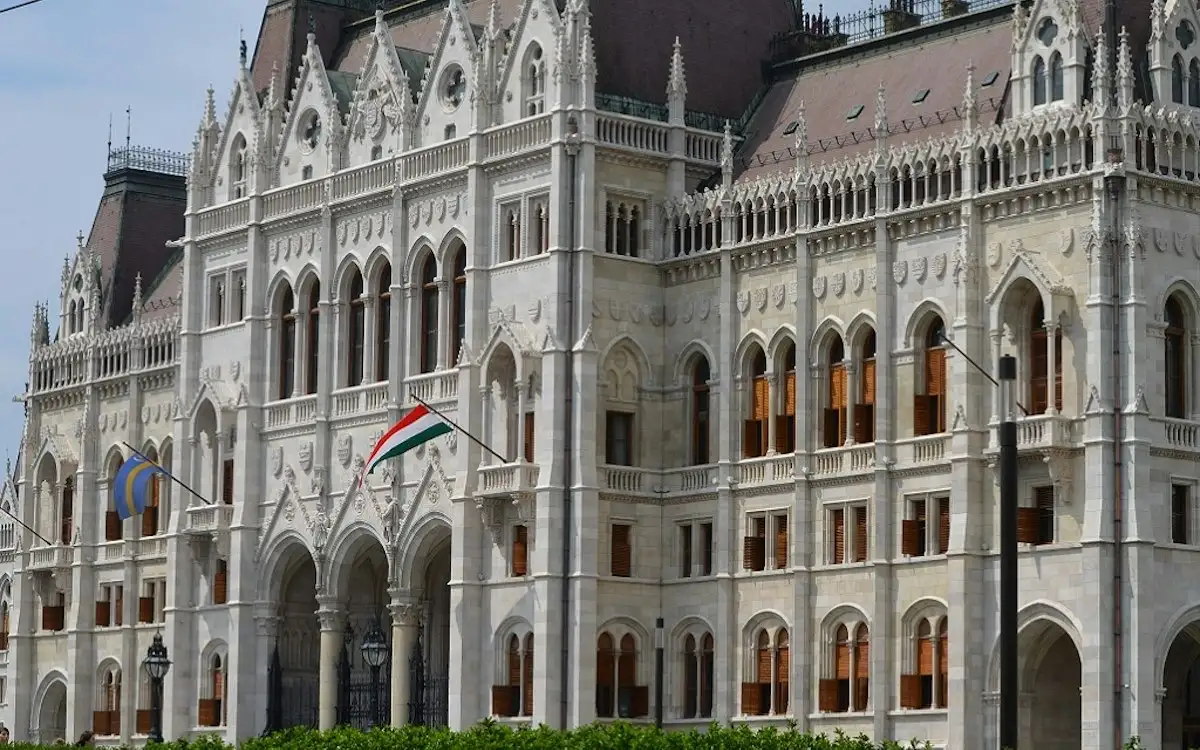
Castle District and Parliament Guided Tour with Transport
Best for: Seeing the crown with a live guide, after a tour of the city
- 4.5 hours
- Live guide in English, German or Spanish
- Non-refundable, cannot be moved
What’s included and more details
What’s included
- Guided tour of the Parliament to finish, admission included
- Castle District, Gellért Hill viewpoint and City Park
- Air-conditioned vehicle and a licensed guide throughout
- Starts
- The tour office on Báthory utca, two streets from the Parliament. Arrive 15 minutes early
- Not included
- Hotel pickup
- Bring
- ID or passport, needed to enter the Parliament
- Every ticket is for a fixed slot, and the Parliament checks a physical passport or ID card at the door
- What each ticket includes, in full: Hungarian Parliament tickets
What the Holy Crown looks like
The crown is two crowns joined together, and the difference between them is the thing to look for.
The lower band, from Constantinople
The circlet at the bottom, known as the corona graeca, is Byzantine work: gold, with cloisonné enamel pictures alternating with gemstones, and enamel panels standing up round the rim. It most likely reached Hungary as a diplomatic gift from the court of Constantinople to King Géza I.
Look at the front for Christ enthroned, flanked by the archangels Michael and Gabriel, then the soldier saints George and Demetrius and the doctor saints Cosmas and Damian. At the back are the Byzantine emperor Michael VII Doukas, his co-emperor Constantine, and Géza himself, crowned but without a halo, a rank below the emperor. Gold chains hang from the sides, each ending in a cluster of stones.
The arched bands on top, added later
The two crossing bands over the top, the corona latina, carry enamels of Christ and eight of the apostles. They were fixed to the circlet later, probably under King Coloman (1095 to 1116) or King Béla III (1172 to 1196), which is why the crown cannot be the one Saint Stephen wore in 1000, whatever the tradition says.
The bands do not sit quite naturally on the circle, and the apostle panels are flat rather than curved. Some of the images are partly hidden where the two pieces meet.
The crooked cross
The cross on top leans to one side, and there is no settled explanation of how that happened. It is the detail to check when you reach the case, because in the few minutes you get it is easy to miss unless you look for it first.
The regalia beside it
The crown shares the Dome Hall with the rest of the coronation regalia: the sceptre, the orb and the coronation sword. All four moved here together on 1 January 2000. The fifth piece, the coronation mantle, stayed at the Hungarian National Museum, so you will not see it on the tour.
How the Holy Crown came to Parliament
- 1070s
The lower band
A diplomatic gift from Constantinople reaches King Géza I.
- 1095 to 1196
The upper bands
The arched bands are added, probably under Coloman or Béla III.
- 1945
Into American hands
At the end of the Second World War the crown is handed to the US Army to keep it from Soviet hands, and held at Fort Knox.
- 6 January 1978
Returned
The United States hands it back in a ceremony at the Parliament, the US delegation led by Secretary of State Cyrus Vance. It goes on show at the Hungarian National Museum.
- 1 January 2000
Into the Dome Hall
The crown, sceptre, orb and sword move to the Parliament.
- 2011
The Crown Guard
Soldiers take over the guarding of the crown again, as the re-formed Crown Guard.
The building’s own story, and the rest of the route: history of the Hungarian Parliament.
Seeing the Holy Crown on the Parliament tour
Book a slot in a language you follow
The Dome Hall is on every public tour of the Parliament, whichever ticket you hold. The audio guide on the entry ticket covers 26 languages.
Leave the camera in your pocket
Photography is allowed in the rest of the building but banned in the Dome Hall, to protect the crown.
Go straight to the case
The group stops in the Dome Hall for a few minutes before moving on. Move to the front of the case as soon as you are in, look for the crooked cross and the enamel of Christ on the front, and read the room afterwards.