Hungary’s Christmas happens a day early and tastes of fish, with the presents from Jézuska, the baby Jesus, and a dinner of fish soup, not turkey, on the evening of 24 December. The city shuts by mid-afternoon on the 24th, so eat your Christmas food at the markets and cake shops in the weeks before, and book a table if you want it on the 24th or 25th.
The Hungarian Christmas calendar for 2026
Advent begins on the Sunday nearest St Andrew’s Day, 30 November, which in 2026 is 29 November. That puts Mikulás and Luca day on Advent Sundays this year.
| Date in 2026 | What happens | What it means for a visitor |
|---|---|---|
| Sunday 29 November | First Sunday of Advent, when the first candle on the Advent wreath is lit | The two big markets have been open since 13 November |
| Sunday 6 December | Mikulás, St Nicholas, fills children’s shoes overnight | Mikulás and krampusz figures around town, and the Santa Run by the Great Market Hall |
| Sunday 13 December | Luca day, when the Luca chair was begun and Luca wheat sown | A folk custom, not a public event |
| Sunday 20 December | Fourth Sunday of Advent | The last Sunday before Christmas Eve |
| Thursday 24 December | Szenteste, Christmas Eve: the tree, the presents, the fish dinner and Midnight Mass | The main day of Christmas. The city closes by mid-afternoon |
| Friday 25 and Saturday 26 December | Public holidays, for family visits and long meals | Shops and most museums are shut; the markets and the big baths open |
| From 26 December | Regölés, when young men traditionally went from house to house singing the regös songs, kept up in a few villages of western Hungary | A village custom, not a Budapest event |
| Monday 28 December | Aprószentek, Holy Innocents’ Day, when boys traditionally switched the girls and women, or the whole household, lightly with twigs for good health | A folk custom |
| Thursday 31 December and Friday 1 January | Szilveszter, New Year’s Eve, then New Year’s Day, with lentils and pork for luck | A night out, then a public holiday |
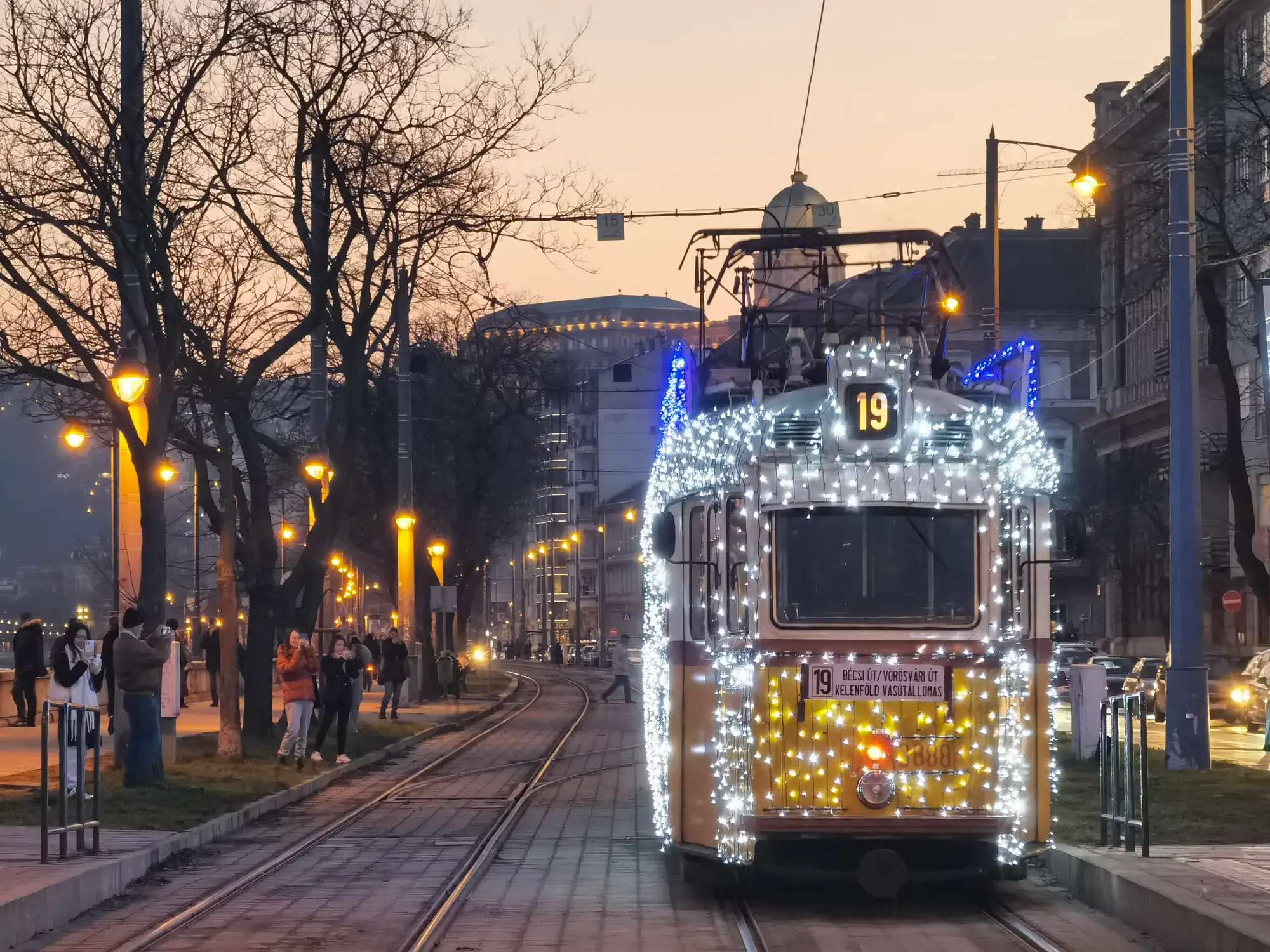
| Wednesday 6 January | Vízkereszt, Epiphany, the end of the Christmas season | Last season the light trams made their last runs on this day |
How each of the holiday days affects shops, transport, museums and baths is on our what’s open over Christmas and New Year page. How Budapest sees in the New Year is in our New Year’s Eve guide.
Mikulás, St Nicholas, on 6 December
Hungarian children get presents twice in December. On the evening of 5 December they clean their shoes and put them on the windowsill, because Mikulás, St Nicholas, only fills clean ones. In the morning there is a small package waiting, traditionally tangerines or apples, peanuts, chocolate and szaloncukor.
He looks like Father Christmas, with the white beard and the red suit, but he is not the one who brings the Christmas presents. His companions are the krampuszes, devils with sooty faces, horns and hooves. A child who has been naughty may find a virgács, a birch rod, in the package, though these days it is painted gold or silver and is only there as decoration. Kindergartens and schools have their own Mikulás visit on the day.
Giving presents on St Nicholas Day is partly a recent custom in Hungary, and an urban one, with Austrian links. The name Mikulás came from Czech in the 19th century, and under Soviet influence the gift-bringer came to be called Télapó, Old Man Winter, as well.
The one to see in Budapest is the Santa Run, the PENNY Mikulásfutás, on Sunday 6 December 2026. A crowd of runners in Santa suits sets off from Sóház utca, beside the Great Market Hall: the family run at noon, the 2.3 km run at 12.30pm and the 5 km from 1.30pm. The organisers supply the suit and the beard, there is an entry fee, and it is a good sight from the pavement even if you do not run. In recent years Mikulás has also met children at the city’s Christmas fair in Városháza Park on 5 and 6 December.
Advent in Budapest: the wreath and the gingerbread
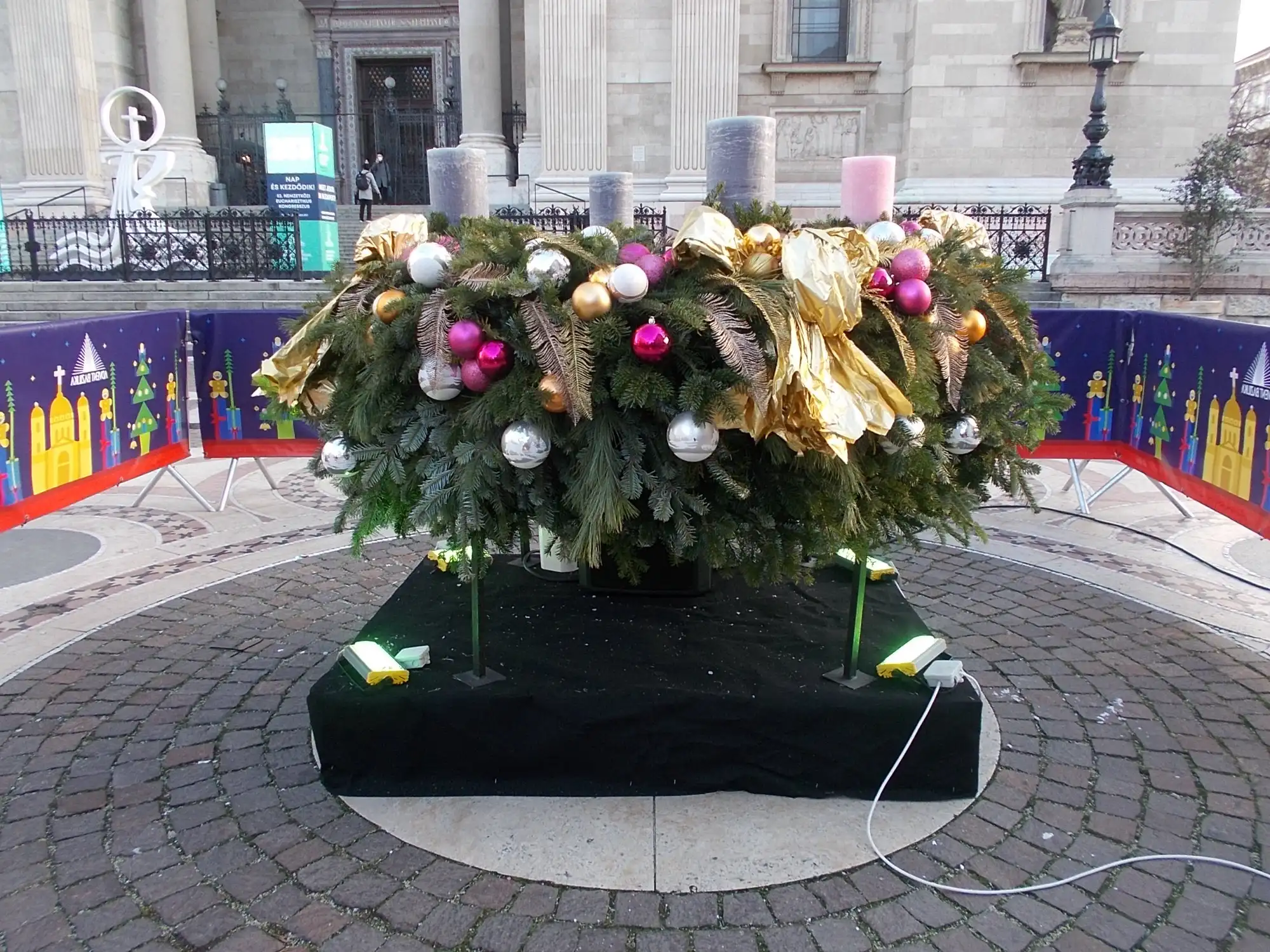
Advent used to be a time of fasting in Hungary, with no weddings or dances from its first Sunday until Epiphany. What has stayed is the wreath. It has four candles, three purple and one pink, and a new one is lit each Sunday. Purple stands for repentance and pink for joy.
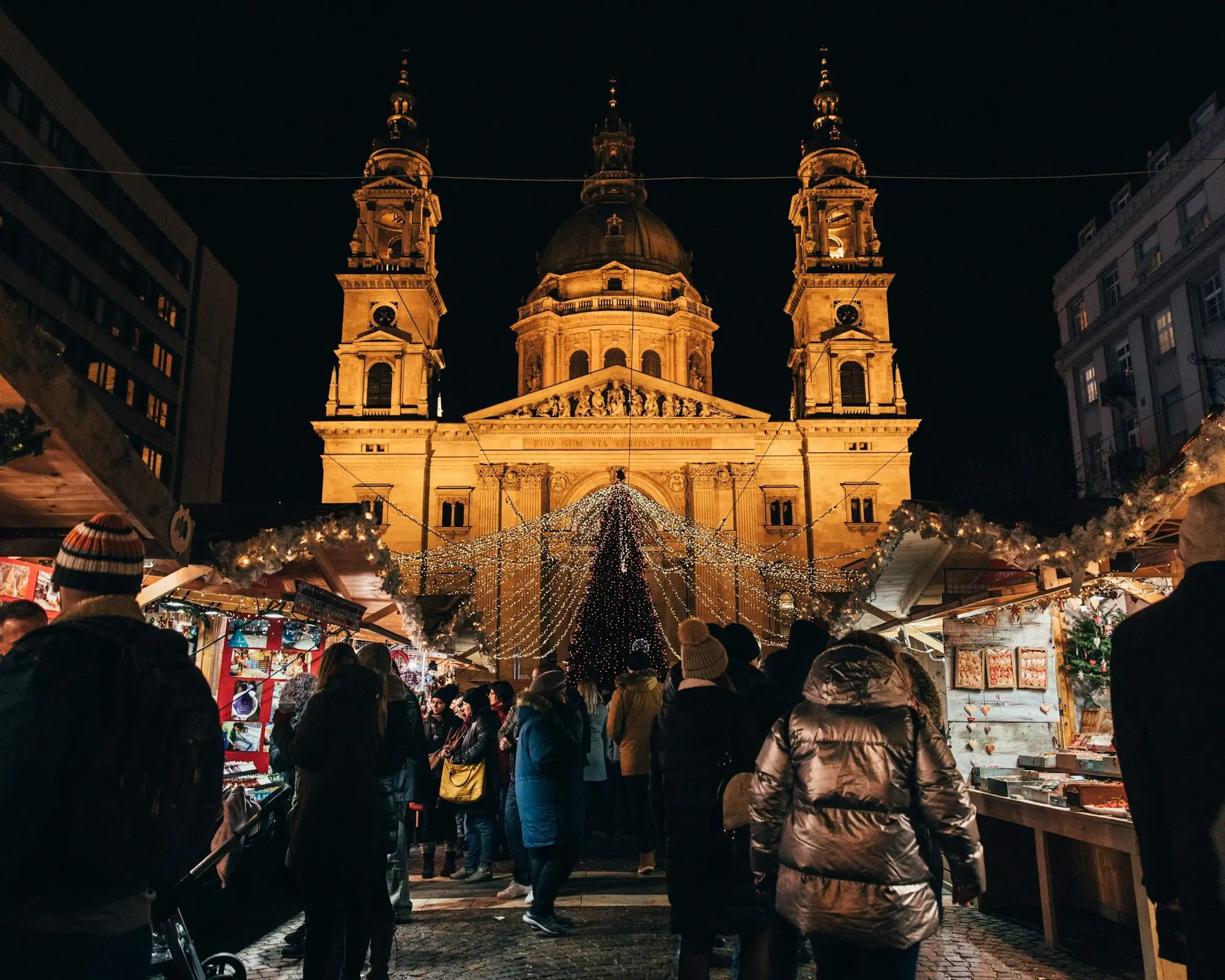
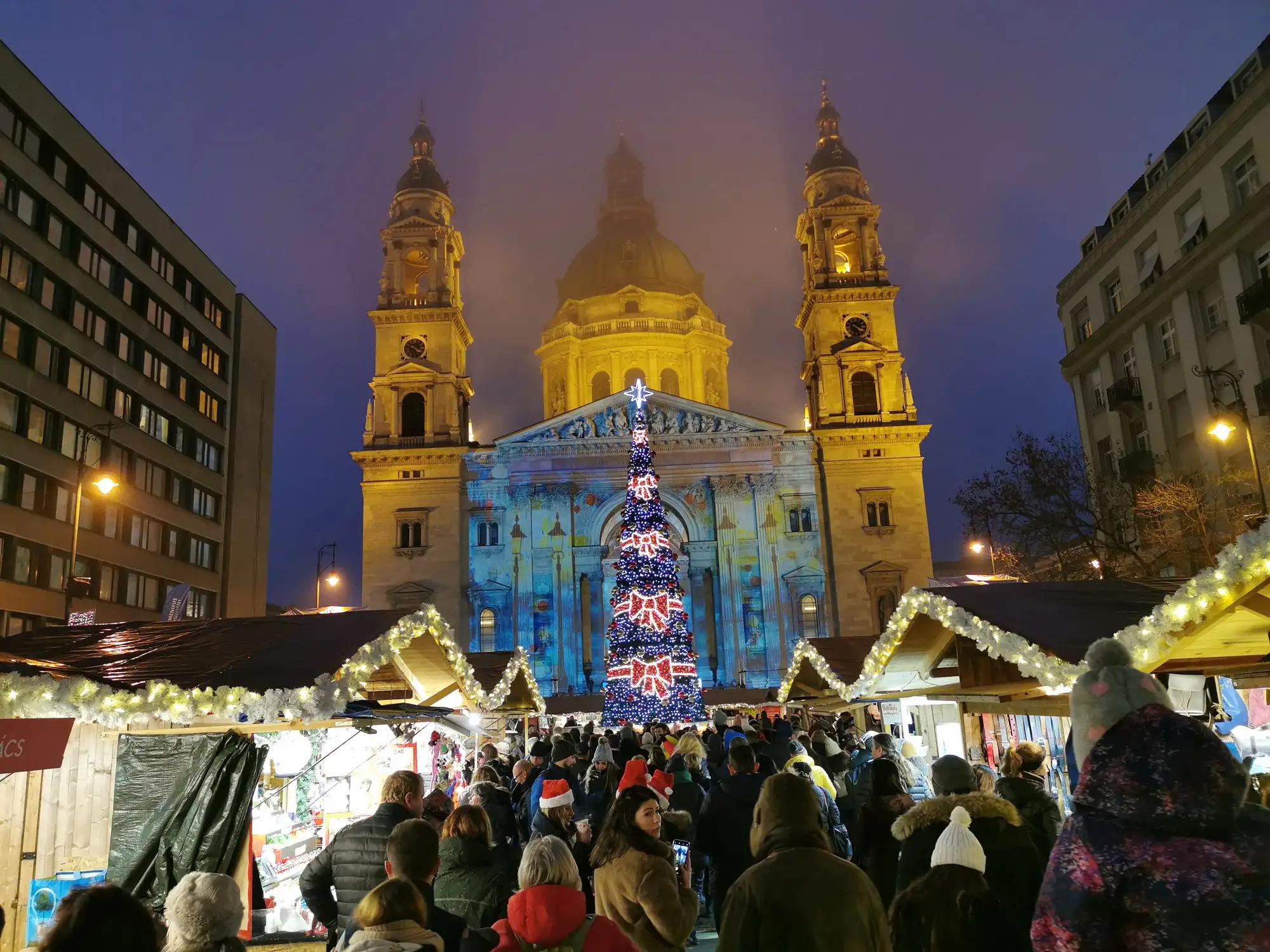
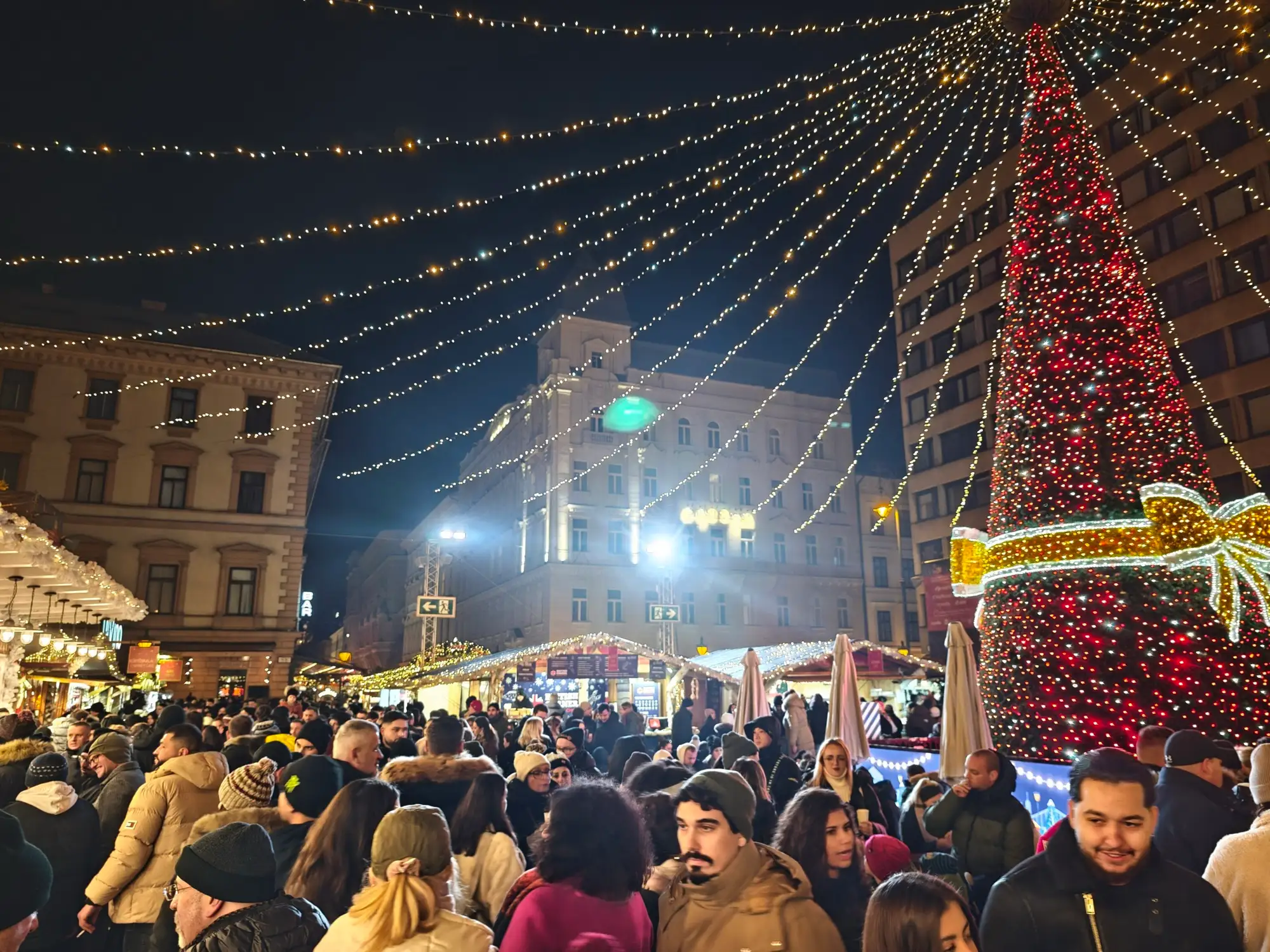
The one in front of St Stephen’s Basilica, at the Advent Bazilika market, is the wreath most visitors see, with a nativity scene and candle-lighting on the square. Last year the city’s fair in Városháza Park also lit its candles with live music on each of the four Advent weekends.
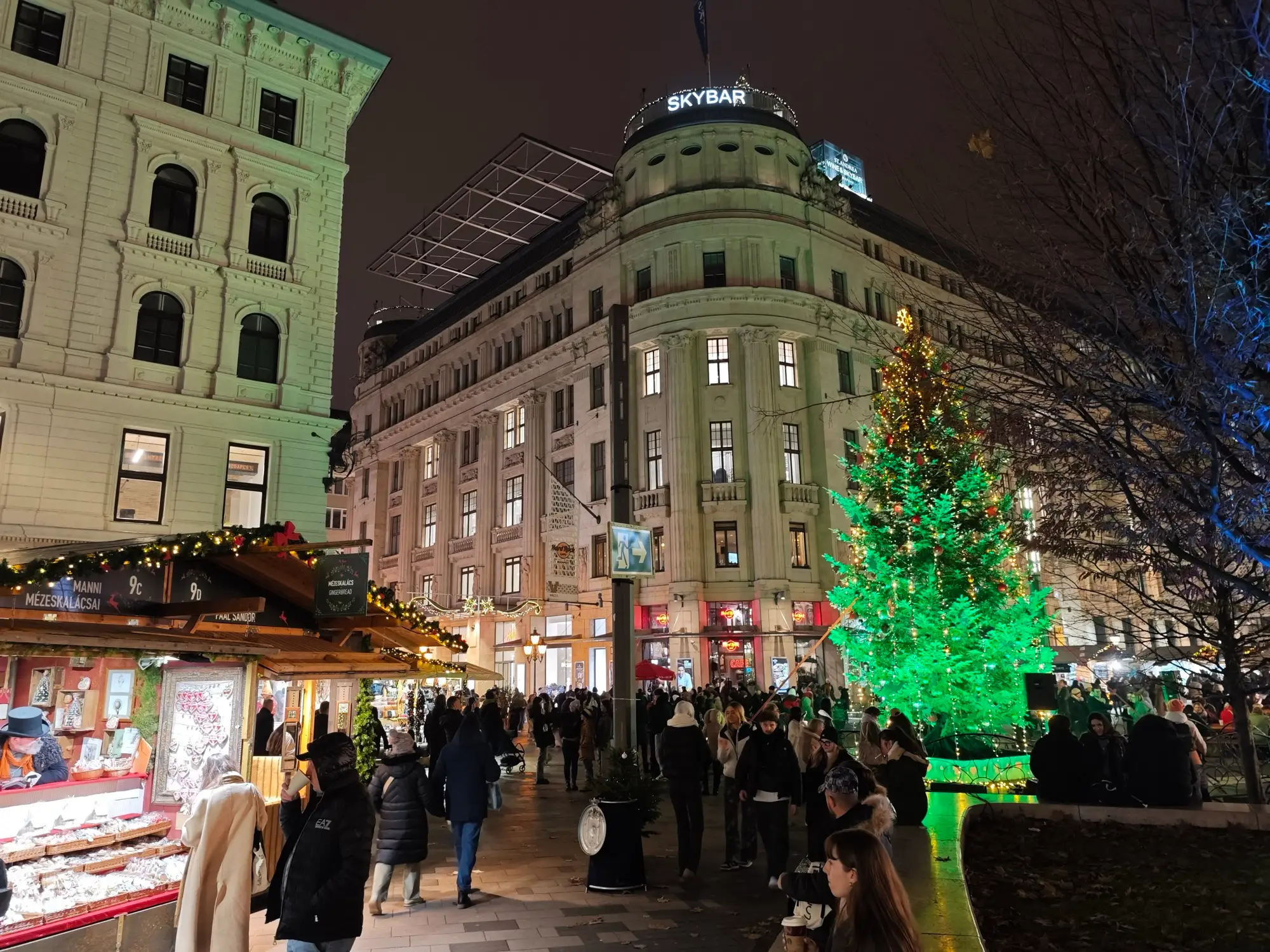
Hungarian households traditionally bake gingerbread, mézeskalács, before Christmas, spiced with cinnamon and cloves, and some of the iced patterns borrow from Hungarian folk motifs. Look for decorated gingerbread hearts on the market stalls. Last year Kozma Mézeskalács and Manni Mézes both had stalls at the Vörösmarty tér fair.
Luca day, 13 December
St Lucy’s Day was one of the strangest days of the old village year. Women were not supposed to spin, weave, wash or bake. Folk belief knew two Lucas, a kind one and a witch-like one, and in the north groups dressed as Luca went from house to house, while in western Hungary people went round with rhymes wishing that the hens would lay well.
The best-known custom is the Luca chair, made from thirteen kinds of wood and worked on a little every day until Christmas Eve. Taken to Midnight Mass, it was meant to let whoever stood on it spot the witches in the church. The witches would then give chase, so the owner had to run home scattering poppy seed behind them and burn the chair at once.
The gentler custom is Luca wheat, sown in a dish on 13 December and watered every day. How well it grew by Christmas was read as a sign for the next year’s harvest and the family’s health, and the dish then went on the Christmas table. Luca day is a custom of the home and the village rather than a public event, so there is nothing to go and see in the centre.
Christmas Eve in Hungary: the tree, the presents and Jézuska
Christmas Eve, Szenteste, is the main day of Christmas. Traditionally the family decorates the tree that day, and the dinner and the presents come in the evening. When the bell rings, everyone comes to the tree, there are carols, and some families go on to Midnight Mass. The presents are brought by Jézuska, the baby Jesus, a custom that came from German Protestant homes. Among the Hungarians of Transylvania it is the angel.
The Christmas tree arrived in Hungary in the first half of the 19th century in aristocratic homes, reached the middle classes and the villages later that century, and became universal in the 20th. It was hung with fruit, cakes, candles and paper, and it is still where the szaloncukor goes. The 24th was once a fast day, and Catholic families ate nothing until the evening bell, then played cards for walnuts until it was time for Midnight Mass. Folk belief held that animals could talk at midnight.
One newer ritual is Home Alone on the television, and in Hungary a Christmas without Kevin is no Christmas at all.
Two churches put the evening within a visitor’s reach. Last year St Stephen’s Basilica held a nativity play, its Pastorale, at 4pm on the 24th and Midnight Mass with Cardinal Péter Erdő, in Hungarian. The nativity play is the city’s version of betlehemezés, the old village custom of shepherds in sheepskin coats carrying a crib from house to house, with a deaf old shepherd as the comic part. Matthias Church holds Midnight Mass on 24 December 2026. Mass in English over Christmas is on our what’s open page.
The Hungarian Christmas dinner: fish soup, carp and stuffed cabbage
One or two hundred years ago Hungarians fasted before Christmas, and the fast included 24 December. That is why Christmas Eve is fish and meatless dishes, and the meat comes from the 25th. Every region and every family does it differently, but the core of the menu is the same.
Fish soup, halászlé
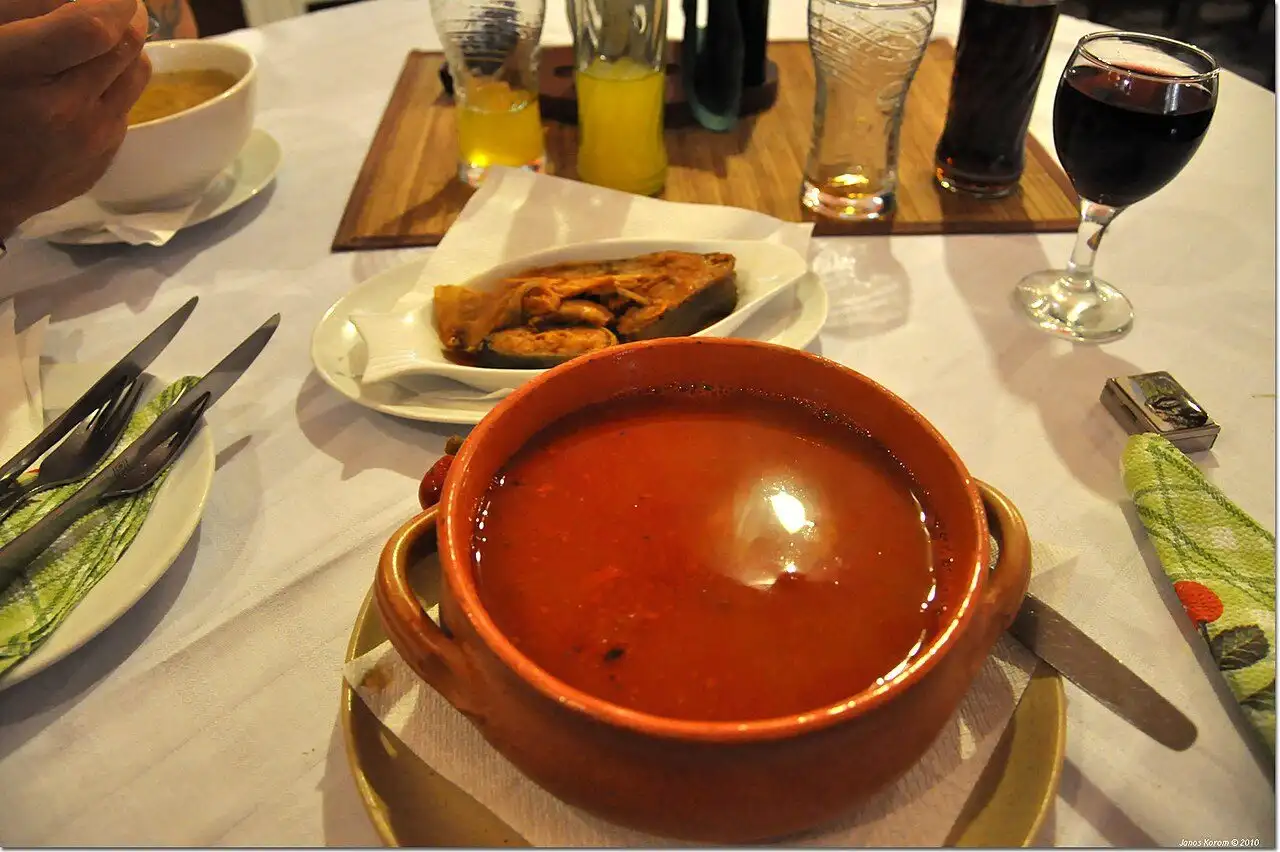
Fish soup (halászlé) is the star of the Hungarian Christmas table, usually made with carp and catfish and seasoned with paprika. How it is made depends on where you are from. In Baja it comes with gyufatészta, thick matchstick pasta, which in Szeged would be sacrilege.
Both versions are hungarikums, on Hungary’s official list of national treasures: fish soup from Baja, and fisherman’s soup from the Tisza, which starts with a stock of white fish and the heads and tails of carp, sieved, before the carp steaks go in. If you only try one Christmas dish in Budapest, make it this one.
After the soup, many families have fried carp with mayonnaise potato salad. Fish is lucky too, because its scales stand for plenty and wealth, and the way it swims forward for progress.
Stuffed cabbage, töltött káposzta
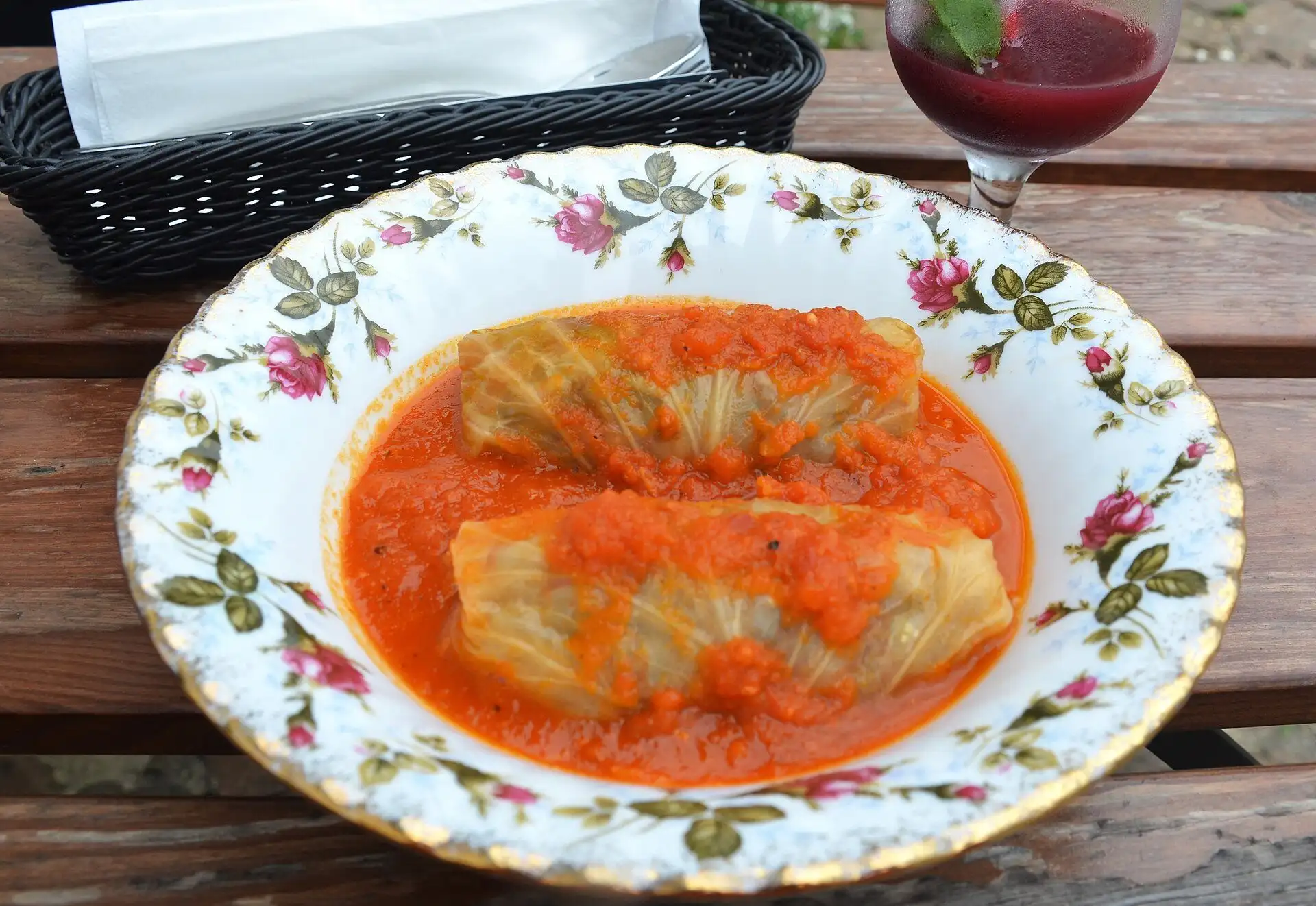
Töltött káposzta is minced meat and rice rolled in pickled cabbage leaves, cooked with smoked meat and served with sour cream, and at Christmas it is close to compulsory. It has meat in it, so it belongs to the days after the fast.
The usual version is from Szabolcs, in the north-east, where the filling is made of very small dumplings. In the east of the country Székely cabbage, with a lot of smoked meat, is the favourite. Every family has its own recipe and will tell you it is the right one.
The rest of the Christmas table
A sweet wine soup, thickened with egg yolk and spices, can open the meal. Kocsonya, pork set in its own jelly, comes out at Christmas and again at New Year. Roast turkey or duck with stewed red cabbage and mashed potato is common now, though turkey came from the English-speaking world, and the mayonnaise salads and the aspic show German influence.
Game is the other Christmas meat: venison or wild boar stew, pheasant soup and game in vadas sauce. In Somogy, south of Lake Balaton, smoked pork, ham and game are the tradition, in Transdanubia a braided brioche, and everywhere the fresh sausages and liverwurst from the pig-killing season that begins in late November.
Why poultry was kept off the Christmas table, and other superstitions
In the old days poultry was never served at Christmas, because turkeys, ducks and geese scratch backwards and that was a bad sign for the year ahead. Poppy seeds, peas and beans stood for plenty and apples for fertility.
Our favourites of the rest: on the Great Plain the family cut an apple into one slice for each person at the table; garlic was eaten with honey for health; a walnut went in each of the four corners of the room against evil; and nobody put their elbows on the table, while the woman of the house was not to get up during the meal, or the hens would not sit well on their eggs.
New Year has its own lucky food: lentils for money and pork for luck, and still no poultry, which would scratch your luck away.
Bejgli, szaloncukor and the other Hungarian Christmas sweets
Bejgli
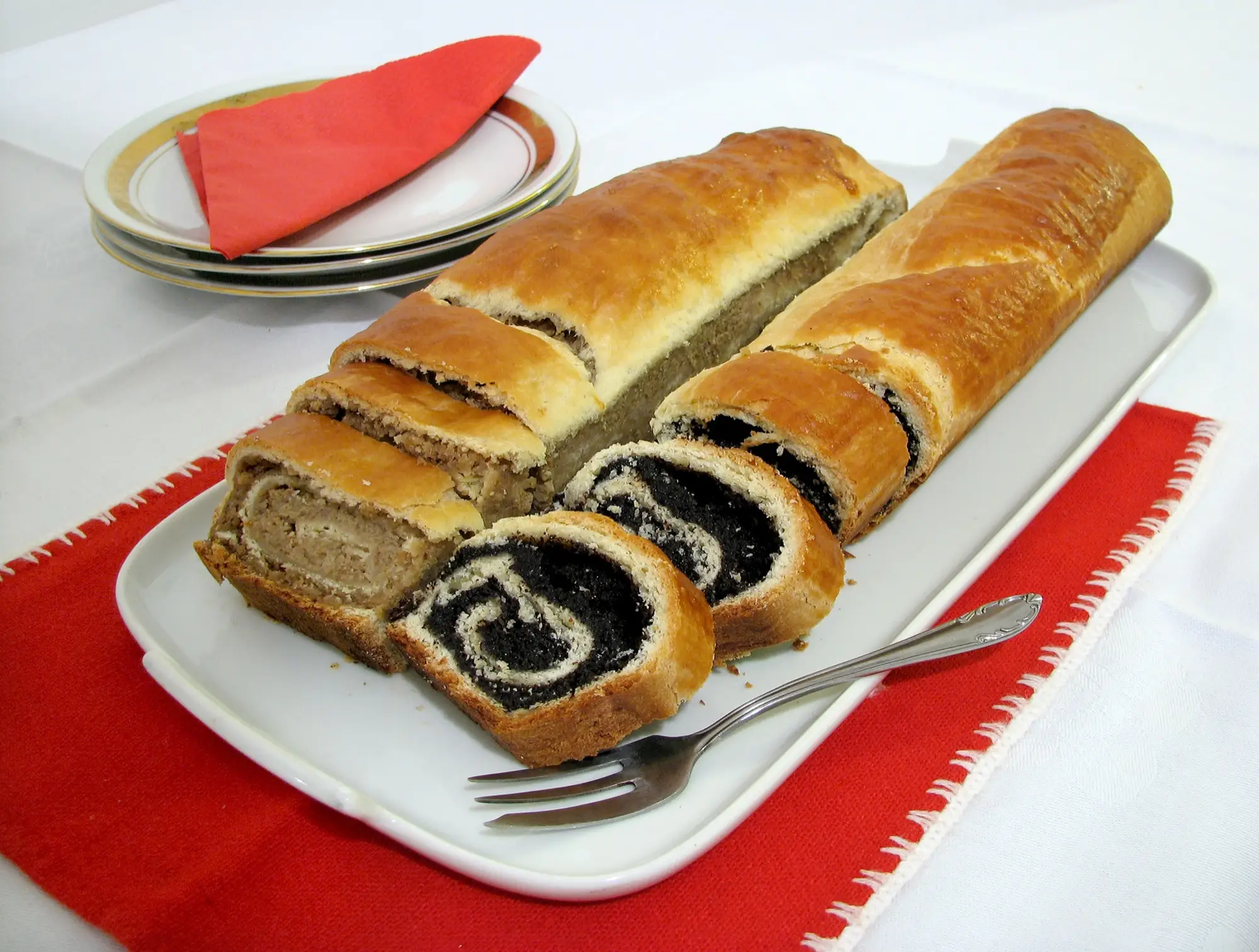
There is no Christmas in Hungary without bejgli (also spelt beigli), the rolled cake with a poppy-seed or walnut filling that is on the table in almost every home. Chestnut, chocolate, jam and even peanut versions exist. Plenty of families bake their own as part of getting ready for Christmas, and the Budapest cake shops sell many versions for everyone else. It is not a hungarikum, oddly, for a cake so central to the season.
Szaloncukor
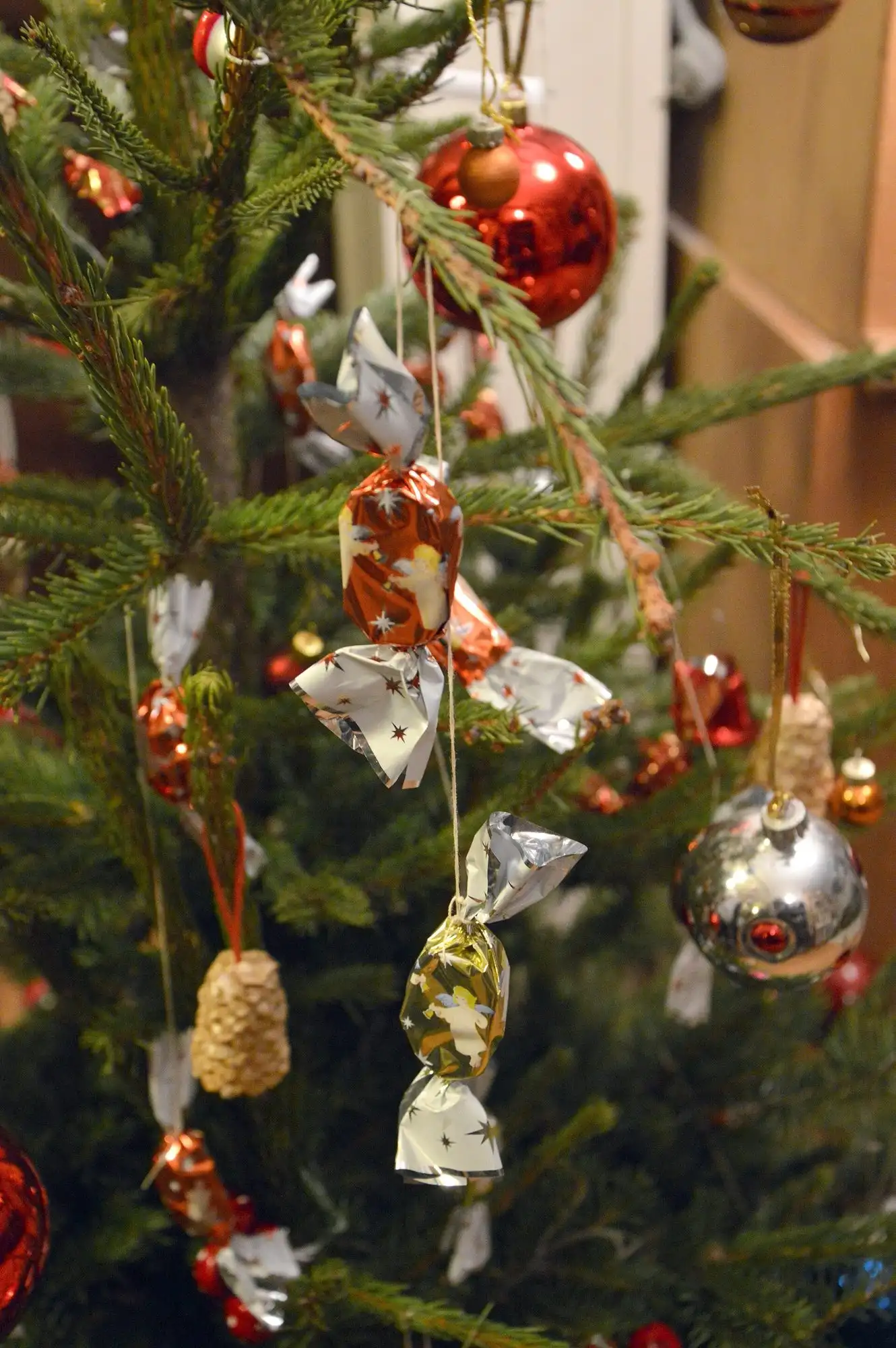
Szaloncukor are the sweets on the tree: bite-sized fondant, cream or jelly under a chocolate coat, each one wrapped in shiny paper with fringed ends and hung from the branches. The name is a translation of the German Salonzuckerl, parlour sweets, from the parlour, the szalon, where the tree stood and a bowl of sweets waited for guests.
Fondant came to Hungary with German confectioners in the 19th century. Frigyes Stühmer, a confectioner from Hamburg, bought a small sweet business in Pest in 1868 and built it into the country’s first chocolate factory, where fondant was made by machine from the end of the century, and he made this Christmas sweet for Café Gerbeaud. Chocolate coats came in the 1930s and fruit jelly fillings about forty years later.
The classic flavours are jelly, coconut, marzipan and chocolate, and the newer ones include gingerbread, Gerbeaud cake, pistachio and coffee. The game is to eat one and hang the empty wrapper back so nobody notices, and the experts reshape the paper so well that the theft goes unspotted for a very long time. A household gets through about a kilo. Szaloncukor became a hungarikum in 2024, and if you find it anywhere else in the world, it was most likely made in Hungary.
Mákos guba, flódni and zserbó
Mákos guba is what Hungarian families did with the leftover bread: a pudding of bread and poppy seed, and still a favourite. Flódni, a traditional Hungarian Jewish pastry, stacks poppy seed, walnut, jam and apple in layers, and Gerbeaud cake, zserbó, layers walnut and apricot jam under chocolate. Both have earned their place among the Christmas sweets. Some families prefer Gerbeaud cake, a Linzer or an apple pie to bejgli.
Two things you will meet at every market are market fare rather than Christmas dishes. Kürtőskalács, chimney cake, is a hungarikum and the sweet you will smell first at any stall, and forralt bor, mulled wine, is the market drink. Both are in our Christmas markets guide.
Where to taste a Hungarian Christmas in Budapest
Do your tasting and buying before the 24th. The markets stay open on the 25th and 26th, but the Great Market Hall and the shops are shut.
At the Christmas markets
The two central markets, Advent Bazilika and Vörösmarty tér, are the easiest place to try the Christmas food. In recent years their stalls have had stuffed cabbage, roasts and sausages, salmon smoked on the spot, game sausages, chimney cake, gingerbread, lángos, strudel, flódni and roast chestnuts.
Both have run themed food weekends. Advent Bazilika’s have gone from goose and the pig-killing feast to fish, stews, stuffed cabbage and sweets, and last year Vörösmarty tér’s ran from goose dishes to fish soup. This year’s programmes are not out yet.
Food and drink on both squares are pricey. Use them for a taste, lángos, the fire-roasted salmon or a chimney cake, and eat your proper Christmas meal in a restaurant a street or two away.
Fish soup in a restaurant
Fish soup is not on every Budapest menu, and the place to have it is a fish restaurant. Horgásztanya Vendéglő, at Fő utca 27 in Víziváros on the Buda riverside below Castle Hill, has a whole section of the menu for it. There is carp soup, catfish soup, a mixed one and fish soup with pasta the Baja way, each in a small pot or a kettle, and any of them can come korhely style, with sour cream, garlic, lemon and bay leaf.
Order the catfish to save yourself picking out bones. It is open every day from noon to 11pm, but its Christmas hours are not published, so book, and check before you go between the 24th and the 26th. For a Christmas dinner out on the 24th or 25th, the restaurants and dinner cruises that open are on our what’s open page.
Bejgli and szaloncukor from the cake shops
Szamos has a Christmas range with szaloncukor, Christmas cakes and chocolate figures. The two shops to know are Szamos Gourmet Ház at Deák Ferenc utca 5, by Vörösmarty tér, and the Szamos Chocolate Museum at Kossuth Lajos tér 10, by the Parliament.
Auguszt, a family confectioner since 1870, is one of the classic Budapest cake shops. Its central branch is at Kossuth Lajos utca 14-16, open Tuesday to Saturday from 10am to 6pm, and Geraldine Auguszt is at Múzeum körút 14-16, by the National Museum garden, open Tuesday to Sunday from 10am.
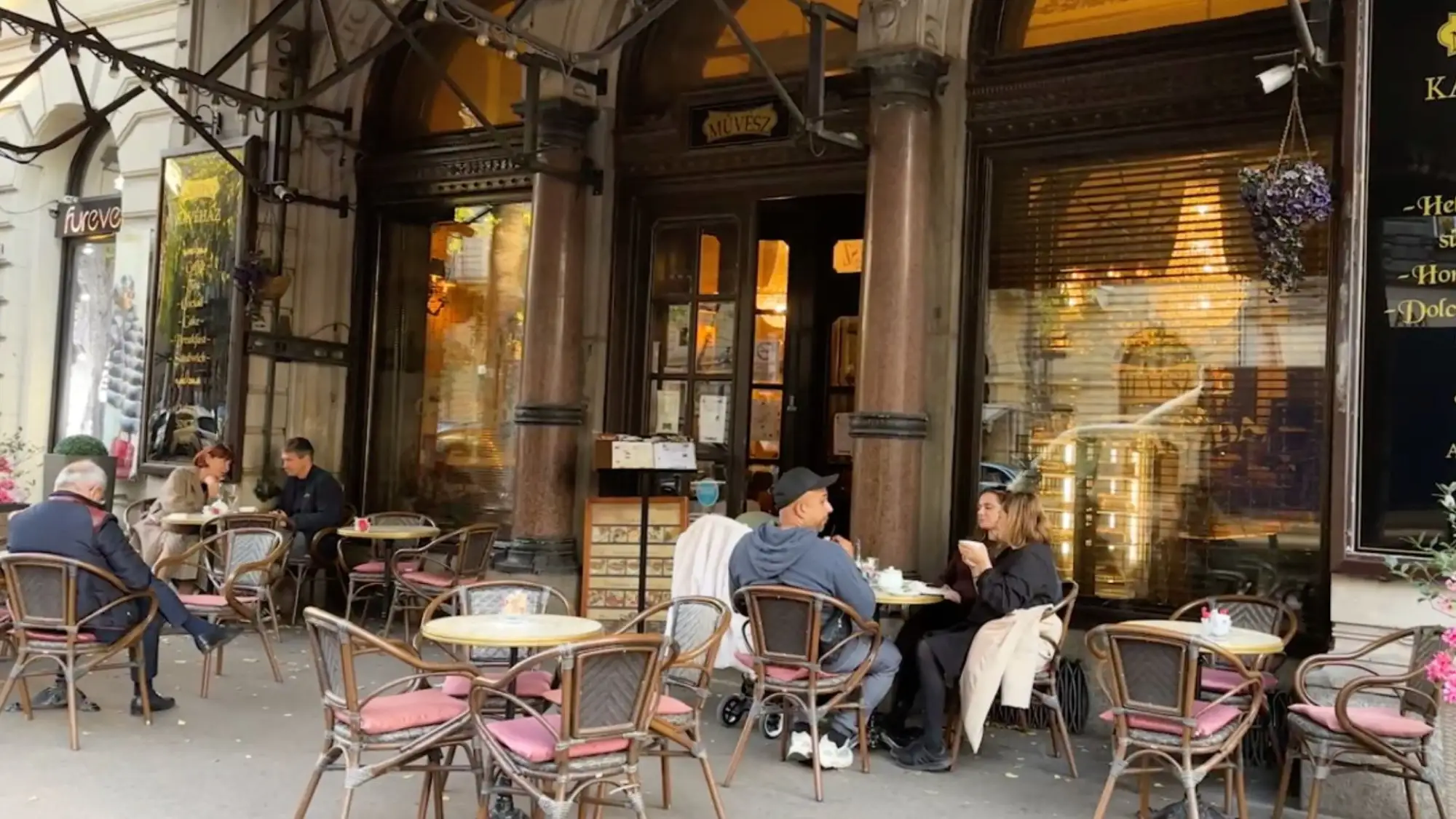
Gerbeaud on Vörösmarty tér has sold walnut and poppy-seed bejgli and a zserbó szaloncukor in past years. Go for the room and a slice of Gerbeaud cake rather than for a bargain, because in December it is expensive and busy, with queues even on Christmas Day. Our best bakeries in Budapest has more cake shops.
The Great Market Hall
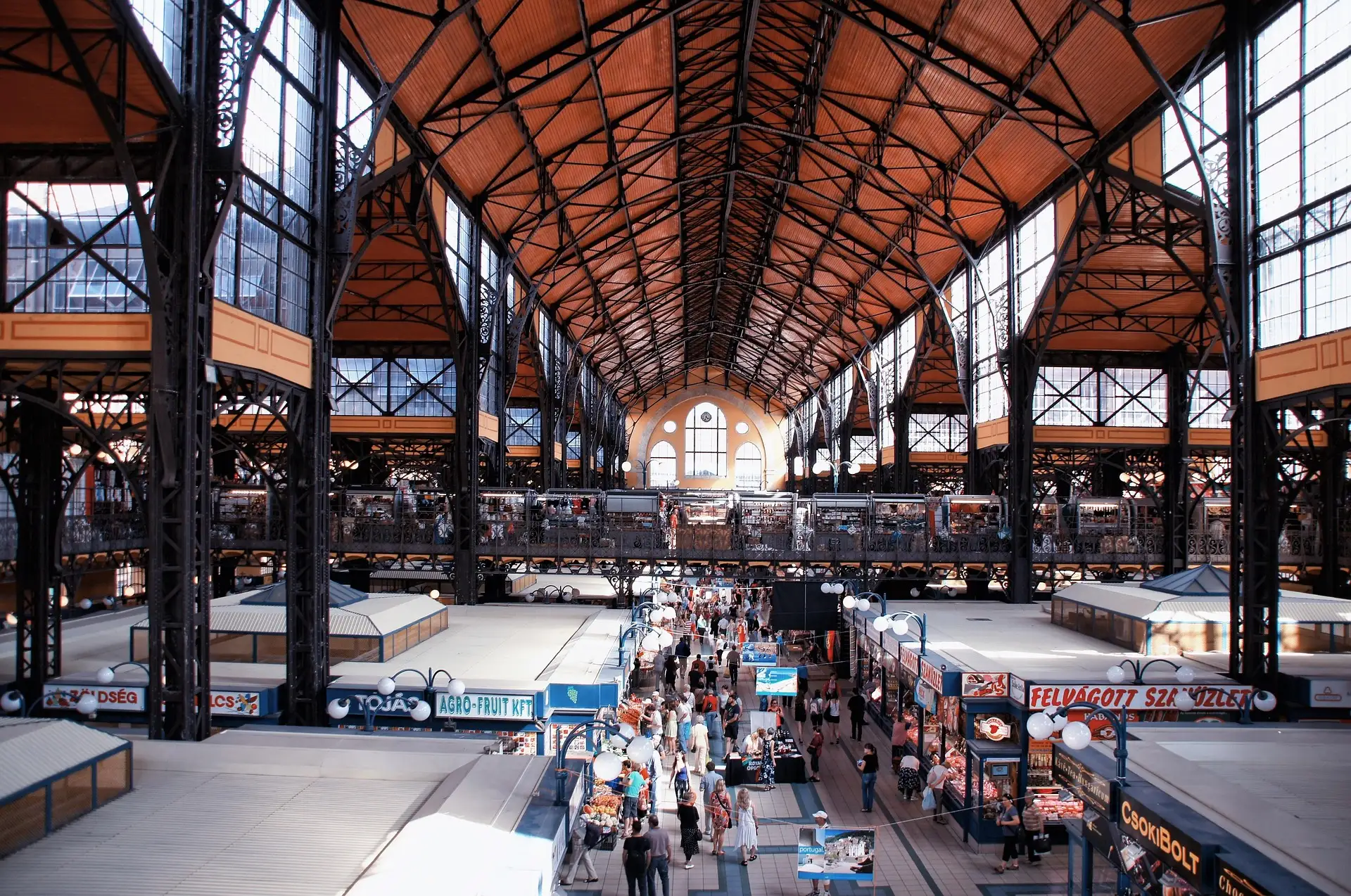
The Great Market Hall is the place for Hungarian food the rest of the year, from paprika and salami to pickles, with lángos upstairs. For bejgli and szaloncukor, though, go to a cake shop. The hall is closed on public holidays, so it is shut on 25 and 26 December, and in recent years it has opened only until noon on the 24th.
Hungarian Christmas food tours and cooking classes in Budapest
A guided walk round the markets is the easiest way to taste the Christmas food and have the traditions explained, and a cooking class is the way to make Hungarian food yourself.
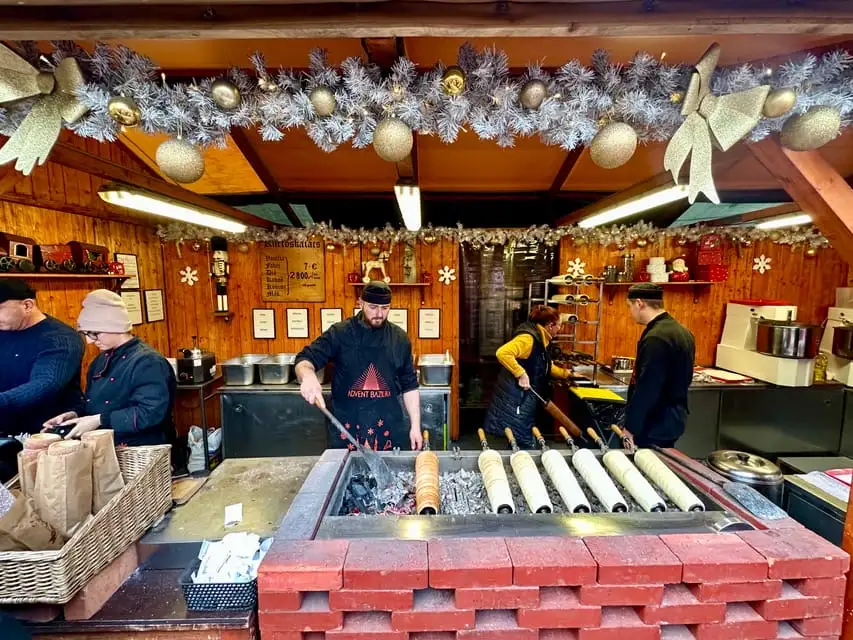
Budapest: Christmas Market Guided Walking Tour with Tastings
Best for: Tasting the Christmas treats with a guide who explains the customs behind them
- 2.5 hours
- Live guide in English
- Free cancellation up to 24 hours ahead
What’s included and more details
What’s included
- Chimney cake, mulled wine and marzipan
- Coffee at a historic coffee house
- A walking tour of the Christmas markets with a local guide
- Dates
- Every day from 15 November to 31 December
- Markets
- The operator lists Vörösmarty tér, St Stephen's Square and Madách tér
- Meeting point
- In front of the Hungarian State Opera House
- Book by
- At least 2 days ahead
- Options
- Pickup and a private group are available
- Not included
- Tips
- Also
- Wheelchair accessible
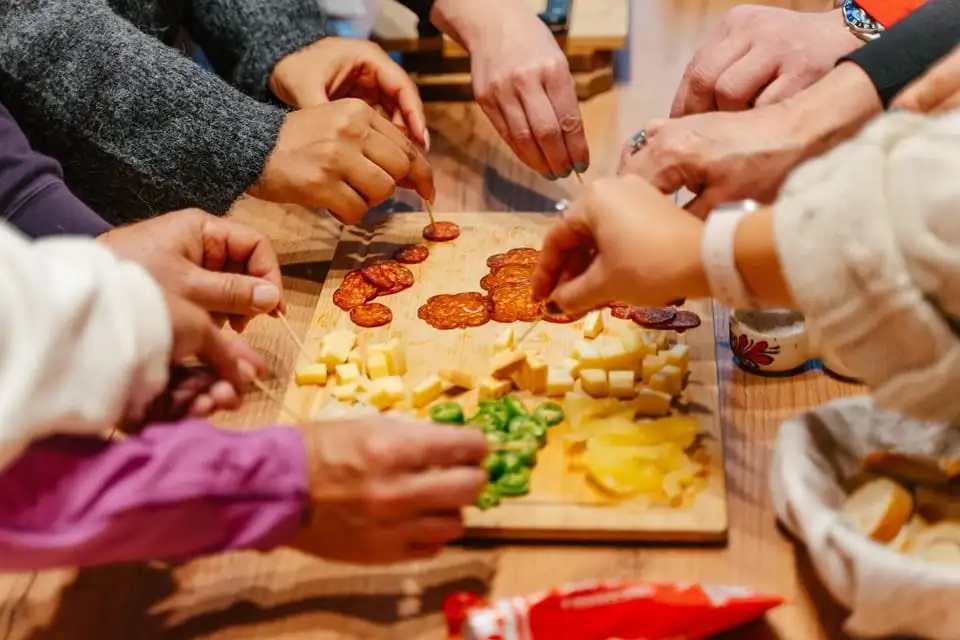
Budapest: Cozy Traditional Hungarian Cooking Class & Wines
Best for: Cooking a traditional Hungarian meal and eating it together
- 3 to 4 hours
- Live guide in English
- Free cancellation up to 24 hours ahead
What’s included and more details
What’s included
- A guided walk through the market to buy the ingredients
- A hands-on Hungarian cooking class in a local flat
- The meal you cook, eaten together at the table
- Cold cuts, pickles, wines and a shot of pálinka to start
- Choose
- The market and cooking option, which starts with the market walk, or the evening class, which does not
- Meeting point
- The market option meets at the front of the hall's main entrance
- Book by
- At least 4 hours ahead
- Over Christmas
- The hall is shut on 25 and 26 December and last year closed at noon on the 24th, so book the market option on another day
- The market tour runs every day of its season, Christmas Day included. The markets close mid-afternoon on Christmas Eve, so pick another day for it
- The cooking class runs all year, and what it promises is a traditional Hungarian meal rather than a Christmas menu
- For a sweet to make yourself, the chimney cake workshop is a 65-minute hands-on session for all ages, where you choose a topping and eat it warm
- A Christmas tour with Hungarian folk music takes in two Christmas markets, with the guide singing folk songs and showing traditional dance steps. It runs on set dates only, with none from 4 to 18 December or on 29 December. Avoid Christmas Eve, when the markets close mid-afternoon, and 1 January, when only Advent Bazilika is still open
Christmas traditions you can see in Budapest
Beyond the Santa Run, the Advent wreaths and the Basilica’s nativity play, the Hungarian Heritage House, the national folk culture institution, has held an Advent weekend with folk music, crafts and children’s dance on the first weekend of December in recent years. The place changes from year to year. It was at the Budai Vigadó on Corvin tér in 2024 and at the Hungarian National Museum in 2025, and the 2026 dates and place are not announced yet.
For the Christmas of the 1970s and 80s, the Retro Christmas Experience is an hour and a half at a café by Rákóczi tér, with sandwiches and retro desserts, music of the time, archive photos and a quiz.
A few Christmas words in Hungarian
| Hungarian | English |
|---|---|
| Boldog karácsonyt! | Merry Christmas! |
| karácsony | Christmas |
| Szenteste | Christmas Eve |
| advent | Advent |
| Mikulás | St Nicholas, who comes on 6 December |
| krampusz | his devil companion |
| virgács | the birch rod for naughty children |
| Jézuska | the baby Jesus, who brings the presents |
| halászlé | fish soup |
| töltött káposzta | stuffed cabbage |
| mákos bejgli, diós bejgli | poppy-seed bejgli, walnut bejgli |
| szaloncukor | the wrapped sweets on the tree |
| mézeskalács | gingerbread |
| mákos guba | poppy-seed bread pudding |
| kürtőskalács | chimney cake |
| forralt bor | mulled wine |
| Luca | St Lucy, 13 December |
The markets, the lights and the rest of the season are in our Christmas in Budapest guide, and the 19 picks we rate most are in the best things to do in Budapest at Christmas.