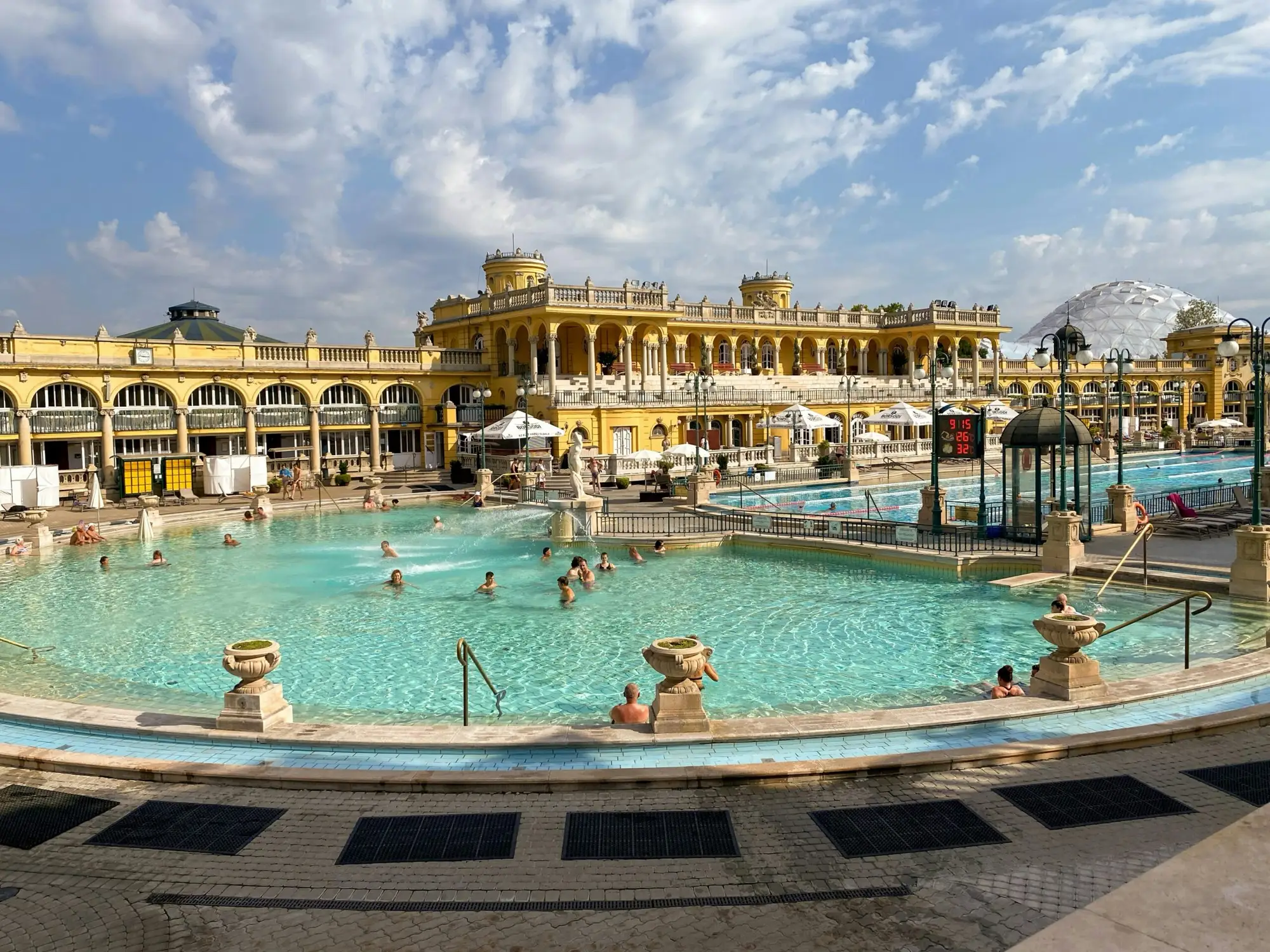
Rudas is the bath we would send most people to. Its 16th-century Turkish bath is the real thing, the rooftop pool looks across the Danube, and on Friday and Saturday nights it stays open until 3am. Széchenyi is the famous one, and worth it for the outdoor pools as long as you are there when it opens.
The list is shorter than it used to be. Gellért closed for rebuilding in October 2025 and plans to reopen in 2028, and Király has been shut since March 2020. Most of the historic baths do not admit children under 14, so families have two places to go, Palatinus and Pesterzsébet. Below are the seven baths worth your time, best first, with who each one suits and what catches people out.
Which one for you
| Bath | Best for | Under-14s | Tickets |
|---|---|---|---|
| Rudas | The Ottoman bath, the rooftop view, bathing at night | Not admitted | Online or at the door; night tickets online only |
| Széchenyi | The famous outdoor pools on a first visit | Not admitted | Book ahead; online tickets get priority when it is full |
| Lukács | Bathing among locals, and hot summer days | Not admitted | Online or at the door; one free visit with the Budapest Card |
| Veli Bej | Quiet, in a small Ottoman bath | Not admitted | At the desk only, valid for three hours |
| Dandár | A cheap, local soak close to the centre | Not admitted | Online or at the door |
| Pesterzsébet | A modern bath with few tourists | Welcome, but not in the medicinal pools | Online or at the door |
| Palatinus | Summer days, and children | Welcome, but not in the medicinal pools | Online, full day with a cabin or locker |
Map of the thermal baths in Budapest
The Buda baths line the river. Rudas is at the Buda end of Elisabeth Bridge, and Lukács and Veli Bej are next door to each other, a few minutes north of the Buda end of Margaret Bridge. Széchenyi is in City Park, on metro line M1. Palatinus is on Margaret Island, Dandár is in Ferencváros on the tram 2 line, and Pesterzsébet is out on the southern edge of the city.
1. Soak under the Ottoman dome at Rudas Thermal Bath
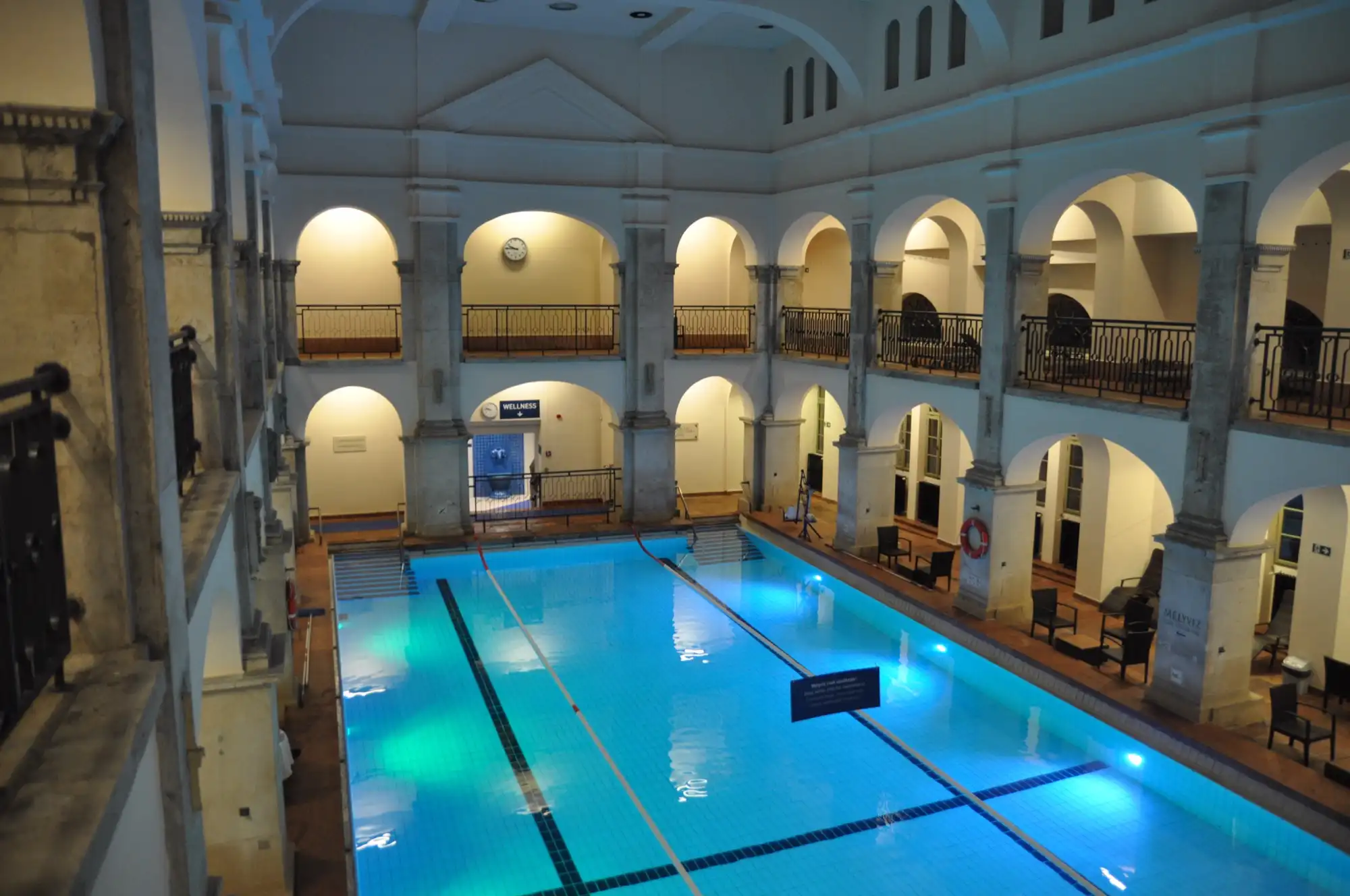
The reason to pick Rudas over every other bath is its Turkish bath, built between 1566 and 1572 under the Ottoman pasha of Buda and in use ever since. An octagonal pool sits under a dome 10 metres across, held up by eight pillars, and the six pools in the hall run from a 16°C plunge to 42°C. Working your way between the hot and the cold is what regulars come for. The bath recommends 20 minutes at a time in each pool.
The panorama pool on the roof is kept at 36°C and looks straight across the Danube to Pest. It holds only 16 people at a time, so it is full for most of the day. It is emptiest when the bath opens at 6am, and at its best after dark. On Friday and Saturday nights Rudas stays open until 3am, with a bar on the roof, and the night crowd comes to soak rather than to party. Night tickets are sold online only, on the bath’s own website, along with plain day tickets.
Go before noon. From about midday to 5pm there is usually a queue at the door, and Saturdays are the worst. Only a fast-track ticket, sold on the bath’s own website, guarantees you walk straight in. Buy the ticket for all zones rather than the spa section alone, because the Turkish bath is the point. Trams 19, 41 and 56 stop outside. More in our Rudas Thermal Bath guide.
2. Sit in the steaming outdoor pools at Széchenyi Thermal Bath
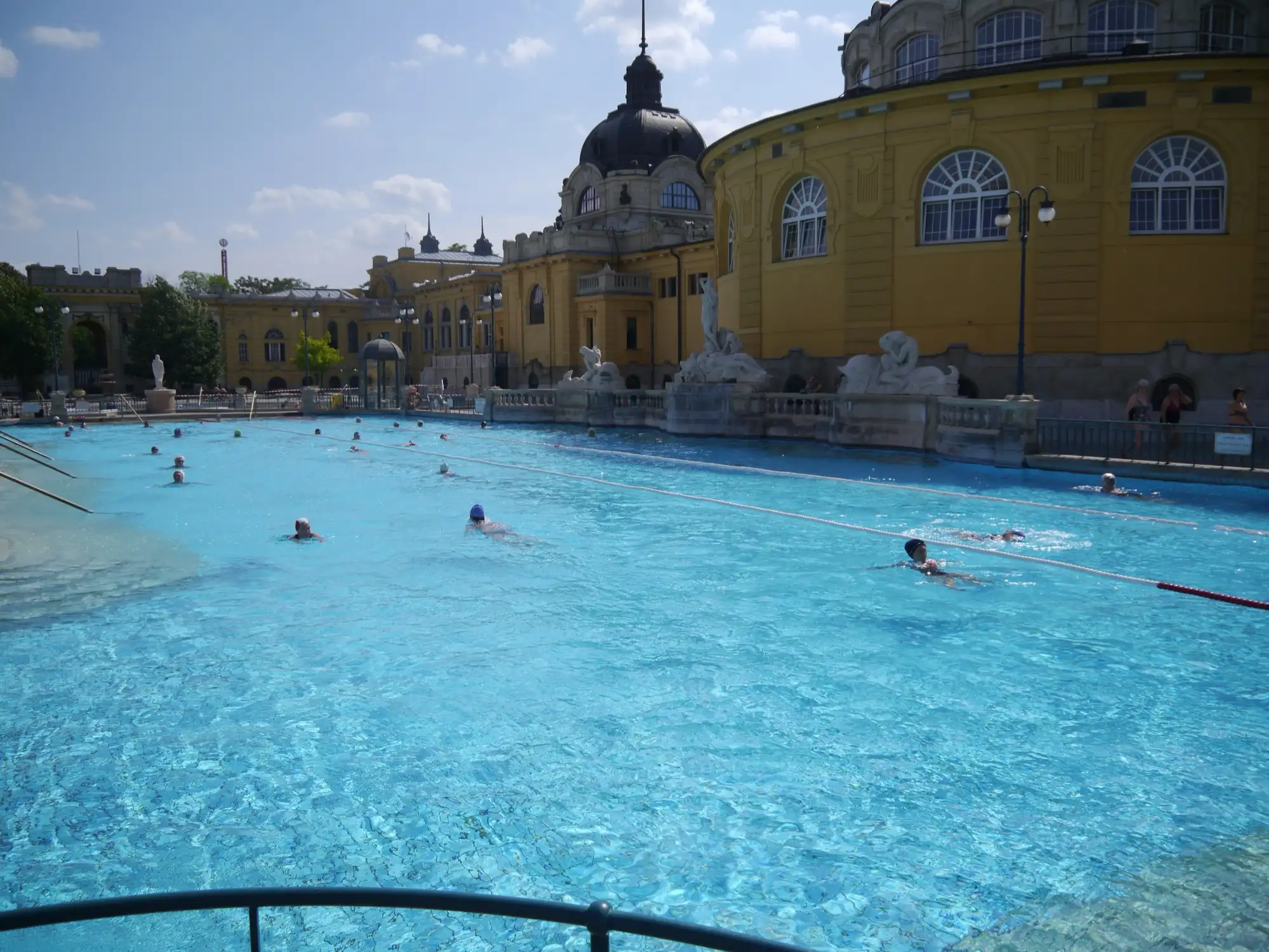
For the Budapest bath in every photograph, go to Széchenyi, the big yellow palace in City Park with steam coming off the outdoor pools. It opened in 1913 as the first thermal bath in Pest, and it has 18 pools, 3 outdoor and 15 indoor. The outdoor thermal pool, at 36 to 38°C, is why you go, and it is at its best on a cold morning. The leisure pool next to it has a whirling corridor that carries you round in a circle.
The indoor halls are the weaker half. They are a warren of older pools and saunas that look their age, and they are where the crowds pile in once the day gets going. Pools also close one at a time for maintenance, so check the list of available services on the bath’s website the day before you go.
Be there when it opens, at 7am on weekdays and 8am at weekends. It is calm until about 9, busy from 10 and at its fullest from midday, and weekends are worse than weekdays. Book online, because when the bath is full, online tickets get priority. A cabin costs more than a locker, but one cabin does for two people and gives you somewhere private to change. The fast track is not worth paying for on an ordinary weekday morning. The Palm House lounge and getting there are in our Széchenyi Thermal Bath guide.
3. Bathe with the locals at Lukács Thermal Bath
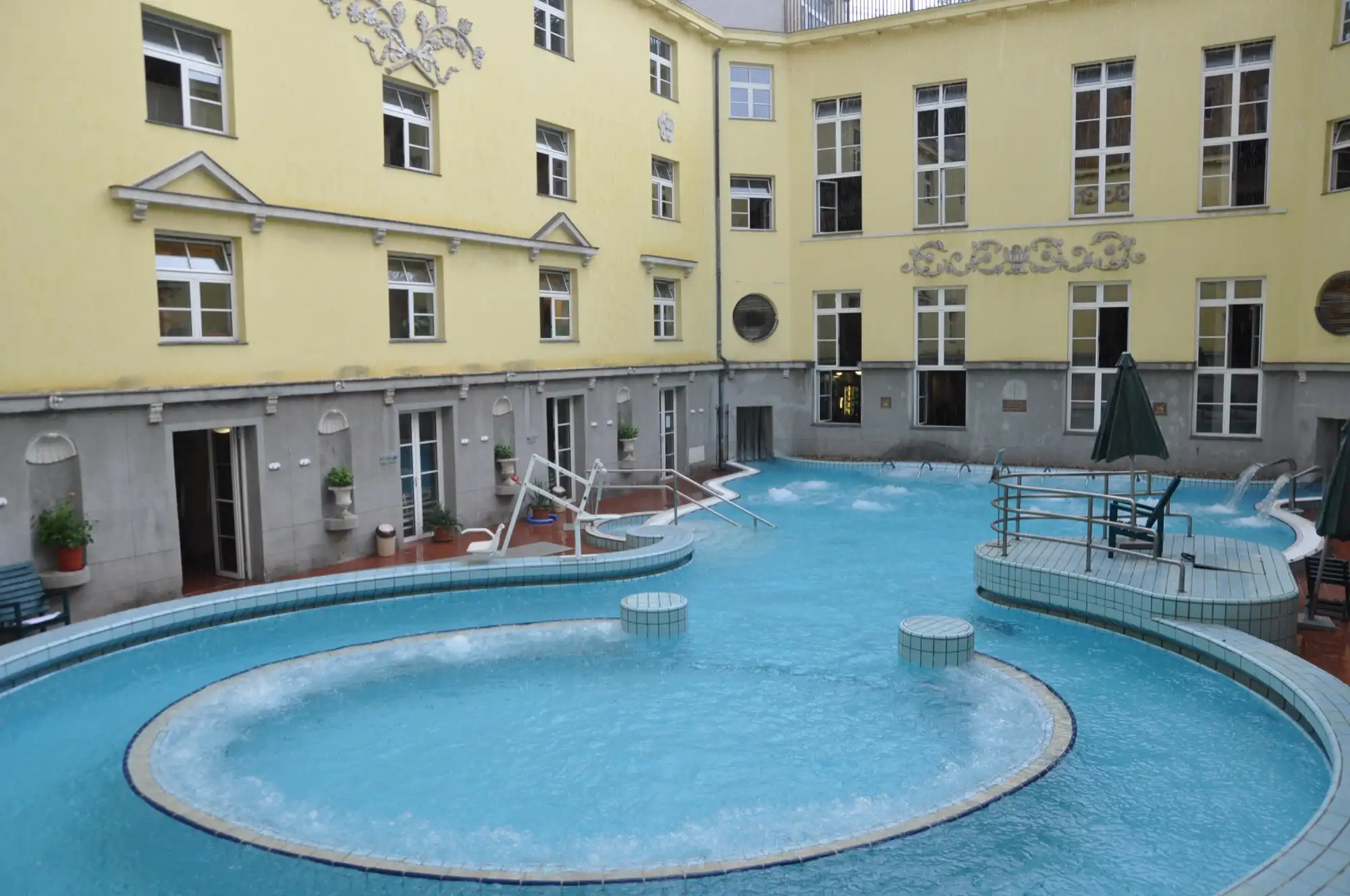
Of the well-known baths, Lukács is the one Budapest people still use themselves. The crowd is mostly regulars, many of them older locals, and far fewer tourists than at Rudas or Széchenyi. Look for the marble plaques on the courtyard wall, put up over the years by grateful patients.
Inside are three medicinal pools at 32, 36 and 40°C. Outside, the adventure pool in the courtyard stays open all year at 33 to 35°C, with bubble beds, neck showers and a lazy river that is easy to miss, and there are two swimming pools at 22 and 26°C. That cooler water makes Lukács our pick on a hot summer day. The Sauna World costs extra and is swimsuit-free, but the basic ticket still gets you four saunas and steam rooms.
It is not polished. The building is dated and a bit of a maze, and staff enforce the cap rule in the swimming pools firmly, so bring your own cap. Weekday mornings are easy, while weekends and public holidays fill up. It stays open until 10pm on Tuesdays, and the drinking hall serves the spring water on Wednesdays and Fridays. Trams 17, 19 and 41 stop outside. More in our Lukács Thermal Bath guide.
4. Have an Ottoman bath almost to yourself at Veli Bej
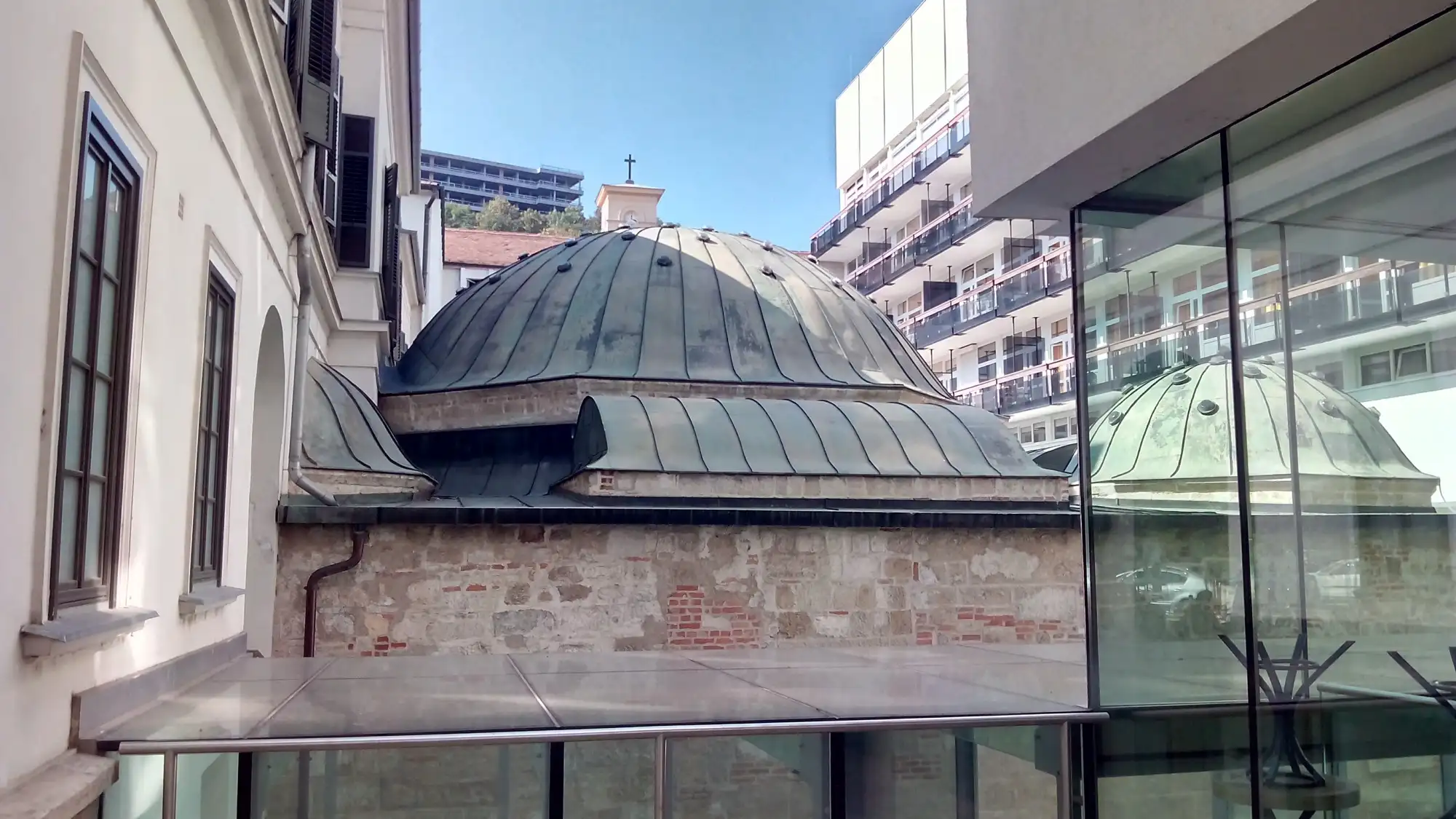
Veli Bej gives you an Ottoman bath without the crowd. It was finished in the mid-1570s, when Buda was under Ottoman rule, and sits inside the Hospitaller Brothers’ hospital on Árpád fejedelem útja, next door to Lukács. The order got the building back in 2000 and restored it, adding a glass-roofed walkway around the old bath.
Under the dome is an octagonal pool at 36 to 38°C, with four smaller pools in side chambers at different temperatures. Alongside are two steam rooms, a Finnish sauna and an infrared one, a jacuzzi, a Kneipp walk and a small swimming pool. There is no outdoor pool, which makes it a winter bath more than a summer one.
Numbers are kept down, so it stays calm and very clean, and when it is full you wait for someone to leave. A ticket lasts three hours and is sold only at the desk. The bath closes from noon to 3pm every day to change the water, so arrive 15 to 30 minutes before a session starts, at 6am or 3pm. On Mondays and Tuesdays there is no morning session. Bus 9 stops outside, and trams 17, 19 and 41 stop at Komjádi Béla utca, three minutes away.
5. Soak in the courtyard pools at Dandár Thermal Bath
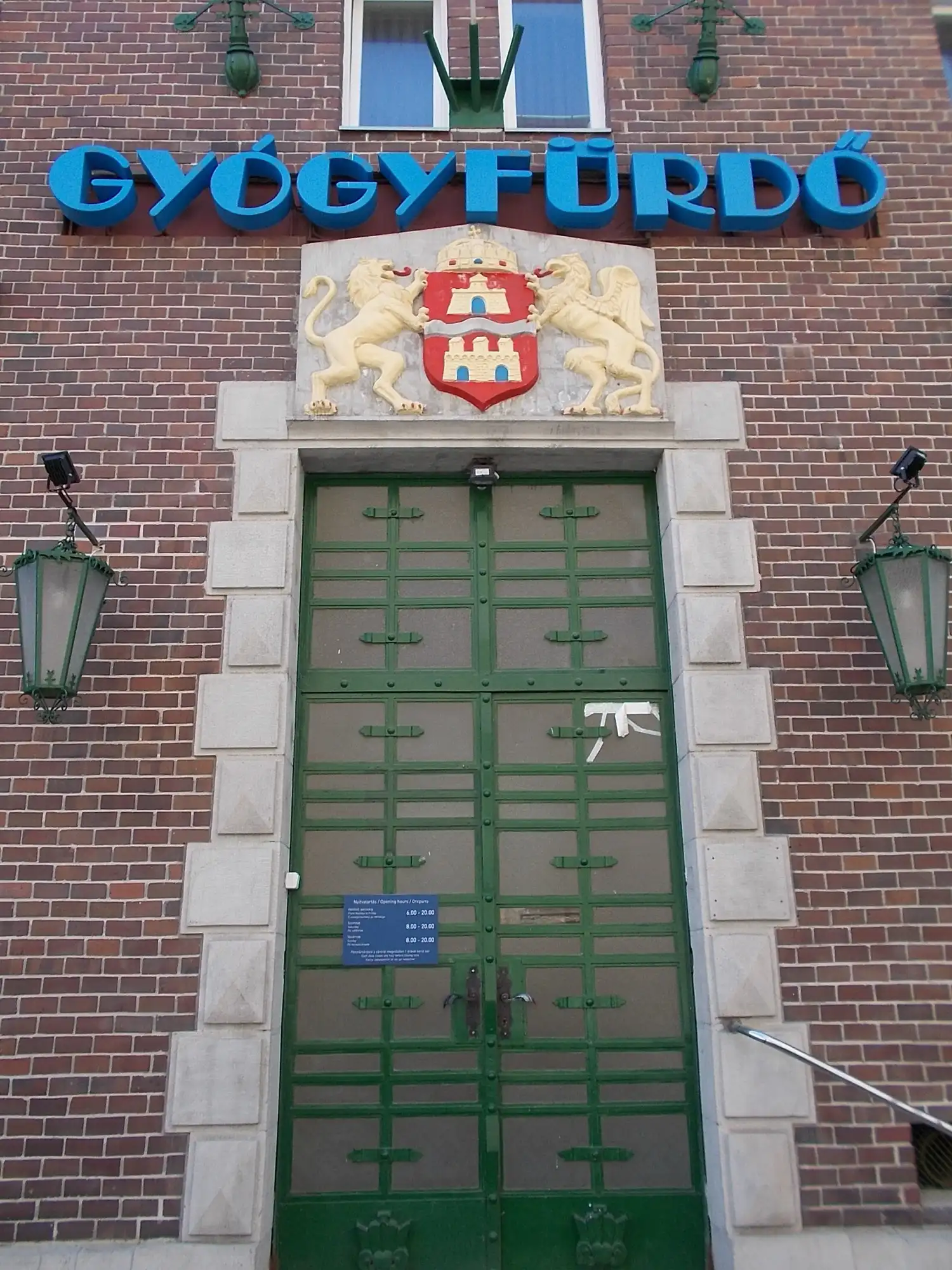
Few visitors find Dandár, and that is its appeal: a small, cheap neighbourhood bath in Ferencváros, used mostly by locals. It opened in 1930 as a public washing bath and has been a medicinal bath since the late 1970s.
Indoors there are two medicinal pools at 35 and 38°C, a cold plunge and a sauna. The better part is outside, where two pools at 36 and 38°C with massage jets sit in an enclosed courtyard and stay open all year. A small sauna world is in the basement.
If you buy at the door, the basic thermal ticket covers the indoor pools only, so ask for the complex ticket, which adds the courtyard pools and the sauna world. Dandár stays open until 10pm on Thursdays, though the massage jets stop at 7pm. Trams 2, 23 and 24 and bus 54 stop at Haller utca, two minutes away.
6. Head out to Pesterzsébet for a modern bath without the tourists
Out on the southern edge of the city, Pesterzsébet is the modern bath locals name as their favourite, and the one visitors miss. It was rebuilt and reopened in 2018 and 2019, so everything is newer than at the historic baths, and it rarely feels crowded.
The old domed hall keeps an octagonal pool at 36°C, alongside a hotter medicinal pool and a leisure pool you can swim out of into the open air. Outside, a sitting pool and a swimming pool stay open all year, and you can play chess in the sitting pool. In summer a wave pool and a children’s pool open as well.
The bath was built on Budapest’s only iodine-salt spring, but that well has been out of action since 2021, and the medicinal pools use a different thermal water. Unlike the historic baths, it welcomes children, though under-14s may not use the medicinal pools without a prescription. It is open until 10pm on Saturdays, when the swimming pool still shuts at 7.40pm. Take the H6 HÉV to Pesterzsébet felső, or buses 35, 36, 148 or 151 to Sósfürdő, at the gate.
7. Spend a summer day with children at Palatinus on Margaret Island
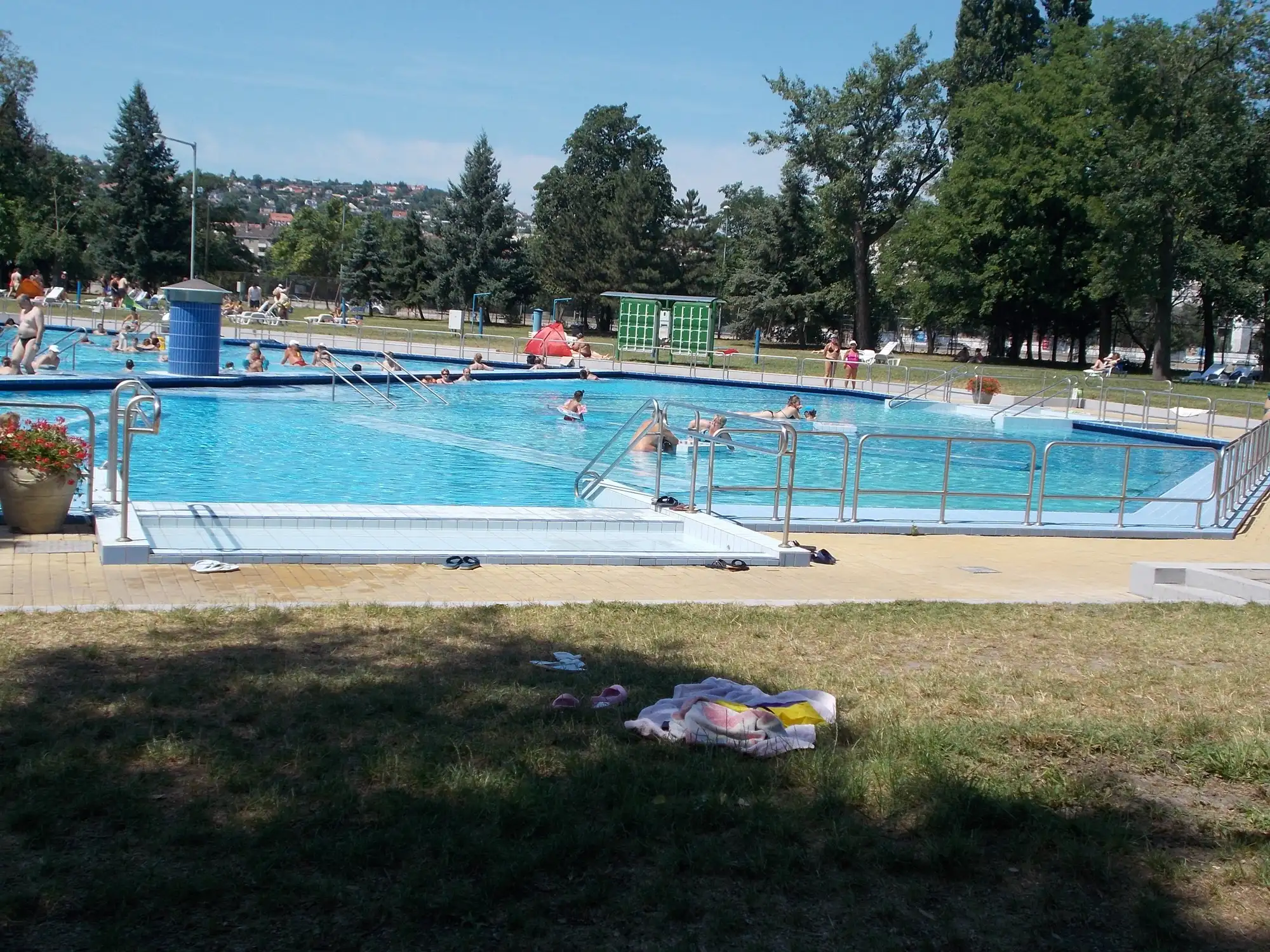
Palatinus is Budapest’s big summer lido, on Margaret Island, and the answer for anyone travelling with children under 14. It opened in 1919 as the city’s first lido, and its Bauhaus-style building went up in 1937. The draw is outdoors: lawns, a wave pool, slides and a string of pools, some of them filled with thermal water.
It is a day at the pool rather than a thermal bath. There is an indoor medicinal pool at 36°C, but people come for the sun and the slides. Children are welcome, though under-14s may not use the medicinal pool or the hot plunge pool without a prescription.
Go on a weekday, because on summer Saturdays the loungers and lockers run out. Palatinus is open every day of the year, but many of the outdoor pools and the slides close for the season in late summer and the hours are shorter in winter, so once summer ends there is little reason to choose it over the baths above. Bus 26 stops outside, and our Palatinus guide has the pools by season.
Closed baths in Budapest: Gellért, Király and Rác
Gellért, the Art Nouveau bath at the foot of Gellért Hill, closed on 1 October 2025 for a full rebuild. The bath plans to reopen in 2028, and the operator’s own later timetable puts the indoor bath at the end of 2028 and the outdoor pools in summer 2029, so do not plan a trip around it before then. The operator expects a large share of Gellért’s visitors to go to Rudas, further along the same riverbank. The rebuild is covered in our Gellért Thermal Bath guide.
Király, the 16th-century Ottoman bath on Fő utca, has been closed since 15 March 2020, with no date to reopen. Veli Bej is the same kind of bath, and open.
Rác, below Gellért Hill, has been shut for many years. The operator bought it in 2021 and is preparing its renovation, with no reopening date.
Verdict
If you do one, make it Rudas. Check the Turkish bath’s schedule if you are going as a mixed group, arrive before noon, and save the rooftop pool for first thing or after dark. On a first trip where you want the photograph, go to Széchenyi at opening time and spend your visit outside. For quiet, go to Veli Bej. With children, go to Palatinus in summer and Pesterzsébet the rest of the year.