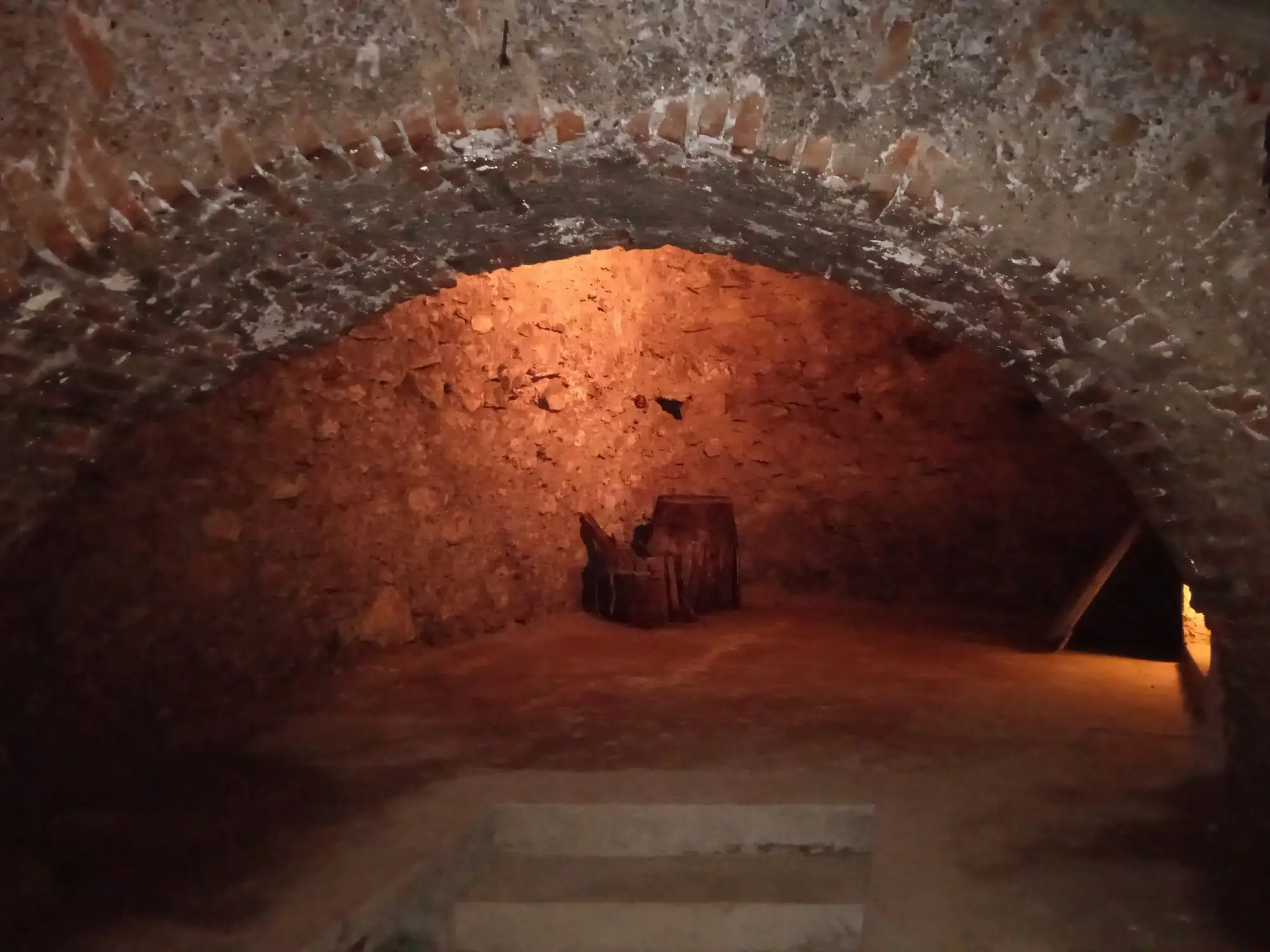
The Buda Castle Caves are the 3.3 km of natural hollows and hand-cut cellars that run under the streets of the Castle District, and the national park that looks after them walks small groups through the middle of it. Wine cellars, a medieval prison and a wartime shelter sit on one route, a few metres below the cobbles.
There is one way in, and it is a guided tour booked online. The door is a plain wooden one at Dárda utca 2, it opens ten minutes before the start, and nothing is sold at the entrance.
- Visit length
- 40 minutes, or 1.5 hours
- Entry
- Guided tour only, booked online
- Book ahead
- Yes. Nothing is sold at the door
- Best time
- Any season. It is 12°C down there
- Nearest stop
- Bus 16 / 16A / 116 Szentháromság térAbout 3 minutes. Walk back along Országház utca and take the first left into Dárda utca
- Accessibility
- Not step-free. Not for wheelchair users
- Temperature
- 12°C all year
- Group size
- Up to 25 people
- Age
- Short tour from 5, full tour from 12
Buda Castle Cave tickets and tours
The tour is the ticket here. Both products below are guided walks that include the cave, and neither can be bought at the door.
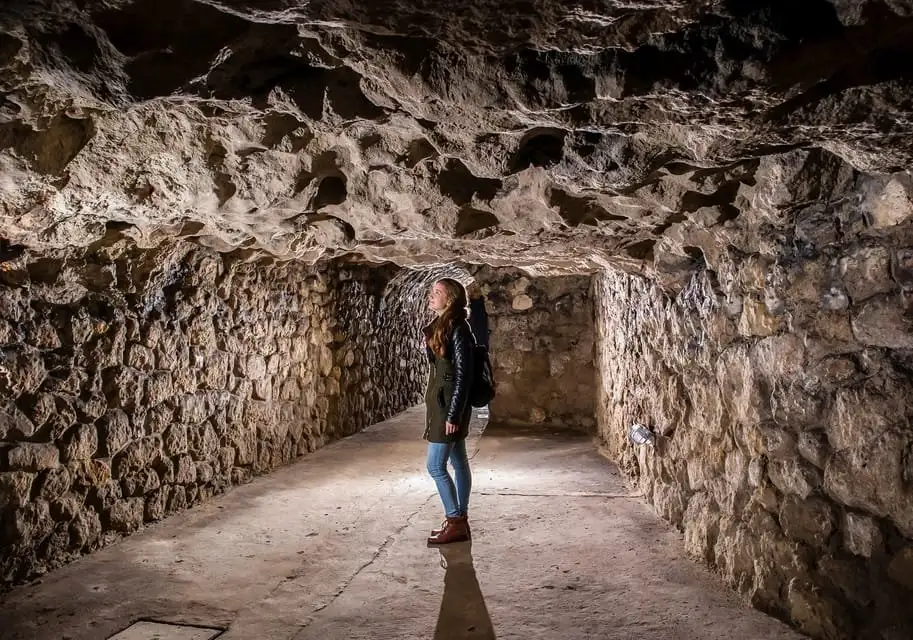
Budapest: Buda Castle Cave Tour
Best for: Getting under Castle Hill with a guide, short or in full
- 40 minutes, or 1.5 hours on the long tour
- Live guide in English
- Free cancellation up to 24 hours ahead
What’s included and more details
What’s included
- Guided walk through the cave on lit, paved paths
- A live guide, in a group of no more than 25
- Choose
- The 40-minute short tour, or the 1.5-hour tour that covers every section open to the public
- Meeting point
- Two points, about four minutes apart. Go by the one printed on your voucher
- Bring
- A warm layer and shoes you do not mind getting dirty. It is 12°C inside all year
- Not suitable for
- Wheelchair users, anyone with limited mobility or claustrophobia, and children aged 3 and under
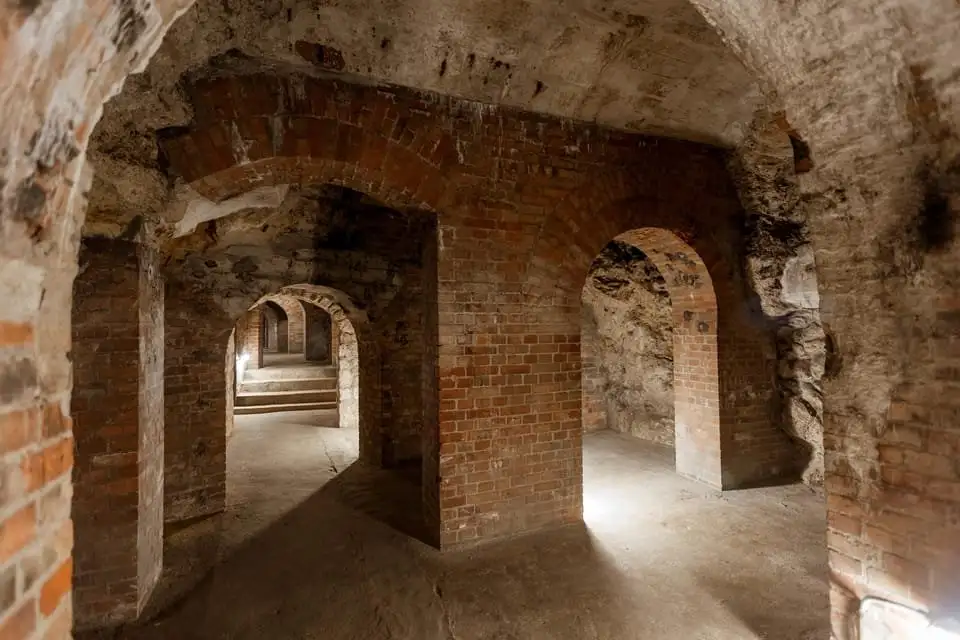
Budapest: The WWII Siege of Buda Castle & Bomb Shelter Tour
Best for: The war under the hill, above ground and below
- 1.5 hours
- Live guide in English
- Free cancellation up to 24 hours ahead
What’s included and more details
What’s included
- A guided walk through the Palace District and down Úri utca
- 35 minutes inside the Buda Castle Cave
- A dwelling-house cellar and an original wartime bomb shelter
- Meeting point
- De la Motte-Beer Palace, Dísz tér 15, at the green gate by the Posta building. Look for the turquoise umbrella
- Ends at
- Szentháromság tér
- Booking
- At least an hour ahead, and it runs only a couple of days a week
- Not suitable for
- Under-14s, wheelchair users, anyone with limited mobility or claustrophobia
- Nothing is sold at the cave door, so a ticket bought online in advance is the only way in
- The door opens ten minutes before the start and the group leaves on time. Arrive after that and there is no refund
- Both tours can be cancelled free up to 24 hours ahead, so a booked slot is not a locked-in day
What each tour covers, how the two meeting points work and which one to pick: Buda Castle Cave tours.
Highlights
Go under the Castle District
A 3.3 km system of natural hollows and hand-cut cellars, a few metres below the cobbles.
Leave the caving kit at home
Lit, paved paths at a steady 12°C, in a group of no more than 25.
Follow one route through 800 years
Wine cellars, a medieval prison and a wartime air-raid shelter, one after another.
Plan your visit
Opening hours
The cave has no opening hours. It opens for booked tours and nothing else, so the question is never whether the door is unlocked, only when the next slot runs.
Slots appear in the booking calendar a few weeks ahead rather than on a published timetable. When we looked in mid-October, every day of the next six weeks had places, Sundays included.
There is no better season to come. It is 12°C down there whatever the weather above, which makes this one of the few things in Budapest that is at its best on the hottest afternoon in August.
Getting there
The entrance is at Dárda utca 2, one street west of Szentháromság tér. Buses 16, 16A and 116 stop on the square, about three minutes away. The long tour does not meet at the door at all: it gathers at the Holy Trinity Column, in front of Matthias Church.
Nearest stops
Both meeting points, the walk up from the river and where the step-free routes stop: how to get to the Buda Castle Caves.
Before you go
- Dress for 12°C. A warm layer whatever the month, and closed-toe shoes. Walls get brushed in the narrow stretches and the floor can be muddy, so nothing you would mind marking
- Be early. The door opens ten minutes before the start, the group goes in on time, and a missed tour is not refunded
- There is no phone signal underground, so you cannot ring the guide once the group has gone in. That is the second reason to be early
- Filming needs permission. The national park allows photos and video only with the written agreement of the guide and the group, so do not plan on filming
- Leave the pushchair above ground. Pushchairs, pets, food, drink and smoking are all out
Accessibility
- Not step-free. The route runs on paved, lit paths, but you go down to it by stairs and there is no lift
- The tour is not sold to wheelchair users, and the booking page rules it out for anyone with a mobility impairment, claustrophobia or a visual impairment too
- Narrow corridors, steep stairs and damp patches in places, below ground as well as on the way down
- The streets above are cobbled right up to the door, and the hill itself is a climb from the river
- If the stairs are the problem, the Hospital in the Rock on Lovas út is the underground site on this hill that does take wheelchairs through most of its route, and a lift down from the castle wall opposite Matthias Church reaches its street
What to see and do
The tour is a conversation as much as a walk, and the guide sets the pace. These are the four things worth getting in front of while the group is in the room.
Look up before you look at anything else
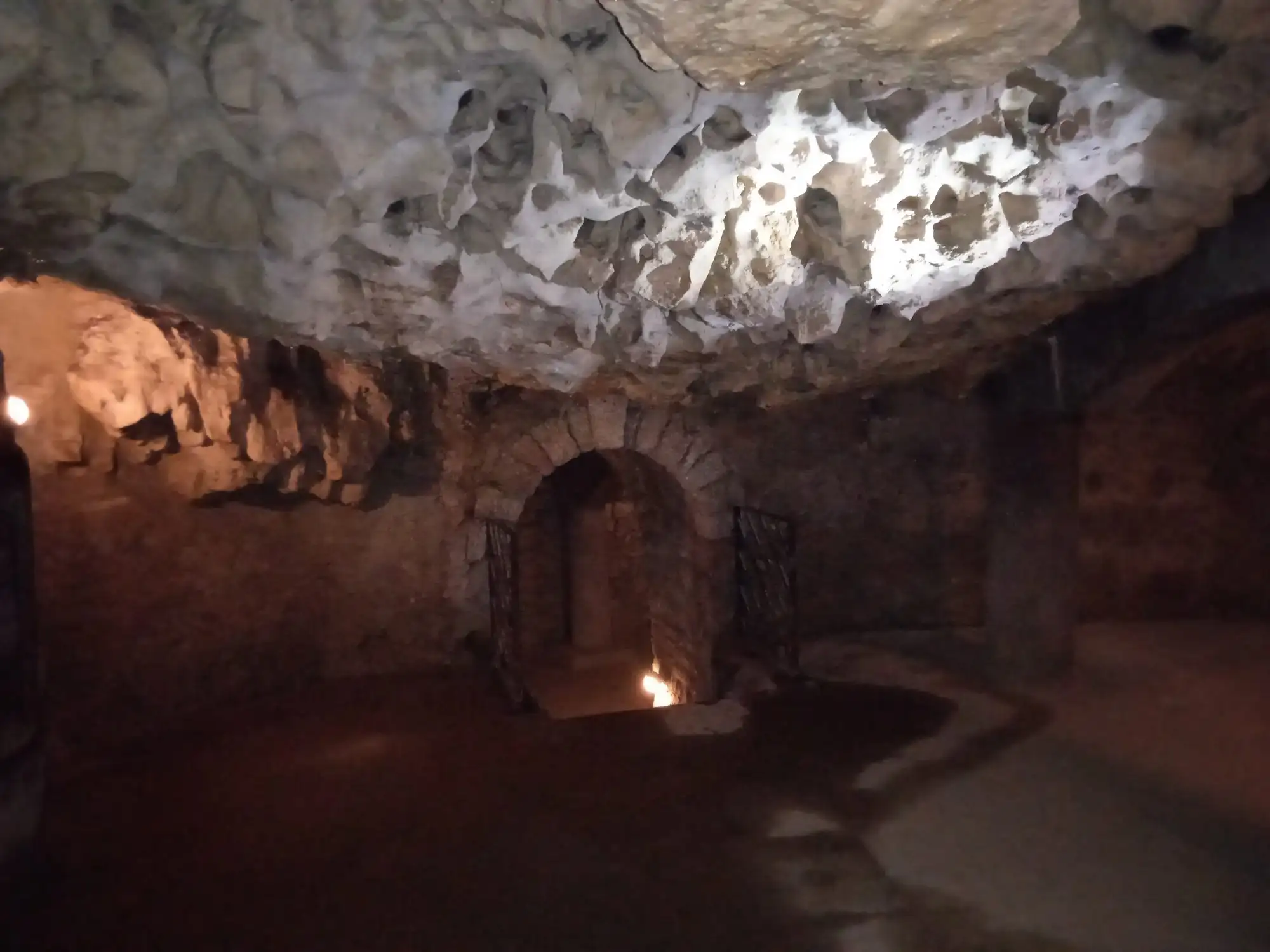
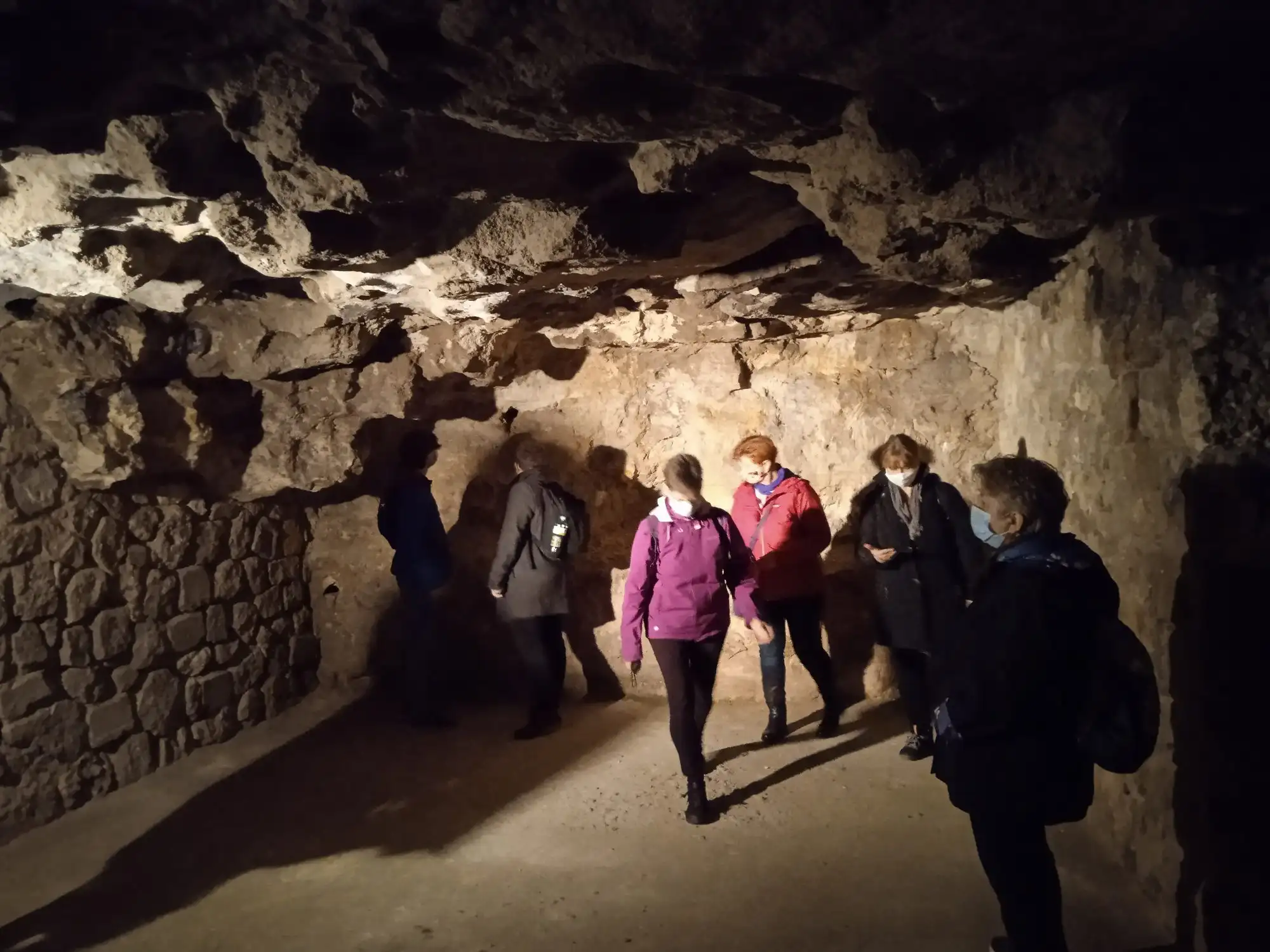
Castle Hill is a block of travertine laid down by hot springs, and the water left hollows in it before anyone built a city on top. The ceilings are where that shows: pale, pitted, dissolved rock, sitting directly on walls that people squared off with chisels. The join between the two is the whole point of the tour.
One thing to be clear about before you book. This is not a cave of stalactites and curtains of flowstone. It has been cut about, bricked, vaulted and lived in for eight centuries, and the interest is in what people did with it. Come for the geology alone and you will feel short-changed; come for the hill’s underside and you will not.
Find the wells
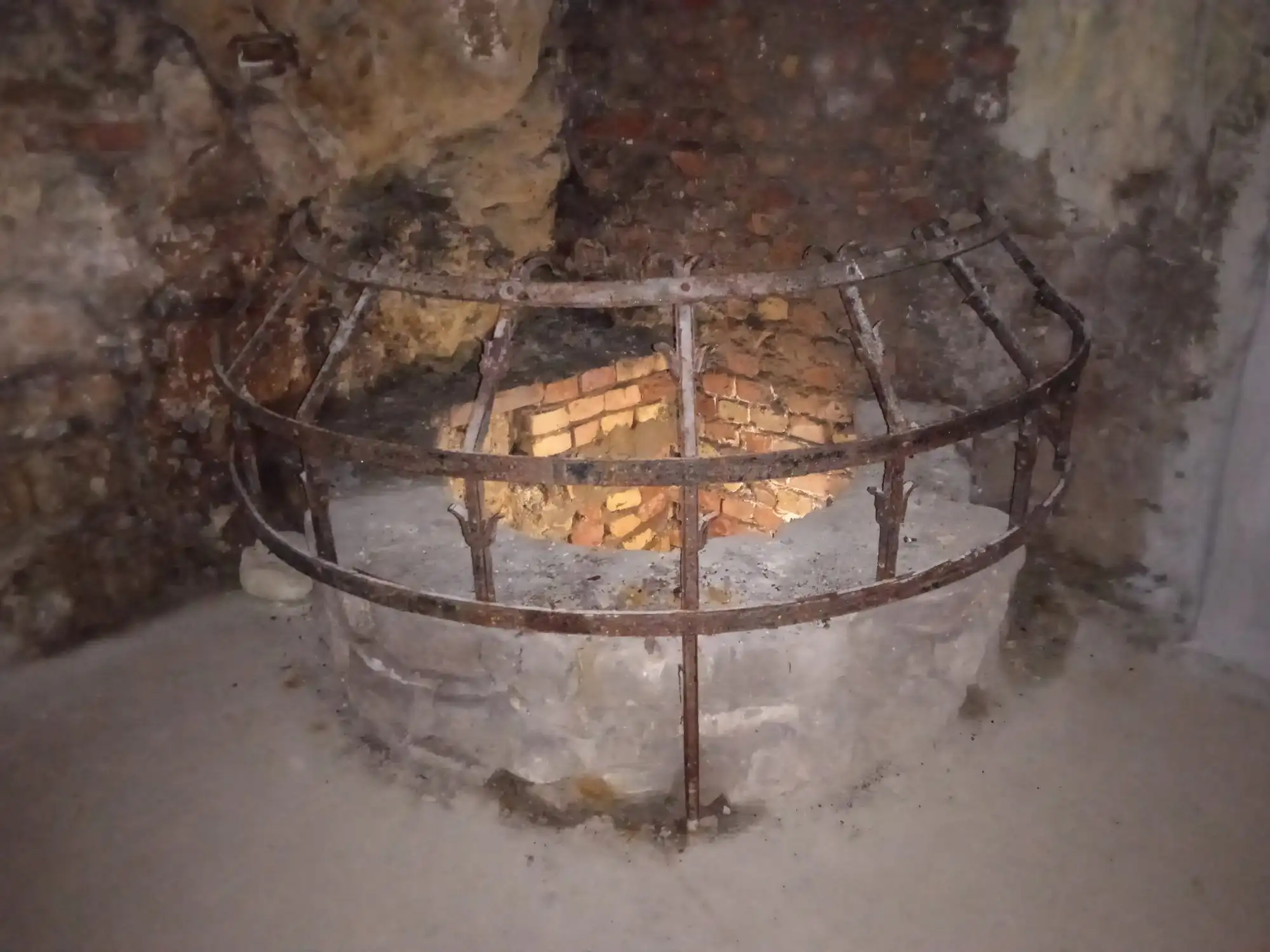
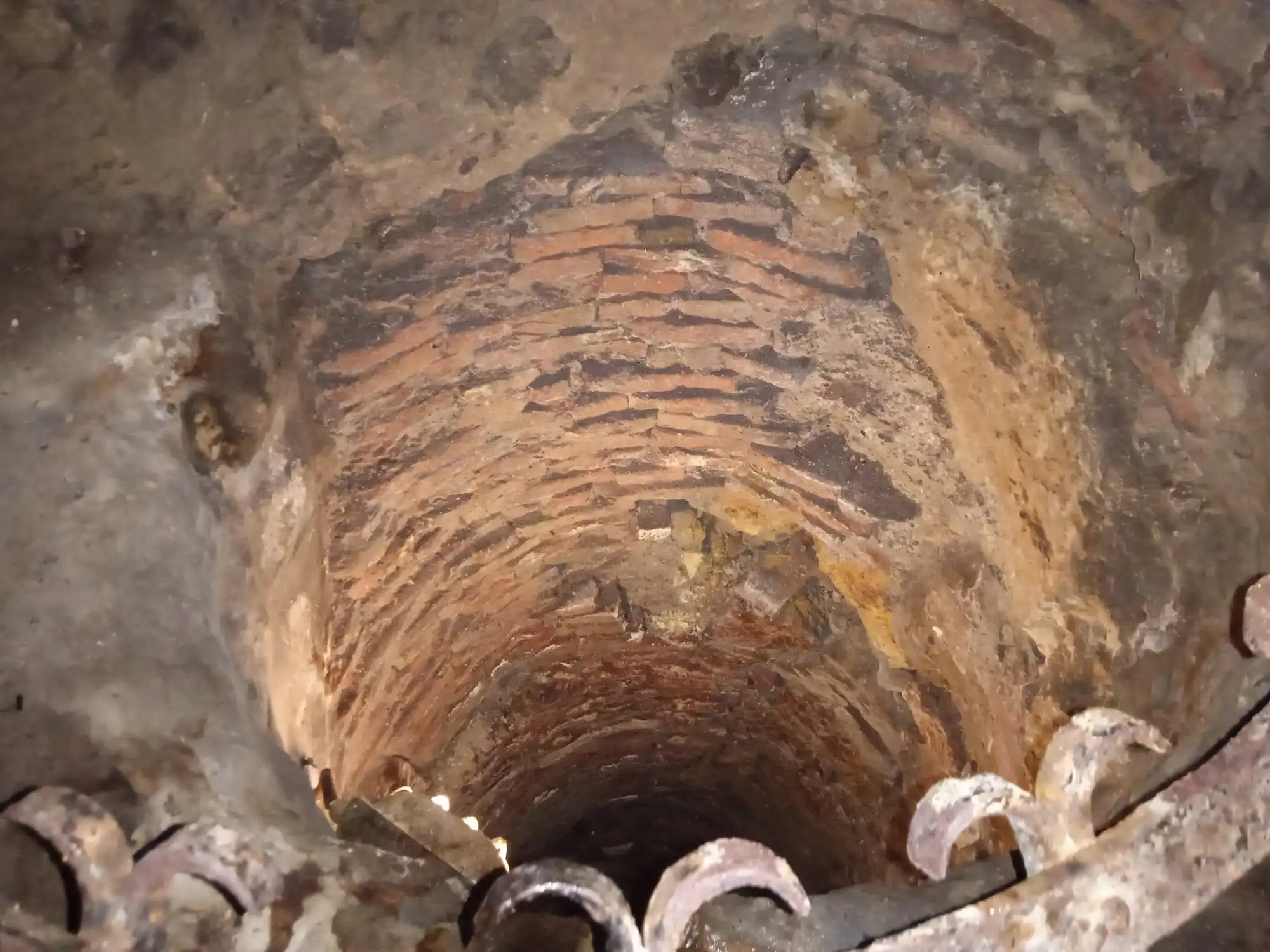
The townspeople found most of these cavities by digging for water, and the wells are still here: round heads ringed with iron rails, lit from inside so you can see down them. A hill town under siege lives or dies by its water, which is why there are so many of them in so small an area.
They are the most photographed objects down here, and they reward a minute of standing still. Look at the lining rather than the hole: hand-laid brick curving away under your feet, course after course, sunk through solid rock without a machine.
Read the brickwork in the cellars
Wine was one of the great trades of medieval Buda, and the cellars under the houses are where the barrels and the food that had to stay cold were kept. The upper level is the part that was built rather than found, and its roofs record the change: vaults carried on stone consoles in the 13th century, proper barrel vaults by the 14th and 15th.
Eight hundred years old is not a round number someone invented for a brochure: the dates are in the stonework. Ask the guide which level you are on when the ceiling turns to brick, because the answer moves you several centuries in a few steps.
Stand in the shelter the city hid in
The army took the cave off the city in May 1943 and joined the cellars under four streets and squares into a labyrinth of about four kilometres. Through the siege of 1945 thousands of soldiers and civilians lived down here while the district above them was destroyed, and the 1950s rebuilt it again as a modern air-raid shelter.
Nothing is staged and there are no mannequins, which is exactly why it lands: bare chambers, a few bulbs, and a guide telling you how many people were in the room you are standing in.
Insider tips
Take the long tour if you only do one
The 1.5-hour option is the one that covers every section of the cave open to the public, and the extra fifty minutes is where the stories are. The short tour is a fine introduction, but it is an introduction.
Book it for the hottest afternoon of the trip
Twelve degrees is a hard number to appreciate until it is 35 outside. An August slot after lunch buys you an hour out of the heat without leaving the Castle District, and in October it buys you a jumper.
Stand near the guide
Twenty-five people in a stone corridor is the one real weakness of this tour, and the back of the group misses the first line in every room. Hang back at the door, then walk in at the front and stay there.
Go by the meeting point on your voucher
There are two, four minutes apart, and a search result will cheerfully give you the wrong one. The booking confirmation is the only version that counts, and the guide will not wait.
Nearby attractions
The cave entrance is tucked into the quiet north-western corner of the Castle District, two streets from the busiest square on the hill.
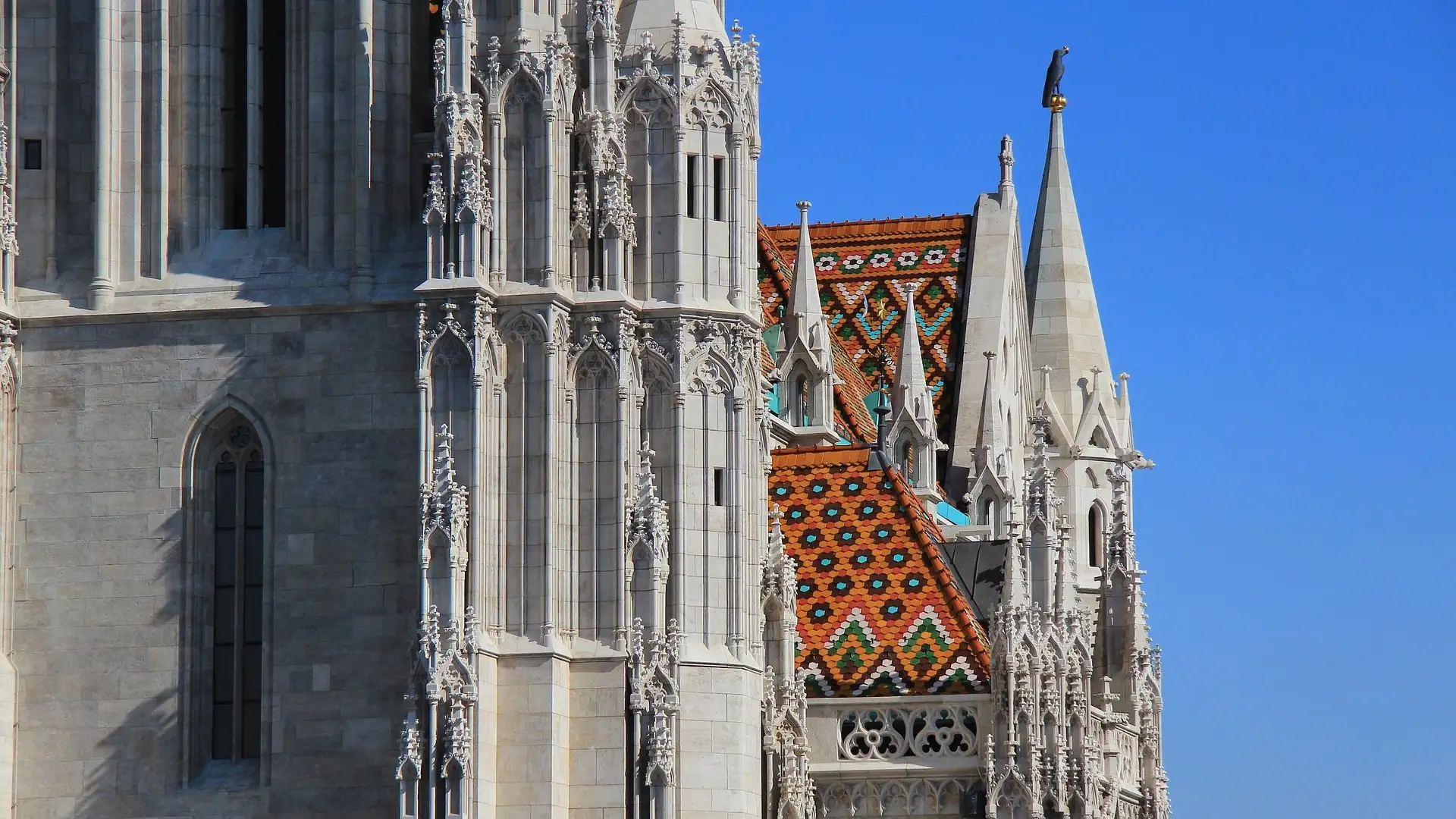
Matthias Church
About 4 minutes east along Országház utca, on Szentháromság tér.
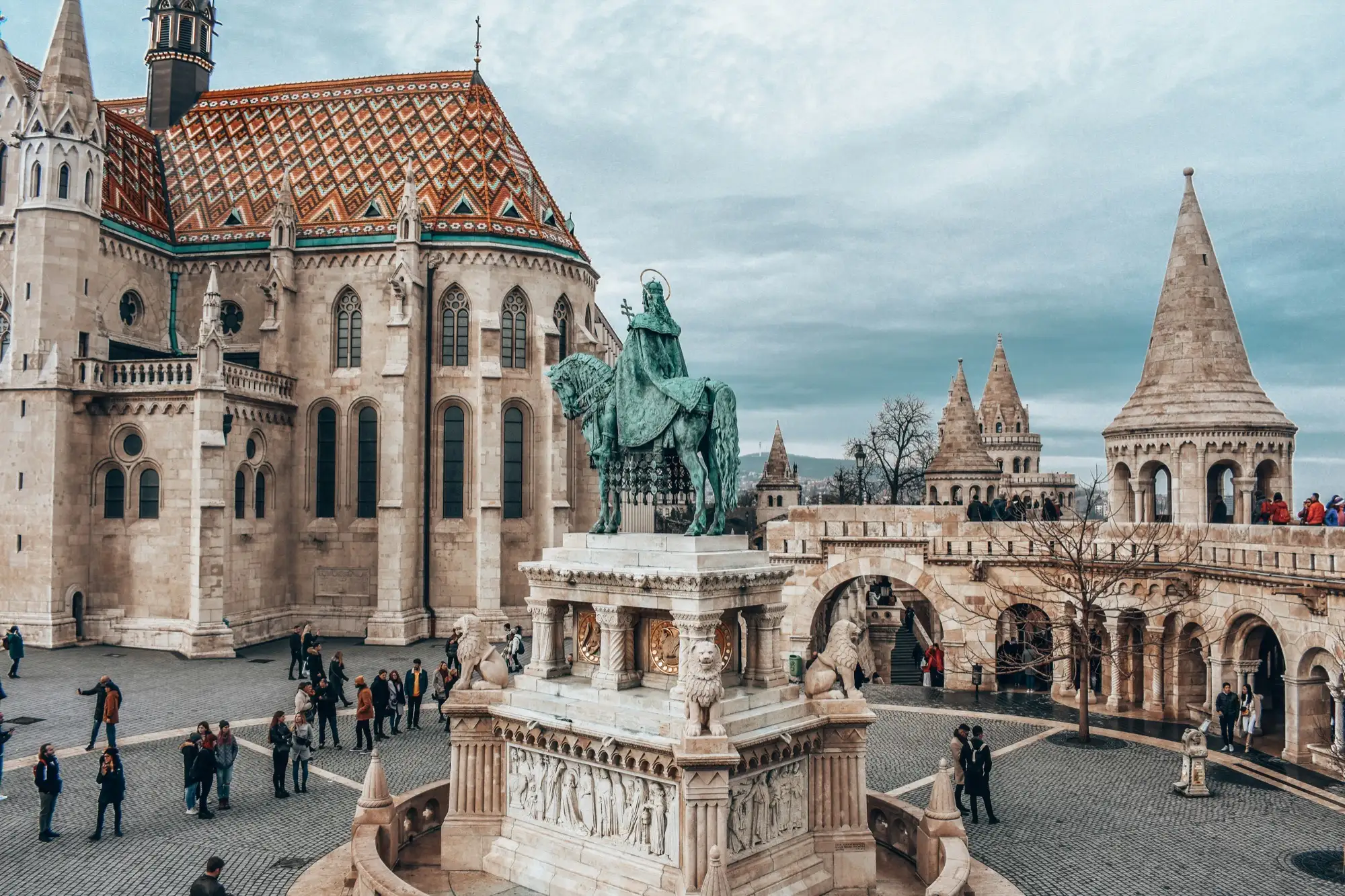
Fisherman's Bastion
About 6 minutes east, just behind the church, free to walk at any hour.
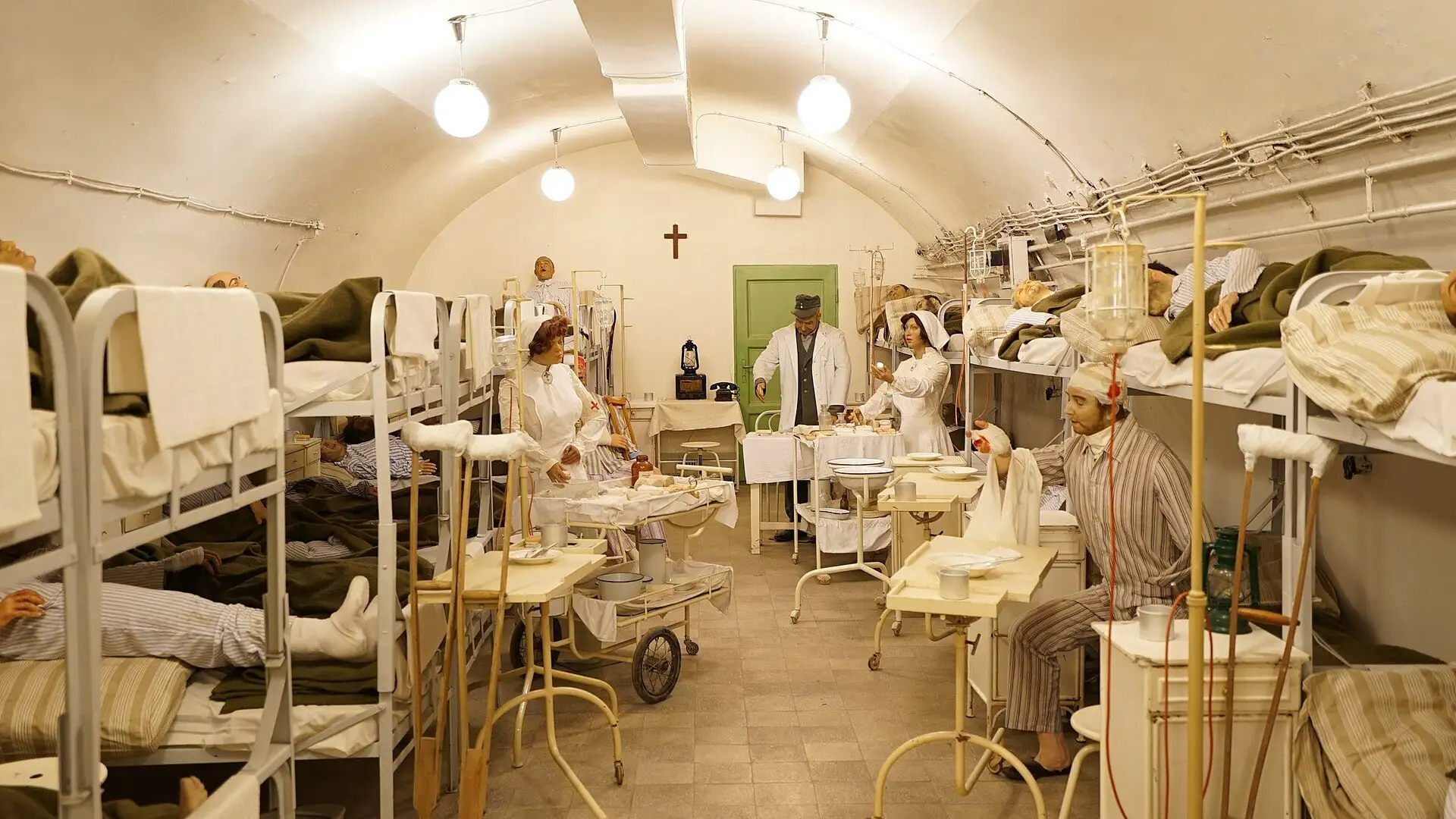
Hospital in the Rock
About 5 minutes south-west down Lovas út, at number 4/c. The wartime hospital and nuclear bunker in another part of the same cave system, on guided tours only.

Buda Castle
About 12 minutes south through the old town to Szent György tér and the palace.
History
The caves were made by water, found by people digging wells, and put to work as cellars, a prison, a shelter and a bunker in turn. The central section you walk today was reconstructed in 1997.
- 13th to 15th centuries
Residents of Buda dig for water, find the hollows, widen them and vault them into cellars for wine and cold storage.
- 1882 to 1886
The city’s engineering office surveys 120 rock cellars between Bécsi kapu tér and Dísz tér.
- 1897
The road collapses in Szentháromság tér, and the state of the ground under the district becomes a public question.
- 1935
The first Cave Museum opens under Szentháromság utca 2 on 17 August, during the repair works led by the geologist Ottokár Kadić.
- 1943 to 1945
The military takes the cave, joins the sections into a labyrinth of about four kilometres and cuts a hospital into it. Thousands shelter here through the siege.
- 1997
The central section is reconstructed and opens to guided groups, which is how it is visited to this day.
Kadić’s rescue of the cellars, the Bone Chamber, the bunker years and how one system became three attractions: history of the Buda Castle Caves.