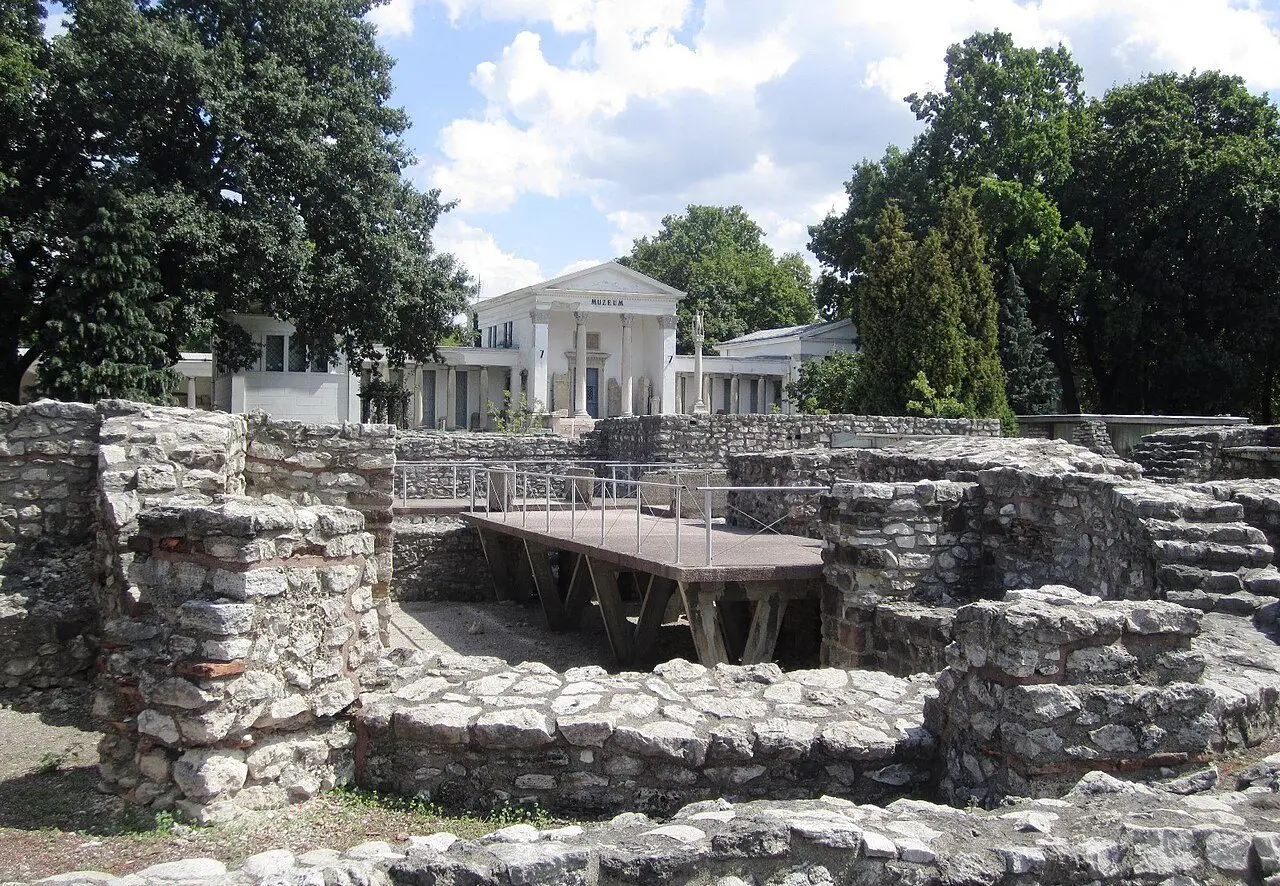
At Aquincum you walk the actual streets of a Roman town, past its forum and two bath houses, in what is now Óbuda. About a quarter of the old capital of Pannonia Inferior has been dug out, and one ticket covers the ruins and the exhibitions, including a Roman organ from AD 228 upstairs in the new exhibition building.
Most of the site is outdoors, and that is what to plan around. In summer the Archaeological Park opens an hour before the exhibitions, which gives you the ruins to yourself; from November to March it opens only when the ground is dry.
- Visit length
- 2 to 3 hours for the park and the exhibitions
- Entry
- One ticket for the park and the exhibitions, free with the Budapest Card
- Book ahead
- Not needed. No timed slots, and tickets are sold at the desk
- Opening hours
- Exhibitions, 1 April to 31 October: Mon closed, Tue to Sun 10:00 to 18:00Exhibitions, 1 November to 31 March: Mon closed, Tue to Sun 10:00 to 16:00Archaeological Park, 1 April to 31 October: Mon closed, Tue to Sun 09:00 to 18:00Archaeological Park, 1 November to 31 March: Mon closed, Tue to Sun 10:00 to 16:00
- Best time
- A dry weekday morning from April to October
- Nearest stop
- Bus 34/106/134 Záhony utcaAbout 1 minute (72 m). This is the stop for buses heading out of town, on the museum's side of Szentendrei út. Coming back towards town, the stop is about 230 m south on the far side of the road
- Accessibility
- The main exhibition building is wheelchair accessible. The ruins underfoot are not
- Mostly outdoors
- An open archaeological park. In winter it opens only in dry weather
- Closed
- Mondays, 1 November, 24 to 26 and 31 December, 1 January
- Dogs
- A dog-friendly venue. Small and medium dogs on a short lead, indoors and out
Aquincum Museum tickets
One ticket covers the permanent exhibitions, whatever temporary exhibition is on, and the whole Archaeological Park. Reduced tickets are mostly for students and older visitors from EEA countries, and eligibility has to be declared before the ticket is sold and shown if staff ask. Discounts cannot be combined.
The museum sells its own tickets, online and at the desk, with no date or time slot to choose, so nothing needs booking ahead and the door is a perfectly good option. Buying online gets you a ticket good for three months and saves you the desk queue on a busy event day.
Entry is free for everyone on the three Hungarian national holidays, 15 March, 20 August and 23 October, and all year for children under 6, for disabled visitors and one companion each, and for residents of District III. The Budapest Card gets everybody else in for nothing on any ordinary open day, and there are more ways to see the city for nothing in our guide to free things to do in Budapest.
If you are taking in more than one of the city’s history museums, the museum also sells a combined ticket valid for a month, good for one visit each to Aquincum, the Kiscell Museum, the Budapest Gallery and the Castle Museum. It does not cover the Castle Museum’s combined ticket with St Stephen’s Hall.
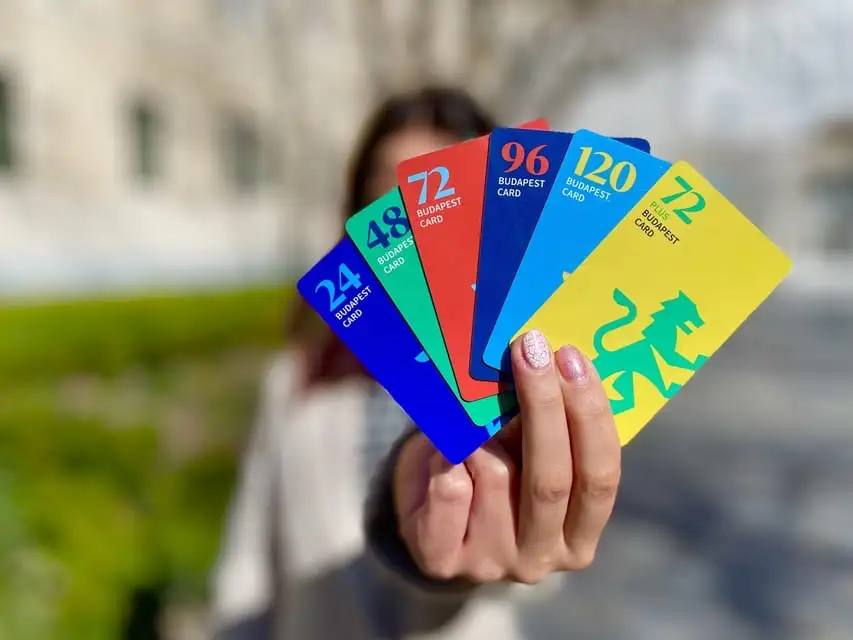
Budapest Card: Public Transport, 30+ Top Attractions & Tours
Best for: Getting in here for nothing, if the museums and the transport are most of your trip
- 24, 48, 72 or 96 hours from first use
- Free cancellation up to 24 hours ahead
What’s included and more details
What’s included
- Free entry to the Aquincum Museum
- Unlimited public transport, including the suburban railway out here
- Free entry to more than 30 museums and attractions
- A Danube river cruise
- Here
- Free entry once per card at the Aquincum Museum, but not at the Hercules Villa, and not on event days
- Not accepted
- The Sziget Citypass version of the card, which the museum turns away
- How it is given
- In person at the ticket desk, never online, and it does not skip the queue
- Worth it only if
- You would have paid for several of the things on it. One museum visit does not cover the card
- Getting out here
- Aquincum is well north of the centre, and the card covers the ride, which is a real part of what it saves you here
- Take the card to the ticket desk and staff issue the free ticket against it. There is nothing to redeem online, and the card does not move you up a queue
- The 24, 48, 72 and 96-hour cards and the PLUS all carry this museum. The 72-hour FLEXI works differently, because its one free museum is chosen from four other big sights and Aquincum is not among them, so check which version you are buying
- On the museum’s own event days the card stops working. Floralia, Barbarian Days, Samhain and the Night of Museums are sold on separate event tickets, and the usual discounts do not apply
Our Budapest Card guide has the full free list and how to tell whether it pays for your trip.
Highlights
Find the Roman organ of AD 228
Barely 300 surviving pieces, a working reconstruction beside them, and a room standing on the spot where they were dug up.
Walk a quarter of a Roman town
Streets, shops, the meat market, the forum and two bath houses, left open as the excavations found them.
Go inside two rebuilt Roman buildings
The House of the Painter and the Symphorus mithraeum, reconstructed on their own ground in the southern half of the park.
Plan your visit
Opening hours
Tuesday to Sunday, closed every Monday, with two seasons and different hours for the exhibitions and the park. In summer the park opens at 09:00 and the exhibitions at 10:00; in winter both run 10:00 to 16:00, and the park only when the ground is dry.
Exhibitions, 1 April to 31 October: Mon closed, Tue to Sun 10:00 to 18:00Exhibitions, 1 November to 31 March: Mon closed, Tue to Sun 10:00 to 16:00Archaeological Park, 1 April to 31 October: Mon closed, Tue to Sun 09:00 to 18:00Archaeological Park, 1 November to 31 March: Mon closed, Tue to Sun 10:00 to 16:00Last entry, the holiday pattern, the buildings that shut for the winter and when we would go: opening hours guide.
Getting there
The museum is at Szentendrei út 135 in Óbuda, about 8 km north of the centre. Buses 34, 106 and 134 stop at Záhony utca, a minute or two from the gate, and suburban railway H5 stops at Aquincum, about 570 m north with the road to cross. Drivers use the Záhony utca gate, the only way into the car park.
Nearest stops
Which Aquincum station is which, the stop you leave from, parking and the step-free approach: how to get there.
Before you go
- Wear shoes you can walk uneven ground in. The paths are uneven Roman surfaces, so mind your step. Most of the site has no shade either, so bring sun cover in summer
- Stay on the recommended paths. Cordoned-off areas are out, climbing or walking on the walls is out, and so is going between the underfloor heating pillars or into the heating and drainage ducts
- There is no café and no gift shop. Vending machines for coffee and soft drinks are in the main exhibition building, and the museum’s own publications are sold at the ticket office. Toilets are marked on the museum map
- Nothing is eaten, drunk or touched in the exhibition areas, and the site is entered only by the designated gates. Smoking is confined to the smoking area
- Children can run and play in the open area by the theatre, and there is a mythological playground between the new exhibition building and the park. They should not be left unsupervised out among the ruins
- Families get a separate baby changing room, a baby food heater on request, and the classroom as a breastfeeding room on request
- Dogs are welcome. Small and medium dogs on a short lead or in a carrier, up to three per visitor, indoors as well as out; assistance dogs of any size
Accessibility
The museum says the main exhibition building is wheelchair accessible and has accessible toilet facilities. The ruins underfoot are a different matter, and there is a route through the park that works.
- Free entry for disabled visitors and one companion each, at the ticket desk
- Free guided tours on an accessible route through the park, Tuesday to Friday, booked ahead. The detail is on our tours guide
- Come by bus 34 or 134 to Záhony utca. It puts you on the museum’s side of Szentendrei út a minute from the gate. The footbridge at the H5 stop has about twenty steps, so don’t count on a step-free crossing there
- The park’s surfaces are Roman, so expect uneven stone and slight level changes, including the step round the outside of the mithraeum
The step-free route from the stop to the door is in our getting there guide.
What to see and do
The museum publishes a recommended route of nineteen numbered points, and following it in order is the easiest way to make sense of a site that is mostly knee-high walls. These are the six things to slow down for.
Find the Aquincum organ upstairs in the exhibition building
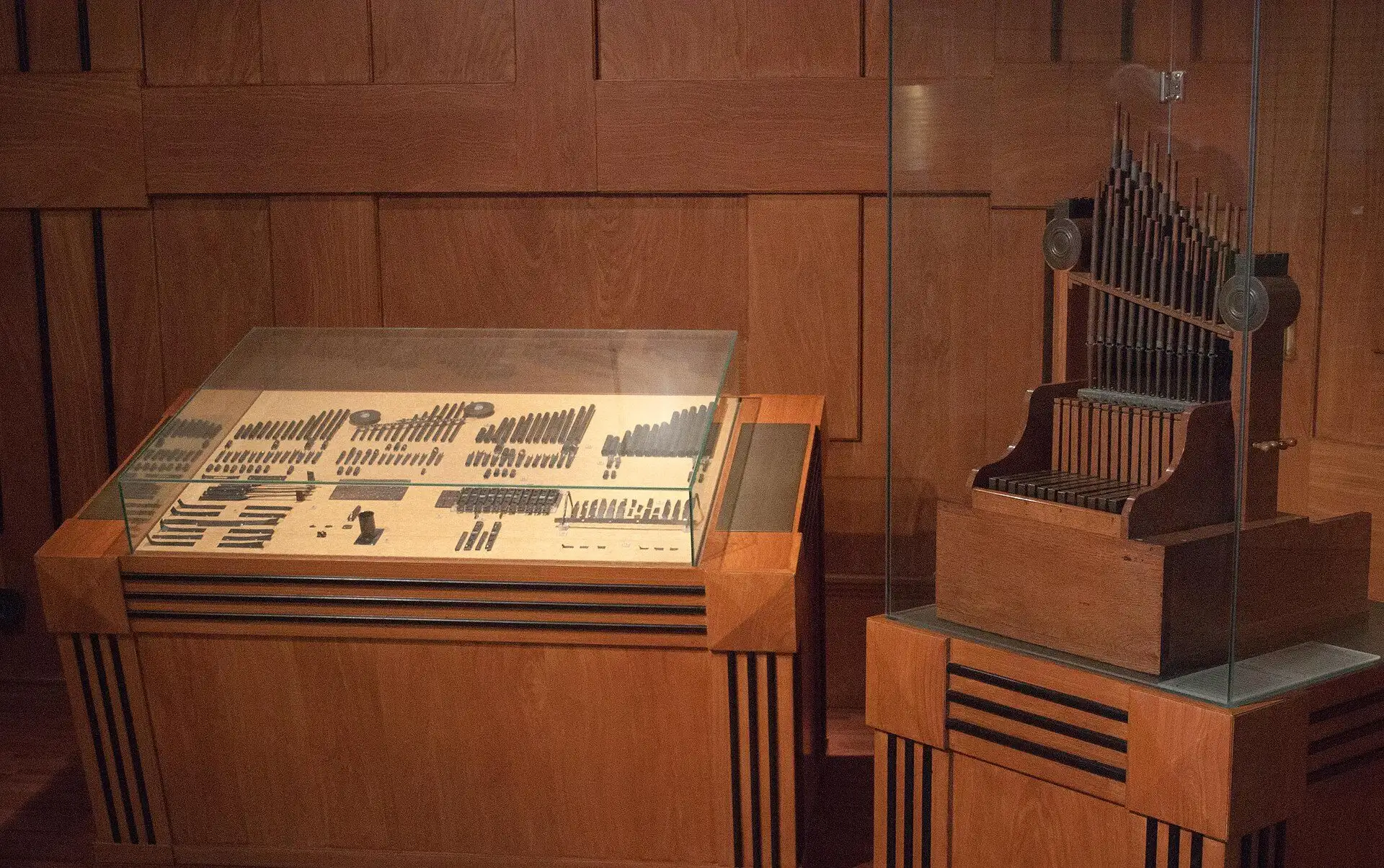
In AD 228 Gaius Julius Viatorinus, a councillor of the colonia, gave a portable organ to the guild of textile dealers, whose other job in town was spotting and fighting fires. It was small enough to carry, probably built of wood, leather, bronze and copper, with 52 pipes in four rows of thirteen. Its Latin name says water organ, though whether it was worked by water or by air has never been settled.
In the middle of the 3rd century a fire swept the civil town and burned out the firemen’s own hall. The organ fell into the cellar and stayed there until 1931, when Lajos Nagy turned up nearly 400 whole and broken pieces while digging foundations for an electricity substation. The war lost many of them and barely 300 remain.
The surviving parts, a model of the structure and a working reconstruction are shown together, in a building that stands on the spot where they were found. This is the best thing in the museum, and it is upstairs, so do not run out of time downstairs.
Walk the Esplanade before you reach the ticket office
The approach to the museum runs along the line of the Roman main road, and Szentendrei út, today’s main road, follows the same line. The Esplanade is the museum’s own introduction to the site, and all of it is outside the ticket barrier.
Look for the coloured stepping stones marking where the ancient street crossings were, the pavement markings showing where the town gate stood, and the portraits of the emperors who mattered to Pannonia. The benches carry motifs lifted from Aquincum’s own frescoes and mosaics. The monumental bronze gate has the plan of the civil town on it, and under the grating beneath it is a cut section of Roman road.
Set into the paving on the way to the ticket office is a funerary poem from an Aquincum sarcophagus. Give the Esplanade ten minutes on the way in rather than walking it twice.
Give In the shadow of the Roman eagle an hour
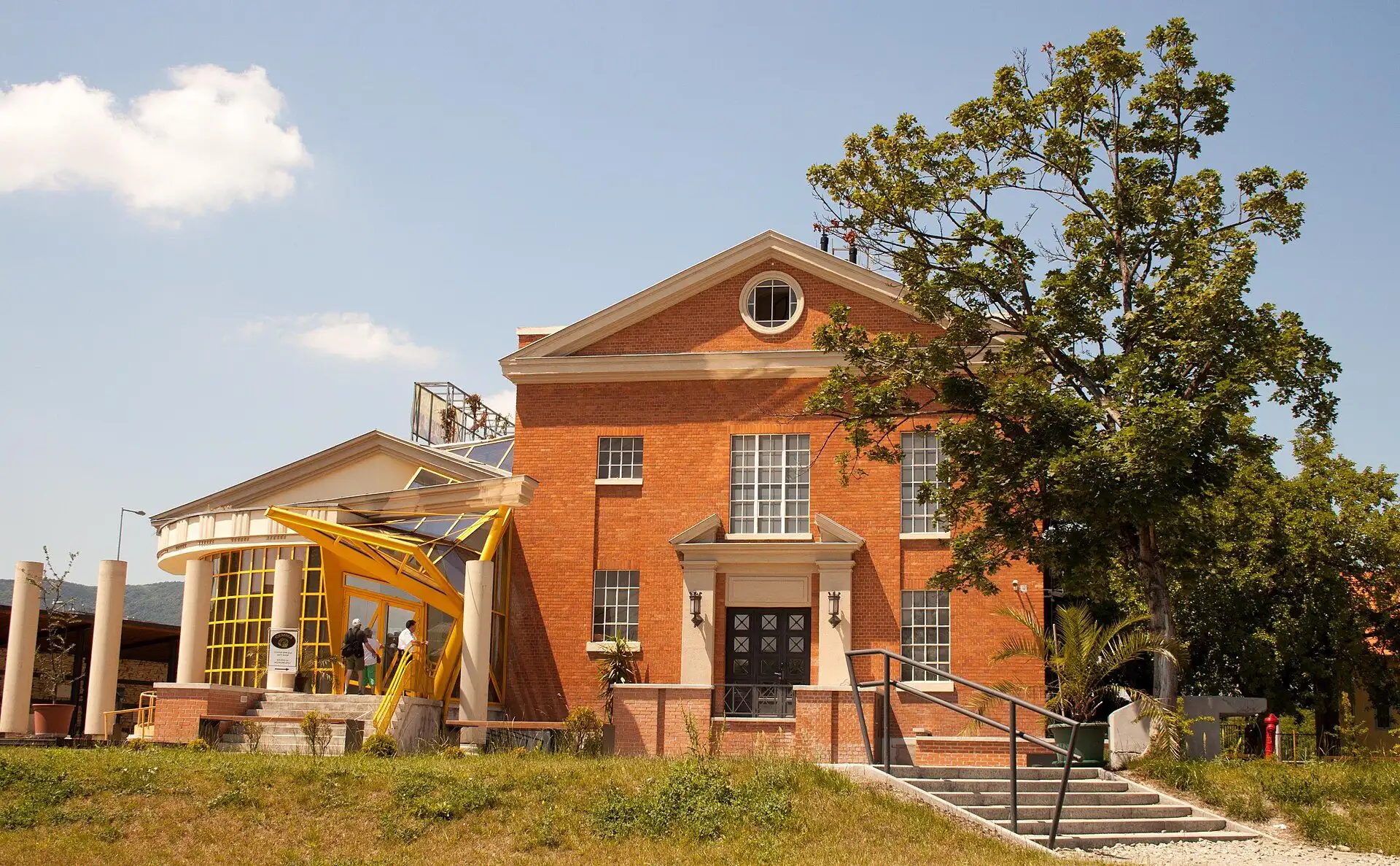
The newest permanent exhibition, open since September 2023, is about military life along the Aquincum frontier, and it is the one to put time aside for. Aquincum was a border town of the empire for some 400 years, and the legionary fortress two kilometres south of here held a heavy infantry unit of nearly 6,000 men.
Three objects earn the visit. The Drusus stone was for a long time the evidence for an Augustan occupation of Pannonia and is now known to record the building of the Óbuda cavalry fort in AD 73. A suit of Roman armour, put together from fragments, is on show for the first time. And the painted wall of the Mithras shrine from the legionary fortress, almost 2,000 years old, is shown in an interior that evokes the shrine, with the altars found alongside it.
The rest is built for being walked through rather than read. Virtual reality takes you into the main street of a legionary fortress, a barrack block, a bathhouse and a shrine, a sound panel plays ancient instruments, and there is a games corner with Roman board games. Follow Salvius, the little eagle, through ten stages from egg to grave and you have the career of a soldier stationed here, which is the easiest way to take children round.
Take the southern path to the painter's house and the mithraeum
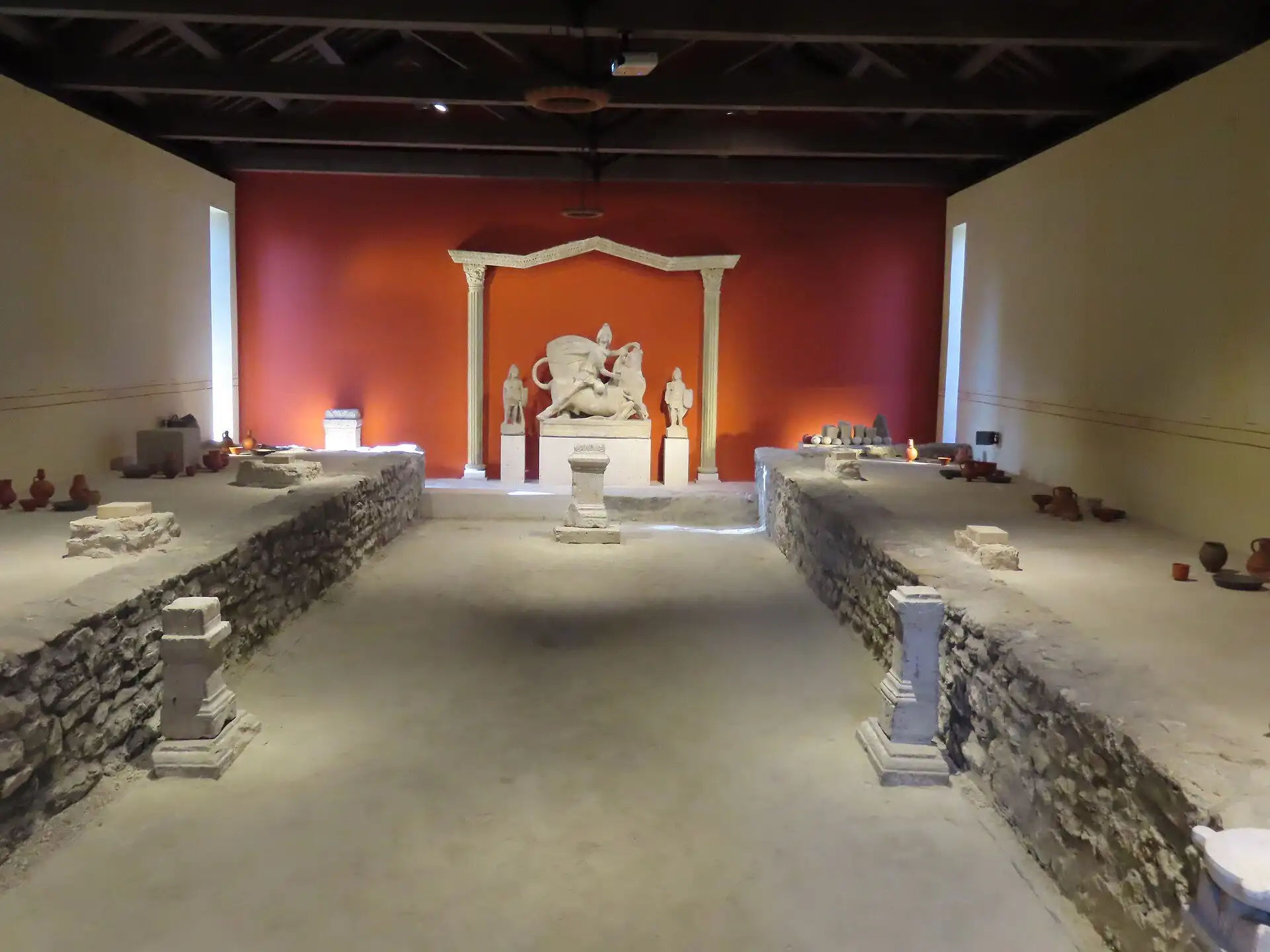
Two reconstructed Roman buildings stand in the southern half of the park, and they are the only places on the site where you are inside Roman rooms rather than looking down at their outlines.
The House of the Painter is a strip-building rebuilt several times between the early 2nd century and the middle of the 3rd, its rooms on different levels because the ground slopes.
The central part is the bit you walk through, furnished in the Roman style: the porch, the entrance corridor, two living rooms, the atrium, the kitchen, the dining room and the reception hall. The painted rooms the house is named after ran off a corridor along its northern side, and they are not part of the walk.
The Symphorus mithraeum was rebuilt in 2017 and 2018 under a protective building of natural stone, meant to feel like the cave a Mithras shrine was supposed to suggest, and the exhibition inside opened in June 2018.
To reach it, take the small path from the southern gate of the park, past the House of the Painter. The shrine opens from the east, so go round the building, and mind the slight level change.
In winter both open for ten minutes at a time, three times a day, and only if the ground is dry. In summer they are open all day, the simplest argument for coming between April and October.
Look down as you walk the Roman streets
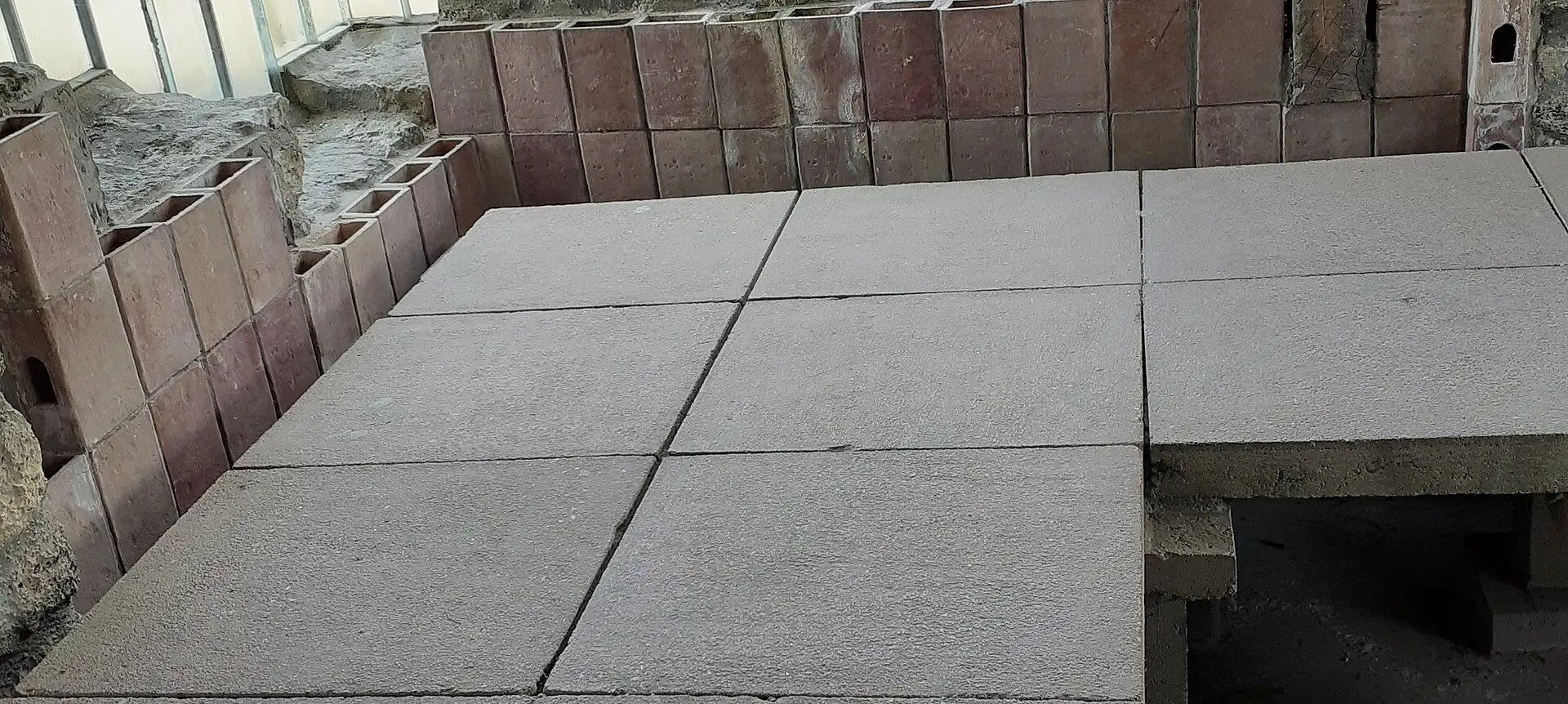
The two best details on the site are both at ankle height. In the large public baths, count rooms from the changing room, which is marked with the figure of a Roman citizen going in. In the fourth, steps lead down to a cross-section of the underfloor heating.
You can see the volcanic rock pillars that held the floor up, with the space between them where hot air and soot circulated before escaping through the hollow bricks lining the walls. Look, don’t climb. Going between the pillars or into the ducts is against the house rules.
The other is on the walk from the artisans’ quarter to the macellum, the meat market. Check the stones on the corners of the small streets to your right. On one corner the slabs covering the sewer carry a deep rut, worn by cart wheels turning in day after day towards the market entrance.
Both are easy to walk straight past.
Cross Szentendrei út to the civil amphitheatre
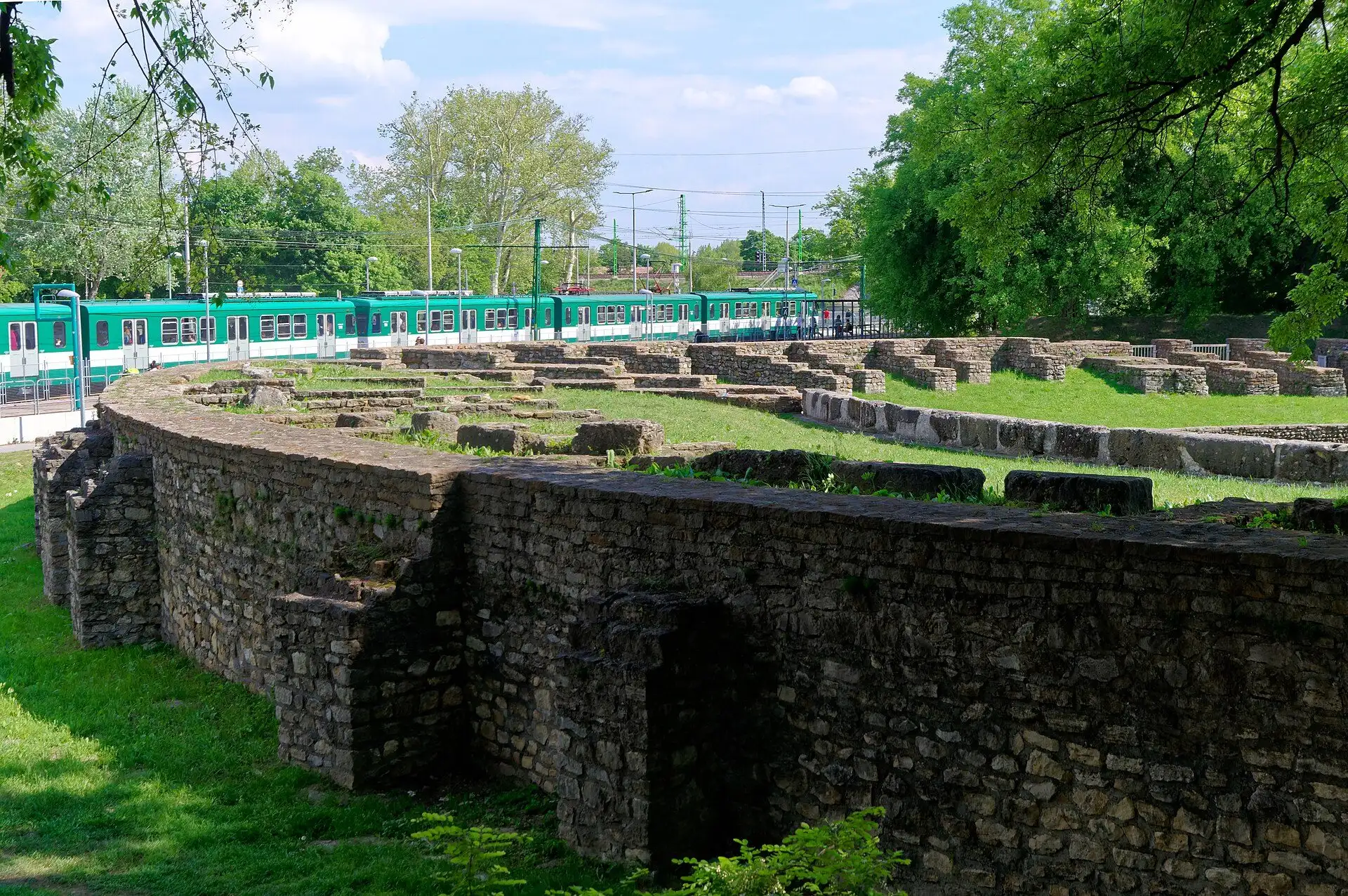
About ten minutes from the museum gate, outside what was the northern town wall, is the smaller of Aquincum’s two amphitheatres. It stands in the open at Szentendrei út 150 and the museum sells no ticket for it, so it costs you only the walk and the crossing.
It is an earth amphitheatre, which means the seating bank was built by ramming earth between two ring walls, and some of the stone benches on it carried their owners’ names. Almost circular at 86.5 m by 75.5 m, it held 6,000 to 7,000 people, who reached the partly covered stands up a ramp on the outside, and the arena was ringed by a wall 3 m high with a gate at either end.
The gladiator barracks stood beside it, and on the south side of the western gate was a shrine of Nemesis, goddess of the games, where a fragment of her statuette and several inscribed altars were found.
It was in use by the middle of the 2nd century and rebuilt several times in the 3rd, and it held more than gladiators and animal hunts. It was the biggest space in town, so it held assemblies, civic festivals and speeches for a visiting emperor. Pair it with the aqueduct arches and you have a good hour after the museum closes.
Floralia and the Roman event days at Aquincum
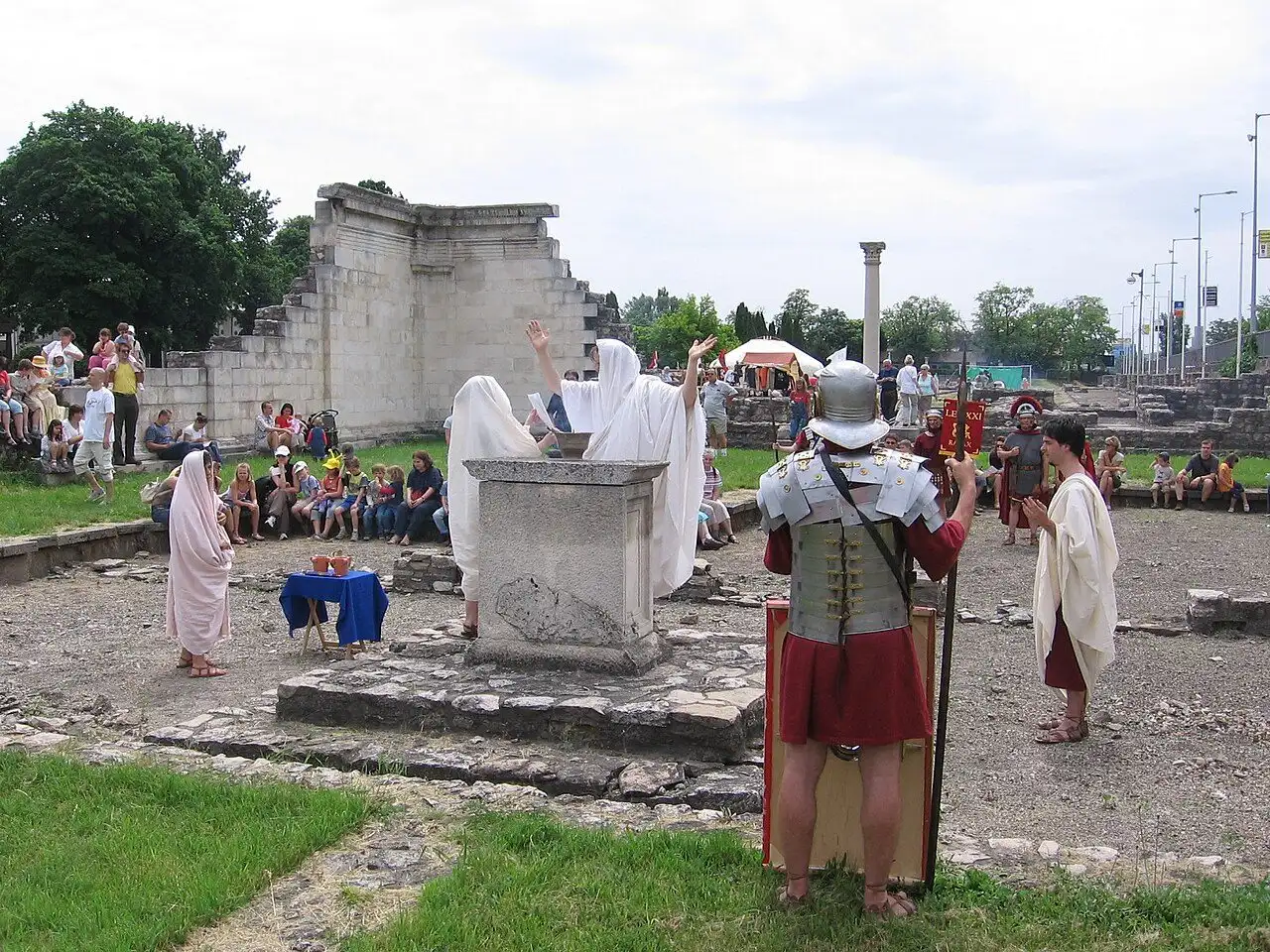
A handful of days a year the park fills up and stops being quiet. Floralia, the Roman spring festival, is the big one, and it has run for more than thirty years: a May weekend with two gladiator displays a day, a legionary display, a Roman fair, theatre and a guided tour in English.
Barbarian Days, on the first weekend of October, does the same for the peoples on the other side of the frontier. Samhain, the Celtic Halloween, runs into the evening on 31 October, and the Night of Museums in June keeps the museum open past midnight.
Event days are sold on their own tickets, the usual discounts do not apply, and the Budapest Card does not get you in. Craft activities on those days need a separate crafts ticket, bought at the information point. What is on and when is on our events calendar.
Insider tips
Download the museum's map before you leave the hotel
It is free, in nine languages, and it carries the recommended route, the nineteen numbered points and a page of what-to-look-for detail that the boards on site do not. The ruins are hard to read on their own, and the map makes sense of them.
Come out on bus 34 or 134, not the railway
The bus drops you on the museum’s side of Szentendrei út about a minute from the gate. The H5 leaves you 570 m away with a four-lane road between you and the entrance, and the walk down is badly signposted.
In summer, arrive at nine for an hour alone in the ruins
The park opens at 09:00 from April to October and the exhibitions not until 10:00, so the first hour is the Roman streets to yourself. It also sets you up to do the park while it is cool and the indoor rooms in the heat of the afternoon.
Pick a day that is not a free one if you want the place quiet
Entry is free to everyone on 15 March, 20 August and 23 October, and those are the days that draw a crowd. The rest of the year a weekday morning will usually give you the grounds almost to yourself.
Nearby attractions
Everything worth adding here is Roman, and all of it is within a walk or a couple of stops on the H5.
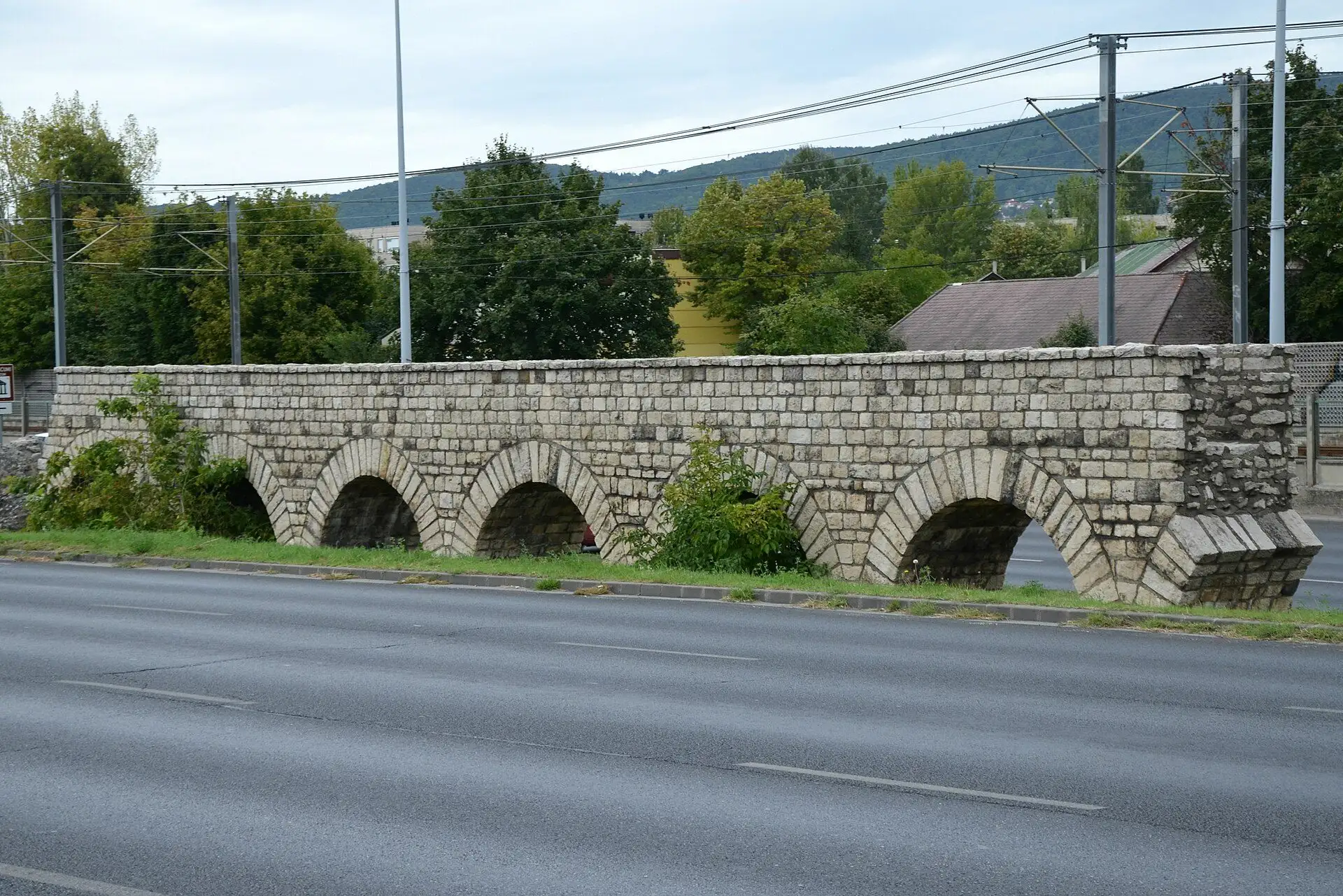
The restored Roman aqueduct
A reconstructed arcade down the middle of Szentendrei út, between the Aquincum and Kaszásdűlő railway stops. Walk the 10 minutes south to Kaszásdűlő and it is beside you the whole way.
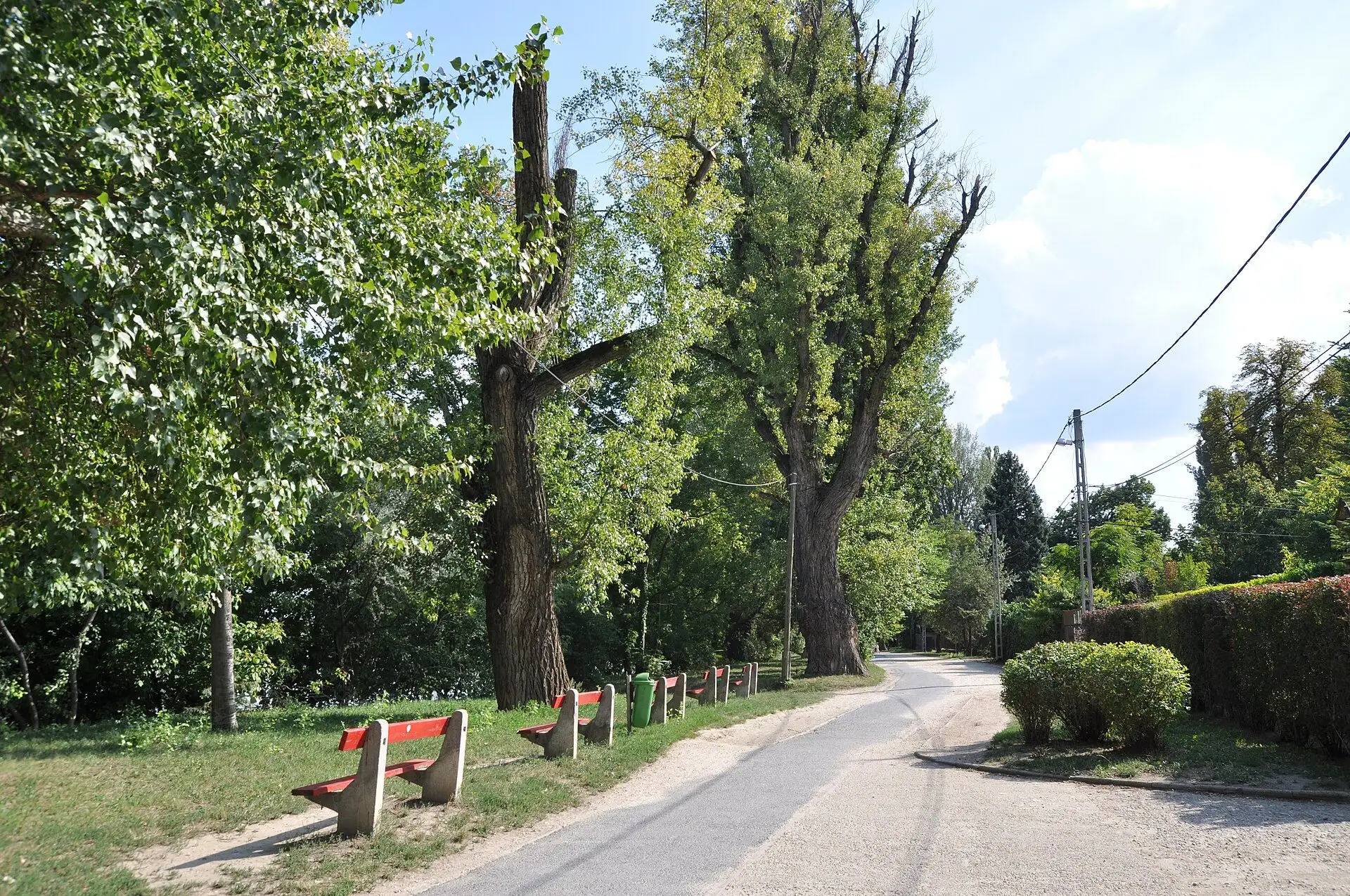
Római Part and the Római Strandfürdő
About 22 minutes north on foot (1,713 m): a tree-lined walk along the Danube, and the mineral springs that once fed the aqueduct.
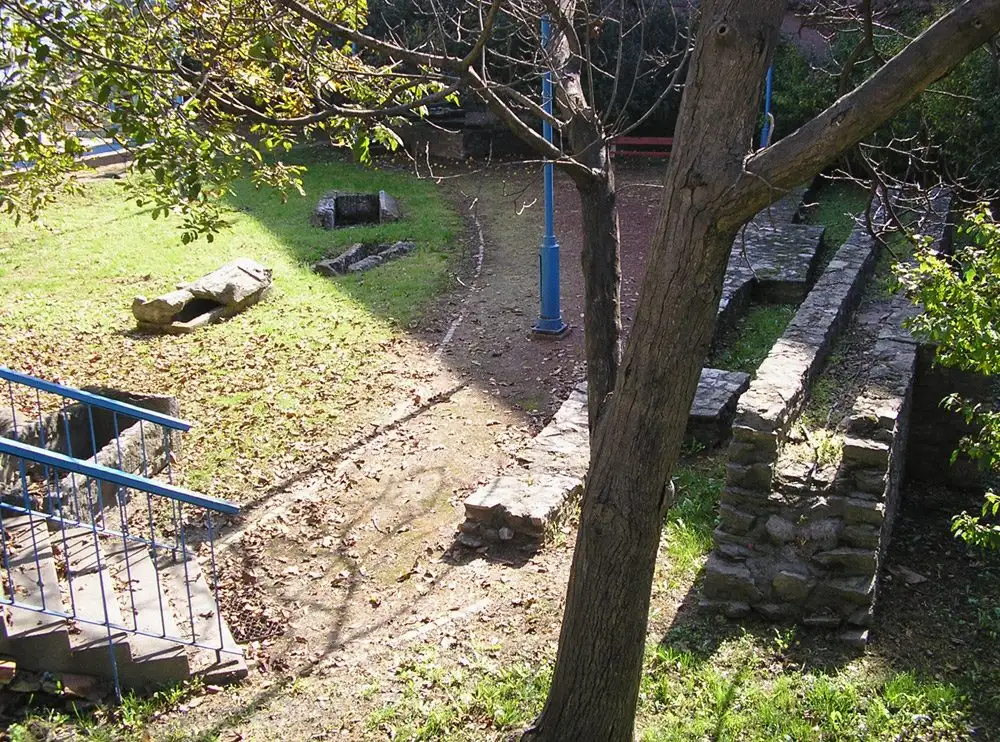
The Hercules Villa
About 26 minutes south (2,015 m), or bus 34 or 134 to Bogdáni út. Roman mosaics under and beside a school building, open May to October on a separate ticket.
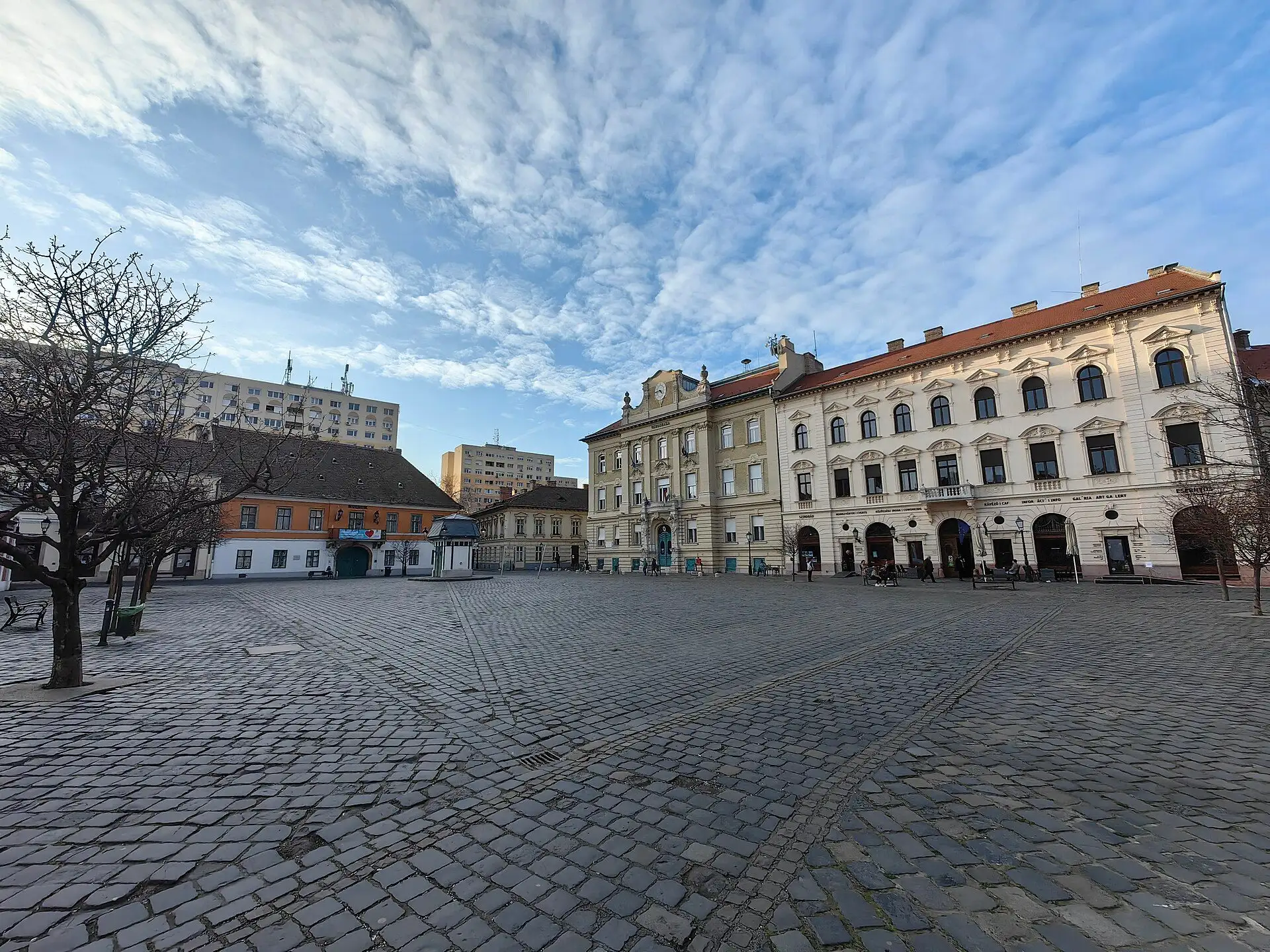
Óbuda's Fő tér
The cobbled Baroque square with the Vasarely and Kassák museums on it. It is three H5 stops south and about 35 minutes on foot (2,662 m), so take the train.
Did you know?
- The organ belonged to the fire brigade. The guild of textile dealers that owned it had spotting and fighting fires as its public duty in the town, and it was a fire that burned out their own hall and buried the instrument.
- The arena floor of Aquincum’s military amphitheatre, down in Óbuda, is bigger than the Colosseum’s: 89.6 m by 66.1 m, in a building 131.8 m by 108.4 m with room for 10,000 to 13,000 people.
- A late-medieval gunpowder mill was built on the foundations of the Roman north gate’s towers, and the first exhibition of Aquincum finds opened inside that mill, years before the museum itself was built. The gate towers themselves cannot be seen.
- Aquincum is a dog-friendly museum, indoors as well as out, which is rare in Budapest.
- A Roman roof tile in the Tegularium carries a dog’s paw prints. The museum’s own map points out curved tile number 116 and notes that the maker’s work must have been made harder by the animal that walked over the raw clay.
History
The ruins were found by a winegrower digging pits in 1778, and the museum that grew out of them opened on 10 May 1894.
- AD 89
The legion arrives
Legio II Adiutrix builds a permanent base in Óbuda under Domitian and stays, with short interruptions, until the early 5th century.
- AD 106
A provincial capital
Pannonia is split and Aquincum becomes the seat of Pannonia Inferior. The aqueduct is built and the civil town begins.
- AD 194
Colonia
Military town and civil town are raised to colonia together, which begins what the museum calls the golden age of Aquincum.
- AD 433
Ceded to the Huns
Pannonia passes out of Roman hands, a generation after the civil town was already emptying.
- 1778
A winegrower's pits
Roman underfloor heating turns up in Óbuda, and the university librarian István Schönvisner connects the ruins with Aquincum and publishes the find the same year.
- 1894
The museum opens
On 10 May the Aquincum Museum opens to the public. Two wings are added for the Millennium in 1896 and the ground plan has not changed since.
- 1945
Air raids
Raids on the Óbuda gasworks damage 40% of the museum building, score twelve hits on the park and destroy two-fifths of the collection.
- 2023
The Roman eagle
The Esplanade and In the shadow of the Roman eagle open on 14 September, in the building that stands where the organ was found.
The excavations, the wars and the people who dug it: history of Aquincum.