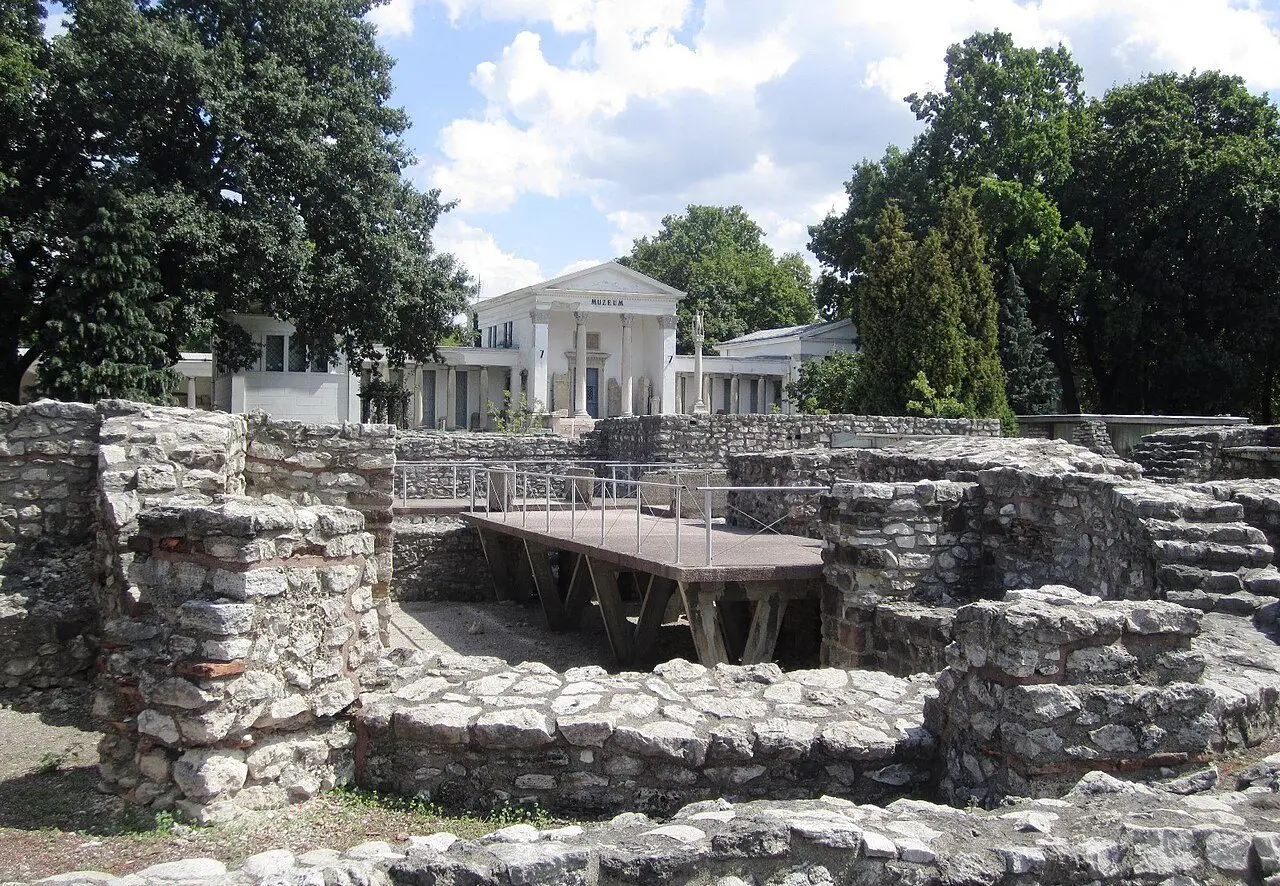
Aquincum’s civil town was lived in for about three hundred years, and you can walk around it today because nobody built on top of it. Modern Budapest grew over the military town two kilometres to the south, but the civil town was left to the fields, which is why about a quarter of it could be dug out and left open.
At a glance
Timeline
- 1st century BC
The Eravisci
The Celtic Eravisci hold this stretch of the Danube from a hilltop settlement on Gellért Hill, minting silver coins marked RAVIS and IRAVIS.
- c. AD 49
Rome reaches the Danube
Under Claudius, Roman control extends to the Danube Bend and Pannonia is organised. A cavalry unit is garrisoned in Víziváros, the earliest known Roman military base in Budapest.
- AD 89
The legion arrives
Domitian sends the Legio II Adiutrix to build a permanent base in Óbuda. It stays, with short interruptions, until the early 5th century.
- AD 106
Capital of Pannonia Inferior
Trajan splits the province and Aquincum becomes its seat. The north to south aqueduct is built and the civil town begins.
- c. AD 124
A municipium
Under Hadrian the civil town is raised to municipium, its town walls go up, and the legionary base is rebuilt in stone.
- AD 145
The military amphitheatre
The Legio II Adiutrix builds its amphitheatre in stone under Antoninus Pius.
- AD 194
Colonia, and the golden age
Septimius Severus raises both towns to colonia together. The museum calls the Severan years the golden age of Aquincum.
- AD 228
The organ is given
Gaius Julius Viatorinus presents a portable organ to the guild of textile dealers, who also fight the town’s fires.
- AD 260
Destruction
An attack by the Quadi, Roxolani and Sarmatians leaves destruction in the fortress and in both towns.
- AD 294
Valeria
Diocletian divides Pannonia into four. Aquincum becomes the military centre of Valeria and the base of its commander.
- Late 4th century
The civil town empties
The civil town is depopulated and the remaining civilians of the military town move inside the late Roman fortress.
- AD 433
Ceded to the Huns
Valentinian III hands Pannonia to the Huns, and Roman Aquincum ends.
- 1778
A winegrower's pits
Roman underfloor heating turns up in Óbuda. István Schönvisner identifies the site and publishes it the same year.
- 1880 to 1881
Excavation begins
A committee of six decides where to dig. Károly Torma, József Hampel and Sándor Gömöri Havas begin regular excavation, and Torma clears the whole civil amphitheatre.
- 10 May 1894
The museum opens
Bálint Kuzsinszky’s museum opens to the public. Two wings follow for the Millennium in 1896.
- 1931
The organ is found
Lajos Nagy excavates the firemen’s headquarters and recovers nearly 400 pieces of the instrument.
- 1945
Bombed
Air raids on the Óbuda gasworks damage 40% of the museum building, score twelve hits on the park and destroy two-fifths of the collection.
- 2007 to 2023
The modern museum
An electricity substation becomes the new exhibition building and the Visible Storage opens; the Pannonia Province Programme follows in 2012, the mithraeum exhibition in 2018, and the Esplanade and In the shadow of the Roman eagle in 2023.
Key facts
- Legionary base founded
- AD 89, under Domitian
- Capital of
- Pannonia Inferior, from AD 106
- Raised to colonia
- AD 194, under Septimius Severus
- The legion
- Legio II Adiutrix, nearly 6,000 men
- Civil town population
- 10,000 to 15,000 at its height
- A frontier town for
- About 400 years
- Aqueduct
- Almost 5 km, from the springs at Római
- Museum opened
- 10 May 1894
The two towns
Aquincum was never one settlement. There were two, two kilometres apart, and the difference explains why the site you visit looks the way it does.
The military town grew round the legionary fortress in what is now the middle of Óbuda, and modern Budapest was built straight over it. What survives there surfaces in fragments: the amphitheatre by Flórián Square, the baths under the underpass, the mosaics of the Hercules Villa beside a school.
The civil town stood further north, in open ground, and was never built over. That is the one the museum shows, and the Archaeological Park covers about a quarter of it. Thanks to that accident, the museum can claim that Budapest is the only European capital north of Rome where the city’s Roman heritage can be shown in one large continuous area.
The history of Aquincum
Before Rome: the Eravisci and the Danube frontier
The Celts reached the Carpathian Basin in the 4th and 3rd centuries BC, and by the 1st century BC this stretch of the Danube belonged to the Eravisci, whose centre was the hilltop settlement on Gellért Hill. Their silver coins carry the letters RAVIS and IRAVIS, which is how we know what they called themselves.
Rome arrived in the middle of the 1st century AD. Under Claudius, around AD 49, control reached the Danube Bend, Pannonia was organised as a province and a Spanish cavalry regiment was stationed in Víziváros, the earliest known Roman military base inside what is now Budapest.
What made this spot matter was the river. The Danube was the edge of the empire here, with Sarmatians and later Quadi on the far bank, and Aquincum spent some 400 years as a border town.
The legion, the capital and the golden age, AD 89 to 260
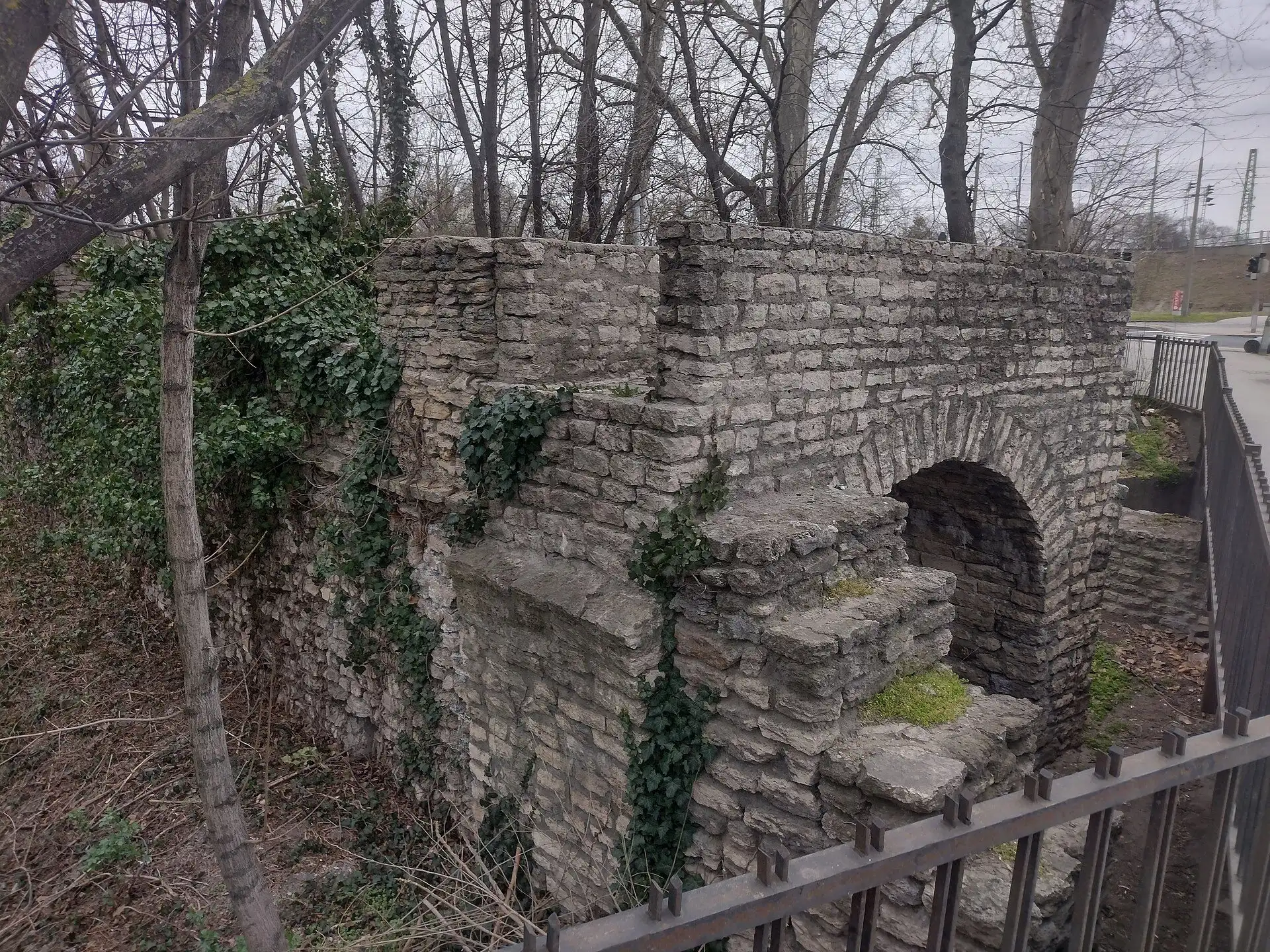
In AD 89 Domitian sent the Legio II Adiutrix to build a permanent base in Óbuda, a heavy infantry unit of nearly 6,000 men that stayed, short interruptions aside, into the early 5th century. Seventeen years later Trajan divided the province, and Aquincum became the seat of Pannonia Inferior. The aqueduct was built and the civil town began at the same time.
The town grew fast. Under Hadrian, around AD 124, it was raised to municipium and walled, and the legionary base was rebuilt in stone. The aqueduct ran almost 5 km from the springs at what is now the Római bathing beach, on pillars joined by arches, at a gradient of a degree or two; it entered the civil town beside the northern gate, ran more than 200 m through it, crossed the southern wall and carried on to the military town.
In AD 194 Septimius Severus raised both towns to colonia together, and the museum calls the Severan years the golden age of Aquincum. Caracalla made it the seat of a two-legion province in 214. Then in 260 the Quadi, Roxolani and Sarmatians came across the river and left destruction in the fortress and in both towns.
The end of Roman Aquincum, 260 to 433
Aquincum did not fall so much as contract. Diocletian split Pannonia into four in 294 and Aquincum became the military centre of the new province of Valeria and the base of its commander. Constantine built the late Roman fortress around 332. Valentinian I added forts and watchtowers through the Danube Bend in 375 and, tellingly, made the late Roman fortress smaller.
By the late 4th century the civil town was emptying and what civilians were left in the military town had moved inside the fortress walls. The aqueduct stopped working at the end of the century.
In 433 Valentinian III ceded Pannonia to the Huns. The ruins stayed where they were, and nobody built on the civil town again.
The Hungarian Pompeii, 1778 to 1894
It began with a winegrower. In 1778 an Óbuda grower digging pits uncovered Roman underfloor heating, and István Schönvisner, a university librarian, recognised it, connected the ruins with Aquincum and published his account the same year. The excavated part of the legionary baths was soon put under a protective building, the first piece of heritage protection on the site.
The nickname arrived in 1820, when, in the museum’s own words, the monarch’s father saw the ruins and declared, “Behold, here is the Hungarian Pompeii and Herculaneum!” Crown Prince Rudolf came in 1869, an international congress of anthropology and archaeology in 1876, and in 1878 the city council passed a decree protecting the visible ruins.
Serious work started in 1880, when a committee of six was set up to choose where to dig and regular excavation began under Károly Torma, József Hampel and Sándor Gömöri Havas. Torma cleared the whole surface of the civil amphitheatre in 1881.
Bálint Kuzsinszky joined in 1888 and took the work over from Torma. The journal Budapest Régiségei began the next year, and at about the same time the first Aquincum exhibition opened in the Krempl mill, the late-medieval gunpowder mill standing on the foundations of the Roman north gate. The museum itself opened to the public on 10 May 1894, gained two wings for the Millennium in 1896, and has kept that ground plan ever since.
Bombs, rebuilding and the museum you visit, 1931 to today
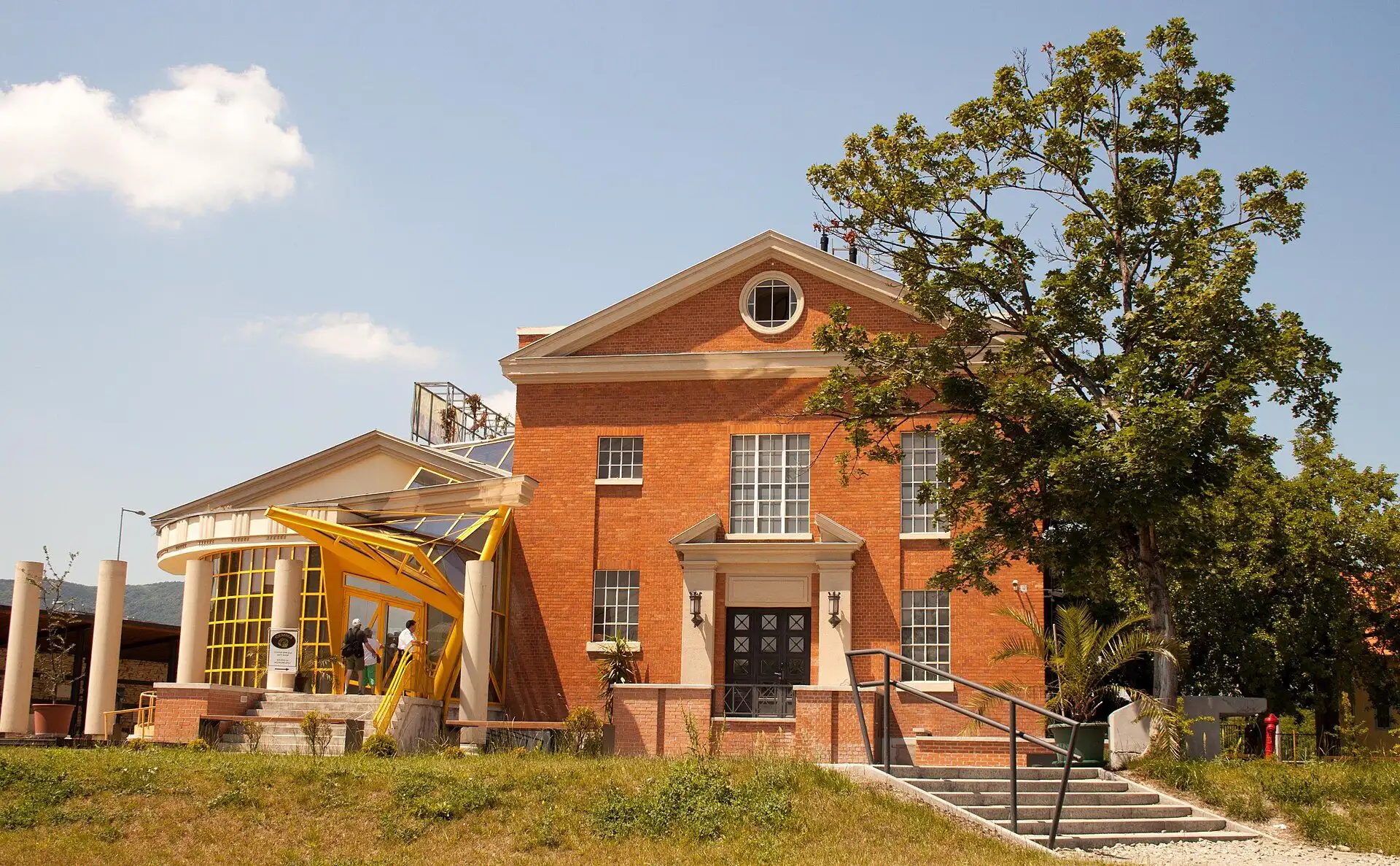
In 1931 Lajos Nagy was digging the foundations for an electricity company’s converter station when he hit the headquarters of the town’s firemen and the remains of their organ, nearly 400 whole and broken pieces of it.
Fourteen years later the war arrived. Air raids on the Óbuda gasworks damaged 40% of the museum building, put twelve hits into the Archaeological Park and destroyed two-fifths of the collection, the organ fragments among them. Barely 300 pieces of the instrument survive.
Conservation ran from 1963 to 1973 and left sixteen buildings consolidated, and the open-air theatre went up in the south of the park between 1995 and 1998.
The biggest change came in 2007 and 2008, when the museum was granted that same electricity substation, refurbished it, and opened the Visible Storage in it, so the organ is now displayed on the spot where it was dug up.
The Pannonia Province Programme added a mythological playground, a reconstructed Roman house and a new Lapidarium on 15 June 2012, the exhibition inside the rebuilt Symphorus mithraeum opened on 21 June 2018, and the Esplanade and In the shadow of the Roman eagle on 14 September 2023.