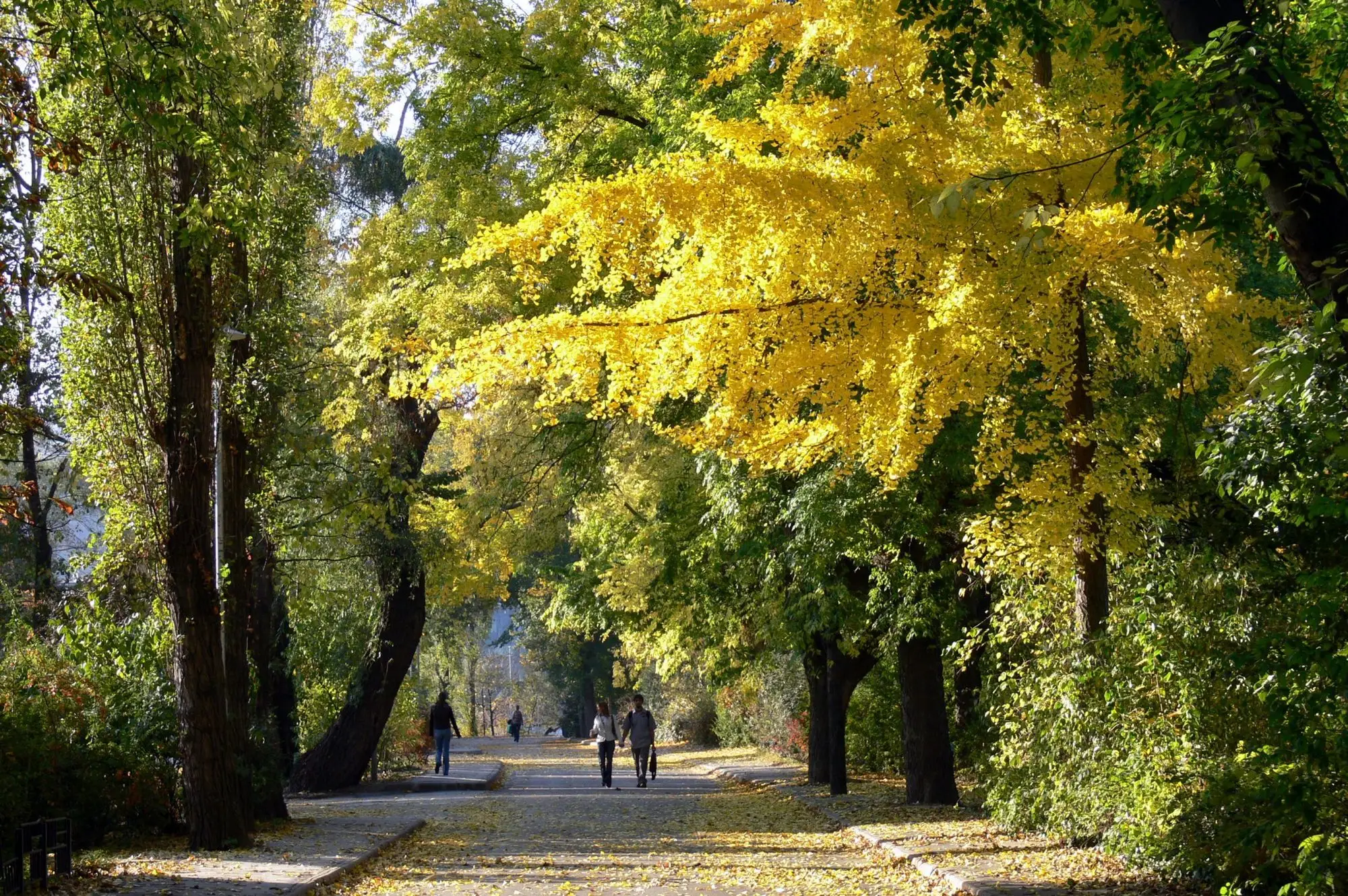
For most of its history this island was not a park at all. It was a hunting ground, then the site of three religious houses, then a nobleman’s private garden with the public kept firmly off it, and only in the last century and a half the place Budapest walks on at the weekend.
The story is unusually well recorded, and much of it is still there to see. The convent Béla IV founded in 1252 stands in outline in the middle of the island, the grave slab of the daughter who lived there is under its own canopy, and the plane trees a gardener from Schönbrunn planted in 1808 are the reason the place looks the way it does.
At a glance
Timeline
- 1225
First named
The island appears in a charter for the first time. Its name then is Insula leporum, the Island of Rabbits, for the hunting.
- 1252
The Dominican convent
Béla IV founds the convent after a vow made while fleeing the Mongols. His daughter Margaret comes from Veszprém at ten years old.
- 1271
Margaret dies here
She is buried in the convent church. Pilgrims come to the grave for 250 years.
- 1540
The nuns leave
They take Saint Margaret’s remains with them. A year later the Premonstratensian community goes too, as Buda falls to the Ottomans.
- 1790
A palatine takes it on
Palatine Sándor Lipót gets the use of the island and begins laying out a park on the Schönbrunn model.
- 1799
Closed to the public
Palatine Joseph takes full ownership, builds a holiday home and forbids visiting, admitting only distinguished guests.
- 1808
The plane trees
Károly Tost, trained at Schönbrunn, arrives and plants the trees that still set the look of the island.
- 1869
Opened to the public
After a rebuilding to Miklós Ybl’s plans, with baths, hotels and restaurants, the island opens to visitors.
- 1871
The horse tramway
A horse-drawn tramway begins running the length of the island. It carries its last passengers on 10 April 1928.
- 1911
The water tower
The tower is finished, designed from the start to hold water and to be climbed.
- 1914
The bell in the roots
A cyclone uproots old trees and the monastery’s fifteenth-century bell comes to light in the roots of one of them.
- 1919
Palatinus opens
The first bath in Budapest where you could swim outdoors. Its Bauhaus building follows in 1937.
- 1962
The Musical Fountain
Built at the southern end, with live music at first. The Centenary Monument joins it in 1972.
Key facts
- Size
- 2.5 km long, 500 m at its widest, 96.5 hectares
- First named
- 1225, as Insula leporum
- Religious houses
- Dominican, Premonstratensian and Franciscan
- Founded the convent
- Béla IV, in 1252
- Named after
- His daughter Margaret, 1242 to 1271
- The plane trees
- Planted from 1808 by Károly Tost
- Opened to the public
- 1869
- Palatinus
- 1919, the city's first outdoor bath
The name
Insula leporum, the Island of Rabbits, is the old name, and it comes from the hunting, not from anything charming.
The island took Margaret’s name from her grave, not from any decree. She was buried in the convent church in 1271 and pilgrims came for 250 years, and the name stuck to the island long after the nuns took her remains away in 1540.
The history of Margaret Island
The Island of Rabbits, and three religious houses
Written and archaeological evidence for the island starts at the end of the twelfth century, and the first charter to name it is from 1225. It was Insula leporum, the Island of Rabbits, because it was hunted over, and tradition puts King Imre’s court here at the turn of the thirteenth century.
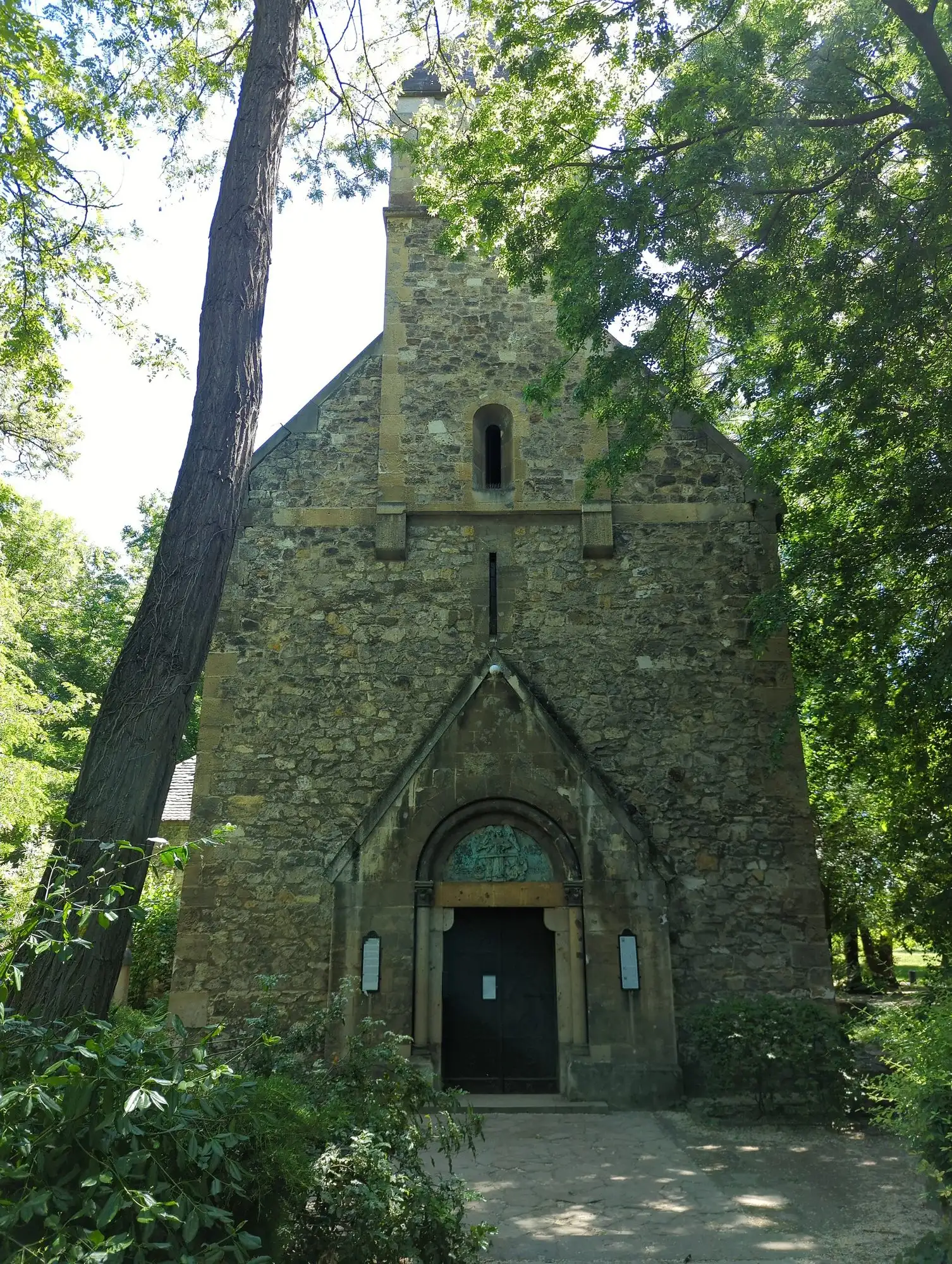
The Premonstratensians came first, founding a house with donations from Andrew II and Béla IV before the Mongol invasion. Their church survived as a ruin until the 1920s, when excavations led by Kálmán Lux uncovered it and a reconstruction was completed in 1932 and consecrated by Cardinal Jusztinián Serédi.
That is Saint Michael’s Chapel, the one building of the three still standing, in the northern part of the island, and the fifteenth-century bell found in a tree’s roots in 1914 is back in its tower.
A Franciscan church and convent dedicated to Saint Clare stood on the island too, thirteenth century and Gothic, and its ruins are still mapped as a monument. All three religious houses on the island were emptied in the sixteenth century, and the island’s name comes from the Dominican one.
Margaret, and the convent she never left
Béla IV made a vow while fleeing the Mongol invasion, and the Dominican convent he founded on the island in 1252 was part of keeping it. His daughter Margaret came here from the convent at Veszprém at ten years old with a few companions, and she stayed for the rest of her life. Her parents visited often until she died in 1271.
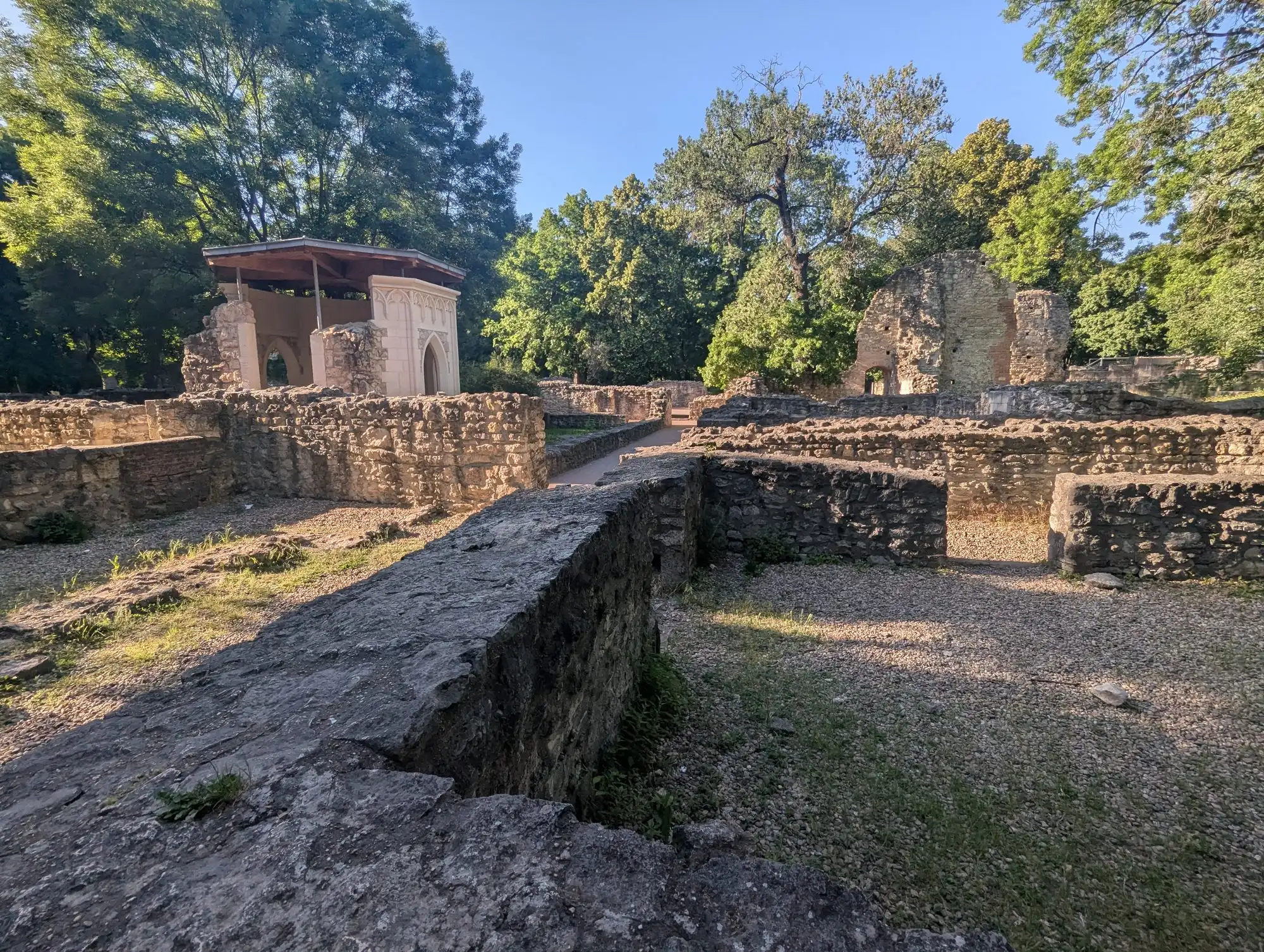
She was buried in the convent church and the grave became a place of pilgrimage for 250 years. When the nuns left in 1540 they took her remains with them; the bones were later brought to Pest and lost there, which is why the slab in the ruins marks a grave rather than covering one. The inscription says as much, recording that her grave was on this spot until the sixteenth century.
What survives above ground is the outline of a large building. The church had a single nave, a western tower and, after a fifteenth-century extension, a polygonal east end. The convent ran round a square cloister courtyard, and a walled outer courtyard to the west, probably for pilgrims, held a chapel of its own. Systematic excavation began in 1923 and the site has never been fully uncovered.
The palatines' private garden
The island’s second life began in 1790, when Palatine Sándor Lipót was given the use of it and started laying out a park in the manner of Schönbrunn. His successor, Palatine Joseph, took full ownership in 1799, built himself a holiday home, and closed the island to everyone else. Distinguished guests were admitted. Nobody else was.
The one thing to thank him for is the trees. In 1808 he brought Károly Tost, trained at Schönbrunn, to run the gardens, and Tost planted the plane trees because the palatine was fond of them.
They are the reason the island looks like this and not like an ordinary city park. The gravelly Danube soil gives roots more water than a street ever does, and the island now holds the oldest and most unusual trees in the capital’s whole stock.
Palatine Joseph’s son, Archduke Stephen, carried it on with rare conifers, and in 1871 he built the horse tramway that ran the length of the island until 1928.
How it became a public park
Margaret Bridge opened in 1876, but it did not reach the island. The ramp down from the middle of the bridge came about a quarter of a century later, at the turn of the twentieth century, and until then the only ways on were a rowing boat or a steamer. In 1899 the small Festő-sziget, a separate island, was joined on.
The island opened to the public in 1869 all the same, after a rebuilding to Miklós Ybl’s plans that gave it baths, hotels, restaurants and a waterfall.
The archducal family kept ownership until the first decade of the 1900s, when the island was bought out of private hands and passed to the city.
What followed was the island people recognise now: a large reorganisation in 1911 that laid out the deer park and the Artists’ Promenade and finished the water tower, Palatinus in 1919, and the flower garden and rose garden after 1927.
The siege of Budapest damaged all of it and the restoration was quick. The post-war additions are the ones most visitors meet first: the Musical Fountain in 1962, busts moved here from the City Park in 1966, and the Centenary Monument in 1972, marking a hundred years since Pest, Buda and Óbuda became one city.
Did you know?
A poem was written under these oaks
The oaks on the island moved the poet János Arany to write “A tölgyek alatt”, Under the oaks. The biggest oaks in the park still stand south of the open-air stage.
Europe's largest pool
Palatinus dug its big pool in 1921, and until the Second World War it was the largest in Europe. The 1930s rebuilding was designed to hold ten thousand people at once.
The island was once several islands
Its present shape is the work of the Danube’s regulation. Before the end of the nineteenth century it was a cluster of smaller and larger islands, not one.
Four pedal cars on a camping table
Two families who met on holiday in Bulgaria in 1984 started hiring pedal cars on the island on 17 May 1985, with four of them and a camping table. The firm is still the one you hire from.
A stage for three thousand
The open-air theatre was built in 1938 with its own dock on the Danube, seats nearly 3,000, and is one of the oldest purpose-built open-air stages in the country.