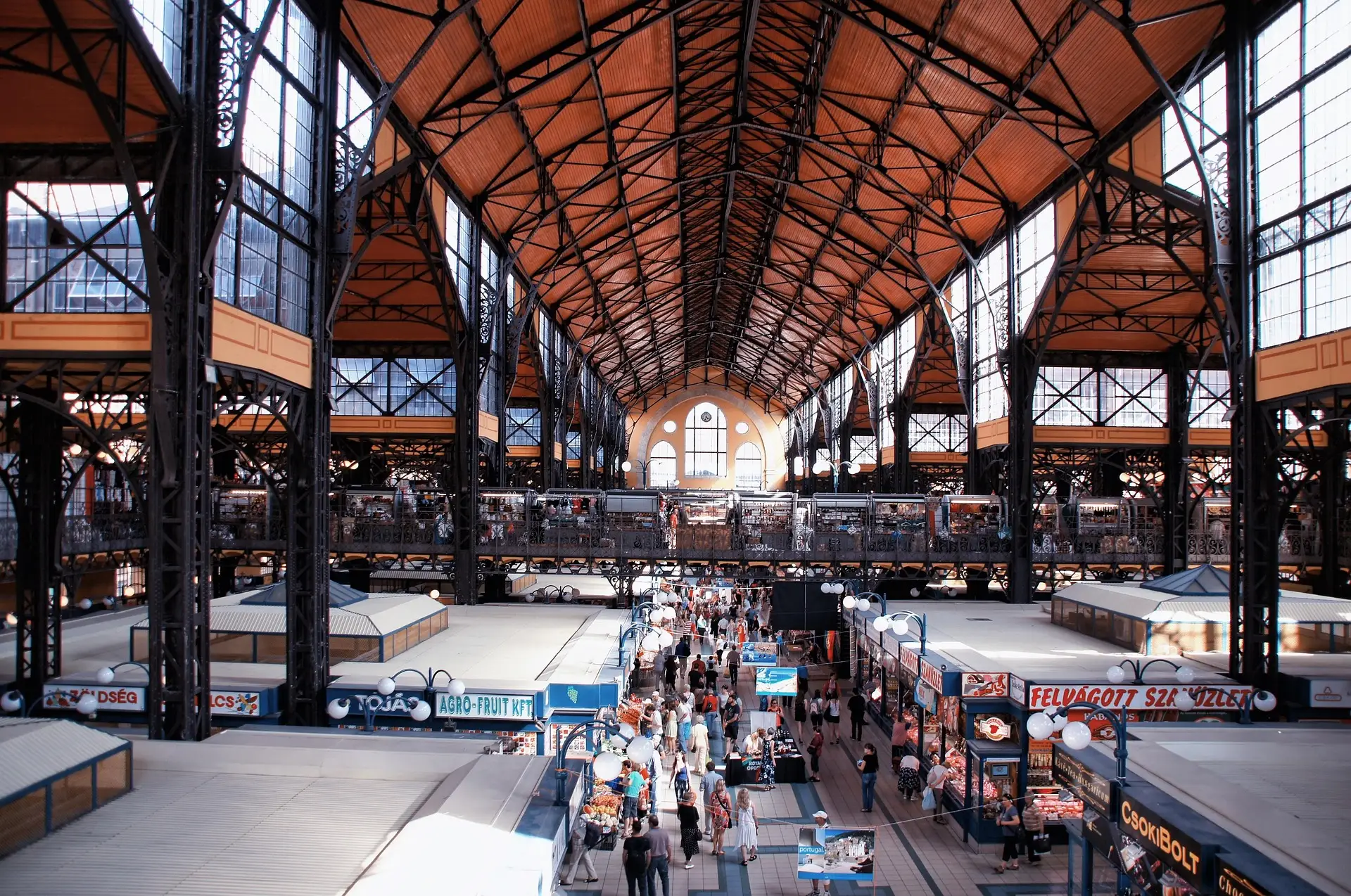
The Great Market Hall is open seven days a week, from 06:00 on six of them. There are three different closing times across the week, though, and every stall inside keeps its own hours. The Sunday opening is recent enough that you will often see it reported wrong.
Opening hours
The hall opens at 06:00 from Monday to Saturday and at 10:00 on Sunday. It closes at 18:00 on weekdays, and at 16:00 on both Saturday and Sunday.
Market hall
| Monday | 06:00-18:00 |
| Tuesday | 06:00-18:00 |
| Wednesday | 06:00-18:00 |
| Thursday | 06:00-18:00 |
| Friday | 06:00-18:00 |
| Saturday | 06:00-16:00 |
| Sunday | 10:00-16:00 |
Closed on official public holidays and non-working days. Last Christmas the operator opened its halls until noon on 24 December, closed them on 25 and 26 December and on 1 January, and reopened on the days between. Individual stalls keep their own, shorter hours inside the building, and several do not trade on Sundays at all.
The Sunday opening dates from the second half of 2023, when Saturday closing also moved from 15:00 to 16:00 and Monday from 17:00 to 18:00. If you see Sunday shown as closed, including on one English page of the operator’s own site, that is the schedule from before the change. The times above are the ones in force since then.
Best times to visit
Time of day
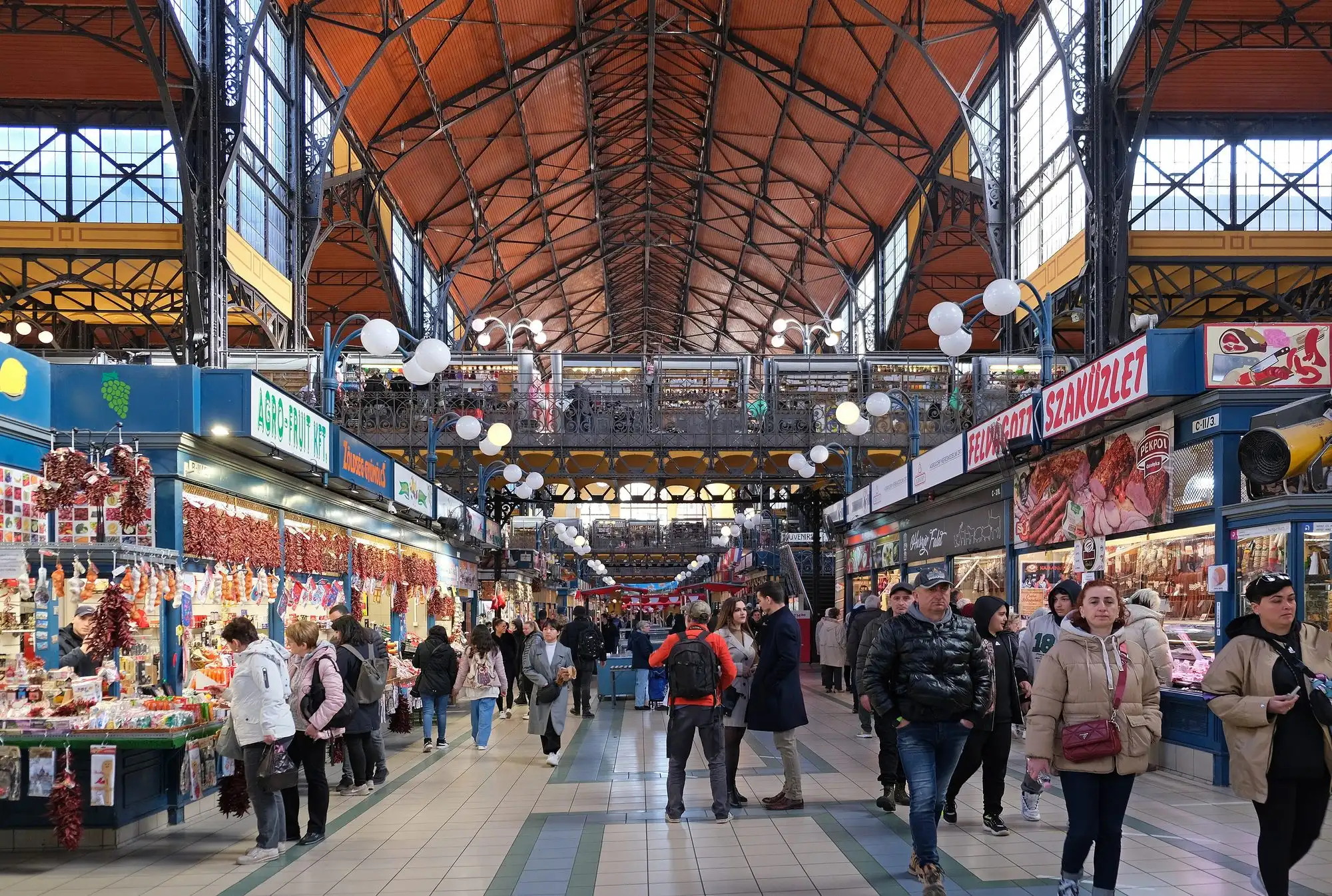
Before 11:00 is the window. The produce is fully stocked, most of the people in the aisles are there to buy food rather than photograph it, and there are seats upstairs. From about 11:30 the groups arrive and the hall stays full through the early afternoon.
The gallery is the pinch point rather than the ground floor. Between about 12:00 and 14:00 the tables are all taken and people eat standing up while others squeeze past them.
The last hour thins out, but so does the market. Stalls start clearing well before closing time, so a late-afternoon visit is a look at the building more than at the trade.
Day of the week
Weekday mornings are the best combination of a full market and room to walk. Saturday is the busiest day of the week, and it also closes two hours earlier than a weekday, which concentrates everything into the morning.
Sunday is the quietest, for the simple reason that it is only open for six hours and some stalls do not bother. If you want the hall calm and you do not mind gaps, it works. If you want the working market, do not make Sunday your only chance.
Season
Summer is the busiest season and the least comfortable. The hall holds the heat under its roof, and the middle of the day on the gallery is hot as well as crowded. In long hot spells the operator puts out drinking water in its market halls.
Late autumn and the depths of winter are the calmest months to shop. December is its own case, because the hall is dressed for Christmas and the aisles fill with people who have come to look at it rather than buy anything.
How long to spend
Half an hour covers the hall for most people. Add time for shopping, for lunch on the gallery, or for a guided tour that spreads it over a morning.
A look round, 30 minutes
Enough for the ground floor, a lap of the gallery and a look at the roof. That is what most visitors need.
Shopping and lunch, about an hour
Time to buy paprika and salami to take home, go down to the cellar, and eat upstairs before the midday crush.
A guided food tour, 2 to 3 hours
The tours run two or three hours and some finish elsewhere in the city. Compare them on our tours page.
Insider tips
Treat 06:00 as a real option
Almost nothing else in Budapest is open at six in the morning. If jet lag has you awake, this is the one sight in the city you can have to yourself, with the traders setting up around you. Not every stall is ready that early, so give it until seven for a full hall.
Do not plan a Saturday afternoon here
Saturday closing is 16:00, two hours earlier than a weekday, and the stalls that publish hours shut at 15:00. Arrive at two on a Saturday and you get the last hour of a market that has been picked over since breakfast.
Check the date against the holiday calendar
The hall closes on Hungarian public holidays and non-working days, and the operator publishes no list of them, so nobody is going to warn you. If your one free morning falls on a national day, an Easter weekend or anywhere near Christmas, check the Hungarian holiday calendar before you build the morning around a closed building.