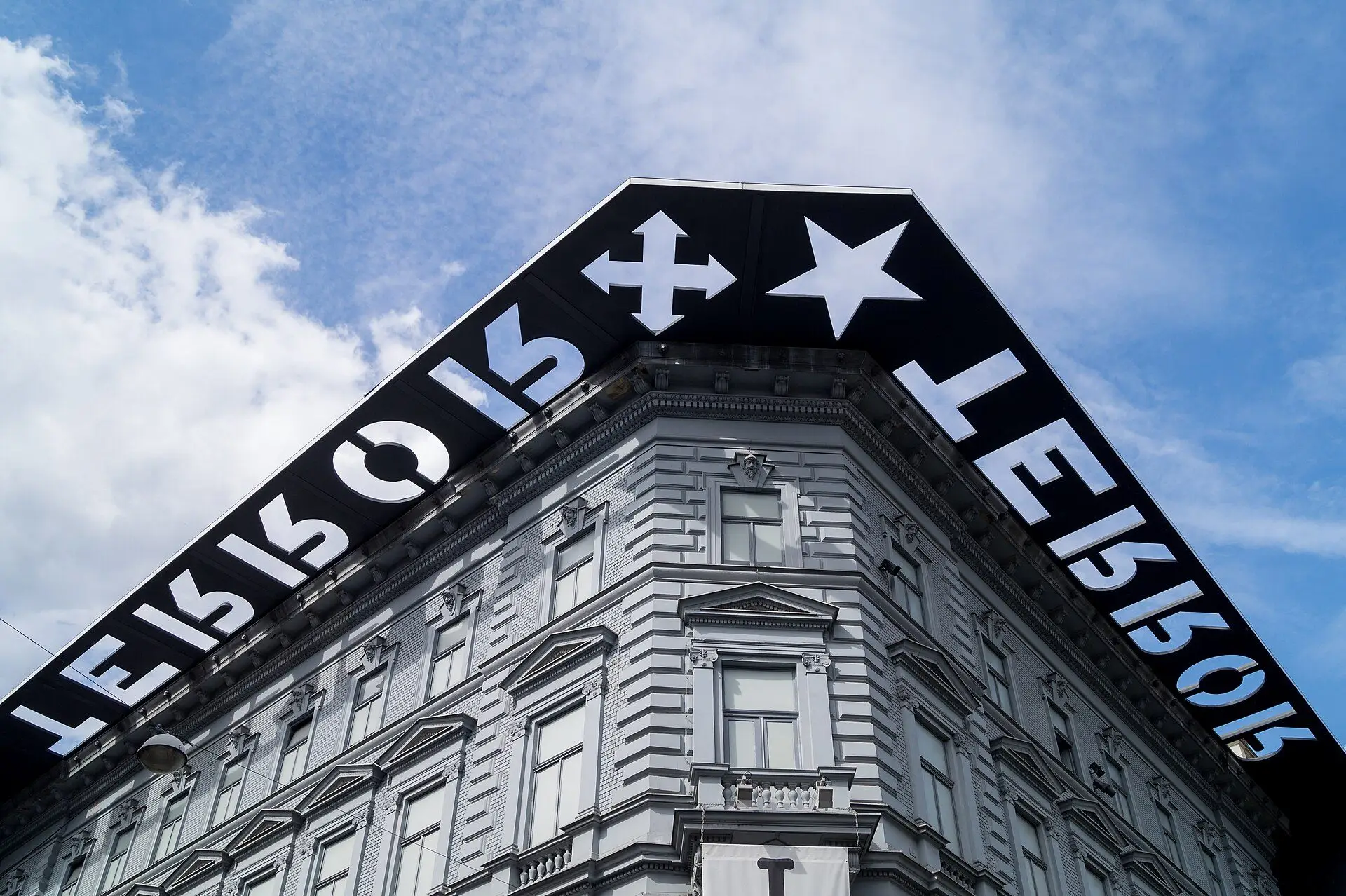
The building at Andrássy út 60 was a grand block of flats for its first fifty-five years and a place of torture for the next twelve.
The Arrow Cross rented rooms here from 1937 and used the cellar in the winter of 1944; the communist political police moved in as soon as the siege ended and stayed until the 1956 revolution drove it out. Forty-six years then passed before the house became the memorial it is now.
The museum’s own line is that this is the place where Hungary lost its freedom twice, to the Nazis and their Hungarian helpers and then to the Soviets and theirs, and where it names the victims and the perpetrators of both.
At a glance
Timeline
- 1882
Built as a block of flats
The apartment building goes up on the new boulevard to plans by Adolf Feszty.
- 1932
A painter's legacy
The painter Izsák Perlmutter dies, leaving the house to his widow and adopted daughter, with the Pest Jewish community as eventual heir.
- 1937
The far right rents the first floor
Count Lajos Széchenyi takes rooms for the Racial Protection Socialist Party in June. In October the merged Hungarian National Socialist Party under Ferenc Szálasi makes the address its headquarters, the House of Loyalty.
- 19 Mar 1944
German occupation
German forces enter Hungary. The museum’s first room dates the loss of the country’s independence to this day.
- 15 Oct 1944
Arrow Cross takes power
After Horthy’s failed attempt to leave the war, the Germans install Szálasi. Through the winter the party holds and tortures hundreds of people in the cellar, most of them Jewish, and many are killed or taken from here to be shot on the Danube bank.
- 1945
The political police arrive
Budapest falls to the Soviet army in February. Gábor Péter’s political police takes the building, divides the cellar into cells and joins it by tunnel to the neighbouring houses it also occupies.
- 1946 to 1950
ÁVO, then ÁVH
The countrywide State Protection Department, the ÁVO, is formed in October 1946 under interior minister László Rajk. It becomes the State Protection Authority, the ÁVH, in September 1948 and an independent authority in January 1950.
- 1951
Expropriated
Until now the police have rented the building from its owner. The state takes it. The street has been Sztálin út since the end of 1949.
- 1953
Folded into the ministry
After Stalin’s death the ÁVH loses its independence in July and is absorbed into the Interior Ministry, in fact if not in public knowledge.
- 28 Oct 1956
Abolished
Imre Nagy announces the abolition of the ÁVH in his radio speech during the revolution. After the Soviet suppression the political police leaves Andrássy út 60, having smashed the cellar prison to remove every trace.
- 19 Jun 1991
Last Soviet soldier leaves
Lieutenant General Viktor Silov crosses the Tisza at Záhony, the last of more than 44,000 Soviet soldiers to go. Parliament makes the date a national remembrance day in 2001.
- Dec 2000
Bought for a museum
The Public Foundation for Research on Central and Eastern European History and Society buys the building. A year of rebuilding follows, to designs by Attila F. Kovács.
- 24 Feb 2002
The museum opens
The House of Terror Museum opens at 17:00, with hundreds of thousands of people gathered on Andrássy út.
Key facts
- Built
- 1882, block of flats
- Architect
- Adolf Feszty
- Address
- Andrássy út 60, Sztálin út 60 from 1949
- House of Loyalty
- Arrow Cross headquarters, 1937 to 1945
- Political police
- PRO, ÁVO and ÁVH, 1945 to 1956
- Museum design
- Attila F. Kovács, 2001 to 2002
- Opened
- 24 February 2002
- Music
- String score by Ákos Kovács
The building
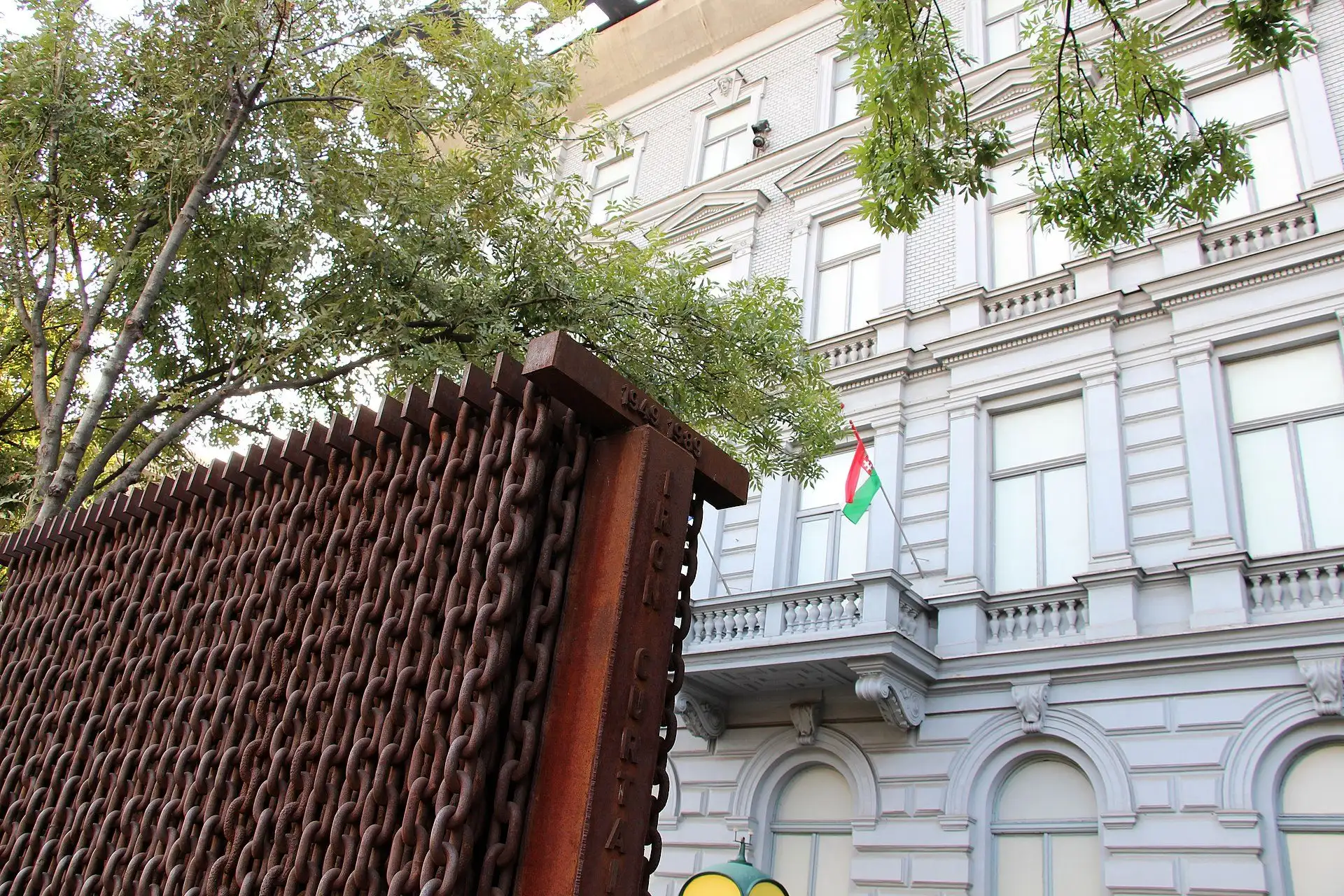
Number 60 was never a palace and never belonged to either of the police forces that used it. It was built in 1882 as a bérpalota, a grand block of rented flats, and by the 1930s it belonged to the painter Izsák Perlmutter, who died in 1932 and left it to his widow and his adopted daughter, Gizella Reiszner, with the Pest Jewish community to inherit after them.
It was Gizella Reiszner, by then the widow of a Persian prince and known as Mrs Ali Ahmed Mirza, who let rooms in 1937 to a far-right party through its aristocratic front man, Count Lajos Széchenyi.
The party merged that autumn with Ferenc Szálasi’s, and the first floor of a Jewish family’s house became the Arrow Cross headquarters. The press noticed, and the owner’s answer at the time was that the flat had stood empty for six months and the rent was paid.
After 1945 the political police rented the building from her too, and paid through her lawyer, until the state simply took it in 1951. The chain sculpture on the pavement today, by the museum’s designer Attila F. Kovács, is the Iron Curtain, a memorial to the forty years of closed borders that followed.
The history of the House of Terror
The Arrow Cross House of Loyalty, 1937 to 1945
The Arrow Cross did not seize this building in 1944. It had been the tenant since October 1937, when the Hungarian National Socialist Party, newly merged under Ferenc Szálasi, moved into the rooms on the first floor and gave the house the name that stuck, the Hűség Háza, the House of Loyalty. For seven years it was a party office on a fashionable street.
That changed on 15 October 1944, when Regent Horthy’s attempt to take Hungary out of the war collapsed and the Germans put Szálasi in power. Through the winter the House of Loyalty, like the other Arrow Cross party houses, became a place where people rounded up in the city were held and beaten in the coal cellars.
The museum says several hundred Jewish Hungarians were tortured here and that many of them died; others were robbed and marched from here to the Danube bank to be shot. It lasted until the Soviet army took Budapest in February 1945.
The political police and the cellar tunnels, from 1945
The political police did not wait. In 1945 the new Political Police Department under Gábor Péter took over the empty Arrow Cross headquarters, and as the museum points out, the men who chose it knew exactly whose building it had been.
Its first job was to find and try war criminals. Its real job, as the communist party soon made clear, was to hunt the party’s opponents, and by the end of 1945 the cellar divided into cells was already too small.
So the police took the neighbouring houses as well, cut their coal cellars into more cells, and joined them with tunnels, so that a prisoner could be walked from one building to the next for interrogation without ever being seen on the street.
A whole state security quarter grew up behind Andrássy út, bounded by Csengery, Aradi and Izabella streets. One of the tunnels, bricked up and running towards number 62, was found when the museum was built and is on show in the cellar.
The ÁVH and the interrogation room, 1946 to 1956
The department became the countrywide ÁVO in October 1946, the ÁVH in September 1948 and an independent authority answering to the Council of Ministers in January 1950, with its own prisons, of which this was one of two in Budapest.
Gábor Péter ran it, and his room, with a desk facing a bunk, is on the museum’s first floor. Orders to beat a prisoner could come from him, from Rákosi himself or from whoever was leading an interrogation.
The interrogation room the guards called the gym is the one room left as it was. On its wall the museum has put the words of János Kádár, interior minister in 1948, that you must be able to hit with every means, and along the end wall hang the truncheons and sticks that were used.
Prisoners were also run up and down the service stairs nearby until they collapsed. False confessions signed in this building fed the show trials of the Rákosi years, and the museum’s Justice room plays the trial of Imre Nagy at its centre.
The 1956 revolution and the destroyed cellar
On 28 October 1956, with the revolution five days old, Imre Nagy announced on the radio that the ÁVH was abolished. In truth an organisation of that name had not existed since July 1953, when it was quietly folded back into the Interior Ministry, but nobody outside knew that, and the announcement was one the crowds had been waiting for.
After the Soviet army crushed the revolution the political police left Andrássy út 60 for good. Before it went, it destroyed the evidence. The cellar prison was smashed and rebuilt so that nothing showed what it had been, the tunnels were sealed, and only the gym upstairs survived untouched.
That is why half of what a visitor walks through in the basement today is a reconstruction of the cells as they stood in the 1940s and 1950s.
How the museum opened in 2002
The Soviet presence outlasted the ÁVH by thirty-five years. The withdrawal agreed in Moscow in March 1990 ended on 19 June 1991, when Lieutenant General Viktor Silov drove across the bridge at Záhony behind the last of more than 44,000 soldiers and their families, and the museum’s route ends with a memorial to that day, a national remembrance day since 2001.
The building itself waited another decade. In December 2000 a public foundation bought it to make a museum of the two dictatorships, and over one year the architect Attila F. Kovács rebuilt the inside and reframed the outside in black, with the word TERROR cut into the roofline, so that the house would stand out from its neighbours and, as the museum puts it, draw attention to itself. Ákos Kovács wrote a string score to play through the rooms.
The museum opened on 24 February 2002 at 17:00, with hundreds of thousands of people in the street, and calls itself a memorial site of Hungarian freedom.
The argument over the museum’s balance
The House of Terror has been argued over since the day it opened. Historians and museum people objected in 2002 and have kept objecting, chiefly to the balance. Two rooms on the museum’s own list carry the Arrow Cross name, and the long communist period fills the rest.
Its tone is also unusually direct for a museum, with the museum’s own texts calling the Arrow Cross thugs and describing the ÁVO’s leaders as Stalin’s most faithful followers.
What is not disputed is the history of the building, the cellar, the tunnels, the gym or the people who died here. Visit knowing that the museum takes a side, and the rooms will make more sense.
Visiting today
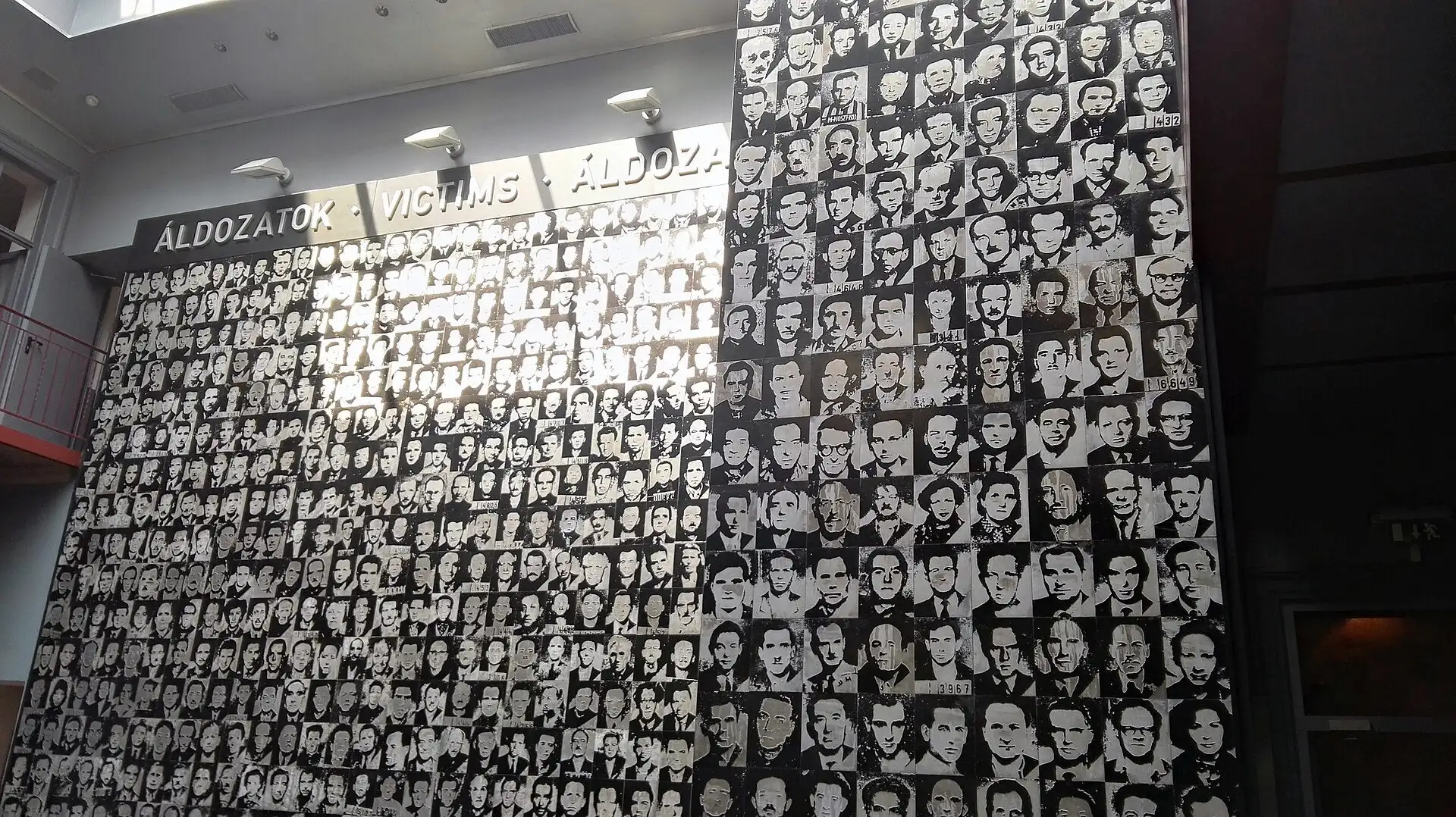
The gym on the first floor is the one room the ÁVH left as it was, the cellar is half reconstruction because the ÁVH made sure of it, and the tank in the atrium stands for the armies that put both regimes in place rather than for anything that happened in this building.