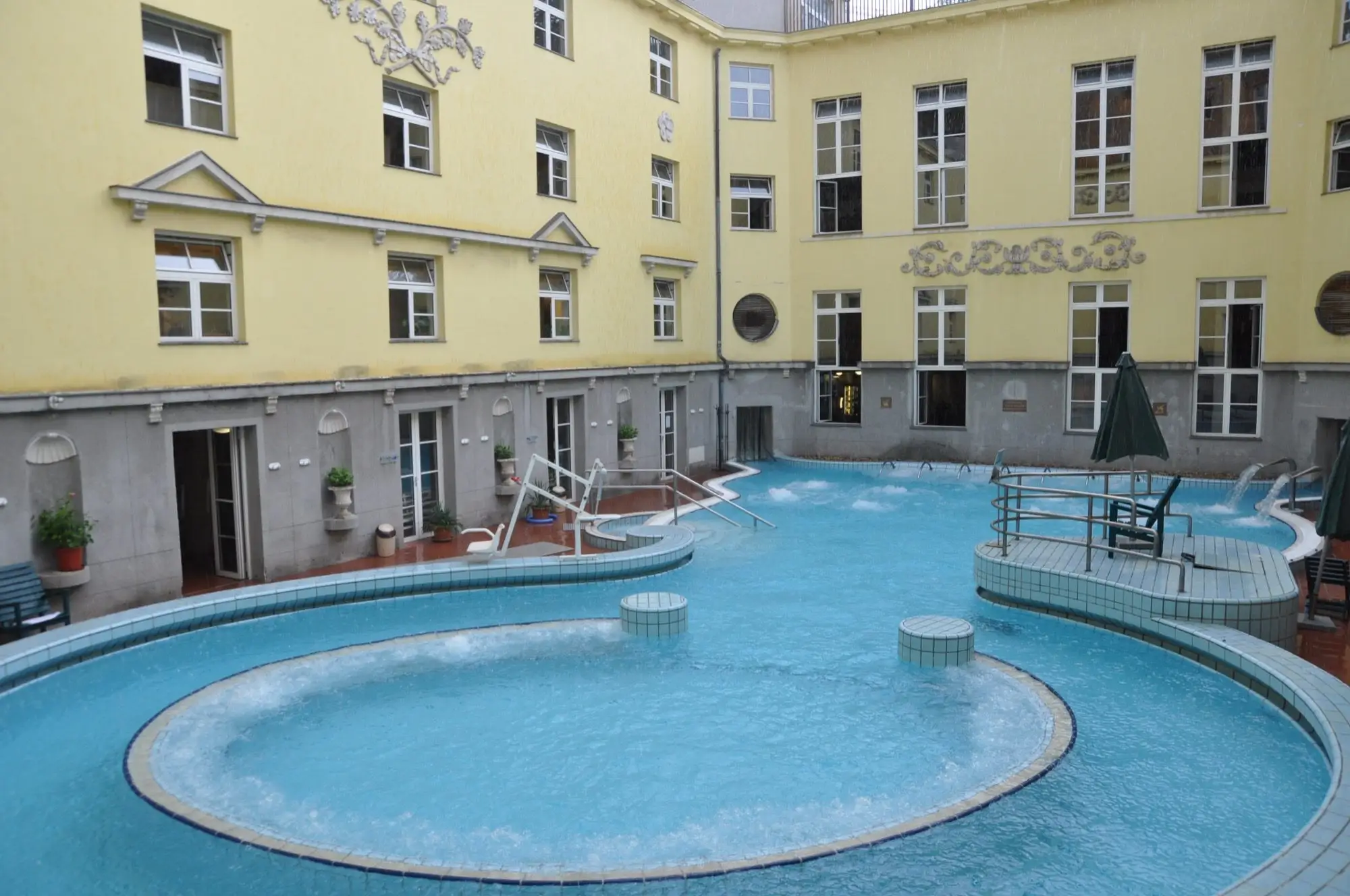
Lukács is one of the oldest healing sites in Budapest and one of the least showy. Knights of the Order of Saint John settled at these springs in the 12th century to treat the sick, and the orders of Rhodes and Malta followed them, building baths alongside their monasteries.
What came after is not the story people expect from a Budapest bath. The Ottomans used the springs for industry rather than bathing, the Treasury held the site for nearly two centuries, and the bath most of us walk through was made by a private buyer in the 1880s and rebuilt piece by piece ever since.
At a glance
Timeline
- 12th century
The knights
Knights of the Order of Saint John settle at the springs to cure the sick, followed by the orders of Rhodes and Malta, who build baths at their monasteries.
- Ottoman rule
Gunpowder and flour
The bath operates, but the energy of the springs is used mainly to produce gunpowder and to grind wheat.
- After 1686
The Treasury
Buda is retaken from the Ottomans and the bath becomes the property of the Treasury.
- 1884
A private buyer
Fülöp Palotay buys the bath from the Treasury. A spa hotel goes up, a modern hydrotherapy department is set up and the swimming pool is rebuilt.
- 1937
The drinking hall
The drinking cure hall is built.
- 1979
A day hospital
The first department in Hungary offering complex thermal bath care as a day hospital opens here.
- 1999
The open-air pools
The outdoor pools are modernised. The little-used mud pond is replaced by the adventure pool, and the two swimming pools in the other courtyard are rebuilt.
- 2023
Solar panels
An energy project finishes: 129 solar panels, 170 square metres of new windows and heat recovery on part of the plant.
Key facts
- Healing use since
- The 12th century
- Ottoman period
- Gunpowder and grinding wheat
- Bought from the Treasury
- 1884, by Fülöp Palotay
- Water source
- The Molnár János cave
- Drinking cure hall
- Built 1937
- Day hospital
- Hungary's first, 1979
- Adventure pool
- 1999, on the old mud pond
- Solar panels
- 129, fitted 2023
The water
Everything here rests on one source. The bath’s medicinal water comes from the Molnár János cave, a flooded system about 6 kilometres long and 30 metres deep, with waters of different origins mixing inside it. The entrance is about 3 minutes’ walk from the bath’s gate, and divers rather than bathers go into it.
That single source is why the pools differ in temperature and not in chemistry, and why the bath has been treated as a place of cure rather than a swimming club for eight centuries. The drinking hall pours the same water over a counter, two days a week.
The history of Lukács Thermal Bath
The knights at the springs
The first people to make something of these springs were hospitaller knights. The Order of Saint John, whose work was curing the sick, settled in the area of today’s bath in the 12th century, and the orders of Rhodes and Malta came after them and built baths at their monasteries.
That line has never quite been broken. The Hospitaller Brothers still run the hospital next door, with the restored Ottoman bath of Veli Bej inside it, a few minutes’ walk north.
Gunpowder and flour under the Ottomans
Rudas, Király and Veli Bej all sell their Ottoman century, and Lukács is the exception. The bath kept working through the occupation, but the springs were valued for their power rather than their heat. The water drove mills that ground wheat and works that made gunpowder.
So there is no domed bathing hall here, and no octagonal pool. After Buda was retaken in 1686 the site passed to the Treasury, which held it for the best part of two hundred years.
Fülöp Palotay and the spa hotel, 1884
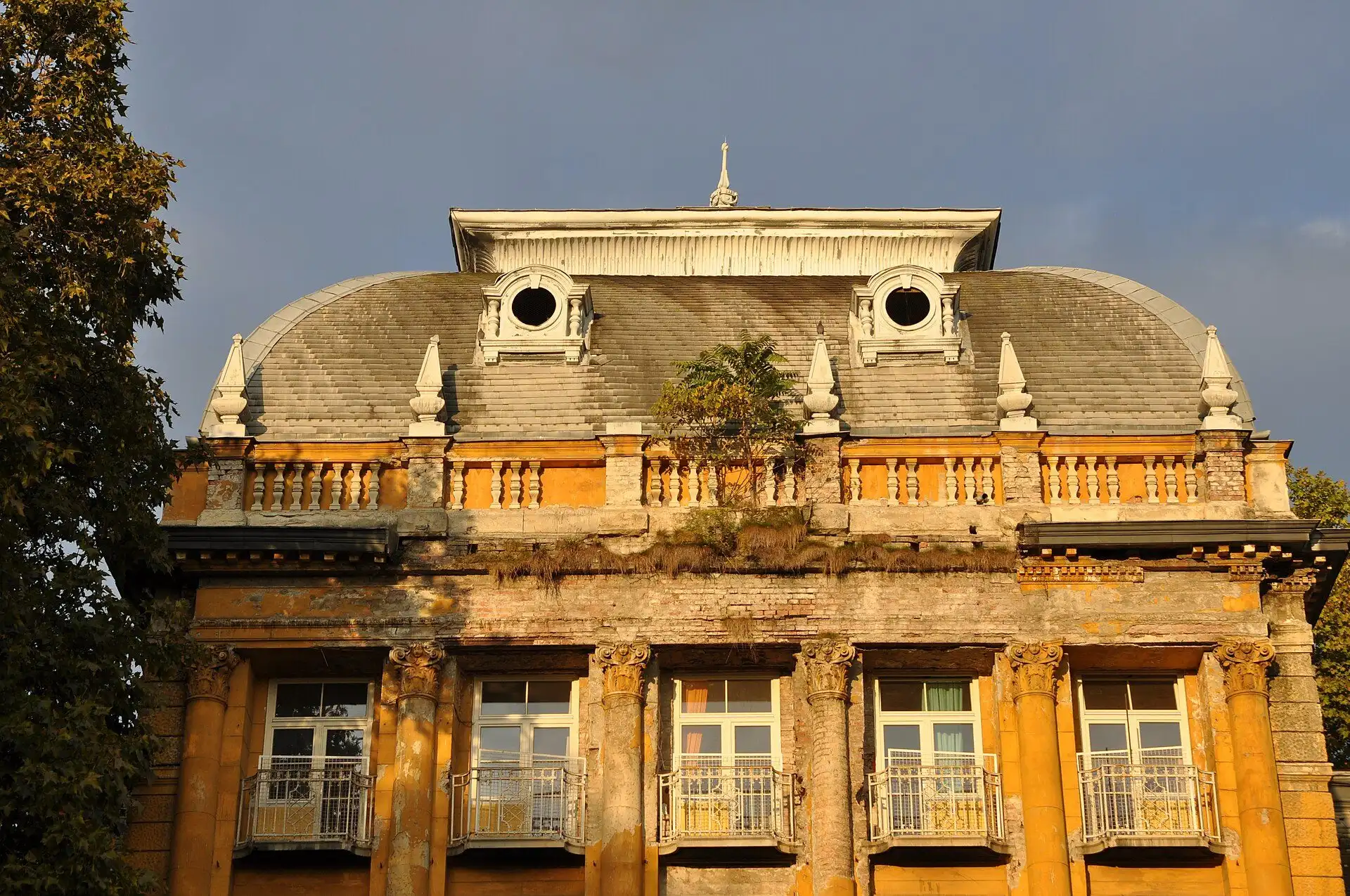
In 1884 Fülöp Palotay bought the bath from the Treasury, and a series of transformations began. A spa hotel went up, an up-to-date hydrotherapy department was established and the swimming pool was rebuilt.
This is the Lukács that got its reputation. People came from all over the world for cures and stayed in the hotel. The weathered building above the courtyard, with the balustrade and the mansard roof, is the only part of the bath that looks like a grand spa.
The thank-you tablets on the courtyard wall
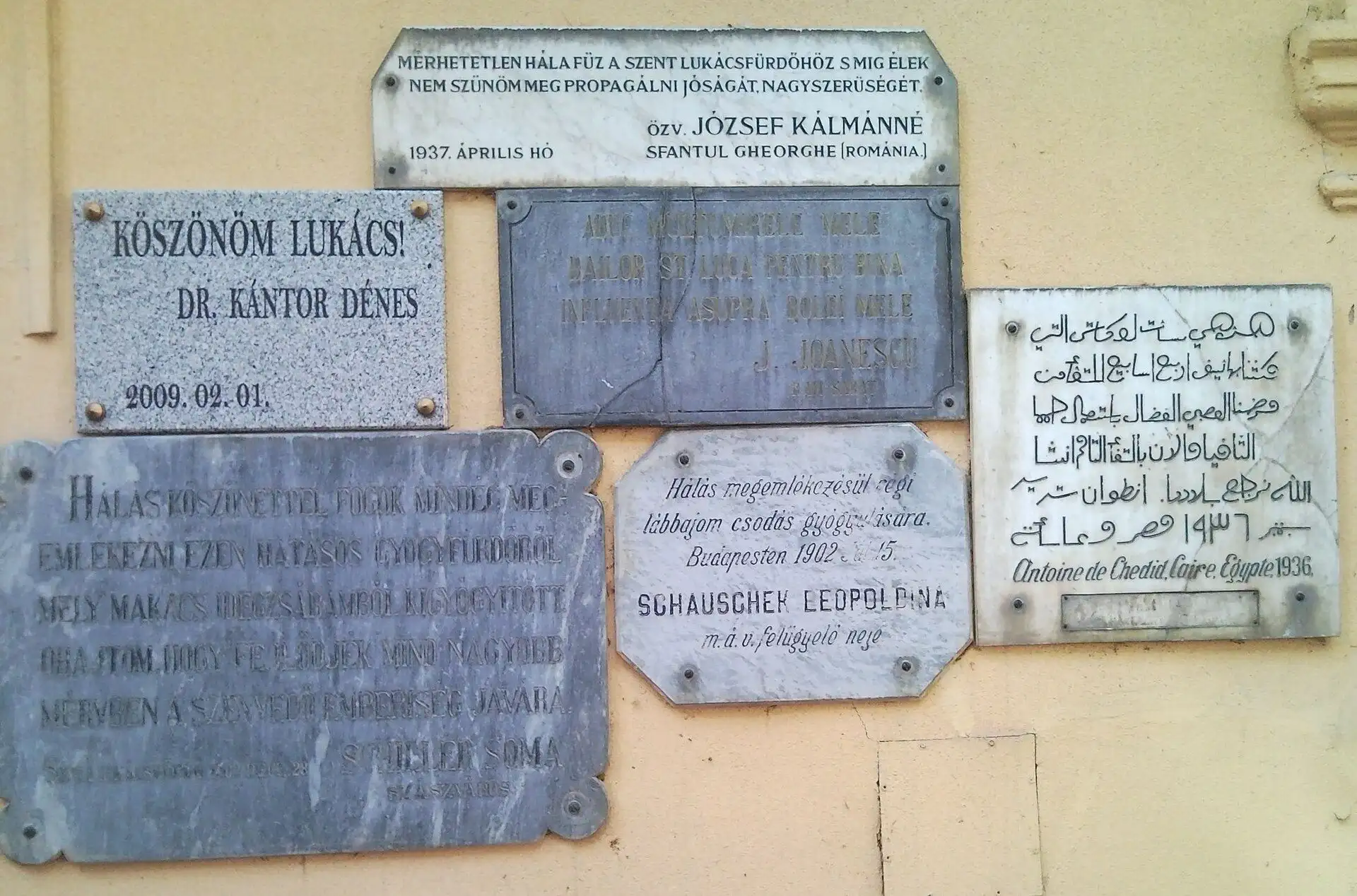
Patients who were healed here left something behind. After a successful cure they had marble tablets carved and fixed to the wall of the bath’s courtyard, and the wall filled up over the decades.
Read across them and you get Hungarian, Romanian and Arabic, from Cairo, from Romania, from Budapest itself, some dated in the 1930s and one from as late as 2009. Nothing else in the building tells you as plainly what people came here for. There is a second plaque by the swimming pool, to the artists and writers who made the bath their own.
The drinking hall, the day hospital and the 1999 pools
The 20th century turned Lukács into a medical institution. The drinking cure hall was built in 1937, for people taking the water by the glass rather than by the pool. In 1979 the country’s first department for complex thermal bath care as a day hospital opened here, which is why prescription treatments still run on weekdays behind their own desk.
The bathing half caught up in 1999. The open-air pools were modernised, the barely used mud pond became the adventure pool with its current channel, bubble beds, neck showers and massage jets, and the two swimming pools in the other courtyard were rebuilt with filtration and circulation. The pool everybody photographs is therefore the newest thing here.
Since then the work has been unglamorous: a renovation project completed in 2012, and an energy scheme finished in November 2023 that put 129 solar panels on the roofs, replaced 170 square metres of old windows and added heat recovery.