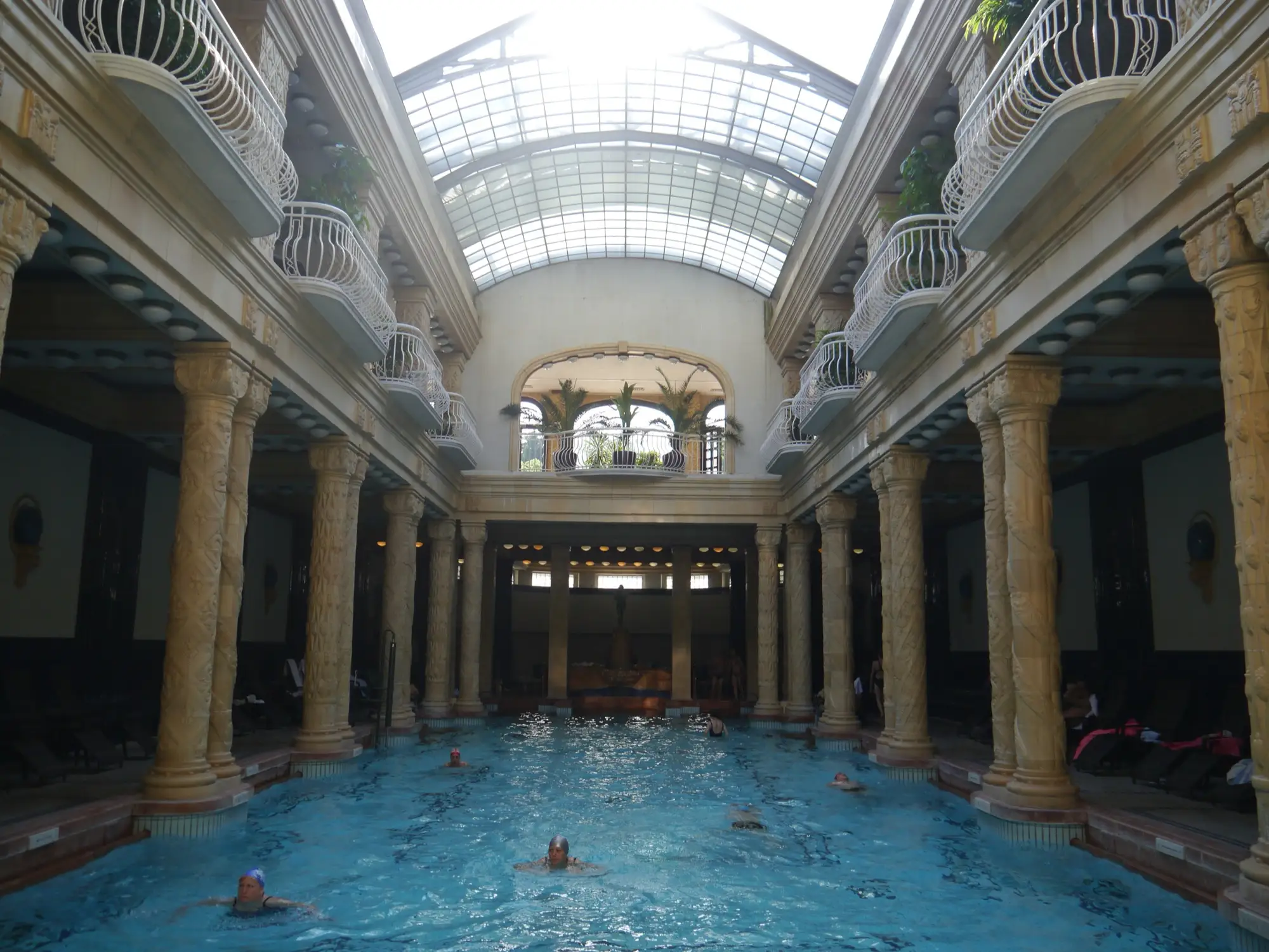
The Gellért took seven years to build, opened as the First World War was ending, and gave Budapest what the bath counts as the first wave pool in the world. It has been shut for a rebuild once before, for eleven years, and it is shut for one again now.
This page follows the springs from the Mud Bath the Turks knew, through the bridge that demolished it and the competition nobody quite won, to the palace of 1918, the war, and why the doors closed on 1 October 2025.
At a glance
Timeline
- 15th century
The springs
Written records describe “miraculous” springs at the foot of the hill.
- Turkish era
Bigger and hotter
The Turks favour the springs here as larger and hotter than the other Buda baths of the day.
- 17th century
The Mud Bath
The site gets the name Sárosfürdő, from the fine silt the springs push up into the pools.
- 1687
A physician's bath
After the reconquest of Buda, Emperor Leopold I gives the ruined bath to his court physician, who rebuilds it.
- 1718
Bought by Buda
The physician’s family sells the bath to the city.
- 1832
A bath hotel
A hotel and bath go up on the site, still under the Mud Bath name.
- 1894
Demolished for a bridge
The old bath is pulled down to build the Ferenc József Bridge, today’s Liberty Bridge.
- 1905
A three-way tie
The design competition for a new bath ends with three architects sharing first prize.
- 1911
Building starts
Work begins, and the First World War slows it to a crawl.
- September 1918
Opening
The Szent Gellért bath and hotel open at seven in the morning; more than 200 people have bathed by ten.
- 1927
The wave pool
An outdoor wave pool is added to Artúr Sebestyén’s design.
- 1934
The effervescent bath
A bubble bath is added.
- 1944 to 1945
The siege
The building is damaged in the siege of Budapest and the interiors wrecked; the rooms are restored in 1945 and the Danube wing in 1961.
- 1972 to 1983
Eleven years of works
The effervescent and wave baths close suddenly in 1972, and the waves return in 1983.
- 2007 to 2008
Restoration
A comprehensive restoration keeps the style and the Zsolnay mosaics.
- 1 January 2013
Fully mixed
The men’s and women’s thermal halls are opened to everyone.
- 1 October 2025
Closed to rebuild
The bath shuts for its first full renovation since the 1970s, with reopening planned for 2028.
Key facts
- Opened
- September 1918
- Architects
- Sebestyén, Hegedűs and Sterk
- Wave pool
- 1927, to Sebestyén's design
- Effervescent bath
- 1934
- Water
- 41 to 43°C, from two wells in the hill
- Mixed bathing
- Since 1 January 2013
- Closed
- 1 October 2025
- Reopening
- Planned for 2028
The water
The bath is fed by two wells sunk into Gellért Hill, 21.55 and 15.10 metres deep, which deliver water at 41 to 43°C. The bath describes it as calcium-magnesium-hydrogen-carbonate water with sulphate and chloride, some sodium and a significant amount of fluoride. Every pool except the cold plunge pools carried thermal water, either neat or mixed down.
The bath recommended it for degenerative joint disease, spinal complaints, chronic and sub-acute arthritis, disc problems, neuralgia, narrowed arteries and circulation disorders. It is the same water that the Turks prized four centuries earlier for being hotter than anything else in Buda.
The history of Gellért Thermal Bath
The Sáros Mud Bath, from the Turks to 1894
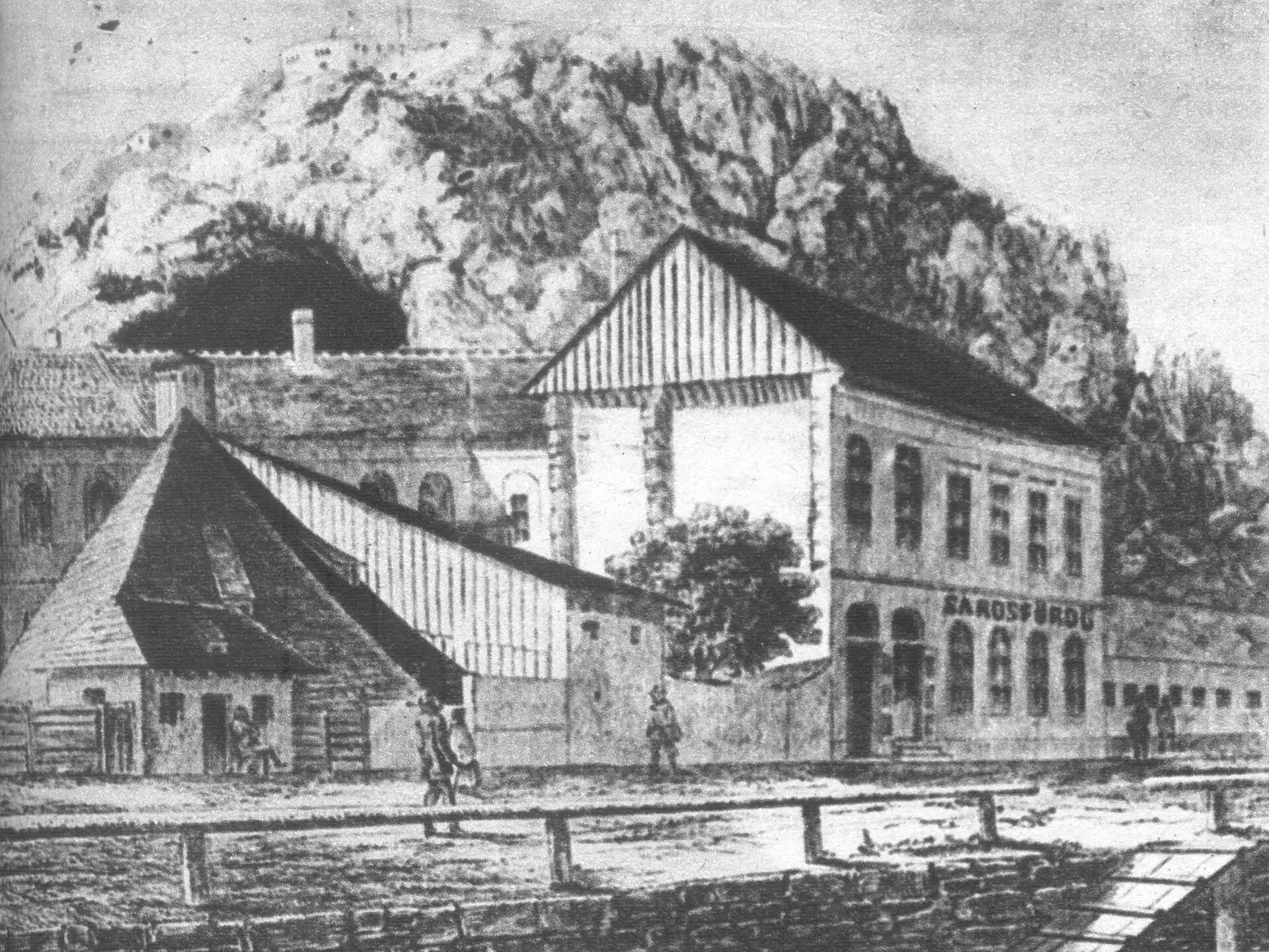
The springs at the foot of Gellért Hill were being written about in the 15th century, and the bath’s own account reaches back further, to a hospital founded here in 1178 and a second one nearby where King Andrew II’s daughter, St Elizabeth, nursed lepers. The Turks made a bath of the springs and liked them because they were bigger and hotter than the other Buda baths.
After Buda was retaken in 1687 the ruined bath went to the emperor’s court physician, who rebuilt it, and in 1718 his family sold it to the city. By the 17th century it already had the name it kept until the end, Sárosfürdő, the Mud Bath, for the fine silt the springs pushed up with the water and left on the bottom of the pools. A bath hotel went up on the site in 1832.
The Mud Bath’s end came from the river, not the springs. In 1894 it was demolished to make room for the Ferenc József Bridge, the green iron bridge that is now Liberty Bridge and still lands on the square in front of the hotel.
Designing and building the bath, 1905 to 1918
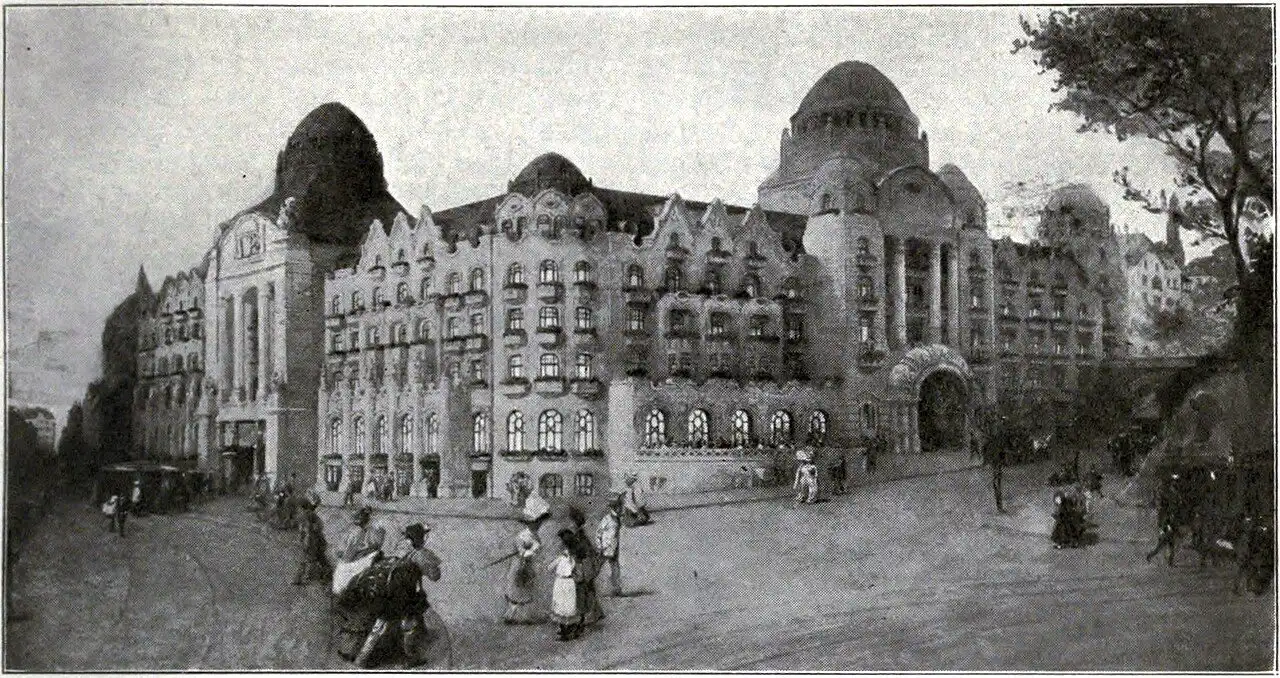
The competition to design the new bath was announced in 1905 and produced not one winner but three. First prize was shared by the partnership of Artúr Sebestyén and Ármin Hegedűs and by Izidor Sterk, and the building that stands today fuses their two plans. It is Art Nouveau, with a dome that borrows from the Baroque.
Building began in 1911 and should have taken a few years. The First World War stretched it to seven, and the Szent Gellért bath and hotel finally opened in September 1918 at seven in the morning, with more than 200 bathers in the pools within three hours. The bath calls it the capital’s first luxury establishment, and for a long time it was counted among the most modern complexes in Europe.
It had a few weeks of peace. On 31 October 1918 the revolution broke out and the military requisitioned the building.
The wave pool of 1927 and the bubble bath
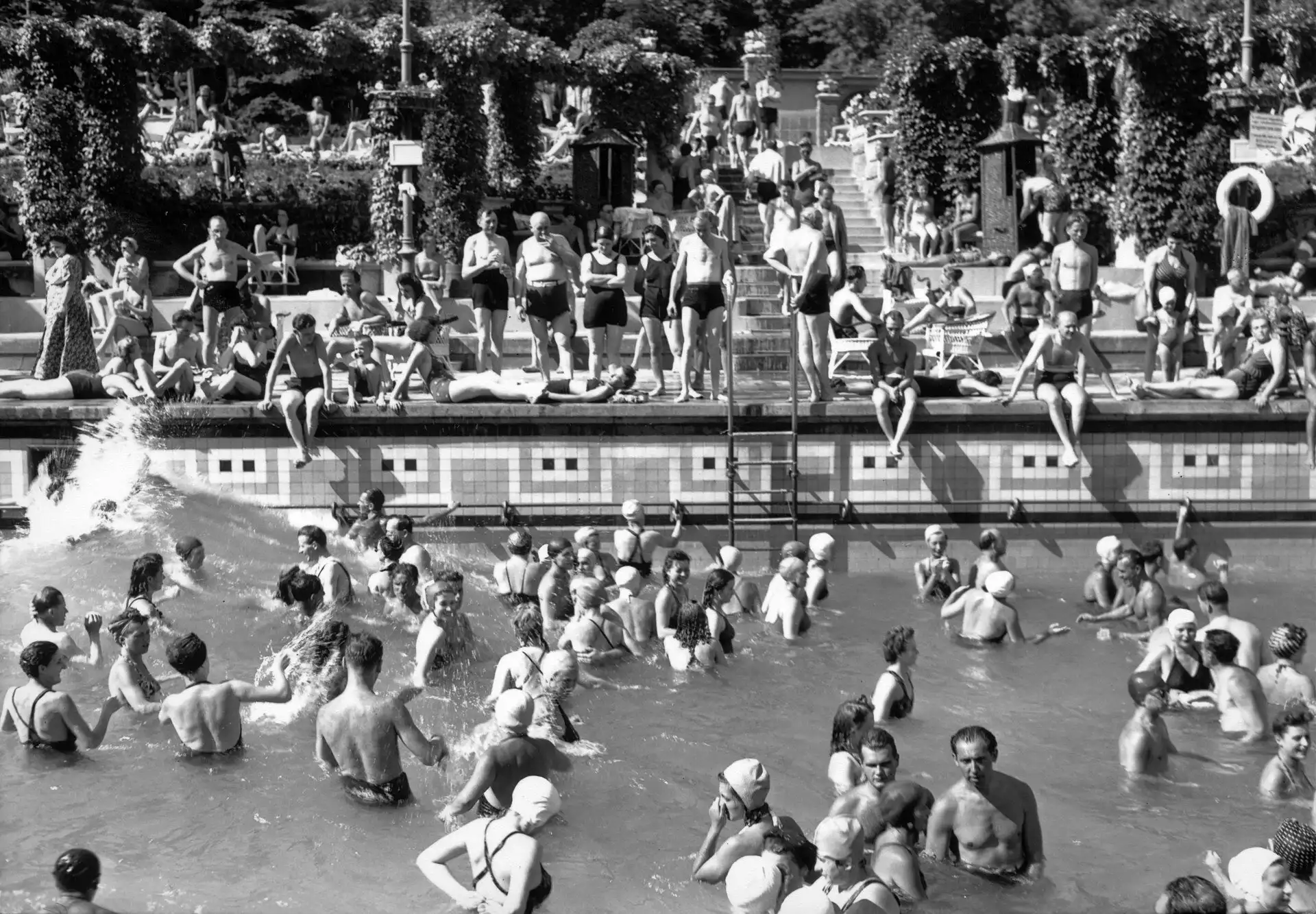
The bath’s two most famous additions came between the wars. In 1927 Artúr Sebestyén added an outdoor wave pool behind the building, in line with the swimming pool, and the bath counts it as the first wave pool in the world. Photographs from the 1930s and 1940s show it packed to the edges. In 1934 an effervescent bath followed, a pool with bubbles forced up through the water.
The hotel’s golden age was the 1930s, when it was the centre of Budapest’s social life. The national archive’s list of guests over the decades runs from Pablo Casals, Arthur Rubinstein, David Oistrakh and Yehudi Menuhin to President Nixon and the Dalai Lama.
Siege damage and the rebuilding, 1945 to 1983
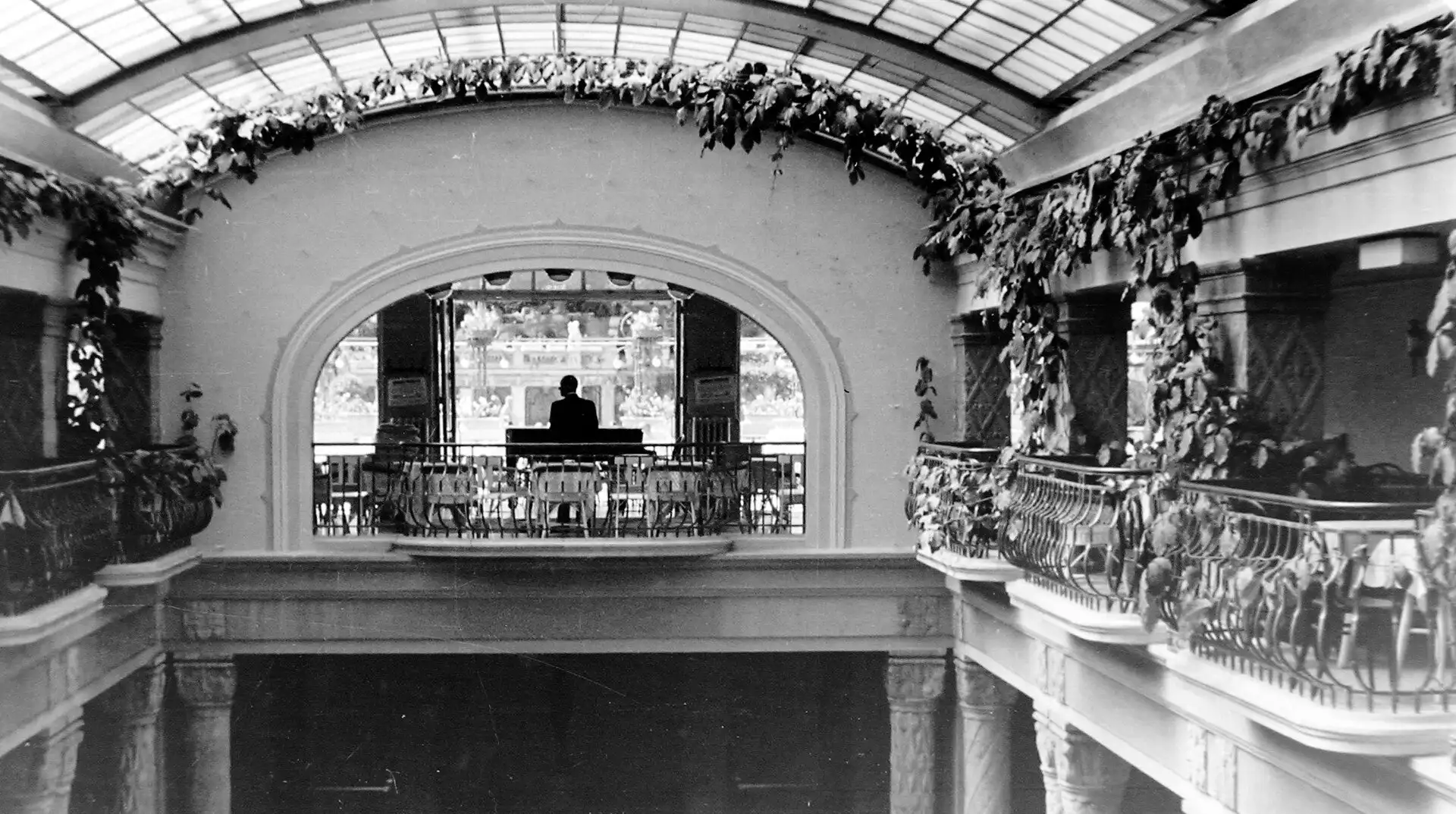
The siege of Budapest in the winter of 1944 to 1945 wrecked the interiors. The city archives record the rooms restored in 1945 and the Danube-facing wing in 1961, and the national archive puts the end of the phased rebuilding at 1972.
That same year the effervescent and wave baths were shut without warning, and the works that followed ran until 1983, when guests got the waves back. It is the precedent the operator itself points to for how long a Gellért renovation can take. A further restoration in 2007 and 2008 kept the style and the Zsolnay mosaics, and on 1 January 2013 the men’s and women’s thermal halls were opened to everyone.
Why Gellért Bath closed in 2025
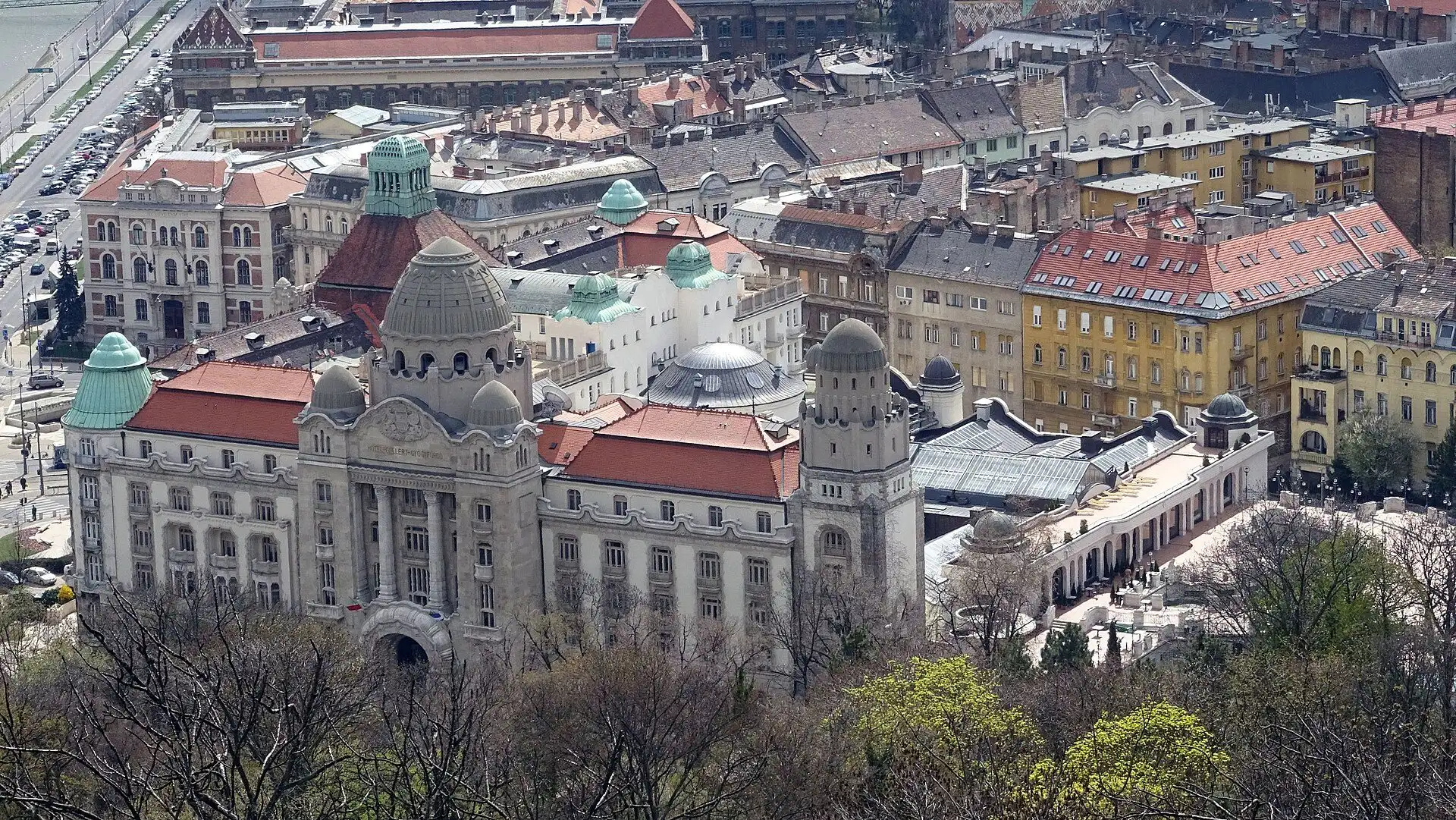
The hotel was sold in 2021 and closed, its renovation began in 2024, and it is due to reopen in 2027 as Mandarin Oriental Gellért, Budapest, with its lobby and grand rooms rebuilt from old photographs and plans. The bath, which belongs to the city’s bath company, stayed open through the noise and dust as long as it could.
By 2025 it could not. The operator says the bath had not been fully renovated since the 1970s, its basic infrastructure had worn out and structural problems had appeared, and the hotel’s owner handed over a survey that found the pump house in the basement, the machinery that drives the whole bath, in a dangerous state. Fixing it meant closing everything. The last guests left on 30 September 2025.
The plan restores the Zsolnay halls and the entrance hall to their original state, brings the waves back, and adds a panoramic sauna, a sun terrace and larger changing rooms. The operator’s phasing gives the indoor bath the end of 2028 and the outdoor pools summer 2029, with the money still being arranged when we checked in September 2026.