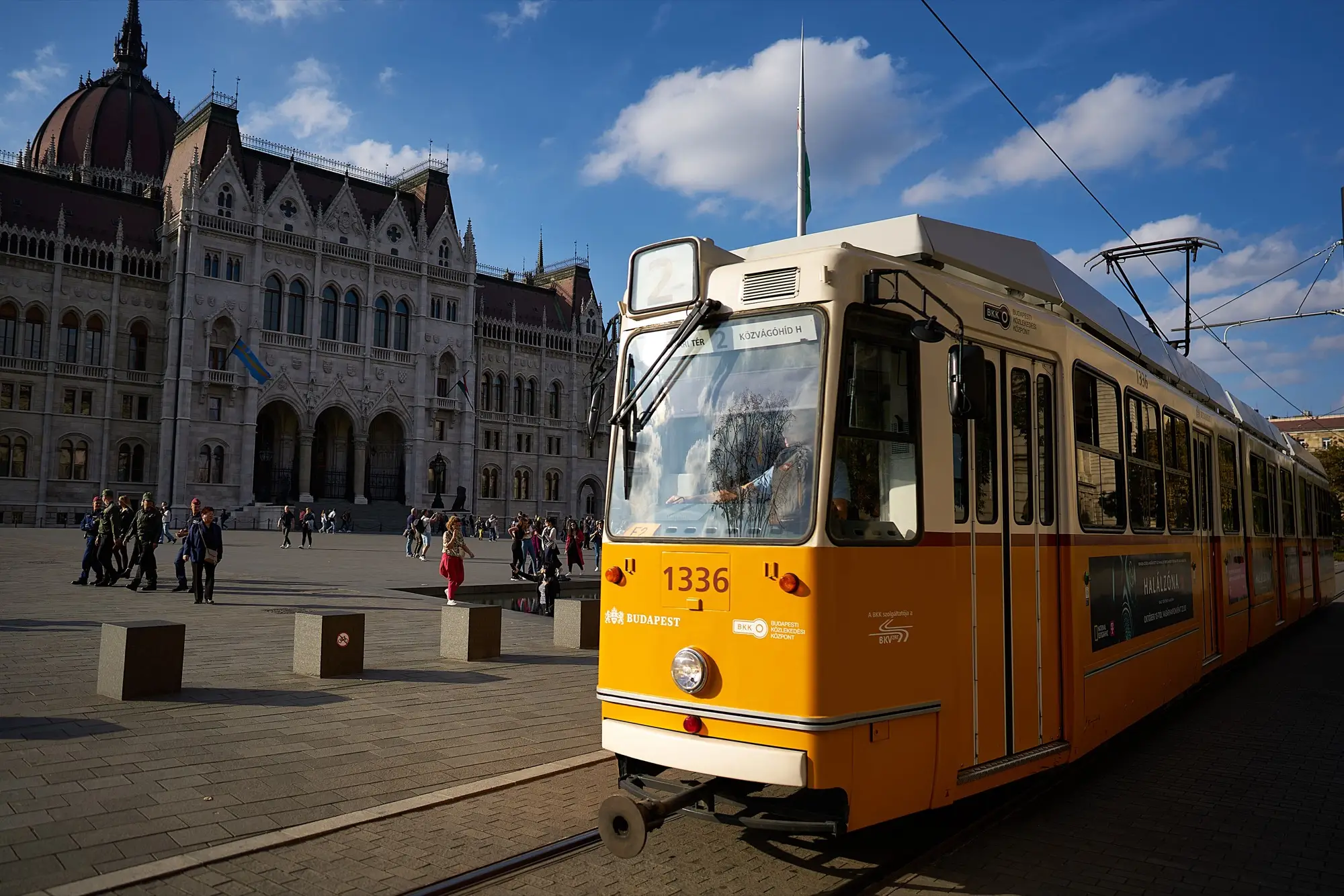
Budapest’s centre is small enough to walk, and the trams and metro cover the rest on one ticket system. Tap a bank card at any metro entrance and you are through, or buy a 24 or 72-hour travelcard and stop thinking about tickets at all.
Two rules catch visitors out. A single ticket covers one vehicle only, so changing from the metro to a tram means a second ticket. And the 100E airport bus has a fare of its own that no travelcard covers.
- Tickets
- Single tickets, or a 24 or 72-hour travelcard
- Contactless
- Tap a bank card at any metro entrance and on the airport bus
- The app
- BudapestGO, for tickets and journey planning
- At night
- Tram 6, the airport buses and night buses numbered from 900
- From the airport
- Bus 100E, on its own ticket, about 40 minutes
- Over 65
- Free on BKK lines with photo ID
Which ticket is right for you
Budapest public transport tickets and how to use them
Know what a single ticket covers
A single ticket is good for one trip on one vehicle: one tram, one bus, one trolleybus or one HÉV ride. You can’t break the journey, change or come back on it. The exception is the metro, where you can change between lines as long as you keep going in the same direction. Either way, the trip has to be finished within 80 minutes, or 120 on night services.
On the metro, validate a paper ticket at the station entrance before you pass the validators; on everything else, validate it as soon as you board. Single tickets bought in the BudapestGO app last a year, so a few spare ones on your phone do no harm.
Buy a travelcard to stop counting
The 24-hour and 72-hour travelcards give unlimited rides on the metro, trams, buses, trolleybuses, the HÉV within Budapest and even second-class trains inside the city, from the date and time you choose. They do not cover the 100E airport bus, the funicular up to the Castle or the chairlift.
A paper travelcard needs no validation: show it if an inspector asks. A travelcard in the app has to be scanned at every metro entrance and every front door, needs a data connection and works only with the original photo ID you entered when you bought it. For a short stay, I find paper simpler.
Tap a bank card at the metro gate
At every metro entrance, on all four lines, a Pay&GO reader sells and validates a single ticket in one tap of a contactless card, phone or watch. It costs the same as a ticket from the machine, needs no app and prints nothing. If an inspector stops you, tap the same card on their reader.
It works on the metro and the 100E only, one ticket per tap at the metro. For a tram or bus you need a ticket bought beforehand.
Use BudapestGO for the journey and the tickets
BKK’s BudapestGO app plans the journey, shows the next departures live and sells single tickets and travelcards. Even if you buy your tickets on paper, it is the best way to find the right stop, which isn’t always where the stop’s name suggests.
Expect inspectors
Ticket checks happen at metro entrances and exits, on board trams and buses, and at the door of the 100E, and visitors with an unvalidated ticket are the ones who get caught. An inspector can issue a penalty fare on the spot. Validate every paper ticket, every time.
Ways to get around Budapest
Ride the metro across the city
Four lines meet in the centre. M1, the oldest, runs under Andrássy út from Vörösmarty tér to Heroes’ Square and the Széchenyi Bath. M2 crosses under the river to Batthyány tér and Széll Kálmán tér in Buda and out to Keleti station. M3 runs north to south through Pest, via Nyugati station, Deák Ferenc tér and Kálvin tér, to Kőbánya-Kispest for the airport bus. M4 goes from Keleti under the river to Szent Gellért tér and Kelenföld.
Deák Ferenc tér is where M1, M2 and M3 meet, and Kálvin tér links M3 with M4.
Take the trams along the river and the boulevard
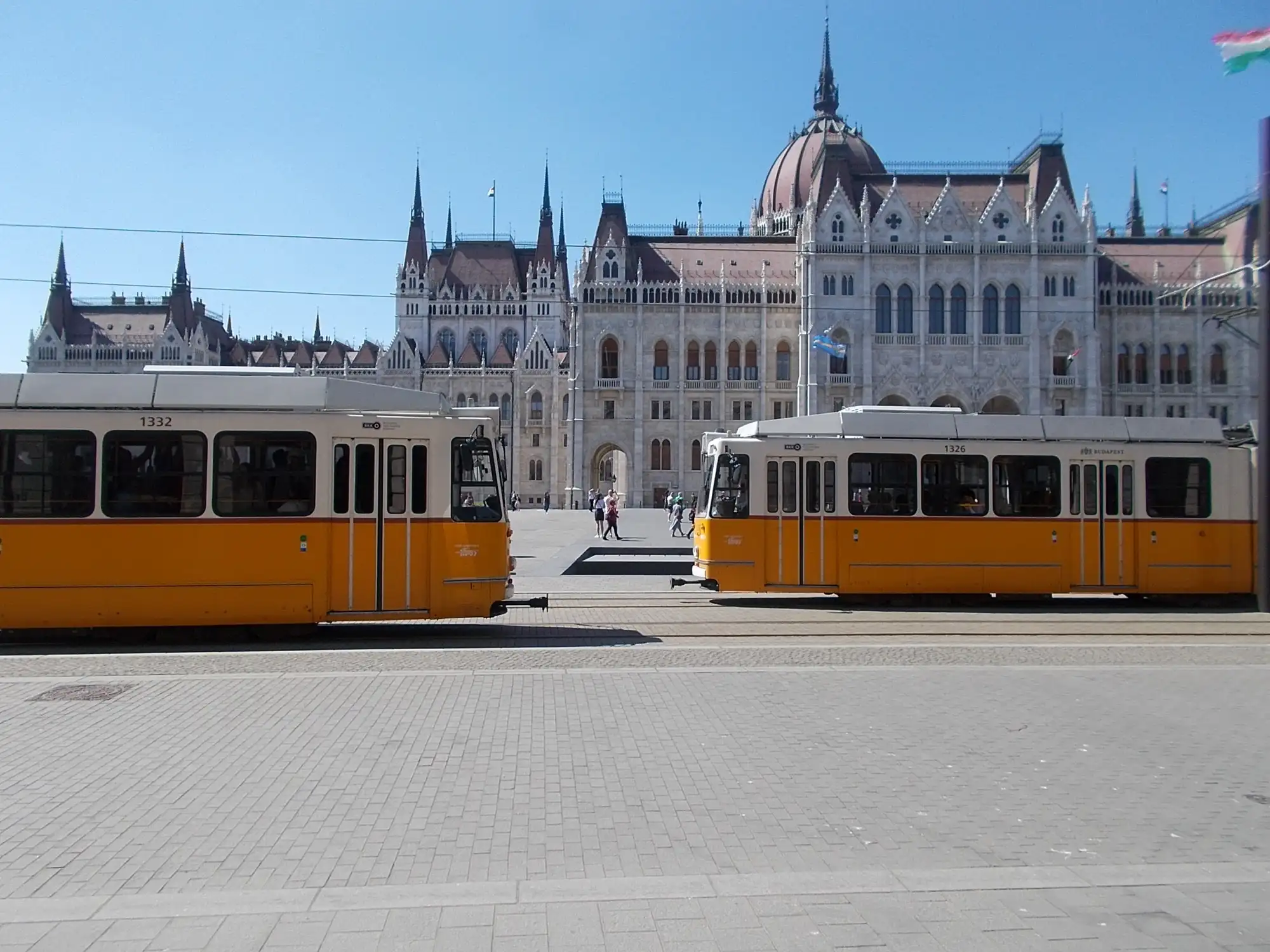
Tram 2 runs along the Pest bank of the Danube, past the Parliament and the Chain Bridge to the Great Market Hall. Trams 4 and 6 run round the Grand Boulevard, crossing Margaret Bridge at one end, with a stop for Margaret Island, and Petőfi Bridge at the other. Trams 47 and 49 go from Deák Ferenc tér past the National Museum and the Great Market Hall, then over Liberty Bridge to Buda.
On the Buda side, tram 41 follows the river from Batthyány tér, under Castle Hill and past the Rudas Bath to Szent Gellért tér and the Gellért Bath.
Use buses and trolleybuses for the gaps
Buses fill in where the metro and trams don’t go, most usefully up Castle Hill. Bus 16 runs from Deák Ferenc tér over the Chain Bridge and up to Fisherman’s Bastion, Dísz tér and the Vienna Gate, then down to Széll Kálmán tér. Bus 105 goes from Heroes’ Square down Andrássy út and over the Chain Bridge to Buda. Single buses, and some longer ones, are boarded at the front door only, where you validate or show your ticket by the driver.
Take the HÉV out of town
The HÉV is the suburban railway. The line you are most likely to use is H5, from Batthyány tér up the Buda bank to Szentendre. Ordinary tickets and travelcards cover it within Budapest; beyond the city boundary you need a suburban ticket for the extra stretch.
Get home at night
When the metro and most trams stop for the night, tram 6 keeps running round the Grand Boulevard all night, and night buses, numbered from 900 upwards, cover the rest of the city. The night network was reorganised in July 2026, so plan any night journey in BudapestGO rather than from an older map. The same tickets are valid at night, and on night buses you can buy one from the driver.
At night, sit near the driver or in the front car of the tram. The buses meet at Astoria, Deák Ferenc tér, Blaha Lujza tér, Móricz Zsigmond körtér, Örs vezér tere and Széll Kálmán tér, where they wait for each other so you can change.
Know which boats are public transport
Only one: the D14 ferry in the far south of the city, which is no use for sightseeing. The sightseeing boats on the Danube in the centre are run separately and sell their own tickets; they are covered on our Danube cruises page. For a river view on a transport ticket, tram 2 does the job.
Ride the funicular, the chairlift and the cogwheel
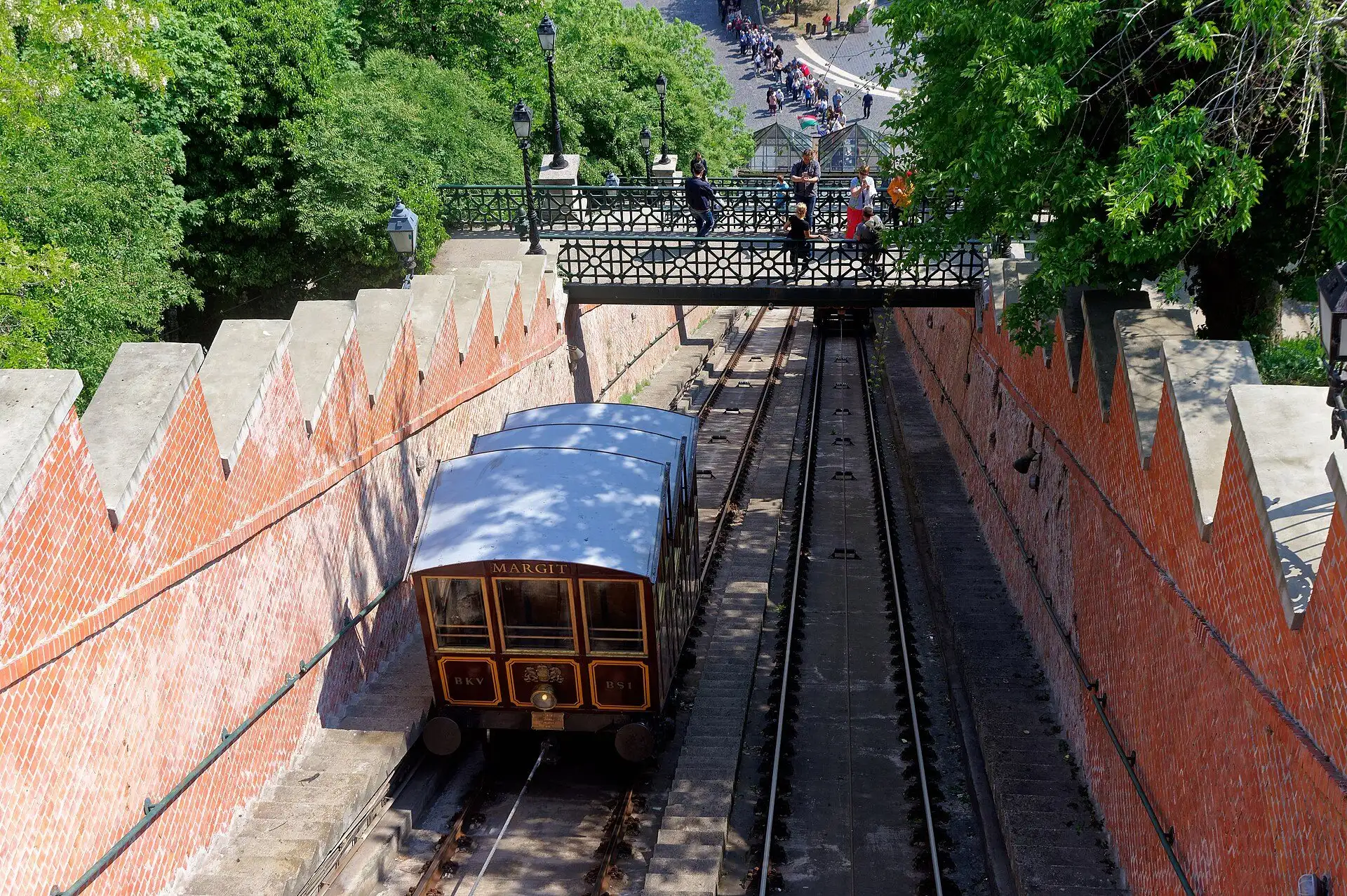
The Buda Castle Funicular climbs from Clark Ádám tér, at the Buda end of the Chain Bridge, to the palace in 95 seconds, every day from 08:00 to 22:00, except on maintenance Mondays every other week. It sells its own tickets, and travel discounts don’t apply; the Budapest Card Plus includes a return ride.
The Zugliget Chairlift takes about 12 minutes up to János-hegy, the highest point in the city, also on its own ticket. The cogwheel railway, line 60, climbs into the Buda Hills on ordinary tickets.
Cycle on MOL Bubi
MOL Bubi is BKK’s public bike-share, with stations around the city. The riverside and Margaret Island are the easy rides; the main roads are busy.
Rides worth taking in Budapest
Tram 2 along the Danube
About 20 minutes from Jászai Mari tér to Közvágóhíd. Going south, sit on the right for the river.
The M1 under Andrássy út
Shallow stations, tiled walls and little yellow trains, from Vörösmarty tér to Heroes’ Square.
Bus 16 up to the Castle
From Deák Ferenc tér over the Chain Bridge, to Fisherman’s Bastion and Dísz tér.
Tram 2 is a river cruise on a transport ticket. From Jászai Mari tér, by Margaret Bridge, it runs past the Parliament and the Chain Bridge and along the Vigadó tér embankment to Fővám tér for the Great Market Hall. Ride it end to end once, then use it for the Parliament and the cruise piers.
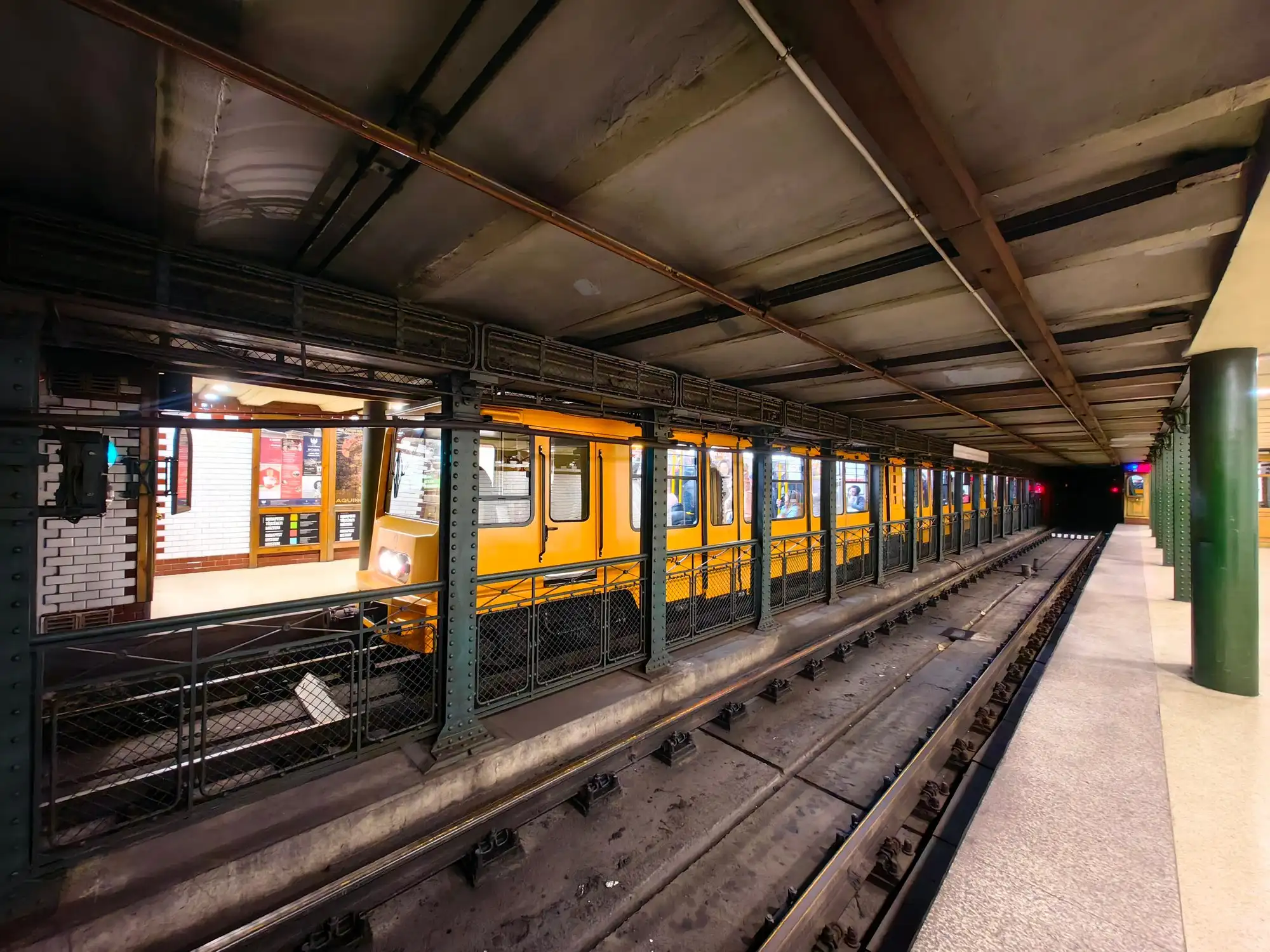
The M1 opened in 1896, just under the road, and still feels like it: steps straight down from the pavement, tiled walls and short yellow trains. It is the quick way from the centre to Heroes’ Square and the Széchenyi Bath, and the Andrássy Avenue guide has the stations worth getting off at.
From the airport to the city
Taxis, Uber and Bolt in Budapest
Budapest’s taxis are regulated. Every licensed taxi charges the same official tariff at every hour, worked out by the meter, and takes cash and cards.
- The five licensed firms: Bolt, City Taxi, Elit Taxi, Főtaxi and Uber Taxi
- How to spot one: a yellow car with yellow number plates, the official fare table on the dashboard and rear doors, and the plate and driver’s licence number in the rear side windows
- Order by app or phone: BKK recommends it over hailing one in the street. Uber and Bolt both send licensed cabs on the same meter
- To or from the airport: a higher airport base fare applies. The airport taxi page has the rank, the Uber pickup point and booking a car for an early flight
Accessibility on Budapest public transport
- Every station on metro M4 has lifts. M1 has none, only stairs from the pavement
- The 100E airport bus runs low-floor buses with room for luggage
- Older trams and buses have high steps, so expect to need a hand with a wheelchair or a heavy pushchair
- BKK runs a door-to-door minibus for travellers with a physical impairment, booked in advance by phone with its dispatcher: details are on BKK’s reduced mobility page
- With a big suitcase, avoid the metro in the late-afternoon rush, when the busiest lines are too full for bags
Insider tips
Keep a paper ticket in your pocket
A dead phone can’t show an app ticket. A couple of spare paper singles, or a paper travelcard, means a flat battery never turns into a fine.
Start the travelcard when you start riding
The 24 and 72-hour travelcards run from the date and time you choose, not from the day you buy them. Buy it the night before and set it for the morning you head out.
Ride the trams, not just the metro
With a travelcard in your pocket, the trams show you far more of the city than the metro: tram 2 on the Pest bank, 41 under Castle Hill, 47 and 49 over Liberty Bridge. Hop off whenever something looks good.
Find the stop in the app
Stop names in Budapest can mislead: the same name can cover stops on different corners of a square. Search the journey in BudapestGO and follow its map to the exact stop.