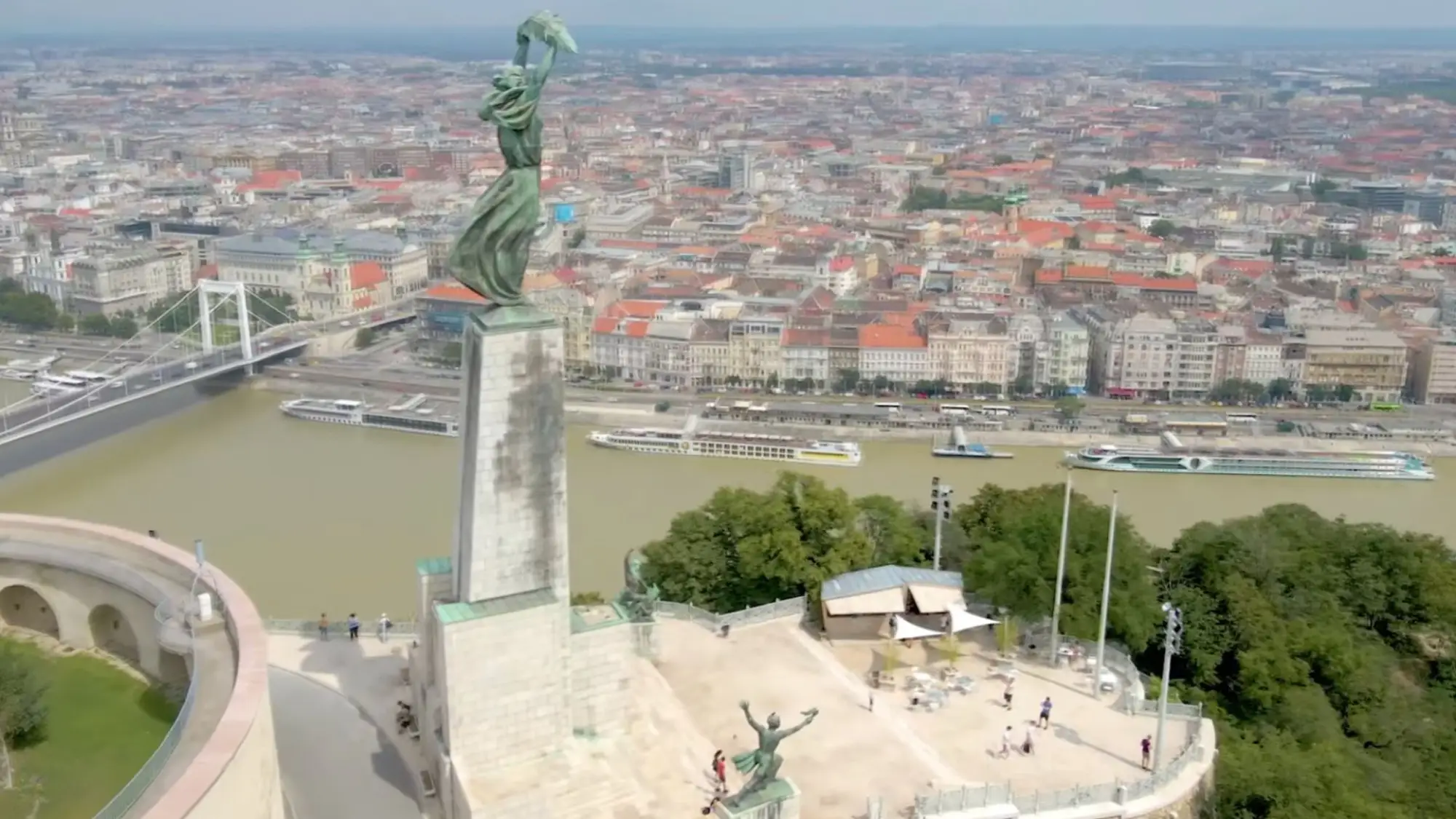
The Citadella offers the most breathtaking panoramic views of Budapest, blending rich history with stunning scenery, it’s a must-visit for anyone exploring this vibrant city.
Highlights
- Stroll through the Liberty Statue and take in its breathtaking panoramic views over Budapest.
- Explore the World War II bunkers and uncover the history within the depths of the Citadella.
- Capture the stunning sunset from the hilltop, where the sky paints a masterpiece over the Danube River.
What to see and do
There are many exciting things to do at the Citadella that will immerse you in both the history and beauty of Budapest.
Take in the Panoramic Views of Budapest
The Citadella offers some of the most stunning panoramic views of Budapest, and believe me, it’s a sight you won’t want to miss. From this vantage point, you can see the winding Danube River, the majestic Parliament building, and the historic Buda Castle all in one sweeping view. It’s as if the entire city unfolds before your eyes, revealing its secrets and stories.
Explore the Citadella Fortress
Built by the Habsburgs in 1851, the Citadella’s origins are steeped in history. It was strategically constructed to control Budapest following the Hungarian Revolution of 1848-1849. The large, imposing stone structure was meant to intimidate and defend, and you can still feel that sense of power as you walk its grounds.
Visit the Liberty Statue
Standing tall since 1947, the Liberty Statue was erected to commemorate the Soviet liberation of Hungary from Nazi forces. However, it has a mixed legacy. While it symbolizes freedom and resilience with its powerful imagery, it also reminds locals of the subsequent Soviet occupation.
The statue features a large figure of a woman holding a palm leaf, representing peace. It’s a poignant sight and one that evokes a lot of emotions, especially when you consider its complex history.
Walk the Trails of Gellért Hill
If you’re a fan of nature and scenic walks, then Gellért Hill is your haven. The various walking paths leading up the hill provide a serene escape from the bustling city. I recommend taking the more winding, peaceful trails. They’re less crowded and offer hidden spots where you can enjoy the greenery and tranquility.
Explore the Nearby Cave Church
Nestled into the rock of Gellért Hill, the Cave Church is a hidden gem you won’t want to miss. It offers a unique history and atmosphere distinct from the more well-known churches in Budapest. The serene, spiritual ambiance inside is a stark contrast to the bustling city outside.
Relax with a Picnic Overlooking the City
For a more laid-back experience, consider having a picnic around the Citadella. There are several grassy areas and benches perfect for a quiet picnic with a view. Bring some local Hungarian snacks and enjoy them while overlooking the Danube.
Enjoy the Sunset or Nighttime Views
The Citadella remains open in the evening, offering a magical perspective of Budapest lit up at night. Seeing the city’s landmarks illuminated is an entirely different experience from daytime.
How to get to the Citadella
To reach the Citadella, you have several appealing options. For an adventurous start, begin at Liberty Bridge near the Gellért Hotel and Cave Church. This route offers a steep but rewarding 20-minute uphill walk, complete with beautiful views and rest areas. Don’t forget to take breaks at the lookout points for panoramic cityscapes.
Alternatively, hop on Metro line M4 to Móricz Zsigmond Square and transfer to Bus 27, which takes you to the Búsuló Juhász (Citadella) stop. A short 5-10 minute walk along a gentle uphill path (Szirtes út) will lead you directly to the Citadella.
If you’re on the Pest side, buses 8E, 110, and 112 from Blaha Square or Astoria can take you to Sánc utca, where you can switch to Bus 27 for the final stretch. This route is less scenic but equally efficient.
Nearby Places
Gellért Thermal Bath: Nestled at the base of Gellért Hill, this iconic art nouveau thermal bath offers indoor and outdoor pools, saunas, and steam rooms, making it a perfect spot to unwind after exploring Citadella.
Rudas Thermal Bath: Just a short walk from Gellért Hill, Rudas Thermal Bath blends Ottoman-era architecture with modern spa facilities, featuring traditional Turkish baths and a rooftop hot tub with panoramic views of the Danube.
Cave Church: Built into Gellért Hill, the Cave Church provides a serene and spiritual atmosphere with its chapel set inside a natural cave, offering a peaceful retreat from the city’s hustle and bustle.
Elizabeth Bridge: Connecting Buda and Pest, Elizabeth Bridge offers stunning views of the Danube and Budapest’s skyline, making it an ideal starting or ending point for a tour of Gellért Hill and Citadella.
Did you know that: (4 Interesting Facts about the Citadella!)
- The Citadella, perched atop Gellért Hill, offers one of the most breathtaking panoramic views of Budapest. But did you know that it was originally built by the Habsburgs in 1851 to keep an eye on the rebellious Hungarian capital?
- While it looks like a fortress, the Citadella never actually saw any military action. Instead, its imposing presence served as a constant reminder of Habsburg power and control over Budapest.
- The iconic Liberty Statue, standing proudly in front of the Citadella, was erected in 1947. This striking 14-meter tall statue, holding a palm leaf, commemorates those who sacrificed their lives for Hungary’s freedom.
- The Citadella once housed anti-aircraft guns during World War II. Today, it’s a peaceful tourist destination, but the thick walls still bear the scars of its tumultuous past, reminding visitors of Budapest’s rich and often turbulent history.
History
- 1851. The Citadella is constructed by the Habsburgs following the Hungarian Revolution of 1848. It serves as a strategic military fortification to keep control over Budapest.
- 1867. The Austro-Hungarian Compromise of 1867 leads to a period of détente. The Citadella’s military relevance begins to wane.
- 1897. The Hungarian government takes control of the Citadella. The fort’s cannons are symbolically removed, marking the end of its use as a military installation.
- World War II. The Citadella is used by both German and Soviet forces due to its strategic vantage point over the city.
- 1947. The Liberty Statue (Szabadság Szobor) is erected in front of the Citadella to commemorate the Soviet liberation of Hungary from Nazi forces.
- 1960s. The Citadella is transformed into a tourist attraction, providing panoramic views of Budapest and the Danube River.
- 1987. UNESCO recognizes the panorama of the Citadella and the banks of the Danube as part of the World Heritage Site.
- 2000s. Various restoration projects aim to preserve the Citadella and enhance its appeal to tourists.
- Present Day. The Citadella stands as a symbol of Budapest’s tumultuous history and resilience. It remains one of the city’s most visited landmarks, offering unparalleled views and a rich historical narrative.