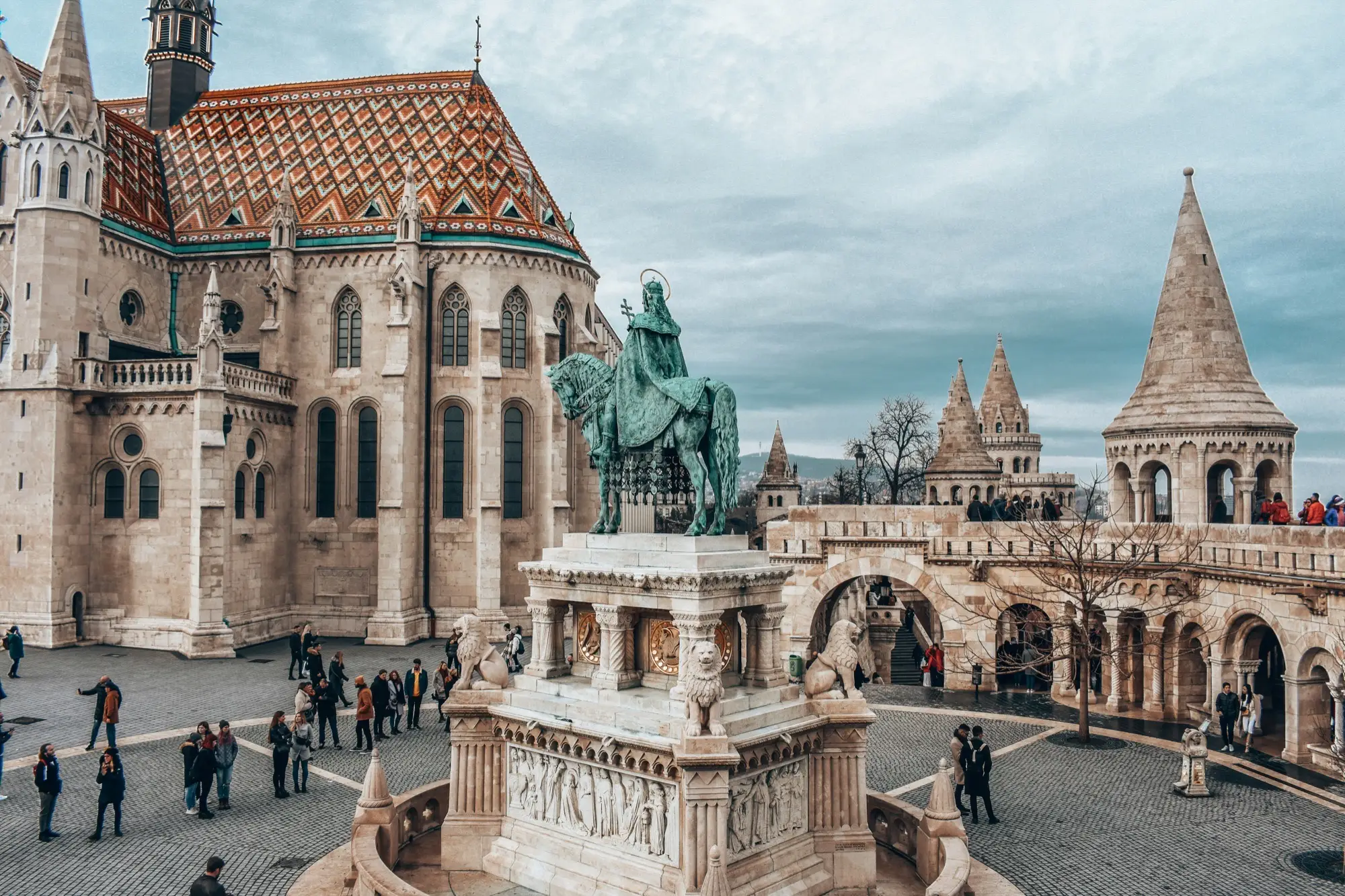
Fisherman’s Bastion is the seven-towered Neo-Romanesque lookout on the eastern edge of Buda Castle Hill, designed by architect Frigyes Schulek and opened in 1905. The white-stone arcades and central staircase sit immediately behind Matthias Church on Szentháromság tér, facing the Hungarian Parliament across the Danube.
The visit is unusual in one respect. The courtyard, the arcades, the central staircase and the connecting walkways are free public space at all times, day and night, year-round.
Only the upper lookout, the walkway and turrets on top of the arcades, needs a ticket, from 09:00 until the early evening on most days of the year, and it is free outside those hours. For most visitors the free level gives essentially the same Pest panorama, so the ticket is genuinely optional.
- Visit length
- 30 to 45 minutes
- Entry
- Free. Only the upper lookout needs a ticket
- Book ahead
- Guided walks, five days a week at 14:00
- Opening hours
- Courtyard, arcades and staircase (free): Daily 00:00 to 24:00Upper lookout ticket hours (2 January to 31 May): Daily 09:00 to 19:00Upper lookout ticket hours (1 June to 30 September): Daily 09:00 to 21:00Upper lookout ticket hours (1 October to 23 December): Daily 09:00 to 19:00
- Best time
- Before 09:00, or after dark
- Nearest stop
- Bus 16 / 16A / 116 Szentháromság térAbout 120 m away, on the level
- Accessibility
- Courtyard and arcades on the level, stairs to the upper lookout
- Free days upstairs
- 1 Jan, 15 Mar, 20 Aug, 23 Oct, 24 to 31 Dec
- Upper lookout ticket
- Sold on the spot, not by our partners
Tickets
Walking onto the bastion is free, and the ticket for the upper lookout is sold by the municipality, on the spot and online, not by our partners. What you can book ahead is a guided walk of the Castle District that takes in the bastion, which gives the historical context the bastion itself doesn’t signpost on site.
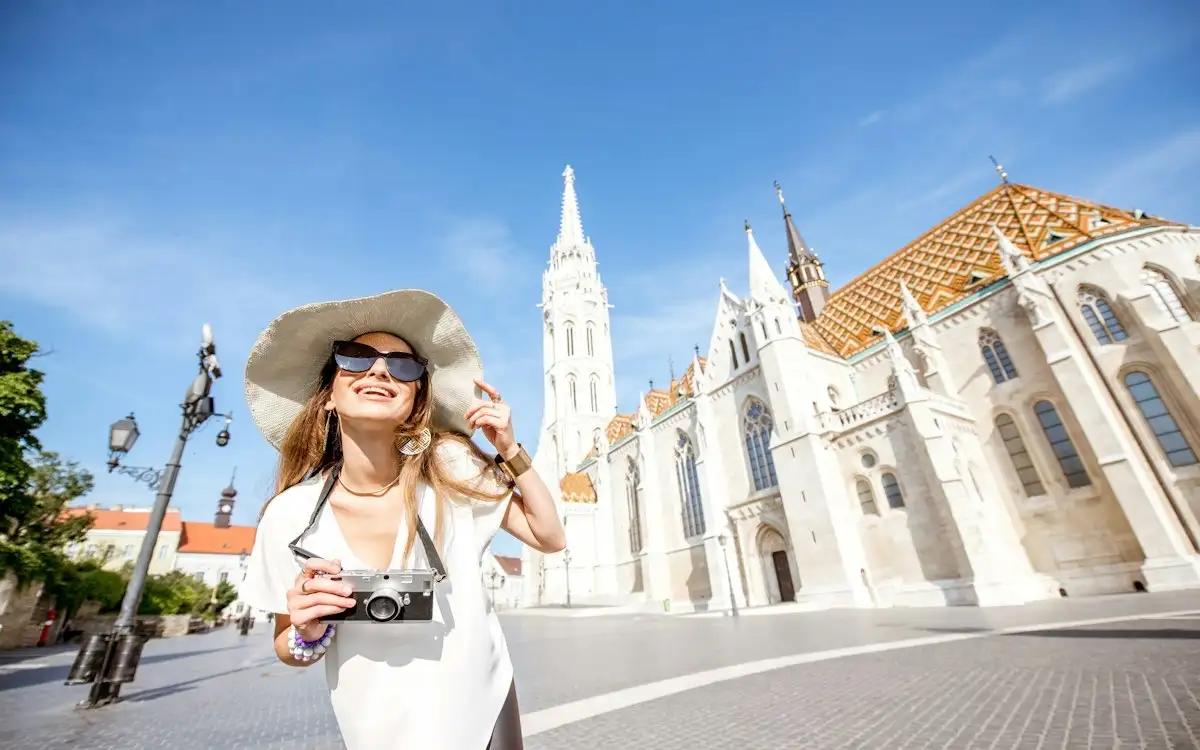
Walking Tour of Buda
Best for: An easy afternoon introduction to the Castle District, all from outside
- 2 hours, starting at 14:00
- Live guide in English
- Free cancellation up to 24 hours ahead
What’s included and more details
What’s included
- A licensed guide past Fisherman's Bastion, Matthias Church, the Royal Palace and the funicular
- Meeting point
- In front of Matthias Church at the Holy Trinity Column (Szentháromság tér 2)
- Not included
- Entrance fees and hotel pick-up
- Changes
- You can move the date up to 24 hours before
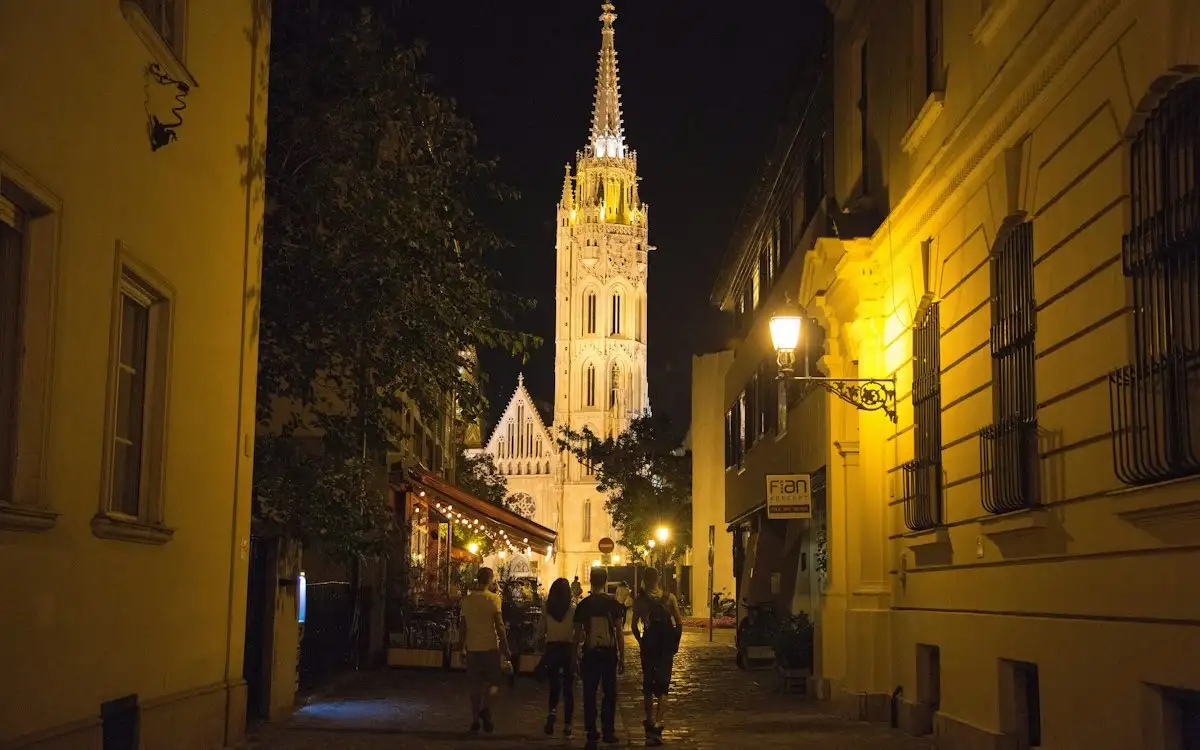
Matthias Church: Fools and Kings Tour
Best for: A story-led walk of the hill, with Matthias Church inside and a coffee stop
- 2.5 hours
- Live guide in English
- Free cancellation up to 24 hours ahead
What’s included and more details
What’s included
- Guided walk of the Castle District
- Admission to Matthias Church
- Coffee and a traditional cake in a local café
- Maps and tips for the rest of your stay
- Meeting point
- The Holy Trinity Column (Holy Trinity Statue), Szentháromság tér 2. The guide holds a Tiqets sign
- On arrival
- Swap the phone voucher for a paper ticket at the meeting point
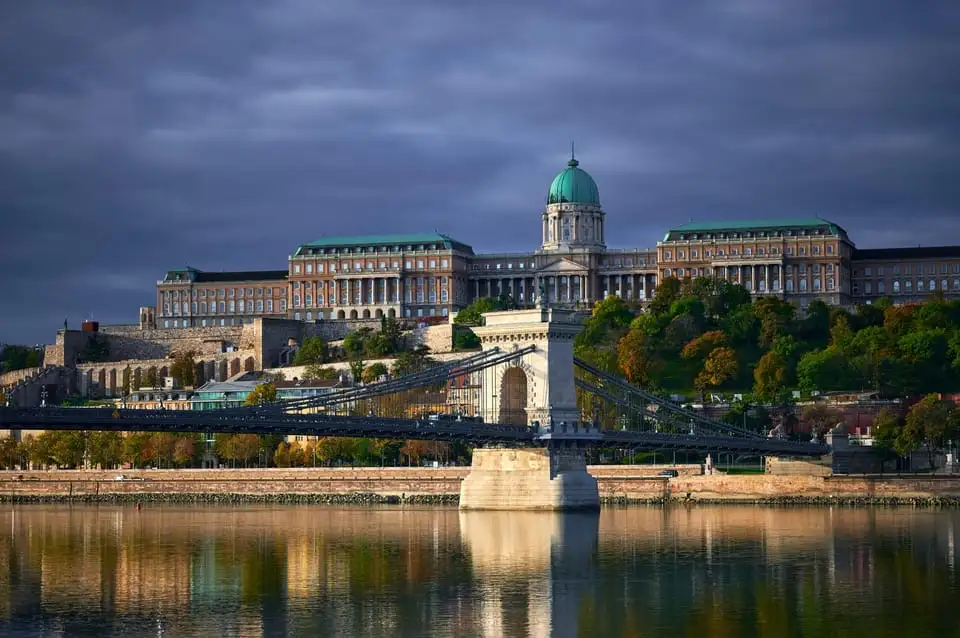
Buda Castle Hill Tour: Fisherman's Bastion & Matthias Church
Best for: A guided walk of the hill in your own language, with a church or bunker upgrade
- 2.5 to 3.5 hours
- Live guide in English, German, Spanish, French, Italian or Hungarian
- Free cancellation up to 24 hours ahead
What’s included and more details
What’s included
- Guided walk of the Castle District
- Buda Castle, Matthias Church and Fisherman's Bastion
- Views over the Danube and the Parliament
- Choose
- The walk alone, or an upgrade with a guided visit inside Matthias Church or the Hospital in the Rock, entry included
- Meeting point
- The Zero Kilometre Stone on Clark Ádám tér, at the Buda end of the Chain Bridge
- Not suitable for
- Wheelchair users and people with limited mobility. No pushchairs or large bags
- Also
- Reserve now and pay later
- The upper lookout needs a ticket from 09:00 to 19:00, and until 21:00 from 1 June to 30 September. Before and after those hours it is open and free
- Reduced tickets for children, students and pensioners are sold only at the ticket office, with proof. Under-6s go up free
- Matthias Church next door is ticketed separately, so check which queue you are in
The upper lookout ticket and its free windows are in our Fisherman’s Bastion tickets guide. Every guided walk that takes in the bastion, compared, is in our Fisherman’s Bastion tours guide.
Highlights
Schulek’s seven-towered lookout
Walk the white-stone Neo-Romanesque arcades Frigyes Schulek built on Buda’s old town wall, with seven towers for the seven Magyar chieftains.
Pest panorama and Parliament view
Frame the Hungarian Parliament directly across the Danube through the bastion’s white-stone arches.
Free at any hour
The courtyard, the arcades and the central staircase are open 24 hours, year-round, with no ticket needed. Visit early morning or after dark for the calmest viewing.
Plan your visit
Opening hours
The courtyard, the arcades and the staircase never close. The upper lookout needs a ticket from 09:00 to 19:00, and until 21:00 from 1 June to 30 September. Outside those hours it is open and free.
Courtyard, arcades and staircase (free): Daily 00:00 to 24:00Upper lookout ticket hours (2 January to 31 May): Daily 09:00 to 19:00Upper lookout ticket hours (1 June to 30 September): Daily 09:00 to 21:00Upper lookout ticket hours (1 October to 23 December): Daily 09:00 to 19:00Check our detailed opening hours guide for the ticket hours by season, the free days on the upper lookout, and the best slots for each time of year.
Getting there
The bastion sits on the eastern edge of Buda Castle Hill, on Szentháromság tér immediately behind Matthias Church. The simplest route is the Castle bus: line 16 from Deák Ferenc tér in Pest or from Széll Kálmán tér in Buda, to the Szentháromság tér stop. The Buda Castle Funicular from Clark Ádám tér is the scenic alternative.
Nearest stops
By car: not recommended. The Castle District is a protected zone behind traffic barriers, and you pay for the time you spend inside.
See our complete how-to-get-there guide for each bus, the funicular, the walking routes up the hill and accessibility notes.
Before you go
- No gate and no security check on the free levels. It is public space, so you simply walk on
- Photography is allowed everywhere on the bastion, including the upper lookout
- The upper lookout’s hours can change in bad weather. The rules are posted on boards on site
- Toilets: there are paid public toilets beside the bastion, just to the south
- Shoes with grip. The Castle District is cobbled in places and the staircases are stone
Accessibility
The courtyard and the arcades are on one level with Szentháromság tér. The upper lookout is reached by stairs, and we found no lift up to it.
- Step-free: the square, the courtyard round St Stephen’s statue and the arcades along the parapet
- Stairs only: the upper lookout and its turrets, the Schulek staircase and the Jesuit Stairs down to the river side. None has a ramp, so do not count on reaching the upper level in a wheelchair
- Free entry to the upper lookout for visitors with a disability and one companion, with proof, from the ticket office
- Step-free arrival: the Szentháromság tér bus stop is on the level, about 120 m away, and most of Budapest’s buses are low-floor
- Underfoot: the Castle District’s paving is cobbled in places
What to see and do
Start in the courtyard with St Stephen
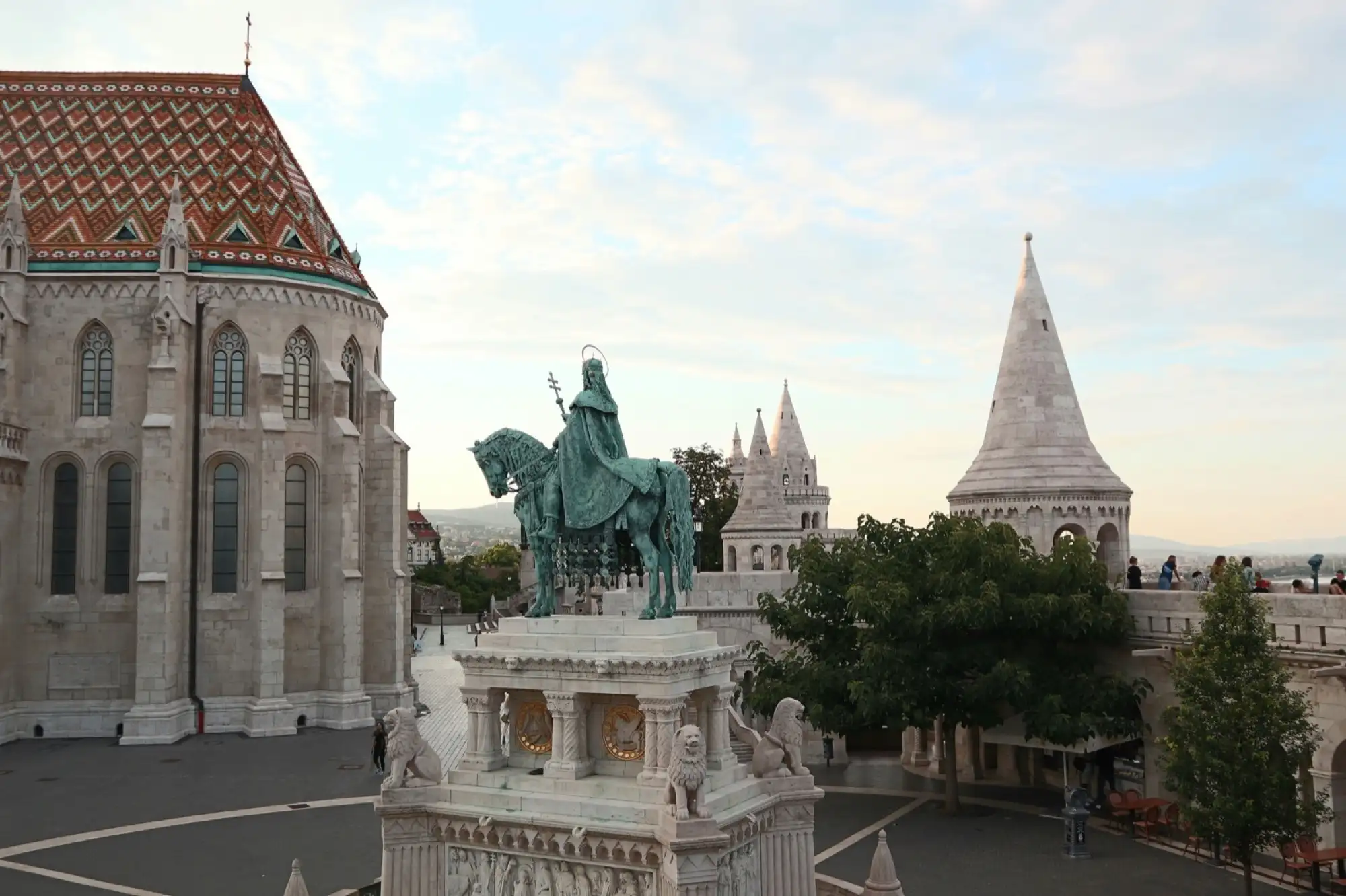
The equestrian statue of St Stephen, the first king of Hungary, by sculptor Alajos Stróbl was set up in 1906, the year after the bastion opened. It stands in the courtyard between the bastion and Matthias Church, and Schulek designed its Neo-Romanesque plinth himself.
Walk round the plinth before you head for the view. The reliefs show scenes from Stephen’s reign, his coronation among them, and in one a master builder kneels before the king holding a model of a church. That is Schulek. Stróbl slipped the architect into his own monument.
Free to view at all times.
Walk the arcades for the free view
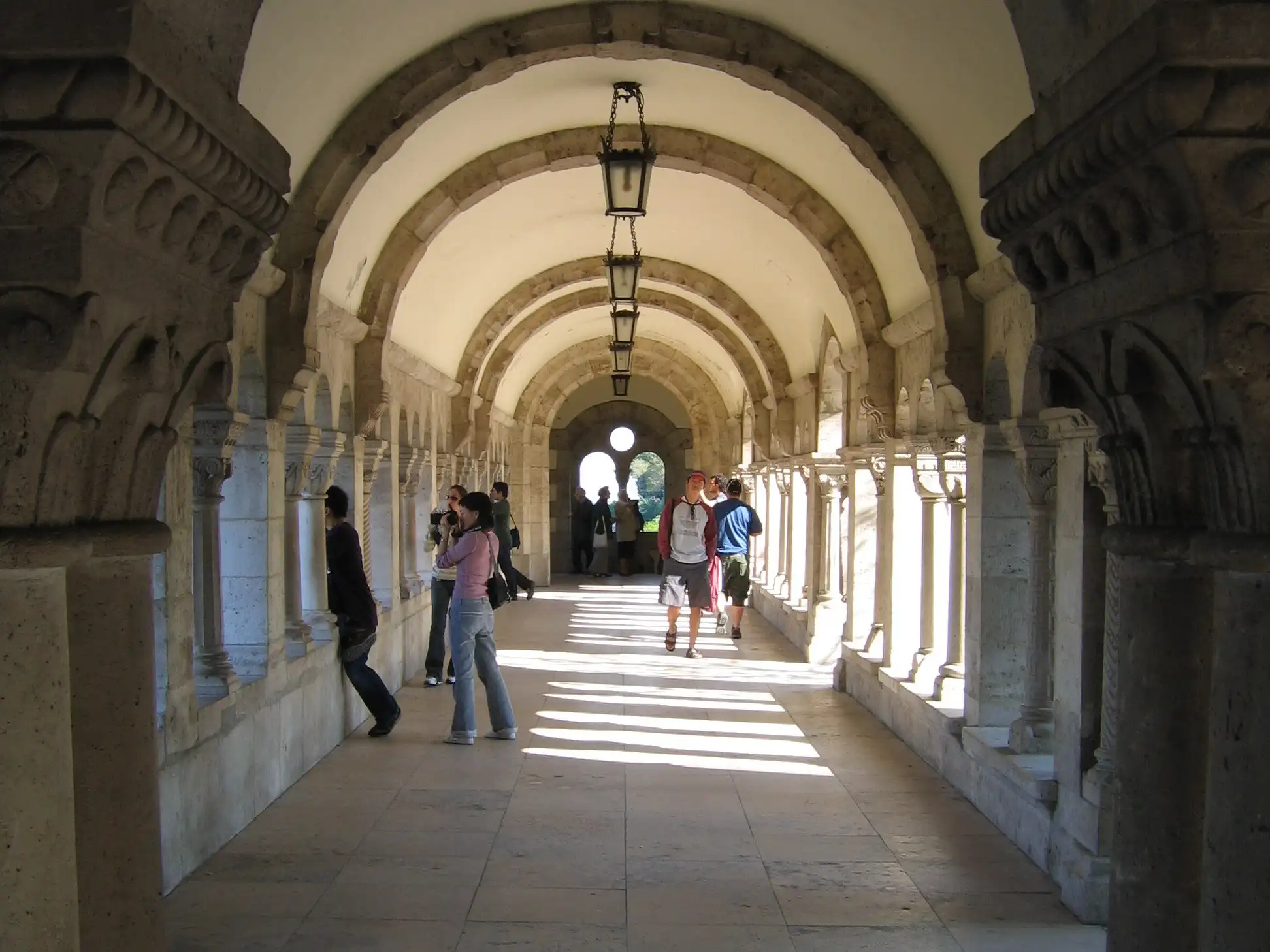
The covered walks along the parapet are the visit’s main architectural payoff. Schulek modelled them on the cloister of a Romanesque monastery, and the detail holds up at close range: carved capitals, stone benches, gargoyles and hanging lamps. The building was designed to be looked at and walked through, not just photographed.
The arcades are free, 24 hours a day, year-round, and every arch frames the Danube and Pest. For most visitors this level is enough.
Bear in mind that part of the arcades and the north towers belong to a restaurant and a café terrace, and at those tables the view comes with a drink. The free stretches are on either side, so keep walking.
Pay for the upper lookout if you want the turrets
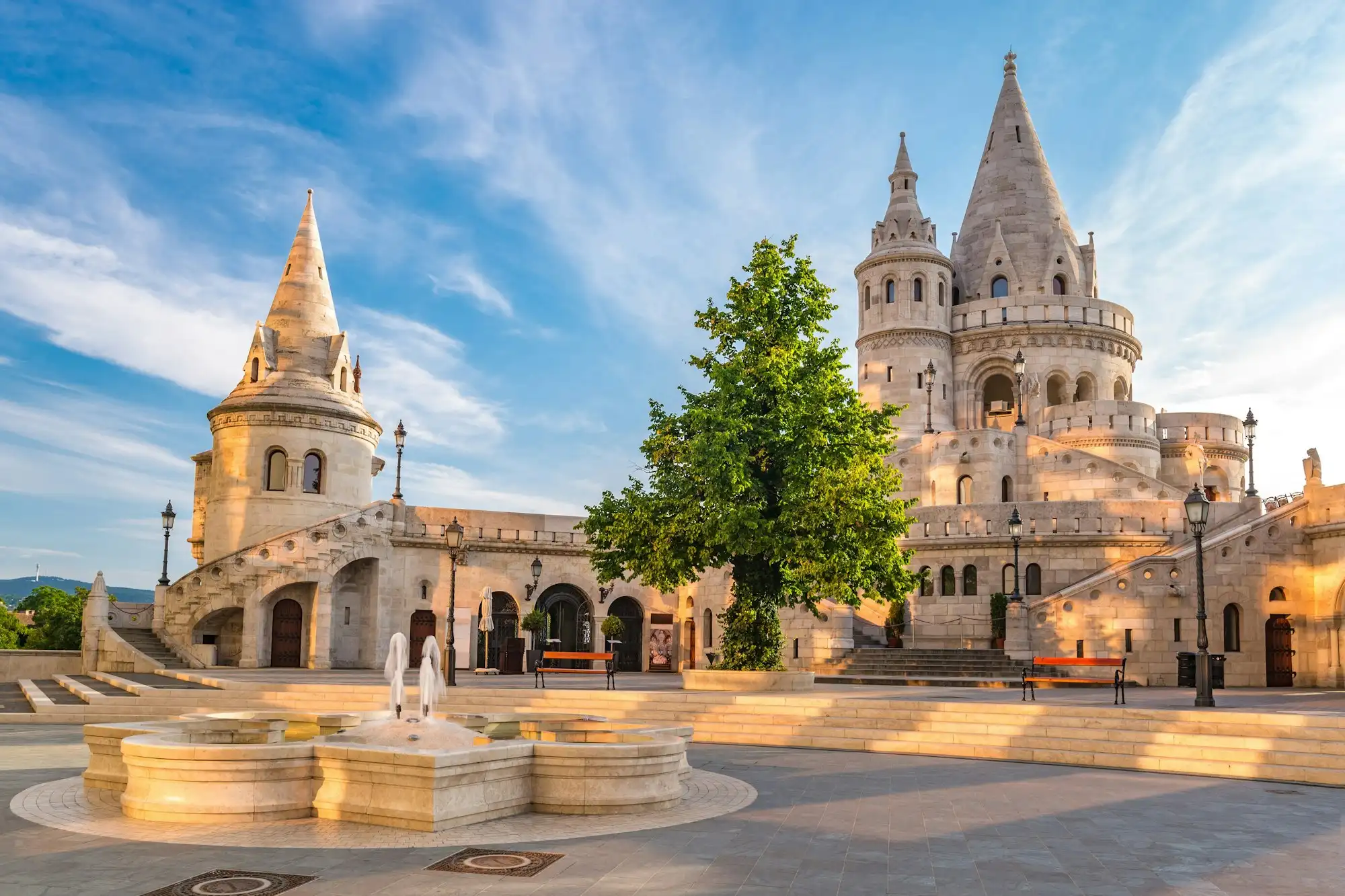
The ticket buys you the walkway on top of the arcades and the turrets at its corners, one storey above the free level. The view is the same river and the same Parliament. What you gain is height over the heads of the crowd, the turret windows to shoot through, and the full circuit of the walls.
Worth it for photographers and for anyone who likes to have seen all of a place. Not essential if you only want the panorama. It is reached by stairs, and we found no lift.
Tickets are sold on the spot, at a ticket office and ticket machines, and the upper level is free before 09:00 and again in the evening once the ticket hours end.
Photograph the Parliament from the parapet
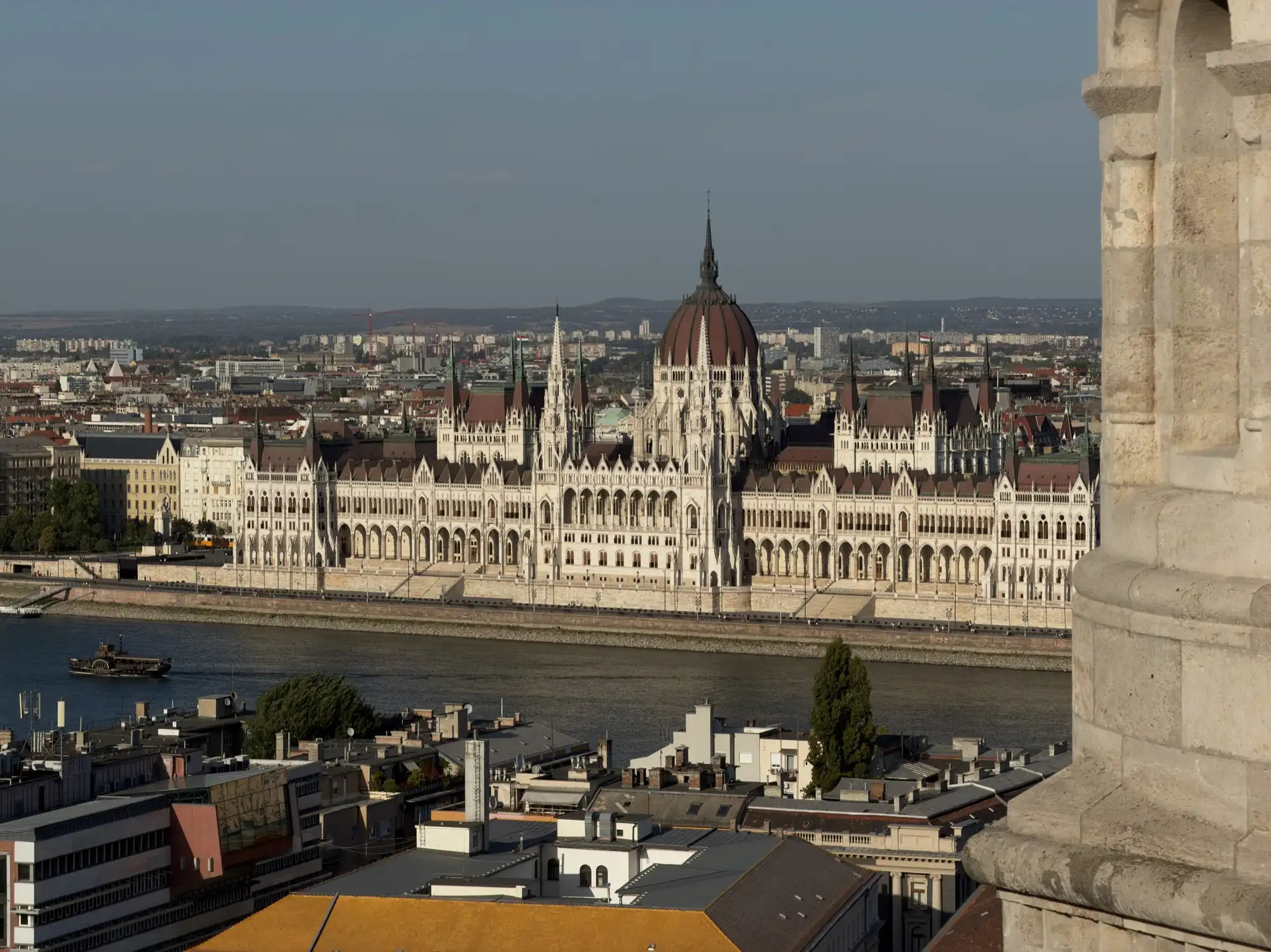
The view east across the Danube to the Hungarian Parliament is the shot everyone comes for. The Parliament sits directly opposite the bastion; the framing through the bastion’s white-stone arches is the classic composition.
Its river front faces west, towards you, so the sun is behind it in the morning and on it from the afternoon until sunset. The first hour after dark is best for the lit-up Parliament against the night sky. Early morning gives the calmest crowds for unobstructed compositions.
If the inside interests you as much as the outside, tours of the Parliament are booked separately and sell out ahead.
Take the Schulek staircase down
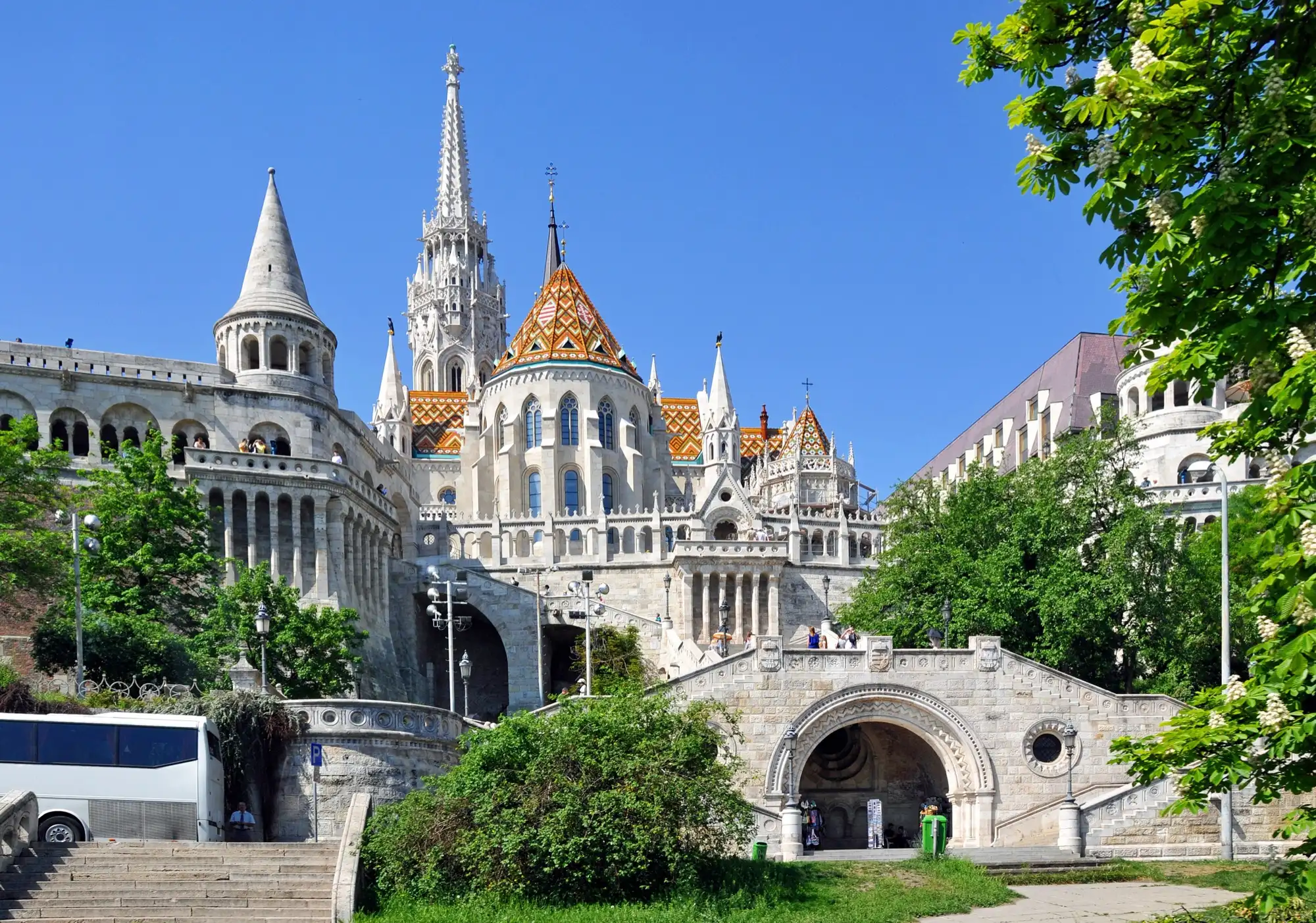
The grand staircase on the river side is the part most visitors only see from the top. It climbs from Hunyadi János út, divides in two below the walls and arrives in the tower courtyards, and it is how Schulek meant the bastion to be approached.
Look for the stone warriors of the Árpád era standing in the niches either side of the steps, and for the statues of János Hunyadi and of St George and the dragon below the walls.
Walk down at least as far as the first landing and look back up. This is the best view of the bastion itself, and few of the people on the terraces above ever see it. Buses 16 and 216 stop at the bottom and carry on up into the Castle District, if you don’t fancy the climb back.
Come back after dark
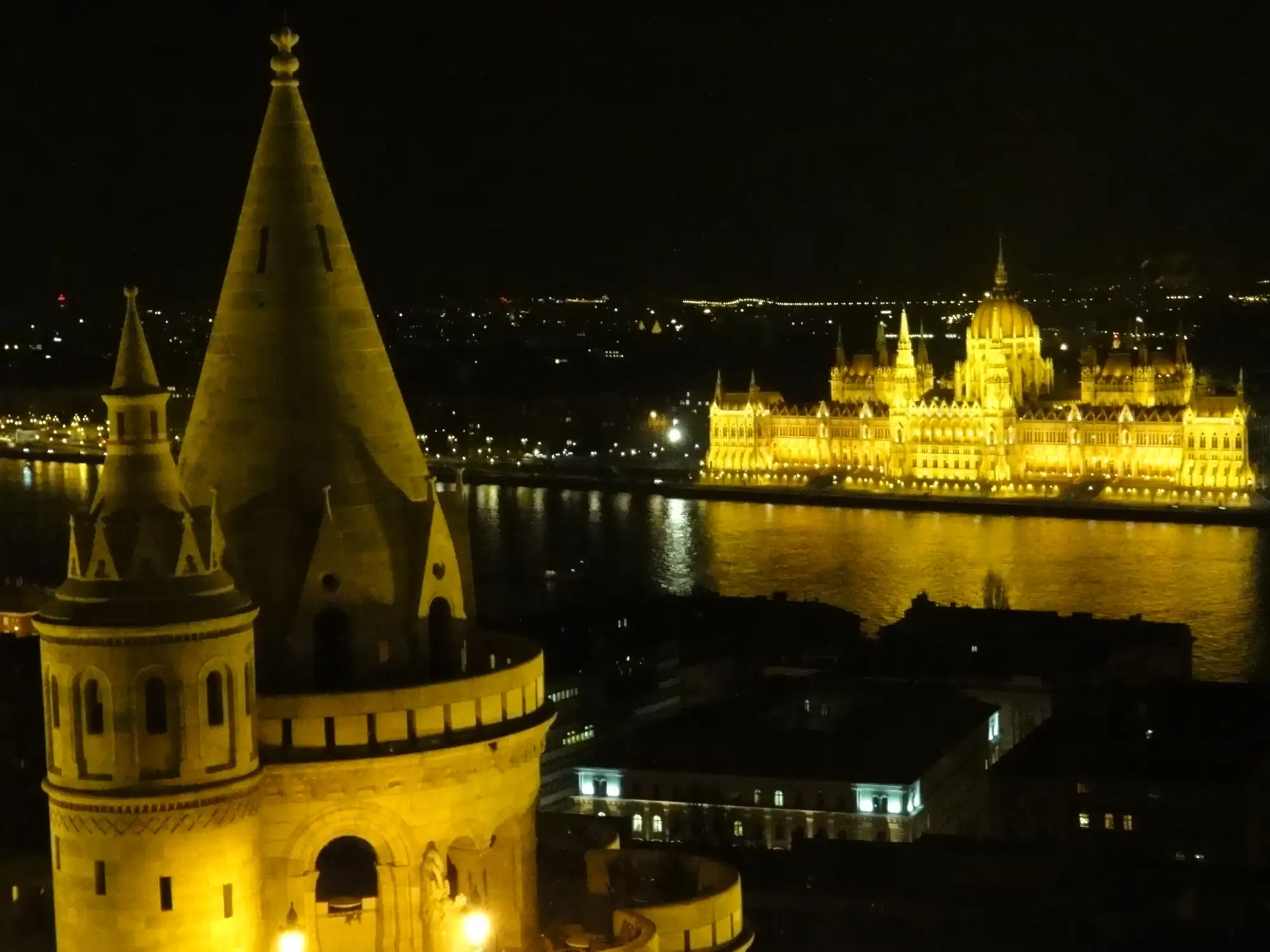
The bastion has been floodlit since 1928, and after dark is when it looks its best. The upper lookout is free once the ticket hours end, and the Parliament is lit up across the river.
It won’t be empty. On a summer evening plenty of people have had the same idea, but there is room at the parapet, which there often isn’t at midday.
The funicular stops running at 22:00, so check your way down before you settle in.
Insider tips
Go up for free before 09:00 or in the evening
The upper lookout only needs a ticket during the ticket hours. Early morning before 09:00 and the evening, after 19:00 or after 21:00 in summer, give you the turrets without paying. If you want every angle without the ticket, plan for one of these windows.
Sunset and the first hour after dark are the best photo windows
The combination of the white-stone bastion arches, the lit Parliament and the Pest skyline is the classic Budapest photograph. Bring a phone with battery and arrive 30 minutes before sunset to compose your shots.
Pair it with Matthias Church
The two were planned by the same architect as one composition, and the natural visit covers them together. Walk through the church first, then step out onto the bastion behind it. Read our Matthias Church guide for its tickets and hours, which are separate from the bastion’s.
Keep walking once you have the photo
Most visitors never get further than the bastion and the church. The streets to the north, towards the Vienna Gate, are quiet even in August, and they start just beyond the square.
Nearby attractions
The bastion sits at the symbolic heart of Buda Castle Hill, with the rest of the Castle District a short walk away on the level.
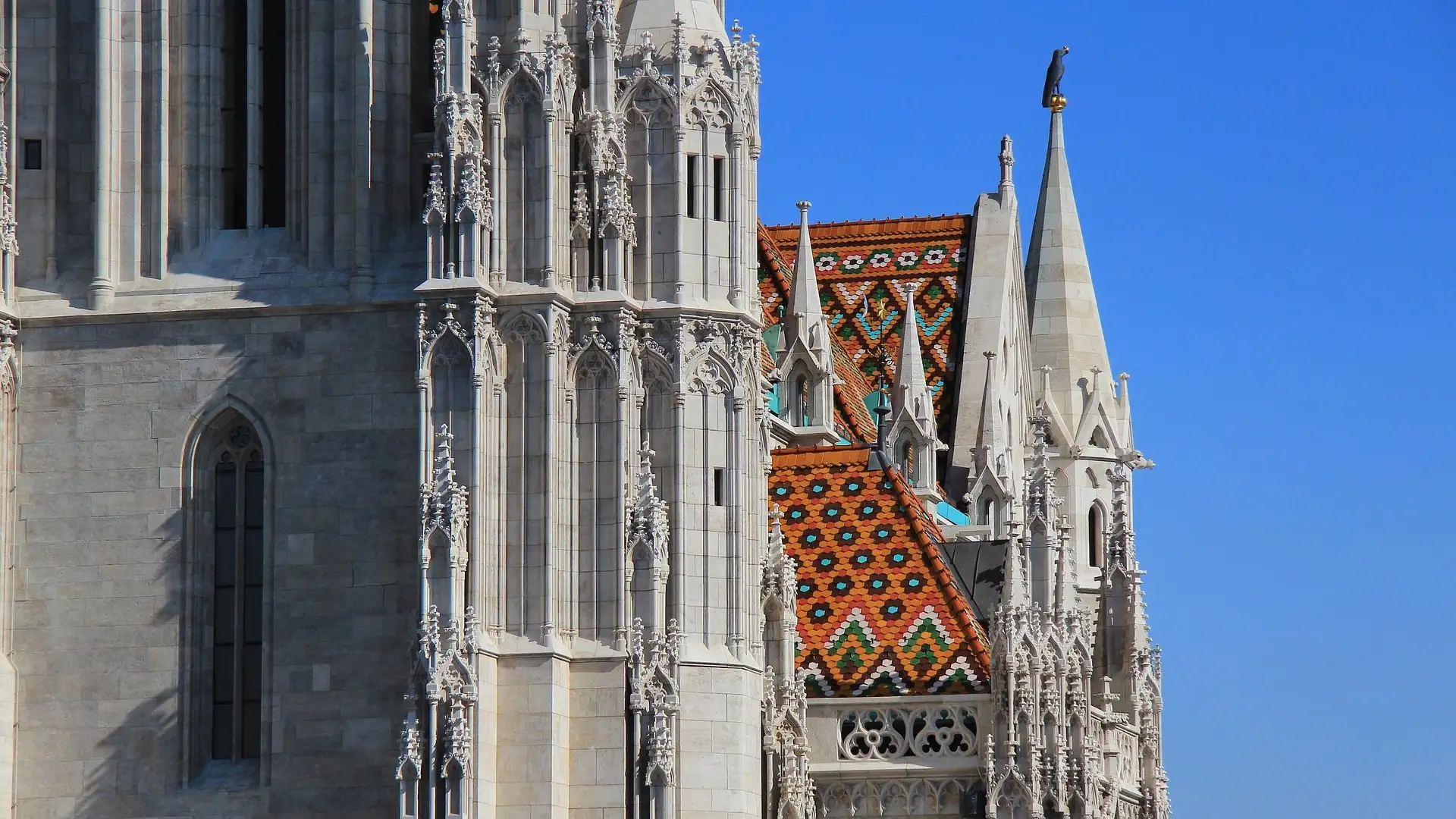
Matthias Church
Immediately in front of the bastion on Szentháromság tér. Schulek’s restored Gothic coronation church.
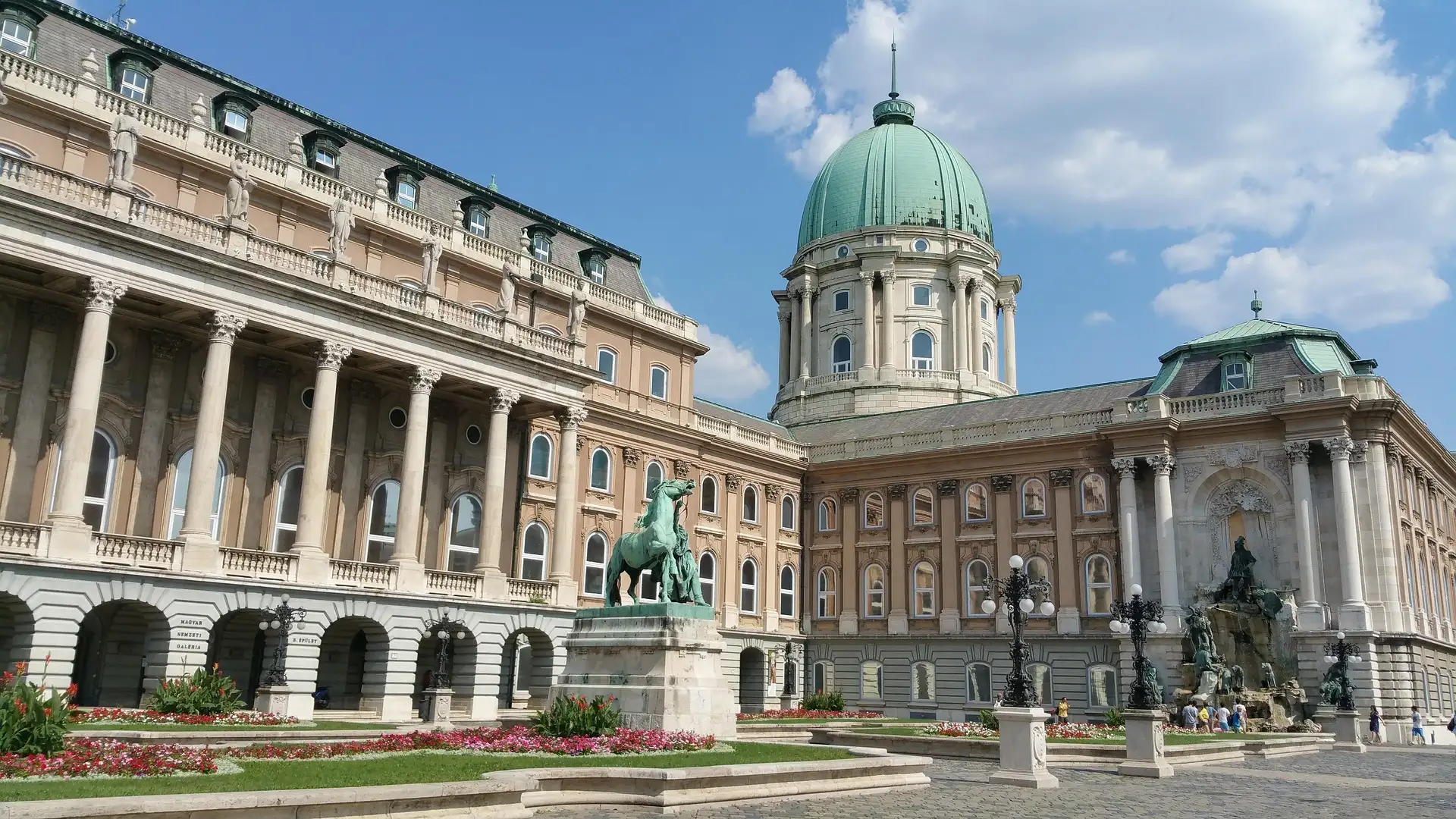
Buda Castle
About 12 minutes south on foot along the top of the hill. The Royal Palace and its courtyards.
Budapest History Museum
About 13 minutes south on foot, inside the Royal Palace. The museum of the city’s own history.
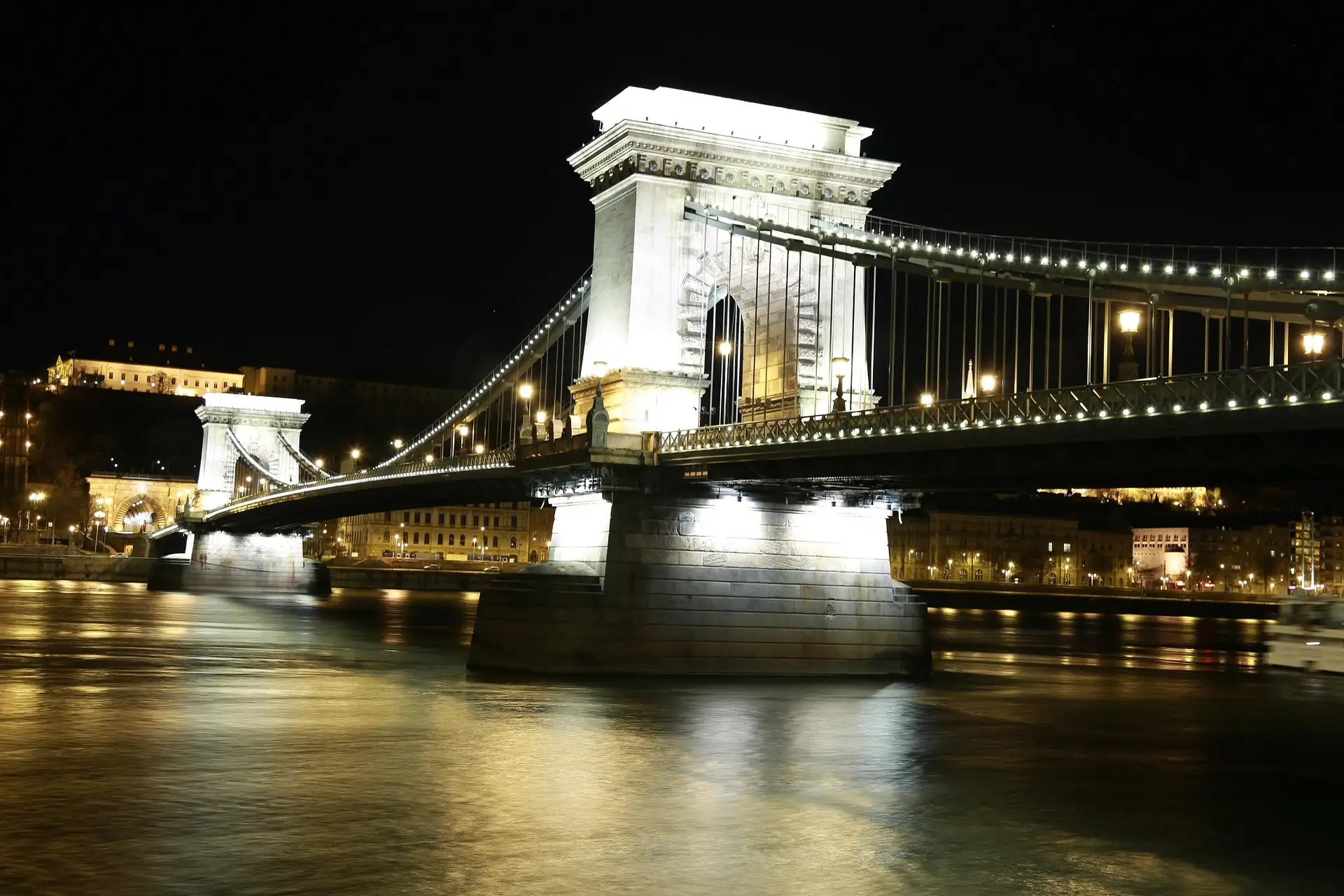
Széchenyi Chain Bridge
About 9 minutes’ walk down to the foot of the hill. The walk across to Pest starts here.
Did you know?
- The statues of the seven chieftains on Heroes’ Square were first meant to stand here, where the north towers are. The city fathers turned the idea down.
- In its present form the bastion has never defended anything. Schulek meant it as a monument to the Magyar conquest and the founding of the Hungarian state.
- Building work kept stopping for archaeology. The finds included Gothic and Renaissance tombstones and the sanctuary of a medieval Dominican church.
History
The name is older than the building. This was a stretch of Buda’s town wall, already known as the Fishermen’s Bastion, when Frigyes Schulek was asked to make it worthy of the church he had just rebuilt next door.
- Early 1700s
The wall is modernised
The Austrian military rebuilds this stretch of Buda’s town wall on a folded plan, so that each face can be covered from the next.
- 1874
The Castle stops being a fortress
The war ministry ends the Castle’s military role, and Frigyes Schulek begins the rebuilding of Matthias Church, which takes until 1896.
- 1899
Work begins on the bastion
Schulek’s plans for the church’s surroundings, drawn up for the 1896 Millennium, finally go ahead. The two staircases are finished by 1902.
- 1905
Handed over to the city
The completed Fisherman’s Bastion is handed over on 9 October: towers, arcades, a grand staircase and a promenade wrapped round Matthias Church.
- 1906
St Stephen statue installed
The equestrian statue of St Stephen by sculptor Alajos Stróbl is set up in the bastion’s southern courtyard, on a plinth designed by Schulek.
- 1944 to 1945
Damage during the Siege of Budapest
The bastion is badly damaged in several places. Restoration, slowed by bomb disposal, lasts until 1953.
- 1995
Upper-level ticket introduced
Visitors have paid to go up to the upper lookout since May 1995. The rest stays free.
- 2003
Reopened after restoration
After decades of soot and neglect, a reconstruction begun in the 1990s is completed and the bastion reopens in November.